

Black Mass Recycling Market Report 2026
Global Outlook – By Battery Source (Automotive Batteries, Industrial Batteries, Portable Batteries), By Technology (Hydrometallurgy, Pyrometallurgy, Other Technologies), By Recovered Metal (Nickel, Cobalt, Lithium, Copper, Manganese, Other Recovered Metals), By Application (Automotive, Consumer Electronics, Energy, Aerospace And Defense, Construction, Other Applications) – Market Size, Trends, Strategies, and Forecast to 2030
Black Mass Recycling Market Overview
• Black Mass Recycling market size has reached to $13.35 billion in 2025 • Expected to grow to $32.49 billion in 2030 at a compound annual growth rate (CAGR) of 19.4% • Growth Driver: Impact Of Electric Vehicle Growth On The Market Due To Increasing Demand For Battery Materials • Market Trend: Advancing Lithium-Ion Battery Recycling Through Eco-Innovation • Europe was the largest region in 2025 and Asia-Pacific is the fastest growing region.Market Gains By 2030 – Top Opportunities By Segment
Market Gain identifies the most promising market opportunities by highlighting the segments or products expected to generate the highest incremental revenue growth over the next five years.
What Is Covered Under Black Mass Recycling Market?
Black mass recycling is the process of recovering valuable metals such as lithium, cobalt, nickel, and graphite from used lithium-ion batteries. The batteries are first shredded, producing a fine powder known as black mass. This black mass is then processed using mechanical or chemical methods to extract the raw materials. The process supports sustainable battery production and helps reduce environmental harm. The main battery source of black mass recycling are automotive batteries, industrial batteries, portable batteries. Automotive batteries refer to batteries used primarily in vehicles for starting, lighting, and ignition (SLI) or as power sources in electric vehicles (EVs). The various technology include hydrometallurgy, pyrometallurgy, others with various recovered metals such as nickel, cobalt, lithium, copper, manganese, other recovered metals. These are used in various applications such as automotive, consumer electronics, energy, aerospace and defense, construction, others.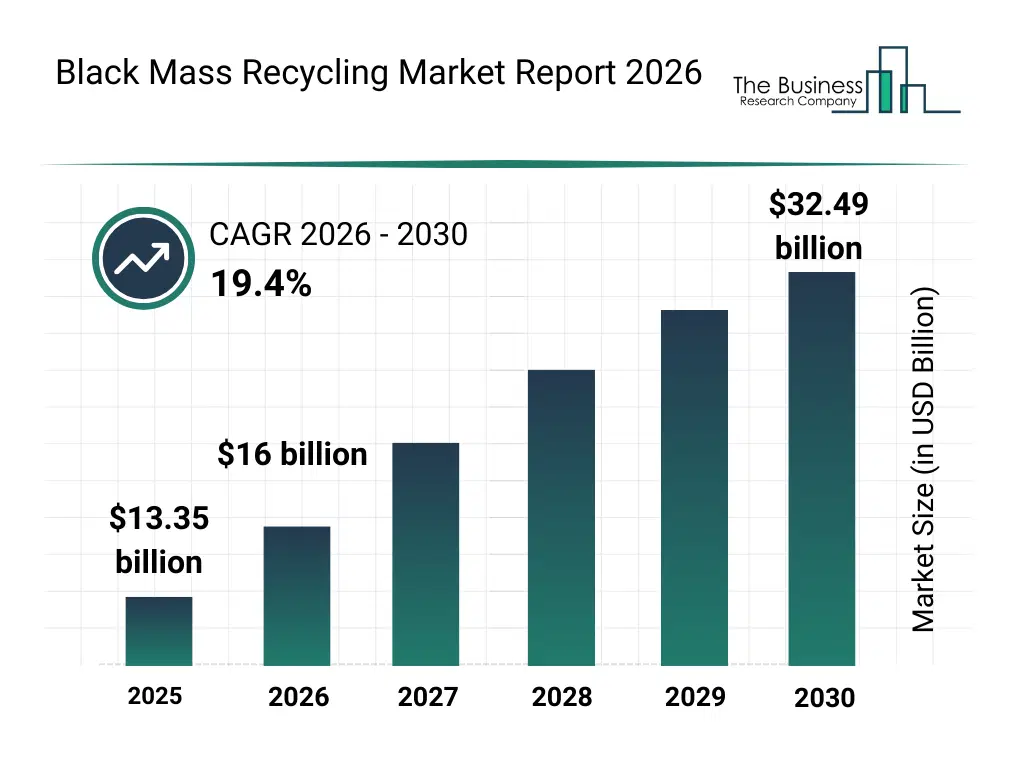
What Is The Black Mass Recycling Market Size and Share 2026?
The black mass recycling market size has grown rapidly in recent years. It will grow from $13.35 billion in 2025 to $16 billion in 2026 at a compound annual growth rate (CAGR) of 19.8%. The growth in the historic period can be attributed to rising electric vehicle adoption, increasing electronic waste generation, government regulations on battery disposal, development of battery recycling facilities, awareness of environmental impact of metals.What Is The Black Mass Recycling Market Growth Forecast?
The black mass recycling market size is expected to see rapid growth in the next few years. It will grow to $32.49 billion in 2030 at a compound annual growth rate (CAGR) of 19.4%. The growth in the forecast period can be attributed to advancements in battery recycling technologies, growing demand for recovered metals, expansion of industrial battery recycling programs, investments in automation and ai for sorting processes, supportive policies for sustainable battery supply chains. Major trends in the forecast period include rising adoption of hydrometallurgical and pyrometallurgical technologies, growth in recycling of automotive lithium-ion batteries, increasing recovery of critical metals like lithium, cobalt, and nickel, expansion of industrial and portable battery recycling programs, integration of circular economy practices in battery lifecycle management.
Global Black Mass Recycling Market Segmentation
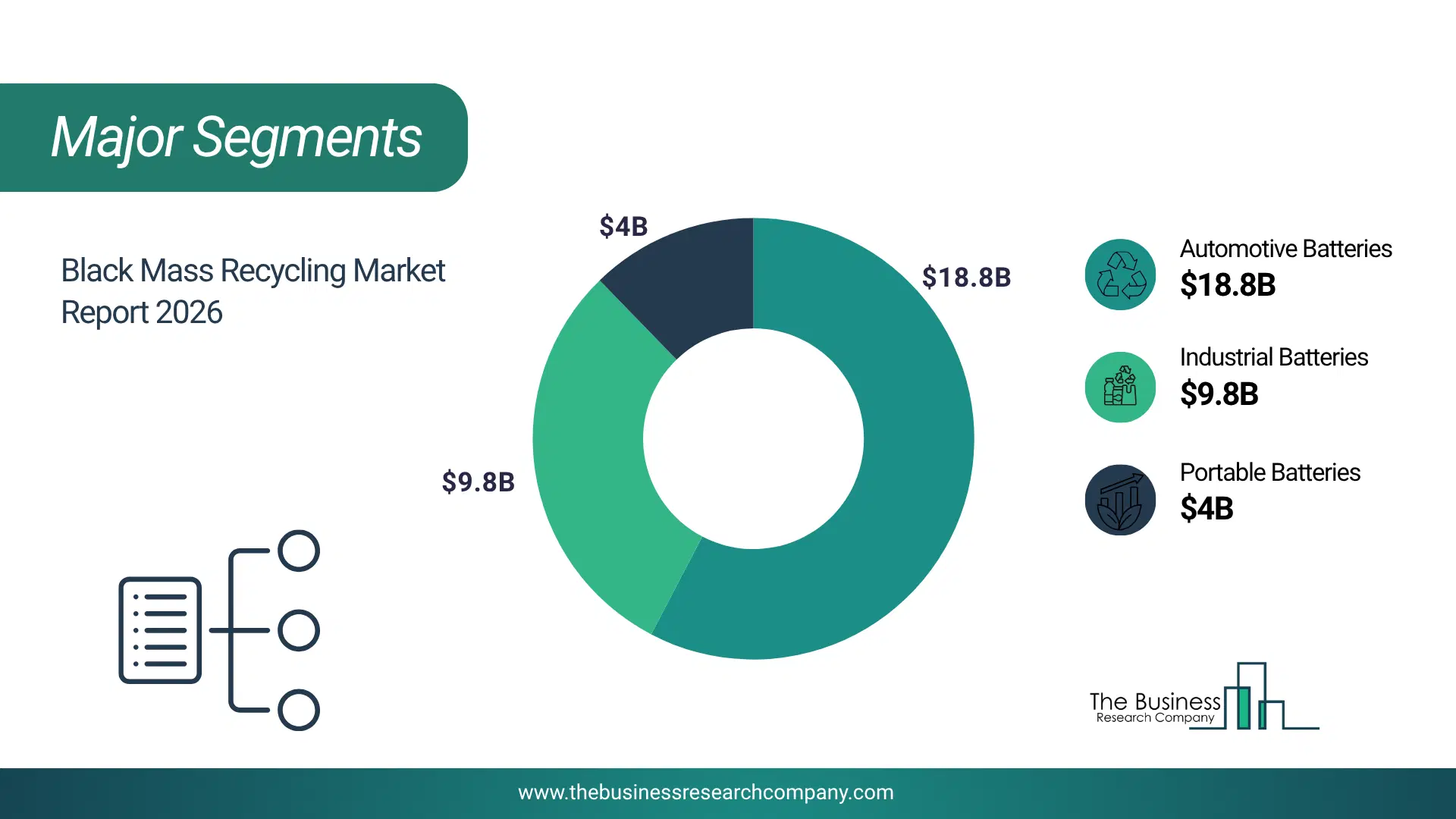
1) By Battery Source: Automotive Batteries, Industrial Batteries, Portable Batteries 2) By Technology: Hydrometallurgy, Pyrometallurgy, Other Technologies 3) By Recovered Metal: Nickel, Cobalt, Lithium, Copper, Manganese, Other Recovered Metals 4) By Application: Automotive, Consumer Electronics, Energy, Aerospace And Defense, Construction, Other Applications Subsegments: 1) By Automotive Batteries: Electric Vehicle (EV) Batteries, Hybrid Electric Vehicle (HEV) Batteries, Plug-in Hybrid Electric Vehicle (PHEV) Batteries, Lead-acid Automotive Batteries, Start-Stop Vehicle Batteries 2) By Industrial Batteries: Uninterruptible Power Supply (UPS) Batteries, Telecom Batteries, Energy Storage System (ESS) Batteries, Forklift and Material Handling Equipment Batteries, Grid-Scale Storage Batteries 3) By Portable Batteries: Consumer Electronics Batteries, Power Tool Batteries, Wearable Device Batteries, Camera And Camcorder Batteries, E-Bike And E-Scooter Batteries The top segments in the black mass recycling market will be: • Automotive Batteries will reach $18.79 billion by 2030. • Industrial Batteries will reach $9.76 billion by 2030. • Portable Batteries will reach $3.94 billion by 2030.What Is The Driver Of The Black Mass Recycling Market?
The growing adoption of electric vehicles is expected to propel the growth of the black mass recycling market going forward. Electric Vehicles (EVs) are vehicles powered by electric motors, using electricity stored in batteries, either solely or in combination with an internal combustion engine. The increase in electric vehicles (EVs) is driven by the need to reduce greenhouse gas emissions and combat climate change by offering a cleaner, zero-emission alternative to traditional vehicles. Black mass recycling helps electric vehicles by recovering critical materials like lithium and cobalt from used batteries, reducing the need for mining, and promoting a more sustainable supply chain for EV production. For instance, in 2024, according to the International Energy Agency (IEA), a France-based autonomous intergovernmental organization, sales of electric cars in 2023 were 3.5 million higher than in 2022, a 35% year-on-year increase. Therefore, the growing adoption of electric vehicles is driving the growth of the black mass recycling industry.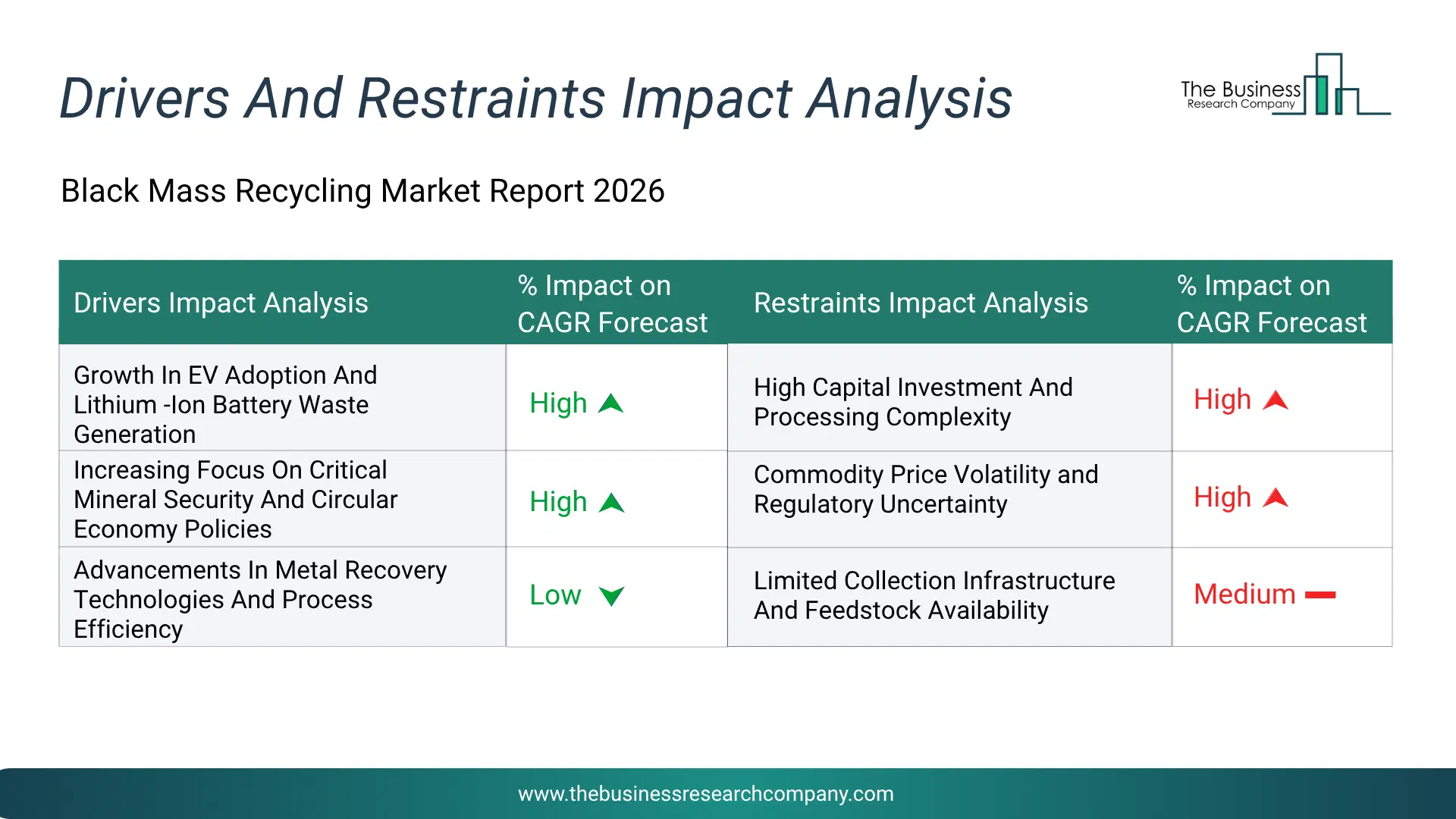
Infographic Chart Showing Key Market Drivers Analysis And Restraints For Black Mass Recycling Market
The chart presents an impact analysis of key drivers and restraints, quantifying their relative influence on the market's growth rate and helping assess the balance between growth enablers and limiting factors. This chart offers a high-level perspective; the full report contains more detailed insights.
How Will The Drivers Impact Growth In The Global Black Mass Recycling Market?
• Growth In EV Adoption And Lithium -Ion Battery Waste Generation (High) – During the forecast period, the growth in ev adoption and lithium -ion battery waste generation is expected to become a key growth driver for the black mass recycling market by 2030. The rapid expansion of electric vehicle (ev) production and lithium -ion battery deployment is a primary driver for the black mass recycling market. As ev adoption accelerates globally, end -of -life batteries and manufacturing scrap are increasing substantially. Black mass, which contains valuable metals such as lithium, nickel, cobalt, and manganese, represents a critical secondary resource stream. Growing battery waste volumes directly support the need for efficient recycling and material recovery infrastructure. • Increasing Focus On Critical Mineral Security And Circular Economy Policies (High) – During the forecast period, the increasing focus on critical mineral security and circular economy policies is expected to emerge as a major factor driving the expansion of the black mass recycling market by 2030. Rising concerns over critical mineral supply security and geopolitical dependency significantly fuel market growth. Many countries rely heavily on imported lithium, cobalt, and nickel, creating supply chain vulnerabilities. Black mass recycling reduces dependence on primary mining and enhances domestic raw material availability. Government incentives, circular economy policies, and battery recycling mandates are accelerating investment in recycling facilities worldwide. • Advancements In Metal Recovery Technologies And Process Efficiency (Low) – During the forecast period, the advancements in metal recovery technologies and process efficiency are expected to act as a key growth catalyst for the black mass recycling market by 2030. Technological advancements in hydrometallurgical and direct recycling processes further support market expansion. Improved recovery rates, lower energy consumption, and enhanced material purity are increasing the commercial viability of recycled battery metals. Automation and improved sorting technologies are enhancing operational efficiency. As recycling technologies mature and scale, cost competitiveness compared to virgin mining is expected to improve significantly.How Will The Restraints Impact Growth In The Global Black Mass Recycling Market?
• High Capital Investment And Processing Complexity (High) – During the forecast period, the high capital expenditure and complex processing requirements act as key restraints in the black mass recycling market. Establishing recycling facilities requires significant investment in specialized equipment, chemical processing systems, and environmental compliance infrastructure. Handling hazardous materials and ensuring safe disposal adds operational complexity. Smaller players may face financial barriers to entry, slowing overall market penetration. • Commodity Price Volatility and Regulatory Uncertainty (High) – During the forecast period, the fluctuations in battery metal prices and regulatory uncertainties also restrain market growth. Variability in lithium, cobalt, and nickel prices impacts profitability and long-term investment decisions. Additionally, evolving environmental regulations and cross-border waste transportation restrictions may create compliance challenges. These factors can introduce uncertainty in project timelines and return on investment. • Limited Collection Infrastructure And Feedstock Availability (Medium) – During the forecast period, the limited collection infrastructure and feedstock availability act as a restraint for the black mass recycling market by restricting the steady supply of end-of-life batteries required for efficient recycling operations. In many regions, inadequate collection networks and weak reverse logistics systems result in fragmented and inconsistent feedstock streams. This reduces plant utilization rates and affects overall operational efficiency. Additionally, improper disposal and informal recycling practices further limit the volume of recoverable materials entering formal recycling channels. These challenges collectively slow down market expansion and reduce scalability of recycling operations.Key Players In The Global Black Mass Recycling Market
Major companies operating in the black mass recycling market are BASF SE, Umicore SA, Veolia Environnement S.A., TATA Chemicals Ltd., Tenova S.p.A., Lohum Cleantech Private Limited, Rubamin Limited, Fortum Oyj, Cirba Solutions LLC, Li-Cycle Holdings Corp., Lithion Recycling Inc., Electra Battery Materials Corporation, Exigo Recycling Pvt. Ltd., Green Li-ion Pte Ltd., Duesenfeld GmbH, EcoGraf Limited, Redux GmbH, Aqua Metals Inc., Royal Bees Pvt. Ltd., SungEel Hi-Tech. Co. Ltd.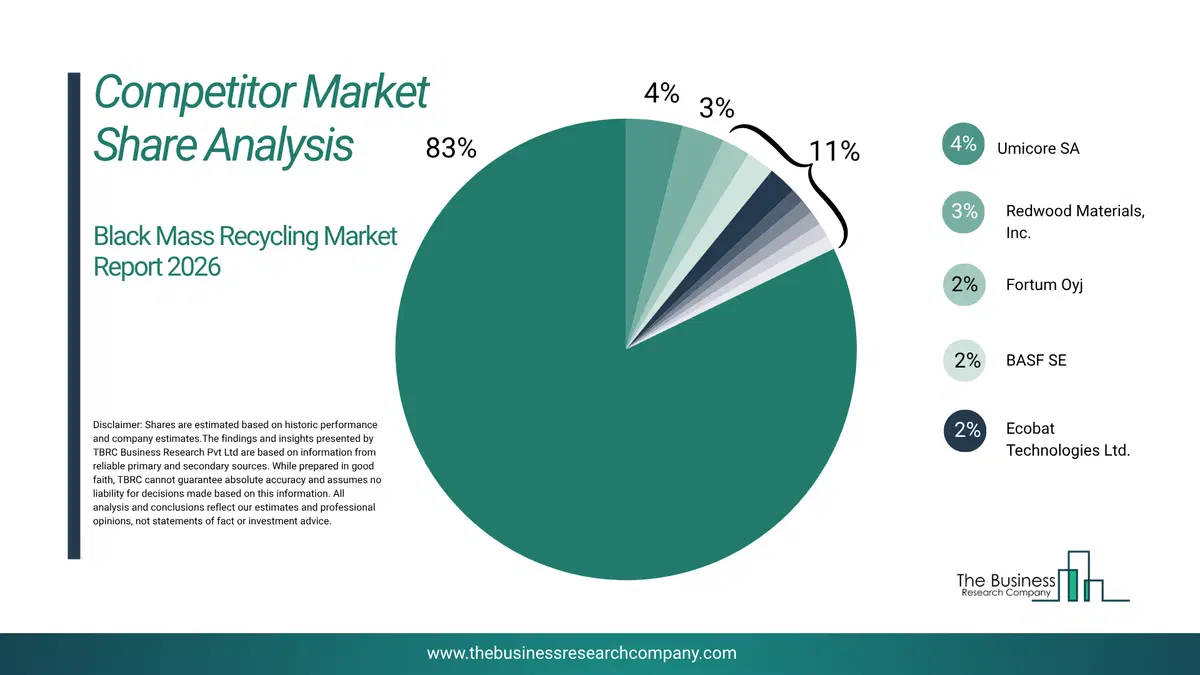
This chart is for illustrative purposes; the full report includes a detailed competitor analysis and comprehensive overview of the top 10 companies in the market.
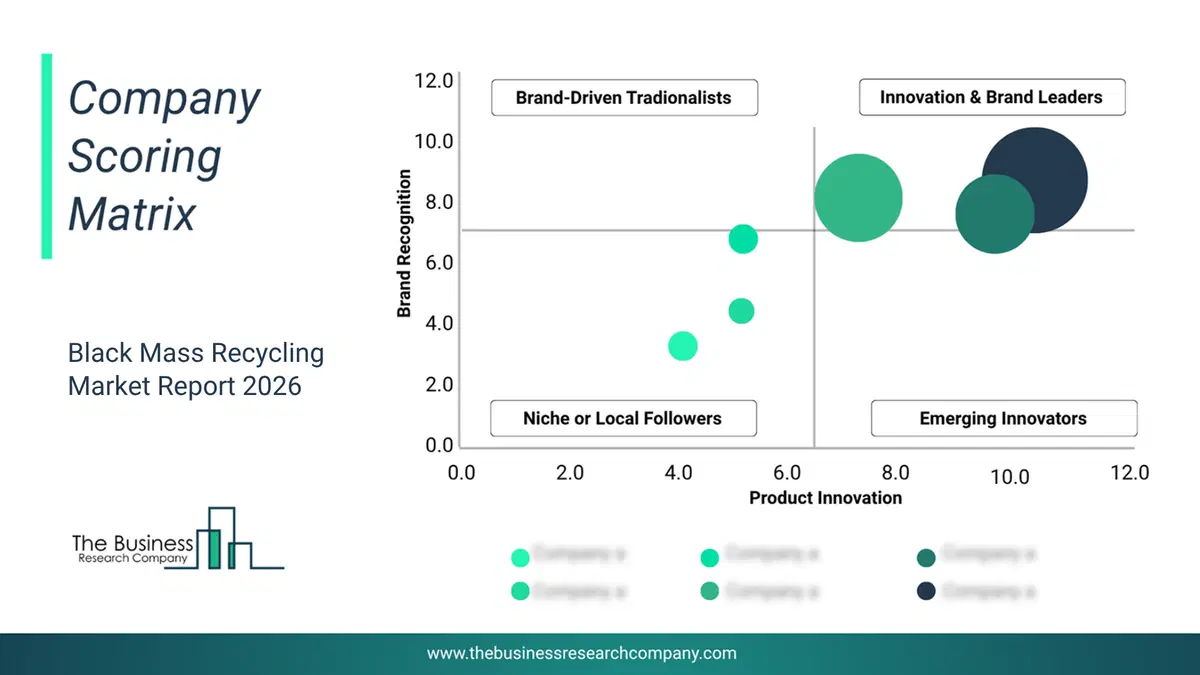
This chart maps companies by product innovation and brand strength, with bubble size indicating relative revenue, helping identify market leaders, challengers, and niche players. This is an illustrative chart; the full report provides a complete and accurate competitive analysis.
Global Black Mass Recycling Market Trends and Insights
Major companies operating in the black mass recycling market are focusing on developing innovative solutions such as eco-innovation to enhance the efficiency, sustainability, and cost-effectiveness of lithium-ion battery recycling processes. Eco-innovation refers to the creation and application of environmentally friendly technologies, processes, or solutions that enhance sustainability and resource efficiency while minimizing ecological impact. For instance, in December 2024, BatX Energies Pvt. Ltd., an India-based battery recycling company, launched a lithium battery recycling and critical minerals extraction plant in Uttar Pradesh. That extracts critical minerals like lithium and cobalt, supporting India's EV sector and reducing import dependency. The facility promotes sustainability with zero emissions and waste, contributing to a circular economy and India's Net Zero goals.What Are Latest Mergers And Acquisitions In The Black Mass Recycling Market?
In January 2024, BASF, a Germany-based chemicals company, partnered with Stena Recycling Oy. With this partnership, we aim to establish a comprehensive battery recycling system in Europe, supporting a circular economy by recovering valuable metals from end-of-life electric vehicle batteries for reuse in new battery production. Stena Recycling Oy is a Sweden-based recycling company that specializes in black mass recycling.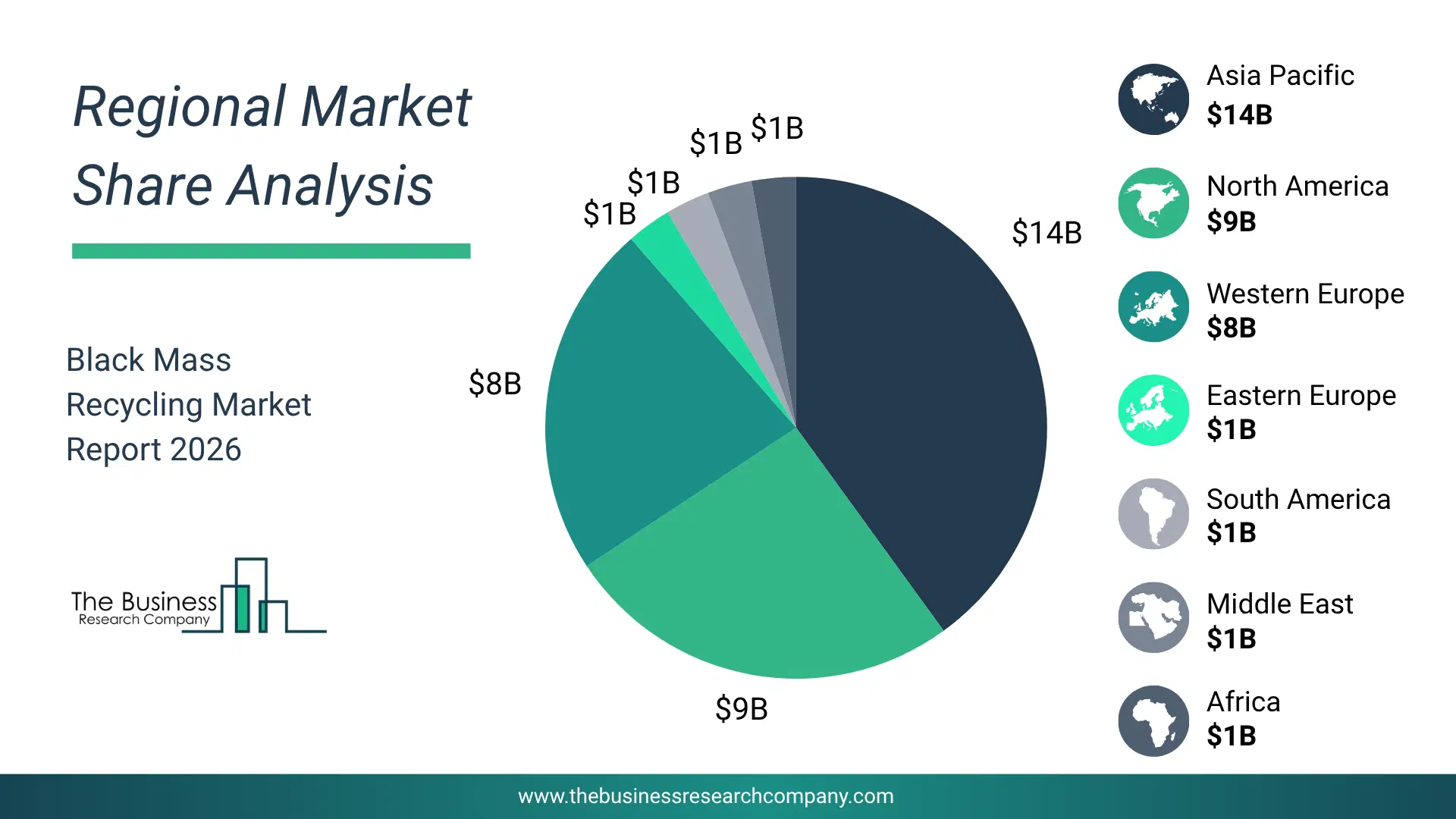
Regional Outlook
Europe was the largest region in the black mass recycling market in 2025. Asia-Pacific is expected to be the fastest-growing region in the forecast period. The regions covered in this market report are Asia-Pacific, South East Asia, Western Europe, Eastern Europe, North America, South America, Middle East, Africa. The countries covered in this market report are Australia, Brazil, China, France, Germany, India, Indonesia, Japan, Taiwan, Russia, South Korea, UK, USA, Canada, Italy, SpainWhat Defines the Black Mass Recycling Market?
The black mass recycling market consists of revenues earned by entities by providing services such as battery sorting, black mass production, and material purification and refining. The market value includes the value of related goods sold by the service provider or included within the service offering. The black mass recycling market also includes sales of products including lithium, cobalt, and graphite. Values in this market are ‘factory gate’ values, that is, the value of goods sold by the manufacturers or creators of the goods, whether to other entities (including downstream manufacturers, wholesalers, distributors, and retailers) or directly to end customers. The value of goods in this market includes related services sold by the creators of the goods.How is Market Value Defined and Measured?
The market value is defined as the revenues that enterprises gain from the sale of goods and/or services within the specified market and geography through sales, grants, or donations in terms of the currency (in USD unless otherwise specified). The revenues for a specified geography are consumption values that are revenues generated by organizations in the specified geography within the market, irrespective of where they are produced. It does not include revenues from resales along the supply chain, either further along the supply chain or as part of other products.
This chart presents market attractiveness based on a quantitative evaluation of growth, competition, strategic alignment, and risk, offering a clear view of opportunity areas for decision-making. This chart is for illustrative purposes; the full report contains the complete analysis.

This chart highlights the Total Addressable Market (TAM) by estimating the maximum revenue opportunity using an assumption-driven approach, supporting strategic planning and opportunity sizing across markets. The chart is illustrative; the full report provides a more comprehensive analysis.
What Key Data and Analysis Are Included in the Black Mass Recycling Market Report 2026?
The black mass recycling market research report is one of a series of new reports from The Business Research Company that provides market statistics, including Market Report 2026?global market size, regional shares, competitors with the market share, detailed market segments, market trends and opportunities, and any further data you may need to thrive in the black mass recycling Market Report 2026? The market research report delivers a complete perspective of everything you need, with an in-depth analysis of the current and future state of the Market Report 2026?Black Mass Recycling Market Report Forecast Analysis
| Report Attribute | Details |
|---|---|
| Market Size Value In 2026 | $16 billion |
| Revenue Forecast In 2030 | $32.49 billion |
| Growth Rate | CAGR of 19.4% from 2026 to 2030 |
| Base Year For Estimation | 2025 |
| Actual Estimates/Historical Data | 2020-2025 |
| Forecast Period | 2026 - 2030 |
| Market Representation | Revenue in USD Billion and CAGR from 2026 to 2030 |
| Segments Covered | Battery Source, Technology, Recovered Metal, Application |
| Regional Scope | Asia-Pacific, Western Europe, Eastern Europe, North America, South America, Middle East, Africa |
| Country Scope | The countries covered in the report are Australia, Brazil, China, France, Germany, India, ... |
| Key Companies Profiled | BASF SE, Umicore SA, Veolia Environnement S.A., TATA Chemicals Ltd., Tenova S.p.A., Lohum Cleantech Private Limited, Rubamin Limited, Fortum Oyj, Cirba Solutions LLC, Li-Cycle Holdings Corp., Lithion Recycling Inc., Electra Battery Materials Corporation, Exigo Recycling Pvt. Ltd., Green Li-ion Pte Ltd., Duesenfeld GmbH, EcoGraf Limited, Redux GmbH, Aqua Metals Inc., Royal Bees Pvt. Ltd., SungEel Hi-Tech. Co. Ltd. |
| Customization Scope | Request for Customization |
| Pricing And Purchase Options | Explore Purchase Options |