
Cancer Tumor Profiling Market Report 2026
Global Outlook – By Cancer Type (Lung Cancer, Breast Cancer, Colorectal Cancer, Prostate Cancer, Melanoma, Ovarian Cancer, Stomach Cancer, Pancreatic Cancer, Thyroid Cancer, Other Cancer Types ), By Technology (Next-Generation Sequencing (NGS), Polymerase Chain Reaction (PCR), Immunohistochemistry (IHC), In Situ Hybridization (ISH), Microarray, Other Technologies), By Process Type (Genomics, Proteomics, Epigenetics, Other Types), By Application (Personalized Medicine, Diagnostics, Biomarker Discovery, Prognostics, Research Applications) - Market Size, Trends, And Global Forecast 2026-2030
Cancer Tumor Profiling Market Overview
• Cancer Tumor Profiling market size has reached to $14.97 billion in 2025 • Expected to grow to $28.27 billion in 2030 at a compound annual growth rate (CAGR) of 13.4% • Growth Driver: Rising Incidences Of Cancer Across Globe • North America was the largest region in 2025 and Asia-Pacific is the fastest growing region.Market Gains By 2030 – Top Opportunities By Segment
Market Gain identifies the most promising market opportunities by highlighting the segments or products expected to generate the highest incremental revenue growth over the next five years.
What Is Covered Under Cancer Tumor Profiling Market?
Cancer tumor profiling refers to a laboratory test that examines a sample of tumor tissue for specific genes, gene mutations (changes), proteins, or other biomarkers. Tumor profiling can help with treatment planning as well as predicting if cancer will recur or spread to other parts of the body. The main types of cancer and tumor profiling are lung cancer, breast cancer, colorectal cancer, prostate cancer, melanoma, ovarian cancer, stomach cancer, pancreatic cancer, thyroid cancer, and other cancer types. The different technologies include next-generation sequencing (NGS), polymerase chain reaction (PCR), immunohistochemistry (IHC), in situ hybridization (ISH), microarrays, and others, and involve various types of processes such as genomics, proteomics, epigenetics, metabolomics, and others. It is used in several applications, including personalized medicine, diagnostics, biomarker discovery, prognostics, and research applications.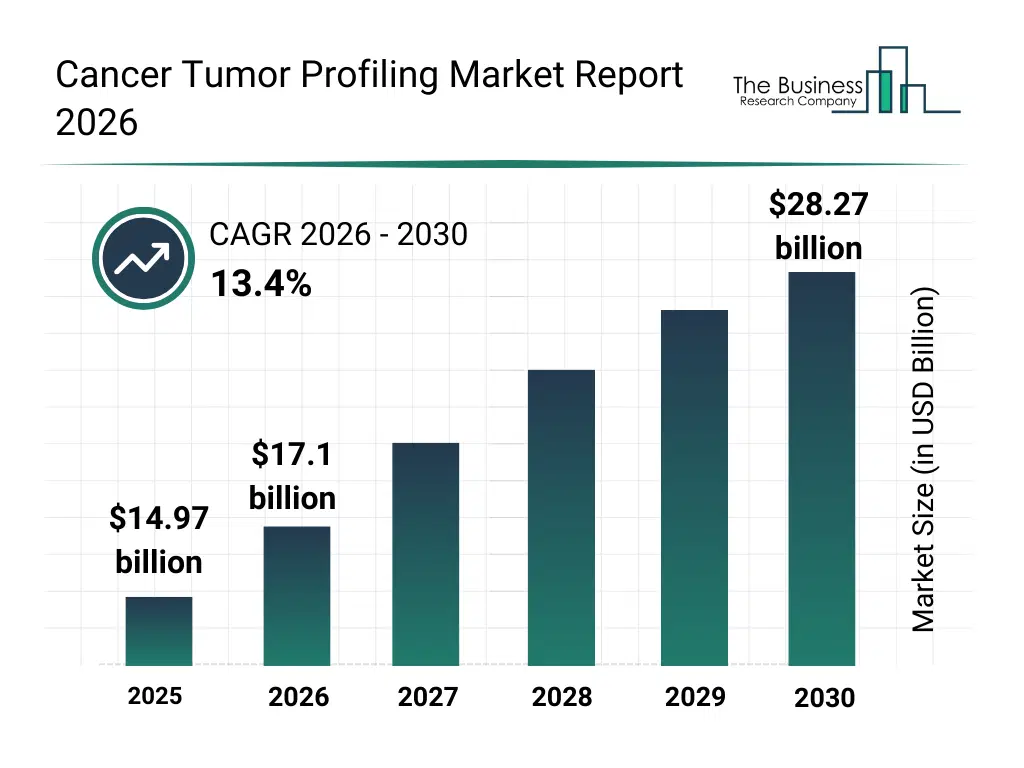
What Is The Cancer Tumor Profiling Market Size and Share 2026?
The cancer tumor profiling market size has grown rapidly in recent years. It will grow from $14.97 billion in 2025 to $17.1 billion in 2026 at a compound annual growth rate (CAGR) of 14.3%. The growth in the historic period can be attributed to increasing utilization of tumor biopsy testing, expansion of oncology research programs, early clinical adoption of molecular stratification, growth of hospital-based profiling services, rising availability of advanced laboratory infrastructure.What Is The Cancer Tumor Profiling Market Growth Forecast?
The cancer tumor profiling market size is expected to see rapid growth in the next few years. It will grow to $28.27 billion in 2030 at a compound annual growth rate (CAGR) of 13.4%. The growth in the forecast period can be attributed to increasing demand for precision oncology decision-making, expansion of personalized cancer therapies, growing investments in translational research, rising adoption of advanced sequencing technologies, increasing focus on predictive oncology diagnostics. Major trends in the forecast period include increasing use of multi-omics tumor profiling, rising adoption of targeted sequencing panels, growing integration of AI-driven biomarker analysis, expansion of personalized treatment planning, enhanced focus on prognostic profiling.
Global Cancer Tumor Profiling Market Segmentation
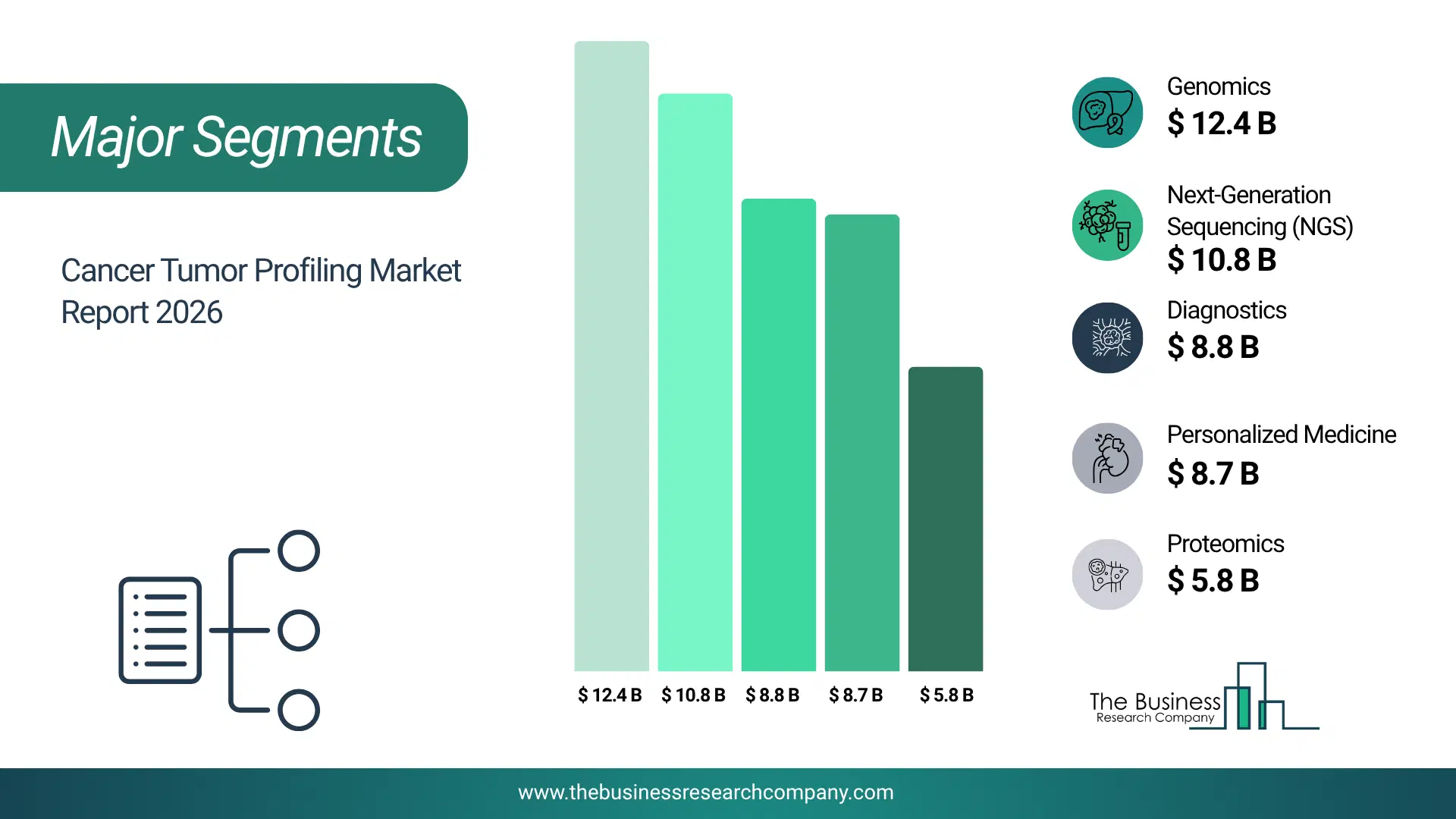
1) By Cancer Type: Lung Cancer, Breast Cancer, Colorectal Cancer, Prostate Cancer, Melanoma, Ovarian Cancer, Stomach Cancer, Pancreatic Cancer, Thyroid Cancer, Other Cancer Types 2) By Technology: Next-Generation Sequencing (NGS), Polymerase Chain Reaction (PCR), Immunohistochemistry (IHC), In Situ Hybridization (ISH), Microarray, Other Technologies 3) By Process Type: Genomics, Proteomics, Epigenetics, Other Types 4) By Application: Personalized Medicine, Diagnostics, Biomarker Discovery, Prognostics, Research Applications Subsegments: 1) By Lung Cancer: Non-Small Cell Lung Cancer (NSCLC), Small Cell Lung Cancer (SCLC) 2) By Breast Cancer: Hormone Receptor-Positive, Triple-Negative Breast Cancer, HER2-Positive Breast Cancer 3) By Colorectal Cancer: Colon Cancer, Rectal Cancer 4) By Prostate Cancer: Localized Prostate Cancer, Advanced Prostate Cancer 5) By Melanoma: Cutaneous Melanoma, Non-Cutaneous Melanoma 6) By Ovarian Cancer: Epithelial Ovarian Cancer, Non-Epithelial Ovarian Cancer 7) By Stomach Cancer: Gastric Adenocarcinoma, Gastrointestinal Stromal Tumors (GISTs) 8) By Pancreatic Cancer: Exocrine Pancreatic Cancer, Neuroendocrine Tumors 9) By Thyroid Cancer: Papillary Thyroid Cancer, Follicular Thyroid Cancer, Medullary Thyroid Cancer 10) By Other Cancer Types: Kidney Cancer, Bladder Cancer, Liver Cancer, Esophageal Cancer The top segments in the cancer tumor profiling market will be: • Genomics will reach $12470.43 Million by 2030. • Next-Generation Sequencing (NGS) will reach $10795.45 Million by 2030. • Diagnostics will reach $8793.22 Million by 2030. • Personalized Medicine will reach $8713.95 Million by 2030. • Proteomics will reach $5882.11 Million by 2030.What Are The Drivers Of The Cancer Tumor Profiling Market?
The increasing incidences of cancer across the globe are expected to propel the growth of the cancer and tumor profiling market going forward. Cancer is a disease in which some cells in the body get uncontrollably large and spread to other parts of the body. As the number of cancer cases rises, so does the demand for cancer tumor profiling, which enables doctors to determine the severity of the disease. For instance, in 2024, the American Cancer Society, a US-based professional organization based, reported that 2 million new cancer cases were diagnosed in the country, up from 1.9 million new cases in 2023. Therefore, the increasing incidences of cancer across the globe drive the growth of the cancer and tumor profiling market. The growing incidence of stomach cancer is expected to propel the growth of the cancer and tumor profiling market going forward. Stomach cancer refers to the uncontrolled growth and multiplication of malignant cells in the lining of the stomach. while gastrointestinal stromal tumors (GISTs) can occur in the stomach, they are distinct from stomach cancer. When two separate tumors collide and merge into one, patients with GISTs have been found to have an increased risk of developing additional cancers, including small bowel adenocarcinoma. Cancer and tumor profiling provides information regarding the cancer development in stomach and help to provide better treatment. For instance, according to Cancer Research UK, a UK-based independent cancer research organization, the incidence of stomach cancer in the UK is projected to fall by 12% between 2023-2025 and 2038-2040, to 8 cases per 100,000 people on average each year. Therefore, the growing incidence of stomach cancer is driving the growth of the cancer and tumor profiling market.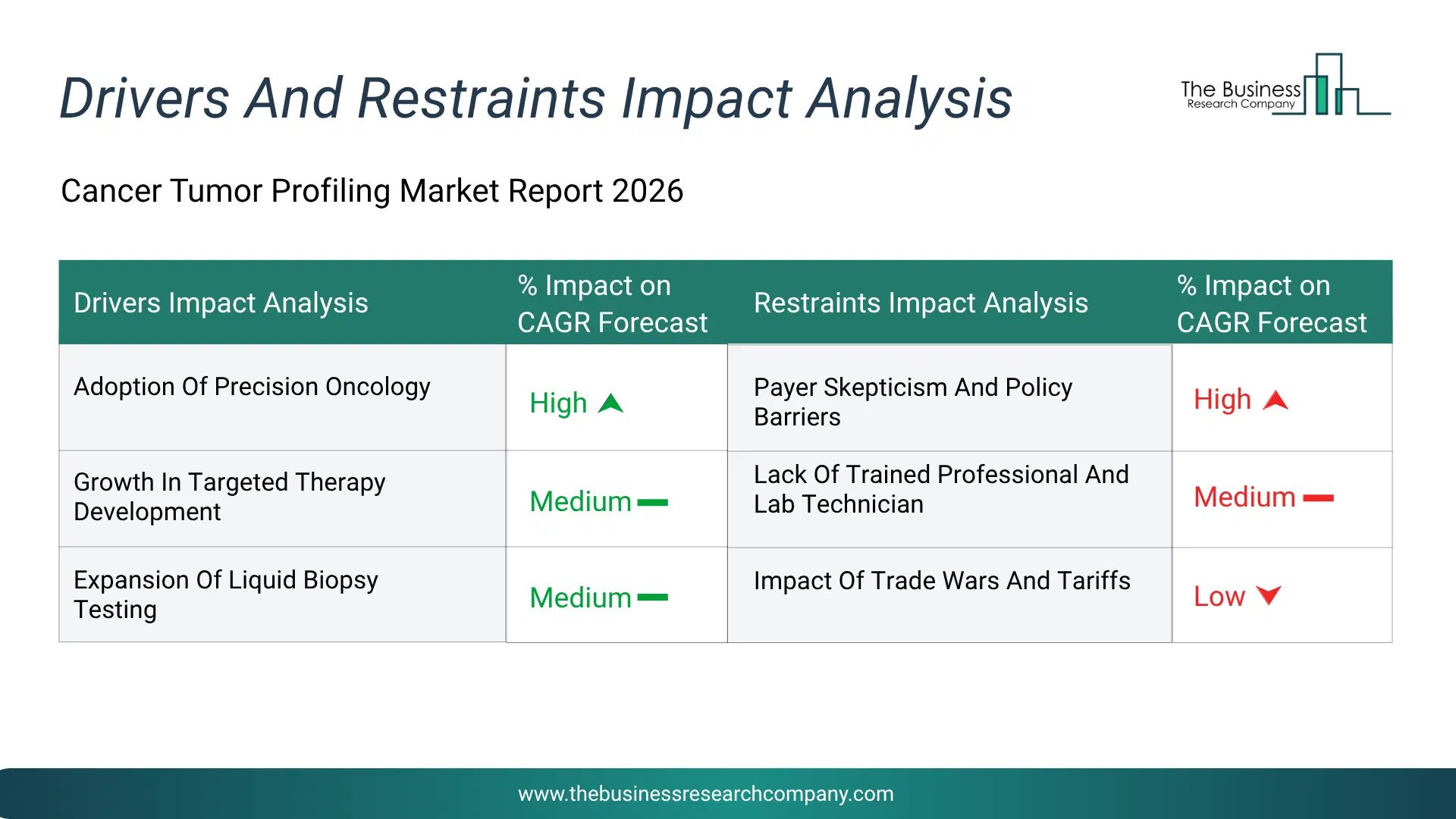
Infographic Chart Showing Key Market Drivers Analysis And Restraints For Cancer Tumor Profiling Market
The chart presents an impact analysis of key drivers and restraints, quantifying their relative influence on the market's growth rate and helping assess the balance between growth enablers and limiting factors. This chart offers a high-level perspective; the full report contains more detailed insights.
How Will The Drivers Impact Growth In The Global Cancer Tumor Profiling Market?
• Adoption Of Precision Oncology (High) – During the forecast period, the adoption of precision oncology is expected to be a key driver propelling growth in the cancer tumor profiling market. Precision Oncology is a personalized cancer treatment approach that uses an individual patient’s genetic, molecular and clinical information to design targeted therapies. Instead of applying a one-size-fits-all treatment, it identifies specific mutations, biomarkers and biological pathways driving a patient’s tumor growth. Cancer tumor profiling supports precision oncology by analyzing the tumor’s DNA (deoxyribonucleic acid), RNA (ribonucleic acid) and protein expression patterns to detect actionable genetic alterations. This detailed molecular insight enables clinicians to select targeted drugs, immunotherapies, or combination treatments that improve efficacy, reduce unnecessary toxicity and enhance overall patient outcomes. Therefore, Adoption Of Precision Oncology may drive the growth of the cancer tumor profiling market. The adoption of precision oncology growth contribution during the forecast period in 2025 is 2.5%. • Growth In Targeted Therapy Development (Medium) – During the forecast period, growth in targeted therapy development is expected to be a key driver propelling growth in the cancer tumor profiling market. Targeted therapy development refers to the process of designing and creating drugs that specifically target molecular abnormalities driving cancer growth, such as mutated genes, overexpressed proteins, or dysregulated signaling pathways. Unlike conventional chemotherapy, which broadly attacks rapidly dividing cells, targeted therapies aim to precisely interfere with cancer-specific mechanisms, improving treatment efficacy while minimizing damage to healthy tissues. Cancer tumor profiling plays a critical role in this development by analyzing the genetic, proteomic and molecular characteristics of a patient’s tumor. Through techniques such as genomic sequencing and biomarker identification, tumor profiling reveals actionable mutations and therapeutic targets. Therefore, growth in targeted therapy development may drive the growth of the cancer tumor profiling market. growth in targeted therapy development during the forecast period in 2025 is 1.5%. • Expansion Of Liquid Biopsy Testing (Medium) – During the forecast period, expansion of liquid biopsy testing is expected to be a key driver propelling growth in the cancer tumor profiling market. Liquid biopsy testing is a non-invasive diagnostic approach that detects cancer-related biomarkers such as circulating tumor DNA (ctDNA), circulating tumor cells (CTCs) and other tumor-derived components in body fluids, primarily blood. It enables real-time monitoring of tumor dynamics without the need for surgical tissue biopsies. By analyzing molecular alterations shed by tumors into the bloodstream, liquid biopsy supports early detection, treatment selection and assessment of therapeutic response. Cancer tumor profiling strengthens liquid biopsy testing by identifying specific genetic mutations, gene expressions and molecular signatures unique to a patient’s tumor. These profiles guide the development of targeted panels used in liquid biopsy assays, improving sensitivity and precision in detecting minimal residual disease and emerging resistance mutations. Therefore, expansion of liquid biopsy testing may drive the growth of the cancer tumor profiling market. The expansion of liquid biopsy testing growth contribution during the forecast period in 2025 is 1.0%. • Integration In Oncology Clinical Trials (Low) – During the forecast period, integration in oncology clinical trials is expected to be a key driver propelling growth in the cancer tumor profiling market. Oncology clinical trials are structured research studies that evaluate the safety, efficacy and optimal use of new drugs, biologics, immunotherapies, radiation protocols, surgical techniques and combination treatments for cancer. These trials are conducted in phased stages to determine appropriate dosing, therapeutic response, side-effect profiles and overall survival outcomes in specific patient populations. Cancer tumor profiling supports oncology clinical trials by analyzing the genetic, molecular and protein characteristics of a patient’s tumor, enabling precise patient stratification and biomarker-driven enrollment. By identifying actionable mutations and molecular signatures, tumor profiling enhances targeted therapy selection, improves trial success rates, reduces heterogeneity and accelerates the development of personalized cancer treatments. Therefore, integration in oncology clinical trials may drive the growth of the cancer tumor profiling market. The integration in oncology clinical trials growth contribution during the forecast period in 2025 is 0.5%.How Will The Restraints Impact Growth In The Global Cancer Tumor Profiling Market?
• Payer Skepticism And Policy Barriers (High) – During the forecast period, payer skepticism and policy barriers are significantly hampering the growth of the cancer tumor profiling market. Uncertain reimbursement landscapes and restrictive coverage policies discourage hospitals, oncology centers and diagnostic laboratories from widely adopting advanced genomic and molecular profiling tests. From a financial and operational perspective, inconsistent reimbursement approvals, high out-of-pocket costs for patients and prolonged claims adjudication processes create revenue unpredictability for test providers and healthcare institutions. In addition, stringent evidence requirements from insurers compel companies to invest heavily in clinical validation studies, health economic analyses and real-world evidence generation before achieving broad coverage. These reimbursement complexities, coupled with fragmented policy frameworks across regions, limit test volumes, slow integration into standard oncology care pathways and constrain expansion into community healthcare settings. As a result, cancer tumor profiling developers and service providers may face delayed commercialization timelines, cautious investment decisions and moderated market penetration despite strong scientific advancements and growing demand for precision oncology. Growth affected by payer skepticism and policy barriers the forecast period in 2025 is -2.0%. • Lack Of Trained Professional And Lab Technician (Medium) – During the forecast period, the lack of trained professionals and lab technicians is significantly hampering the growth of the cancer tumor profiling market. The shortage of skilled molecular diagnosticians and bioinformatics experts limits the operational capacity of diagnostic laboratories and delays test processing timelines. From a commercial and service delivery perspective, insufficient workforce availability increases turnaround times, raises labor costs and constrains the ability of hospitals and independent labs to scale high-throughput sequencing services. Inadequate technical expertise can also elevate the risk of diagnostic errors, inconsistent reporting standards and challenges in interpreting complex genomic data, which may reduce clinician confidence in advanced profiling technologies. Furthermore, the growing complexity of next-generation sequencing platforms and multi-omics analysis tools intensifies the demand for specialized training, certification programs and continuous skill development investments. As a result, cancer tumor profiling providers may experience slower geographic expansion, limited service penetration in emerging healthcare markets and delayed integration of advanced molecular diagnostics into routine oncology workflows. Growth affected by the lack of trained professionals and lab technicians during the forecast period in 2025 is -1.0%. • Impact Of Trade Wars And Tariffs (Medium) – During the forecast period, trade wars and tariffs are significantly hampering the growth of the cancer tumor profiling market. Increased import duties on sequencing systems, reagents and laboratory instruments raise capital expenditure for hospitals, research institutions and diagnostic laboratories, thereby slowing procurement decisions and expansion plans. From an operational standpoint, supply chain disruptions caused by geopolitical tensions lead to shipment delays, limited availability of critical components and higher logistics costs, which collectively affect testing turnaround times and service reliability. Escalating tariffs also increase production costs for manufacturers, compress profit margins and reduce pricing flexibility in competitive markets. Furthermore, uncertainty surrounding cross-border regulatory approvals and export controls discourages long-term investment in global manufacturing partnerships and technology transfers. As a result, cancer tumor profiling companies may experience constrained international expansion, delayed technology upgrades and moderated market growth despite rising demand for precision oncology solutions. Growth affected by impact of trade wars and tariffs during the forecast period in 2025 is -0.3%.Key Players In The Global Cancer Tumor Profiling Market
Major companies operating in the cancer tumor profiling market are F. Hoffmann-La Roche Ltd., Caris Life Sciences, Thermo Fisher Scientific Inc., Illumina Inc., Qiagen, HTG Molecular Diagnostics Inc., NanoString Technologies Inc., NeoGenomics Laboratories Inc., Lucence Health Inc., ACT Genomics Co. LTD, Strand Life Sciences, Exact Sciences Corporation, Guardant Health, Foundation Medicine Inc., Agilent Technologies Inc., Myriad Genetics Inc., Personal Genome Diagnostics Inc., Tempus Labs Inc., ArcherDX Inc., Natera Inc., Bio-Rad Laboratories Inc., Genetron Health, NantHealth Inc., Resolution Bioscience, OncoDNA, Strata Oncology Inc., RareCyte Inc., Inivata Limited, Cepheid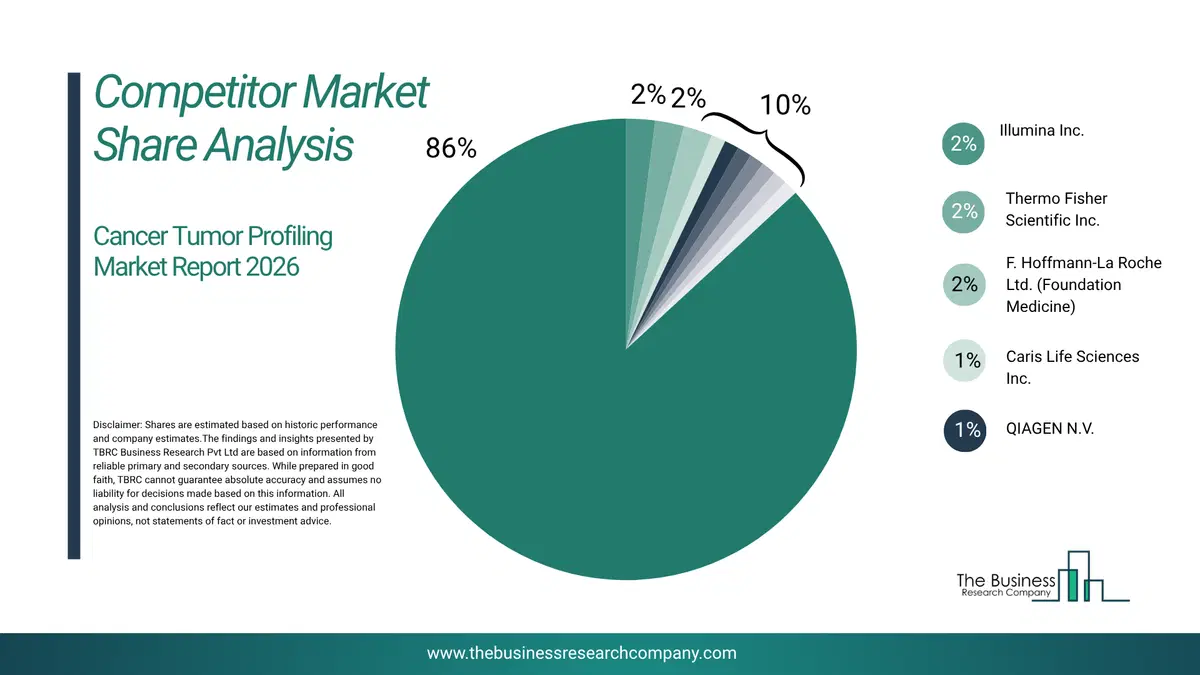
This chart is for illustrative purposes; the full report includes a detailed competitor analysis and comprehensive overview of the top 10 companies in the market.
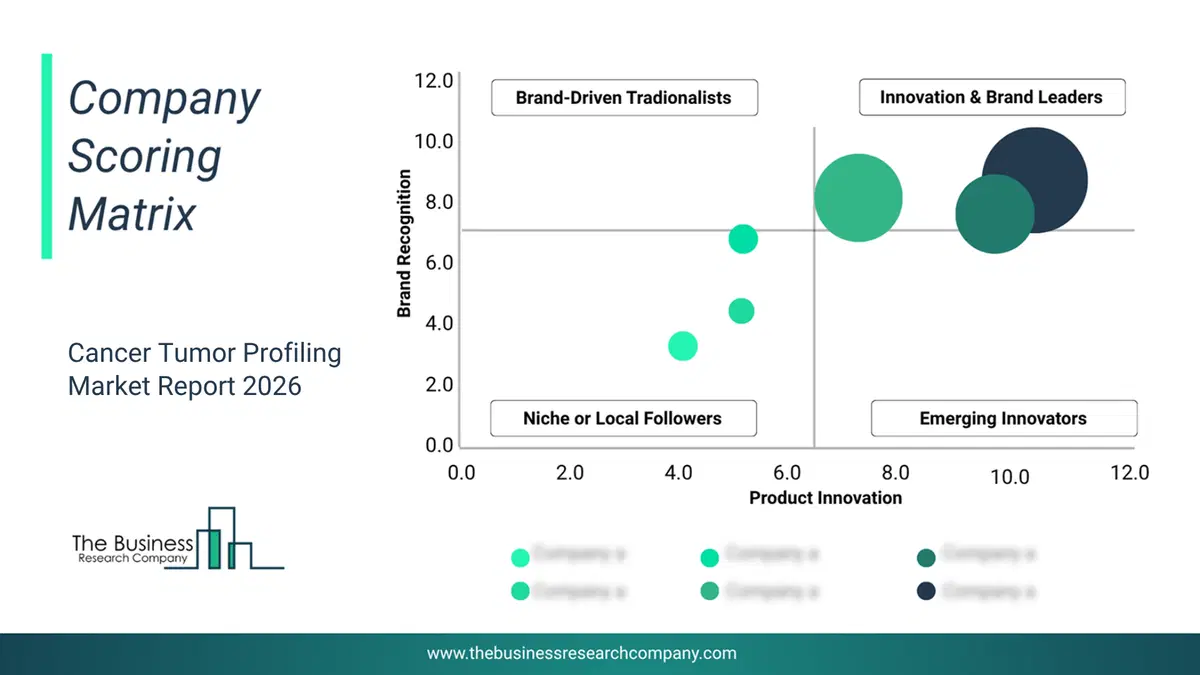
This chart maps companies by product innovation and brand strength, with bubble size indicating relative revenue, helping identify market leaders, challengers, and niche players. This is an illustrative chart; the full report provides a complete and accurate competitive analysis.
What Are Latest Mergers And Acquisitions In The Cancer Tumor Profiling Market?
In February 2024, AbbVie Inc. acquired a US-based pharmaceutical company, ImmunoGen, Inc., for an undisclosed amount. With this acquisition, AbbVie Inc. aims to strengthen its research and development capabilities, diversify its product offerings, and accelerate growth in key therapeutic areas. ImmunoGen, Inc. is a US-based biotechnology company focused on the development of antibody-drug conjugate therapeutics for the treatment of cancer.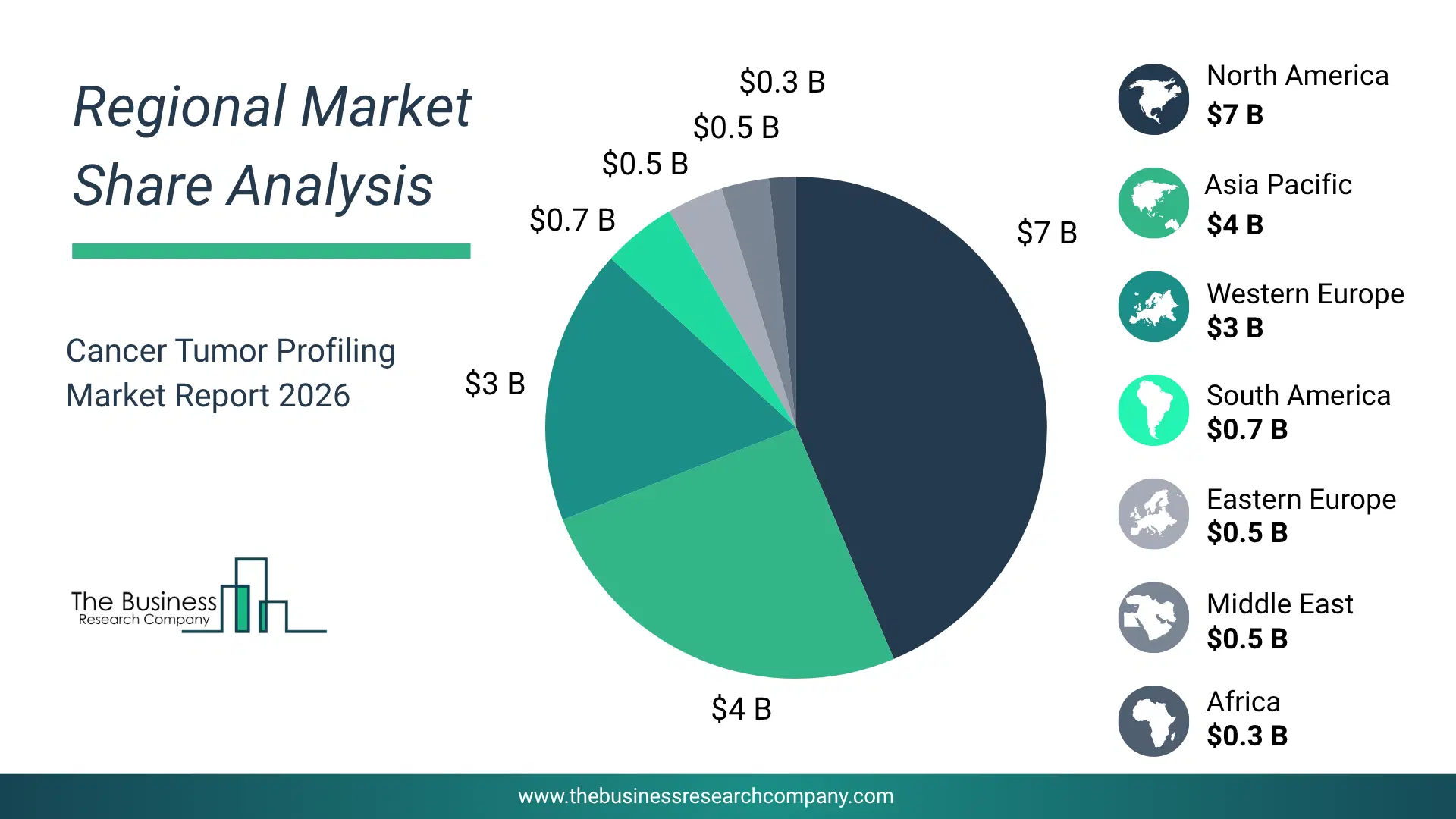
Regional Outlook
North America was the largest region in cancer and tumor profiling market in 2025. Asia-Pacific is expected to be the fastest-growing region in the forecast period. The regions covered in this market report are Asia-Pacific, South East Asia, Western Europe, Eastern Europe, North America, South America, Middle East, Africa. The countries covered in this market report are Australia, Brazil, China, France, Germany, India, Indonesia, Japan, Taiwan, Russia, South Korea, UK, USA, Canada, Italy, Spain.What Defines the Cancer Tumor Profiling Market?
The cancer tumor profiling market includes revenues earned by entities by sanger sequencing, pyro sequencing (PyroSeq), chromogenic/ fluorescence in situ hybridization (CISH/FISH) and fragment analysis (FA/Frag. Analysis). The market value includes the value of related goods sold by the service provider or included within the service offering. Only goods and services traded between entities or sold to end consumers are included.How is Market Value Defined and Measured?
The market value is defined as the revenues that enterprises gain from the sale of goods and/or services within the specified market and geography through sales, grants, or donations in terms of the currency (in USD unless otherwise specified). The revenues for a specified geography are consumption values that are revenues generated by organizations in the specified geography within the market, irrespective of where they are produced. It does not include revenues from resales along the supply chain, either further along the supply chain or as part of other products.
This chart presents market attractiveness based on a quantitative evaluation of growth, competition, strategic alignment, and risk, offering a clear view of opportunity areas for decision-making. This chart is for illustrative purposes; the full report contains the complete analysis.

This chart highlights the Total Addressable Market (TAM) by estimating the maximum revenue opportunity using an assumption-driven approach, supporting strategic planning and opportunity sizing across markets. The chart is illustrative; the full report provides a more comprehensive analysis.
What Key Data and Analysis Are Included in the Cancer Tumor Profiling Market Report 2026?
The cancer tumor profiling market research report is one of a series of new reports from The Business Research Company that provides market statistics, including industry global market size, regional shares, competitors with the market share, detailed market segments, market trends and opportunities, and any further data you may need to thrive in the cancer tumor profiling industry. The market research report delivers a complete perspective of everything you need, with an in-depth analysis of the current and future state of the industry.Cancer Tumor Profiling Market Report Forecast Analysis
| Report Attribute | Details |
|---|---|
| Market Size Value In 2026 | $17.1 billion |
| Revenue Forecast In 2030 | $28.27 billion |
| Growth Rate | CAGR of 14.3% from 2026 to 2030 |
| Base Year For Estimation | 2025 |
| Actual Estimates/Historical Data | 2020-2025 |
| Forecast Period | 2026 - 2030 - 2035 |
| Market Representation | Revenue in USD Billion and CAGR from 2026 to 2030 |
| Segments Covered | Cancer Type, Technology, Process Type, Application |
| Regional Scope | Asia-Pacific, Western Europe, Eastern Europe, North America, South America, Middle East, Africa |
| Country Scope | The countries covered in the report are Australia, Brazil, China, France, Germany, India, Indonesia, Japan, Taiwan, Russia, South Korea, UK, USA, Canada, Italy, Spain. |
| Key Companies Profiled | F. Hoffmann-La Roche Ltd., Caris Life Sciences, Thermo Fisher Scientific Inc., Illumina Inc., Qiagen, HTG Molecular Diagnostics Inc., NanoString Technologies Inc., NeoGenomics Laboratories Inc., Lucence Health Inc., ACT Genomics Co. LTD, Strand Life Sciences, Exact Sciences Corporation, Guardant Health, Foundation Medicine Inc., Agilent Technologies Inc., Myriad Genetics Inc., Personal Genome Diagnostics Inc., Tempus Labs Inc., ArcherDX Inc., Natera Inc., Bio-Rad Laboratories Inc., Genetron Health, NantHealth Inc., Resolution Bioscience, OncoDNA, Strata Oncology Inc., RareCyte Inc., Inivata Limited, Cepheid |
| Customization Scope | Request for Customization |
| Pricing And Purchase Options | Explore Purchase Options |