

Frozen Shrimp Market Report 2026
Global Outlook – By Species (Gulf Shrimp, Giant Tiger Shrimp, Ocean Shrimp, Farmed Whiteleg Shrimp, Black Tiger Shrimp, Royal Red Shrimp, Blue Shrimp), By Source (Conventional, Organic), By Application (Household or Retail Consumption, Food Service or HoReCa (Hotels, Restaurants, Cafes), Food Processing Industry, Ready to Eat Products, Ready to Cook Products), By Distribution Channel (Online, Offline) – Market Size, Trends, Strategies, and Forecast to 2030
Frozen Shrimp Market Overview
• Frozen Shrimp market size has reached to $25.57 billion in 2025 • Expected to grow to $38.83 billion in 2030 at a compound annual growth rate (CAGR) of 8.7% • Growth Driver: High Demand for Convenience Foods Fuels Growth in Frozen Shrimp Market • Market Trend: Innovation in the Frozen Shrimp Market By Introducing Frozen Shrimp Dumplings • Europe was the largest region in 2025 and North America is the fastest growing region.Market Gains By 2030 – Top Opportunities By Segment
Market Gain identifies the most promising market opportunities by highlighting the segments or products expected to generate the highest incremental revenue growth over the next five years.
What Is Covered Under Frozen Shrimp Market?
Frozen shrimp refers to shrimp that has been caught, processed, and promptly frozen to maintain its freshness and taste. Frozen shrimp maintains its high quality and freshness because it is promptly frozen right after being harvested, which helps preserve its nutrients and flavor effectively. The main species in the frozen shrimp market are gulf shrimp, banded coral shrimp, giant tiger shrimp, ocean shrimp, farmed whiteleg shrimp, royal red shrimp, and blue shrimp. Gulf shrimp are a variety of shrimp found in the Gulf of Mexico, known for their sweet flavor and firm texture. The various sources include conventional and organic and several applications such as food, pharmaceuticals, cosmetics, industrial, and biotechnology. They are distributed by online and offline channels.
What Is The Frozen Shrimp Market Size and Share 2026?
The frozen shrimp market size has grown strongly in recent years. It will grow from $25.57 billion in 2025 to $27.81 billion in 2026 at a compound annual growth rate (CAGR) of 8.8%. The growth in the historic period can be attributed to expansion of aquaculture farming, rising global shrimp consumption, improved freezing and processing technologies, growth of international seafood trade, increased investment in shrimp processing facilities.What Is The Frozen Shrimp Market Growth Forecast?
The frozen shrimp market size is expected to see strong growth in the next few years. It will grow to $38.83 billion in 2030 at a compound annual growth rate (CAGR) of 8.7%. The growth in the forecast period can be attributed to growing demand for certified sustainable shrimp, expansion of cold chain logistics, rising preference for convenience seafood products, increasing regulatory focus on food safety compliance, innovation in shrimp farming practices. Major trends in the forecast period include increasing adoption of individually quick frozen shrimp, rising demand for farmed shrimp varieties, growing emphasis on traceability and quality assurance, expansion of frozen shrimp product lines, enhanced focus on export-oriented processing.
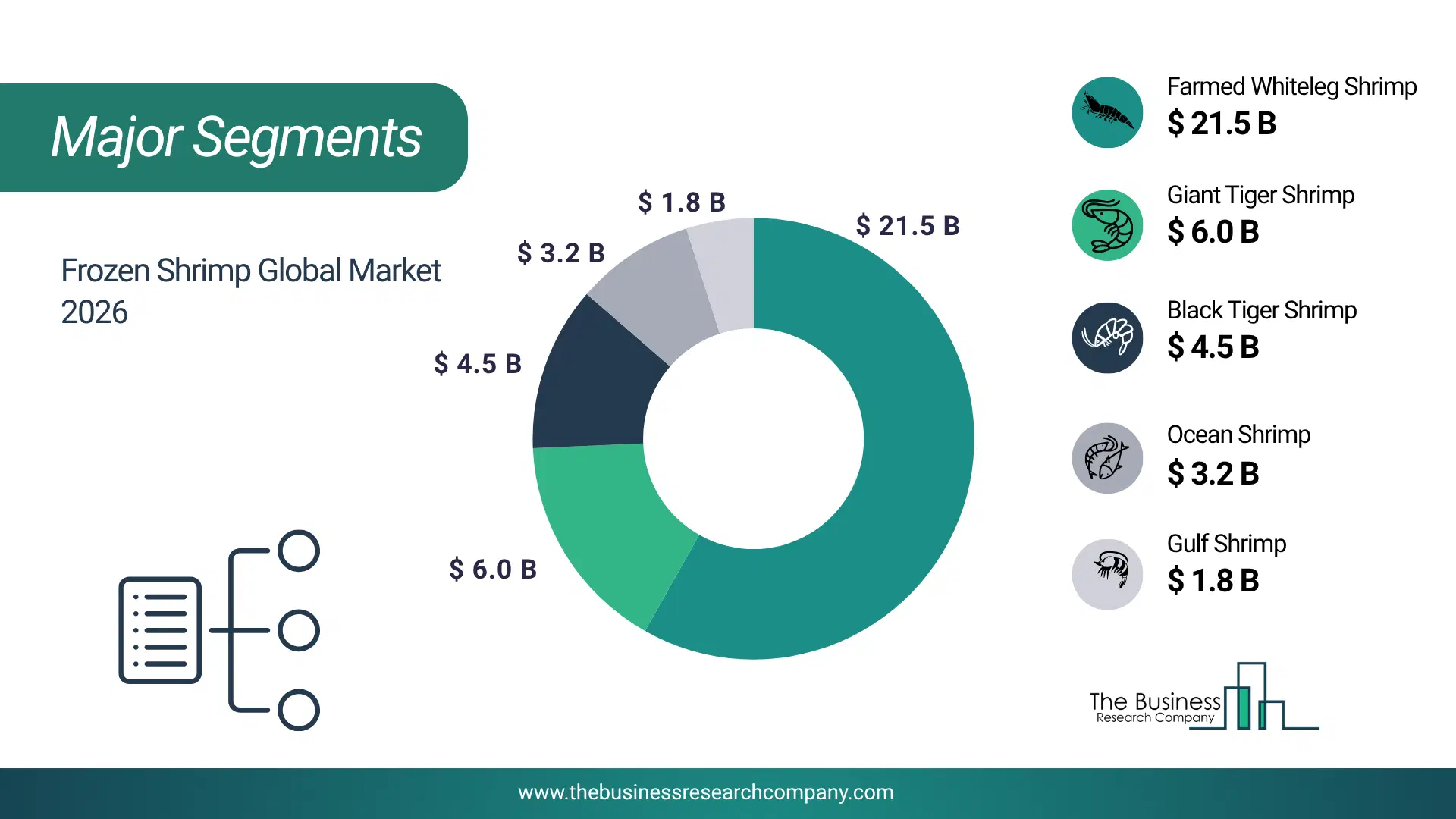
Global Frozen Shrimp Market Segmentation
1) By Species: Gulf Shrimp, Giant Tiger Shrimp, Ocean Shrimp, Farmed Whiteleg Shrimp, Black Tiger Shrimp, Royal Red Shrimp, Blue Shrimp 2) By Source: Conventional, Organic 3) By Application: Household or Retail Consumption, Food Service or HoReCa (Hotels, Restaurants, Cafes), Food Processing Industry, Ready to Eat Products, Ready to Cook Products 4) By Distribution Channel: Online, Offline Subsegments: 1) By Gulf Shrimp: Brown Gulf Shrimp, White Gulf Shrimp, Pink Gulf Shrimp 2) By Giant Tiger Shrimp: Wild-Caught Giant Tiger Shrimp, Farmed Giant Tiger Shrimp 3) By Ocean Shrimp: Wild-Caught Ocean Shrimp, Farmed Ocean Shrimp 4) By Farmed Whiteleg Shrimp: Pacific Whiteleg Shrimp 5) By Black Tiger Shrimp: Black Tiger Shrimp (Farmed) 6) By Royal Red Shrimp: Wild-Caught Royal Red Shrimp, Frozen Royal Red Shrimp 7) By Blue Shrimp: Wild-Caught Blue Shrimp, Farmed Blue Shrimp The top segments in the frozen shrimp market will be: • Farmed Whiteleg Shrimp will reach $21.51 billion by 2030. • Giant Tiger Shrimp will reach $5.97 billion by 2030. • Black Tiger Shrimp will reach $4.48 billion by 2030. • Ocean Shrimp will reach $3.21 billion by 2030. • Gulf Shrimp will reach $1.83 billion by 2030.What Is The Driver Of The Frozen Shrimp Market?
The high demand for convenience foods is expected to propel the growth of the frozen shrimp market going forward. Convenience foods are ready-to-eat or easy-to-make meals that save cooking time and effort. High demand for convenience foods attributed to busy schedules and the need for fast, easy meal options drive the popularity of convenience foods, especially among working people and families with limited time to cook. Frozen shrimp contributes to convenience foods by offering a versatile, time-saving, and consistently high-quality ingredient that extends shelf life and simplifies meal preparation. For instance, in April 2024, according to the National Association of Convenience Stores, a US-based association representing the convenience and fuel retailing industry, in 2023, foodservice sales, including prepared foods, commissary items, and dispensed beverages, made up 26.9% of in-store sales, an increase from 25.6% in 2022. Additionally, sales of prepared foods per store per month rose by 12.2% in 2023 compared to 2022. Therefore, the high demand for convenience foods will drive the frozen shrimp industry.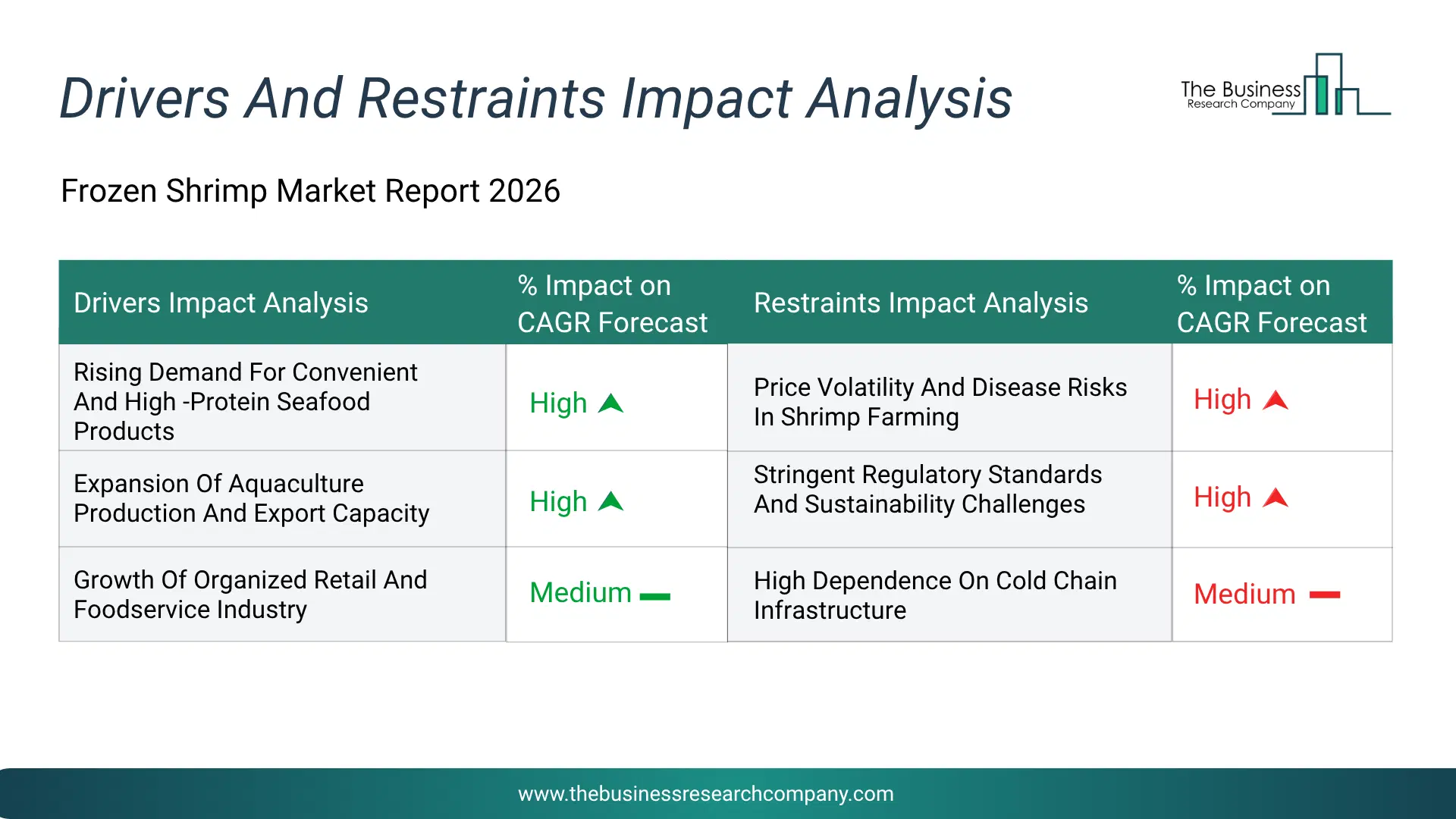
Infographic Chart Showing Key Market Drivers Analysis And Restraints For Frozen Shrimp Market
The chart presents an impact analysis of key drivers and restraints, quantifying their relative influence on the market's growth rate and helping assess the balance between growth enablers and limiting factors. This chart offers a high-level perspective; the full report contains more detailed insights.
How Will The Drivers Impact Growth In The Global Frozen Shrimp Market?
• Rising Demand For Convenient And High -Protein Seafood Products (High) – During the forecast period, the rising demand for convenient and high -protein seafood products is expected to become a key growth driver for the frozen shrimp market by 2030. The rising global demand for convenient and protein -rich seafood products acts as a primary growth driver for the frozen shrimp market. Increasing urbanization, busy lifestyles, and growing preference for ready -to -cook meal solutions are accelerating consumption across retail and foodservice channels. Frozen shrimp offers longer shelf life, ease of storage, and minimal preparation time, making it attractive to both households and restaurants. Additionally, shrimp is widely perceived as a healthy, low -fat, high -protein seafood option, further strengthening consumer demand across developed and emerging economies. • Expansion Of Aquaculture Production And Export Capacity (High) – During the forecast period, the expansion of aquaculture production and export capacity is expected to emerge as a major factor driving the expansion of the frozen shrimp market by 2030. Expansion of aquaculture production and technological advancements in shrimp farming significantly drive market growth. Improvements in breeding techniques, feed efficiency, disease management, and cold chain logistics have enhanced production volumes and product quality. Countries such as india, vietnam, ecuador, and indonesia are increasing shrimp exports supported by modern processing facilities. The growing reliability of farmed whiteleg shrimp supply ensures stable year-round availability, strengthening international trade and retail distribution networks. • Growth Of Organized Retail And Foodservice Industry (Medium) – During the forecast period, the growth of organized retail and foodservice industry is expected to act as a key growth catalyst for the frozen shrimp market by 2030. Growth in organized retail, e-commerce grocery platforms, and global foodservice chains further boosts the frozen shrimp market. Supermarkets, hypermarkets, and online grocery channels provide wider product variety, attractive packaging, and improved cold storage infrastructure. The rapid expansion of quick-service restaurants (qsrs) and seafood-based menu innovations increases bulk demand for frozen shrimp. As international cuisine gains popularity, especially asian and mediterranean dishes, frozen shrimp consumption continues to expand in both developed and emerging markets.How Will The Restraints Impact Growth In The Global Frozen Shrimp Market?
• Price Volatility And Disease Risks In Shrimp Farming (High) – During the forecast period, the price volatility and disease outbreaks in shrimp farming act as major restraints for the frozen shrimp market. Fluctuations in feed costs, climate conditions, and international trade tariffs can significantly impact shrimp prices and export margins. Additionally, outbreaks such as early mortality syndrome (ems) and other viral diseases disrupt production cycles and reduce yields. These uncertainties create supply chain instability and affect long-term profitability for producers and exporters. • Stringent Regulatory Standards And Sustainability Challenges (High) – During the forecast period, the stringent food safety regulations and sustainability concerns also restrain market growth to some extent. Import restrictions, quality standards, antibiotic residue limits, and traceability requirements increase compliance costs for exporters. Moreover, environmental concerns related to aquaculture practices and overfishing create pressure for sustainable certifications. Smaller producers may face challenges in meeting global regulatory standards, potentially limiting market participation and slowing expansion. • High Dependence On Cold Chain Infrastructure (Medium) – During the forecast period, the high dependence on cold chain infrastructure acts as a restraint for the frozen shrimp market by increasing operational complexity and overall distribution costs. Maintaining consistent low temperatures throughout storage, transportation, and retail stages is essential to preserve product quality and prevent spoilage. Any disruption in refrigeration systems or logistics can lead to significant product losses and reduced shelf life. In developing regions, limited cold chain availability further restricts market penetration and export efficiency. This dependency increases investment requirements and reduces flexibility in supply chain operations.Key Players In The Global Frozen Shrimp Market
Major companies operating in the frozen shrimp market are Thai Union Group PCL, Austevoll Seafood ASA, Pacific Seafood, High Liner Foods Inc., Royal Greenland A/S, Clearwater Seafoods, Devi Seafoods Ltd., Ocean Choice International, Omarsa S.A., Surapon Foods Plc., Apex Frozen Foods Limited, Aqua Star, Nordic Seafood A/S, Minh Phu Seafood Corporation, Blue Star Seafood Co. Ltd., SeaPak Shrimp Company, Grand Ocean Seafoods Co. Ltd., Charoen Pokphand Foods Public Co. Ltd., Zhanjiang Guolian Aquatic Products Co. Ltd., Avanti Feeds Limited, Nekkanti Sea Foods, Sandhya Aqua Export Pvt Ltd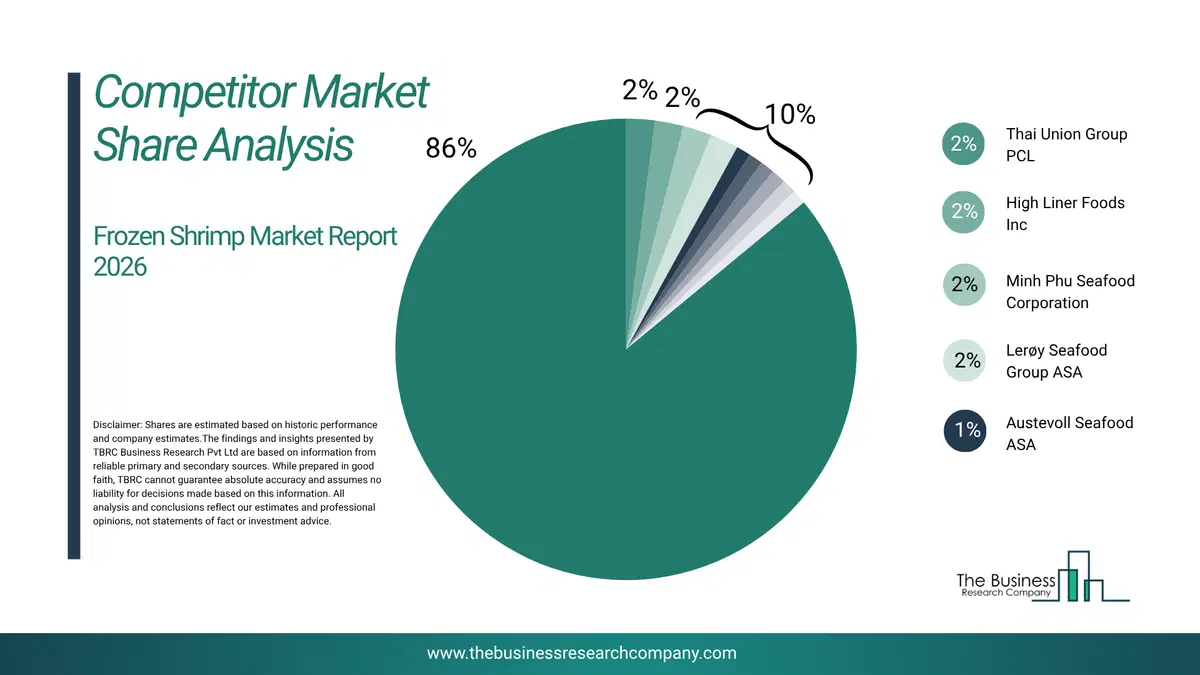
This chart is for illustrative purposes; the full report includes a detailed competitor analysis and comprehensive overview of the top 10 companies in the market.
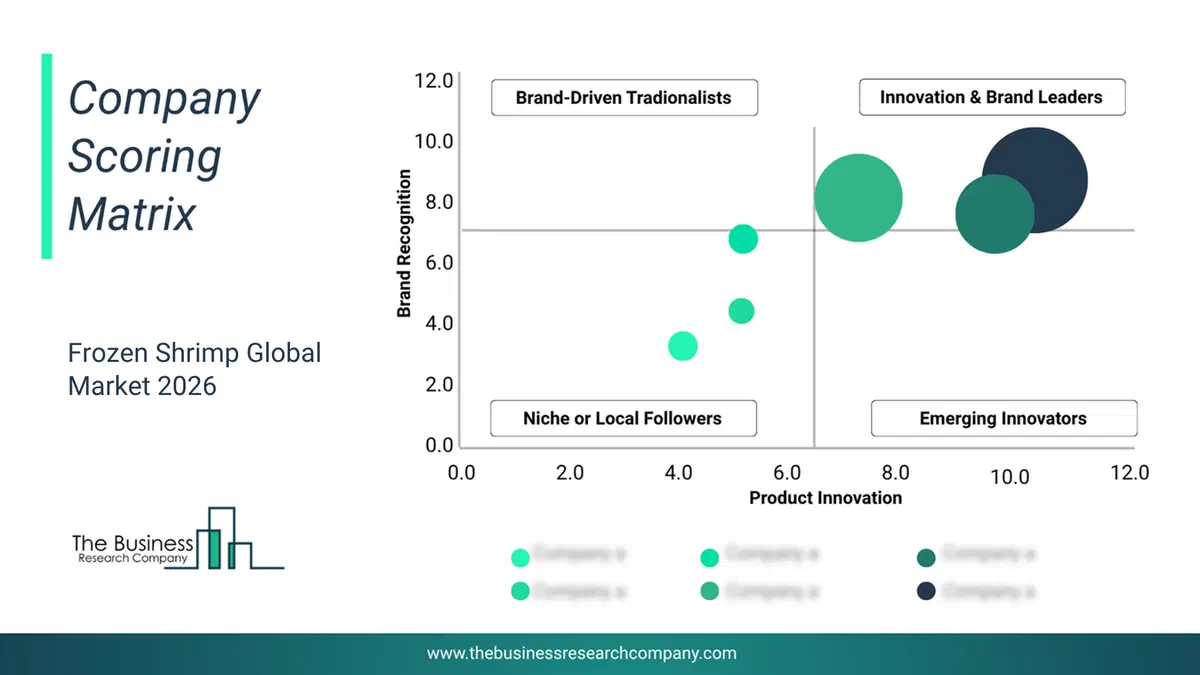
This chart maps companies by product innovation and brand strength, with bubble size indicating relative revenue, helping identify market leaders, challengers, and niche players. This is an illustrative chart; the full report provides a complete and accurate competitive analysis.
Global Frozen Shrimp Market Trends and Insights
Major companies operating in the frozen shrimp market are developing innovative products, such as frozen dumplings, to cater to the growing demand for convenient and high-quality seafood options that appeal to consumers looking for quick and easy meal solutions. Frozen dumplings are pre-made, often partially cooked dumplings that have been frozen to preserve their freshness and extend their shelf life. For instance, in May 2024, Sanquan Food Co. Ltd. and Synear, China-based frozen food manufacturing companies, introduced frozen shrimp dumplings marketed as nutritious for children. The dumplings are positioned to target China's lucrative kids' food market, which is seeing growing demand for convenient, healthy, and tasty options.What Are Latest Mergers And Acquisitions In The Frozen Shrimp Market?
In September 2025, Suempol Sp. z o.o., a Poland-based salmon and seafood processing company, acquired Van Biesen & Pieters, for an undisclosed amount. Through this acquisition, Suempol aims to expand its frozen shrimp product offerings, revitalize shrimp preparation and distribution, and strengthen its position in the European seafood market. Van Biesen & Pieters is a Belgium-based shrimp-processing firm, specializes in processing various shrimp products, including wild-caught North Sea shrimp, and has established a strong reputation in the Belgian seafood industry.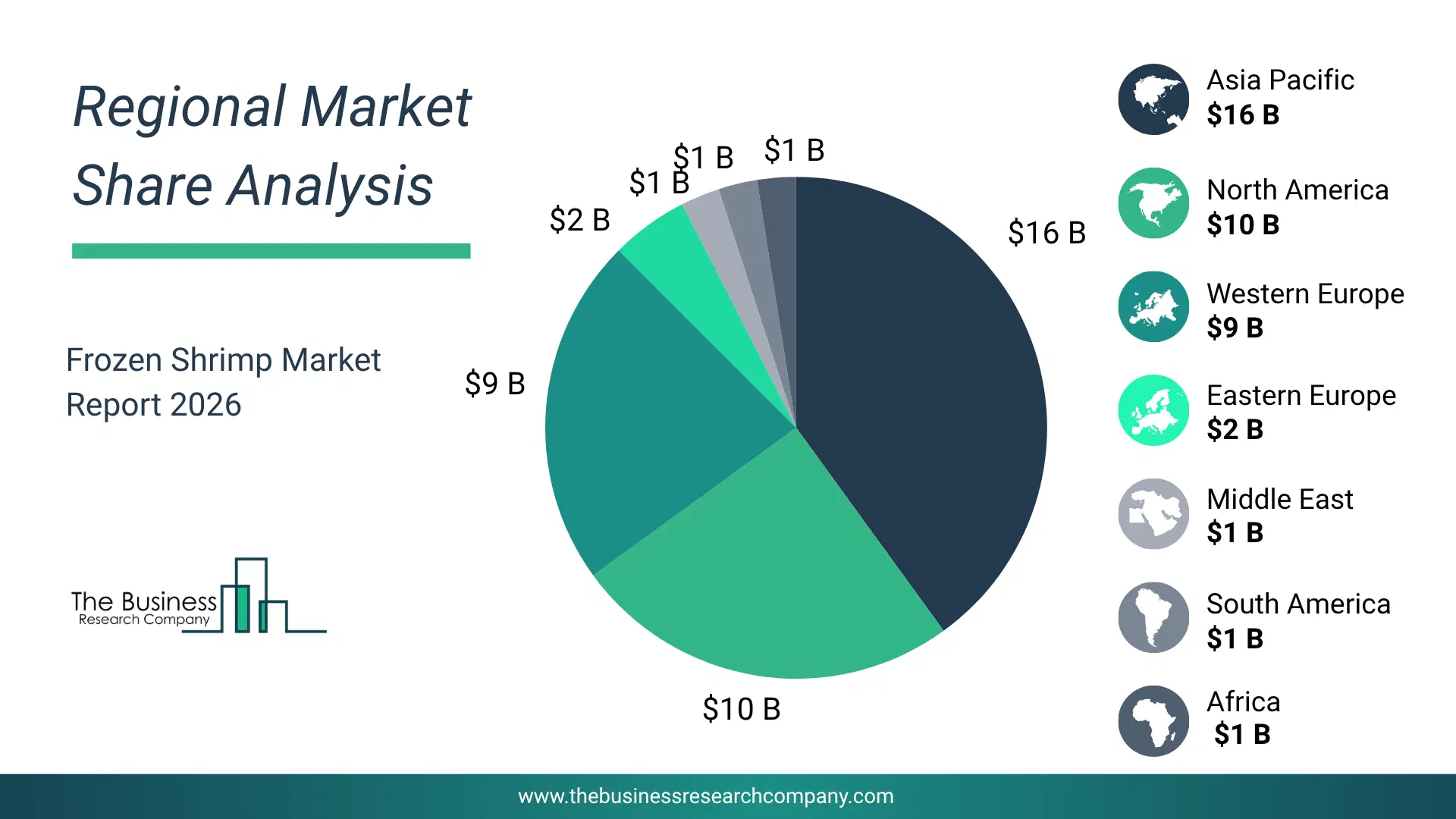
Regional Outlook
Europe was the largest region in the frozen shrimp market in 2025. North America is expected to be the fastest-growing region in the forecast period. The regions covered in this market report are Asia-Pacific, South East Asia, Western Europe, Eastern Europe, North America, South America, Middle East and Africa. The countries covered in this market report are Australia, Brazil, China, France, Germany, India, Indonesia, Japan, Taiwan, Russia, South Korea, UK, USA, Italy, Spain, CanadaWhat Defines the Frozen Shrimp Market?
The frozen shrimp market consists of sales of raw frozen shrimp, cooked frozen shrimp, flavored or marinated shrimp, organic shrimp, blast freezers, vacuum-sealed bags, trays, boxes, cold storage facilities and warehouses, and containers. Values in this market are ‘factory gate’ values, that is, the value of goods sold by the manufacturers or creators of the goods, whether to other entities (including downstream manufacturers, wholesalers, distributors, and retailers) or directly to end customers. The value of goods in this market includes related services sold by the creators of the goods.How is Market Value Defined and Measured?
The market value is defined as the revenues that enterprises gain from the sale of goods and/or services within the specified market and geography through sales, grants, or donations in terms of the currency (in USD unless otherwise specified). The revenues for a specified geography are consumption values that are revenues generated by organizations in the specified geography within the market, irrespective of where they are produced. It does not include revenues from resales along the supply chain, either further along the supply chain or as part of other products.
This chart presents market attractiveness based on a quantitative evaluation of growth, competition, strategic alignment, and risk, offering a clear view of opportunity areas for decision-making. This chart is for illustrative purposes; the full report contains the complete analysis.

This chart highlights the Total Addressable Market (TAM) by estimating the maximum revenue opportunity using an assumption-driven approach, supporting strategic planning and opportunity sizing across markets. The chart is illustrative; the full report provides a more comprehensive analysis.
What Key Data and Analysis Are Included in the Frozen Shrimp Market Report 2026?
The frozen shrimp market research report is one of a series of new reports from The Business Research Company that provides market statistics, including industry global market size, regional shares, competitors with the market share, detailed market segments, market trends and opportunities, and any further data you may need to thrive in the frozen shrimp industry. The market research report delivers a complete perspective of everything you need, with an in-depth analysis of the current and future state of the industry.Frozen Shrimp Market Report Forecast Analysis
| Report Attribute | Details |
|---|---|
| Market Size Value In 2026 | $27.81 billion |
| Revenue Forecast In 2030 | $38.83 billion |
| Growth Rate | CAGR of 8.8% from 2026 to 2030 |
| Base Year For Estimation | 2025 |
| Actual Estimates/Historical Data | 2020-2025 |
| Forecast Period | 2026 - 2030 |
| Market Representation | Revenue in USD Billion and CAGR from 2026 to 2030 |
| Segments Covered | Species, Source, Application, Distribution Channel |
| Regional Scope | Asia-Pacific, Western Europe, Eastern Europe, North America, South America, Middle East, Africa |
| Country Scope | The countries covered in the report are Australia, Brazil, China, France, Germany, India, Indonesia, Japan, Taiwan, Russia, South Korea, UK, USA, Canada, Italy, Spain. |
| Key Companies Profiled | Thai Union Group PCL, Austevoll Seafood ASA, Pacific Seafood, High Liner Foods Inc., Royal Greenland A/S, Clearwater Seafoods, Devi Seafoods Ltd., Ocean Choice International, Omarsa S.A., Surapon Foods Plc., Apex Frozen Foods Limited, Aqua Star, Nordic Seafood A/S, Minh Phu Seafood Corporation, Blue Star Seafood Co. Ltd., SeaPak Shrimp Company, Grand Ocean Seafoods Co. Ltd., Charoen Pokphand Foods Public Co. Ltd., Zhanjiang Guolian Aquatic Products Co. Ltd., Avanti Feeds Limited, Nekkanti Sea Foods, Sandhya Aqua Export Pvt Ltd |
| Customization Scope | Request for Customization |
| Pricing And Purchase Options | Explore Purchase Options |