

Neutralizing Antibody Market Report 2026
Global Outlook – By Antibody Type (Monoclonal Antibodies, Polyclonal Antibodies), By Target Virus (SARS-CoV-2 (COVID-19), Human Immunodeficiency Viruses (HIV), Influenza, Ebola, Zika, Hepatitis C, Other Target Viruses), By Distribution Channel (Direct Sales To End-Users, Distributors, Online Retail, Other Distribution Channels), By Application (Therapeutics, Diagnostics, Research And Development), By End User (Hospitals And Clinics, Research Institutes, Diagnostic Laboratories, Pharmaceutical Companies, Other End Users) – Market Size, Trends, Strategies, and Forecast to 2030
Neutralizing Antibody Market Overview
• Neutralizing Antibody market size has reached to $257.81 billion in 2025 • Expected to grow to $447.16 billion in 2030 at a compound annual growth rate (CAGR) of 11.6% • Growth Driver: Rising Prevalence Of Infectious Diseases Fueling The Growth Of The Market Due To Increasing Global Travel And Pathogen Spread • Market Trend: Advancements In Antibody Engineering Improve Patient Outcomes And Immunity • North America was the largest region in 2025 and Asia-Pacific is the fastest growing region.Market Gains By 2030 – Top Opportunities By Segment
Market Gain identifies the most promising market opportunities by highlighting the segments or products expected to generate the highest incremental revenue growth over the next five years.
What Is Covered Under Neutralizing Antibody Market?
A neutralizing antibody is a type of antibody that binds specifically to a virus or pathogen and blocks its ability to infect host cells. Its primary purpose is to prevent infection by neutralizing the pathogen’s harmful effects, thereby preventing disease progression. The main antibody types of neutralizing antibody are monoclonal antibodies, and polyclonal antibodies. Monoclonal antibodies refer to laboratory-produced molecules that are designed to bind specifically to one type of antigen, such as a virus or cancer cell. It targets various viruses, including SARS-CoV-2 (COVID-19), human immunodeficiency viruses (HIV), influenza, Ebola, Zika, hepatitis C, and others. The distribution channels include direct sales to end-users, distributors, online retail, and others, while applications span therapeutics, diagnostics, and research and development, serving end-users such as hospitals and clinics, research institutes, diagnostic laboratories, pharmaceutical companies, and others.
What Is The Neutralizing Antibody Market Size and Share 2026?
The neutralizing antibody market size has grown rapidly in recent years. It will grow from $257.81 billion in 2025 to $288.51 billion in 2026 at a compound annual growth rate (CAGR) of 11.9%. The growth in the historic period can be attributed to emergence of viral outbreaks like sars-cov-2, development of early monoclonal antibody platforms, increasing r&d in immunology, adoption of antibodies in diagnostic assays, reliance on animal-derived polyclonal antibodies.What Is The Neutralizing Antibody Market Growth Forecast?
The neutralizing antibody market size is expected to see rapid growth in the next few years. It will grow to $447.16 billion in 2030 at a compound annual growth rate (CAGR) of 11.6%. The growth in the forecast period can be attributed to advancements in fully human and humanized monoclonal antibodies, growth in recombinant polyclonal antibody technology, rising global demand for covid-19 and influenza therapeutics, increasing collaboration between pharma and biotech companies, expansion of antibody research in emerging markets. Major trends in the forecast period include rising investment in neutralizing antibody therapeutics, expansion of monoclonal and polyclonal antibody development, increasing applications in viral diagnostics and research, growing focus on personalized medicine and targeted therapies, enhanced regulatory oversight and compliance for antibody production.
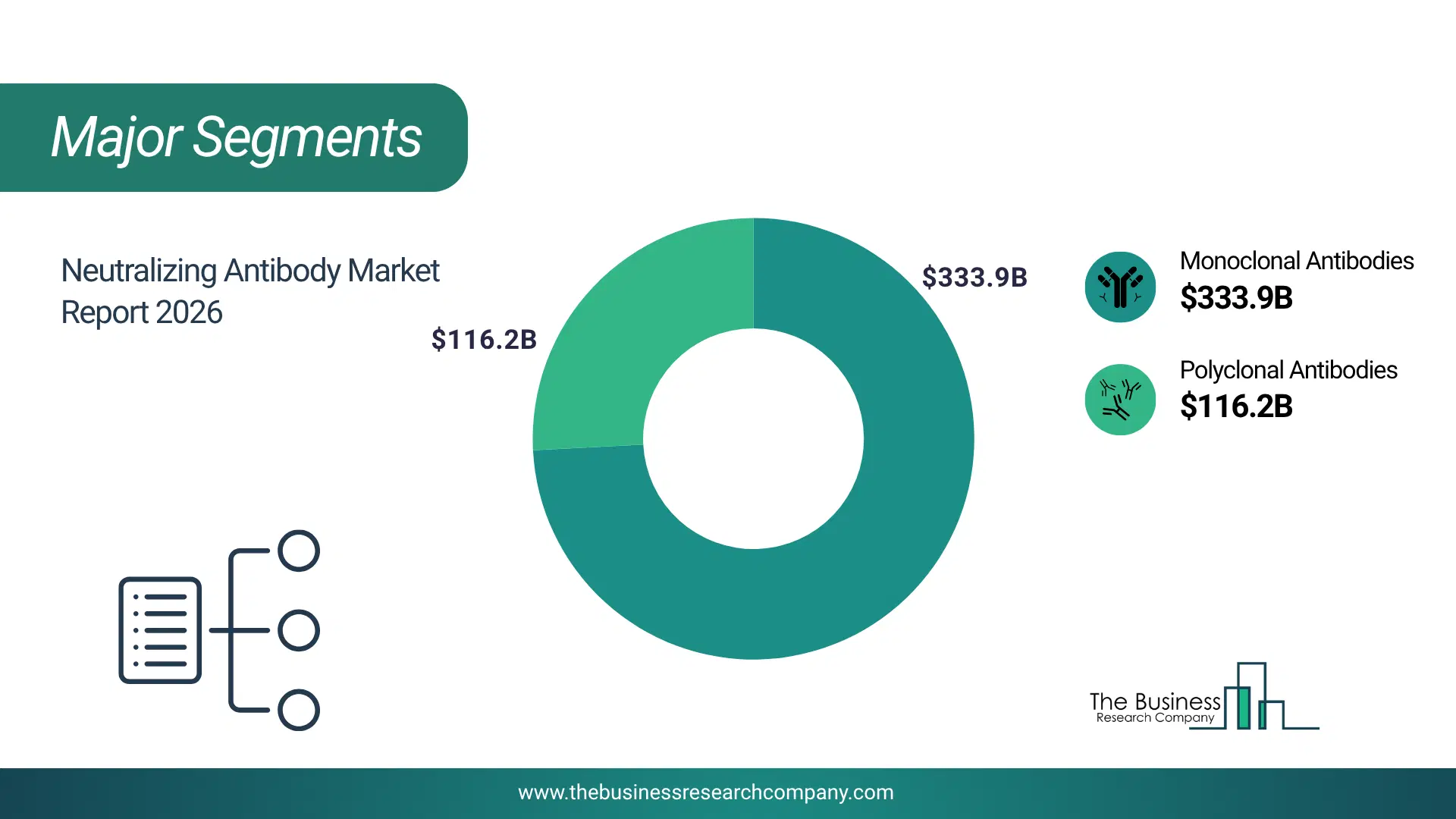
Global Neutralizing Antibody Market Segmentation
1) By Antibody Type: Monoclonal Antibodies, Polyclonal Antibodies 2) By Target Virus: SARS-CoV-2 (COVID-19), Human Immunodeficiency Viruses (HIV), Influenza, Ebola, Zika, Hepatitis C, Other Target Viruses 3) By Distribution Channel: Direct Sales To End-Users, Distributors, Online Retail, Other Distribution Channels 4) By Application: Therapeutics, Diagnostics, Research And Development 5) By End User: Hospitals And Clinics, Research Institutes, Diagnostic Laboratories, Pharmaceutical Companies, Other End Users Subsegments: 1) By Monoclonal Antibodies: Fully Human Monoclonal Antibodies, Humanized Monoclonal Antibodies, Chimeric Monoclonal Antibodies, Murine Monoclonal Antibodies 2) By Polyclonal Antibodies: Animal-Derived Polyclonal Antibodies, Recombinant Polyclonal Antibodies, Human Polyclonal Antibody Preparations The top segments in the neutralizing antibody market will be: • Monoclonal Antibodies will reach $333.82 billion by 2030. • Polyclonal Antibodies will reach $116.12 billion by 2030.What Is The Driver Of The Neutralizing Antibody Market?
The rising prevalence of infectious diseases is expected to propel the growth of the neutralizing antibody market going forward. Infectious diseases refer to illnesses caused by harmful microorganisms such as bacteria, viruses, fungi, or parasites that can spread directly or indirectly from one person to another. The rising prevalence of infectious diseases is due to increased travel, which facilitates the rapid spread of pathogens across borders. Neutralizing antibodies enhance infectious disease treatment by specifically targeting and blocking pathogens, making them effective in preventing disease progression. They improve patient outcomes by providing precise and timely immune protection. For instance, in February 2024, according to the UK Health Security Agency, a UK-based government agency, tuberculosis (a contagious bacterial infection that primarily affects the lungs) cases in England rose to 4,850 in 2023, an increase of 10.7% from 4,380 cases in 2022. Therefore, the rising prevalence of infectious diseases is driving the growth of the neutralizing antibody industry.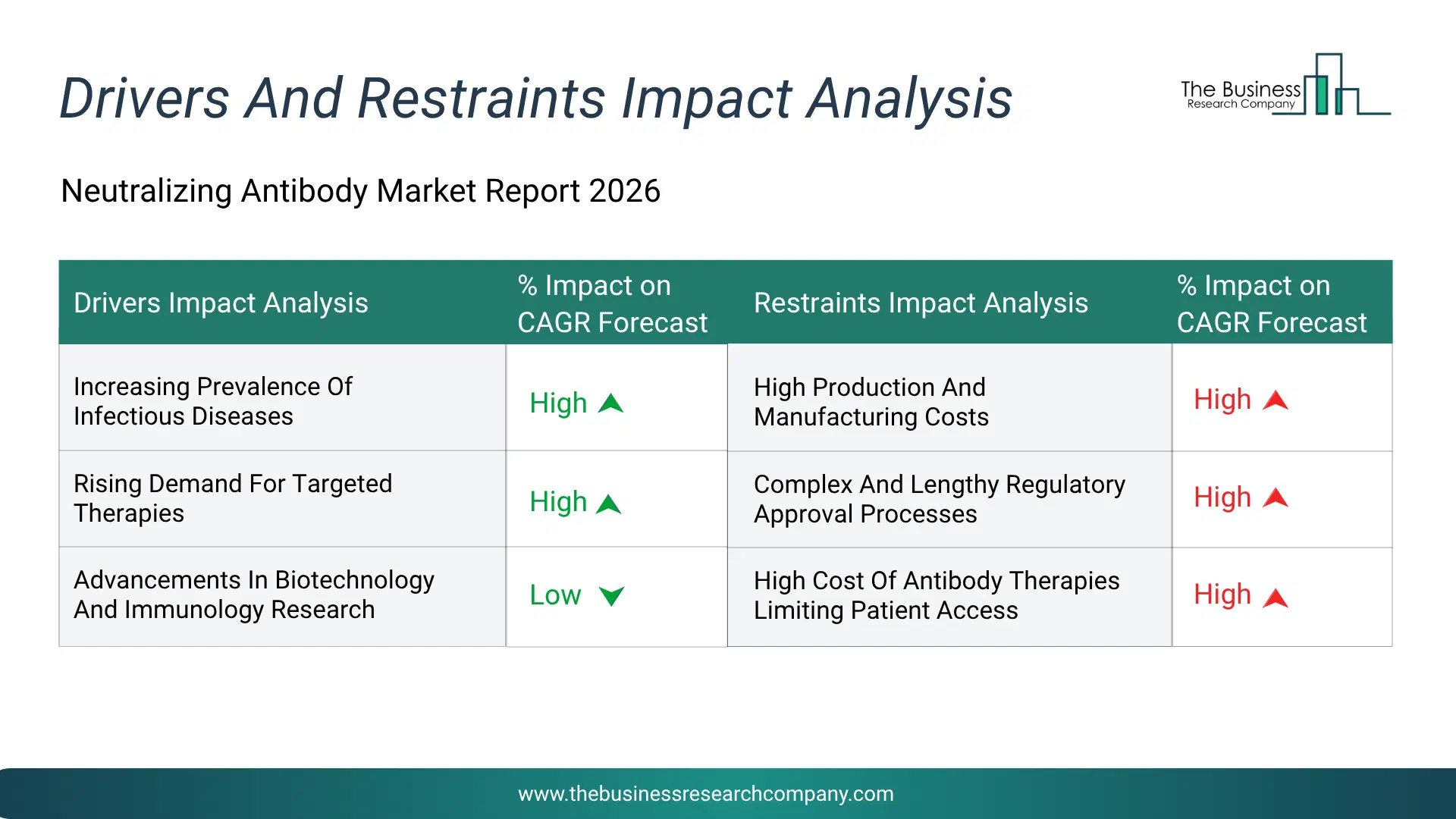
Infographic Chart Showing Key Market Drivers Analysis And Restraints For Neutralizing Antibody Market
The chart presents an impact analysis of key drivers and restraints, quantifying their relative influence on the market's growth rate and helping assess the balance between growth enablers and limiting factors. This chart offers a high-level perspective; the full report contains more detailed insights.
How Will The Drivers Impact Growth In The Global Neutralizing Antibody Market?
• Increasing Prevalence Of Infectious Diseases (High) – During the forecast period, the increasing prevalence of infectious diseases is expected to become a key growth driver for the neutralizing antibody market by 2030. The rising incidence of viral outbreaks such as covid -19, influenza, and emerging zoonotic diseases is accelerating the demand for effective therapeutic and preventive solutions. Neutralizing antibodies play a critical role in inhibiting viral entry and replication, making them essential in modern treatment protocols. Healthcare systems and governments are therefore investing heavily in preparedness and response capabilities. This growing disease burden is reinforcing sustained demand for antibody -based therapies. • Rising Demand For Targeted Therapies (High) – During the forecast period, the rising demand for targeted therapies is expected to emerge as a major factor driving the expansion of the neutralizing antibody market by 2030. Precision medicine approaches are gaining traction, with therapies designed to specifically target pathogens or disease pathways while minimizing side effects. Neutralizing antibodies offer high specificity and improved clinical outcomes, making them a preferred choice in modern therapeutics. Pharmaceutical companies are increasingly focusing on developing personalized biologics to enhance treatment efficacy. • Advancements In Biotechnology And Immunology Research (Low) – During the forecast period, advancements in biotechnology and immunology research are expected to act as a key growth catalyst for the neutralizing antibody market by 2030. Continuous innovations in antibody discovery, engineering, and production technologies are enabling faster development of highly effective biologics. Breakthroughs in areas such as recombinant dna technology, high-throughput screening, and cell line development are improving scalability and reducing production costs. These advancements are expanding the scope of antibody applications across therapeutics, diagnostics, and research.How Will The Restraints Impact Growth In The Global Neutralizing Antibody Market?
• High Production And Manufacturing Costs (High) – During the forecast period, the high production and manufacturing costs act as a restraint on the neutralizing antibody market because developing and producing these antibodies requires complex biotechnological processes and specialized manufacturing facilities. The production of high-quality antibodies often involves advanced cell culture systems, purification technologies, and strict quality control standards, which significantly increase operational expenses. These high costs can lead to expensive final products, limiting accessibility for healthcare providers and patients, particularly in cost-sensitive markets. As a result, the financial burden associated with large-scale manufacturing and development can slow down adoption and restrict the overall growth of the neutralizing antibody market. • Complex And Lengthy Regulatory Approval Processes (High) – During the forecast period, the complex and lengthy regulatory approval processes act as a restraint on the neutralizing antibody market because antibody-based diagnostics and therapeutics must undergo rigorous regulatory evaluation before they can be commercialized. These products require extensive preclinical studies, multiple phases of clinical trials, and detailed safety and efficacy assessments to ensure they effectively neutralize pathogens without causing adverse effects. The approval procedures conducted by regulatory authorities can take several years and involve substantial documentation and compliance costs. Such prolonged timelines may delay product launches, increase development expenses, and discourage smaller companies from entering the market, thereby slowing overall market expansion. • High Cost Of Antibody Therapies Limiting Patient Access (High) – During the forecast period, the high cost of antibody therapies limiting patient access acts as a restraint on the neutralizing antibody market because antibody-based treatments are often expensive to develop and produce, which results in high treatment prices. Neutralizing antibody therapies require advanced biotechnology processes, specialized manufacturing facilities, and strict quality standards, all of which contribute to elevated costs. These high prices can make such therapies less affordable for many patients and healthcare systems, particularly in low- and middle-income regions. Limited affordability and reimbursement challenges may therefore restrict widespread adoption, slowing the overall growth of the neutralizing antibody market.Key Players In The Global Neutralizing Antibody Market
Major companies operating in the neutralizing antibody market are Pfizer Inc., Johnson & Johnson, Roche Holding AG, Merck & Co. Inc., AstraZeneca PLC, Sanofi SA, GlaxoSmithKline plc, Eli Lilly and Company, Regeneron Pharmaceuticals Inc., GeNext Genomics, Celltrion Healthcare Co. Ltd, BeiGene Ltd, AbCellera Biologics Inc., BMC Pharmacology and Toxicology, Anthos Therapeutics, Immunome Inc., Sorrento Therapeutics Inc., Tonix Pharmaceuticals, Abwiz Bio, AXIM Biotechnologies.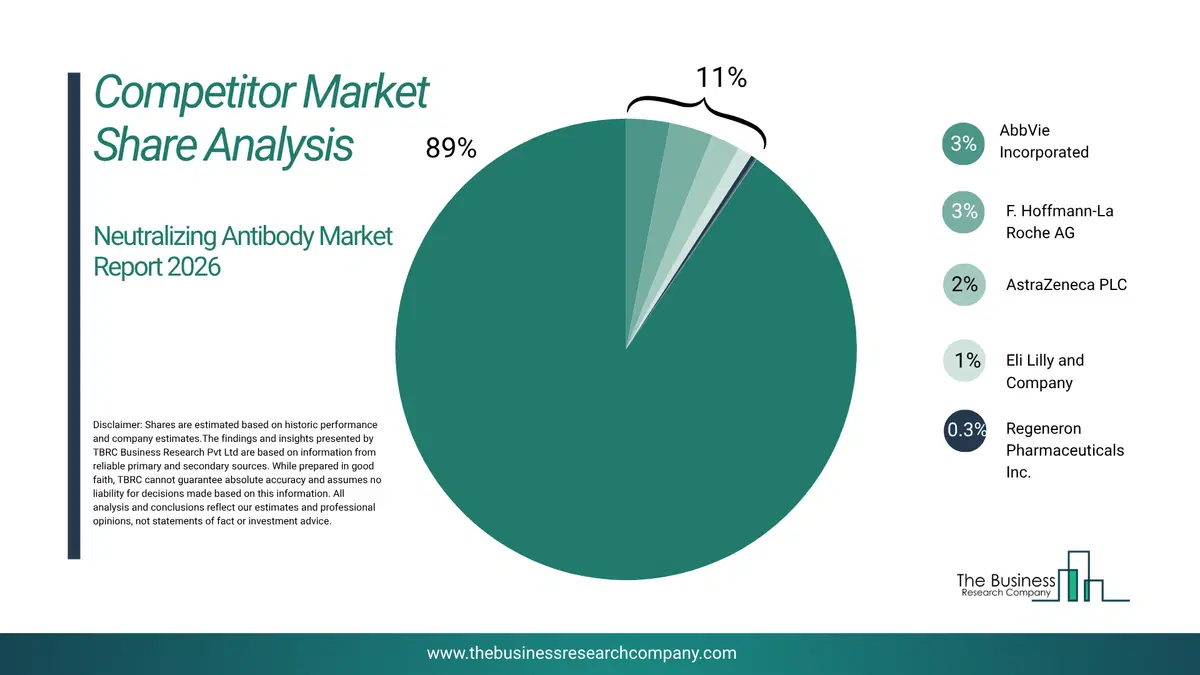
This chart is for illustrative purposes; the full report includes a detailed competitor analysis and comprehensive overview of the top 10 companies in the market.
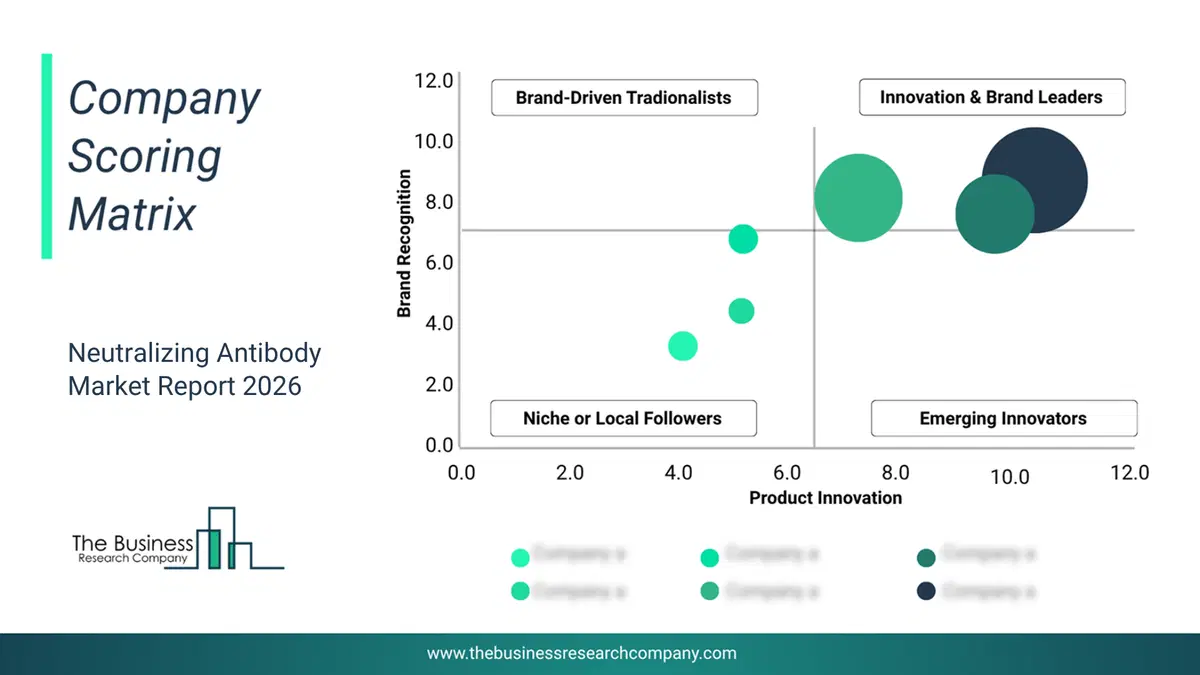
This chart maps companies by product innovation and brand strength, with bubble size indicating relative revenue, helping identify market leaders, challengers, and niche players. This is an illustrative chart; the full report provides a complete and accurate competitive analysis.
Global Neutralizing Antibody Market Trends and Insights
Major companies operating in the neutralizing antibody market are focusing on developing innovative solutions, such as long-acting monoclonal neutralizing antibodies, to provide durable protection against infectious diseases, address unmet medical needs in vulnerable populations, and overcome limitations associated with traditional vaccines. Long-acting monoclonal neutralizing antibodies are engineered proteins that specifically bind viral antigens with high affinity and block infection, while modifications in the Fc region extend their half-life in the body; unlike traditional small-molecule antivirals or vaccines, these antibodies offer passive immunity without requiring repeated dosing or an active immune response. For instance, in June 2025, Merck & Co. Inc, a US-based pharmaceutical company, launched clesrovimab-cfor, a long-acting monoclonal neutralizing antibody approved by the U.S. FDA. It is a fully human IgG1κ antibody targeting the fusion (F) protein of respiratory syncytial virus (RSV), featuring a triple amino acid substitution in its Fc region to enhance binding to the neonatal Fc receptor and prolong serum half-life. Administered as a single 105 mg intramuscular dose regardless of infant weight, it provides season-long protection against RSV, supporting preventive care in infants and high-risk populations.What Are Latest Mergers And Acquisitions In The Neutralizing Antibody Market?
In February 2023, Vir Biotechnology Inc., a US-based commercial-stage immunology company, partnered with GSK to continue discovering and developing next-generation solutions for COVID-19 and other respiratory diseases. Through this collaboration, Vir aims to ensure ongoing access to sotrovimab and advance its portfolio of monoclonal antibody therapeutics targeting respiratory viruses. GSK plc is a UK-based pharmaceutical company focused on innovative treatments for infectious diseases and immunology.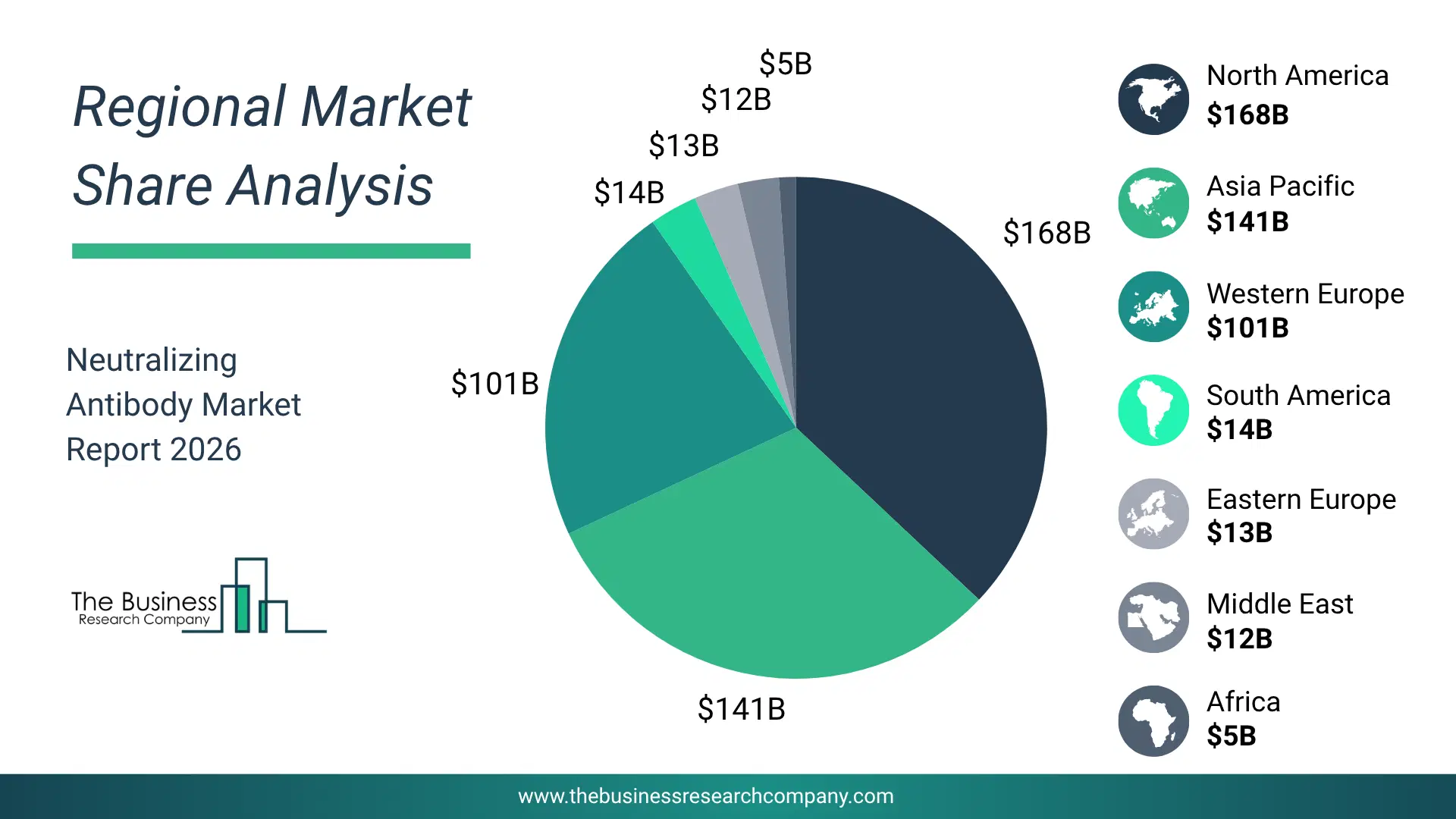
Regional Insights
North America was the largest region in the neutralizing antibody market in 2025. Asia-Pacific is expected to be the fastest-growing region in the forecast period. The regions covered in this market report are Asia-Pacific, South East Asia, Western Europe, Eastern Europe, North America, South America, Middle East, Africa. The countries covered in this market report are Australia, Brazil, China, France, Germany, India, Indonesia, Japan, Taiwan, Russia, South Korea, UK, USA, Canada, Italy, Spain.What Defines the Neutralizing Antibody Market?
The neutralizing antibody market consists of sales of antibody kits, reagents, and related diagnostic and therapeutic products. Values in this market are ‘factory gate’ values, that is the value of goods sold by the manufacturers or creators of the goods, whether to other entities (including downstream manufacturers, wholesalers, distributors and retailers) or directly to end customers. The value of goods in this market includes related services sold by the creators of the goods.How is Market Value Defined and Measured?
The market value is defined as the revenues that enterprises gain from the sale of goods and/or services within the specified market and geography through sales, grants, or donations in terms of the currency (in USD unless otherwise specified). The revenues for a specified geography are consumption values that are revenues generated by organizations in the specified geography within the market, irrespective of where they are produced. It does not include revenues from resales along the supply chain, either further along the supply chain or as part of other products.
This chart presents market attractiveness based on a quantitative evaluation of growth, competition, strategic alignment, and risk, offering a clear view of opportunity areas for decision-making. This chart is for illustrative purposes; the full report contains the complete analysis.

This chart highlights the Total Addressable Market (TAM) by estimating the maximum revenue opportunity using an assumption-driven approach, supporting strategic planning and opportunity sizing across markets. The chart is illustrative; the full report provides a more comprehensive analysis.
What Key Data and Analysis Are Included in the Neutralizing Antibody Market Report 2026?
The neutralizing antibody market research report is one of a series of new reports from The Business Research Company that provides market statistics, including industry global market size, regional shares, competitors with the market share, detailed market segments, market trends and opportunities, and any further data you may need to thrive in the neutralizing antibody industry. The market research report delivers a complete perspective of everything you need, with an in-depth analysis of the current and future state of the industry.Neutralizing Antibody Market Report Forecast Analysis
| Report Attribute | Details |
|---|---|
| Market Size Value In 2026 | $288.51 billion |
| Revenue Forecast In 2030 | $447.16 billion |
| Growth Rate | CAGR of 11.6% from 2026 to 2030 |
| Base Year For Estimation | 2025 |
| Actual Estimates/Historical Data | 2020-2025 |
| Forecast Period | 2026 - 2030 |
| Market Representation | Revenue in USD Billion and CAGR from 2026 to 2030 |
| Segments Covered | Antibody Type, Target Virus, Distribution Channel, Application, End User |
| Regional Scope | Asia-Pacific, Western Europe, Eastern Europe, North America, South America, Middle East, Africa |
| Country Scope | The countries covered in the report are Australia, Brazil, China, France, Germany, India, ... |
| Key Companies Profiled | Pfizer Inc., Johnson & Johnson, Roche Holding AG, Merck & Co. Inc., AstraZeneca PLC, Sanofi SA, GlaxoSmithKline plc, Eli Lilly and Company, Regeneron Pharmaceuticals Inc., GeNext Genomics, Celltrion Healthcare Co. Ltd, BeiGene Ltd, AbCellera Biologics Inc., BMC Pharmacology and Toxicology, Anthos Therapeutics, Immunome Inc., Sorrento Therapeutics Inc., Tonix Pharmaceuticals, Abwiz Bio, AXIM Biotechnologies. |
| Customization Scope | Request for Customization |
| Pricing And Purchase Options | Explore Purchase Options |