

Plant Biotechnology Equipment Market Report 2026
Global Outlook – By Equipment Type (Bioreactors, Fermenters, Incubators, Centrifuges, Chromatography Systems), By Technology (Clustered Regularly Interspaced Short Palindromic Repeats Tools, Next Generation Sequencing, Polymerase Chain Reaction (PCR) Technology), By Application (Genetic Engineering, Plant Tissue Culture, Molecular Farming, Biopesticides, Biofertilizers), By End User (Agriculture, Research Institutions, Biotechnology Companies, Pharmaceutical Companies, Food And Beverage Industry) - Market Size, Trends, And Global Forecast 2026-2030
Plant Biotechnology Equipment Market Overview
• Plant Biotechnology Equipment market size has reached to $16.55 billion in 2025 • Expected to grow to $23.85 billion in 2030 at a compound annual growth rate (CAGR) of 7.7% • Growth Driver: Government Funding For Agricultural Research Is Propelling The Market Due To Increasing Investment In Agricultural Innovation • Market Trend: Antimicrobial Materials Enhance Contamination Control • North America was the largest region in 2025 and Asia-Pacific is the fastest growing region.Market Gains By 2030 – Top Opportunities By Segment
Market Gain identifies the most promising market opportunities by highlighting the segments or products expected to generate the highest incremental revenue growth over the next five years.
What Is Covered Under Plant Biotechnology Equipment Market?
Plant biotechnology equipment refers to specialized instruments and tools used in the research, development, and production of plants through biotechnological techniques. These include tissue culture systems, bioreactors, gene editing tools, and analytical devices that facilitate plant propagation, genetic modification, and disease resistance studies. It enables precise manipulation, analysis, and monitoring of plant cells, tissues, and genes to improve crop traits, enhance productivity, and develop sustainable agricultural solutions. The main equipment types of the plant biotechnology equipment are bioreactors, fermenters, incubators, centrifuges, and chromatography systems. Bioreactors refer to engineered systems or devices that provide a controlled environment for the growth of cells, tissues, or microorganisms, helping optimize biological processes, enhance productivity, and support research and industrial-scale applications. The various technologies include clustered regularly interspaced short palindromic repeats tools, next-generation sequencing, and polymerase chain reaction (PCR) technology. It finds applications in genetic engineering, plant tissue culture, molecular farming, biopesticides, and biofertilizers, and serves a wide range of end-users, including agriculture, research institutions, biotechnology companies, pharmaceutical companies, and food and beverage industry.
What Is The Plant Biotechnology Equipment Market Size and Share 2026?
The plant biotechnology equipment market size has grown strongly in recent years. It will grow from $16.55 billion in 2025 to $17.76 billion in 2026 at a compound annual growth rate (CAGR) of 7.3%. The growth in the historic period can be attributed to increasing investments in agricultural biotechnology research, expansion of plant genetic engineering programs, rising demand for disease-resistant crops, growth of academic and institutional research, availability of advanced laboratory instrumentation.What Is The Plant Biotechnology Equipment Market Growth Forecast?
The plant biotechnology equipment market size is expected to see strong growth in the next few years. It will grow to $23.85 billion in 2030 at a compound annual growth rate (CAGR) of 7.7%. The growth in the forecast period can be attributed to increasing adoption of precision agriculture biotechnology, rising focus on climate-resilient crop development, expansion of commercial plant biotech applications, growing integration of automation in research labs, increasing demand for sustainable crop enhancement technologies. Major trends in the forecast period include increasing adoption of advanced tissue culture systems, rising use of gene editing and crispr tools, growing integration of automated bioreactors, expansion of high-throughput plant analysis equipment, enhanced focus on precision crop improvement.
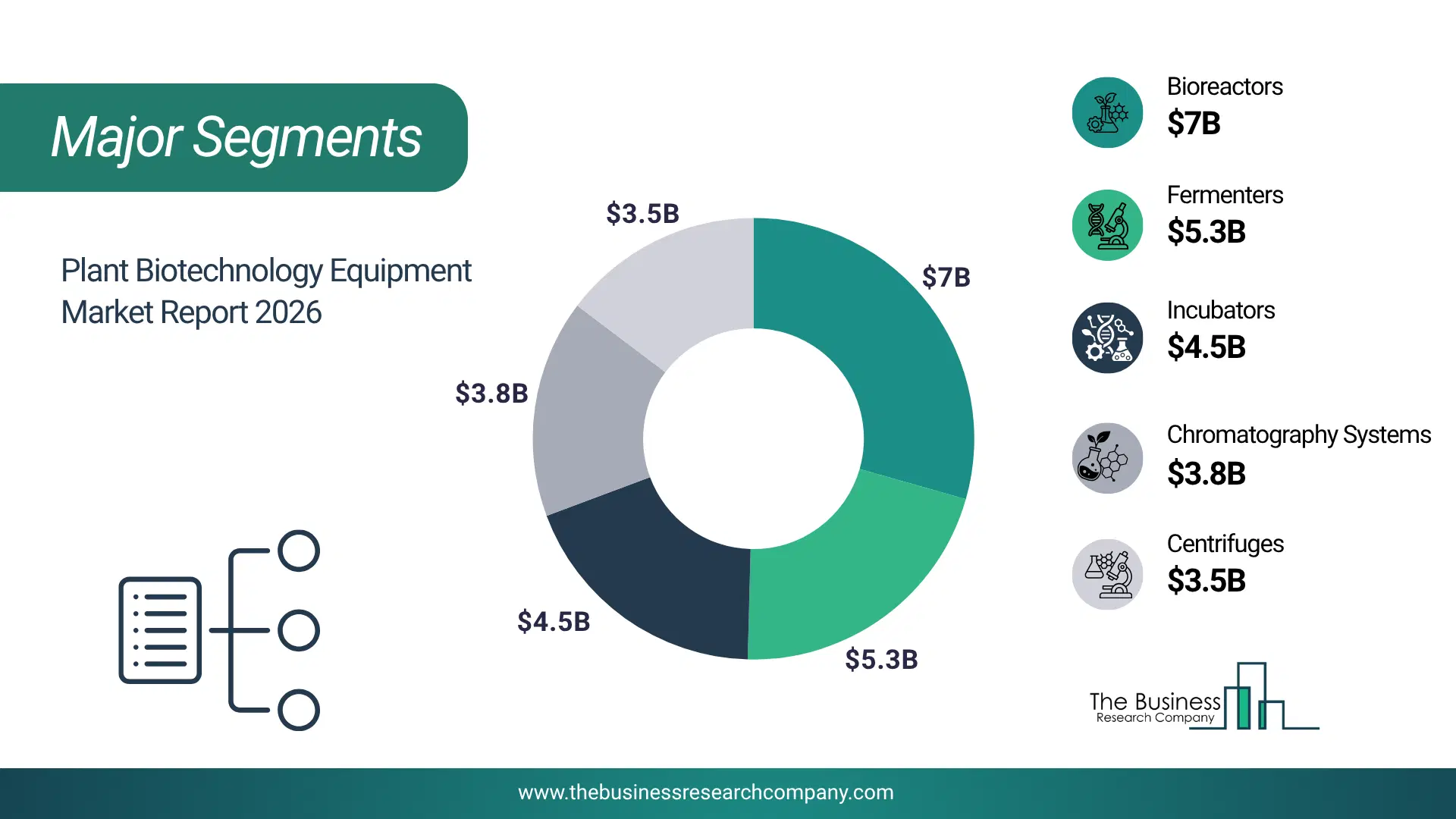
Global Plant Biotechnology Equipment Market Segmentation
1) By Equipment Type: Bioreactors, Fermenters, Incubators, Centrifuges, Chromatography Systems 2) By Technology: Clustered Regularly Interspaced Short Palindromic Repeats Tools, Next Generation Sequencing, Polymerase Chain Reaction (PCR) Technology 3) By Application: Genetic Engineering, Plant Tissue Culture, Molecular Farming, Biopesticides, Biofertilizers 4) By End User: Agriculture, Research Institutions, Biotechnology Companies, Pharmaceutical Companies, Food And Beverage Industry Subsegments: 1) By Bioreactors: Stirred Tank Bioreactors, Airlift Bioreactors, Fixed Bed Bioreactors, Wave Bioreactors, Disposable Bioreactors 2) By Fermenters: Batch Fermenters, Fed-Batch Fermenters, Continuous Fermenters, Solid-State Fermenters, Airlift Fermenters 3) By Incubators: CO2 Incubators, Shaking Incubators, Refrigerated Incubators, Drying Incubators, Humidity-Controlled Incubators 4) By Centrifuges: Benchtop Centrifuges, High-Speed Centrifuges, Ultracentrifuges, Refrigerated Centrifuges, Floor-Standing Centrifuges 5) By Chromatography Systems: High-Performance Liquid Chromatography (HPLC), Gas Chromatography (GC), Ion-Exchange Chromatography, Affinity Chromatography, Size-Exclusion Chromatography The top segments in the plant biotechnology equipment market will be: • Bioreactors will reach $6.94 billion by 2030. • Fermenters will reach $5.3 billion by 2030. • Incubators will reach $4.45 billion by 2030. • Chromatography Systems will reach $3.71 billion by 2030. • Centrifuges will reach $3.46 billion by 2030.What Is The Driver Of The Plant Biotechnology Equipment Market?
The government funding for agricultural research is expected to propel the growth of the plant biotechnology equipment market going forward. Government funding refers to financial support provided by national or regional governments to promote research and development activities in agriculture, aiming to increase productivity, sustainability, and innovation in farming practices. Funding for agricultural research is increasing due to the growing need to ensure food security amid challenges posed by climate change. The plant biotechnology equipment market benefits from such funding by providing essential tools and technologies that enable advanced crop development, innovation, and research efficiency. For instance, in July 2025, according to the Department for Environment, Food & Rural Affairs (DEFRA), a UK-based government department, total funding to the agricultural industry rose to £4,426 million ($5,441 million) in 2024, marking a 3.4% increase, while agri-environment scheme payments surged 51% to £1,121 million. Therefore, government funding for agricultural research is driving the growth of the plant biotechnology equipment industry.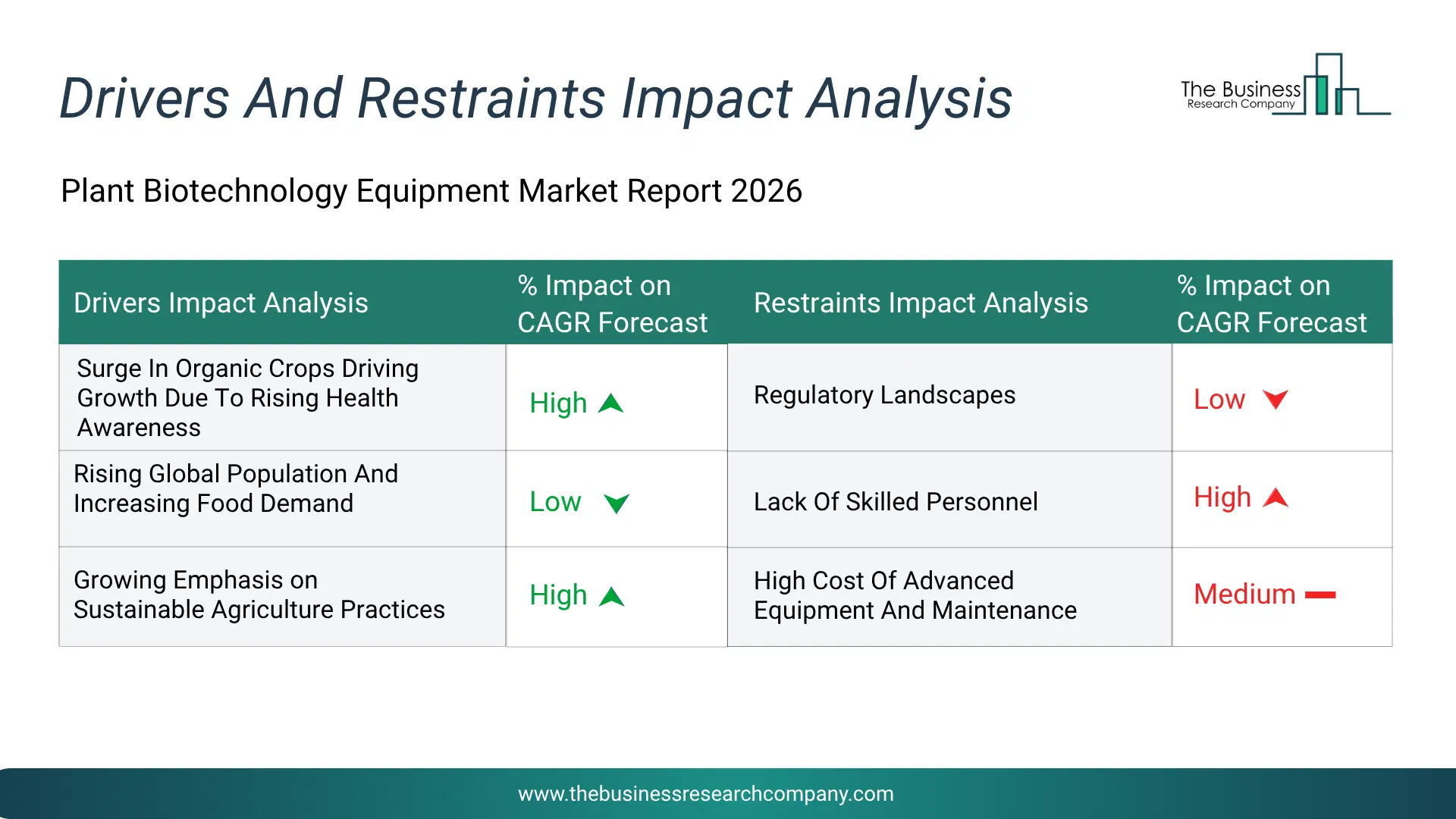
Infographic Chart Showing Key Market Drivers Analysis And Restraints For Plant Biotechnology Equipment Market
The chart presents an impact analysis of key drivers and restraints, quantifying their relative influence on the market's growth rate and helping assess the balance between growth enablers and limiting factors. This chart offers a high-level perspective; the full report contains more detailed insights.
How Will The Drivers Impact Growth In The Global Plant Biotechnology Equipment Market?
• Surge In Organic Crops Driving Growth Due To Rising Health Awareness (High) – During the forecast period, the surge in organic crops driving growth due to rising health awareness is expected to become a key growth driver for the plant biotechnology equipment market by 2030. Increasing demand for organic produce is encouraging farmers and agricultural researchers to adopt advanced biotechnological tools to enhance crop productivity, improve resistance to pests and diseases, and maintain soil health without relying on synthetic inputs. Plant biotechnology equipment supports tissue culture, molecular breeding, and genetic analysis techniques that help develop high-quality, resilient crop varieties suitable for organic farming systems. • Rising Global Population And Increasing Food Demand (Low) – During the forecast period, the rising global population and increasing food demand is expected to emerge as major factors driving the expansion of the plant biotechnology equipment market by 2030. The expanding global population is intensifying pressure on agricultural systems to increase food production despite constraints in arable land and natural resources. This escalating demand is accelerating the adoption of plant biotechnology equipment, which facilitates advanced applications such as genetic modification, tissue culture, and molecular diagnostics to enhance crop productivity and durability. These technologies enable the development of high-yielding, disease-resistant, drought-tolerant, and nutritionally enriched crop varieties, helping to address global food security concerns. By improving operational efficiency and minimizing reliance on conventional farming practices, plant biotechnology solutions contribute to more sustainable and resilient agricultural systems. • Growing Emphasis on Sustainable Agriculture Practices (High) – During the forecast period, the growing emphasis on sustainable agriculture practices is expected to act as a key growth catalyst for the plant biotechnology equipment market by 2030. The increasing focus on sustainable agricultural practices is fueling demand for plant biotechnology equipment, as it supports the adoption of innovative tools that enable environmentally responsible farming. These technologies facilitate the development of high-yield crops with enhanced resistance to pests and diseases, while reducing reliance on chemical fertilizers and pesticides. Biotechnology equipment also enables the creation of stress-resilient plant varieties capable of growing in harsh environmental conditions, promoting more efficient use of land and water resources. This advancement aligns with global initiatives aimed at lowering environmental impact while safeguarding long-term food security.How Will The Restraints Impact Growth In The Global Plant Biotechnology Equipment Market?
• Regulatory Landscapes (Low) – During the forecast period, the strict regulatory landscapes act as a restraint for plant biotechnology equipment by creating lengthy approval processes and compliance requirements that slow down innovation. Companies often face high costs in meeting safety, ethical, and environmental standards, which limits the speed of product commercialization. Complex international regulations also create barriers for global trade and collaboration, making it difficult to scale operations. These challenges discourage smaller firms and startups from entering the market due to resource constraints. Consequently, regulatory hurdles restrict the growth potential of the plant biotechnology equipment sector. • Lack Of Skilled Personnel (High) – During the forecast period, the lack of skilled personnel acts as a restraint for plant biotechnology equipment because operating advanced tools requires specialized knowledge and technical expertise. Without trained professionals, organizations face challenges in effectively utilizing equipment for genetic engineering, molecular analysis, and tissue culture. This skills gap can slow down research progress, reduce efficiency, and increase the risk of errors in experiments. Additionally, training new staff demands significant time and investment, which limits rapid adoption. Consequently, the shortage of skilled workforce hampers the full potential and growth of the plant biotechnology equipment market. • High Cost Of Advanced Equipment And Maintenance (Medium) – During the forecast period, the high cost of advanced equipment and maintenance acts as a restraint for the plant biotechnology equipment market by limiting adoption among research institutes, small laboratories, and emerging biotech firms. The significant investment required for purchasing sophisticated instruments, along with ongoing calibration, servicing, and upgrade expenses, increases the overall operational burden. Many organizations with limited funding are unable to justify such high expenditures, leading them to rely on older or less advanced technologies. This financial constraint slows down the widespread deployment of modern plant biotechnology solutions. As a result, market growth is restricted, particularly in cost-sensitive regions.Key Players In The Global Plant Biotechnology Equipment Market
Major companies operating in the plant biotechnology equipment market are Thermo Fisher Scientific Inc., Illumina Inc., Agilent Technologies Inc., QIAGEN N.V., PerkinElmer Inc., Waters Corporation, Sartorius AG, Bruker Corporation, Eppendorf AG, Oxford Nanopore Technologies plc, Hamilton Company, Shimadzu Corporation, Corning Incorporated, Analytik Jena GmbH+Co. KG, Photon Systems Instruments, Labconco Corporation, Memmert GmbH, Esco Lifesciences Group Ltd., Qubit Systems Inc., LemnaTec GmbH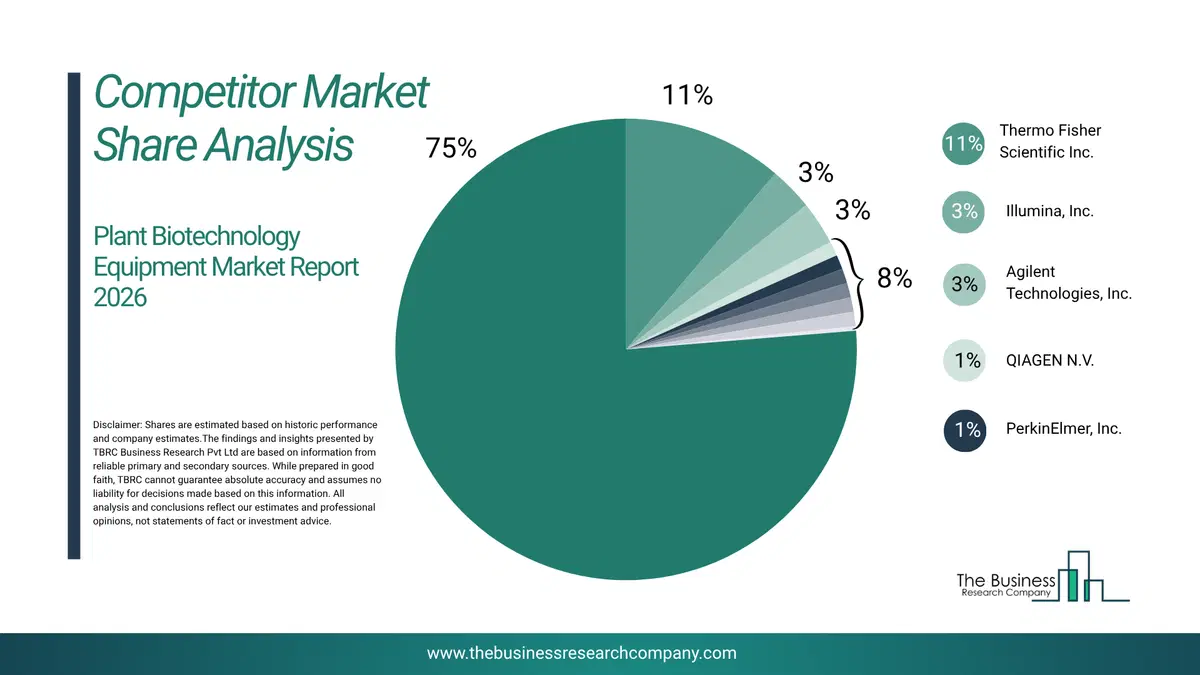
This chart is for illustrative purposes; the full report includes a detailed competitor analysis and comprehensive overview of the top 10 companies in the market.
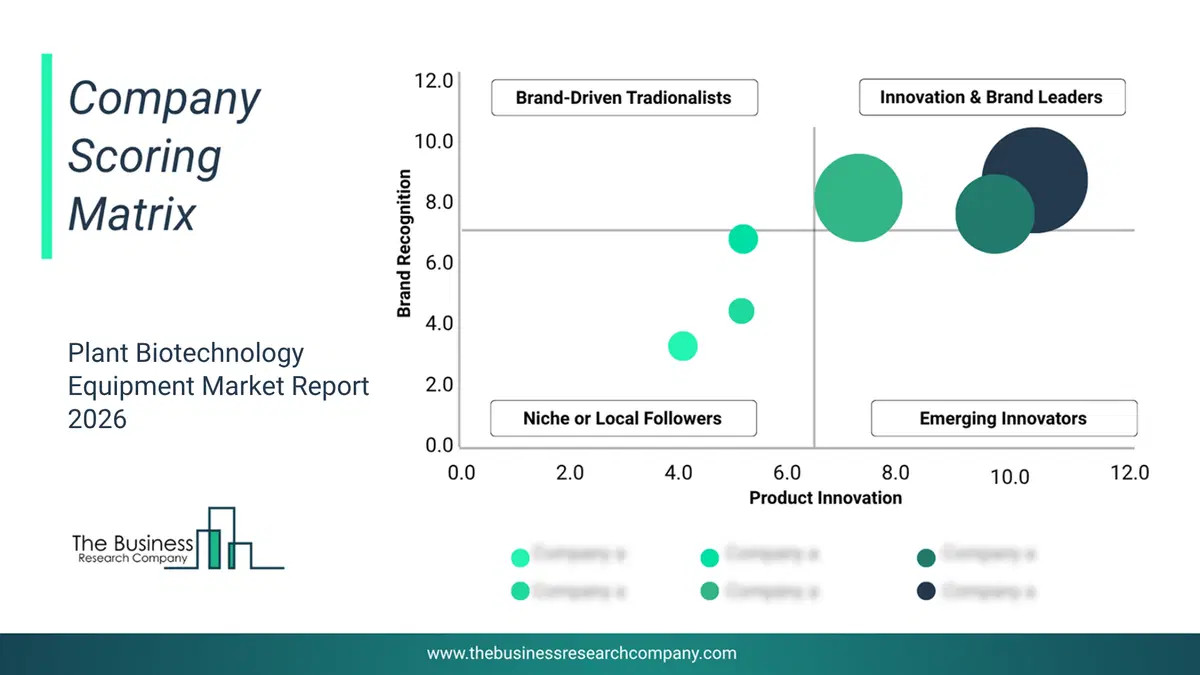
This chart maps companies by product innovation and brand strength, with bubble size indicating relative revenue, helping identify market leaders, challengers, and niche players. This is an illustrative chart; the full report provides a complete and accurate competitive analysis.
Global Plant Biotechnology Equipment Market Trends and Insights
Major companies operating in the plant biotechnology equipment market are focusing on developing cell culture systems and cultivation-free bioprocessing platforms, such as plant cell suspension culture with molecular fingerprint replication to enable consistent, scalable production of high-value plant-derived compounds. Plant cell suspension culture with molecular fingerprint replication is a controlled cultivation method where plant cells are grown in liquid media to produce compounds that precisely replicate the molecular profile of the source plant. For instance, in March 2025, PHC Corporation of North America, a US-based laboratory equipment company, launched the PHCbi MCO-171AICUVD-PA high-heat CO₂ incubator. The system features an antimicrobial inCu-saFe interior combining copper’s germicidal properties with stainless steel durability, a Safe Cell UV-LED germicidal bulb, and an optional 11-hour high-heat sterilization cycle for decontamination. By introducing advanced incubation technologies, PHC strengthens controlled plant cell culture applications, underlining the importance of sterility and consistency in plant biotechnology workflows.What Are Latest Mergers And Acquisitions In The Plant Biotechnology Equipment Market?
In May 2025, Brookfield Corporation, a Canada-based investment management company, and Quebec Deposit and Investment Fund, a Canada-based pension fund company, acquired Antylia Scientific for $1.34 billion. With this acquisition, Brookfield Corporation and Quebec Deposit and Investment Fund aim to strengthen Antylia Scientific’s growth in the life sciences sector by enhancing its commercial strategy and procurement processes. Antylia Scientific is a US-based instrumentation company that provides a comprehensive range of laboratory equipment suitable for plant biotechnology applications.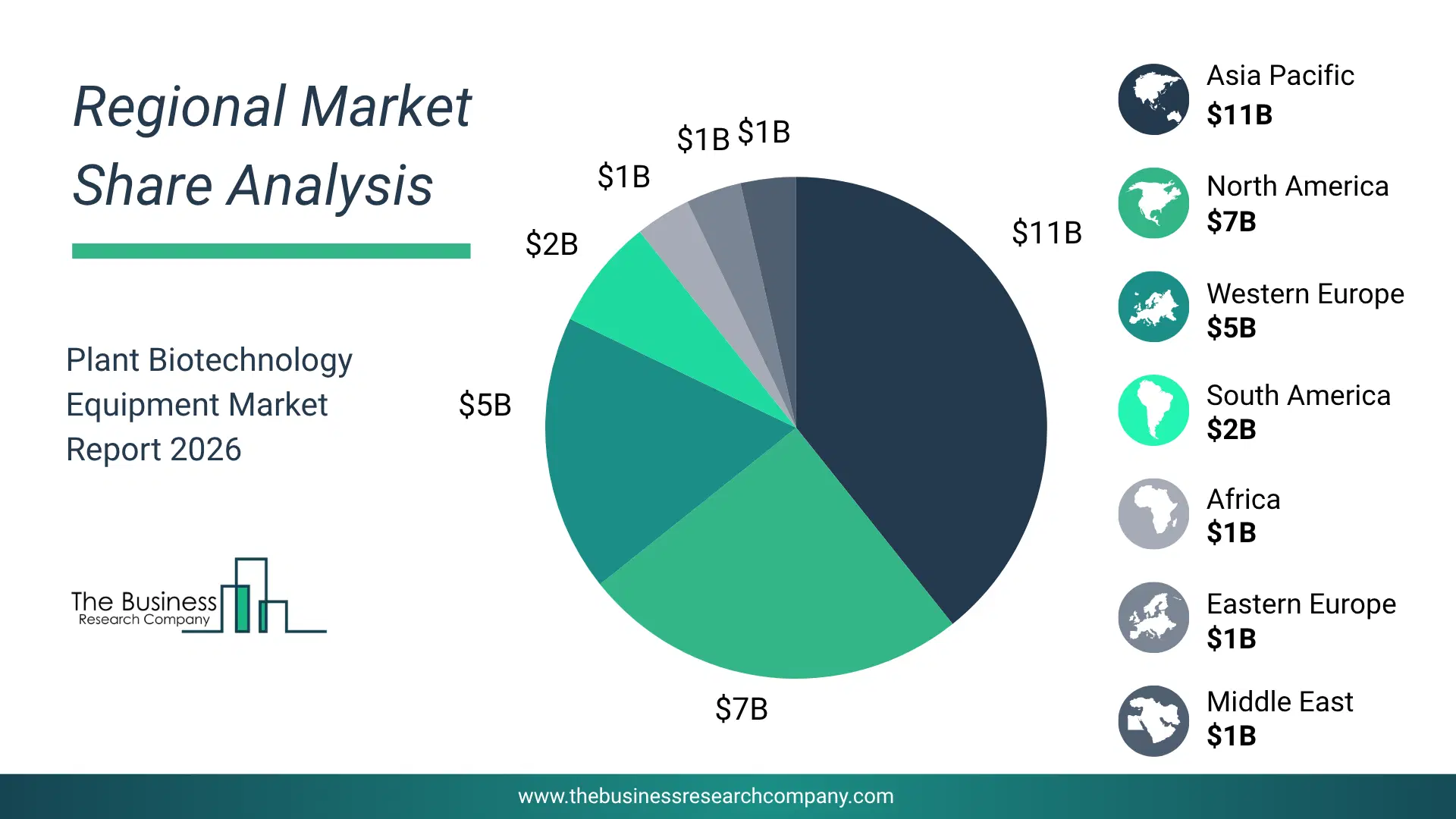
Regional Outlook
North America was the largest region in the plant biotechnology equipment market in 2025. Asia-Pacific is expected to be the fastest-growing region in the forecast period. The regions covered in this market report are Asia-Pacific, South East Asia, Western Europe, Eastern Europe, North America, South America, Middle East, Africa. The countries covered in this market report are Australia, Brazil, China, France, Germany, India, Indonesia, Japan, Taiwan, Russia, South Korea, UK, USA, Canada, Italy, Spain.What Defines the Plant Biotechnology Equipment Market?
The plant biotechnology equipment market consists of revenues earned by entities by providing services such as tissue culture propagation, genetic engineering support, plant transformation and regeneration, micropropagation, cryopreservation, and molecular analysis of plant cells and tissues. The market value includes the value of related goods sold by the service provider or included within the service offering. The plant biotechnology equipment market also includes sales of gene sequencers, polymerase chain reaction systems, electrophoresis equipment, microarray systems, and plant tissue culture chambers. Values in this market are ‘factory gate’ values, that is the value of goods sold by the manufacturers or creators of the goods, whether to other entities (including downstream manufacturers, wholesalers, distributors and retailers) or directly to end customers. The value of goods in this market includes related services sold by the creators of the goods.How is Market Value Defined and Measured?
The market value is defined as the revenues that enterprises gain from the sale of goods and/or services within the specified market and geography through sales, grants, or donations in terms of the currency (in USD unless otherwise specified). The revenues for a specified geography are consumption values that are revenues generated by organizations in the specified geography within the market, irrespective of where they are produced. It does not include revenues from resales along the supply chain, either further along the supply chain or as part of other products.
This chart presents market attractiveness based on a quantitative evaluation of growth, competition, strategic alignment, and risk, offering a clear view of opportunity areas for decision-making. This chart is for illustrative purposes; the full report contains the complete analysis.

This chart highlights the Total Addressable Market (TAM) by estimating the maximum revenue opportunity using an assumption-driven approach, supporting strategic planning and opportunity sizing across markets. The chart is illustrative; the full report provides a more comprehensive analysis.
What Key Data and Analysis Are Included in the Plant Biotechnology Equipment Market Report 2026?
The plant biotechnology equipment market research report is one of a series of new reports from The Business Research Company that provides market statistics, including industry global market size, regional shares, competitors with the market share, detailed market segments, market trends and opportunities, and any further data you may need to thrive in the plant biotechnology equipment industry. The market research report delivers a complete perspective of everything you need, with an in-depth analysis of the current and future state of the industry.Plant Biotechnology Equipment Market Report Forecast Analysis
| Report Attribute | Details |
|---|---|
| Market Size Value In 2026 | $17.76 billion |
| Revenue Forecast In 2030 | $23.85 billion |
| Growth Rate | CAGR of 7.7% from 2026 to 2030 |
| Base Year For Estimation | 2025 |
| Actual Estimates/Historical Data | 2020-2025 |
| Forecast Period | 2026 - 2030 |
| Market Representation | Revenue in USD Billion and CAGR from 2026 to 2030 |
| Segments Covered | Equipment Type, Technology, Application, End User |
| Regional Scope | Asia-Pacific, Western Europe, Eastern Europe, North America, South America, Middle East, Africa |
| Country Scope | The countries covered in the report are Australia, Brazil, China, France, Germany, India, ... |
| Key Companies Profiled | Thermo Fisher Scientific Inc., Illumina Inc., Agilent Technologies Inc., QIAGEN N.V., PerkinElmer Inc., Waters Corporation, Sartorius AG, Bruker Corporation, Eppendorf AG, Oxford Nanopore Technologies plc, Hamilton Company, Shimadzu Corporation, Corning Incorporated, Analytik Jena GmbH+Co. KG, Photon Systems Instruments, Labconco Corporation, Memmert GmbH, Esco Lifesciences Group Ltd., Qubit Systems Inc., LemnaTec GmbH |
| Customization Scope | Request for Customization |
| Pricing And Purchase Options | Explore Purchase Options |