

Remote Patient Monitoring Market Report 2026
Global Outlook – By Component (Devices, Services, Software), By Application (Chronic Disease Management, Post-Acute Care Monitoring, Preventive Care And Wellness, Home Health Monitoring, Rehabilitation Monitoring), By End User (Hospitals, Clinics, Home Healthcare Providers, Ambulatory Care Centers, Long-Term Care Facilities) – Market Size, Trends, Strategies, and Forecast to 2030
Remote Patient Monitoring Market Overview
• Remote Patient Monitoring market size has reached to $55.24 billion in 2025 • Expected to grow to $111.93 billion in 2030 at a compound annual growth rate (CAGR) of 15.1% • Growth Driver: Rising Prevalence Of Chronic Diseases Fueling The Growth Of The Market Due To The Need For Continuous, Home-Based Monitoring And Early Intervention • Market Trend: Advancing Wearable Vital Signs Monitoring With the Halo System For Continuous Patient Care And Chronic Disease Management • North America was the largest region in 2025 and Asia-Pacific is the fastest growing region.Market Gains By 2030 – Top Opportunities By Segment
Market Gain identifies the most promising market opportunities by highlighting the segments or products expected to generate the highest incremental revenue growth over the next five years.
What Is Covered Under Remote Patient Monitoring Market?
Remote patient monitoring is a healthcare approach that uses digital technologies to collect medical data from individuals outside traditional clinical settings. It enables continuous tracking of health indicators such as vital signs, symptoms, and treatment responses in real time. This method improves early detection, enhances care management, and supports timely medical intervention without requiring in-person visits. The main components of remote patient monitoring include devices, services, and software. Devices are used to remotely collect patients’ vital signs and health data, enabling continuous monitoring, early detection of health issues, and timely intervention. Different applications are chronic disease management, post-acute care monitoring, preventive care and wellness, home health monitoring, and rehabilitation monitoring, and they are used by several end-users comprise hospitals, clinics, home healthcare providers, ambulatory care centers, and long-term care facilities.
What Is The Remote Patient Monitoring Market Size and Share 2026?
The remote patient monitoring market size has grown rapidly in recent years. It will grow from $55.24 billion in 2025 to $63.75 billion in 2026 at a compound annual growth rate (CAGR) of 15.4%. The growth in the historic period can be attributed to the growing burden of chronic diseases, the increasing aging population, the rising demand for home-based healthcare, the expanding adoption of telehealth services, and the growing focus on reducing hospital readmissions.What Is The Remote Patient Monitoring Market Growth Forecast?
The remote patient monitoring market size is expected to see rapid growth in the next few years. It will grow to $111.93 billion in 2030 at a compound annual growth rate (CAGR) of 15.1%. The growth in the forecast period can be attributed to increasing prevalence of chronic and lifestyle-related diseases, rising demand for home healthcare services, growing patient awareness of remote monitoring benefits, increasing healthcare expenditure globally, and rising focus on value-based and outcome-driven care. Major trends in the forecast period include advancements in wearable sensor technologies, innovations in remote monitoring platforms and software solutions, developments in the integration of remote patient data with electronic health records, research and developments in predictive analytics for patient monitoring, and advancements in artificial intelligence-driven clinical decision support.
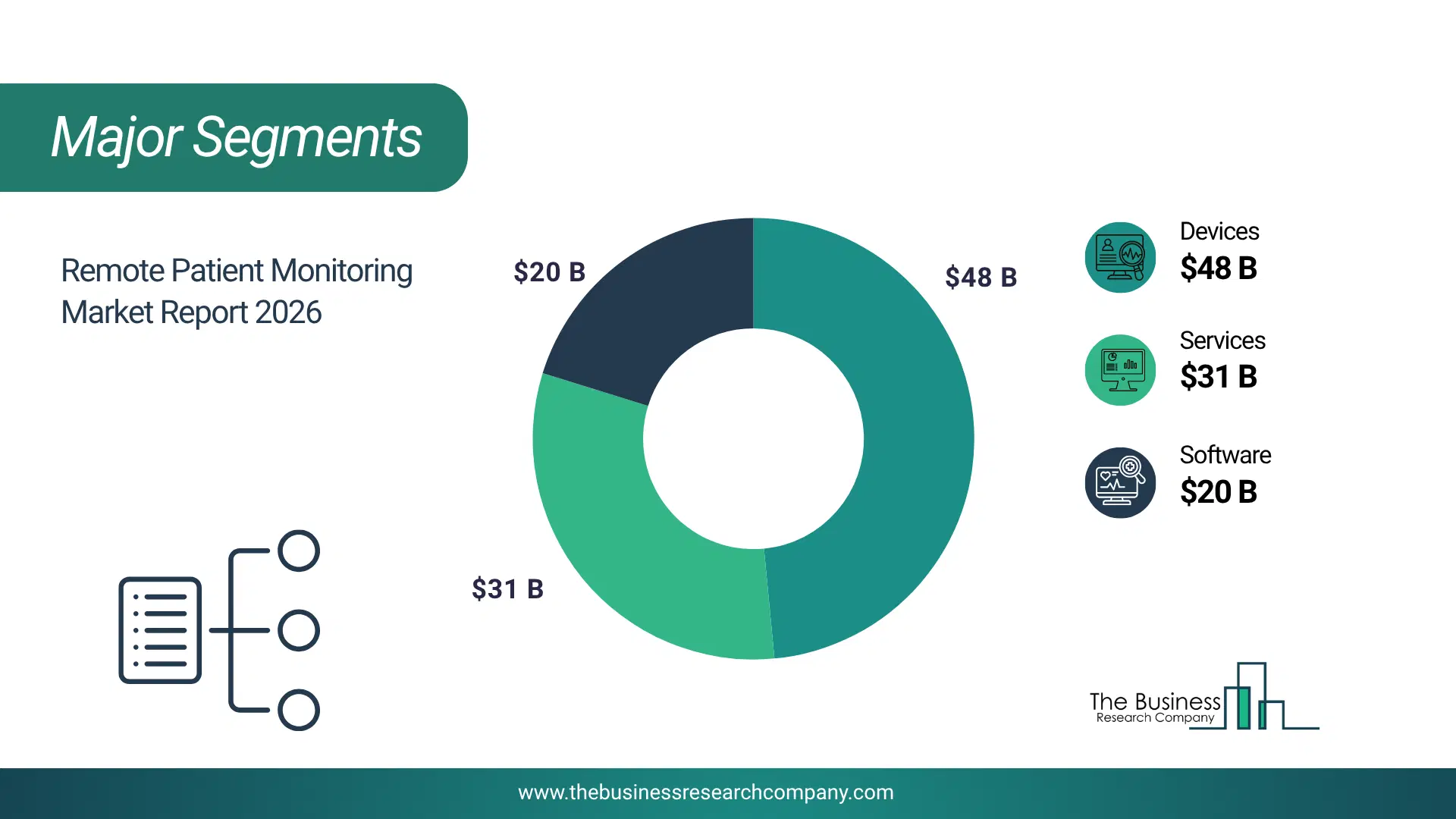
Global Remote Patient Monitoring Market Segmentation
1) By Component: Devices, Services, Software 2) By Application: Chronic Disease Management, Post-Acute Care Monitoring, Preventive Care And Wellness, Home Health Monitoring, Rehabilitation Monitoring 3) By End User: Hospitals, Clinics, Home Healthcare Providers, Ambulatory Care Centers, Long-Term Care Facilities Subsegments: 1) By Devices: Remote Monitoring Sensors, Wearable Health Trackers, Blood Pressure Monitors, Blood Glucose Monitors, Pulse Oximetry Devices, Electrocardiogram Devices, Temperature Monitoring Devices, Smart Scales, Multi-Parameter Monitoring Devices 2) By Services: Installation Services, Maintenance Services, Training Services, Technical Support Services, Remote Monitoring Services, Data Management Services, Consultation Services 3) By Software: Patient Data Management Software, Clinical Decision Support Software, Remote Monitoring Platforms, Mobile Health Applications, Cloud-Based Analytics Software, Alert And Notification Software, Electronic Health Record Integration Software The top segments in the remote patient monitoring market will be: • Devices will reach $47.95 Billion by 2030. • Services will reach $30.86 Billion by 2030. • Software will reach $19.73 Billion by 2030.What Is The Driver Of The Remote Patient Monitoring Market?
The rising prevalence of chronic diseases is expected to propel the growth of the remote patient monitoring market going forward. Chronic diseases refer to long-term health conditions such as hypertension, diabetes, and cardiovascular disorders that require continuous monitoring and ongoing management. The prevalence of chronic diseases is rising as aging populations combine with widespread unhealthy lifestyle patterns such as physical inactivity, poor nutrition, tobacco use, and excessive alcohol consumption, which together drive long-term risks like obesity, hypertension and diabetes. Remote patient monitoring aids in chronic disease management by continuously tracking patients’ vital signs, symptoms, and treatment adherence from home. It improves patient outcomes by enabling early detection of complications, timely interventions, and personalized care adjustments. For instance, in June 2024, according to the National Health Service, a UK-based government department, 3,615,330 individuals registered with a general practitioner (GP) were diagnosed with non-diabetic hyperglycemia or pre-diabetes (a condition with elevated blood sugar levels, not high enough to be classified as diabetes) in 2023, marking an 18% increase from 3,065,825 cases in 2022. Therefore, the rising prevalence of chronic diseases is driving the growth of the remote patient monitoring industry.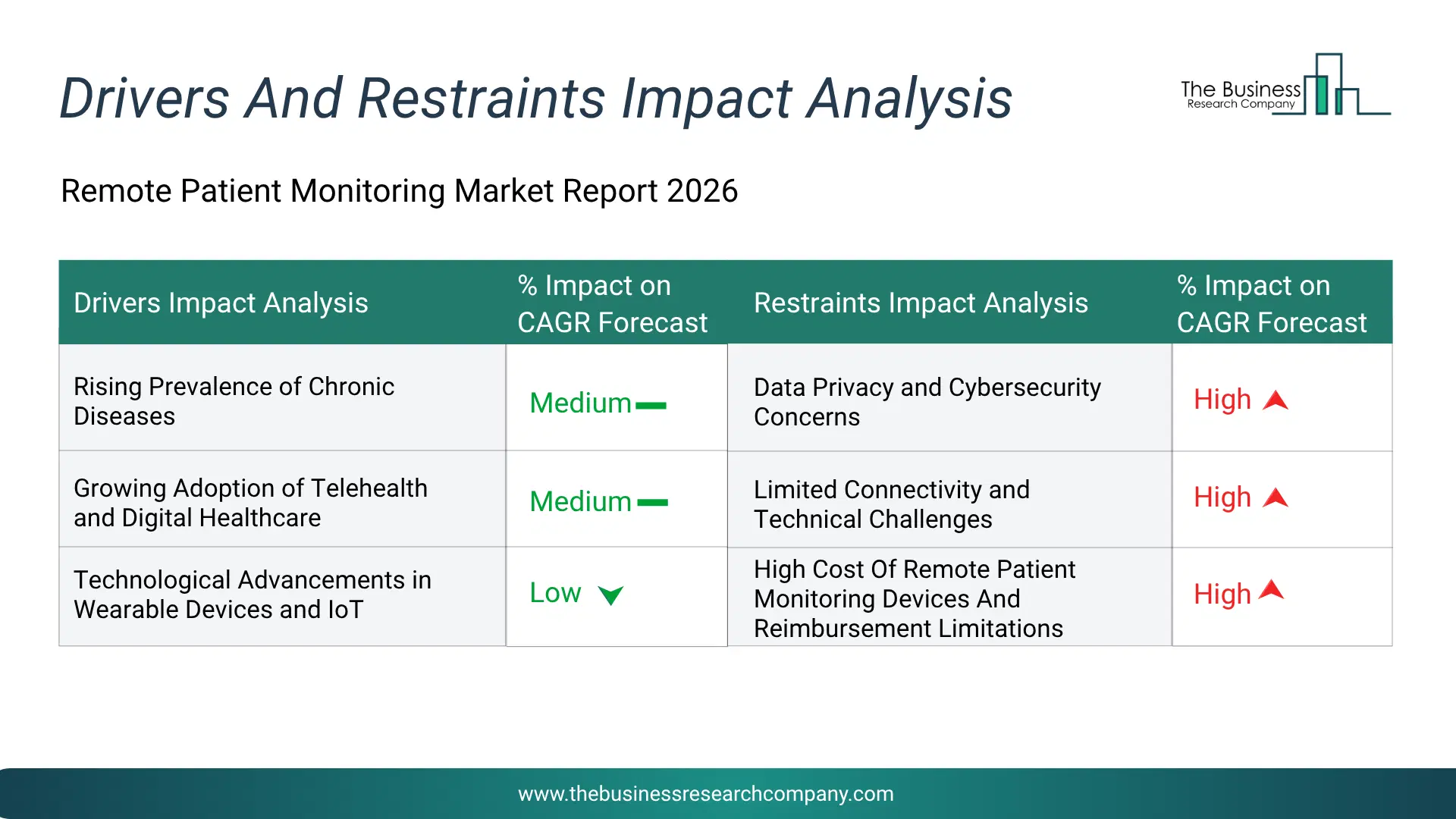
Infographic Chart Showing Key Market Drivers Analysis And Restraints For Remote Patient Monitoring Market
The chart presents an impact analysis of key drivers and restraints, quantifying their relative influence on the market's growth rate and helping assess the balance between growth enablers and limiting factors. This chart offers a high-level perspective; the full report contains more detailed insights.
How Will The Drivers Impact Growth In The Global Remote Patient Monitoring Market?
• Rising Prevalence of Chronic Diseases (Medium) – During the forecast period, the rising prevalence of chronic diseases is expected to become a key growth driver for the remote patient monitoring market by 2030. The increasing incidence of chronic conditions such as diabetes, cardiovascular diseases, hypertension, and respiratory disorders is a major driver of the remote patient monitoring market. These diseases require continuous monitoring and long-term management, which RPM solutions provide efficiently. Remote monitoring helps healthcare providers track patient health in real time and detect complications early. It also reduces hospital readmissions and emergency visits by enabling timely intervention. • Growing Adoption of Telehealth and Digital Healthcare (Medium) – During the forecast period, the growing adoption of telehealth and digital healthcare is expected to emerge as a major factor driving the expansion of the remote patient monitoring market by 2030. The rapid expansion of telehealth services and digital healthcare infrastructure is accelerating the adoption of remote patient monitoring solutions. Healthcare providers are increasingly integrating RPM systems with telemedicine platforms to deliver virtual care services. Advancements in cloud computing, mobile applications, and connected medical devices improve accessibility and convenience for both patients and clinicians. The COVID-19 pandemic also accelerated acceptance of remote healthcare technologies globally. • Technological Advancements in Wearable Devices and IoT (Low) – During the forecast period, the technological advancements in wearable devices and IoT is expected to act as a key growth catalyst for the remote patient monitoring market by 2030. Continuous innovation in wearable health devices, Internet of Things (IoT) technologies, and wireless communication systems is driving market growth. Modern wearable devices can monitor multiple health parameters such as heart rate, blood glucose, oxygen saturation, and ECG data in real time. Improved sensor accuracy, battery efficiency, and AI-based analytics enhance the reliability of RPM solutions. Integration with smartphones and cloud-based platforms enables seamless data sharing between patients and healthcare professionals.How Will The Restraints Impact Growth In The Global Remote Patient Monitoring Market?
• Data Privacy and Cybersecurity Concerns (Medium) – During the forecast period, the remote patient monitoring systems collect and transmit sensitive patient health information through connected digital platforms, creating concerns regarding data privacy and cybersecurity. Unauthorized access, data breaches, and cyberattacks can compromise confidential medical records and reduce patient trust in RPM technologies. Compliance with strict healthcare regulations such as HIPAA and GDPR increases operational complexity for service providers. Many healthcare organizations face challenges in maintaining secure IT infrastructure and encrypted communication systems. These concerns may limit adoption, particularly in regions with weaker cybersecurity frameworks. • Limited Connectivity and Technical Challenges (Medium) – During the forecast period, the effectiveness of remote patient monitoring depends heavily on stable internet connectivity and reliable digital infrastructure. In rural and underdeveloped regions, limited broadband access and poor network coverage can hinder real-time patient monitoring and data transmission. Technical issues such as device compatibility, software integration, and system maintenance also create operational challenges for healthcare providers. Elderly patients may experience difficulties using connected devices due to limited digital literacy. These infrastructure and usability limitations can slow widespread implementation of RPM solutions. • High Cost Of Remote Patient Monitoring Devices And Reimbursement Limitations (Low) – During the forecast period, the high cost of remote patient monitoring devices and reimbursement limitations are expected to restrain the growth of the remote patient monitoring market. The implementation of remote patient monitoring solutions often requires investments in connected medical devices, wearable sensors, software platforms, and ongoing technical support, increasing the overall cost of care. Healthcare providers and patients may face financial barriers when reimbursement policies do not fully cover remote monitoring services or associated equipment. Reimbursement frameworks vary significantly across countries and healthcare systems, creating uncertainty regarding long-term financial sustainability for providers. In addition, smaller healthcare organizations may have limited resources to invest in large-scale remote patient monitoring programs. These financial constraints can slow technology adoption and reduce access to remote monitoring services, particularly in cost-sensitive and underserved markets. Consequently, high device costs and reimbursement limitations remain significant barriers to the widespread adoption of remote patient monitoring solutions.Key Players In The Global Remote Patient Monitoring Market
Major companies operating in the remote patient monitoring market are Siemens AG, Abbott Laboratories, Medtronic plc, Koninklijke Philips N.V., GE HealthCare Technologies Inc., Boston Scientific Corporation, Baxter International Inc., Roche Diagnostics, Omron Corporation, Shenzhen Mindray Bio-Medical Electronics Co. Ltd., ResMed Inc., Dräger Medical, Dexcom Inc., Teladoc Health Inc., Nihon Kohden Corporation, OSI Systems Inc, Biofourmis Inc., Masimo Corp., VitalConnect Inc., Guangdong Transtek Medical Electronics Co. Ltd.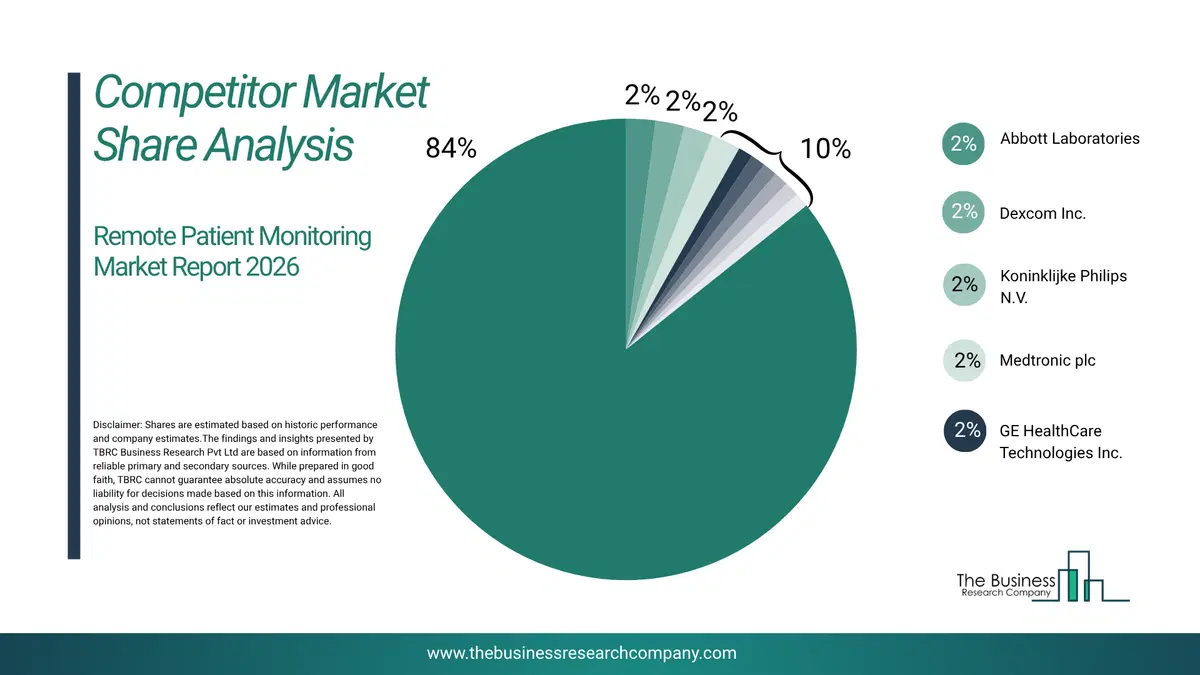
This chart is for illustrative purposes; the full report includes a detailed competitor analysis and comprehensive overview of the top 10 companies in the market.
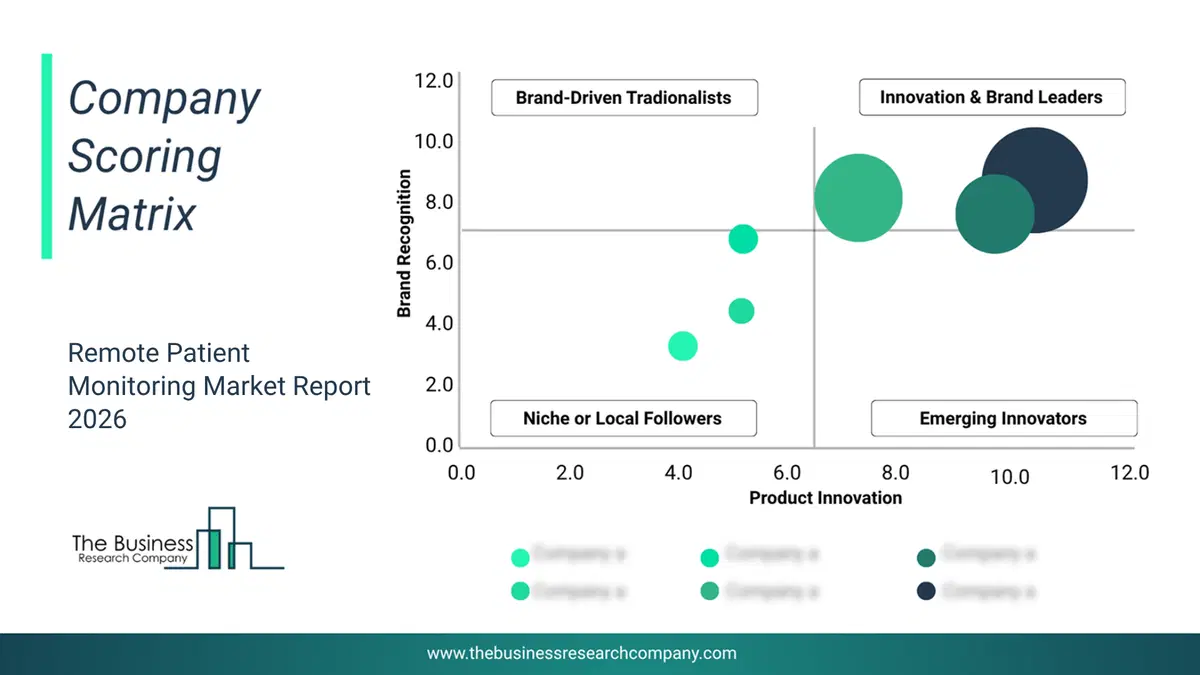
This chart maps companies by product innovation and brand strength, with bubble size indicating relative revenue, helping identify market leaders, challengers, and niche players. This is an illustrative chart; the full report provides a complete and accurate competitive analysis.
Global Remote Patient Monitoring Market Trends and Insights
Major companies operating in the remote patient monitoring market are focusing on developing advanced remote monitoring products to enhance patient care, improve clinical decision-making, and expand access to medical-grade data. Remote vital signs monitoring systems refer to wearable devices that continuously and accurately track key physiological parameters for use in clinical, emergency, and home settings. For instance, in May 2024, Sempulse Corporation, a US-based medical device manufacturer, launched the FDA 510(k)-cleared Halo Vital Signs Monitoring System, a miniature wearable device that integrates with the LiveCharts mobile app and the Command Cloud platform for centralized data visualization and management. The solution includes features such as a reusable design for both home and clinical use, cloud-based data analytics for prioritizing patient care, and continuous monitoring of vital signs even during patient activity.What Are Latest Mergers And Acquisitions In The Remote Patient Monitoring Market?
In June 2024, ResMed Inc., a US-based provider of digital health solutions, acquired Inhealthcare Limited for an undisclosed amount. Through this acquisition, ResMed aims to scale its remote patient monitoring and virtual wards capabilities in the UK, enhancing service offerings and extending patient care impact across integrated care systems. Inhealthcare Limited is a UK-based provider of remote patient monitoring services, including virtual wards, hypertension and COPD remote care, digital care home monitoring, medication reminders, and falls prevention solutions.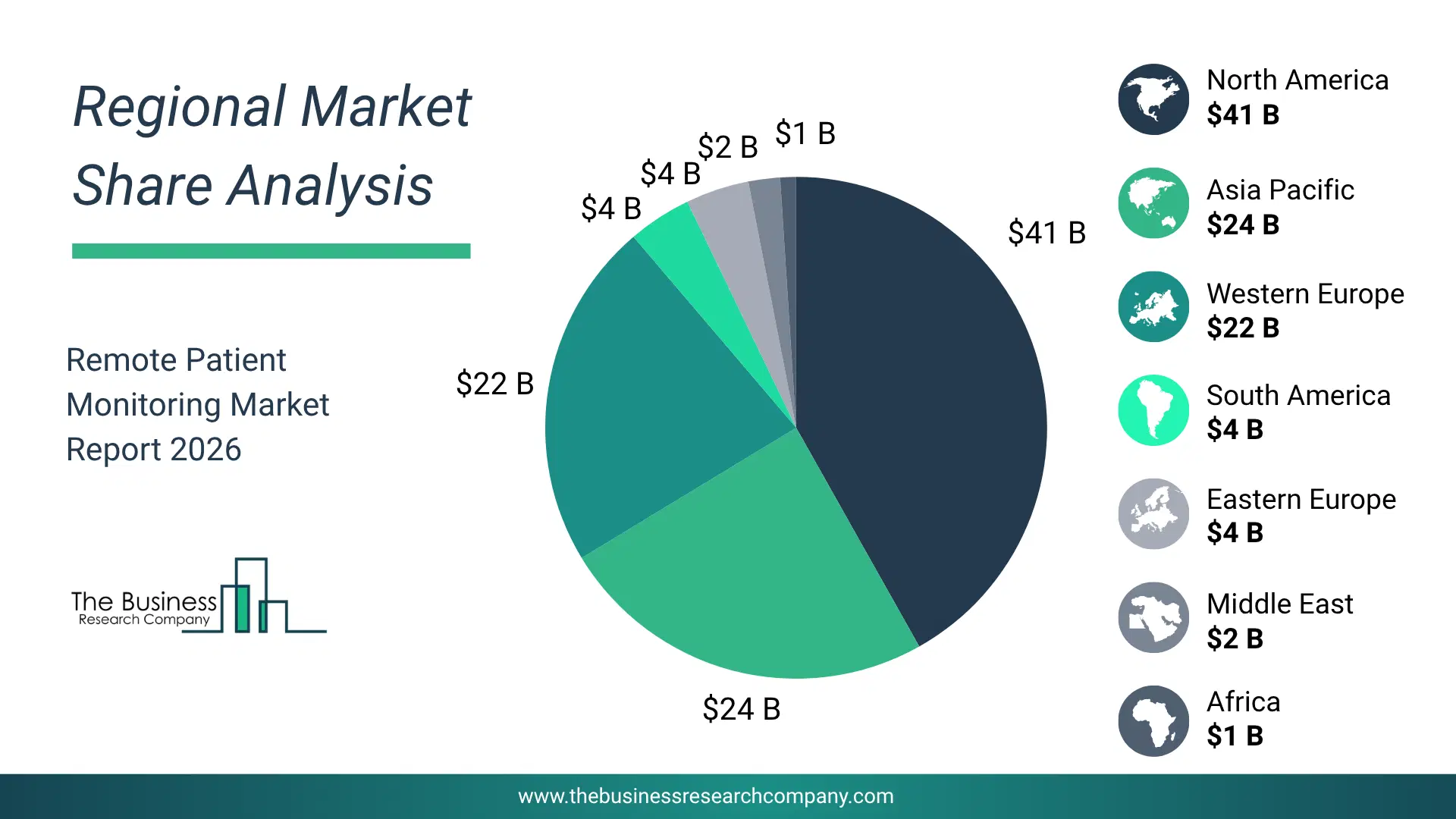
Regional Insights
North America was the largest region in the remote patient monitoring market in 2025. Asia-Pacific is expected to be the fastest-growing region in the forecast period. The regions covered in this market report are Asia-Pacific, South East Asia, Western Europe, Eastern Europe, North America, South America, Middle East, Africa. The countries covered in this market report are Australia, Brazil, China, France, Germany, India, Indonesia, Japan, Taiwan, Russia, South Korea, UK, USA, Canada, Italy, Spain.What Defines the Remote Patient Monitoring Market?
The remote patient monitoring market consists of revenues earned by entities by providing services such as remote monitoring service, telehealth consultation service, data analytics service, clinical interpretation service, and technical support service. The market value includes the value of related goods sold by the service provider or included within the service offering. The remote patient monitoring market also includes sales of wearable monitoring devices, vital sign sensors, blood pressure monitors, glucose monitoring devices, pulse oximeters, and electrocardiogram monitors. Values in this market are ‘factory gate’ values, that is, the value of goods sold by the manufacturers or creators of the goods, whether to other entities (including downstream manufacturers, wholesalers, distributors, and retailers) or directly to end customers. The value of goods in this market includes related services sold by the creators of the goods.How is Market Value Defined and Measured?
The market value is defined as the revenues that enterprises gain from the sale of goods and/or services within the specified market and geography through sales, grants, or donations in terms of the currency (in USD unless otherwise specified). The revenues for a specified geography are consumption values that are revenues generated by organizations in the specified geography within the market, irrespective of where they are produced. It does not include revenues from resales along the supply chain, either further along the supply chain or as part of other products.
This chart presents market attractiveness based on a quantitative evaluation of growth, competition, strategic alignment, and risk, offering a clear view of opportunity areas for decision-making. This chart is for illustrative purposes; the full report contains the complete analysis.

This chart highlights the Total Addressable Market (TAM) by estimating the maximum revenue opportunity using an assumption-driven approach, supporting strategic planning and opportunity sizing across markets. The chart is illustrative; the full report provides a more comprehensive analysis.
What Key Data and Analysis Are Included in the Remote Patient Monitoring Market Report 2026?
The remote patient monitoring market research report is one of a series of new reports from The Business Research Company that provides market statistics, including industry global market size, regional shares, competitors with the market share, detailed market segments, market trends and opportunities, and any further data you may need to thrive in the remote patient monitoring industry. The market research report delivers a complete perspective of everything you need, with an in-depth analysis of the current and future state of the industry.Remote Patient Monitoring Market Report Forecast Analysis
| Report Attribute | Details |
|---|---|
| Market Size Value In 2026 | $63.75 billion |
| Revenue Forecast In 2030 | $111.93 billion |
| Growth Rate | CAGR of 15.4% from 2026 to 2030 |
| Base Year For Estimation | 2025 |
| Actual Estimates/Historical Data | 2020-2025 |
| Forecast Period | 2026 - 2030 |
| Market Representation | Revenue in USD Billion and CAGR from 2026 to 2030 |
| Segments Covered | Component, Application, End User |
| Regional Scope | Asia-Pacific, Western Europe, Eastern Europe, North America, South America, Middle East, Africa |
| Country Scope | The countries covered in the report are Australia, Brazil, China, France, Germany, India, Indonesia, Japan, Taiwan, Russia, South Korea, UK, USA, Canada, Italy, Spain. |
| Key Companies Profiled | Siemens AG, Abbott Laboratories, Medtronic plc, Koninklijke Philips N.V., GE HealthCare Technologies Inc., Boston Scientific Corporation, Baxter International Inc., Roche Diagnostics, Omron Corporation, Shenzhen Mindray Bio-Medical Electronics Co. Ltd., ResMed Inc., Dräger Medical, Dexcom Inc., Teladoc Health Inc., Nihon Kohden Corporation, OSI Systems Inc, Biofourmis Inc., Masimo Corp., VitalConnect Inc., Guangdong Transtek Medical Electronics Co. Ltd. |
| Customization Scope | Request for Customization |
| Pricing And Purchase Options | Explore Purchase Options |