

Digital Biology Market Report 2026
Global Outlook – By Component (Software, Hardware, Services), By Deployment Mode (On Premises, Cloud), By Technology (Artificial Intelligence In Biology, Bioinformatics Tools And Software, Blockchain For Data Integrity, Cloud Computing Solutions, Deoxyribonucleic Acid Data Storage Technology), By Application (Drug Discovery, Agriculture, Environmental Monitoring, Personalized Medicine, Synthetic Biology, Bioinformatics, Other Applications), By End User (Pharmaceutical and Biotechnology Companies, Research and Academic Institutes, Healthcare Providers, Contract Research Organizations, Government and Regulatory Bodies) - Market Size, Trends, And Global Forecast 2026-2030
Digital Biology Market Overview
• Digital Biology market size has reached to $15.97 billion in 2025 • Expected to grow to $29.37 billion in 2030 at a compound annual growth rate (CAGR) of 13% • Growth Driver: Surge In Healthcare Research And Development Expenditure Driving The Growth Of The Market Due To Funding Advanced Computational Tools And Disease Modeling • Market Trend: AI-Driven Innovations Accelerating Drug Discovery And Personalized Medicine • North America was the largest region in 2025 and Asia-Pacific is the fastest growing region.Market Gains By 2030 – Top Opportunities By Segment
Market Gain identifies the most promising market opportunities by highlighting the segments or products expected to generate the highest incremental revenue growth over the next five years.
What Is Covered Under Digital Biology Market?
The digital biology market refers to the integration of computational tools, digital technologies, and advanced laboratory systems to model, simulate, and analyze biological processes at molecular, cellular, and organismal levels. By converting biological information into digital formats, it enables precise understanding, experimentation, and innovation across life sciences applications. The main components of digital biology are software, hardware, and services. Digital biology software refers to computer programs and platforms that model, simulate, analyze, and interpret biological systems and processes using computational methods. The various deployment modes involved are on-premises and cloud, which are based on artificial intelligence in biology, bioinformatics tools and software, blockchain for data integrity, cloud computing solutions, and deoxyribonucleic acid data storage technology. The various applications involved are drug discovery, agriculture, environmental monitoring, personalized medicine, synthetic biology, bioinformatics, and others, which are used by pharmaceutical and biotechnology companies, research and academic institutes, healthcare providers, contract research organizations, and government and regulatory bodies.
What Is The Digital Biology Market Size and Share 2026?
The digital biology market size has grown rapidly in recent years. It will grow from $15.97 billion in 2025 to $18 billion in 2026 at a compound annual growth rate (CAGR) of 12.7%. The growth in the historic period can be attributed to increasing availability of high-throughput biological data, expansion of genomic sequencing activities, growth of bioinformatics research initiatives, rising adoption of laboratory automation, improvements in computational processing power.What Is The Digital Biology Market Growth Forecast?
The digital biology market size is expected to see rapid growth in the next few years. It will grow to $29.37 billion in 2030 at a compound annual growth rate (CAGR) of 13.0%. The growth in the forecast period can be attributed to increasing investments in ai-enabled drug discovery, expansion of personalized medicine research, growing use of digital biology in agriculture and environment studies, rising demand for scalable cloud bio platforms, increasing collaboration between tech and life sciences firms. Major trends in the forecast period include increasing adoption of computational biology platforms, rising use of AI-driven biological modeling, growing integration of multi-omics data analysis, expansion of cloud-based bioinformatics solutions, enhanced focus on digital twin biology.
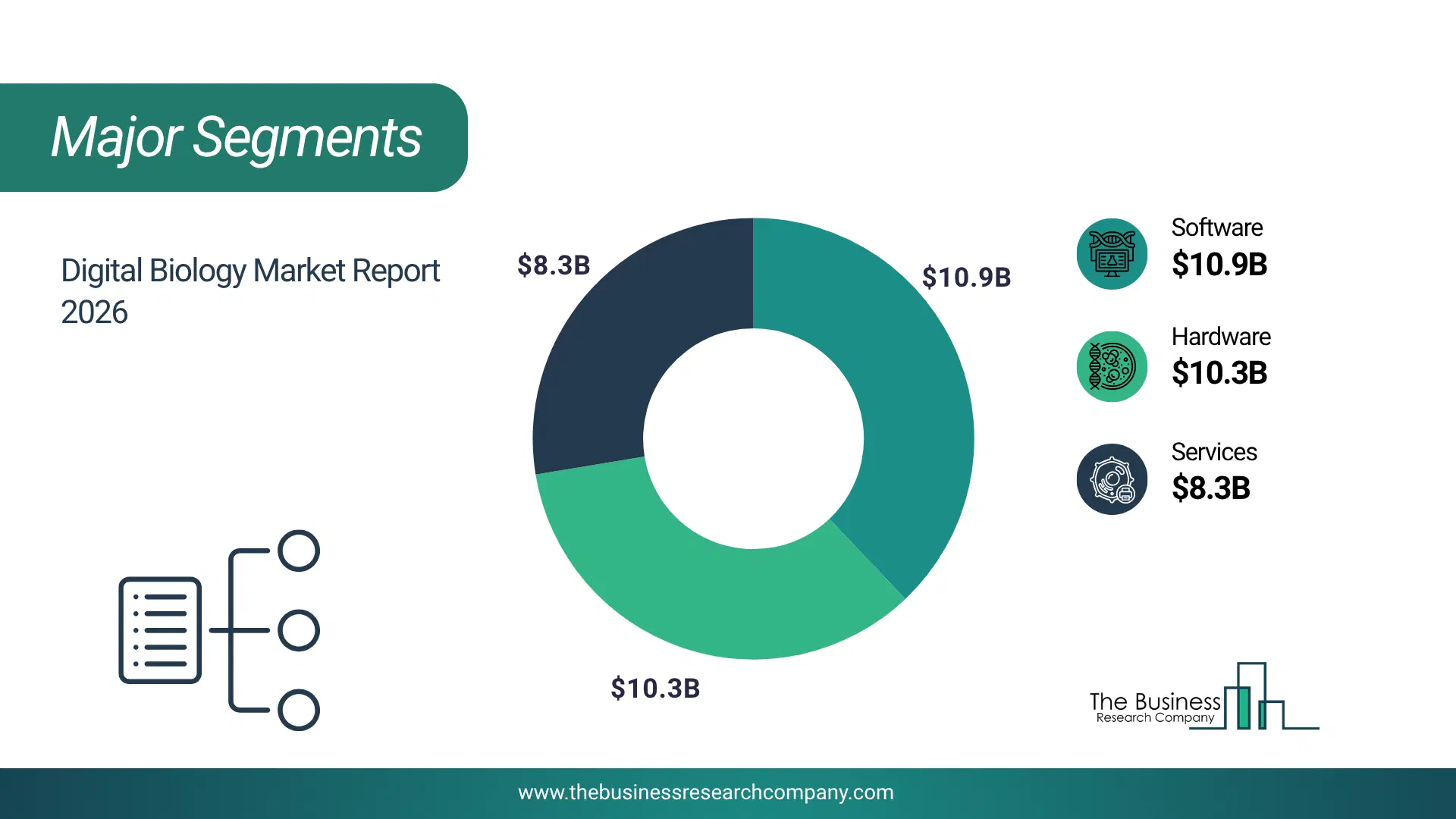
Global Digital Biology Market Segmentation
1) By Component: Software, Hardware, Services 2) By Deployment Mode: On Premises, Cloud 3) By Technology: Artificial Intelligence In Biology, Bioinformatics Tools And Software, Blockchain For Data Integrity, Cloud Computing Solutions, Deoxyribonucleic Acid Data Storage Technology 4) By Application: Drug Discovery, Agriculture, Environmental Monitoring, Personalized Medicine, Synthetic Biology, Bioinformatics, Other Applications 5) By End User: Pharmaceutical and Biotechnology Companies, Research and Academic Institutes, Healthcare Providers, Contract Research Organizations, Government and Regulatory Bodies Subsegments: 1) By Software: Genomic Data Analysis, Proteomics Analysis, Metabolomics Analysis, Transcriptomics Analysis, Clinical Bioinformatics, Data Visualization Tools, Laboratory Information Management Systems 2) By Hardware: Sequencing Instruments, Mass Spectrometry Systems, Microscopy Instruments, Chromatography Equipment, Cell Culture Instruments, Laboratory Automation Equipment 3) By Services: Bioinformatics Consulting, Data Management Services, Genetic Testing Services, Clinical Trial Support Services, Custom Assay Development, Laboratory Management Services, Training And Support Services The top segments in the digital biology market will be: • Software will reach $10.86 billion by 2030. • Hardware will reach $10.21 billion by 2030. • Services will reach $8.3 billion by 2030.What Is The Driver Of The Digital Biology Market?
The surge in healthcare research and development expenditure is expected to propel the growth of the digital biology market going forward. Healthcare research and development refers to the organized efforts to create, test, and improve medical treatments, devices, and procedures to enhance health outcomes and patient care. Healthcare research and development expenditure is rising due to the increasing demand for innovative treatments and advanced therapies, as companies invest more to develop new drugs, medical devices, and personalized medicine solutions that address complex and emerging health challenges. Healthcare research and development spending supports digital biology by financing the development of advanced computational tools and bioinformatics platforms, which allow faster analysis of biological data and more precise modeling of diseases to improve diagnostics and treatments. For instance, in June 2025, the Department for Science, Innovation and Technology, a UK-based government ministry, unveiled a $114.38 billion (£86 billion) investment over four years to support science and technology research and development, including drug development, with annual spending of $29.93 billion (£22.5 billion). Therefore, the surge in healthcare research and development expenditure is driving the growth of the digital biology industry.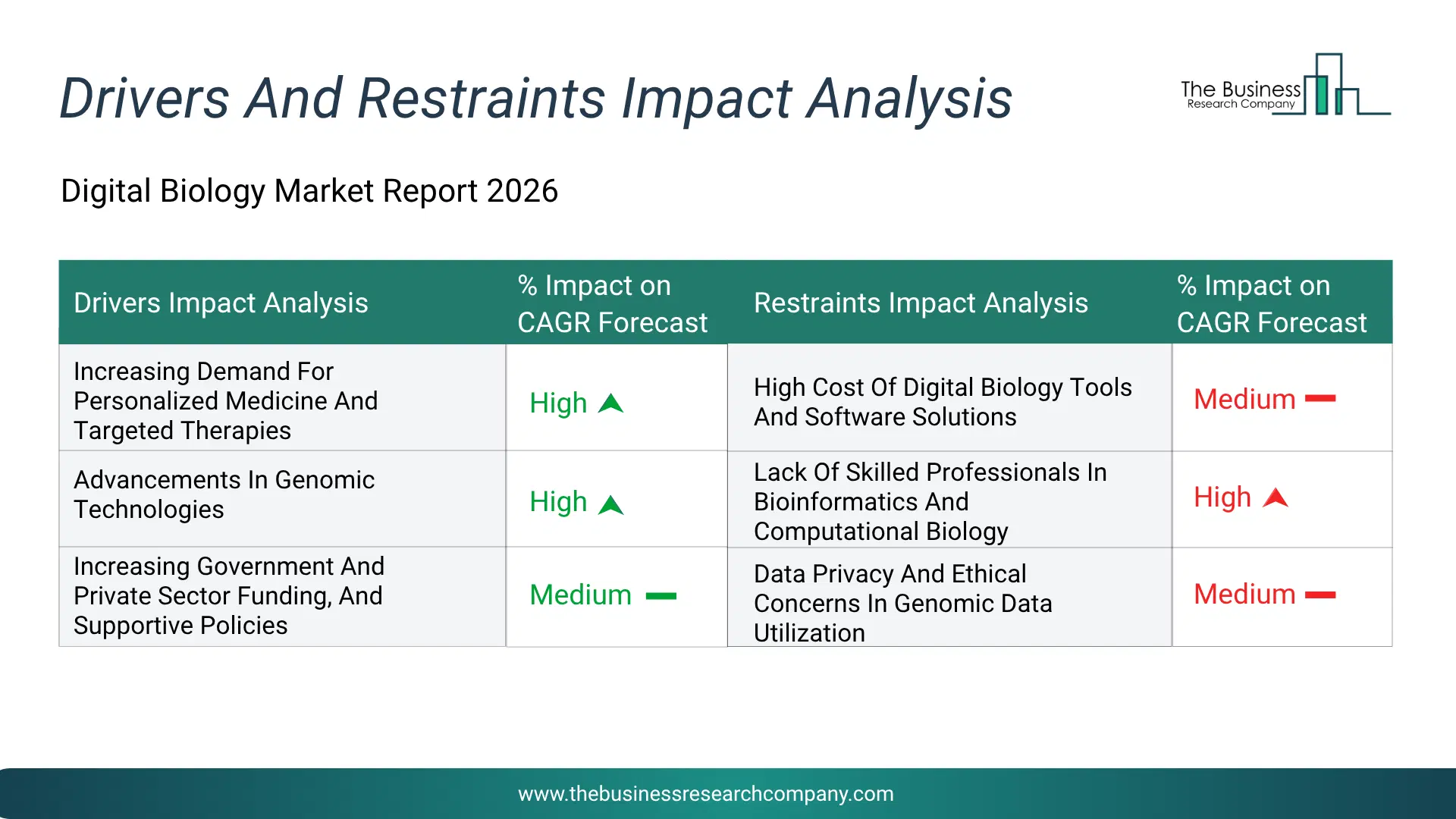
Infographic Chart Showing Key Market Drivers Analysis And Restraints For Digital Biology Market
The chart presents an impact analysis of key drivers and restraints, quantifying their relative influence on the market's growth rate and helping assess the balance between growth enablers and limiting factors. This chart offers a high-level perspective; the full report contains more detailed insights.
How Will The Drivers Impact Growth In The Global Digital Biology Market?
• Increasing Demand For Personalized Medicine And Targeted Therapies (High) – During the forecast period, the increasing demand for personalized medicine and targeted therapies is expected to become a key growth driver for the digital biology market by 2030. Personalized medicine requires advanced tools to analyze genetic and molecular data for tailoring treatments to individual patients. Digital biology enables researchers to simulate, model, and predict outcomes more effectively, improving the success of precision therapies. As healthcare shifts toward individualized care, this demand strongly accelerates market adoption. • Advancements In Genomic Technologies (High) – During the forecast period, the advancements in genomic technologies is expected to emerge as a major factor driving the expansion of the digital biology market by 2030. Rapid progress in next-generation sequencing and multi-omics technologies has created vast datasets that require advanced digital biology tools. These innovations allow deeper biological insights and accelerate drug discovery and diagnostics. The synergy between genomic advancements and digital biology directly drives efficiency and innovation in healthcare solutions. • Increasing Government And Private Sector Funding, And Supportive Policies (Medium) – During the forecast period, the increasing government and private sector funding, and supportive policies is expected to act as a key growth catalyst for the digital biology market by 2030. Increasing government and private sector funding, along with supportive policies, are significant drivers for the growth of digital biology. Such funding accelerates research and innovation by providing necessary resources for advanced computational tools, data analytics, and experimental technologies. Supportive policies also create an encouraging ecosystem that fosters collaboration, startup growth, and technology adoption, thereby boosting the development and application of digital biology solutions.How Will The Restraints Impact Growth In The Global Digital Biology Market?
• High Cost Of Digital Biology Tools And Software Solutions (Medium) – During the forecast period, the digital biology requires advanced infrastructure, expensive computational resources, and specialized software, which are costly to acquire and maintain. Smaller research labs and startups often face financial constraints in adopting these systems. This limits widespread accessibility and slows overall market penetration. • Lack Of Skilled Professionals In Bioinformatics And Computational Biology (High) – During the forecast period, the market relies on experts skilled in biology, data science, and computational modeling, but such professionals are in short supply. The talent gap makes it difficult for institutions to implement and utilize digital biology solutions effectively. This shortage restricts innovation and hampers large-scale adoption. • Data Privacy And Ethical Concerns In Genomic Data Utilization (Medium) – During the forecast period, the increasing use of large-scale genomic and biological datasets in digital biology raises significant concerns regarding data privacy, consent, and ethical handling of sensitive biological information. Strict regulatory frameworks and compliance requirements can limit data sharing across institutions and borders. These constraints create operational challenges for research organizations and reduce the speed of collaborative innovation, thereby restraining market growth.Key Players In The Global Digital Biology Market
Major companies operating in the digital biology market are Thermo Fisher Scientific, Illumina Inc., Qiagen N.V., F. Hoffmann-La Roche Ltd., Perkin Elmer, Agilent Technologies Inc., BGI Genomics Co. Ltd., DNAnexus Inc., Seven Bridges Genomics Inc., GenBio Inc., Evogene Ltd., Cradle B.V., Ginkgo Biosecurity, Evolutionary Scale Inc., Naturannova S.A., Nexco Analytics Inc., Latent Labs Inc., BioLizard NV, Lamin Labs Inc., LatchBio Inc., Standard BioTools Inc., Recursion Pharmaceuticals Inc., Insilico Medicine Inc., Deep Genomics Inc., Valo Health Inc., LabGenius Ltd., Arzeda Corp., e-Therapeutics plc, Bio-Map, A-Alpha Bio Inc., Eikon Therapeutics Inc., Proscia Inc., Lifebit Biotech Ltd., Genestack Ltd., Seqera Labs SL, Sciepot, Pluto Biosciences Inc., SciNote LLC, Qlucore AB, 10x Genomics Inc., Bruker Corporation, Bio-Techne Corporation, Resolve Biosciences GmbH, RareCyte Inc., Oxford Nanopore Technologies plc, PacBio, Ultima Genomics Inc., Element Biosciences Inc., Benchling Inc., and Synthace Ltd.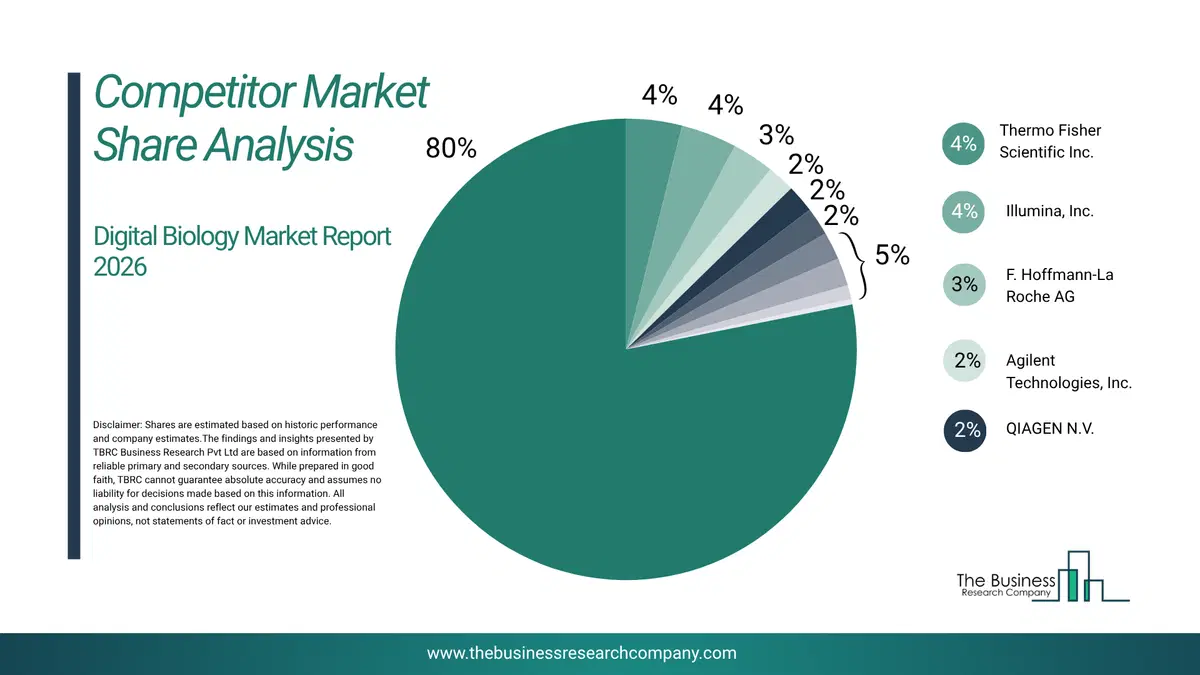
This chart is for illustrative purposes; the full report includes a detailed competitor analysis and comprehensive overview of the top 10 companies in the market.
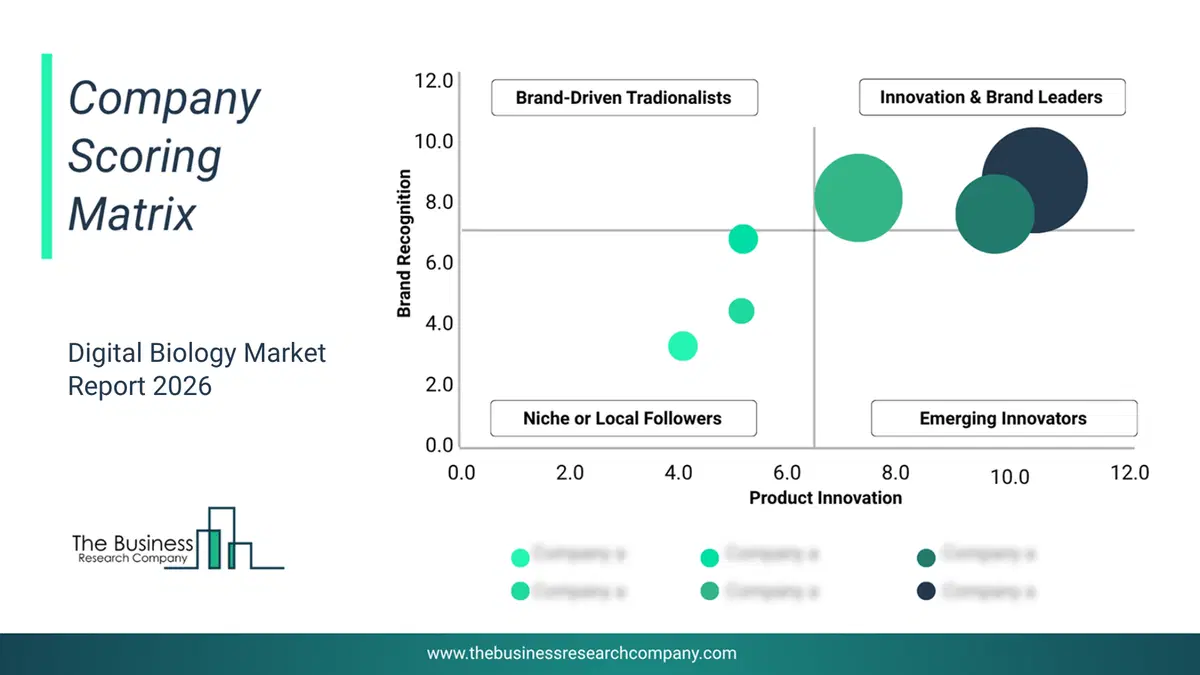
This chart maps companies by product innovation and brand strength, with bubble size indicating relative revenue, helping identify market leaders, challengers, and niche players. This is an illustrative chart; the full report provides a complete and accurate competitive analysis.
Global Digital Biology Market Trends and Insights
Major companies in the digital biology market are increasingly adopting artificial intelligence for drug discovery and predictive biology. Artificial intelligence enables faster identification of therapeutic targets, optimizes drug development, and supports the creation of precise, patient-specific treatments. For instance, in December 2024, GenBio AI, a US-based digital biology company, launched Phase 1 of the AI-Driven Digital Organism (AIDO). This innovative platform enables comprehensive modeling of DNA (deoxyribonucleic acid), RNA (ribonucleic acid), protein, and single-cell expression, providing researchers with advanced tools to simulate biological systems and accelerate medical research, drug discovery, and personalized therapy development.What Are Latest Mergers And Acquisitions In The Digital Biology Market?
In January 2025, Merck, a Germany-based pharmaceutical and life sciences company, acquired HUB Organoids Holding B.V. for an undisclosed amount. This acquisition expands Merck’s next-generation biology portfolio, strengthening its capabilities in advanced organoid platforms and next-generation biology tools to accelerate research and innovation in drug discovery and personalized medicine. HUB Organoids Holding B.V. is a Netherlands-based digital biology company specializing in the development of advanced organoid platforms and next-generation in vitro models.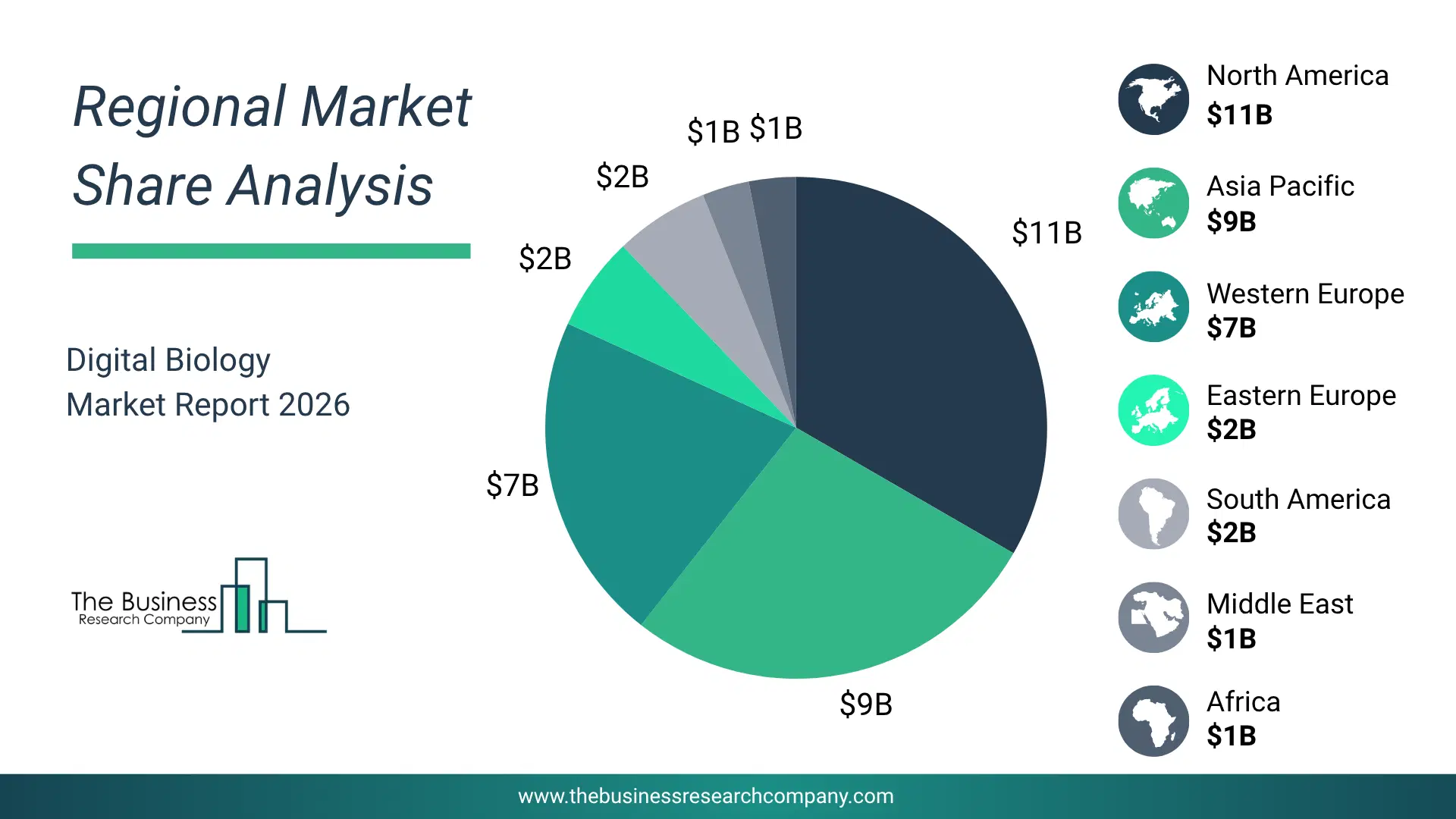
Regional Outlook
North America was the largest region in the digital biology market in 2025. Asia-Pacific is expected to be the fastest-growing region in the forecast period. The regions covered in this market report are Asia-Pacific, South East Asia, Western Europe, Eastern Europe, North America, South America, Middle East, Africa. The countries covered in this market report are Australia, Brazil, China, France, Germany, India, Indonesia, Japan, Taiwan, Russia, South Korea, UK, USA, Canada, Italy, Spain.What Defines the Digital Biology Market?
The digital biology market consists of revenues earned by entities by providing services such as bioinformatics services, genomic sequencing and analysis, and molecular diagnostics support. The market value includes the value of related goods sold by the service provider or included within the service offering. The digital biology market also includes of sales of bioinformatics platforms, biological database subscriptions, synthetic biology design tools, laboratory automation instruments, and high-performance computing systems for biological research. Values in this market are ‘factory gate’ values, that is the value of goods sold by the manufacturers or creators of the goods, whether to other entities (including downstream manufacturers, wholesalers, distributors and retailers) or directly to end customers. The value of goods in this market includes related services sold by the creators of the goods.How is Market Value Defined and Measured?
The market value is defined as the revenues that enterprises gain from the sale of goods and/or services within the specified market and geography through sales, grants, or donations in terms of the currency (in USD unless otherwise specified). The revenues for a specified geography are consumption values that are revenues generated by organizations in the specified geography within the market, irrespective of where they are produced. It does not include revenues from resales along the supply chain, either further along the supply chain or as part of other products.
This chart presents market attractiveness based on a quantitative evaluation of growth, competition, strategic alignment, and risk, offering a clear view of opportunity areas for decision-making. This chart is for illustrative purposes; the full report contains the complete analysis.

This chart highlights the Total Addressable Market (TAM) by estimating the maximum revenue opportunity using an assumption-driven approach, supporting strategic planning and opportunity sizing across markets. The chart is illustrative; the full report provides a more comprehensive analysis.
What Key Data and Analysis Are Included in the Digital Biology Market Report 2026?
The digital biology market research report is one of a series of new reports from The Business Research Company that provides market statistics, including industry global market size, regional shares, competitors with the market share, detailed market segments, market trends and opportunities, and any further data you may need to thrive in the digital biology industry. The market research report delivers a complete perspective of everything you need, with an in-depth analysis of the current and future state of the industry.Digital Biology Market Report Forecast Analysis
| Report Attribute | Details |
|---|---|
| Market Size Value In 2026 | $18 billion |
| Revenue Forecast In 2030 | $29.37 billion |
| Growth Rate | CAGR of 13% from 2026 to 2030 |
| Base Year For Estimation | 2025 |
| Actual Estimates/Historical Data | 2020-2025 |
| Forecast Period | 2026 - 2030 |
| Market Representation | Revenue in USD Billion and CAGR from 2026 to 2030 |
| Segments Covered | Component, Deployment Mode, Technology, Application, End User |
| Regional Scope | Asia-Pacific, Western Europe, Eastern Europe, North America, South America, Middle East, Africa |
| Country Scope | The countries covered in the report are Australia, Brazil, China, France, Germany, India, ... |
| Key Companies Profiled | Thermo Fisher Scientific, Illumina Inc., Qiagen N.V., F. Hoffmann-La Roche Ltd., Perkin Elmer, Agilent Technologies Inc., BGI Genomics Co. Ltd., DNAnexus Inc., Seven Bridges Genomics Inc., GenBio Inc., Evogene Ltd., Cradle B.V., Ginkgo Biosecurity, Evolutionary Scale Inc., Naturannova S.A., Nexco Analytics Inc., Latent Labs Inc., BioLizard NV, Lamin Labs Inc., LatchBio Inc., Standard BioTools Inc., Recursion Pharmaceuticals Inc., Insilico Medicine Inc., Deep Genomics Inc., Valo Health Inc., LabGenius Ltd., Arzeda Corp., e-Therapeutics plc, Bio-Map, A-Alpha Bio Inc., Eikon Therapeutics Inc., Proscia Inc., Lifebit Biotech Ltd., Genestack Ltd., Seqera Labs SL, Sciepot, Pluto Biosciences Inc., SciNote LLC, Qlucore AB, 10x Genomics Inc., Bruker Corporation, Bio-Techne Corporation, Resolve Biosciences GmbH, RareCyte Inc., Oxford Nanopore Technologies plc, PacBio, Ultima Genomics Inc., Element Biosciences Inc., Benchling Inc., and Synthace Ltd. |
| Customization Scope | Request for Customization |
| Pricing And Purchase Options | Explore Purchase Options |