
Synthetic Biology Market Report 2026
Global Outlook – By Technology (Nucleotide Synthesis And Sequencing, Bioinformatics, Microfluidics, Genetic Engineering), By Product Type (Oligonucleotides, Enzymes, Cloning And Assembly Kits, Xeno-Nucleic Acids (XNA), Chassis Organism ), By Application (Pharmaceuticals And Diagnostics, Chemicals, Biofuels, Bioplastics, Other Application) - Market Size, Trends, Strategies, and Forecast to 2030
Synthetic Biology Market Overview
• Synthetic Biology market size has reached to $26.63 billion in 2025 • Expected to grow to $62.48 billion in 2030 at a compound annual growth rate (CAGR) of 18.2% • Growth Driver: Synthetic Biology Market Growth Fueled By Rising R&D Investments • Market Trend: Custom Synthetic Biology Solutions Program to Accelerate Design-Build-Test Innovation • North America was the largest region in 2025 and Western Europe is the fastest growing region.What Is Covered Under Synthetic Biology Market?
Synthetic biology is a field of biological science that involve engineering principles to redesign organisms to give them new abilities. It is possible to think of synthetic biology as the culmination or the prescriptive, deliberate stage of biology. The main product types of synthetic biology are oligonucleotides, enzymes, cloning and assembly kits, xeno-nucleic acids (XNA), and chassis organisms. Oligonucleotides are small single-stranded DNA segments that, when internalized by the cell, can specifically suppress the expression of a single protein. The various technologies include nucleotide synthesis and sequencing, bioinformatics, microfluidics, and genetic engineering that are applied in pharmaceuticals and diagnostics, chemicals, biofuels, bioplastics, and others.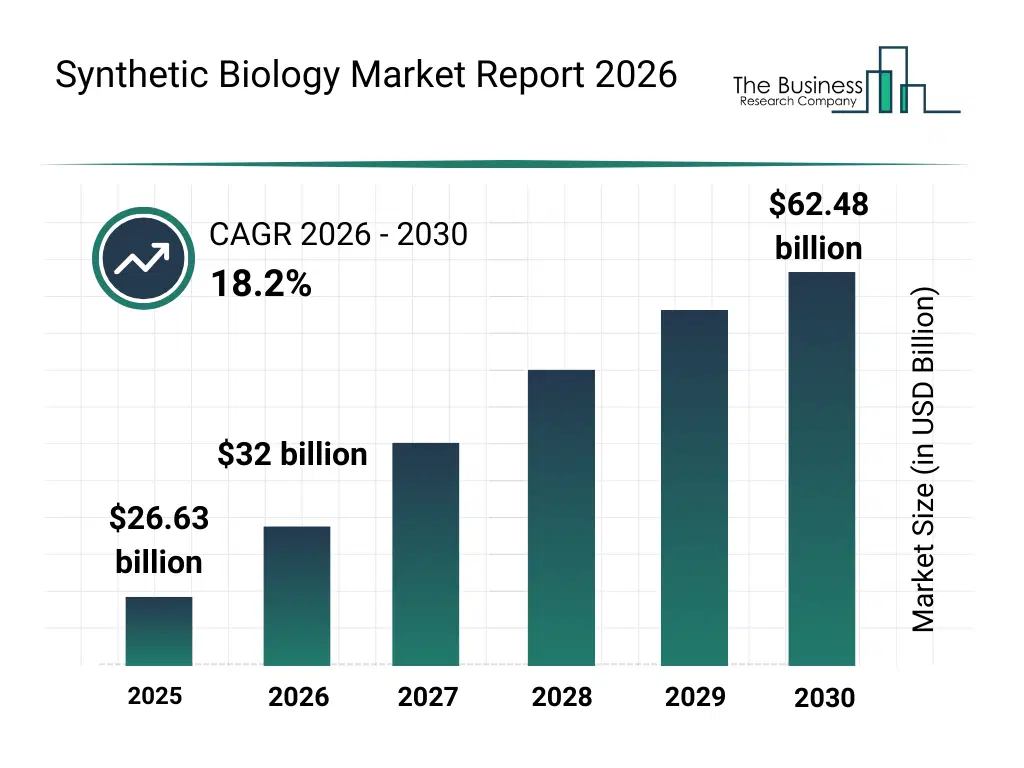
What Is The Synthetic Biology Market Size and Share 2026?
The synthetic biology market size has grown exponentially in recent years. It will grow from $26.63 billion in 2025 to $32 billion in 2026 at a compound annual growth rate (CAGR) of 20.2%. The growth in the historic period can be attributed to advancements in genetic engineering techniques, expansion of academic and industrial research funding, growing availability of sequencing technologies, early commercialization of synthetic organisms, increasing collaboration between academia and industry.What Is The Synthetic Biology Market Growth Forecast?
The synthetic biology market size is expected to see rapid growth in the next few years. It will grow to $62.48 billion in 2030 at a compound annual growth rate (CAGR) of 18.2%. The growth in the forecast period can be attributed to increasing investments in bio-manufacturing, rising demand for sustainable chemicals and fuels, expansion of synthetic biology applications in healthcare, growing integration of ai-driven biological design, increasing regulatory clarity for engineered organisms. Major trends in the forecast period include increasing adoption of crispr-based gene editing, rising use of bioinformatics-driven design tools, expansion of synthetic gene construction platforms, growing focus on sustainable bio-based production, enhanced automation in biological engineering workflows.
Global Synthetic Biology Market Segmentation
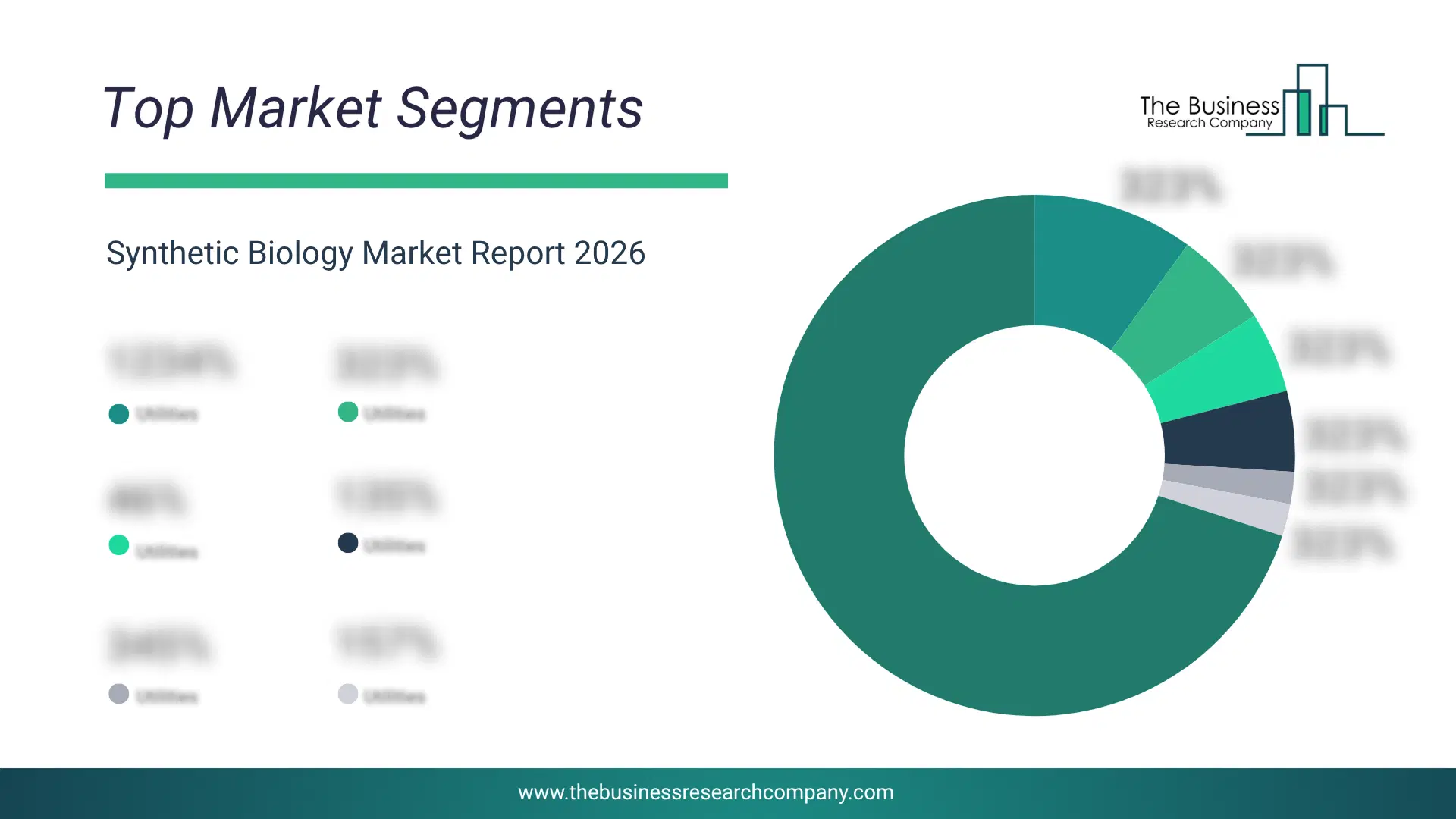
1) By Technology: Nucleotide Synthesis And Sequencing, Bioinformatics, Microfluidics, Genetic Engineering 2) By Product Type: Oligonucleotides, Enzymes, Cloning And Assembly Kits, Xeno-Nucleic Acids (XNA), Chassis Organism 3) By Application: Pharmaceuticals And Diagnostics, Chemicals, Biofuels, Bioplastics, Other Application Subsegments: 1) By Nucleotide Synthesis And Sequencing: DNA Synthesis Technologies, Next-Generation Sequencing (NGS), Sanger Sequencing 2) By Bioinformatics: Software Tools For Genomic Data Analysis, Databases For Gene/Protein Information, Algorithms For Gene Editing And Design 3) By Microfluidics: Lab-On-A-Chip Technologies, Microfluidic Devices For Biological Assays, Applications In Drug Discovery And Diagnostics 4) By Genetic Engineering: CRISPR/Cas9 Technology, Recombinant DNA Technology, Synthetic Gene Construction And AssemblyWhat Is The Driver Of The Synthetic Biology Market?
The rising research and development investment is expected to propel the growth of the synthetic biology market going forward. Research and development (R&D) is the process of creating new knowledge, technologies, or products through systematic investigation, experimentation, and innovation to improve existing offerings or develop new ones. Investments in research and development are rising due to increasing competition, the demand for innovation, advancements in technology, and the need for businesses to adapt to changing consumer preferences and market dynamics. Investment in research and development for synthetic biology is essential to advance the field's potential for creating sustainable solutions in areas such as healthcare, agriculture, and environmental management by engineering biological systems and organisms for specific purposes. For instance, in 2023, according to Office for National Statistics, a UK-based, government agency, the UK government’s net spending on research and development (R&D) increased to £17.4 ($22.1 billion) billion in 2023, up from £16.1 billion ($20.45 billion) in 2022, marking an 8.2% rise. Therefore, the rising research and development investment is driving the growth of the synthetic biology industry.Key Players In The Global Synthetic Biology Market
Major companies operating in the synthetic biology market are Thermo Fisher Scientific Inc, Danaher Corporation, Eurofins Scientific, Merck KGaA, Novozymes A/S, Agilent Technologies, New England Biolabs Inc, Precigen Inc, Amyris, Inc, Genscript Biotech Corporation, Codex Genetics, Cathay Biotech, Bota Biosciences, Bluepha, Spiber, OriCiro Genomics Inc, Provectus Algae, Puraffinity, Royal DSM NV, Colorifix, Phytoform Labs, Desktop Genetics, NanoSyrinx, Pulmobiotics S.L, EnginZyme, Chain Biotech, Nuclera Nucleics, Biosynthetics GmbH, Entelechon GmbH, Sloning BioTechnology GmbH, Prokarium Ltd, Synbio, Captor Therapeutics, Gero.ai, ARNA Genomics, Solvo Omixon, Soft flow, Algenol, Genomatica, Integrated DNA Technologies, Sana Biotechnology, Impossible Foods, Apeel Sciences, Twist Bioscience, Synlogic, Zymergen Inc, Ginkgo Bioworks, Codexis, Arzeda Corporation, Synthetic Genomics, Conagen, Dupont, Oxitec Ltd, Sentebiolab, GEEN Biotechnology Inc, Genbiotek Biosistem Laboratory Ltd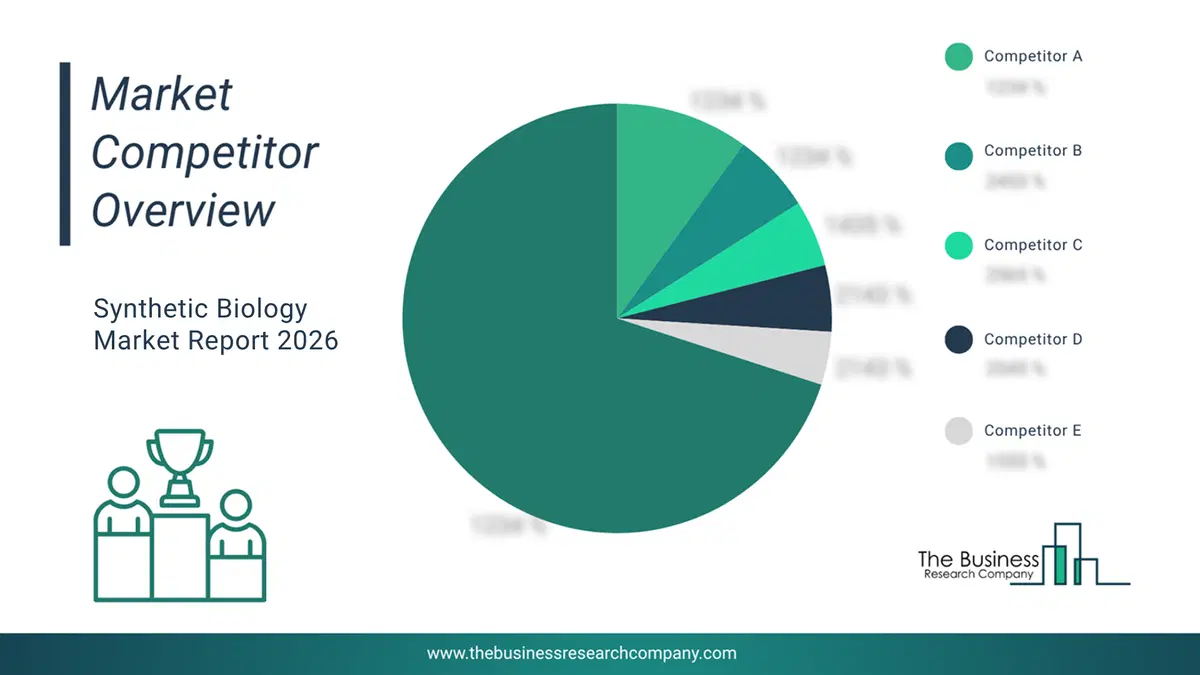
This chart is for illustrative purposes; the full report includes a detailed competitor analysis and comprehensive overview of the top 10 companies in the market.
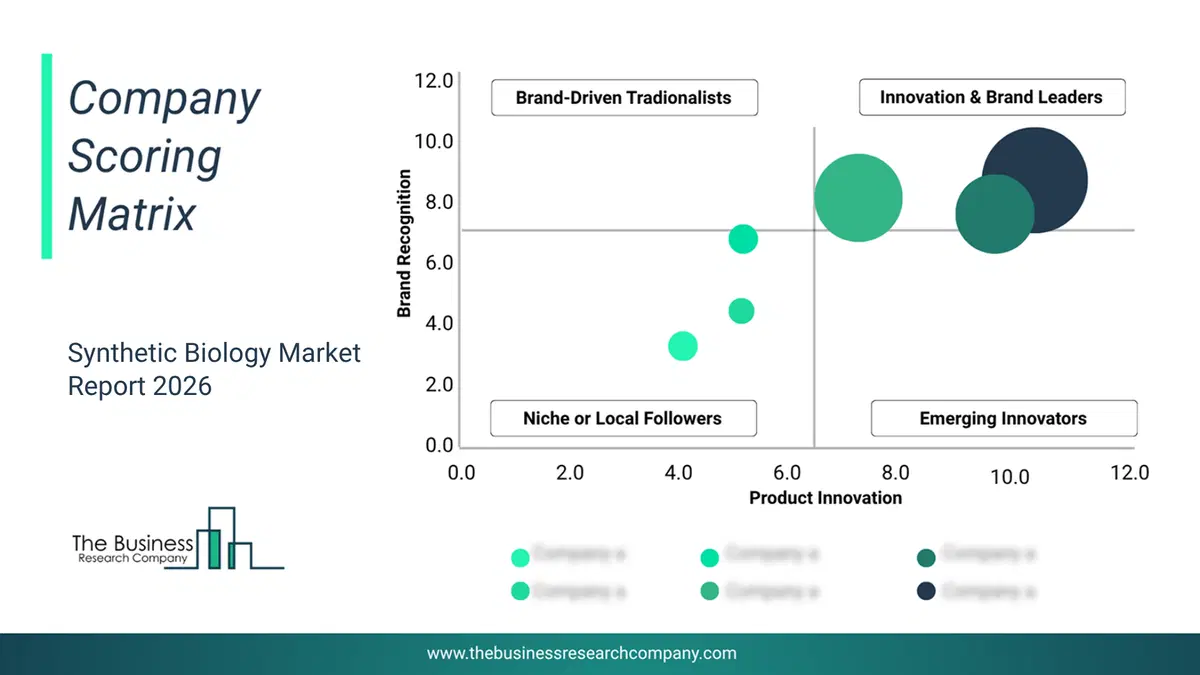
This chart maps companies by product innovation and brand strength, with bubble size indicating relative revenue, helping identify market leaders, challengers, and niche players. This is an illustrative chart; the full report provides a complete and accurate competitive analysis.
Global Synthetic Biology Market Trends and Insights
Major companies operating in the synthetic biology market are focusing on developing innovative products, such as custom solutions programs for design-build-test cycles to accelerate bespoke synthetic biology projects. A custom solutions program is a tailored service that enables clients to partner directly with experts to design, build, and test synthetic DNA constructs rather than relying on off-the-shelf catalog items. For instance in June 2025, Integrated DNA Technologies (IDT), a U.S.-basedbiotechnology company, launched its Synthetic Biology Custom Solutions Program. This white glove manufacturing service gives customers access to IDT’s in-house scientists and engineers to work on tailored projects everything from complex genes to non-standard DNA fragments. Key features include a dedicated team to support design-build-test workflows, custom manufacturing in IDT’s 25,000-sq-ft synthetic biology facility, a wide acceptance of project types (e.g., high-yield non-standard gene fragments, genes >5 kb, multi-site cloning), and faster turnaround times by removing rigid high-throughput constraints. This program empowers synthetic biology innovators to iterate more quickly and overcome bottlenecks in their R&D.What Are Latest Mergers And Acquisitions In The Synthetic Biology Market?
In March 2024, Johnson & Johnson, a US-based pharmaceutical company, completed the acquisition of Ambrx, Inc., for an undisclosed amount. With this acquisition, Johnson & Johnson aims to strengthen its biopharmaceutical pipeline, enhance its protein and peptide engineering capabilities, expand its innovative therapeutic portfolio, and accelerate the development of next-generation biologics. Ambrx, Inc., is a US-based biotechnology company specializing in the design and development of site-specific protein and peptide therapeutics.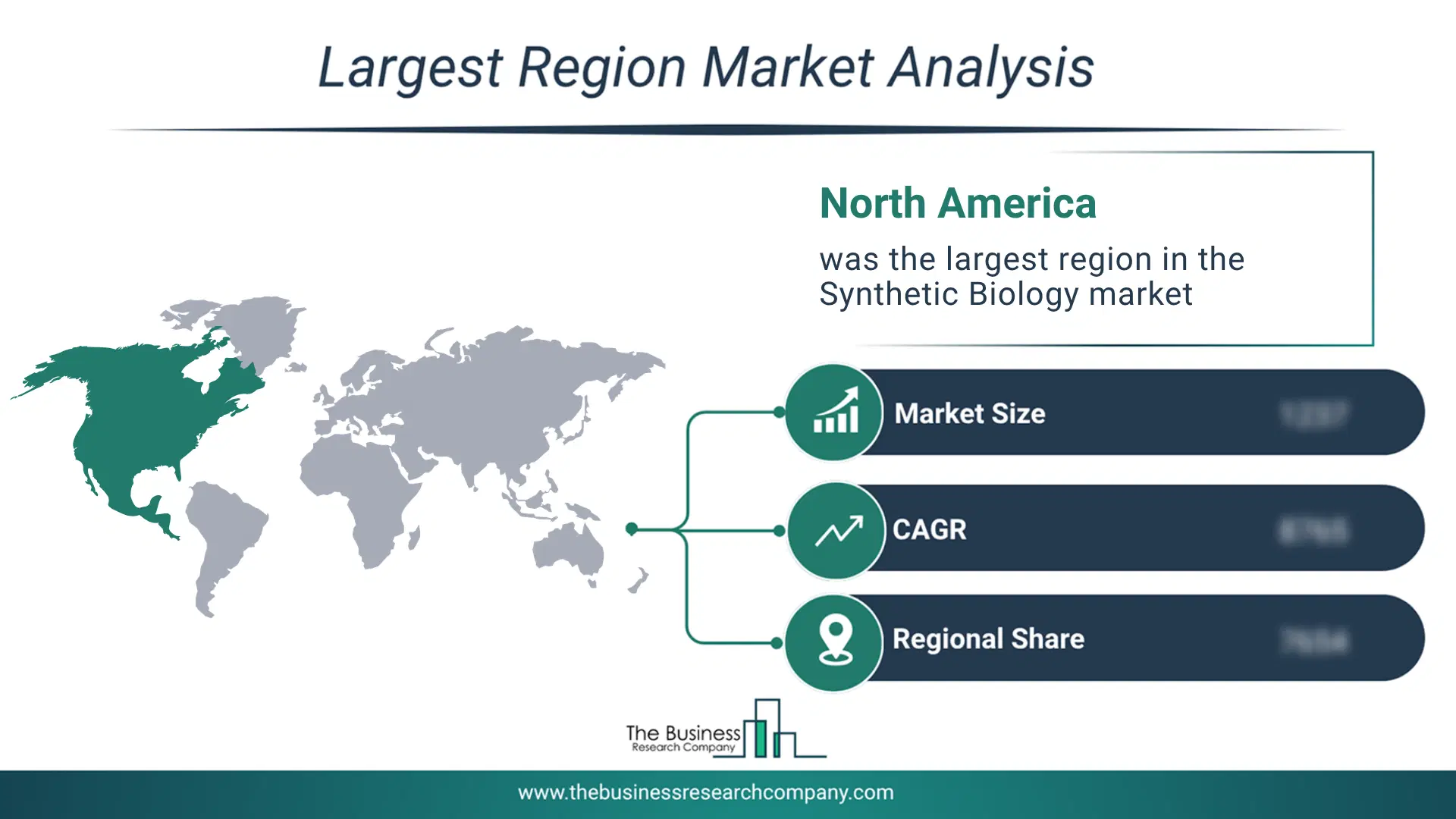
Regional Outlook
North America was the largest region in the synthetic biology market in 2025. Western Europe was the second largest region in the global synthetic biology market share. The regions covered in this market report are Asia-Pacific, South East Asia, Western Europe, Eastern Europe, North America, South America, Middle East, Africa. The countries covered in this market report are Australia, Brazil, China, France, Germany, India, Indonesia, Japan, Taiwan, Russia, South Korea, UK, USA, Canada, Italy, Spain.What Defines the Synthetic Biology Market?
The synthetic biology market includes revenue earned by synthetic compound, technology and related services. The market value includes the value of related goods sold by the service provider or included within the service offering. Only goods and services traded between entities or sold to end consumers are included.How is Market Value Defined and Measured?
The market value is defined as the revenues that enterprises gain from the sale of goods and/or services within the specified market and geography through sales, grants, or donations in terms of the currency (in USD unless otherwise specified). The revenues for a specified geography are consumption values that are revenues generated by organizations in the specified geography within the market, irrespective of where they are produced. It does not include revenues from resales along the supply chain, either further along the supply chain or as part of other products.
This chart presents market attractiveness based on a quantitative evaluation of growth, competition, strategic alignment, and risk, offering a clear view of opportunity areas for decision-making. This chart is for illustrative purposes; the full report contains the complete analysis.

This chart highlights the Total Addressable Market (TAM) by estimating the maximum revenue opportunity using an assumption-driven approach, supporting strategic planning and opportunity sizing across markets. The chart is illustrative; the full report provides a more comprehensive analysis.
What Key Data and Analysis Are Included in the Synthetic Biology Market Report 2026?
The synthetic biology market research report is one of a series of new reports from The Business Research Company that provides market statistics, including industry global market size, regional shares, competitors with the market share, detailed market segments, market trends and opportunities, and any further data you may need to thrive in the synthetic biology industry. The market research report delivers a complete perspective of everything you need, with an in-depth analysis of the current and future state of the industry.Synthetic Biology Market Report Forecast Analysis
| Report Attribute | Details |
|---|---|
| Market Size Value In 2026 | $32 billion |
| Revenue Forecast In 2030 | $62.48 billion |
| Growth Rate | CAGR of 18.2% from 2026 to 2030 |
| Base Year For Estimation | 2025 |
| Actual Estimates/Historical Data | 2020-2025 |
| Forecast Period | 2026 - 2030 |
| Market Representation | Revenue in USD Billion and CAGR from 2026 to 2030 |
| Segments Covered | Technology, Product Type, Application |
| Regional Scope | Asia-Pacific, Western Europe, Eastern Europe, North America, South America, Middle East, Africa |
| Country Scope | The countries covered in the report are Australia, Brazil, China, France, Germany, India, Indonesia, Japan, Taiwan, Russia, South Korea, UK, USA, Canada, Italy, Spain |
| Key Companies Profiled | Thermo Fisher Scientific Inc, Danaher Corporation, Eurofins Scientific, Merck KGaA, Novozymes A/S, Agilent Technologies, New England Biolabs Inc, Precigen Inc, Amyris, Inc, Genscript Biotech Corporation, Codex Genetics, Cathay Biotech, Bota Biosciences, Bluepha, Spiber, OriCiro Genomics Inc, Provectus Algae, Puraffinity, Royal DSM NV, Colorifix, Phytoform Labs, Desktop Genetics, NanoSyrinx, Pulmobiotics S.L, EnginZyme, Chain Biotech, Nuclera Nucleics, Biosynthetics GmbH, Entelechon GmbH, Sloning BioTechnology GmbH, Prokarium Ltd, Synbio, Captor Therapeutics, Gero.ai, ARNA Genomics, Solvo Omixon, Soft flow, Algenol, Genomatica, Integrated DNA Technologies, Sana Biotechnology, Impossible Foods, Apeel Sciences, Twist Bioscience, Synlogic, Zymergen Inc, Ginkgo Bioworks, Codexis, Arzeda Corporation, Synthetic Genomics, Conagen, Dupont, Oxitec Ltd, Sentebiolab, GEEN Biotechnology Inc, Genbiotek Biosistem Laboratory Ltd |
| Customization Scope | Request for Customization |
| Pricing And Purchase Options | Explore Purchase Options |