

Gene Editing Market Report 2026
Global Outlook – By Technology (CRISPR, TALEN, ZFN ), By Application (Animal Genetic Engineering, Plant Genetic Engineering, Cell Line Engineering), By End Users (Biotechnology, Pharmaceutical, Contract Research Organization ) - Market Size, Trends, Strategies, and Forecast to 2030
Gene Editing Market Overview
• Gene Editing market size has reached to $10.31 billion in 2025 • Expected to grow to $24.45 billion in 2030 at a compound annual growth rate (CAGR) of 18.8% • Growth Driver: Elevating Demand For Gene Editing Solutions In Response To Rising Genetic Disorder Prevalence • Market Trend: Advancement In Gene Editing • North America was the largest region in 2025 and Western Europe is the fastest growing region.What Is Covered Under Gene Editing Market?
Gene editing is a technology that allows genetic material to change genetic code at a particular location in a genome. It involves cell line engineering, animal genetic engineering, and plant genetic engineering. The main technology types of gene editing are CRISPR, TALEN, and ZFN. CRISPR is a novel technology that allows geneticists and medical researchers to edit parts of the genome by removing, inserting, or modifying DNA sequences. The various applications include biotechnology, pharmaceuticals, and contract research organization that are used in animal genetic engineering, plant genetic engineering, and cell line engineering.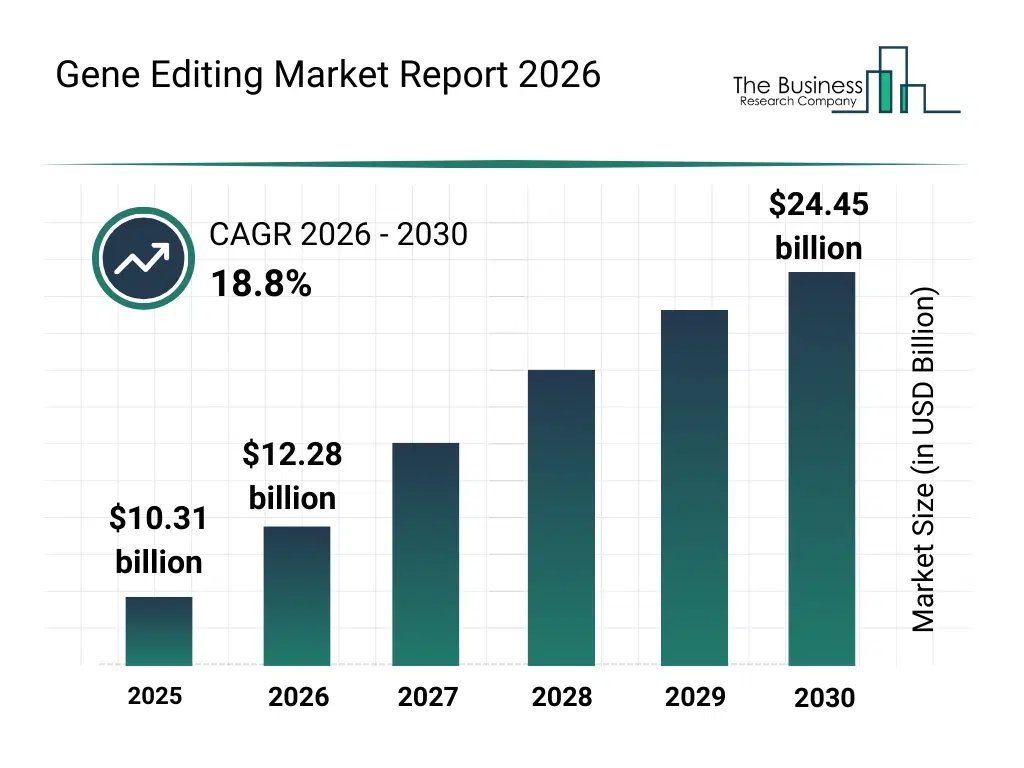
What Is The Gene Editing Market Size and Share 2026?
The gene editing market size has grown rapidly in recent years. It will grow from $10.31 billion in 2025 to $12.28 billion in 2026 at a compound annual growth rate (CAGR) of 19.0%. The growth in the historic period can be attributed to discovery of crispr cas systems, academic gene editing research, development of zfn and talen technologies, availability of research funding, expansion of molecular biology tools.What Is The Gene Editing Market Growth Forecast?
The gene editing market size is expected to see rapid growth in the next few years. It will grow to $24.45 billion in 2030 at a compound annual growth rate (CAGR) of 18.8%. The growth in the forecast period can be attributed to clinical translation of gene editing therapies, regulatory approvals, innovation in next-generation editing tools, increased industry investment, expansion of precision medicine. Major trends in the forecast period include rapid adoption of crispr-based technologies, expansion of gene editing in cell line engineering, increased use in agricultural and animal genetics, growth in therapeutic gene editing research, rising demand for precision genome modification.
Global Gene Editing Market Segmentation
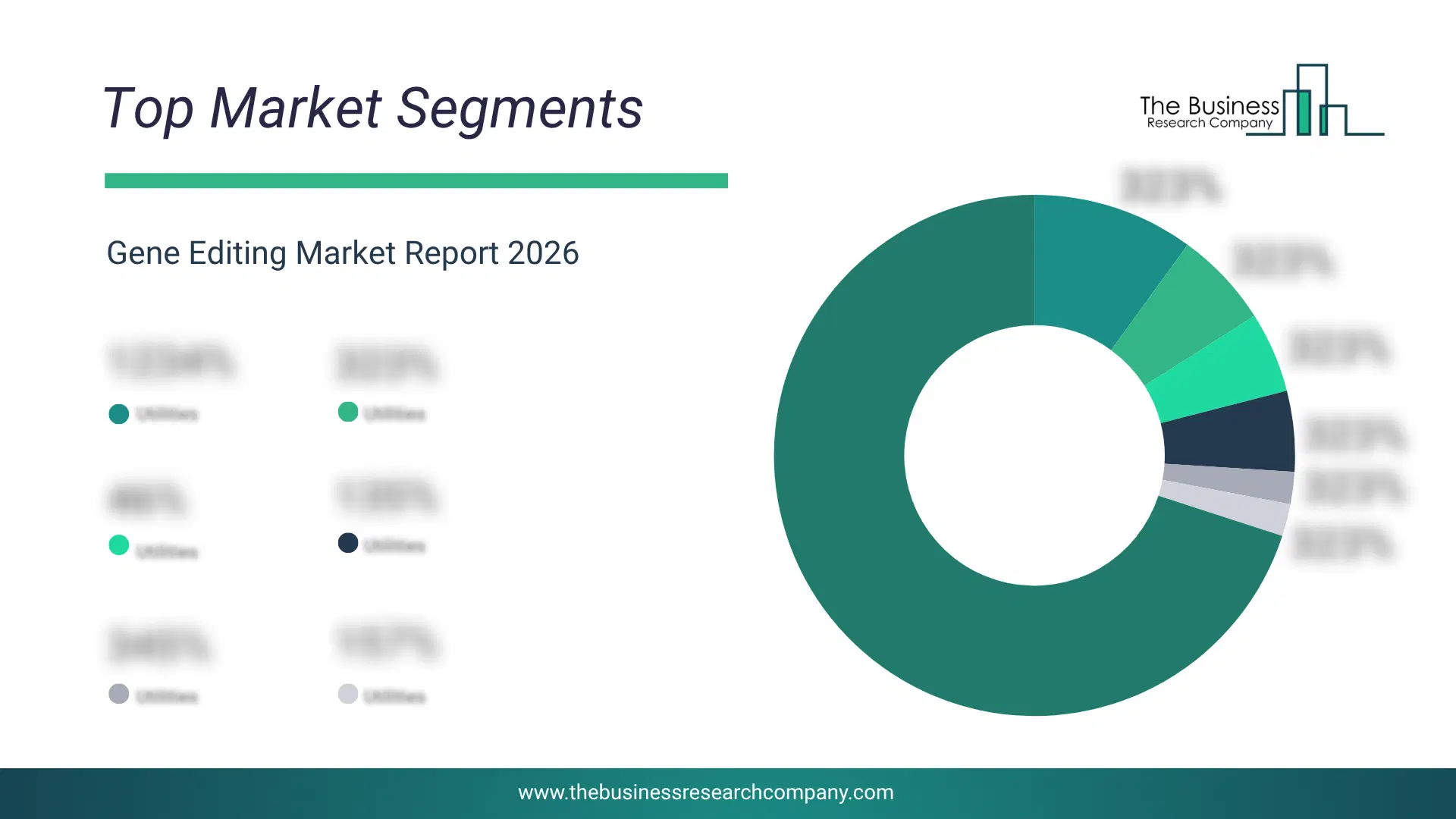
1) By Technology: CRISPR, TALEN, ZFN 2) By Application: Animal Genetic Engineering, Plant Genetic Engineering, Cell Line Engineering 3) By End Users: Biotechnology, Pharmaceutical, Contract Research Organization Subsegments: 1) By CRISPR: CRISPR-Cas9, CRISPR-Cas12, CRISPR-Cas13, CRISPR-based Gene Drives 2) By TALEN (Transcription Activator-Like Effector Nucleases): Custom TALENs, Commercial TALEN Kits 3) By ZFN (Zinc Finger Nucleases): Custom ZFNs, Commercial ZFN KitsWhat Is The Driver Of The Gene Editing Market?
The rising prevalence of genetic disorders is expected to propel the growth of the gene editing global market going forward. Genetic disorders refer to a category of medical conditions caused by abnormalities or mutations in an individual's DNA. These disorders can be inherited from one's parents or may occur due to spontaneous genetic mutations. They result in various health issues or medical conditions, which can be present at birth or develop later in life. Gene editing holds vast potential for tackling devastating genetic diseases such as sickle cell disease, Huntington's disease, β-thalassemia, cystic fibrosis, Alzheimer's, and Parkinson's. For instance, in April 2023, the National Library of Medicine (NLM), a US-based medical library, published that an estimated 6.7 million Americans age 65 and older will be living with Alzheimer's dementia (AD) in 2023. This number could grow to 13.8 million by 2060, barring the development of medical breakthroughs to prevent, slow, or cure AD. Therefore, genetic disorders are increasing and are thus expected to propel the gene editing industry.Key Players In The Global Gene Editing Market
Major companies operating in the gene editing market are AstraZeneca plc, Thermo Fisher Scientific Inc., Merck KGaA, GE Healthcare Life Sciences, Agilent Technologies Inc., Lonza Group AG, PerkinElmer Inc., Bio-Rad Laboratories Inc., Qiagen N.V., CRISPR Therapeutics, Promega Corporation, GenScript USA Inc., Integrated DNA Technologies Inc., Intellia Therapeutics Inc., DNA Script Inc., Dharmacon Inc., Precision Biosciences Inc., Editas Medicine Inc., OriGene Technologies Inc., Tecan Group Ltd., Sangamo Therapeutics Inc., Horizon Discovery Group plc, Addgene Inc., New England Biolabs Inc., Cellectis SA, Recombinetics Inc., Allele Biotechnology LLC, Transposagen Biopharmaceuticals Inc., Synthego Corporation, Beam Therapeutics Inc., Caribou Biosciences Inc., Inscripta Inc., Mammoth Biosciences Inc., ToolGen Inc., Mirus Bio LLC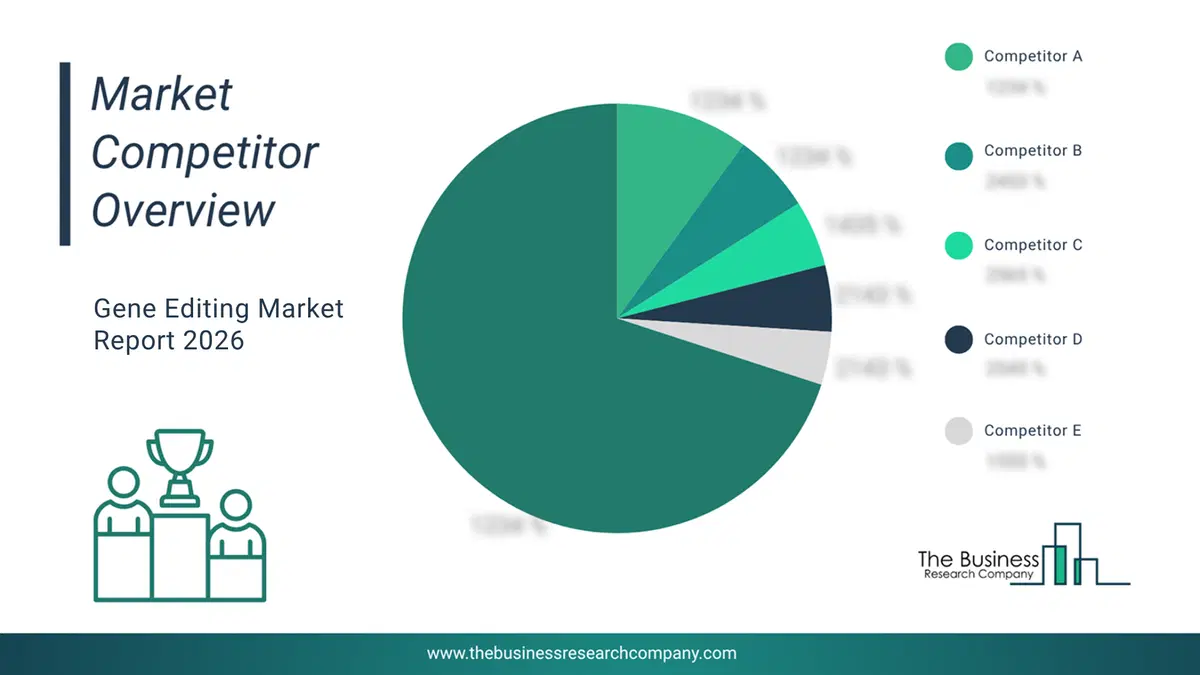
This chart is for illustrative purposes; the full report includes a detailed competitor analysis and comprehensive overview of the top 10 companies in the market.
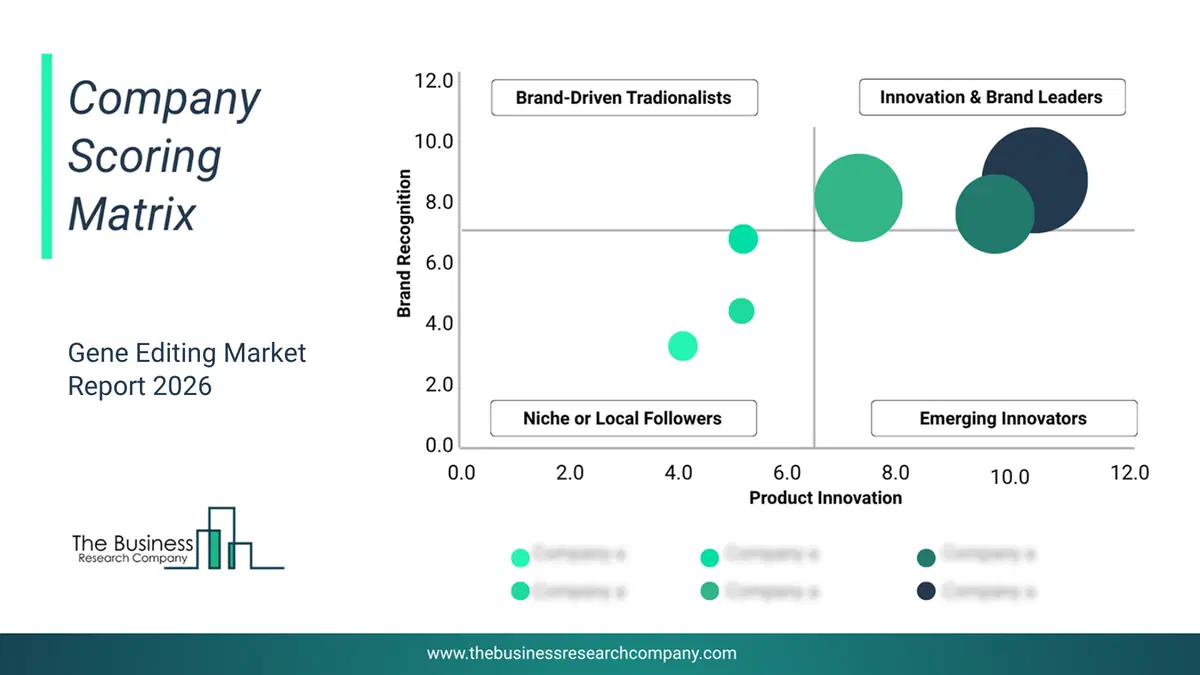
This chart maps companies by product innovation and brand strength, with bubble size indicating relative revenue, helping identify market leaders, challengers, and niche players. This is an illustrative chart; the full report provides a complete and accurate competitive analysis.
Global Gene Editing Market Trends and Insights
Major companies operating in the gene editing markets are introducing innovative technology in gene editing, such as a technique based on special cell-penetrating peptides that promises advantages over current methods, to gain a competitive edge in the market. The approach could also power the development of advanced cell therapies for cancer and other diseases. For instance, in April 2023, Penn Medicine, a US-based major multi-hospital health system, found that protein fragments used by some viruses to help them get into cells could also be used to get CRISPR-Cas gene editing molecules into cells and their DNA-containing nuclei with extraordinarily high efficiency and low cellular toxicity. The scientists expect the new technique to be particularly useful for modifying T cells and other cells from a patient’s own body to make cell therapies. One such application could be CAR T (chimeric antigen receptor T cell) therapy, which uses specially modified immune cells from a patient to treat cancer. A new approach to the genetic engineering of cells promises significant improvements in speed, efficiency, and reduction in cellular toxicity compared to current methods.What Are Latest Mergers And Acquisitions In The Gene Editing Market?
In February 2024, Ginkgo Bioworks, a US-based biotechnology company, acquired Patch Biosciences for an undisclosed amount. This acquisition is a key component of Ginkgo's strategy to bolster its genetic medicine capabilities. It seeks to integrate Patch's AI-driven platform into Ginkgo's existing services, particularly in gene therapy, cell therapy, and RNA therapeutics. This move is part of Ginkgo's broader approach to expanding its portfolio through various acquisitions, including firms specializing in molecular medicine and AI-driven drug discovery. Patch Biosciences is a US-based biotechnology company that specializes in gene editing and the development of genetic medicines.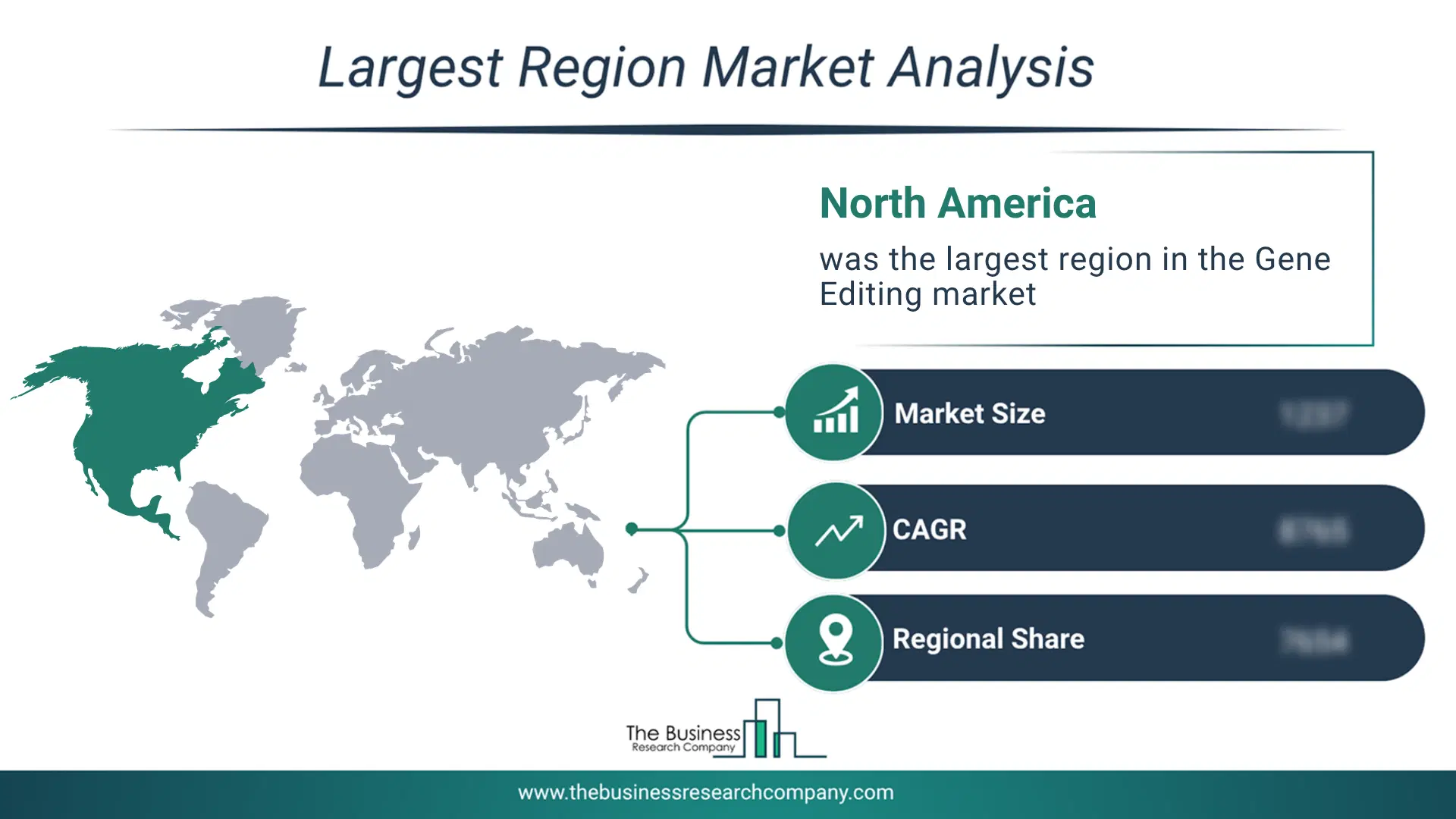
Regional Outlook
North America was the largest region in the gene editing market in 2025. Western Europe was the second largest region in the global gene editing market share. The regions covered in this market report are Asia-Pacific, South East Asia, Western Europe, Eastern Europe, North America, South America, Middle East, Africa. The countries covered in this market report are Australia, Brazil, China, France, Germany, India, Indonesia, Japan, Taiwan, Russia, South Korea, UK, USA, Canada, Italy, Spain.What Defines the Gene Editing Market?
The gene editing market includes revenue earned by zinc-finger nucleases (ZFNs) and homing endonucleases or meganucleases. The market value includes the value of related goods sold by the service provider or included within the service offering. Only goods and services traded between entities or sold to end consumers are included.How is Market Value Defined and Measured?
The market value is defined as the revenues that enterprises gain from the sale of goods and/or services within the specified market and geography through sales, grants, or donations in terms of the currency (in USD unless otherwise specified). The revenues for a specified geography are consumption values that are revenues generated by organizations in the specified geography within the market, irrespective of where they are produced. It does not include revenues from resales along the supply chain, either further along the supply chain or as part of other products.
This chart presents market attractiveness based on a quantitative evaluation of growth, competition, strategic alignment, and risk, offering a clear view of opportunity areas for decision-making. This chart is for illustrative purposes; the full report contains the complete analysis.

This chart highlights the Total Addressable Market (TAM) by estimating the maximum revenue opportunity using an assumption-driven approach, supporting strategic planning and opportunity sizing across markets. The chart is illustrative; the full report provides a more comprehensive analysis.
What Key Data and Analysis Are Included in the Gene Editing Market Report 2026?
The gene editing market research report is one of a series of new reports from The Business Research Company that provides market statistics, including industry global market size, regional shares, competitors with the market share, detailed market segments, market trends and opportunities, and any further data you may need to thrive in the gene editing industry. The market research report delivers a complete perspective of everything you need, with an in-depth analysis of the current and future state of the industry.Gene Editing Market Report Forecast Analysis
| Report Attribute | Details |
|---|---|
| Market Size Value In 2026 | $12.28 billion |
| Revenue Forecast In 2030 | $24.45 billion |
| Growth Rate | CAGR of 18.8% from 2026 to 2030 |
| Base Year For Estimation | 2025 |
| Actual Estimates/Historical Data | 2020-2025 |
| Forecast Period | 2026 - 2030 |
| Market Representation | Revenue in USD Billion and CAGR from 2026 to 2030 |
| Segments Covered | Technology, Application, End Users |
| Regional Scope | Asia-Pacific, Western Europe, Eastern Europe, North America, South America, Middle East, Africa |
| Country Scope | The countries covered in the report are Australia, Brazil, China, France, Germany, India, Indonesia, Japan, Taiwan, Russia, South Korea, UK, USA, Canada, Italy, Spain |
| Key Companies Profiled | AstraZeneca plc, Thermo Fisher Scientific Inc., Merck KGaA, GE Healthcare Life Sciences, Agilent Technologies Inc., Lonza Group AG, PerkinElmer Inc., Bio-Rad Laboratories Inc., Qiagen N.V., CRISPR Therapeutics, Promega Corporation, GenScript USA Inc., Integrated DNA Technologies Inc., Intellia Therapeutics Inc., DNA Script Inc., Dharmacon Inc., Precision Biosciences Inc., Editas Medicine Inc., OriGene Technologies Inc., Tecan Group Ltd., Sangamo Therapeutics Inc., Horizon Discovery Group plc, Addgene Inc., New England Biolabs Inc., Cellectis SA, Recombinetics Inc., Allele Biotechnology LLC, Transposagen Biopharmaceuticals Inc., Synthego Corporation, Beam Therapeutics Inc., Caribou Biosciences Inc., Inscripta Inc., Mammoth Biosciences Inc., ToolGen Inc., Mirus Bio LLC |
| Customization Scope | Request for Customization |
| Pricing And Purchase Options | Explore Purchase Options |