
Life Sciences Information Technology (IT) Market Report 2026
Global Outlook – By Type (Software, Service), By Solution (Drug Discovery Informatics, Clinical Trial Management, Bioinformatics, Laboratory Information Management, Other Solutions), By End User (Pharmaceutical And Biotechnology Companies, Contract Research And Development Organizations, Other End Users) - Market Size, Trends, And Global Forecast 2026-2030
Life Sciences Information Technology (IT) Market Overview
• Life Sciences Information Technology (IT) market size has reached to $29.14 billion in 2025 • Expected to grow to $56.16 billion in 2030 at a compound annual growth rate (CAGR) of 14% • Growth Driver: Impact Of Rising Chronic Diseases On The Growth Of The Life Science IT Market • Market Trend: Innovative Cloud-Native SaaS Platforms Transforming Life Sciences IT • North America was the largest region in 2025 and Asia-Pacific is the fastest growing region.Market Gains By 2030 – Top Opportunities By Segment
Market Gain identifies the most promising market opportunities by highlighting the segments or products expected to generate the highest incremental revenue growth over the next five years.
What Is Covered Under Life Sciences Information Technology (IT) Market?
Life science information technology (IT) refers to the application of information technology (IT) systems and solutions specifically designed to support and enhance various aspects of life sciences research, development, and operations. This field encompasses a range of technologies and tools that facilitate data management, analysis, and communication within life sciences sectors, such as pharmaceuticals, biotechnology, and medical research. The main life sciences information technology (IT) are software and services. Life sciences IT software refers to specialized technology and applications designed to support and enhance research, development, and management processes in fields such as biotechnology, pharmaceuticals, and healthcare. It provides various types of solutions such as drug discovery informatics, clinical trial management, bioinformatics, laboratory information management, and others, and is used by several end users, including pharmaceutical and biotechnology companies, contract research and development organizations, and others.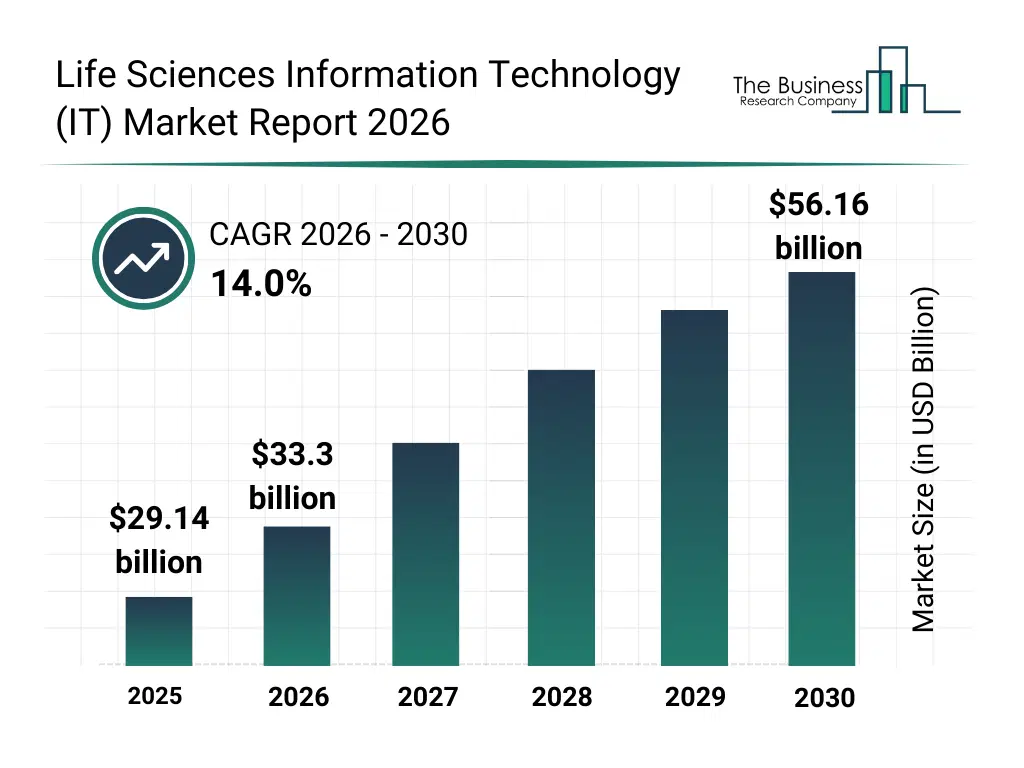
What Is The Life Sciences Information Technology (IT) Market Size and Share 2026?
The life sciences information technology (it) market size has grown rapidly in recent years. It will grow from $29.14 billion in 2025 to $33.3 billion in 2026 at a compound annual growth rate (CAGR) of 14.3%. The growth in the historic period can be attributed to expansion of digital data generation in life sciences, increasing complexity of clinical trial management, adoption of electronic laboratory systems, growth of bioinformatics research, rising regulatory data requirements.What Is The Life Sciences Information Technology (IT) Market Growth Forecast?
The life sciences information technology (it) market size is expected to see rapid growth in the next few years. It will grow to $56.16 billion in 2030 at a compound annual growth rate (CAGR) of 14.0%. The growth in the forecast period can be attributed to increasing investments in cloud-native life science IT, rising adoption of AI-driven bioinformatics, expansion of interoperable healthcare data platforms, growing demand for real-time research collaboration tools, increasing focus on cybersecurity in life sciences. Major trends in the forecast period include increasing adoption of integrated life science it platforms, rising use of cloud-based laboratory systems, growing deployment of bioinformatics solutions, expansion of digital clinical trial management tools, enhanced focus on data security and compliance.
Global Life Sciences Information Technology (IT) Market Segmentation
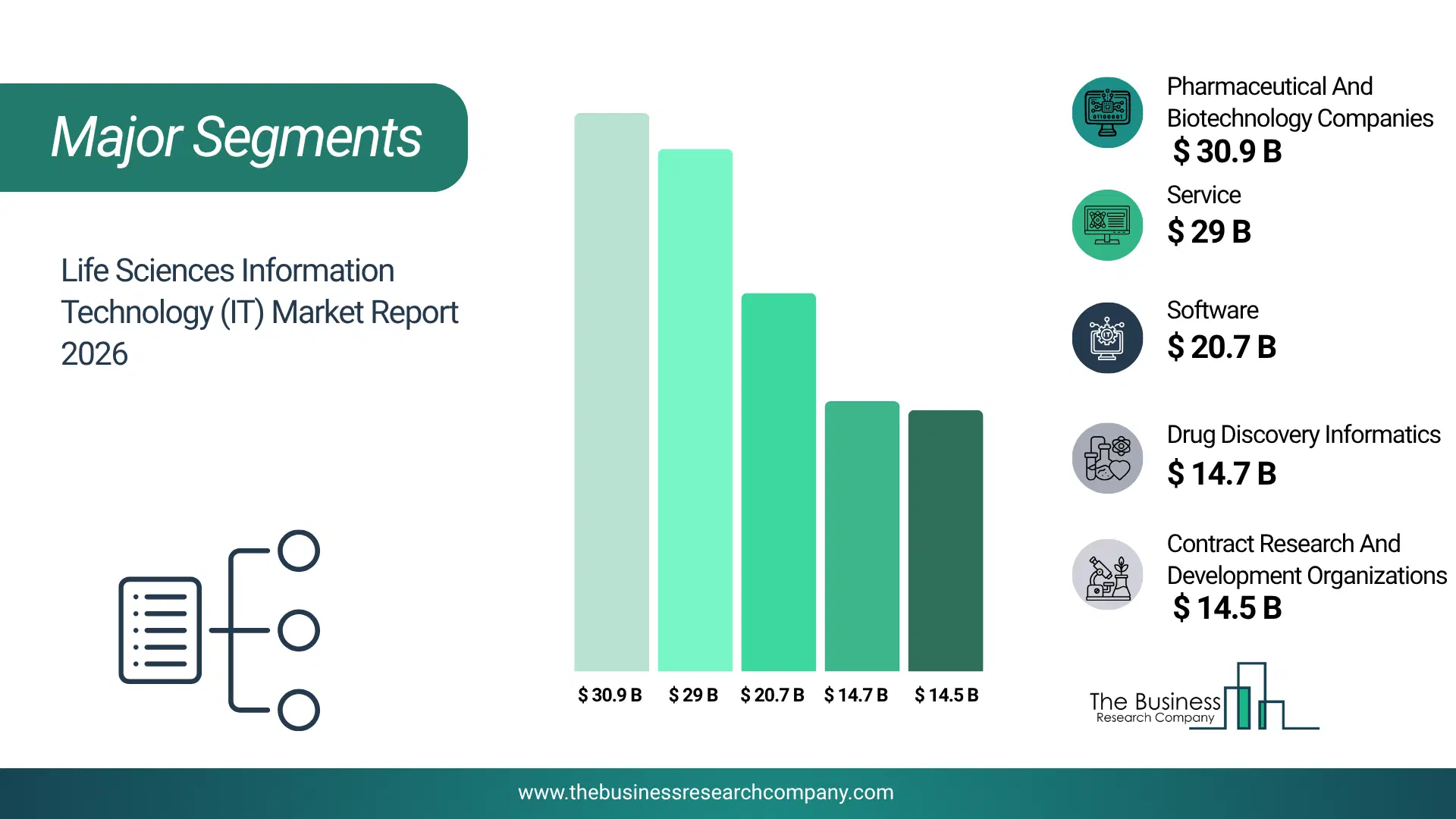
1) By Type: Software, Service 2) By Solution: Drug Discovery Informatics, Clinical Trial Management, Bioinformatics, Laboratory Information Management, Other Solutions 3) By End User: Pharmaceutical And Biotechnology Companies, Contract Research And Development Organizations, Other End Users Subsegments: 1) By Software: Laboratory Information Management Systems (LIMS), Electronic Lab Notebooks (ELN), Clinical Trial Management Systems (CTMS), Regulatory Compliance Software, Bioinformatics Software, Data Analytics And Visualization Tools, Pharmaceutical Manufacturing Software 2) By Service: Implementation And Integration Services, Consulting Services, Training And Education Services, Managed IT Services, Support And Maintenance Services, Data Management Services, Outsourcing Services, Validation Services, Cloud Computing Services The top segments in the life sciences information technology (it) market will be: • Pharmaceutical And Biotechnology Companies will reach $30916.89 Million by 2030. • Service will reach $29060.57 Million by 2030. • Software will reach $20731.4 Million by 2030. • Drug Discovery Informatics will reach $14736.69 Million by 2030. • Contract Research And Development Organizations will reach $14581.29 Million by 2030.What Is The Driver Of The Life Sciences Information Technology (IT) Market?
The rise in the prevalence of chronic diseases is expected to propel the growth of the life science information technology (IT) market going forward. Chronic diseases are long-term health conditions that persist for extended periods, often for the rest of a person's life, and typically progress slowly, such as diabetes, heart disease, and chronic respiratory conditions. The prevalence of chronic diseases is due to factors such as aging populations, sedentary lifestyles, poor diet, increased prevalence of obesity, and environmental factors. Life science IT is essential for chronic diseases to enable comprehensive data management, facilitate personalized treatment plans, and improve patient monitoring and outcomes through advanced analytics and integrated health information systems. For instance, in January 2023, according to the National Center for Biotechnology Information (NCBI), a US-based medicine library, the number of people aged 50 and above who suffer from one or more chronic illnesses is expected to increase by 99.5% by 2050, from 71.52 million in 2020 to 142.66 million. Therefore, the rise in the prevalence of chronic diseases is driving the growth of the life science information technology (IT) market.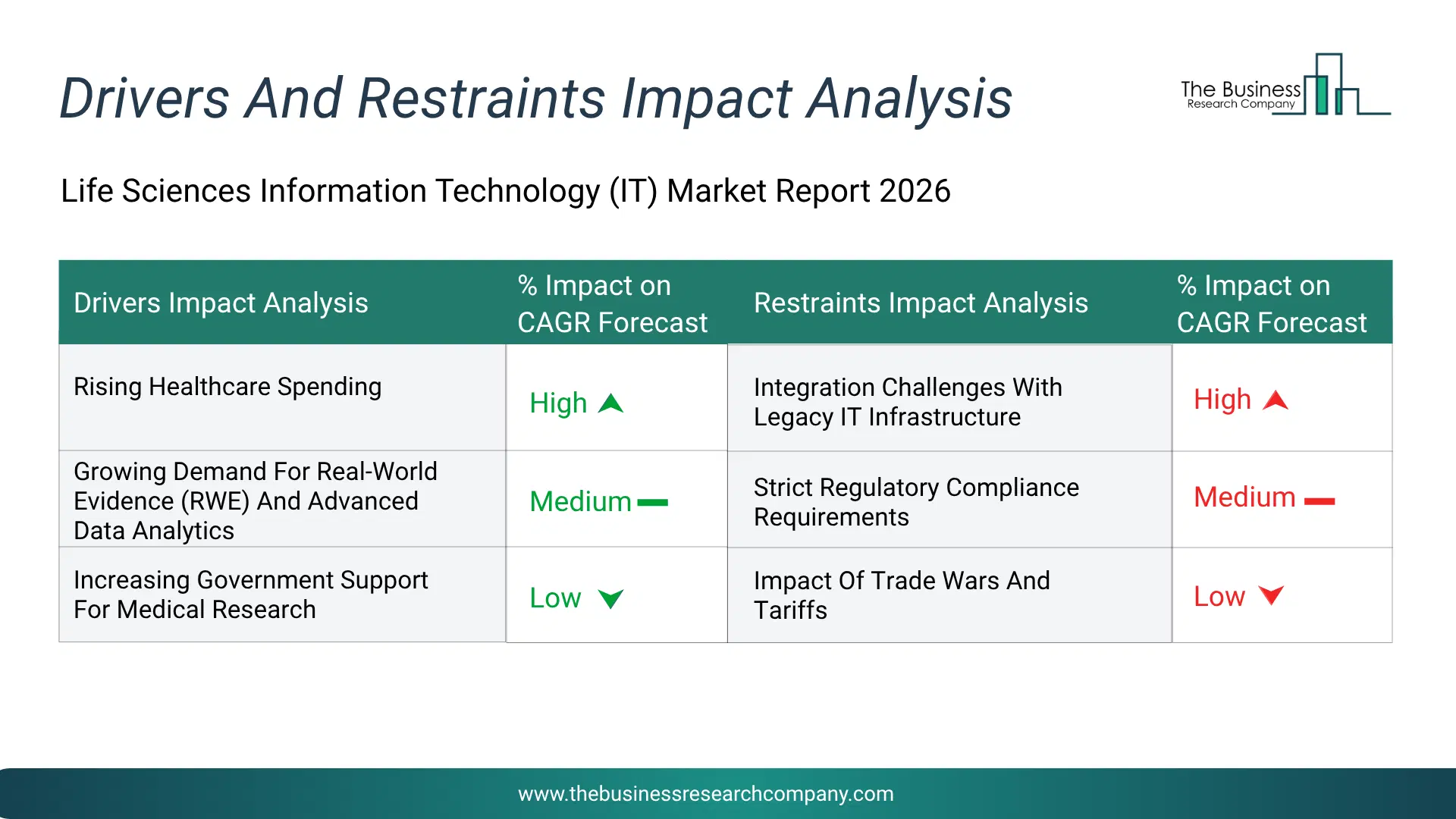
Infographic Chart Showing Key Market Drivers Analysis And Restraints For Life Sciences Information Technology (It) Market
The chart presents an impact analysis of key drivers and restraints, quantifying their relative influence on the market's growth rate and helping assess the balance between growth enablers and limiting factors. This chart offers a high-level perspective; the full report contains more detailed insights.
How Will The Drivers Impact Growth In The Global Life Sciences Information Technology (IT) Market?
• Rising Healthcare Spending (High) – During the forecast period, rising healthcare spending is expected to be a key driver the growth in the life sciences IT market. As governments and healthcare systems continue to increase investments in healthcare infrastructure, medical research and digital health capabilities, the demand for advanced information technology solutions in life sciences is expected to expand significantly. Higher healthcare expenditures support the adoption of data management platforms, digital research tools and advanced analytics systems that help organizations improve operational efficiency, enhance clinical research capabilities and accelerate drug development processes. The growing financial commitment toward healthcare systems and biomedical innovation is expected to encourage pharmaceutical companies, research institutions and healthcare providers to adopt advanced life sciences IT solutions, supporting continued growth in the life sciences IT market. The growth in rising healthcare spending growth contribution during the forecast period in 2025 is 2.0%. • Growing Demand For Real-World Evidence (RWE) And Advanced Data Analytics (Medium) – During the forecast period, growing demand for real-world evidence (RWE) and advanced data analytics is expected to propel the growth in the life sciences IT market. As pharmaceutical companies and healthcare organizations increasingly seek to understand how treatments perform in real clinical settings, there is a rising need for technologies that can collect, integrate and analyze large volumes of healthcare data. Real-world evidence is generated from sources such as electronic health records, insurance claims, patient registries and other healthcare databases, providing valuable insights into treatment effectiveness, patient outcomes and long-term safety beyond controlled clinical trials. The growing reliance on real-world data to support clinical research, regulatory decision-making and drug development strategies is expected to accelerate the adoption of life sciences IT solutions, supporting continued growth in the life sciences IT market. The growth in growing demand for real-world evidence (RWE) and advanced data analytics growth contribution during the forecast period in 2025 is 1.0%. • Increasing Government Support For Medical Research (Low) – During the forecast period, increasing government support for medical research is expected drive growth in the life sciences IT market. As governments continue to expand investments in biomedical research, public health initiatives and scientific innovation programs, the demand for advanced digital technologies and research infrastructure is expected to increase. Public funding for medical research supports the development of new therapies, strengthens research institutions and promotes the adoption of advanced data management and analytical tools used in scientific studies and clinical research. The growing emphasis on strengthening national research capabilities and improving healthcare outcomes through government-backed funding initiatives is expected to accelerate the adoption of life sciences IT solutions, supporting continued growth in the life sciences IT market. The growth in increasing government support for medical research growth contribution during the forecast period in 2025 is 0.8%. • Growing Volume Of Biomedical Data (Low) – During the forecast period, the growing volume of biomedical data is expected to be a key driver propelling growth in the life sciences IT market. As advancements in genomics, biomedical imaging and high-throughput laboratory technologies continue to generate vast amounts of biological and clinical data, life sciences organizations are increasingly required to adopt digital tools capable of efficiently managing and analyzing complex datasets. The rapid expansion of biomedical data is expected to increase demand for advanced data management platforms, cloud-based analytics systems and artificial intelligence-enabled research tools. The growing need to process, store and interpret large volumes of biological information is expected to accelerate the adoption of life sciences IT solutions, supporting continued growth in the life sciences IT market. The growth in growing volume of biomedical data growth contribution during the forecast period in 2025 is 0.5%.How Will The Restraints Impact Growth In The Global Life Sciences Information Technology (IT) Market?
• Integration Challenges With Legacy IT Infrastructure (High) – During the forecast period, integration challenges with legacy IT infrastructure are restricting the growth of the life sciences IT market. Increasing reliance on advanced digital platforms such as electronic health records, clinical data management systems and cloud-based research environments is creating operational difficulties for organizations that still depend on older health information technology systems. From a functional and infrastructure perspective, many healthcare organizations operate with outdated software architectures and fragmented data environments that lack interoperability with newer technologies, making it difficult to achieve seamless data exchange and system coordination. These technological limitations, combined with the technical complexity of upgrading legacy systems, are increasing hesitation among healthcare providers and research organizations regarding the large-scale deployment of life sciences IT solutions that require fully integrated digital infrastructure. Growth affected by integration challenges with legacy IT infrastructure during the forecast period in 2025 is -2.0%. • Strict Regulatory Compliance Requirements (Medium) – During the forecast period, strict regulatory compliance requirements are restricting the growth of the life sciences IT market. Increasing reliance on advanced digital platforms such as clinical trial management systems, pharmacovigilance software, electronic data capture systems and cloud-based research environments is creating operational difficulties for organizations that must comply with complex pharmaceutical regulatory frameworks. From a regulatory and operational perspective, many life sciences organizations operate in highly controlled environments where IT systems must comply with strict standards. These regulatory requirements, combined with the technical complexity of maintaining validated and compliant digital systems, are increasing hesitation among pharmaceutical companies and research organizations regarding the large-scale deployment of life sciences IT solutions that must continuously meet evolving global compliance standards. Growth affected by strict regulatory compliance requirements during the forecast period in 2025 is -1.0%. • Impact Of Trade Wars And Tariffs (Low) – During the forecast period, the impact of trade wars and tariffs is restricting the growth of the life sciences IT market. Increasing reliance on globally sourced technology infrastructure such as servers, networking equipment, semiconductor components and cloud computing hardware is creating operational difficulties for organizations that depend on international technology supply chains. From a supply chain and infrastructure perspective, many life sciences organizations rely on imported IT hardware and technology components that are subject to changing global trade policies and tariff regulations, making it difficult to maintain stable technology procurement and cost-efficient infrastructure expansion. These supply chain disruptions, combined with rising technology procurement costs caused by tariffs on imported electronic equipment, are increasing hesitation among healthcare providers and research organizations regarding the large-scale deployment of life sciences IT solutions that require significant digital infrastructure investments. Growth affected by impact of trade wars and tariffs during the forecast period in 2025 is -0.3%.Key Players In The Global Life Sciences Information Technology (IT) Market
Major companies operating in the life sciences information technology (it) market are Veeva Systems Inc., Medidata Solutions Inc., Oracle Corporation, SAP SE, International Business Machines Corporation, Microsoft Corporation, Accenture plc, Cognizant Technology Solutions Corporation, Dassault Systèmes SE, SAS Institute Inc., PTC Inc., Infor Inc., LabWare Inc., Thermo Fisher Scientific Inc., PerkinElmer Inc., Certara Inc., IQVIA Holdings Inc., ArisGlobal LLC, Dotmatics Limited, Benchling Inc.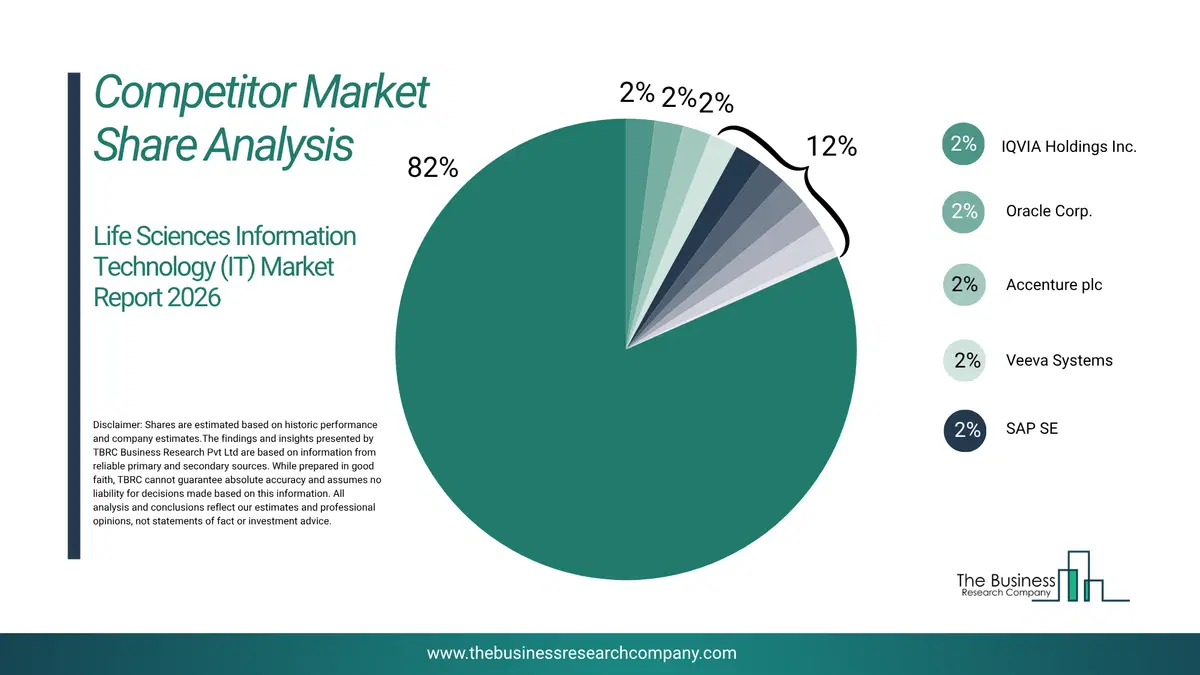
This chart is for illustrative purposes; the full report includes a detailed competitor analysis and comprehensive overview of the top 10 companies in the market.
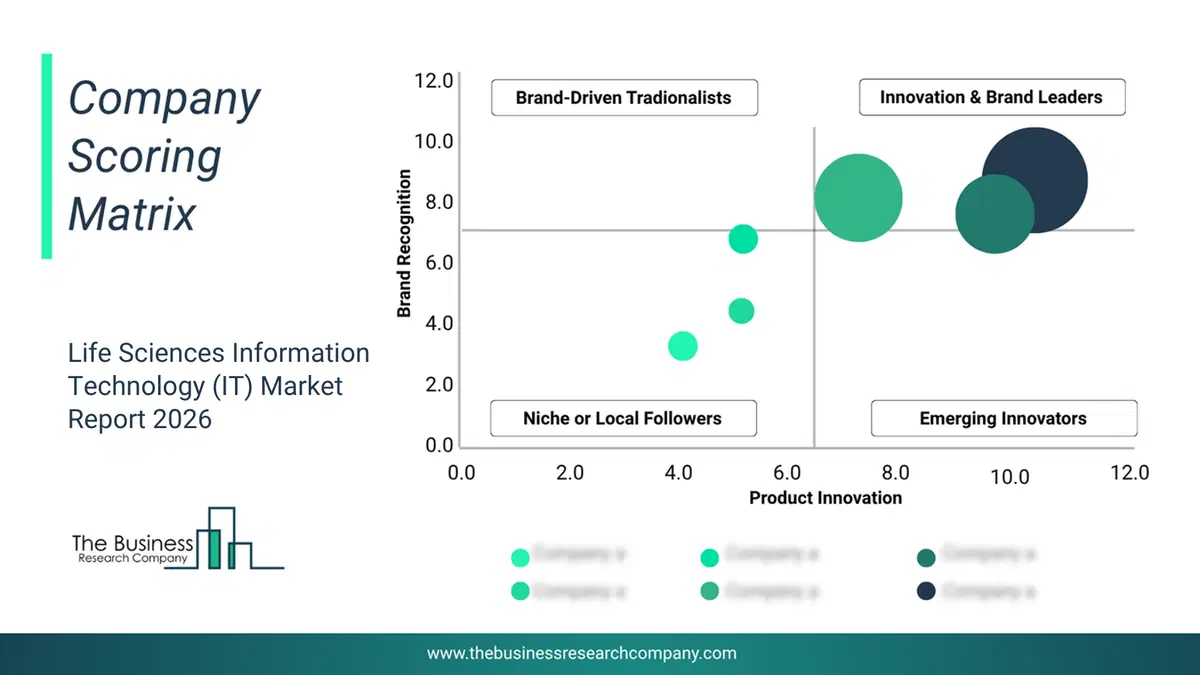
This chart maps companies by product innovation and brand strength, with bubble size indicating relative revenue, helping identify market leaders, challengers, and niche players. This is an illustrative chart; the full report provides a complete and accurate competitive analysis.
Global Life Sciences Information Technology (IT) Market Trends and Insights
Major companies operating in the life sciences information technology (IT) market are focused on developing technologically advanced solutions, such as cloud-native SaaS platforms, to offer scalable, cost-efficient, and compliant solutions that enhance collaboration, data integration, and innovation speed. A cloud-native SaaS platform refers to software-as-a-service applications explicitly designed to run in cloud environments, leveraging cloud infrastructure for scalability, flexibility, and reliability. For instance, in June 2023, Revvity Inc., a US-based biotechnology company, launched the Signals Research Suite, a cloud-native SaaS platform designed to improve scientific collaboration in drug discovery and specialty chemicals development. The suite integrates applications such as Signals Notebook, VitroVivo, and Inventa, providing comprehensive support throughout the entire drug development process, from early research to in vitro testing and safety assessments. The Signals Research Suite is distinguished by its scientifically intelligent, integrated software applications that fully support the Make-Test-Decide lifecycle. Key features include advanced analytics and visualizations powered by TIBCO Spotfire, seamless integration with the industry-standard ChemDraw, and a modern, streamlined interface that fully customizes workflows across various techniques, modalities, and datatypes. With secure single-sign-on access, centralized data resources, tutorials, and software updates, users can efficiently focus on their experiments without the hassle of navigating between disparate solutions.What Are Latest Mergers And Acquisitions In The Life Sciences Information Technology (IT) Market?
In January 2024, DNAnexus Inc., a US-based precision health data cloud provider, partnered with Intelliseq to incorporate clinical reporting and automated genomic variance interpretation functionalities into the precision health data cloud. This partnership aims to streamline next-generation sequencing data analysis, provide insights into somatic cancers and hereditary diseases, and allow DNAnexus customers to access Intelliseq's tertiary analysis tools directly on the Precision Health Data Cloud. Intelliseq is a Poland-based provider of life science IT solutions.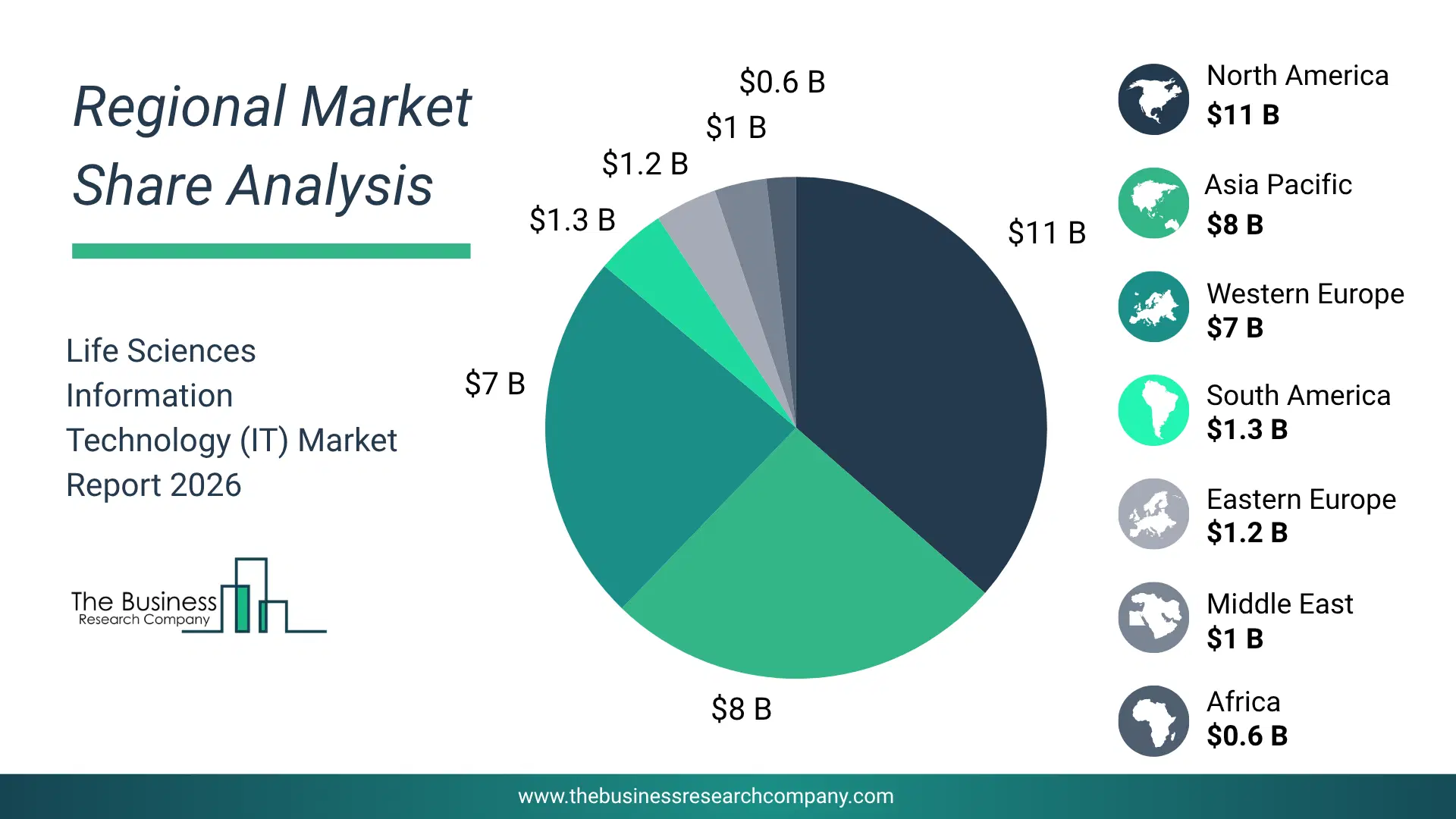
Regional Outlook
North America was the largest region in the life sciences information technology (IT) market in 2025. Asia-Pacific is expected to be the fastest-growing region in the forecast period. The regions covered in this market report are Asia-Pacific, South East Asia, Western Europe, Eastern Europe, North America, South America, Middle East, Africa. The countries covered in this market report are Australia, Brazil, China, France, Germany, India, Indonesia, Japan, Taiwan, Russia, South Korea, UK, USA, Canada, Italy, Spain.What Defines the Life Sciences Information Technology (IT) Market?
The life science information technology (IT) market consists of revenues earned by entities by providing services such as electronic lab notebooks (ELN) integration, regulatory compliance consulting, health information management and clinical data integration. The market value includes the value of related goods sold by the service provider or included within the service offering. The life science information technology (IT) market also includes sales of data analytics platforms, custom research software, cloud-based data solutions and related products. Values in this market are ‘factory gate’ values, that is the value of goods sold by the manufacturers or creators of the goods, whether to other entities (including downstream manufacturers, wholesalers, distributors and retailers) or directly to end customers. The value of goods in this market includes related services sold by the creators of the goods.How is Market Value Defined and Measured?
The market value is defined as the revenues that enterprises gain from the sale of goods and/or services within the specified market and geography through sales, grants, or donations in terms of the currency (in USD unless otherwise specified). The revenues for a specified geography are consumption values that are revenues generated by organizations in the specified geography within the market, irrespective of where they are produced. It does not include revenues from resales along the supply chain, either further along the supply chain or as part of other products.
This chart presents market attractiveness based on a quantitative evaluation of growth, competition, strategic alignment, and risk, offering a clear view of opportunity areas for decision-making. This chart is for illustrative purposes; the full report contains the complete analysis.

This chart highlights the Total Addressable Market (TAM) by estimating the maximum revenue opportunity using an assumption-driven approach, supporting strategic planning and opportunity sizing across markets. The chart is illustrative; the full report provides a more comprehensive analysis.
What Key Data and Analysis Are Included in the Life Sciences Information Technology (IT) Market Report 2026?
The life sciences information technology (it) market research report is one of a series of new reports from The Business Research Company that provides market statistics, including industry global market size, regional shares, competitors with the market share, detailed market segments, market trends and opportunities, and any further data you may need to thrive in the life sciences information technology (it) industry. The market research report delivers a complete perspective of everything you need, with an in-depth analysis of the current and future state of the industry.Life Sciences Information Technology (IT) Market Report Forecast Analysis
| Report Attribute | Details |
|---|---|
| Market Size Value In 2026 | $33.3 billion |
| Revenue Forecast In 2030 | $56.16 billion |
| Growth Rate | CAGR of 14.3% from 2026 to 2030 |
| Base Year For Estimation | 2025 |
| Actual Estimates/Historical Data | 2020-2025 |
| Forecast Period | 2026 - 2030 - 2035 |
| Market Representation | Revenue in USD Billion and CAGR from 2026 to 2030 |
| Segments Covered | Type, Solution, End User |
| Regional Scope | Asia-Pacific, Western Europe, Eastern Europe, North America, South America, Middle East, Africa |
| Country Scope | The countries covered in the report are Australia, Brazil, China, France, Germany, India, Indonesia, Japan, Taiwan, Russia, South Korea, UK, USA, Canada, Italy, Spain. |
| Key Companies Profiled | Veeva Systems Inc., Medidata Solutions Inc., Oracle Corporation, SAP SE, International Business Machines Corporation, Microsoft Corporation, Accenture plc, Cognizant Technology Solutions Corporation, Dassault Systèmes SE, SAS Institute Inc., PTC Inc., Infor Inc., LabWare Inc., Thermo Fisher Scientific Inc., PerkinElmer Inc., Certara Inc., IQVIA Holdings Inc., ArisGlobal LLC, Dotmatics Limited, Benchling Inc. |
| Customization Scope | Request for Customization |
| Pricing And Purchase Options | Explore Purchase Options |