

Peptide Therapeutics Contract Active Pharmaceutical Ingredient (API) Manufacturing Market Report 2026
Global Outlook – By Scale Of Operation (Preclinical Or Clinical, Commercial), By Synthesis Method (Non Chemical Synthesis, Chemical Synthesis), By Enterprise Type (Large Enterprise, Small And Medium Enterprises) – Market Size, Trends, Strategies, and Forecast to 2030
Peptide Therapeutics Contract Active Pharmaceutical Ingredient (API) Manufacturing Market Overview
• Peptide Therapeutics Contract Active Pharmaceutical Ingredient (API) Manufacturing market size has reached to $2.89 billion in 2025 • Expected to grow to $4.11 billion in 2030 at a compound annual growth rate (CAGR) of 7.3% • Growth Driver: Rising Diabetes Prevalence Fuels Growth Of The Market Due To Increasing Obesity Rates And Demand For Hormone-Mimicking Therapies • Market Trend: Enhancing Speed And Quality In Peptide API Production With All-In-One Solutions • North America was the largest region in 2025 and Asia-Pacific is the fastest growing region.Market Gains By 2030 – Top Opportunities By Segment
Market Gain identifies the most promising market opportunities by highlighting the segments or products expected to generate the highest incremental revenue growth over the next five years.
What Is Covered Under Peptide Therapeutics Contract Active Pharmaceutical Ingredient (API) Manufacturing Market?
Peptide therapeutics contract active pharmaceutical ingredient manufacturing refers to the outsourced production of peptide-based active pharmaceutical ingredients by specialized third-party manufacturers under strict regulatory compliance. These manufacturers offer services such as custom synthesis, purification, and good manufacturing practice (GMP)-grade production to support clinical trials and commercial supply of peptide therapeutics. The main scale of operation types of peptide therapeutics contract active pharmaceutical ingredient (API) manufacturing are preclinical or clinical and commercial. Preclinical or clinical refers to the early stages of drug development, encompassing lab-based research and human trials to evaluate the safety and efficacy of peptide drugs. The different synthesis methods include non-chemical synthesis and chemical synthesis for varied enterprise types, including both large enterprises and small and medium enterprises.
What Is The Peptide Therapeutics Contract Active Pharmaceutical Ingredient (API) Manufacturing Market Size and Share 2026?
The peptide therapeutics contract active pharmaceutical ingredient (api) manufacturing market size has grown strongly in recent years. It will grow from $2.89 billion in 2025 to $3.1 billion in 2026 at a compound annual growth rate (CAGR) of 7.3%. The growth in the historic period can be attributed to limited number of specialized peptide api manufacturers, growing demand for peptide therapeutics, reliance on in-house synthesis by pharma companies, regulatory compliance requirements, increasing preclinical and clinical trials.What Is The Peptide Therapeutics Contract Active Pharmaceutical Ingredient (API) Manufacturing Market Growth Forecast?
The peptide therapeutics contract active pharmaceutical ingredient (api) manufacturing market size is expected to see strong growth in the next few years. It will grow to $4.11 billion in 2030 at a compound annual growth rate (CAGR) of 7.3%. The growth in the forecast period can be attributed to expansion of cmo capabilities for peptide api, rising investment in advanced peptide synthesis technologies, growth of personalized medicine and biologics, increasing outsourcing by small and mid-size pharma companies, adoption of digital manufacturing and ai-based process optimization. Major trends in the forecast period include rising demand for contract manufacturing of peptide apis, increased focus on gmp-grade production and compliance, growth in outsourced peptide synthesis for clinical trials, expansion of process optimization and tech transfer services, adoption of custom peptide synthesis for personalized therapeutics.
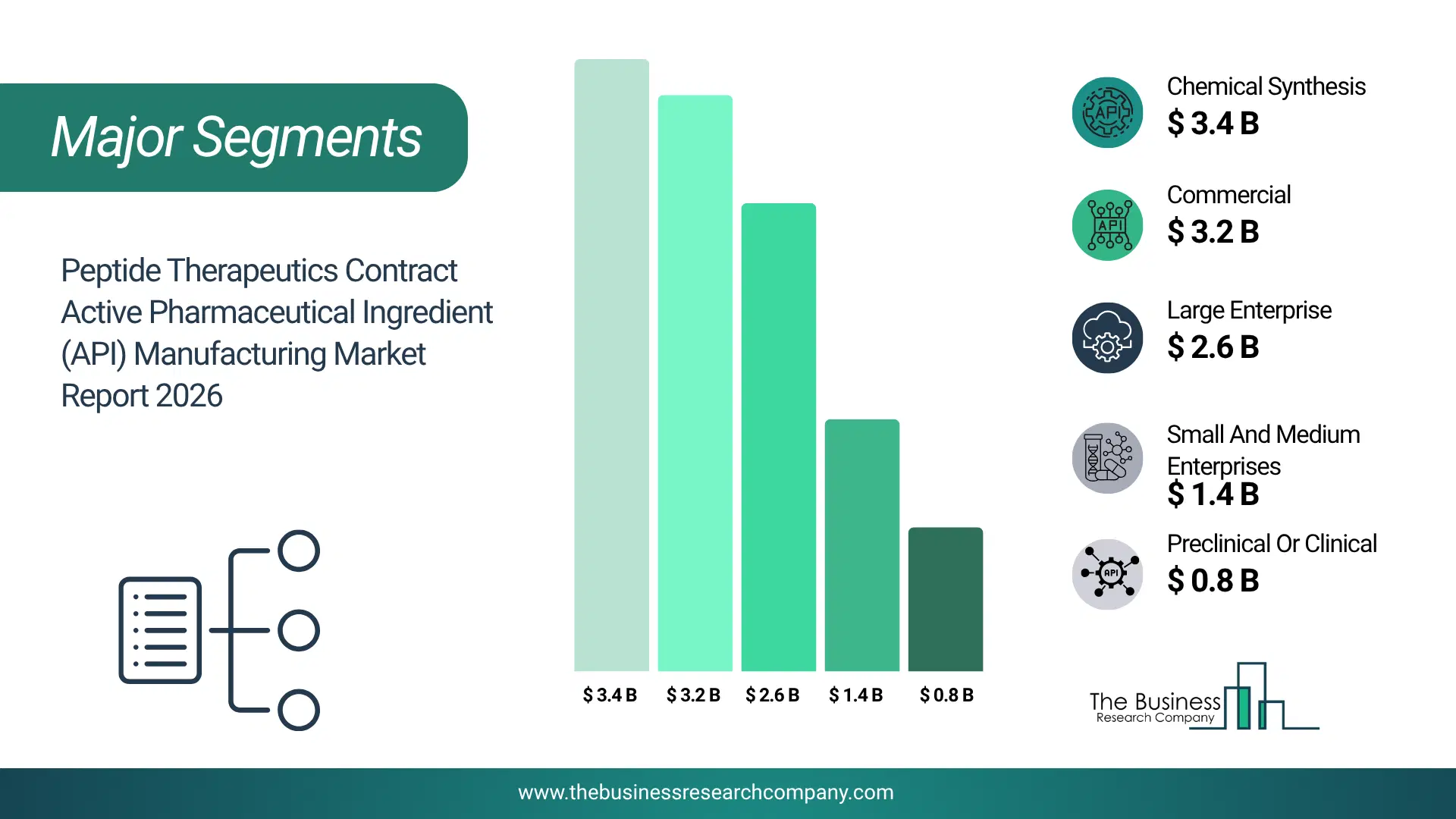
Global Peptide Therapeutics Contract Active Pharmaceutical Ingredient (API) Manufacturing Market Segmentation
1) By Scale Of Operation: Preclinical Or Clinical, Commercial 2) By Synthesis Method: Non Chemical Synthesis, Chemical Synthesis 3) By Enterprise Type: Large Enterprise, Small And Medium Enterprises Subsegments: 1) By Preclinical Or Clinical: Discovery And Preclinical Development, Phase II Or III Manufacturing, Phase I Manufacturing 2) By Commercial: Commercial-Scale Good Manufacturing Practice Manufacturing, Tech Transfer And Scale-up, Lifecycle Management Or Process Optimization The top segments in the peptide therapeutics contract active pharmaceutical ingredient (api) manufacturing market will be: • Chemical Synthesis will reach $3391.84 Million by 2030. • Commercial will reach $3284.21 Million by 2030. • Large Enterprise will reach $2674.27 Million by 2030. • Small And Medium Enterprises will reach $1448.82 Million by 2030. • Preclinical Or Clinical will reach $838.89 Million by 2030.What Is The Driver Of The Peptide Therapeutics Contract Active Pharmaceutical Ingredient (API) Manufacturing Market?
The rising prevalence of diabetes is expected to propel the growth of the peptide therapeutics contract active pharmaceutical ingredient (API) manufacturing market going forward. Diabetes refers to a chronic metabolic disorder marked by elevated blood sugar (glucose) levels resulting from the body’s insufficient insulin production or its inability to use insulin effectively. The growing prevalence of diabetes is primarily fueled by increasing obesity rates, as excess body fat contributes to insulin resistance and disrupts blood sugar control. Peptide therapeutics leverage contract API manufacturing to enable large-scale production of hormone-mimicking drugs, enhancing insulin secretion and glucose control in diabetes management. For instance, in March 2025, according to the report published by the Office for Health Improvement and Disparities, a UK-based government department, the recorded prevalence of type 2 diabetes among adults aged 17 and over in England was 7.0% as of March 2024, up from 6.8% in March 2023. Therefore, the rising prevalence of diabetes is driving the growth of the peptide therapeutics contract active pharmaceutical ingredient (API) manufacturing industry.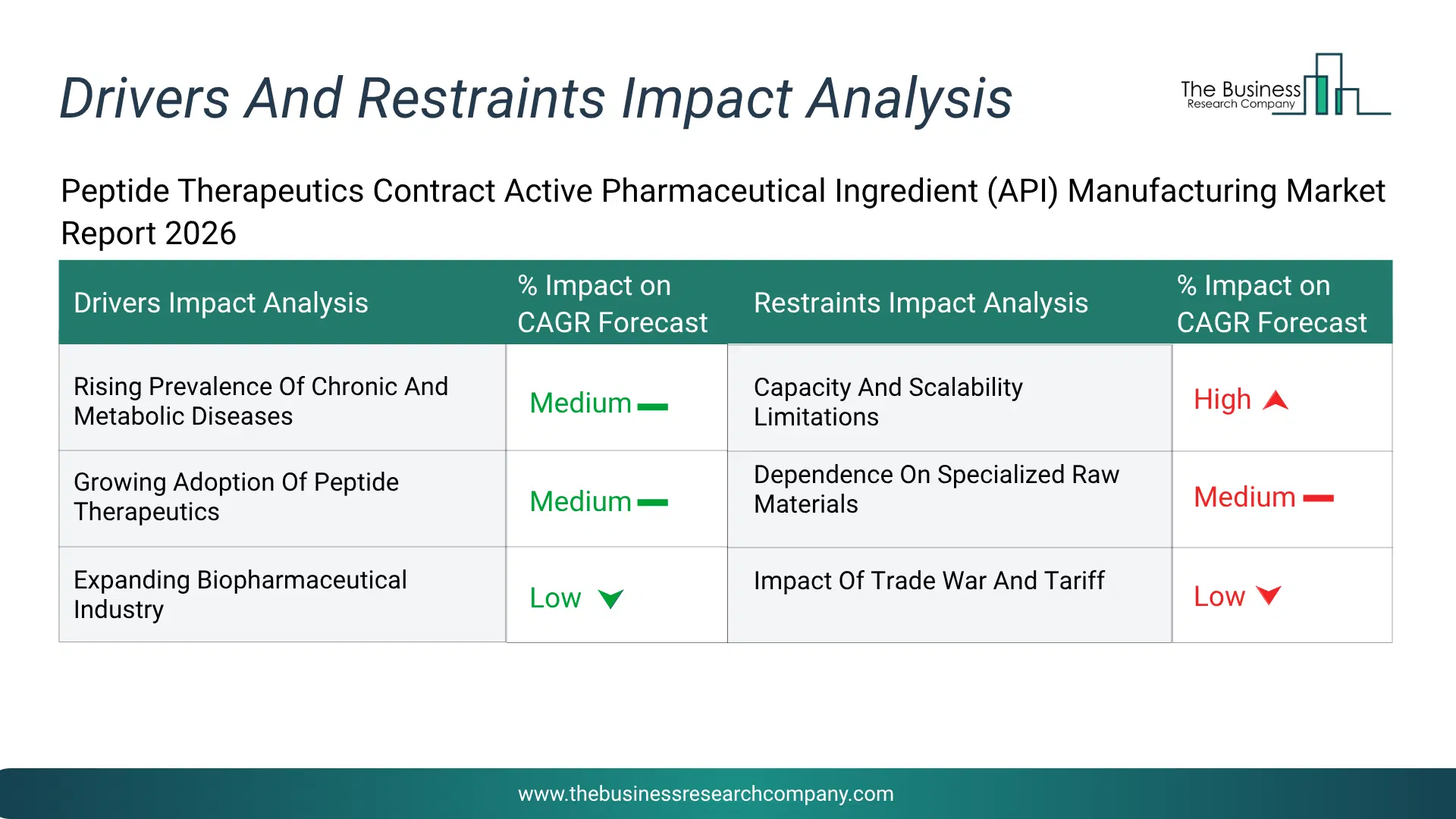
Infographic Chart Showing Key Market Drivers Analysis And Restraints For Peptide Therapeutics Contract Active Pharmaceutical Ingredient (Api) Manufacturing Market
The chart presents an impact analysis of key drivers and restraints, quantifying their relative influence on the market's growth rate and helping assess the balance between growth enablers and limiting factors. This chart offers a high-level perspective; the full report contains more detailed insights.
How Will The Drivers Impact Growth In The Global Peptide Therapeutics Contract Active Pharmaceutical Ingredient (API) Manufacturing Market?
• Rising Prevalence Of Chronic And Metabolic Diseases (Medium) – During the forecast period, the rising prevalence of chronic and metabolic diseases is driving demand for dark factories. many chronic conditions require long-term, targeted, and biologically specific treatments, which aligns well with peptide-based drug modalities. as pharmaceutical and biotechnology companies expand their development programs to address growing patient populations, the need for reliable and scalable peptide api supply increases across preclinical, clinical, and commercial stages. this growth places pressure on internal manufacturing resources, encouraging sponsors to rely on specialized cdmos that possess established peptide synthesis, purification, and gmp compliance capabilities. as disease prevalence rises, development portfolios become broader and more complex, reinforcing sustained outsourcing demand for high-quality peptide apis that can support multiple programs simultaneously while meeting stringent regulatory requirements. the rising prevalence of chronic and metabolic diseases growth contribution during the forecast period in 2025 is 1.5%. • Growing Adoption Of Peptide Therapeutics (Medium) – During the forecast period, the growing adoption of peptide therapeuticsis accelerating the adoption of dark factories. increased confidence in peptide drug performance, safety, and therapeutic specificity has led pharmaceutical developers to integrate peptides more prominently into their product strategies. this shift expands the volume and diversity of peptide candidates requiring development-stage and commercial-grade api supply. as peptide molecules often involve complex synthesis pathways, tight purity specifications, and scale-up challenges, many developers lack the internal expertise or infrastructure to manufacture these apis independently. consequently, reliance on specialized peptide cdmos increases, driving growth in outsourced manufacturing services focused on synthesis optimization, large-scale production, and consistent quality delivery throughout the therapeutic lifecycle. the growing adoption of peptide therapeuticsis growth contribution during the forecast period in 2025 is 1.0%. • Expanding Biopharmaceutical Industry (Low) – During the forecast period, expanding biopharmaceutical industry are accelerating the adoption of dark factories. as manufacturers increasingly implement digital platforms to observe, control, and optimize production processes from off site locations, the adoption of centralized monitoring drives the need for integrated systems that ensure operational visibility and continuous oversight. industry projections indicate that manufacturers worldwide are increasingly investing in remote monitoring and digital factory management technologies year on year, reflecting a broader trend toward automated, connected production environments. as organizations deploy more advanced monitoring frameworks that link autonomous machines, sensors, and control systems, dark factories enable real time performance tracking, predictive maintenance, and operational efficiency, thereby significantly driving demand for automated, remotely supervised manufacturing solutions. the expanding biopharmaceutical industry growth contribution during the forecast period in 2025 is 0.8%. • Greater Use Of Peptides In Specialty Care (Low) – During the forecast period, the greater use of peptides in specialty care is driving increased demand for dark factories. specialty care treatments often target complex, narrowly defined patient populations and require highly specific biological interactions, which peptides are well suited to deliver. as specialty care portfolios grow, developers must manage smaller but more technically demanding production volumes that emphasize purity, consistency, and regulatory robustness. this manufacturing profile aligns closely with the capabilities of specialized peptide cdmos rather than large-scale internal production. as a result, pharmaceutical companies increasingly outsource peptide api production to partners that can deliver tailored synthesis, controlled scale-up, and reliable gmp compliance, driving sustained growth in contract manufacturing demand. the greater use of peptides in specialty care growth contribution during the forecast period in 2025 is 0.5%.How Will The Restraints Impact Growth In The Global Peptide Therapeutics Contract Active Pharmaceutical Ingredient (API) Manufacturing Market?
• Capacity And Scalability Limitations (Medium) – During the forecast period, the capacity and scalability limitations remains a significant barrier to market expansion. peptide manufacturing infrastructure involves capital-intensive synthesis reactors, purification systems, and controlled production environments that cannot be easily or rapidly expanded. as a result, cdmos may face constraints in scaling production volumes, especially when multiple clients require simultaneous scale-up or commercial supply. limited scalability can lead to longer lead times, delayed project transitions from clinical to commercial stages, and prioritization challenges among customers. these constraints reduce flexibility for pharmaceutical developers and can discourage outsourcing if manufacturers are unable to guarantee timely capacity availability, thereby slowing overall market growth. growth affected by capacity and scalability limitations during the forecast period in 2025 is -2.0%. • Dependence On Specialized Raw Materials (Medium) – During the forecast period, the dependence on specialized raw materials a significant barrier to market expansion. peptide synthesis relies on highly specific amino acids, reagents, resins, and coupling agents that often have limited supplier bases and stringent quality requirements. any disruption in the availability or quality of these inputs can delay production schedules, complicate batch planning, and increase manufacturing risk. this dependence also reduces supply chain flexibility, as substituting materials may require extensive validation and regulatory review. for contract manufacturers, managing these dependencies increases operational complexity and inventory risk, while for pharmaceutical clients, it raises concerns around supply reliability and long-term sourcing stability. growth affected by dependence on specialized raw materials during the forecast period in 2025 is -1.0%. • Impact Of Trade War And Tariff (Low) – During the forecast period, the impact of trade war and tariffs remains a significant barrier to market expansion. peptide api manufacturing frequently involves cross-border sourcing of raw materials, equipment, and intermediates, as well as international shipment of apis to clients. trade restrictions, tariffs, and shifting regulatory trade policies can raise procurement costs, extend lead times, and complicate logistics planning for cdmos. these factors reduce cost predictability and disrupt long-term supply agreements, making it more difficult for manufacturers to offer stable pricing and delivery commitments. heightened trade-related uncertainty can also discourage investment in capacity expansion and slow cross-regional collaboration, ultimately constraining market growth. growth affected by impact of trade war and tariffs during the forecast period in 2025 is -0.3%.Key Players In The Global Peptide Therapeutics Contract Active Pharmaceutical Ingredient (API) Manufacturing Market
Major companies operating in the peptide therapeutics contract active pharmaceutical ingredient (api) manufacturing market are Thermo Fisher Scientific Inc., Lonza Group AG., WuXi AppTec Co. Ltd., Cambrex Corporation, ChemPartner, GenScript Biotech Corporation, Bachem Group, CordenPharma International GmbH, Syngene International Limited, Ambiopharm Inc., CPC Scientific Inc., ScinoPharm Taiwan Ltd., Hybio Pharmaceutical Co. Ltd., CSBio Company Inc., Senn Chemicals AG., AnaSpec Inc., LifeTein LLC, Apex Biotechnology Corp., BCN Peptides S.A.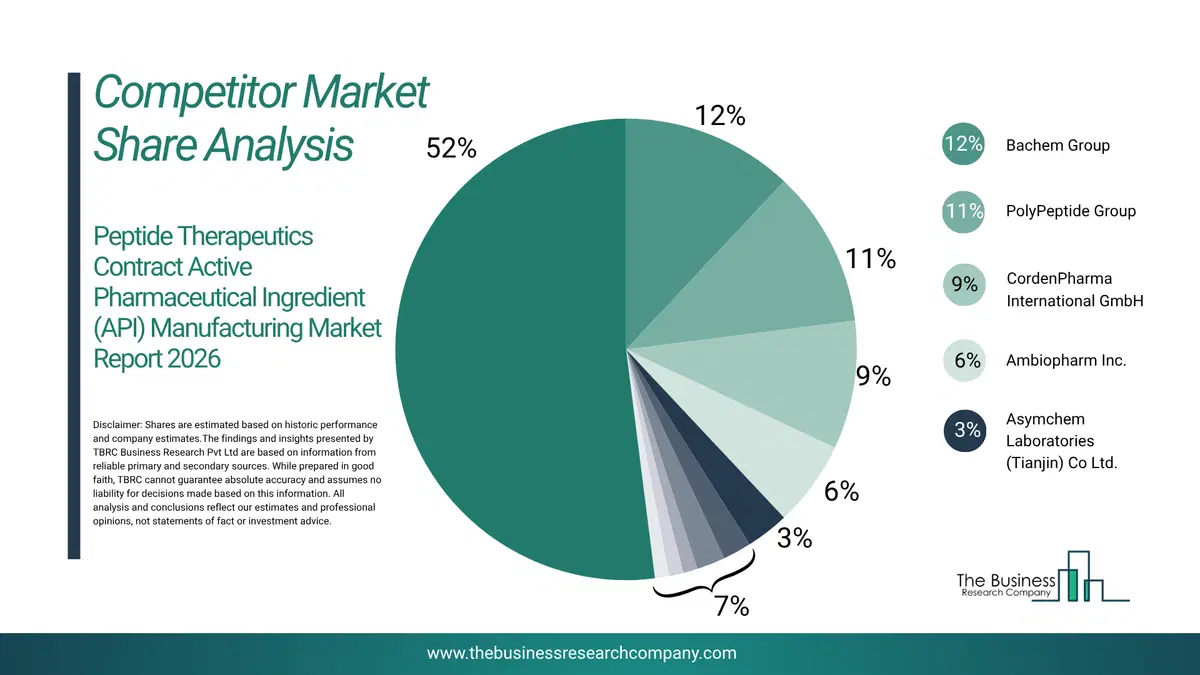
This chart is for illustrative purposes; the full report includes a detailed competitor analysis and comprehensive overview of the top 10 companies in the market.
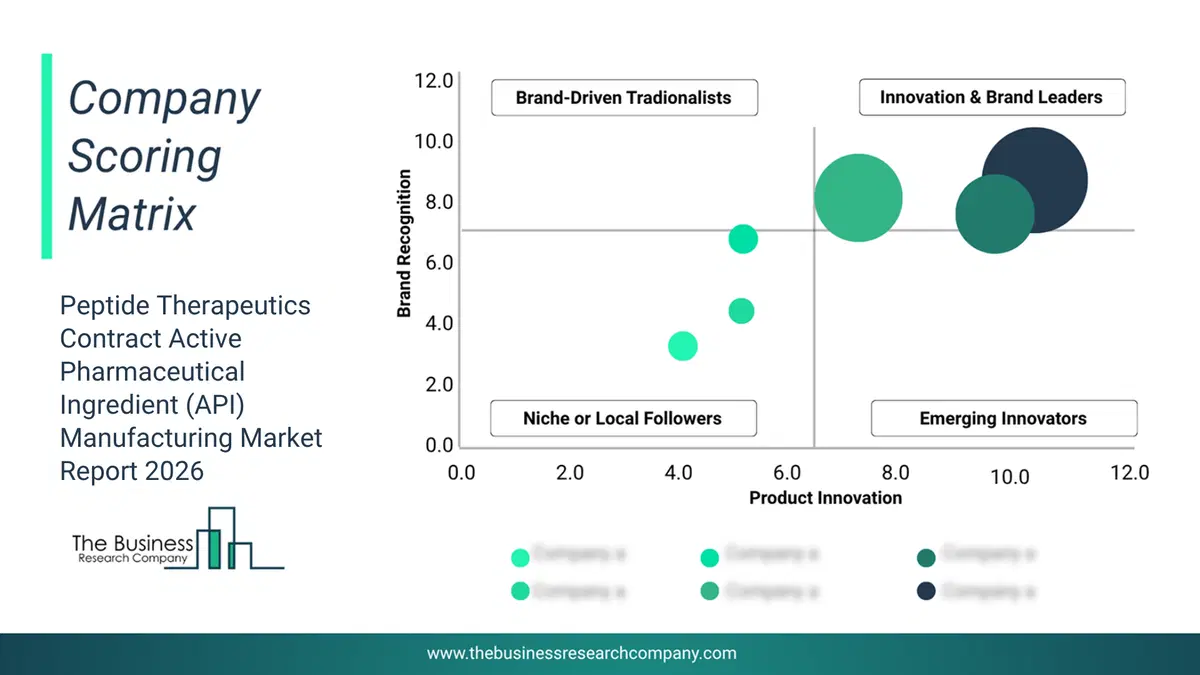
This chart maps companies by product innovation and brand strength, with bubble size indicating relative revenue, helping identify market leaders, challengers, and niche players. This is an illustrative chart; the full report provides a complete and accurate competitive analysis.
Global Peptide Therapeutics Contract Active Pharmaceutical Ingredient (API) Manufacturing Market Trends and Insights
Major companies operating in the peptide therapeutics contract active pharmaceutical ingredient (API) manufacturing market are focusing on developing innovative solutions, such as the continuous flow synthesis platform, to streamline production and address growing complexity in drug development. The continuous flow synthesis platform integrates multiple stages, reaction, separation, concentration, and crystallization, into a single, uninterrupted process with real-time in-line measurement, enabling high-precision, non-destructive monitoring and efficient scale-up. For instance, in May 2023, SynCrest Inc., a Japan-based contract research, development, and manufacturing organization (CRDMO), announced the launch of its good manufacturing practice (GMP)-compliant Naruto Plant equipped with a continuous flow synthesis platform for peptide and nucleotide API production. The platform enables the rapid and high-quality manufacturing of over 100 types of non-natural amino acids and high-purity special amidites, significantly reducing lead times and production costs. This innovation is addressing growing market demand for advanced peptide-based therapeutics by offering scalable, efficient, and cost-effective API manufacturing solutions.What Are Latest Mergers And Acquisitions In The Peptide Therapeutics Contract Active Pharmaceutical Ingredient (API) Manufacturing Market?
In December 2024, Novo Holdings A/S, a Denmark-based asset management company, acquired Catalent Inc. for $16.5 billion. Through this acquisition, Novo Holdings A/S aims to optimize the development and delivery of life-changing therapies, improve global patient outcomes, and generate sustainable value in life sciences via its engaged ownership model. Catalent Inc. is a US-based pharmaceutical company that provides contract manufacturing services for active pharmaceutical ingredients (APIs), including peptide therapeutics APIs.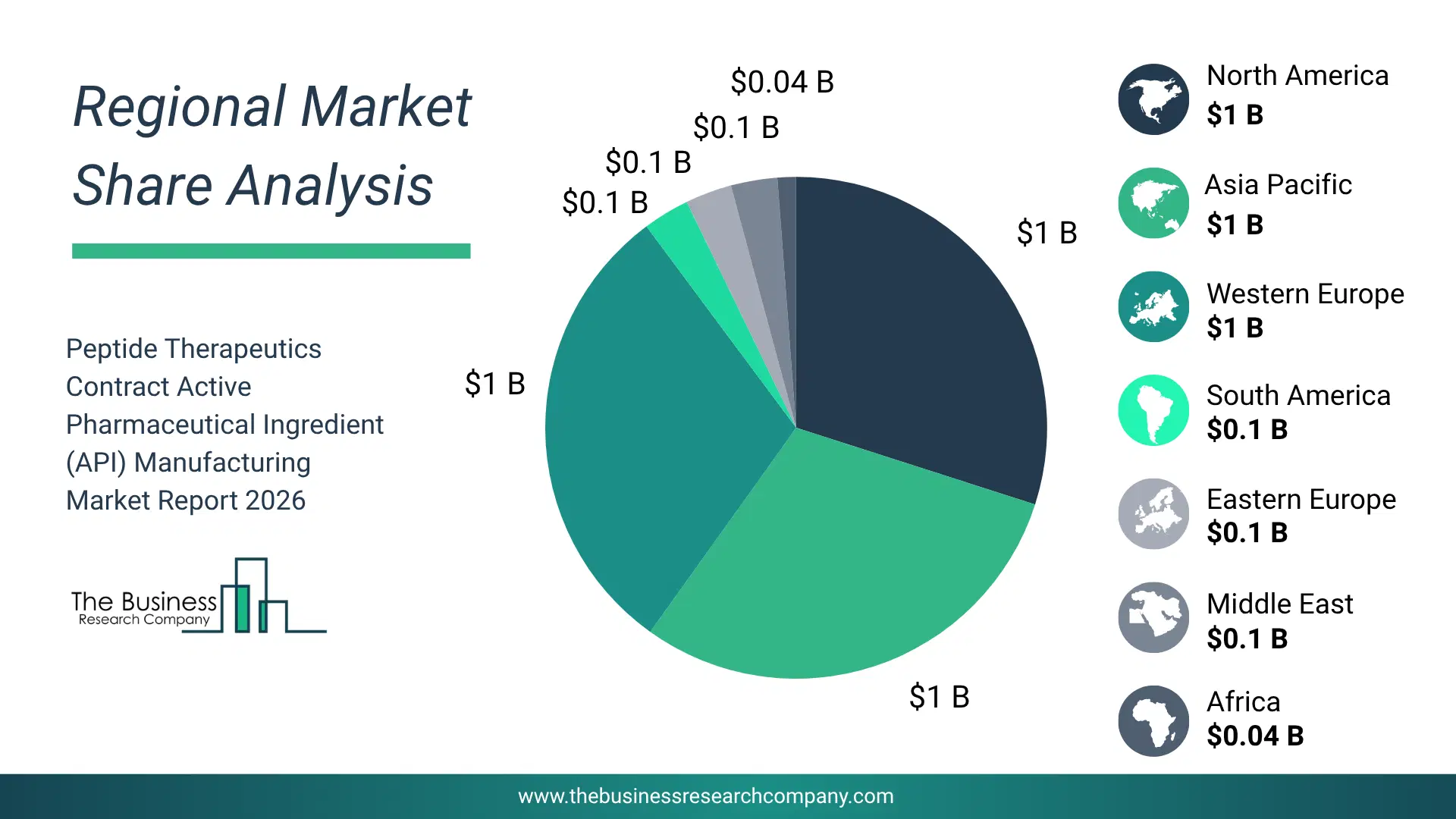
Regional Insights
North America was the largest region in the peptide therapeutics contract active pharmaceutical ingredient (API) manufacturing market in 2025. Asia-Pacific is expected to be the fastest-growing region in the forecast period. The regions covered in this market report are Asia-Pacific, South East Asia, Western Europe, Eastern Europe, North America, South America, Middle East, Africa. The countries covered in this market report are Australia, Brazil, China, France, Germany, India, Indonesia, Japan, Taiwan, Russia, South Korea, UK, USA, Canada, Italy, Spain.What Defines the Peptide Therapeutics Contract Active Pharmaceutical Ingredient (API) Manufacturing Market?
The peptide therapeutics contract active pharmaceutical ingredient (API) manufacturing market includes revenues earned by entities through custom peptide synthesis, process development and optimization, and analytical development and quality control. The market value includes the value of related goods sold by the service provider or included within the service offering. Only goods and services traded between entities or sold to end consumers are included.How is Market Value Defined and Measured?
The market value is defined as the revenues that enterprises gain from the sale of goods and/or services within the specified market and geography through sales, grants, or donations in terms of the currency (in USD unless otherwise specified). The revenues for a specified geography are consumption values that are revenues generated by organizations in the specified geography within the market, irrespective of where they are produced. It does not include revenues from resales along the supply chain, either further along the supply chain or as part of other products.
This chart presents market attractiveness based on a quantitative evaluation of growth, competition, strategic alignment, and risk, offering a clear view of opportunity areas for decision-making. This chart is for illustrative purposes; the full report contains the complete analysis.

This chart highlights the Total Addressable Market (TAM) by estimating the maximum revenue opportunity using an assumption-driven approach, supporting strategic planning and opportunity sizing across markets. The chart is illustrative; the full report provides a more comprehensive analysis.
What Key Data and Analysis Are Included in the Peptide Therapeutics Contract Active Pharmaceutical Ingredient (API) Manufacturing Market Report 2026?
The peptide therapeutics contract active pharmaceutical ingredient (api) manufacturing market research report is one of a series of new reports from The Business Research Company that provides market statistics, including industry global market size, regional shares, competitors with the market share, detailed market segments, market trends and opportunities, and any further data you may need to thrive in the peptide therapeutics contract active pharmaceutical ingredient (api) manufacturing industry. The market research report delivers a complete perspective of everything you need, with an in-depth analysis of the current and future state of the industry.Peptide Therapeutics Contract Active Pharmaceutical Ingredient (API) Manufacturing Market Report Forecast Analysis
| Report Attribute | Details |
|---|---|
| Market Size Value In 2026 | $3.1 billion |
| Revenue Forecast In 2030 | $4.11 billion |
| Growth Rate | CAGR of 7.3% from 2026 to 2030 |
| Base Year For Estimation | 2025 |
| Actual Estimates/Historical Data | 2020-2025 |
| Forecast Period | 2026 - 2030 - 2035 |
| Market Representation | Revenue in USD Billion and CAGR from 2026 to 2030 |
| Segments Covered | Scale Of Operation, Synthesis Method, Enterprise Type |
| Regional Scope | Asia-Pacific, Western Europe, Eastern Europe, North America, South America, Middle East, Africa |
| Country Scope | The countries covered in the report are Australia, Brazil, China, France, Germany, India, Indonesia, Japan, Taiwan, Russia, South Korea, UK, USA, Canada, Italy, Spain. |
| Key Companies Profiled | Thermo Fisher Scientific Inc., Lonza Group AG., WuXi AppTec Co. Ltd., Cambrex Corporation, ChemPartner, GenScript Biotech Corporation, Bachem Group, CordenPharma International GmbH, Syngene International Limited, Ambiopharm Inc., CPC Scientific Inc., ScinoPharm Taiwan Ltd., Hybio Pharmaceutical Co. Ltd., CSBio Company Inc., Senn Chemicals AG., AnaSpec Inc., LifeTein LLC, Apex Biotechnology Corp., BCN Peptides S.A. |
| Customization Scope | Request for Customization |
| Pricing And Purchase Options | Explore Purchase Options |