
Building Resilient Supply Chains Through Market Intelligence
Published date: 3rd July, 2026
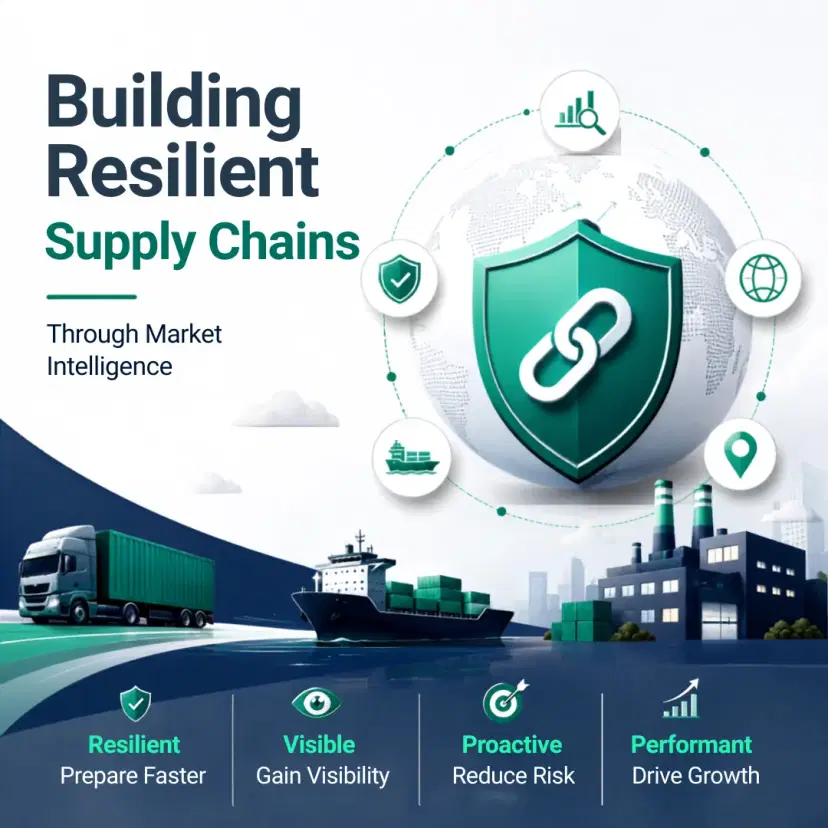
For most of the past three decades, supply chains were optimized for one thing: cost. The past five years rewrote that playbook. Pandemic shocks, geopolitical conflict, tariffs, and climate events have made resilience — not just efficiency — the defining priority. And resilience, it turns out, is an intelligence problem.

The Cost of Fragility
The numbers are sobering. McKinsey estimates that supply chain disruptions lasting a month or longer now occur every 3.7 years on average, and that these disruptions cost the average organization 45% of a year's profits over the course of a decade. A single prolonged production shock can wipe out 30% to 50% of one year's EBITDA. The visibility gap is the root cause. McKinsey found that more than 40% of organizations have limited or no visibility into even their Tier 1 supplier performance. In its supply chain research, just under half of senior executives understood the location of their tier-one suppliers, but only 2% could make the same claim about suppliers in the third tier and beyond — and most disruptions originate in these deeper supply chain tiers.

Intelligence Is the Resilience Multiplier
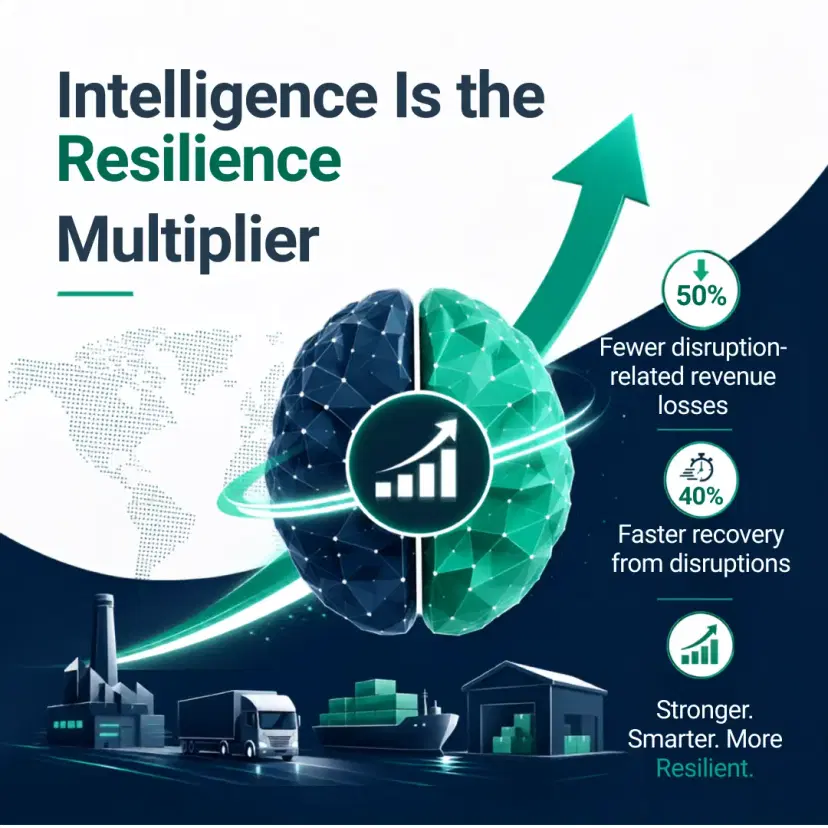
The payoff for closing that gap is large. McKinsey estimates that companies at the leading level of supply chain resilience experience 50% fewer disruption-related revenue losses and recover 40% faster from the disruptions they do face. The tooling market reflects this shift. The Business Research Company sizes the supply chain management (SCM) software market at $93.35 billion by 2029, growing at a 10.4% CAGR, and the procurement analytics market at $14.43 billion by 2029 at a 23.2% CAGR — one of the fastest-growing segments in the intelligence stack. TBRC also tracks adjacent markets such as supply chain finance, projected to reach $18.64 billion by 2029 at an 8.4% CAGR.

How AI Changes the Resilience Equation
AI turns supply chain data from a rear-view mirror into an early-warning system. Predictive analytics — a market TBRC values at $65.28 billion by 2030 at a 25.9% CAGR — powers demand forecasting, supplier risk scoring, and disruption simulation. The World Economic Forum, citing Accenture, notes that digitally fluent organizations are three times more likely to have achieved high revenue growth, underscoring that the resilience dividend and the growth dividend are linked. But technology alone is not resilience. The WEF reports that investment in supply chain digitization leveled off in 2024, and that only about a quarter of supply chain professionals believe their companies have completed their digital transformation. The bottleneck is not tools — it is intelligence: knowing which suppliers, regions, and commodities carry hidden risk.


Where Market Intelligence Comes In
This is where multi-factor research is decisive. TBRC's reports assess the impact of geopolitical conflicts, trade policies and tariffs, inflation, interest rates, and evolving regulation on each market — across 16 geographies — giving supply chain leaders the macro and competitive context that an internal dashboard cannot supply. Our custom research can map supplier networks, benchmark distributor and partner ecosystems, and pressure-test sourcing strategies against named risks.

From Cost Center to Strategic Advantage
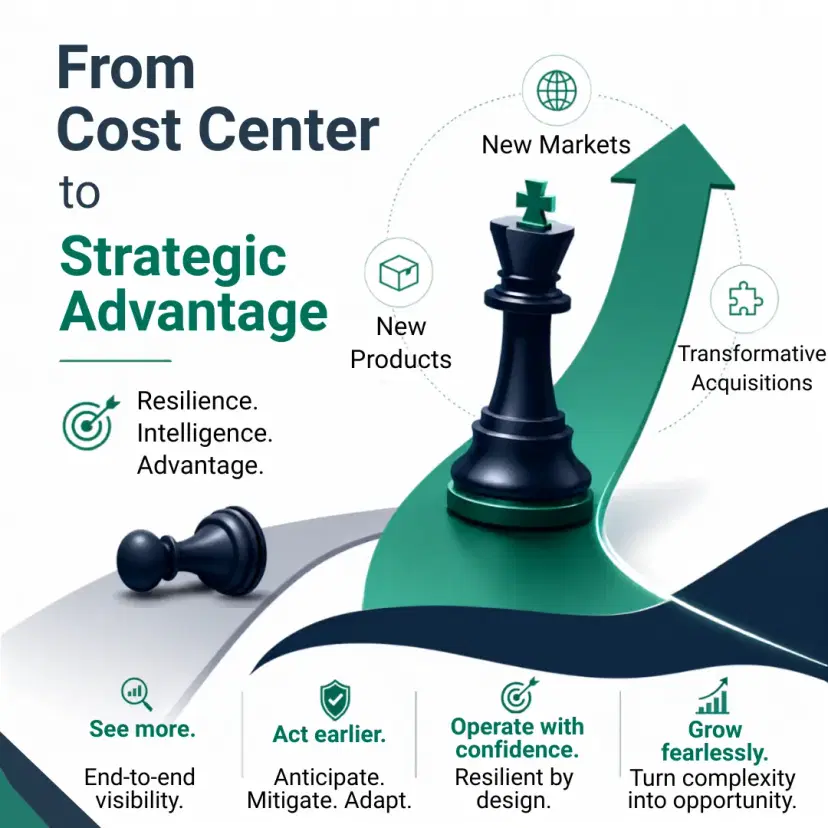
The strategic reframe is the most important takeaway: resilience is not overhead. Companies with genuinely resilient supply chains can make bolder strategic bets — new markets, new products, transformative acquisitions — because they trust their ability to absorb operational complexity. Intelligence is what makes that confidence rational.