

3D Neuroscience Market Report 2026
Global Outlook – By Component (Instruments And Consumables, Software And Services), By Technology (Brain Imaging, Neuro-Microscopy, Electrophysiology, Neurophotonic Analysis, Other Technologies), By Scale Of Analysis (Macro-Scale Connectomics (MSC), Meso-Scale Connectomics (MeSC), Micro-Scale Connectomics (MiSC), Nanoscale Or Synaptic Analysis (NSA)), By Application (Disease Modeling And Drug Discovery, Brain Mapping And Connectomics, Developmental Neuroscience, Diagnostics And Surgical Planning), By End-User (Hospitals, Diagnostic Laboratories, Research and Academic Institutes, Other End-Users) – Market Size, Trends, Strategies, and Forecast to 2030
3D Neuroscience Market Overview
• 3D Neuroscience market size has reached to $1.49 billion in 2025 • Expected to grow to $2.95 billion in 2030 at a compound annual growth rate (CAGR) of 14.5% • Growth Driver: Growing Incidence Of Neurological Disorders Fueling Demand For Market Due To Lifestyle-Related Health Risks • Market Trend: Advancing 3D Neuroscience With Multicellular Integrated Human Brain Models For Enhanced Disease Research • North America was the largest region in 2025 and Asia-Pacific is the fastest growing region.What Is Covered Under 3D Neuroscience Market?
3D neuroscience refers to the use of three-dimensional (3D) technologies to visualize, analyze, and model the structure and function of the nervous system at high spatial resolution. Its primary purpose is to enable accurate mapping of brain circuits, neural connectivity, and cellular interactions for advanced research and diagnostic development. It also supports improved understanding of neurological disorders, brain development, and neural network behavior through immersive and data-rich visualization. The main components of 3D neuroscience are instruments and consumables, and software and services. Instruments and consumables refer to advanced imaging, analysis, and visualization tools used to capture and study three-dimensional brain structures and neural networks with high spatial resolution. The technologies such as brain imaging, neuro-microscopy, electrophysiology, neurophotonic analysis, and others. The different scales, including macro-scale, meso-scale, micro-scale, and nanoscale or synaptic levels. The application such as disease modeling and drug discovery, brain mapping and connectomics, developmental neuroscience, diagnostics, and surgical planning, and the key end users including hospitals, diagnostic laboratories, research and academic institutes, and others.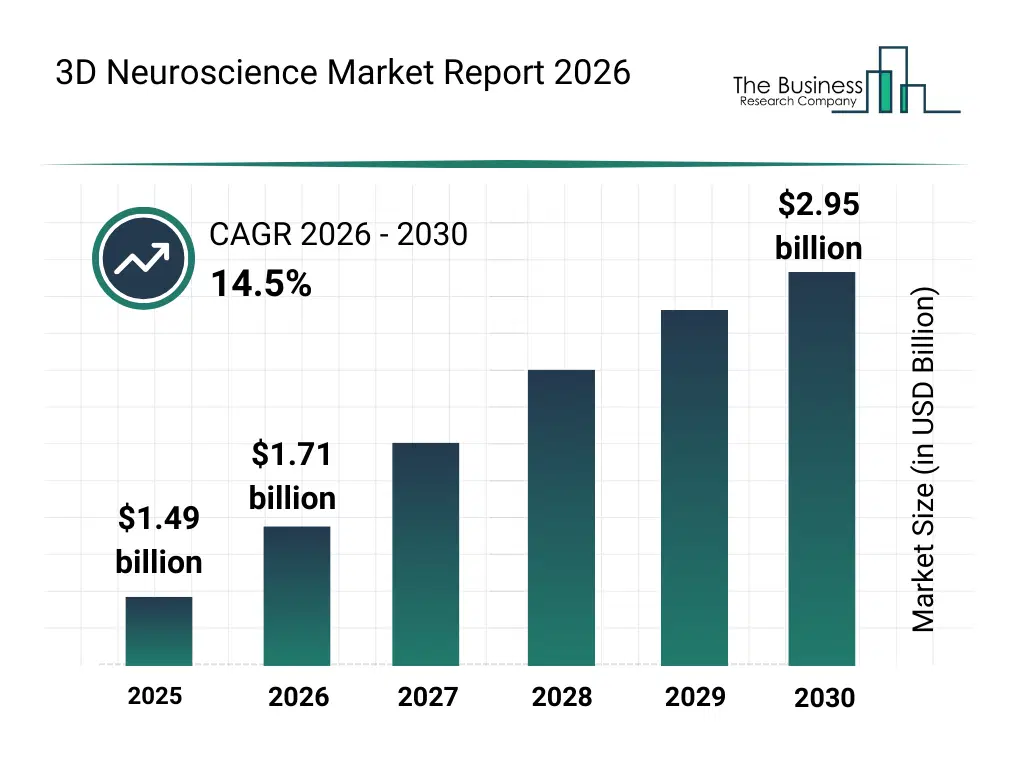
What Is The 3D Neuroscience Market Size and Share 2026?
The three-dimensional (3D) neuroscience market size has grown rapidly in recent years. It will grow from $1.49 billion in 2025 to $1.71 billion in 2026 at a compound annual growth rate (CAGR) of 14.8%. The growth in the historic period can be attributed to growing adoption of three-dimensional (3D) brain modeling techniques, increasing demand for advanced neurological research tools, rising use in drug discovery and neuropharmacology, expansion of imaging and visualization technologies, and growing focus on understanding complex neural networks.What Is The 3D Neuroscience Market Growth Forecast?
The three-dimensional (3D) neuroscience market size is expected to see rapid growth in the next few years. It will grow to $2.95 billion in 2030 at a compound annual growth rate (CAGR) of 14.5%. The growth in the forecast period can be attributed to increasing integration of three-dimensional (3D) models with artificial intelligence (AI) analytics, rising investment in personalized neuroscience research, growing adoption in disease modeling and therapeutic development, expansion of high-resolution imaging and data acquisition platforms, and a rise in demand for predictive and translational neuroscience studies. Major trends in the forecast period include technology-driven innovations in three-dimensional (3D) neural tissue modeling, advancements in artificial intelligence (AI)-enabled data analysis, developments in organoid and lab-grown neural systems, rising research and development in imaging and simulation platforms, and innovation in integrated neuroscience modeling and visualization tools.
Global 3D Neuroscience Market Segmentation
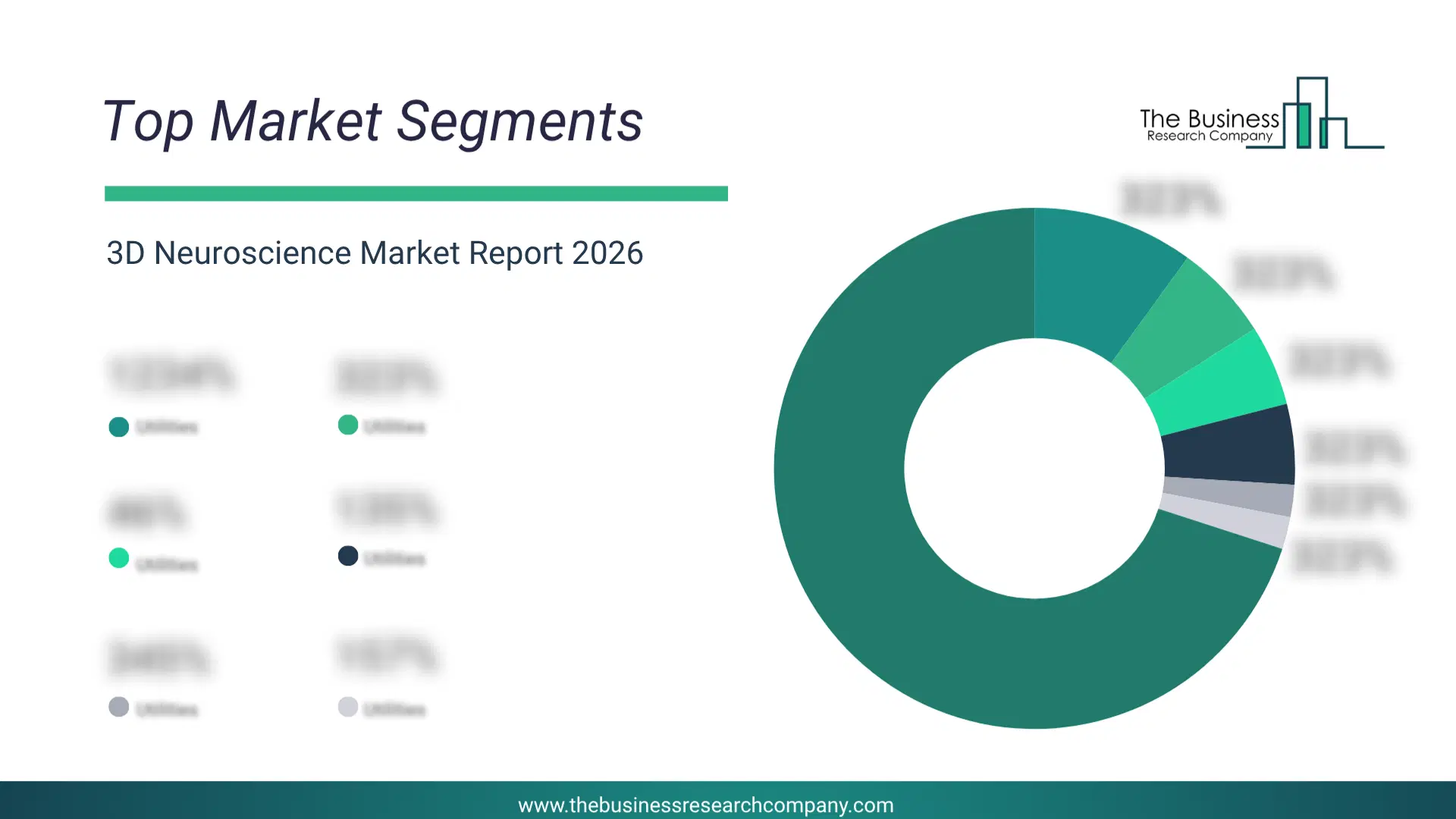
1) By Component: Instruments And Consumables, Software And Services 2) By Technology: Brain Imaging, Neuro-Microscopy, Electrophysiology, Neurophotonic Analysis, Other Technologies 3) By Scale Of Analysis: Macro-Scale Connectomics (MSC), Meso-Scale Connectomics (MeSC), Micro-Scale Connectomics (MiSC), Nanoscale Or Synaptic Analysis (NSA) 4) By Application: Disease Modeling And Drug Discovery, Brain Mapping And Connectomics, Developmental Neuroscience, Diagnostics And Surgical Planning 5) By End-User: Hospitals, Diagnostic Laboratories, Research and Academic Institutes, Other End-Users Subsegments: 1) By Instruments And Consumables: Imaging Devices, Microelectrodes, Sensors, Reagents, Laboratory Consumables 2) By Software And Services: Data Analysis Software, Visualization Software, Modeling And Simulation Software, Technical Support Services, Training And Consultation ServicesWhat Is The Driver Of The 3D Neuroscience Market?
The increasing prevalence of neurological disorders is expected to propel the growth of the 3D neuroscience market going forward. Neurological disorders are medical conditions that affect the brain, spinal cord, and nerves, disrupting normal nervous system function and leading to impairments in movement, cognition, sensation, behavior, or overall bodily control. The increasing prevalence of neurological disorders is due to unhealthy lifestyle habits, including poor diet, physical inactivity, smoking, excessive alcohol consumption, and chronic stress. 3D neuroscience enhances understanding of the brain’s structure and function, enabling more precise diagnosis and personalized treatment for neurological patients. For instance, in April 2024, according to the National Institutes of Health (NIH), a US-based government agency, an estimated 6.9 million Americans aged 65 and older are currently living with Alzheimer’s dementia, and this figure is projected to nearly double to 13.8 million by 2060. Therefore, the increasing prevalence of neurological disorders drives the 3D neuroscience industry.Key Players In The Global 3D Neuroscience Market
Major companies operating in the 3D neuroscience market are Siemens Healthineers AG, Merck KGaA, Koninklijke Philips N.V., GE Healthcare Technologies Inc., Corning Incorporated, Bruker Corporation, STEMCELL Technologies Inc., Greiner Bio-One International GmbH, American Type Culture Collection, Cellink AB, Aspect Biosystems Ltd., InSphero AG, Axion BioSystems Inc., Emulate Inc., Mimetas B.V., NeuroNexus Technologies Inc., Tessara Therapeutics Inc., TheWell Bioscience Inc., Kirkstall Ltd., Pelobiotech GmbH, 3D Biotek LLC, Mightex Systems Inc., Advanced BioMatrix Inc.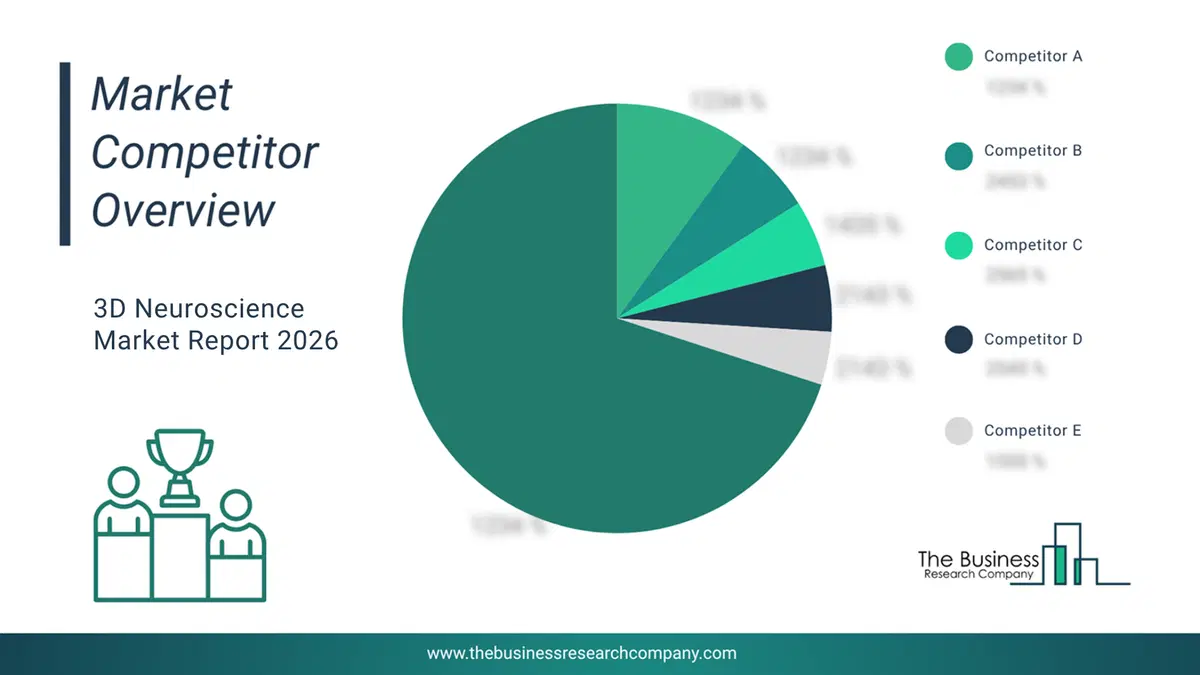
This chart is for illustrative purposes; the full report includes a detailed competitor analysis and comprehensive overview of the top 10 companies in the market.
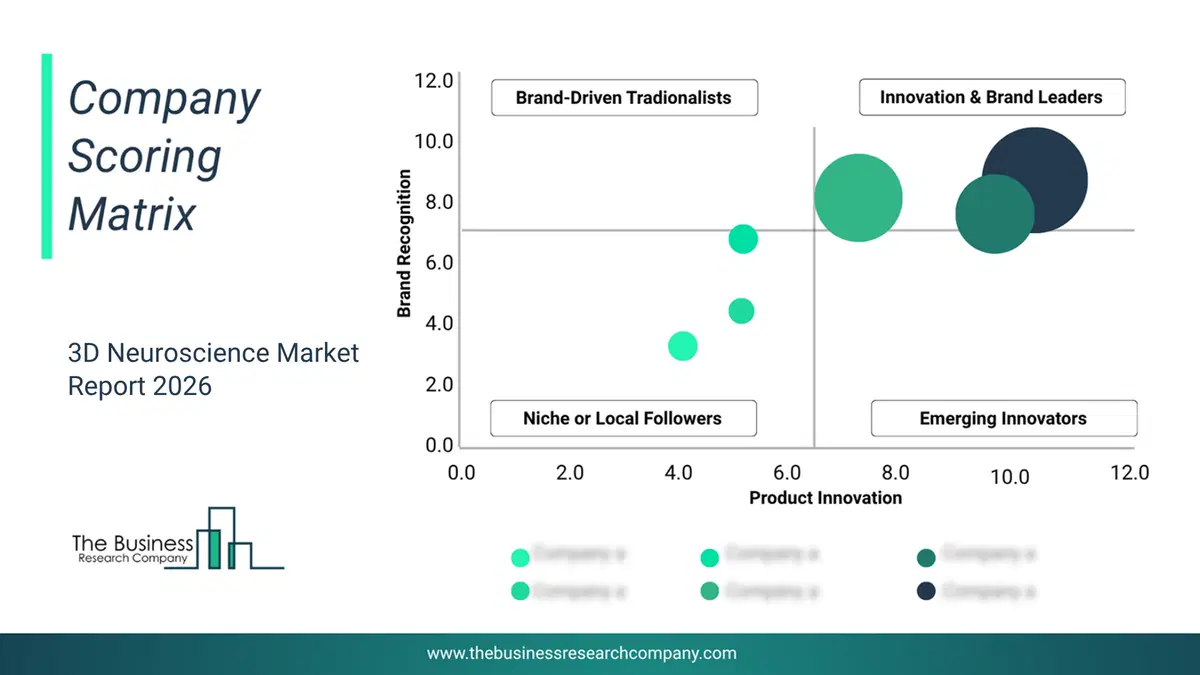
This chart maps companies by product innovation and brand strength, with bubble size indicating relative revenue, helping identify market leaders, challengers, and niche players. This is an illustrative chart; the full report provides a complete and accurate competitive analysis.
Global 3D Neuroscience Market Trends and Insights
Major companies operating in the 3D neuroscience market are focusing on developing advanced 3D human brain tissue platforms, such as multicellular integrated brain models, to enhance disease modeling, accelerate drug testing, and provide more physiologically relevant results. Multicellular integrated brain models refer to laboratory-cultured three-dimensional constructs derived from induced pluripotent stem cells that incorporate multiple major brain cell types, enabling detailed study of cellular interactions, pathology, and drug responses. For instance, in November 2025, Massachusetts Institute of Technology (MIT), a US-based research institution, launched Multicellular Integrated Brains (miBrains), a customizable 3D human brain tissue system. The platform integrates six major brain cell types, supports genetic engineering for personalized disease studies, and can be scaled to support large-scale research projects, improving the supply and usability of complex in vitro models for neuroscience research.What Are Latest Mergers And Acquisitions In The 3D Neuroscience Market?
In December 2023, Mentice AB, a Sweden-based provider of medical simulation and image-guided interventional therapy solutions, acquired Biomodex for an undisclosed amount. Through this acquisition, Mentice aims to enhance its 3D anatomical printing and simulation capabilities by incorporating patient-specific, high-fidelity 3D models that support advanced clinical planning, physician training, and neurovascular procedural rehearsal. Biomodex is a UK-based medical technology company specializing in biorealistic 3D-printed anatomical models and patient-specific simulation systems.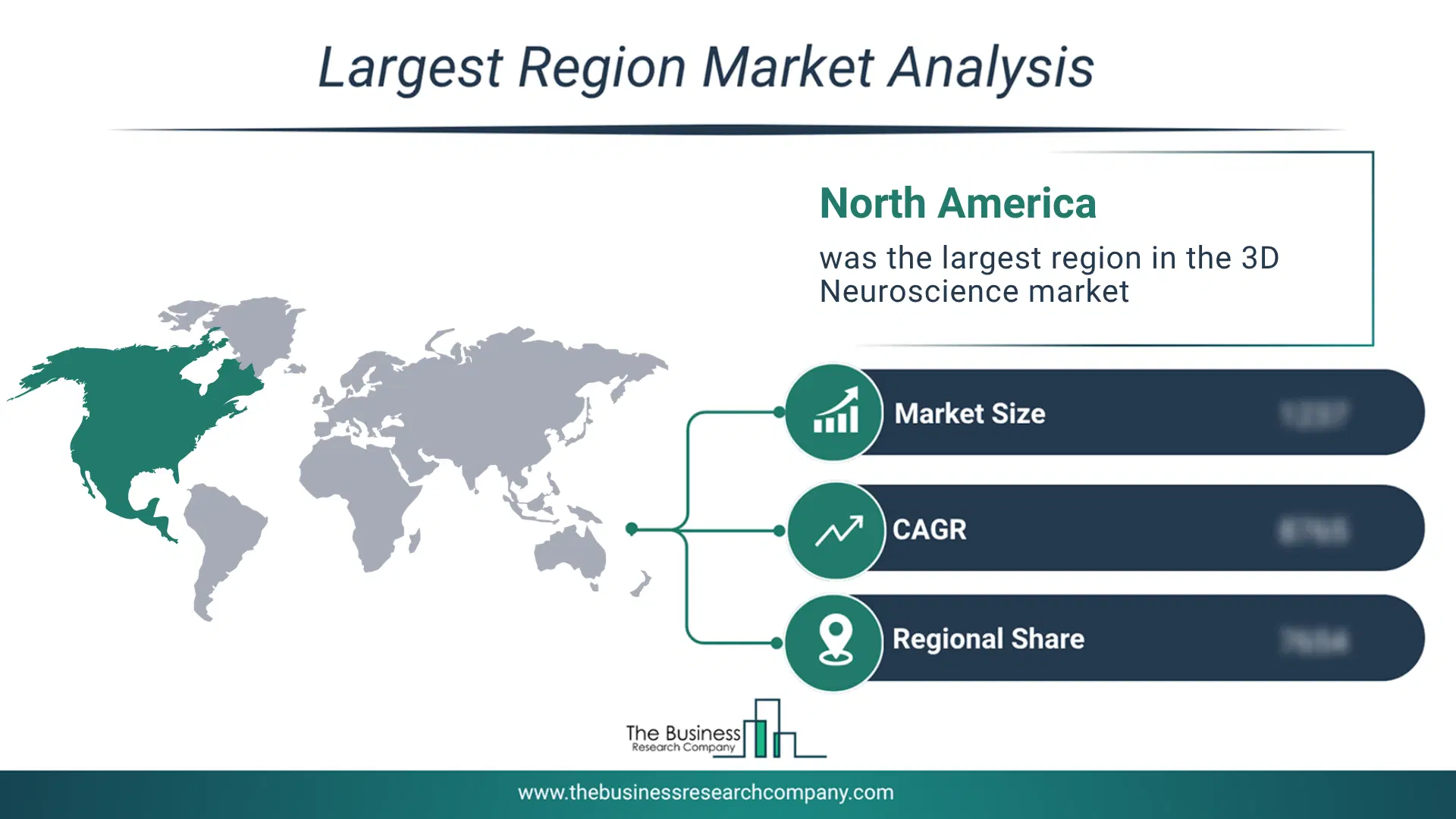
Regional Insights
North America was the largest region in the three dimensional (3D) neuroscience market in 2025. Asia-Pacific is expected to be the fastest-growing region in the forecast period. The regions covered in this market report are Asia-Pacific, South East Asia, Western Europe, Eastern Europe, North America, South America, Middle East, Africa. The countries covered in this market report are Australia, Brazil, China, France, Germany, India, Indonesia, Japan, Taiwan, Russia, South Korea, UK, USA, Canada, Italy, Spain.What Defines the 3D Neuroscience Market?
The 3D neuroscience market consists of revenues earned by entities by providing services such as three-dimensional (3D) brain imaging platforms, neural reconstruction software, volumetric data analysis tools, virtual brain modeling systems, and advanced microscopy integration. The market value includes the value of related goods sold by the service provider or included within the service offering. The 3D neuroscience includes sales of high-resolution imaging hardware, optical microscopy systems, three-dimensional (3D) imaging scanners, and neural data visualization workstations. Values in this market are ‘factory gate’ values, that is, the value of goods sold by the manufacturers or creators of the goods, whether to other entities (including downstream manufacturers, wholesalers, distributors, and retailers) or directly to end customers. The value of goods in this market includes related services sold by the creators of the goods.How is Market Value Defined and Measured?
The market value is defined as the revenues that enterprises gain from the sale of goods and/or services within the specified market and geography through sales, grants, or donations in terms of the currency (in USD unless otherwise specified). The revenues for a specified geography are consumption values that are revenues generated by organizations in the specified geography within the market, irrespective of where they are produced. It does not include revenues from resales along the supply chain, either further along the supply chain or as part of other products.
This chart presents market attractiveness based on a quantitative evaluation of growth, competition, strategic alignment, and risk, offering a clear view of opportunity areas for decision-making. This chart is for illustrative purposes; the full report contains the complete analysis.

This chart highlights the Total Addressable Market (TAM) by estimating the maximum revenue opportunity using an assumption-driven approach, supporting strategic planning and opportunity sizing across markets. The chart is illustrative; the full report provides a more comprehensive analysis.
What Key Data and Analysis Are Included in the 3D Neuroscience Market Report 2026?
The 3d neuroscience market research report is one of a series of new reports from The Business Research Company that provides market statistics, including industry global market size, regional shares, competitors with the market share, detailed market segments, market trends and opportunities, and any further data you may need to thrive in the 3d neuroscience industry. The market research report delivers a complete perspective of everything you need, with an in-depth analysis of the current and future state of the industry.3D Neuroscience Market Report Forecast Analysis
| Report Attribute | Details |
|---|---|
| Market Size Value In 2026 | $1.71 billion |
| Revenue Forecast In 2030 | $2.95 billion |
| Growth Rate | CAGR of 14.5% from 2026 to 2030 |
| Base Year For Estimation | 2025 |
| Actual Estimates/Historical Data | 2020-2025 |
| Forecast Period | 2026 - 2030 |
| Market Representation | Revenue in USD Billion and CAGR from 2026 to 2030 |
| Segments Covered | Component, Technology, Scale Of Analysis, Application, End-User |
| Regional Scope | Asia-Pacific, Western Europe, Eastern Europe, North America, South America, Middle East, Africa |
| Country Scope | The countries covered in the report are Australia, Brazil, China, France, Germany, India, Indonesia, Japan, Taiwan, Russia, South Korea, UK, USA, Canada, Italy, Spain. |
| Key Companies Profiled | Siemens Healthineers AG, Merck KGaA, Koninklijke Philips N.V., GE Healthcare Technologies Inc., Corning Incorporated, Bruker Corporation, STEMCELL Technologies Inc., Greiner Bio-One International GmbH, American Type Culture Collection, Cellink AB, Aspect Biosystems Ltd., InSphero AG, Axion BioSystems Inc., Emulate Inc., Mimetas B.V., NeuroNexus Technologies Inc., Tessara Therapeutics Inc., TheWell Bioscience Inc., Kirkstall Ltd., Pelobiotech GmbH, 3D Biotek LLC, Mightex Systems Inc., Advanced BioMatrix Inc. |
| Customization Scope | Request for Customization |
| Pricing And Purchase Options | Explore Purchase Options |