
5th Generation (5G) Enterprise Market Report 2026
Global Outlook – By Network Type (Hybrid Networks, Private Networks, Enterprise Network, Communication Service Provider (CSP) Network), By Frequency Band (Sub-6GHz, mmWave), By Infrastructure (Access Equipment, Small Cells, E-RAN Equipment (Service Node), Core Network, Software-Defined Networking (SDN), Network Function Virtualization (NFV)), By Application (Mobile Robots (AGV), Video Analytics, Drones, Augmented Reality (AR) Or Virtual Reality (VR), Communication, Other Applications), By Vertical (Banking, Financial Services, And Insurance (BFSI), Manufacturing, Energy And Utilities, Retail, Healthcare, Government And Public Safety, Transportation And Logistics, Aerospace And Defense, Media And Entertainment, Office Buildings) – Market Size, Trends, Strategies, and Forecast to 2030
5th Generation (5G) Enterprise Market Overview
• 5th Generation (5G) Enterprise market size has reached to $6.18 billion in 2025 • Expected to grow to $22.33 billion in 2030 at a compound annual growth rate (CAGR) of 28.2% • Growth Driver: IoT Adoption Fuels Expansion Of The 5G Enterprise Market • Market Trend: Innovative Solutions Drive Competitive Advantages In The 5G Enterprise Sector • North America was the largest region in 2025 and Asia-Pacific is the fastest growing region.What Is Covered Under 5th Generation (5G) Enterprise Market?
5th generation (5G) enterprise refers to the use of 5G technology designed primarily for business and industrial applications in order to improve operational efficiency and open up opportunities for new companies across a wide range of industries. 5G networks offer significantly faster data speeds and lower latency compared to other generations. This high-speed connectivity enables businesses to access and transfer large amounts of data quickly and efficiently. The main network types of 5th generation (5G) enterprises are hybrid networks, private networks, enterprise networks, and communication service provider (CSP) networks. Hybrid networks involve combining various networking technologies including wired, wireless, and satellite to create versatile infrastructures catering to diverse connectivity needs. The frequency bands such as Sub-6GHz and mmWave, are incorporated in types of infrastructure that include access equipment, small cells, E-RAN equipment (service node), core networks, software-defined networking (SDN), and network function virtualization (NFV) for applications such as mobile robots (AGV), video analytics, drones, augmented reality (AR) or virtual reality (VR), communication, and other end-use verticals, which are categorized as banking, financial services, and insurance (BFSI), manufacturing, energy and utilities, retail, healthcare, government and public safety, transportation and logistics, aerospace and defense, media and entertainment, and office buildings.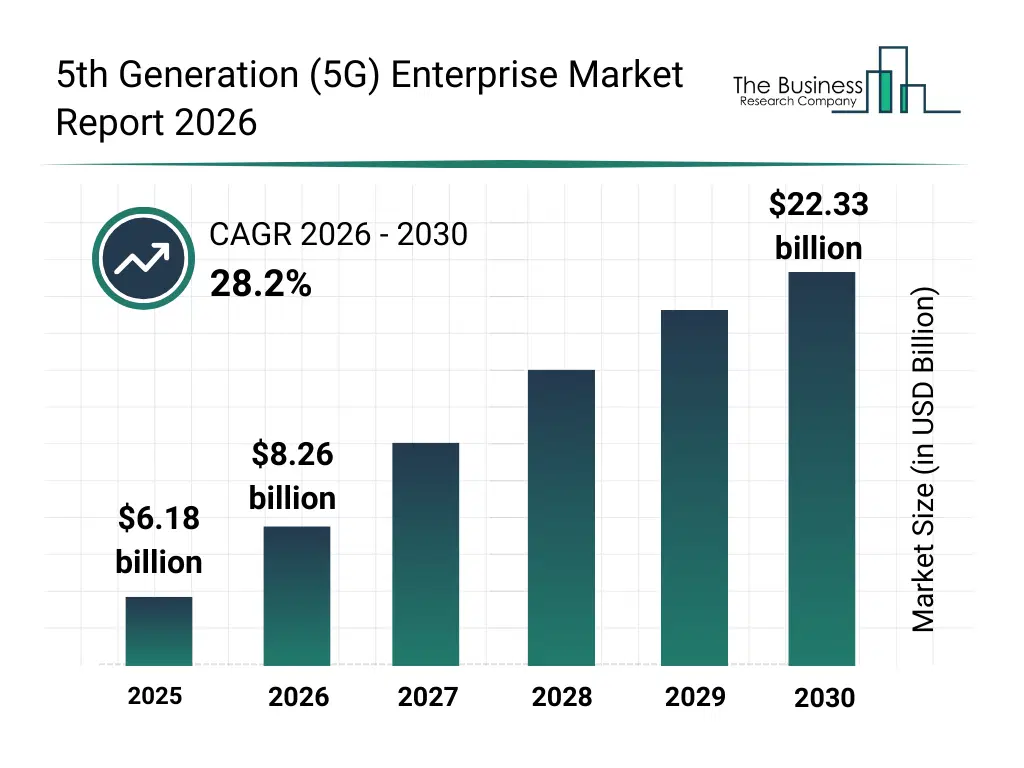
What Is The 5th Generation (5G) Enterprise Market Size and Share 2026?
The 5th generation (5g) enterprise market size has grown exponentially in recent years. It will grow from $6.18 billion in 2025 to $8.26 billion in 2026 at a compound annual growth rate (CAGR) of 33.7%. The growth in the historic period can be attributed to early enterprise digital transformation initiatives, rising demand for low latency connectivity, increasing automation in manufacturing, expansion of industrial iot deployments, need for secure enterprise communication.What Is The 5th Generation (5G) Enterprise Market Growth Forecast?
The 5th generation (5g) enterprise market size is expected to see exponential growth in the next few years. It will grow to $22.33 billion in 2030 at a compound annual growth rate (CAGR) of 28.2%. The growth in the forecast period can be attributed to growth of private 5G investments, increasing adoption of smart factories, rising demand for real-time analytics, expansion of edge computing infrastructure, growing enterprise focus on network customization. Major trends in the forecast period include private 5G network deployment for enterprises, ultra-reliable low-latency communication (URLLC) adoption, network slicing for industry-specific use cases, edge computing integration with enterprise 5g, secure and scalable enterprise connectivity.
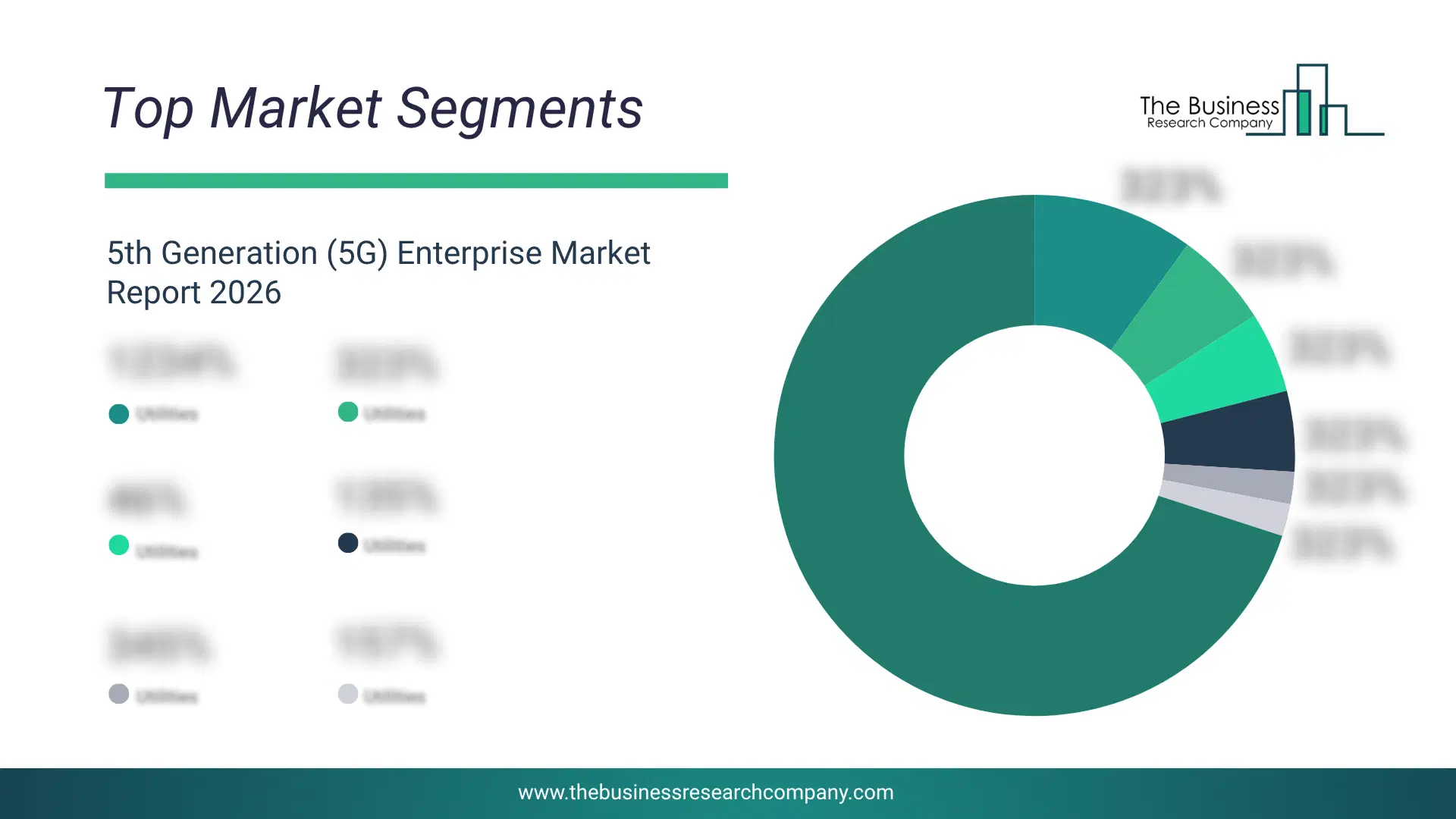
Global 5th Generation (5G) Enterprise Market Segmentation
1) By Network Type: Hybrid Networks, Private Networks, Enterprise Network, Communication Service Provider (CSP) Network 2) By Frequency Band: Sub-6GHz, mmWave 3) By Infrastructure: Access Equipment, Small Cells, E-RAN Equipment (Service Node), Core Network, Software-Defined Networking (SDN), Network Function Virtualization (NFV) 4) By Application: Mobile Robots (AGV), Video Analytics, Drones, Augmented Reality (AR) Or Virtual Reality (VR), Communication, Other Applications 5) By Vertical: Banking, Financial Services, And Insurance (BFSI), Manufacturing, Energy And Utilities, Retail, Healthcare, Government And Public Safety, Transportation And Logistics, Aerospace And Defense, Media And Entertainment, Office Buildings Subsegments: 1) By Hybrid Networks: Combination Of Private And Public Networks, Integration With Cloud Networks 2) By Private Networks: On-premises Private 5G Networks, Remote or Distributed Private 5G Networks 3) By Enterprise Network: Large Enterprise Networks, Small And Medium Enterprise Networks 4) By Communication Service Provider (CSP) Network: CSP-owned 5G Networks, CSP-managed Private 5G NetworksWhat Is The Driver Of The 5th Generation (5G) Enterprise Market?
The growing adoption of IoT devices is expected to propel the growth of the 5G enterprise market going forward. IoT devices refer to physical objects embedded with sensors, software, and connectivity capabilities, allowing them to collect, exchange, and act on data without human intervention. The factors contributing to the increased demand for IoT (Internet of Things) devices are automation and efficiency, improved connectivity, and consumer demand. 5G provides ultra-fast speeds and low latency, enabling seamless connectivity for IoT devices, supporting real-time data transmission and massive deployments across diverse applications such as industrial automation and smart cities. For instance, in September 2023, according to a report published by Ericsson, a Sweden-based telecommunications company, global IoT connections reached 15.7 billion connections in 2023 and are expected to increase by 16% to 38.9 billion connections by 2029. Therefore, the growing adoption of IoT devices is driving the growth of the 5G enterprise market.Key Players In The Global 5th Generation (5G) Enterprise Market
Major companies operating in the 5th generation (5g) enterprise market are Samsung Electronics Co. Ltd; Microsoft Corporation; Verizon Communications Inc.; AT&T Inc.; Huawei Technologies Co. Ltd; Intel Corporation; Vodafone Group Plc; Cisco Systems Inc; Qualcomm Incorporated; Oracle Corporation; NTT Docomo Inc.; Hewlett Packard Enterprise Company; Telefonaktiebolaget LM Ericsson; Nokia Corporation; NEC Corporation; ZTE Corporation; Telstra Corporation Limited; SK Telecom Co. Ltd.; Juniper Networks Inc.; Ciena Corporation; Fujitsu Limited; Mavenir plc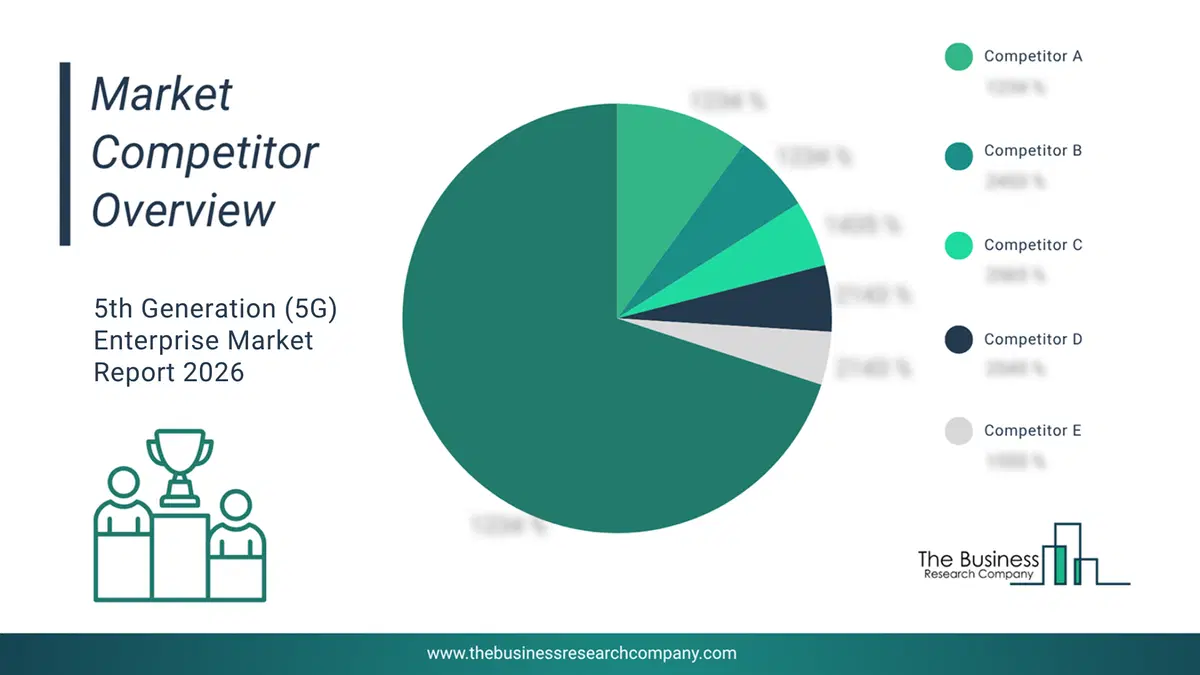
This chart is for illustrative purposes; the full report includes a detailed competitor analysis and comprehensive overview of the top 10 companies in the market.
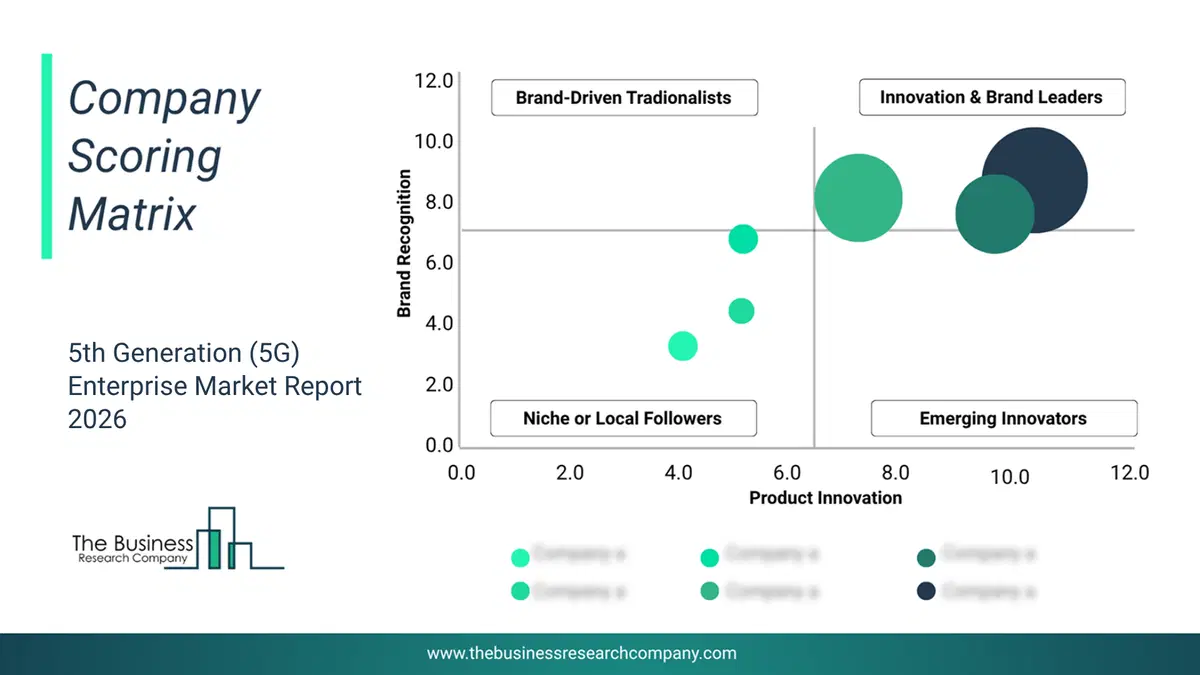
This chart maps companies by product innovation and brand strength, with bubble size indicating relative revenue, helping identify market leaders, challengers, and niche players. This is an illustrative chart; the full report provides a complete and accurate competitive analysis.
Global 5th Generation (5G) Enterprise Market Trends and Insights
Major companies in the 5G enterprise market are interested in deploying private networks such as 5G wireless networks, to meet specific communication requirements. A 5G wireless network is the fifth generation of cellular network technology designed to provide significantly faster data speeds, lower latency, increased network capacity, and improved reliability compared to previous generations. For instance, in February 2024, Wipro Ltd., an India-based technology company, and Nokia Corporation, a Finland-based telecommunications company, launched a joint private 5G wireless solution for enterprises. This partnership seeks to propel businesses towards digital transformation and innovation, empowering them with enhanced connectivity and AI-driven capabilities. This partnership allows enterprises to scale their digital transformation, mitigate security risks, and optimize their operations effectively.What Are Latest Mergers And Acquisitions In The 5th Generation (5G) Enterprise Market?
In June 2023, Hewlett-Packard Enterprise (HPE), a US-based information technology company, acquired Athonet for an undisclosed amount. This acquisition aims to expand HPE's portfolio of edge-to-cloud solutions, particularly in the field of 5G technology. This strategic move reinforces HPE's position as a leader in delivering next-generation infrastructure and services to enterprises seeking to capitalize on the transformative potential of edge computing and 5G technologies. Athonet is an Italy-based telecommunications company that provides private 5G technology for enterprises and organizations.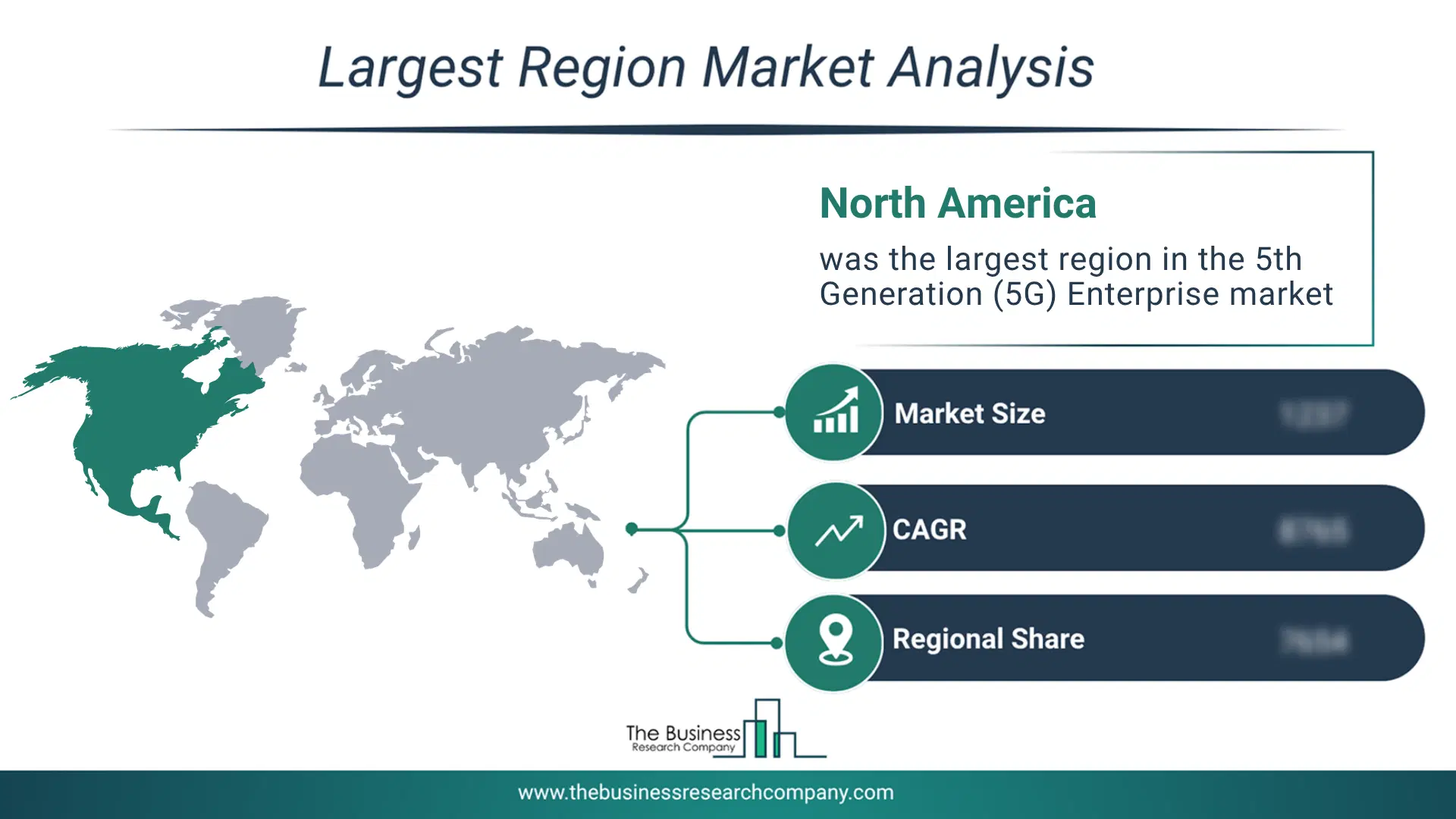
Regional Insights
North America was the largest region in the 5th generation (5G) enterprise market in 2025. Asia-Pacific is expected to be the fastest-growing region in the forecast period. The regions covered in this market report are Asia-Pacific, South East Asia, Western Europe, Eastern Europe, North America, South America, Middle East, Africa. The countries covered in this market report are Australia, Brazil, China, France, Germany, India, Indonesia, Japan, Taiwan, Russia, South Korea, UK, USA, Canada, Italy, SpainWhat Defines the 5th Generation (5G) Enterprise Market?
The 5th generation (5G) enterprise market consist of revenues earned by entities by providing services such as network infrastructure services and IoT connectivity services. The market value includes the value of related goods sold by the service provider or included within the service offering. The 5th generation (5G) enterprise market also includes sales of base stations, smartphones and tablets, antennas, and test and measurement equipment. Values in this market are ‘factory gate’ values, that is the value of goods sold by the manufacturers or creators of the goods, whether to other entities (including downstream manufacturers, wholesalers, distributors and retailers) or directly to end customers. The value of goods in this market includes related services sold by the creators of the goods.How is Market Value Defined and Measured?
The market value is defined as the revenues that enterprises gain from the sale of goods and/or services within the specified market and geography through sales, grants, or donations in terms of the currency (in USD unless otherwise specified). The revenues for a specified geography are consumption values that are revenues generated by organizations in the specified geography within the market, irrespective of where they are produced. It does not include revenues from resales along the supply chain, either further along the supply chain or as part of other products.
This chart presents market attractiveness based on a quantitative evaluation of growth, competition, strategic alignment, and risk, offering a clear view of opportunity areas for decision-making. This chart is for illustrative purposes; the full report contains the complete analysis.

This chart highlights the Total Addressable Market (TAM) by estimating the maximum revenue opportunity using an assumption-driven approach, supporting strategic planning and opportunity sizing across markets. The chart is illustrative; the full report provides a more comprehensive analysis.
What Key Data and Analysis Are Included in the 5th Generation (5G) Enterprise Market Report 2026?
The 5th generation (5g) enterprise market research report is one of a series of new reports from The Business Research Company that provides market statistics, including industry global market size, regional shares, competitors with the market share, detailed market segments, market trends and opportunities, and any further data you may need to thrive in the 5th generation (5g) enterprise industry. The market research report delivers a complete perspective of everything you need, with an in-depth analysis of the current and future state of the industry.5th Generation (5G) Enterprise Market Report Forecast Analysis
| Report Attribute | Details |
|---|---|
| Market Size Value In 2026 | $8.26 billion |
| Revenue Forecast In 2030 | $22.33 billion |
| Growth Rate | CAGR of 28.2% from 2026 to 2030 |
| Base Year For Estimation | 2025 |
| Actual Estimates/Historical Data | 2020-2025 |
| Forecast Period | 2026 - 2030 |
| Market Representation | Revenue in USD Billion and CAGR from 2026 to 2030 |
| Segments Covered | Network Type, Frequency Band, Infrastructure, Application, Vertical |
| Regional Scope | Asia-Pacific, Western Europe, Eastern Europe, North America, South America, Middle East, Africa |
| Country Scope | The Countries Covered In This Market Report Are Australia, Brazil, China, France, Germany, India, Indonesia, Japan, Taiwan, Russia, South Korea, Uk, Usa, Canada, Italy, Spain. |
| Key Companies Profiled | Samsung Electronics Co. Ltd, Microsoft Corporation, Verizon Communications Inc., AT&T Inc., Huawei Technologies Co. Ltd, Intel Corporation, Vodafone Group Plc, Cisco Systems Inc, Qualcomm Incorporated, Oracle Corporation, NTT Docomo Inc., Hewlett Packard Enterprise Company, Telefonaktiebolaget LM Ericsson, Nokia Corporation, NEC Corporation, ZTE Corporation, Telstra Corporation Limited, SK Telecom Co. Ltd., Juniper Networks Inc., Ciena Corporation, Fujitsu Limited, Mavenir plc |
| Customization Scope | Request for Customization |
| Pricing And Purchase Options | Explore Purchase Options |