
AI in Transportation Market Report 2026
Global Outlook – By Components (Hardware, Software), By Process (Signal Recognition, Object Recognition, Data Mining), By Technology Type (Deep Learning, Computer Vision, Context-Awareness), By Application (Semi-Autonomous Truck, Truck Platooning, Predictive Maintenance, Precision And Mapping, Autonomous Truck, Machine Human Interface, Other Applications) – Market Size, Trends, Strategies, and Forecast to 2030
AI in Transportation Market Overview
• AI in Transportation market size has reached to $4.41 billion in 2025 • Expected to grow to $11.17 billion in 2030 at a compound annual growth rate (CAGR) of 20.5% • Growth Driver: Rising Vehicle Sales Fuel Expansion of AI in Transportation Market • Market Trend: Strategic Partnerships For Ai-Based Automated Vehicle Inspection • North America was the largest region in 2025.Market Gains By 2030 – Top Opportunities By Segment
Market Gain identifies the most promising market opportunities by highlighting the segments or products expected to generate the highest incremental revenue growth over the next five years.
What Is Covered Under AI in Transportation Market?
AI in transportation refers to the use of artificial intelligence (AI) technologies in various areas of transportation, such as autonomous vehicles, traffic management, and logistics. AI in transportation is used to forecast collisions based on environmental and other parameters to improve passenger safety, decrease accidents and traffic jams, cut carbon emissions, and lower overall costs. The main AI in transportation components are hardware, and software. Hardware refers to physical infrastructure that provides the foundation for computer systems and other electronic devices to operate. The various processes are signal recognition, object recognition, and data mining. The various technology types are natural language processing, deep learning, computer vision, and context-awareness that are applied in semi-autonomous truck, truck platooning, predictive maintenance, precision and mapping, autonomous truck, machine human interface, and others.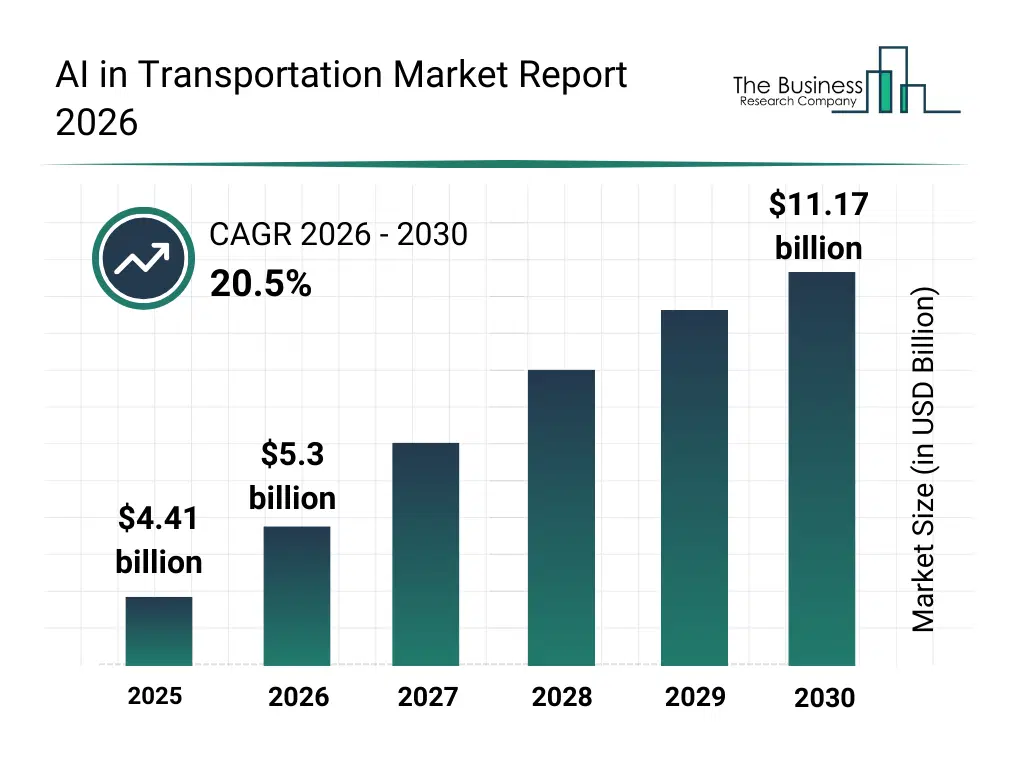
What Is The AI in Transportation Market Size and Share 2026?
The AI in transportation market size has grown exponentially in recent years. It will grow from $4.41 billion in 2025 to $5.3 billion in 2026 at a compound annual growth rate (CAGR) of 20.1%. The growth in the historic period can be attributed to growth of urban traffic congestion, adoption of fleet management systems, advancements in sensor technologies, increasing road safety concerns, expansion of logistics and transportation networks.What Is The AI in Transportation Market Growth Forecast?
The AI in transportation market size is expected to see exponential growth in the next few years. It will grow to $11.17 billion in 2030 at a compound annual growth rate (CAGR) of 20.5%. The growth in the forecast period can be attributed to development of autonomous vehicles, smart city infrastructure investments, demand for emission reduction solutions, integration of AI with electric vehicles, growth of intelligent logistics platforms. Major trends in the forecast period include autonomous driving algorithms, intelligent traffic management systems, predictive fleet maintenance, computer vision for object detection, ai-based route optimization.
Global AI in Transportation Market Segmentation
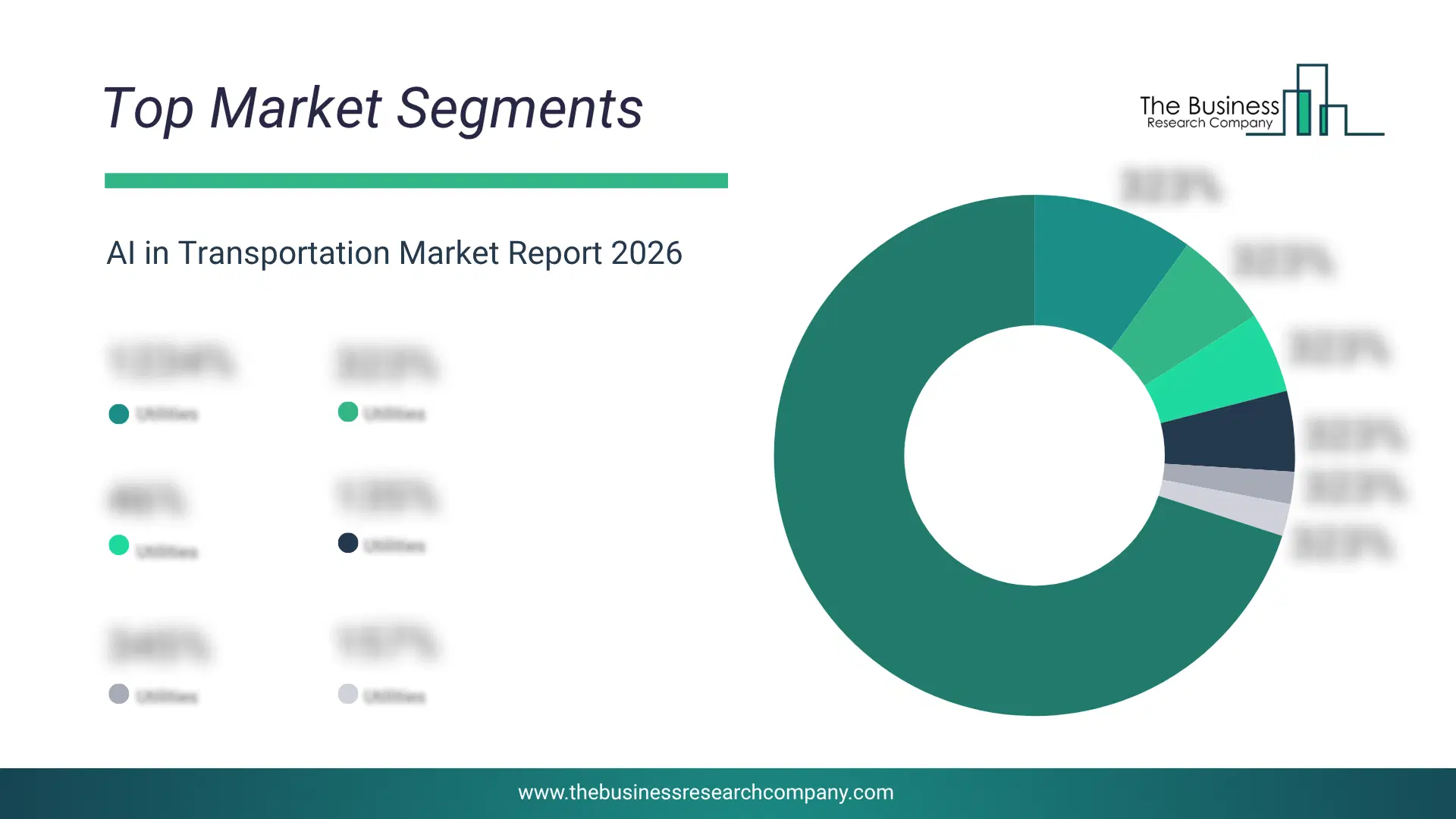
1) By Components: Hardware, Software 2) By Process: Signal Recognition, Object Recognition, Data Mining 3) By Technology Type: Deep Learning, Computer Vision, Context-Awareness 4) By Application: Semi-Autonomous Truck, Truck Platooning, Predictive Maintenance, Precision And Mapping, Autonomous Truck, Machine Human Interface, Other Applications Subsegments: 1) By Hardware: Sensors, Cameras, LiDAR, Radar, GPS Devices 2) By Software: Traffic Management Software, Autonomous Driving Software, Route Planning Software, Fleet Management Software, Predictive Analytics Software The top segments in the artificial intelligence (ai) in transportation market will be: • Software will reach $7.01 Billion by 2030. • Hardware will reach $4.3 Billion by 2030.What Is The Driver Of The AI in Transportation Market?
The growing number of vehicles is expected to propel the growth of the AI in transportation market going forward. The increase in the number of vehicles on the road can be attributed to several factors, including population growth, economic development, and the inadequacy of public transportation infrastructure. AI can be used to optimize traffic flow, reduce congestion, and minimize travel times by analyzing real-time traffic data and adjusting signal timings and lane configurations accordingly. For instance, in March 2024, according to the European Automobile Manufacturers' Association, a Belgium-based vehicle industry association, the EU car market expanded robustly in 2023 by 13.9% when compared to previous year, in 2024, global car sales reached 74.6 million units, marking a 2.5% increase compared to 2023, reaching a volume of 10.5 million units. Therefore, the growing number of vehicles is driving the growth of the AI in transportation industry.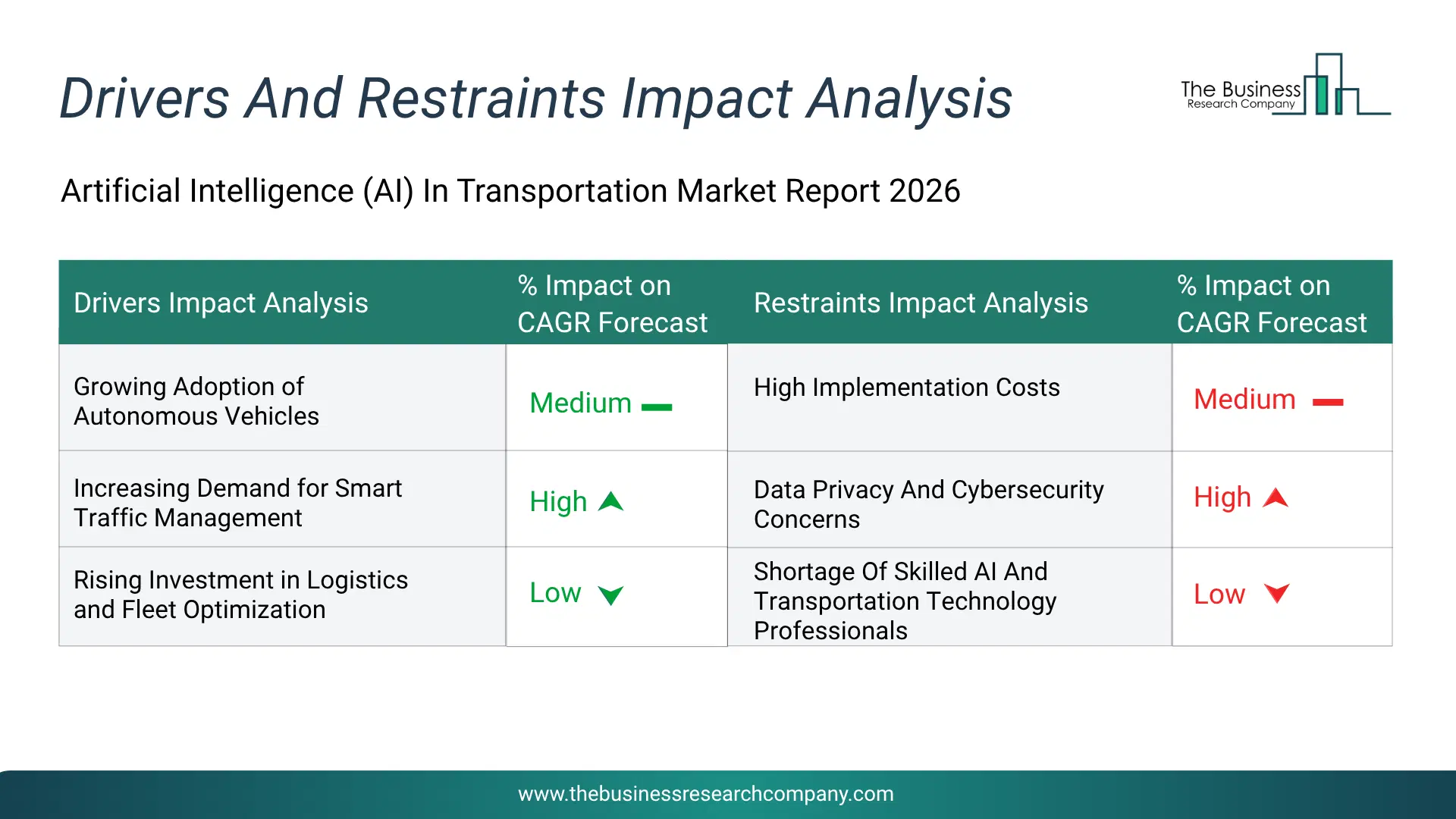
Infographic Chart Showing Key Market Drivers Analysis And Restraints For Ai In Transportation Market
The chart presents an impact analysis of key drivers and restraints, quantifying their relative influence on the market's growth rate and helping assess the balance between growth enablers and limiting factors. This chart offers a high-level perspective; the full report contains more detailed insights.
How Will The Drivers Impact Growth In The Global Artificial Intelligence (AI) In Transportation Market?
• Growing Adoption of Autonomous Vehicles (Medium) – During the forecast period, the growing adoption of autonomous vehicles is expected to become a key growth driver for the artificial intelligence (AI) in transportation market by 2030. Growing adoption of autonomous vehicles acts as a major driver for the artificial intelligence in transportation market because autonomous vehicles rely on AI to process sensor data, detect objects, make driving decisions, and navigate safely without constant human intervention. Automakers and mobility companies continue investing in self-driving technologies to improve road safety, reduce accidents, and increase transportation efficiency. AI also enables real-time decision-making and predictive route optimization, making autonomous mobility more reliable. • Increasing Demand for Smart Traffic Management (High) – During the forecast period, the increasing demand for smart traffic management is expected to emerge as a major factor driving the expansion of the artificial intelligence (AI) in transportation market by 2030. Increasing demand for smart traffic management acts as a major driver for the artificial intelligence in transportation market because growing urbanization and rising vehicle numbers are creating severe traffic congestion in cities worldwide. AI helps analyze real-time traffic data, optimize traffic signals, predict congestion, and improve road network efficiency. Governments and city authorities are increasingly investing in intelligent transportation systems to reduce travel time, fuel consumption, and emissions. • Rising Investment in Logistics and Fleet Optimization (Low) – During the forecast period, the rising investment in logistics and fleet optimization is expected to act as a key growth catalyst for the artificial intelligence (AI) in transportation market by 2030. Rising investment in logistics and fleet optimization acts as a major driver for the artificial intelligence in transportation market because transportation companies are using AI to improve route planning, monitor vehicle performance, predict maintenance needs, and reduce operating costs. AI enables logistics providers to optimize deliveries, minimize fuel consumption, and improve asset utilization through data-driven decisions. The rapid growth of e-commerce and same-day delivery services further increases the need for intelligent transportation solutions.How Will The Restraints Impact Growth In The Global Artificial Intelligence (AI) In Transportation Market?
• High Implementation Costs (Medium) – During the forecast period, the high implementation costs act as a major restraint for the artificial intelligence in transportation market because deploying AI solutions requires significant investment in sensors, cameras, computing hardware, cloud infrastructure, software platforms, and system integration. Transportation operators also need continuous spending on maintenance, upgrades, and employee training to ensure reliable performance. These high upfront and operational costs discourage adoption, particularly among small transportation companies and public agencies with limited budgets. As a result, large-scale deployment of AI technologies is delayed, limiting overall market growth. • Data Privacy And Cybersecurity Concerns (High) – During the forecast period, the data privacy and cybersecurity concerns act as a major restraint for the artificial intelligence in transportation market because AI-powered transportation systems collect and process large volumes of real-time data related to vehicles, passengers, traffic conditions, and logistics operations. Any data breach or cyberattack can disrupt transportation services, compromise sensitive information, and reduce public trust in AI technologies. Organizations therefore invest heavily in cybersecurity and regulatory compliance, increasing deployment complexity and costs. These concerns slow the adoption of AI solutions across transportation networks. • Shortage Of Skilled AI And Transportation Technology Professionals (Low) – During the forecast period, the shortage of skilled AI and transportation technology professionals acts as a major restraint for the artificial intelligence in transportation market because the successful development, deployment, and maintenance of AI-powered transportation solutions require expertise in artificial intelligence, machine learning, data analytics, intelligent transportation systems, and cybersecurity. Many organizations face difficulties in recruiting and retaining qualified professionals capable of managing complex AI applications and optimizing system performance. The shortage of skilled talent increases implementation costs, extends deployment timelines, and limits the effective utilization of AI technologies, thereby slowing market growth.Key Players In The Global AI in Transportation Market
Major companies operating in the AI in transportation market are Volvo AB; Mercedes-Benz Group AG; Alphabet Inc.; Intel Corporation; NVIDIA Corporation; Valeo SA; ZF Friedrichshafen AG; Continental AG; Magna International Inc.; Microsoft Corporation; PACCAR Inc.; Robert Bosch GmbH; Scania Group; Xevo Inc.; Zonar Systems Inc.; Daimler AG; Waymo LLC; Tesla Inc.; Uber Technologies Inc.; Mobileye Global Inc.; Aptiv plc; TomTom N.V.; HERE Technologies; Siemens AG; Cisco Systems Inc.; IBM Corporation; Cognata Ltd.; Argo AI; Aurora Innovation Inc.; Zoox Inc.; Embark Technology Inc.; TuSimple Holdings Inc.; PlusAI Inc.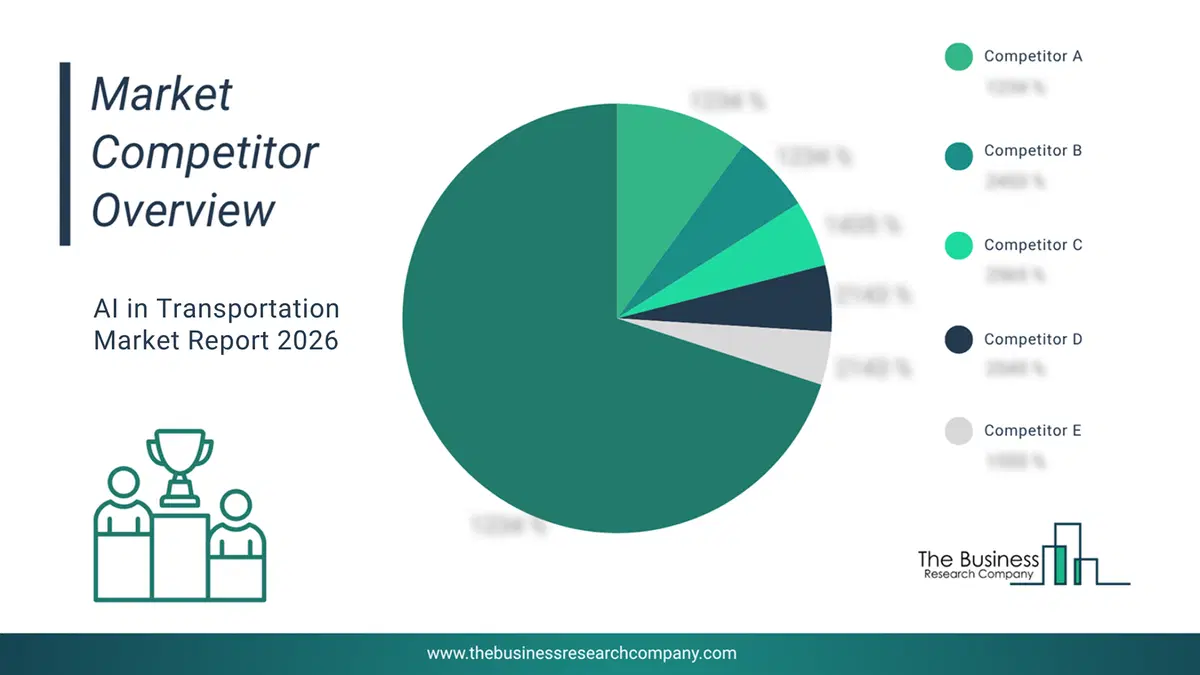
This chart is for illustrative purposes; the full report includes a detailed competitor analysis and comprehensive overview of the top 10 companies in the market.
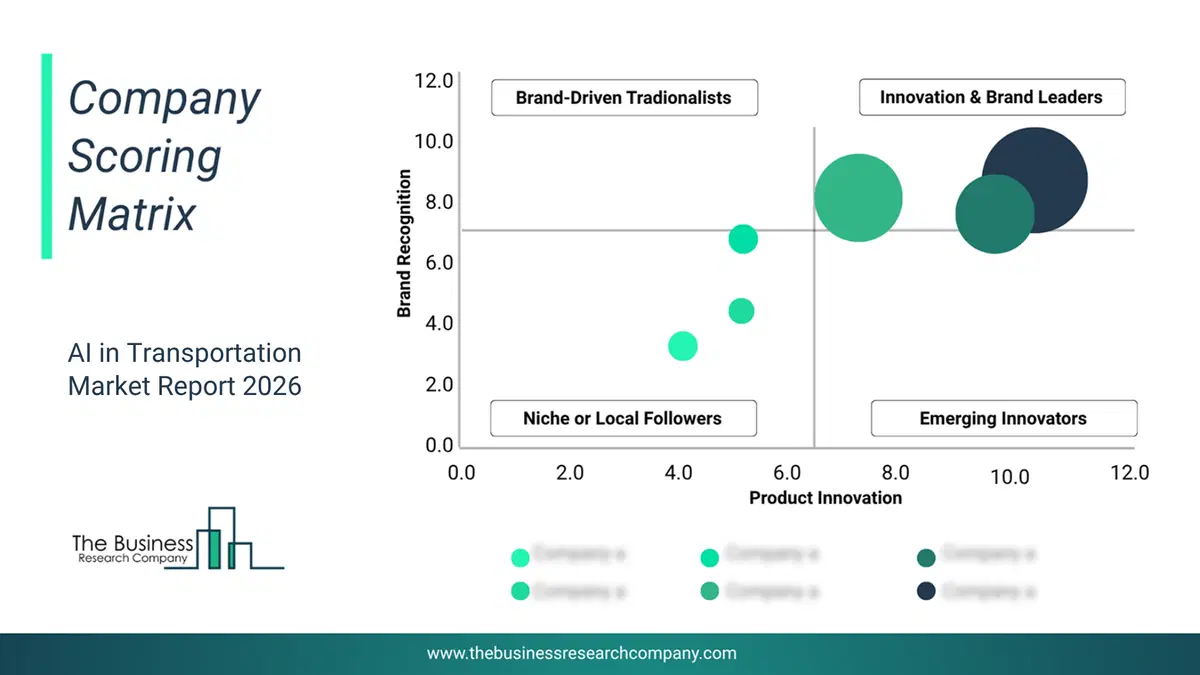
This chart maps companies by product innovation and brand strength, with bubble size indicating relative revenue, helping identify market leaders, challengers, and niche players. This is an illustrative chart; the full report provides a complete and accurate competitive analysis.
Global AI in Transportation Market Trends and Insights
Major companies operating in the AI in transportation market are developing strategic partnerships to access valuable information and resources from other members, fostering innovation and the development of new technologies. Partnerships enable companies to pool their resources and expertise to develop innovative AI-driven transportation solutions. For instance, in October 2023, Amazon, a US-based E-commerce company, partnered with UVeye, a US-based automatic vehicle inspection provider to develop an AI-based technology called Automated Vehicle Inspection (AVI). This technology is designed to inspect delivery vans for anomalies such as tire deformities, undercarriage wear, and bent or warped body pieces. The AVI system performs a full-vehicle scan in a few seconds while the vehicle is rolling at 5 mph, identifies problems, classifies them based on severity, and immediately sends the results to a computer. The technology aims to improve the safety of Amazon's delivery fleet and reduce the reliance on manual inspections.What Are Latest Mergers And Acquisitions In The AI in Transportation Market?
In October 2025, Rose Rocket, a Canada-based software company, acquired Centro for an undisclosed amount. With this acquisition, Rose Rocket aims to accelerate artificial intelligence innovation in the transportation sector by integrating advanced AI capabilities into its logistics management ecosystem to enhance operational efficiency and automation. Centro is a Canada-based provider of logistics technology specializing in AI-driven solutions that optimize carrier and shipper connectivity and streamline freight operations.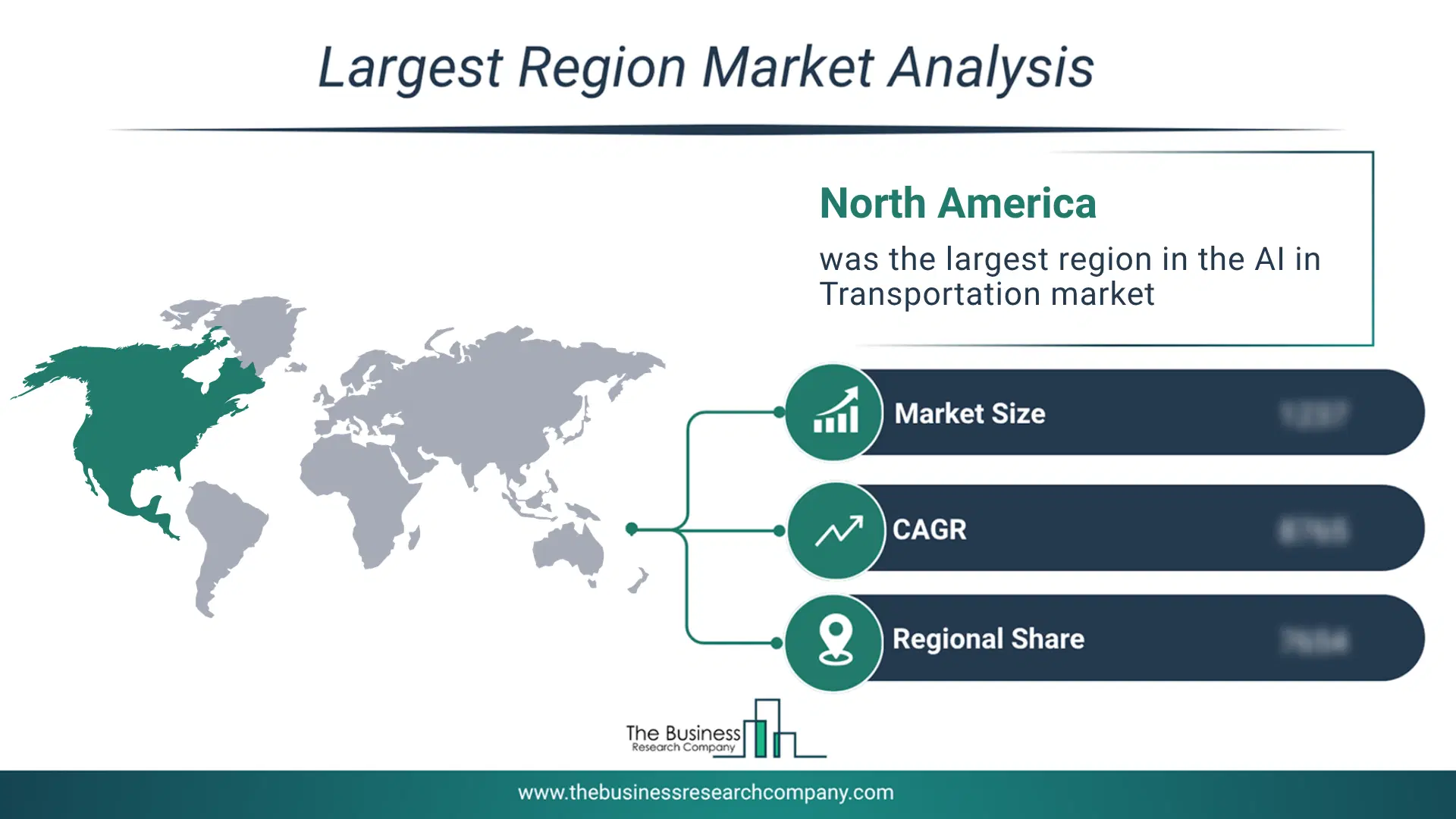
Regional Insights
North America was the largest region in the AI in transportation market in 2025. The regions covered in this market report are Asia-Pacific, South East Asia, Western Europe, Eastern Europe, North America, South America, Middle East, Africa. The countries covered in this market report are Australia, Brazil, China, France, Germany, India, Indonesia, Japan, Taiwan, Russia, South Korea, UK, USA, Canada, Italy, SpainWhat Defines the AI in Transportation Market?
The AI in transportation market consists of revenues earned by entities by providing Intelligent traffic management, safety management, automatic traffic incident detection, advanced driver-assistance systems and route optimization. The market value includes the value of related goods sold by the service provider or included within the service offering. The AI in transportation market also includes sales of storage devices, network connectors, and storage IOPS. Values in this market are ‘factory gate’ values, that is the value of goods sold by the manufacturers or creators of the goods, whether to other entities (including downstream manufacturers, wholesalers, distributors and retailers) or directly to end customers. The value of goods in this market includes related services sold by the creators of the goods.How is Market Value Defined and Measured?
The market value is defined as the revenues that enterprises gain from the sale of goods and/or services within the specified market and geography through sales, grants, or donations in terms of the currency (in USD unless otherwise specified). The revenues for a specified geography are consumption values that are revenues generated by organizations in the specified geography within the market, irrespective of where they are produced. It does not include revenues from resales along the supply chain, either further along the supply chain or as part of other products.
This chart presents market attractiveness based on a quantitative evaluation of growth, competition, strategic alignment, and risk, offering a clear view of opportunity areas for decision-making. This chart is for illustrative purposes; the full report contains the complete analysis.

This chart highlights the Total Addressable Market (TAM) by estimating the maximum revenue opportunity using an assumption-driven approach, supporting strategic planning and opportunity sizing across markets. The chart is illustrative; the full report provides a more comprehensive analysis.
What Key Data and Analysis Are Included in the AI in Transportation Market Report 2026?
The ai in transportation market research report is one of a series of new reports from The Business Research Company that provides market statistics, including industry global market size, regional shares, competitors with the market share, detailed market segments, market trends and opportunities, and any further data you may need to thrive in the ai in transportation industry. The market research report delivers a complete perspective of everything you need, with an in-depth analysis of the current and future state of the industry.AI in Transportation Market Report Forecast Analysis
| Report Attribute | Details |
|---|---|
| Market Size Value In 2026 | $5.3 billion |
| Revenue Forecast In 2030 | $11.17 billion |
| Growth Rate | CAGR of 20.1% from 2026 to 2030 |
| Base Year For Estimation | 2025 |
| Actual Estimates/Historical Data | 2020-2025 |
| Forecast Period | 2026 - 2030 |
| Market Representation | Revenue in USD Billion and CAGR from 2026 to 2030 |
| Segments Covered | Components, Process, Technology Type, Application |
| Regional Scope | Asia-Pacific, Western Europe, Eastern Europe, North America, South America, Middle East, Africa |
| Country Scope | The countries covered in the report are Australia, Brazil, China, France, Germany, India, ... |
| Key Companies Profiled | Volvo AB; Mercedes-Benz Group AG; Alphabet Inc.; Intel Corporation; NVIDIA Corporation; Valeo SA; ZF Friedrichshafen AG; Continental AG; Magna International Inc.; Microsoft Corporation; PACCAR Inc.; Robert Bosch GmbH; Scania Group; Xevo Inc.; Zonar Systems Inc.; Daimler AG; Waymo LLC; Tesla Inc.; Uber Technologies Inc.; Mobileye Global Inc.; Aptiv plc; TomTom N.V.; HERE Technologies; Siemens AG; Cisco Systems Inc.; IBM Corporation; Cognata Ltd.; Argo AI; Aurora Innovation Inc.; Zoox Inc.; Embark Technology Inc.; TuSimple Holdings Inc.; PlusAI Inc. |
| Customization Scope | Request for Customization |
| Pricing And Purchase Options | Explore Purchase Options |