
Artificial Intelligence (AI) In Drug Discovery Market Report 2026
Global Outlook – By Technology (Context-Aware Processing, Natural Language Processing, Deep Learning), By Drug Type (Small Molecules, Large Molecules), By Therapeutic Type (Metabolic Disease, Cardiovascular Disease, Oncology, Neurodegenerative Diseases, Anti-Infective Diseases, Respiratory Diseases, Other Therapeutics), By End User (Pharmaceutical Companies, Biopharmaceutical Companies, Academic And Research Institutes, Other End-Users) - Market Size, Trends, Strategies, and Forecast to 2030
Artificial Intelligence (AI) In Drug Discovery Market Overview
• Artificial Intelligence (AI) In Drug Discovery market size has reached to $2.33 billion in 2025 • Expected to grow to $7.42 billion in 2030 at a compound annual growth rate (CAGR) of 26.2% • Growth Driver: AI In Drug Discovery Surges With Growing Demand For Personalized Medicine • Market Trend: Strategic Investments In AI-Driven Drug Discovery • North America was the largest region in 2025 and Western Europe is the fastest growing region.Market Gains By 2030 – Top Opportunities By Segment
Market Gain identifies the most promising market opportunities by highlighting the segments or products expected to generate the highest incremental revenue growth over the next five years.
What Is Covered Under Artificial Intelligence (AI) In Drug Discovery Market?
Artificial Intelligence (AI) in drug discovery refers to the use of machine learning algorithms and data-driven models to accelerate and improve the process of identifying and developing new drugs. AI can analyze vast datasets to predict drug-target interactions, optimize molecular structures, and identify potential candidates faster than traditional methods. The main technologies in artificial intelligence (AI) in drug discovery are deep learning and machine learning. Deep learning is a machine learning and artificial intelligence (AI) technique that mimics how humans acquire knowledge. Data science, which covers statistics and predictive modeling, incorporates deep learning as a key component. The different drug types include small molecule, and large molecules and involve various types of therapies. It is implemented in several end-users including pharmaceutical companies, biopharmaceutical companies, academic and research institutes, and others.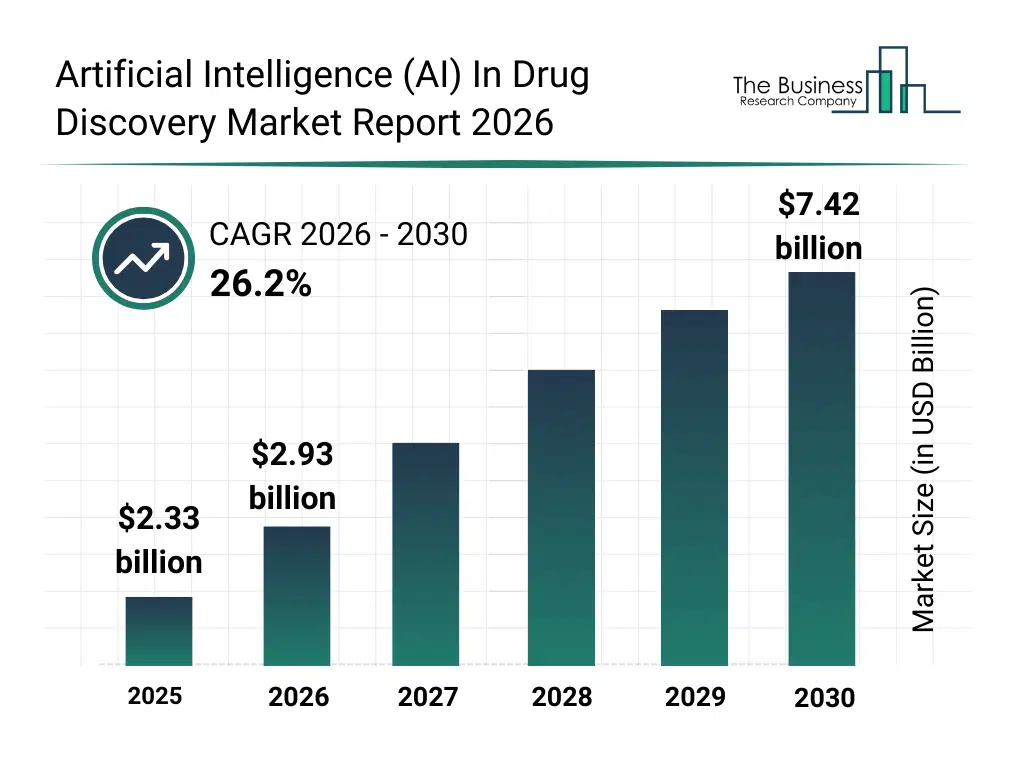
What Is The Artificial Intelligence (AI) In Drug Discovery Market Size and Share 2026?
The artificial intelligence (ai) in drug discovery market size has grown exponentially in recent years. It will grow from $2.33 billion in 2025 to $2.93 billion in 2026 at a compound annual growth rate (CAGR) of 25.9%. The growth in the historic period can be attributed to increasing pharmaceutical R&D spending, growing complexity of drug discovery pipelines, rising availability of biological and chemical datasets, early adoption of machine learning in bioinformatics, increasing collaboration between pharma and tech firms.What Is The Artificial Intelligence (AI) In Drug Discovery Market Growth Forecast?
The artificial intelligence (ai) in drug discovery market size is expected to see exponential growth in the next few years. It will grow to $7.42 billion in 2030 at a compound annual growth rate (CAGR) of 26.2%. The growth in the forecast period can be attributed to increasing adoption of generative ai models, rising demand for precision therapeutics, expansion of ai-enabled clinical trial design, growing investments in cloud-based discovery platforms, regulatory acceptance of ai-assisted drug development. Major trends in the forecast period include increasing use of AI-driven target identification, rising adoption of deep learning for molecule screening, growing integration of virtual drug screening platforms, expansion of AI-based lead optimization tools, enhanced focus on reducing drug development timelines.
Global Artificial Intelligence (AI) In Drug Discovery Market Segmentation
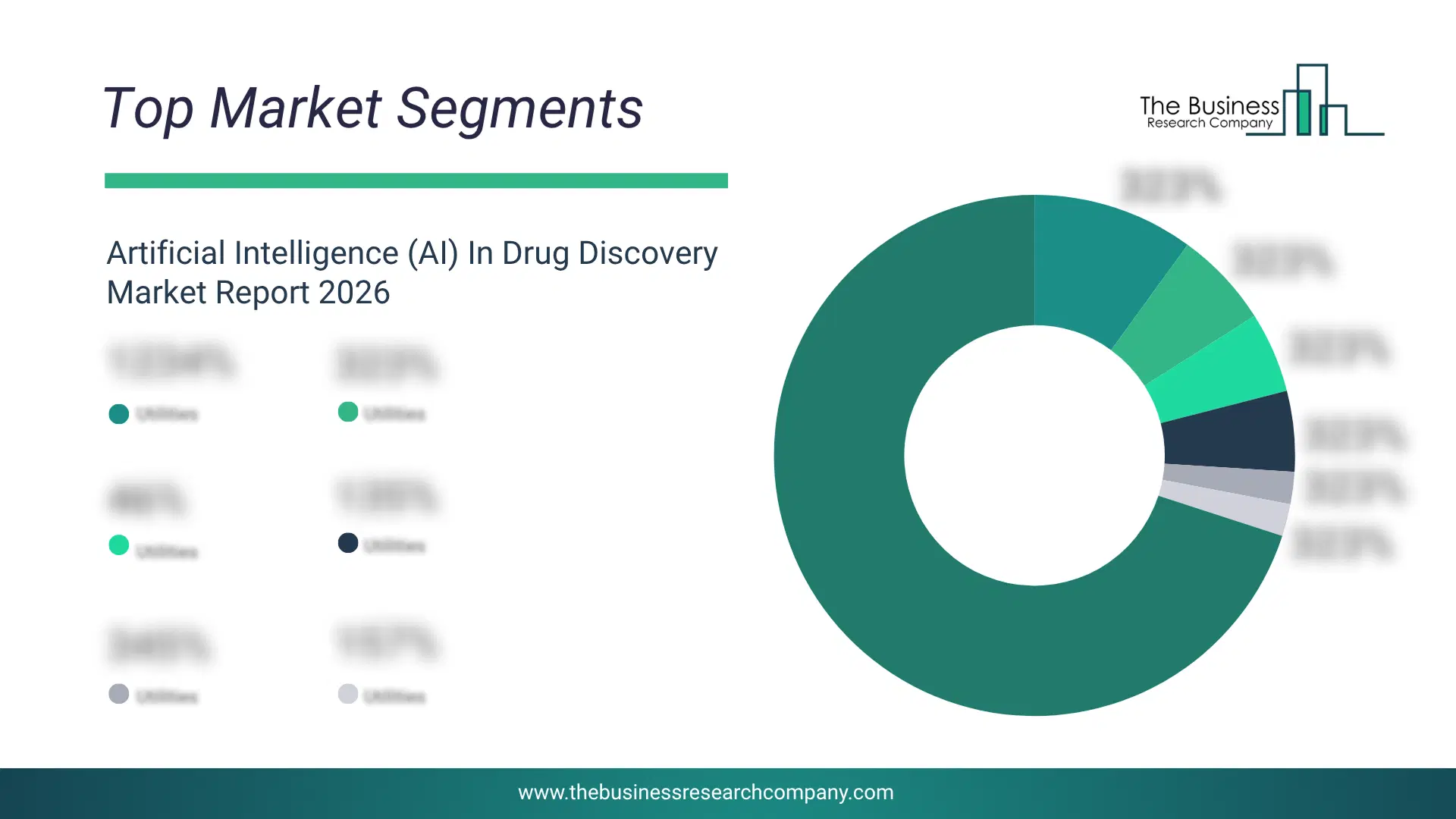
1) By Technology: Context-Aware Processing, Natural Language Processing, Deep Learning 2) By Drug Type: Small Molecules, Large Molecules 3) By Therapeutic Type: Metabolic Disease, Cardiovascular Disease, Oncology, Neurodegenerative Diseases, Anti-Infective Diseases, Respiratory Diseases, Other Therapeutics 4) By End User: Pharmaceutical Companies, Biopharmaceutical Companies, Academic And Research Institutes, Other End-Users Subsegments: 1) By Context-Aware Processing: Contextual Data Integration, Predictive Modeling, Adaptive Learning Systems 2) By Natural Language Processing (NLP): Text Mining And Analysis, Drug Interaction Extraction, Clinical Trial Data Analysis 3) By Deep Learning: Neural Networks, Convolutional Neural Networks (CNNs), Recurrent Neural Networks (RNNs), Reinforcement Learning Applications The top segments in the artificial intelligence in drug discovery market will be: • Natural Language Processing will reach $3 Billion by 2030. • Deep Learning will reach $3 Billion by 2030. • Context-Aware Processing will reach $1 Billion by 2030.What Is The Driver Of The Artificial Intelligence (AI) In Drug Discovery Market?
The growing demand for personalized medicine is expected to propel the growth of artificial intelligence (AI) in the drug discovery market going forward. Personalized medicine refers to a targeted approach to disease prevention, diagnosis, and treatment that leverages an individual’s genetic, proteomic, or biological profile to guide clinical decisions. The rising adoption of personalized medicine is driven by the increasing need for precise, patient-specific therapies that improve treatment effectiveness and reduce adverse effects. AI supports this shift by accelerating the identification of molecular targets, optimizing drug candidates, and enhancing clinical decision-making throughout the development pipeline. For instance, in February 2024, according to the Personalized Medicine Coalition, a US-based advocacy and research organization, the U.S. FDA approved 26 new personalized treatments in 2023, including 20 new molecular entities and 6 gene- or cell-based therapies. Therefore, the growing demand for personalized medicine is driving the growth of artificial intelligence (AI) in the drug discovery market.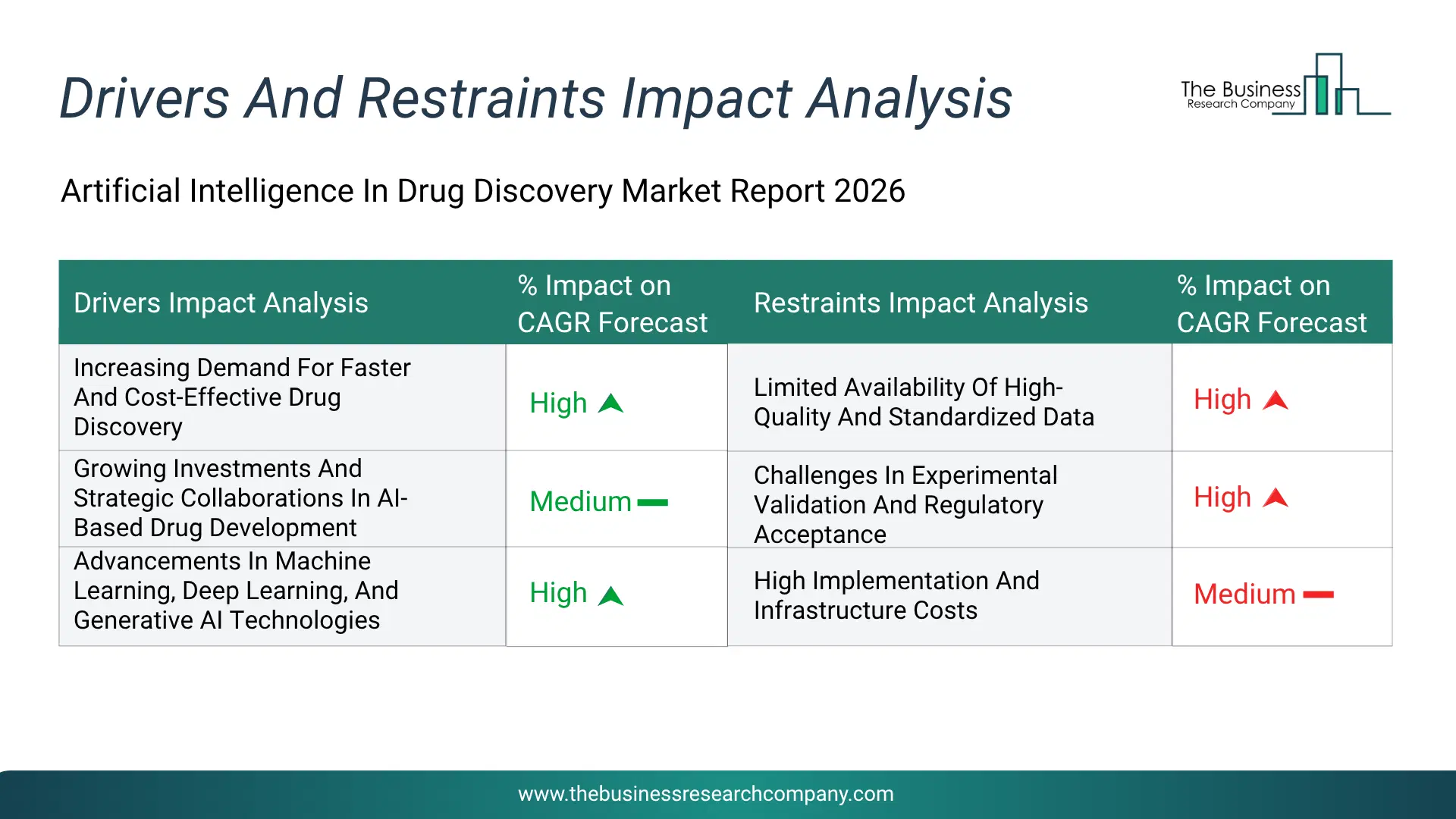
Infographic Chart Showing Key Market Drivers Analysis And Restraints For Artificial Intelligence (Ai) In Drug Discovery Market
The chart presents an impact analysis of key drivers and restraints, quantifying their relative influence on the market's growth rate and helping assess the balance between growth enablers and limiting factors. This chart offers a high-level perspective; the full report contains more detailed insights.
How Will The Drivers Impact Growth In The Global Artificial Intelligence In Drug Discovery Market?
• Increasing Demand For Faster And Cost-Effective Drug Discovery (High) – During the forecast period, the increasing demand for faster and cost-effective drug discovery is expected to become a key growth driver for the artificial intelligence in drug discovery market by 2030. Pharmaceutical companies are increasingly adopting AI to shorten lengthy research cycles, reduce experimental costs, and improve the efficiency of identifying promising drug candidates. AI-powered platforms enable rapid analysis of biological and chemical data, enhance drug-target prediction, and streamline lead optimization, helping organizations improve research productivity while minimizing development risks. This shift toward AI-enabled discovery is reinforcing sustained market expansion. • Growing Investments And Strategic Collaborations In AI-Based Drug Development (Medium) – During the forecast period, the growing investments and strategic collaborations in AI-based drug development are expected to emerge as a major factor driving the expansion of the artificial intelligence in drug discovery market by 2030. Pharmaceutical companies are increasingly partnering with AI technology providers and biotechnology firms to strengthen computational drug discovery capabilities and accelerate therapeutic innovation. These collaborations combine advanced AI platforms with biological expertise and proprietary datasets to improve candidate selection and enhance research outcomes. Rising venture funding and industry alliances are further supporting commercialization of AI-enabled drug discovery solutions. • Advancements In Machine Learning, Deep Learning, And Generative AI Technologies (High) – During the forecast period, the advancements in machine learning, deep learning, and generative AI technologies are expected to act as a key growth catalyst for the artificial intelligence in drug discovery market by 2030. Continuous improvements in AI models are enabling more accurate prediction of molecular behavior, biological interactions, and therapeutic potential while expanding the ability to generate and optimize novel drug candidates. These innovations are improving computational precision, increasing scalability across research workflows, and supporting broader adoption of AI throughout pharmaceutical discovery programs. Therefore, advancements in machine learning, deep learning, and generative AI technologies are projected to contribute approximately 0.8% annual growth to the market.How Will The Restraints Impact Growth In The Global Artificial Intelligence In Drug Discovery Market?
• Limited Availability Of High-Quality And Standardized Data (High) – During the forecast period, limited availability of high-quality and standardized data is a significant barrier to the growth of the artificial intelligence in drug discovery market because AI algorithms require large, diverse, and well-annotated biological, chemical, and clinical datasets to generate reliable predictions. However, data is often fragmented across multiple sources, inconsistent in format, incomplete, or restricted due to privacy regulations and proprietary ownership. Variability in experimental methods and lack of standardized data collection practices further reduce model accuracy and generalizability. These challenges increase the complexity of AI model development, delay drug discovery workflows, and reduce confidence in AI-driven outcomes. Consequently, limited availability of high-quality and standardized data restrains the widespread adoption of artificial intelligence in drug discovery. • Challenges In Experimental Validation And Regulatory Acceptance (Medium) – During the forecast period, challenges in experimental validation and regulatory acceptance are expected to restrain the growth of the artificial intelligence in drug discovery market because AI-generated predictions must undergo extensive laboratory validation and clinical evaluation before they can support drug development decisions. Demonstrating the accuracy, reproducibility, and transparency of AI models remains complex, while regulatory agencies continue to develop frameworks for evaluating AI-driven approaches in pharmaceutical research. The lack of standardized validation protocols and evolving regulatory requirements increases development timelines, costs, and uncertainty for pharmaceutical companies. These challenges limit the rapid integration of AI into mainstream drug discovery processes and slow commercialization of AI-assisted drug candidates. Consequently, challenges in experimental validation and regulatory acceptance act as a significant restraint on market growth. • High Implementation And Infrastructure Costs (High) – During the forecast period, high implementation and infrastructure costs are expected to restrain the growth of the artificial intelligence in drug discovery market because deploying AI-driven drug discovery platforms requires substantial investments in high-performance computing infrastructure, cloud resources, advanced software, and skilled personnel. Pharmaceutical and biotechnology companies must also invest in data integration, model development, validation, and cybersecurity to ensure reliable and compliant AI operations. These significant upfront and ongoing costs create financial barriers, particularly for small and mid-sized biotechnology firms and research organizations with limited budgets. As a result, high implementation and infrastructure costs slow the adoption of AI technologies in drug discovery and limit market expansion.Key Players In The Global Artificial Intelligence (AI) In Drug Discovery Market
Major companies operating in the artificial intelligence (AI) in drug discovery market are Exscientia, Insilico Medicine, Owkin Inc., XtalPi Inc., Standigm Inc., Innoplexus AG, Atomwise, Inc., BenevolentAI, Deep Genomics Inc., NuMedii, Inc., Verge Genomics, Inc., Berg LLC, Cyclica Inc., Iktos, Quris, Adagene Inc., Gero Pte. Ltd., IBM Corporation, Microsoft Corporation, NVIDIA Corporation, Alphabet Inc., DeepMind Technologies Limited, IQVIA Holdings Inc., GNS Healthcare, Inc., GE HealthCare Technologies Inc., Novartis AG, Pfizer Inc., F. Hoffmann-La Roche Ltd., Merck & Co., Inc., AbbVie Inc., AstraZeneca PLC, Amgen Inc., GlaxoSmithKline plc, Johnson & Johnson, Takeda Pharmaceutical Company Limited, Ipsen S.A., Galderma S.A.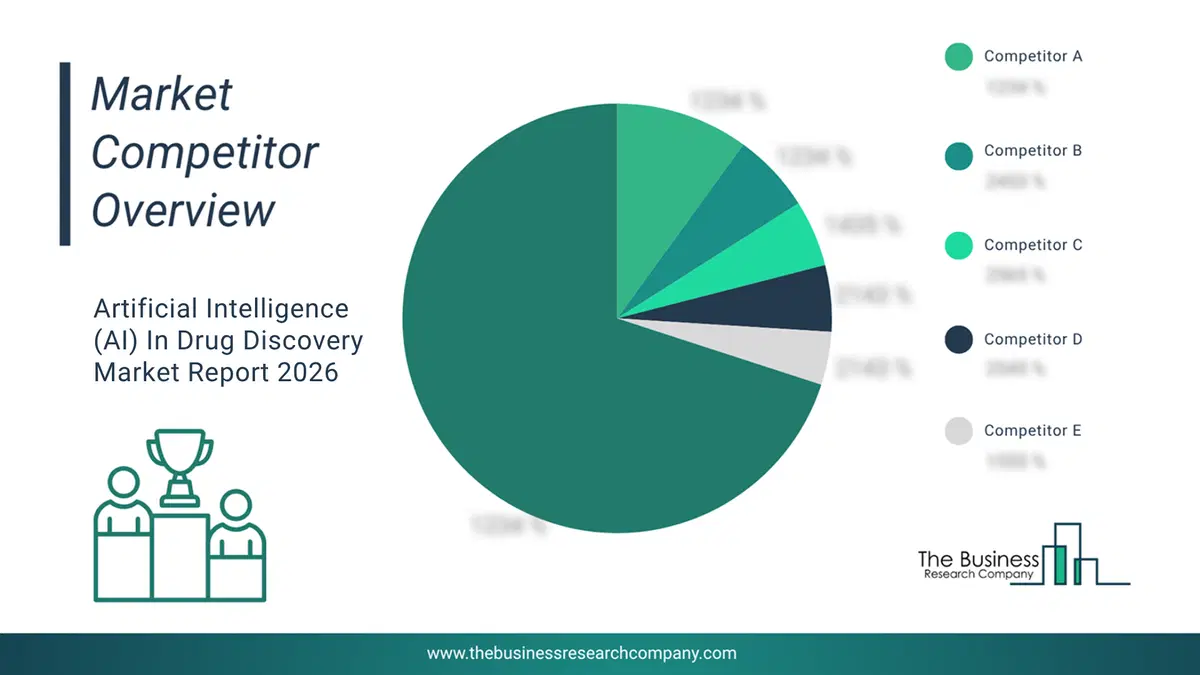
This chart is for illustrative purposes; the full report includes a detailed competitor analysis and comprehensive overview of the top 10 companies in the market.
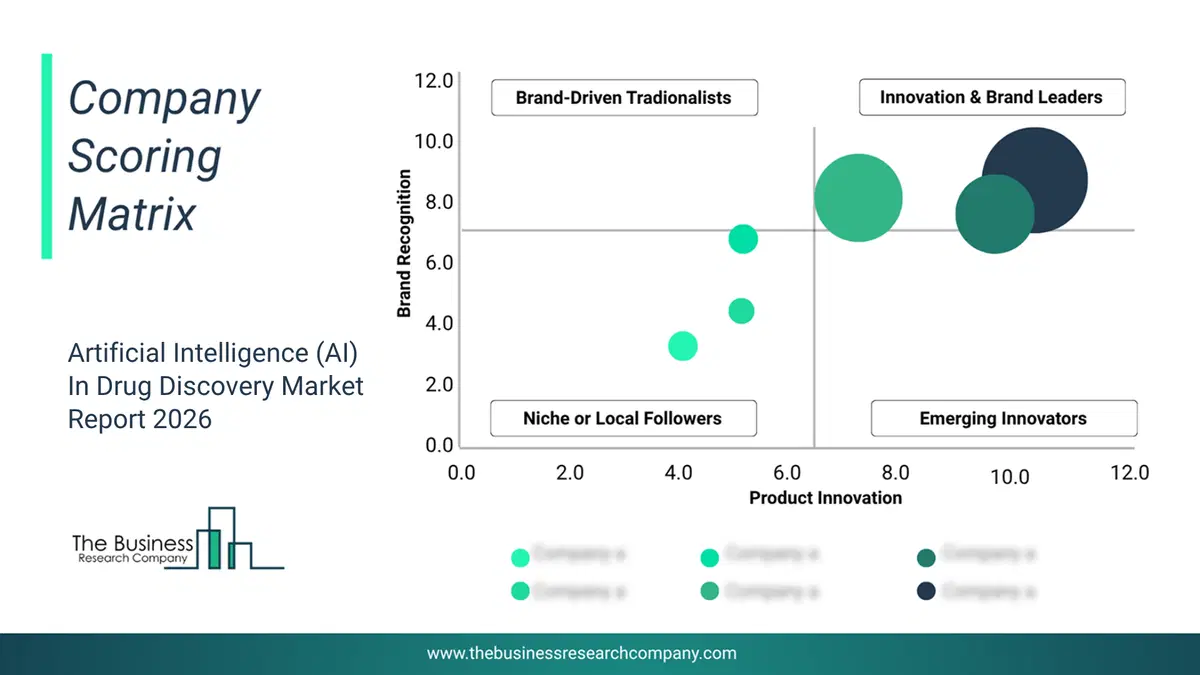
This chart maps companies by product innovation and brand strength, with bubble size indicating relative revenue, helping identify market leaders, challengers, and niche players. This is an illustrative chart; the full report provides a complete and accurate competitive analysis.
Global Artificial Intelligence (AI) In Drug Discovery Market Trends and Insights
Major companies are investing in companies operating in artificial intelligence (AI) in the drug discovery market to identify and design new therapies and offer those models to other drugmakers. Strategic investment can provide funding for research and development of new drugs, which can be a costly and time-consuming process. This funding can help companies advance their drug discovery programs and bring new treatments to market. For instance, in July 2023, Nvidia, a US-based software company, invested $50 million in Recursion Pharmaceuticals, a US-based biotech company that uses artificial intelligence (AI) for drug discovery. The investment will help Recursion accelerate the development of its AI foundation models for biology and chemistry by using Nvidia's cloud services.What Are Latest Mergers And Acquisitions In The Artificial Intelligence (AI) In Drug Discovery Market?
In November 2025, Merck KGaA, a Germany-based provider of pharmaceuticals and life-science tools, partnered with Valo Health to accelerate neurology innovation through AI-driven drug discovery. The partnership aims to advance Merck KGaA’s neurology pipeline by using Valo Health’s AI platform to rapidly identify novel targets and develop preclinical candidates for Parkinson’s and related disorders. Valo Health is a US-based company that provides AI-driven drug discovery solutions using large-scale human data, machine-learning platforms, and automated chemistry to generate preclinical small-molecule candidates.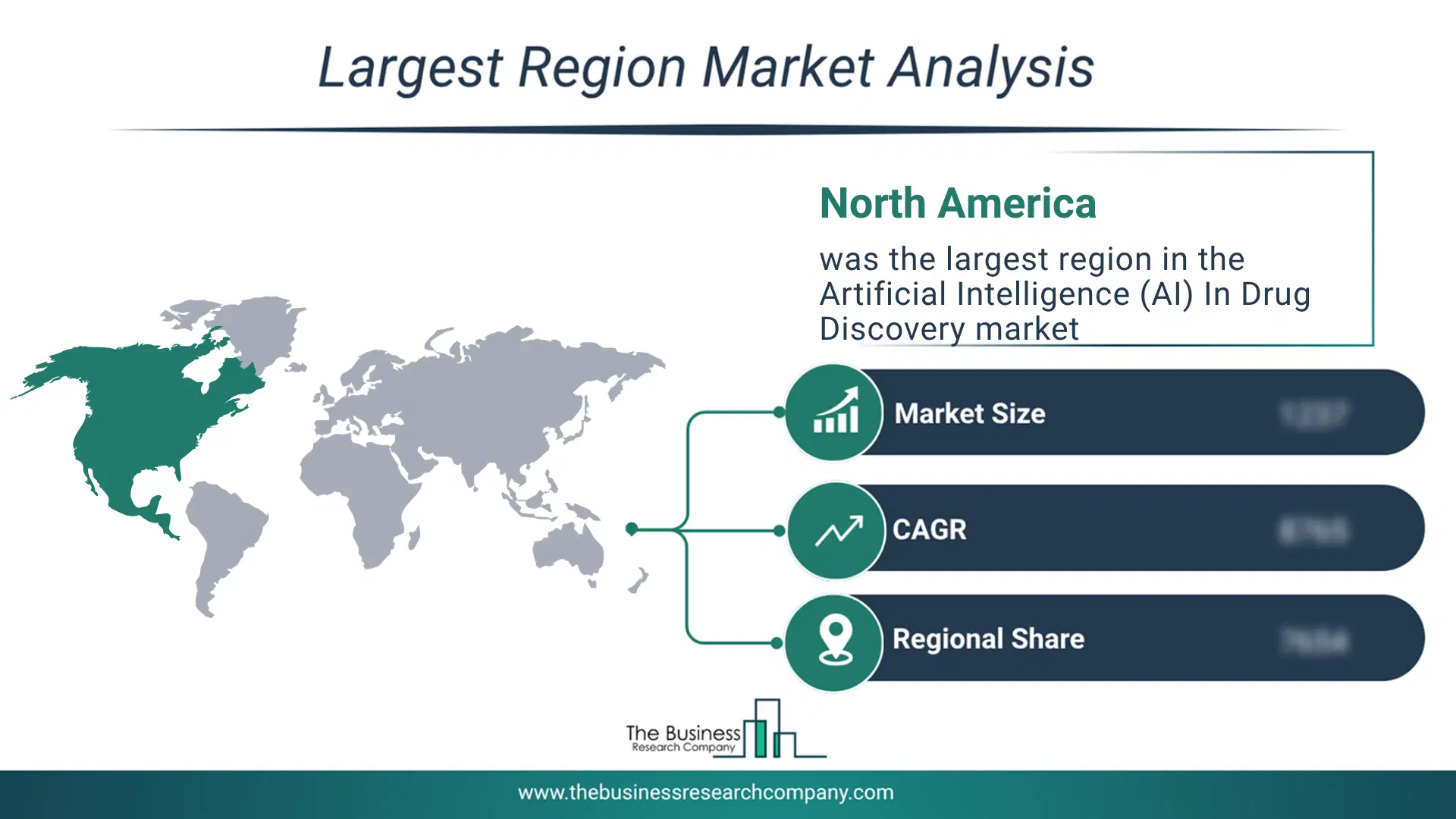
Regional Outlook
North America was the largest region in the artificial intelligence (AI) in drug discovery market in 2025. Western Europe was the second largest region in the global artificial intelligence (AI) in drug discovery market share. The regions covered in this market report are Asia-Pacific, South East Asia, Western Europe, Eastern Europe, North America, South America, Middle East, Africa. The countries covered in this market report are Australia, Brazil, China, France, Germany, India, Indonesia, Japan, Taiwan, Russia, South Korea, UK, USA, Canada, Italy, Spain.What Defines the Artificial Intelligence (AI) In Drug Discovery Market?
The artificial intelligence (AI) in drug discovery market includes revenues earned by entities by offering AI for drug discovery. Artificial Intelligence (AI) for drug discovery is a technology that uses a simulation of the human intelligence process by machines to tackle complex problems in the drug discovery process. It helps to find new molecules to identify drug targets and develop personalized medicines in the pharmaceutical industry. Values in this market are factory gate values, that is the value of goods sold by the manufacturers or creators of the goods, whether to other entities (including downstream manufacturers, wholesalers, distributors and retailers) or directly to end customers. The value of goods in this market includes related services sold by the creators of the goods.How is Market Value Defined and Measured?
The market value is defined as the revenues that enterprises gain from the sale of goods and/or services within the specified market and geography through sales, grants, or donations in terms of the currency (in USD unless otherwise specified). The revenues for a specified geography are consumption values that are revenues generated by organizations in the specified geography within the market, irrespective of where they are produced. It does not include revenues from resales along the supply chain, either further along the supply chain or as part of other products.
This chart presents market attractiveness based on a quantitative evaluation of growth, competition, strategic alignment, and risk, offering a clear view of opportunity areas for decision-making. This chart is for illustrative purposes; the full report contains the complete analysis.

This chart highlights the Total Addressable Market (TAM) by estimating the maximum revenue opportunity using an assumption-driven approach, supporting strategic planning and opportunity sizing across markets. The chart is illustrative; the full report provides a more comprehensive analysis.
What Key Data and Analysis Are Included in the Artificial Intelligence (AI) In Drug Discovery Market Report 2026?
The artificial intelligence (ai) in drug discovery market research report is one of a series of new reports from The Business Research Company that provides market statistics, including industry global market size, regional shares, competitors with the market share, detailed market segments, market trends and opportunities, and any further data you may need to thrive in the artificial intelligence (ai) in drug discovery industry. The market research report delivers a complete perspective of everything you need, with an in-depth analysis of the current and future state of the industry.Artificial Intelligence (AI) In Drug Discovery Market Report Forecast Analysis
| Report Attribute | Details |
|---|---|
| Market Size Value In 2026 | $2.93 billion |
| Revenue Forecast In 2030 | $7.42 billion |
| Growth Rate | CAGR of 26.2% from 2026 to 2030 |
| Base Year For Estimation | 2025 |
| Actual Estimates/Historical Data | 2020-2025 |
| Forecast Period | 2026 - 2030 |
| Market Representation | Revenue in USD Billion and CAGR from 2026 to 2030 |
| Segments Covered | Technology, Drug Type, Therapeutic Type, End User |
| Regional Scope | Asia-Pacific, Western Europe, Eastern Europe, North America, South America, Middle East, Africa |
| Country Scope | The countries covered in the report are Australia, Brazil, China, France, Germany, India, Indonesia, Japan, Taiwan, Russia, South Korea, UK, USA, Canada, Italy, Spain. |
| Key Companies Profiled | Exscientia, Insilico Medicine, Owkin Inc., XtalPi Inc., Standigm Inc., Innoplexus AG, Atomwise, Inc., BenevolentAI, Deep Genomics Inc., NuMedii, Inc., Verge Genomics, Inc., Berg LLC, Cyclica Inc., Iktos, Quris, Adagene Inc., Gero Pte. Ltd., IBM Corporation, Microsoft Corporation, NVIDIA Corporation, Alphabet Inc., DeepMind Technologies Limited, IQVIA Holdings Inc., GNS Healthcare, Inc., GE HealthCare Technologies Inc., Novartis AG, Pfizer Inc., F. Hoffmann-La Roche Ltd., Merck & Co., Inc., AbbVie Inc., AstraZeneca PLC, Amgen Inc., GlaxoSmithKline plc, Johnson & Johnson, Takeda Pharmaceutical Company Limited, Ipsen S.A., Galderma S.A. |
| Customization Scope | Request for Customization |
| Pricing And Purchase Options | Explore Purchase Options |