

B2B Telecommunication Market Report 2026
Global Outlook – By Solution (Cloud Services, Unified Communication And Collaboration, VoIP, WAN, M2M Communication), By Enterprise Type (Large Enterprises, Small And Medium Enterprises), By Industrial Verticals (Banking, Financial Services And Insurance (BFSI), Information Technology And Telecom, Media And Entertainment, Healthcare, Government, Retail And E-commerce, Other Industrial Verticals) – Market Size, Trends, Strategies, and Forecast to 2030
B2B Telecommunication Market Overview
• B2B Telecommunication market size has reached to $89.58 billion in 2025 • Expected to grow to $176.04 billion in 2030 at a compound annual growth rate (CAGR) of 14.5% • Growth Driver: The Interplay Of Industrialization And Urbanization In B2B Telecommunication Expansion • Market Trend: Bharti Airtel’s B2B, Cisco Launch Network Management Solution For Enterprise • North America was the largest region in 2025 and Asia-Pacific is the fastest growing region.Market Gains By 2030 – Top Opportunities By Segment
Market Gain identifies the most promising market opportunities by highlighting the segments or products expected to generate the highest incremental revenue growth over the next five years.
What Is Covered Under B2B Telecommunication Market?
B2B telecommunication refers to electronic commerce, which is used while the exchange of products, services, and information between businesses, rather than between businesses and consumers (B2C). A B2B transaction is conducted between two companies, between wholesalers and online retailers. The B2B telecommunication is used for direct communications between businesses to transmit data, text, sound, voice, and video. The main solution in B2B telecommunication is cloud services, unified communication and collaboration, VoIP, WAN and M2M communication. Cloud services refer to a broad range of services that are provided on demand over the internet to businesses and customers. The major enterprise types are large enterprises and SMEs. The main industrial verticals are BFSI, IT and telecom, media and entertainment, healthcare, government, retail and eCommerce and other industrial verticals.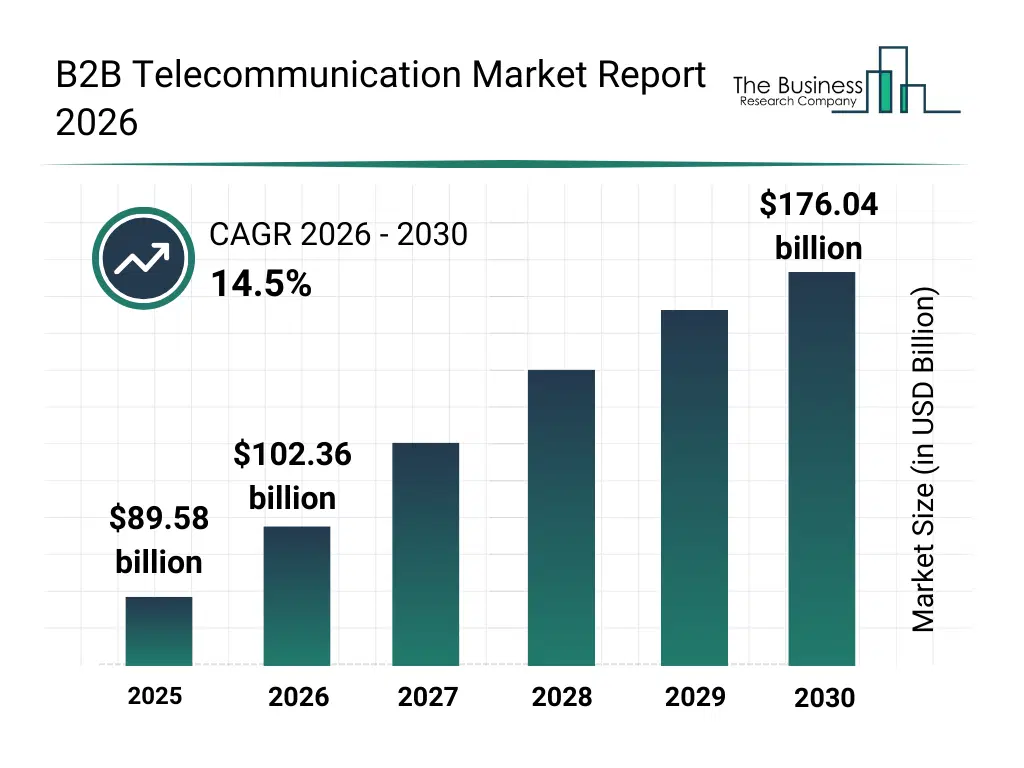
What Is The B2B Telecommunication Market Size and Share 2026?
The b2b telecommunication market size has grown rapidly in recent years. It will grow from $89.58 billion in 2025 to $102.36 billion in 2026 at a compound annual growth rate (CAGR) of 14.3%. The growth in the historic period can be attributed to expansion of enterprise digitalization, growth in business internet usage, adoption of voip services, globalization of business operations, demand for reliable data connectivity.What Is The B2B Telecommunication Market Growth Forecast?
The b2b telecommunication market size is expected to see rapid growth in the next few years. It will grow to $176.04 billion in 2030 at a compound annual growth rate (CAGR) of 14.5%. The growth in the forecast period can be attributed to deployment of 5G enterprise networks, growth of cloud communication services, increasing remote workforce adoption, rising demand for secure data transmission, expansion of iot based business solutions. Major trends in the forecast period include cloud based business communication, unified communication platforms, enterprise iot connectivity, secure business networks, scalable wan solutions.
Global B2B Telecommunication Market Segmentation
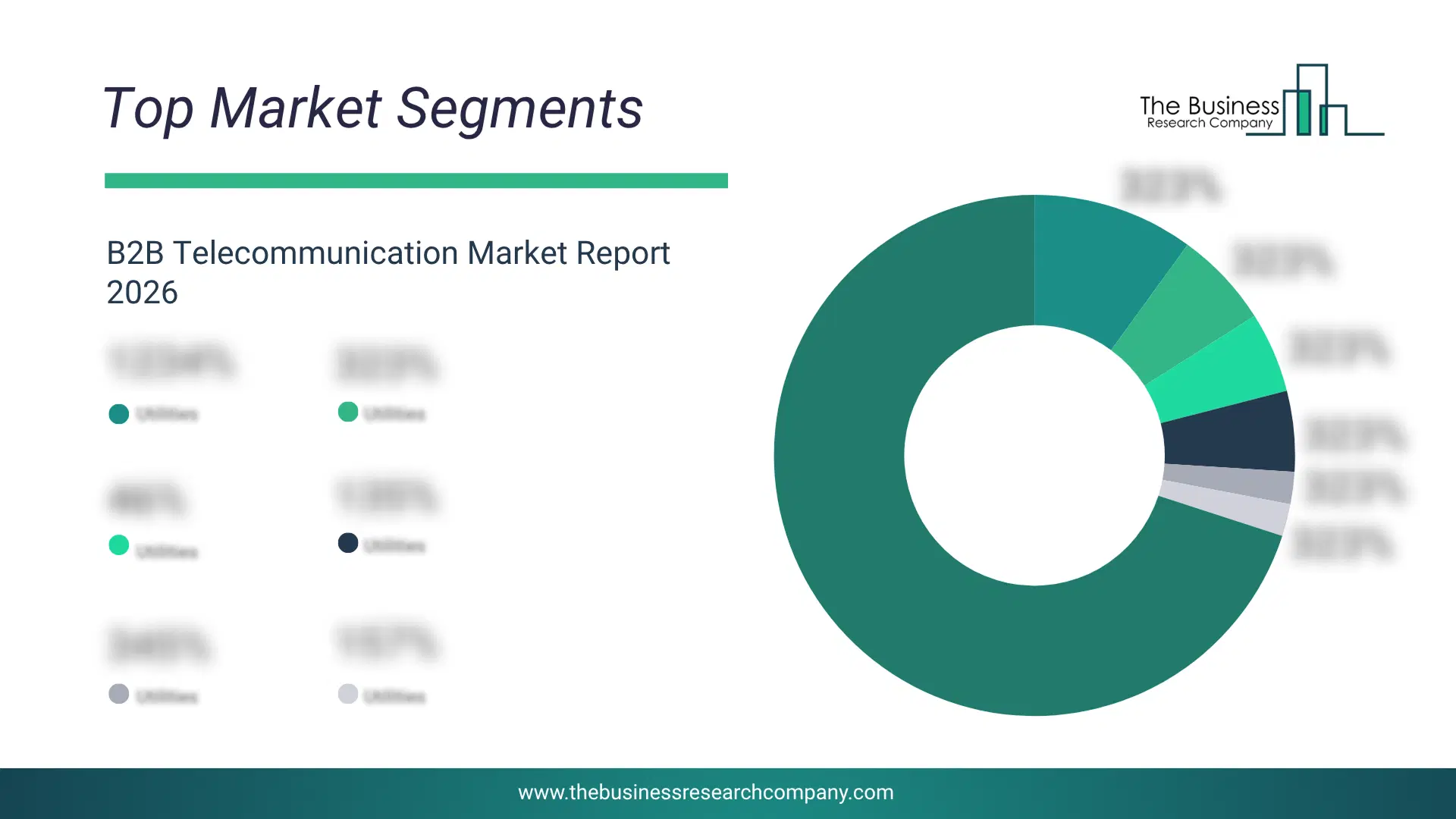
1) By Solution: Cloud Services, Unified Communication And Collaboration, VoIP, WAN, M2M Communication 2) By Enterprise Type: Large Enterprises, Small And Medium Enterprises 3) By Industrial Verticals: Banking, Financial Services And Insurance (BFSI), Information Technology And Telecom, Media And Entertainment, Healthcare, Government, Retail And E-commerce, Other Industrial Verticals Subsegments: 1) By Cloud Services: Cloud Hosting Solutions, Cloud Storage Services, Software As a Service (SaaS) 2) By Unified Communication And Collaboration (UCC): Video Conferencing Solutions, Team Collaboration Tools, Instant Messaging Platforms 3) By VoIP (Voice Over Internet Protocol): Hosted VoIP Solutions, On-premises VoIP Systems, VoIP For Business Communication 4) By WAN (Wide Area Network): MPLS (Multiprotocol Label Switching), SD-WAN (Software-Defined WAN), Leased Lines And Dedicated Circuits 5) By M2M (Machine To Machine) Communication: IoT Connectivity Solutions, Remote Monitoring And Control Systems, Smart Device Communication Platforms The top segments in the business-to-business (b2b) telecommunication market will be: • Wan will reach $43.02 Billion by 2030. • Unified Communication And Collaboration will reach $42.47 Billion by 2030. • Cloud Services will reach $38.89 Billion by 2030. • VoIP will reach $25.99 Billion by 2030. • M2M Communication will reach $25.06 Billion by 2030.What Is The Driver Of The B2B Telecommunication Market?
The increase in industrialization and urbanization in several countries is expected to propel the growth of the B2B telecommunication market going forward. Industrialization refers to the transformation of a country’s economy from agriculture to mass-production of goods and services using technology through industries. Urbanization, on the other hand, refers to the permanent migration of rural people to cities. B2B telecommunication in industrialization helps in gathering and processing customer data that can be used in targeting advertisements and predicting clients' behaviors to control the cost of operation, which is essential for industrialization. For instance, April 2023, according to world bank group U.S-based today, some 56% of the world’s population – 4.4 billion inhabitants – live in cities. This trend is expected to continue, with the urban population more than doubling its current size by 2050, at which point nearly 7 of 10 people will live in cities. Therefore, the increase in industrialization and urbanization in several countries is driving the B2B telecommunication industry growth.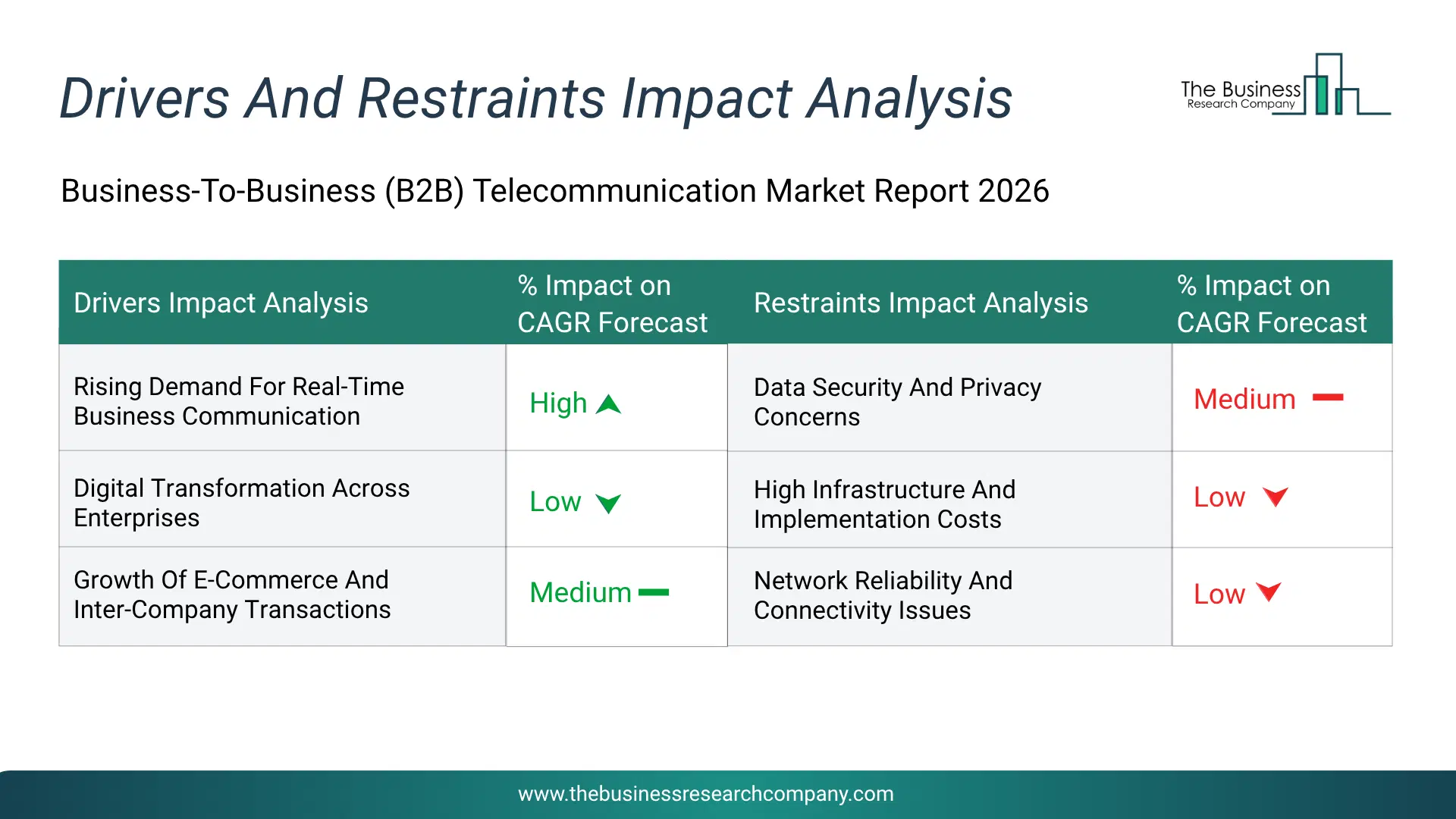
Infographic Chart Showing Key Market Drivers Analysis And Restraints For B2B Telecommunication Market
The chart presents an impact analysis of key drivers and restraints, quantifying their relative influence on the market's growth rate and helping assess the balance between growth enablers and limiting factors. This chart offers a high-level perspective; the full report contains more detailed insights.
How Will The Drivers Impact Growth In The Global Business-To-Business (B2B) Telecommunication Market?
• Rising Demand For Real-Time Business Communication (High) – During the forecast period, the rising demand for real-time business communication is expected to become a key growth driver for the business-to-business (B2B) telecommunication market by 2030. Enterprises are increasingly relying on instant communication channels such as voice, video, and messaging platforms to support time-sensitive decision-making and operational responsiveness. The need for seamless collaboration between distributed teams, partners, and clients is pushing organizations to adopt low-latency and highly reliable communication networks. Additionally, industries such as finance, healthcare, and logistics require real-time data exchange to ensure service continuity and efficiency. Telecom providers are therefore enhancing their service capabilities with advanced communication technologies that support high-speed and uninterrupted connectivity. • Digital Transformation Across Enterprises (Low) – During the forecast period, the digital transformation across enterprises is expected to emerge as a major factor driving the expansion of the business-to-business (B2B) telecommunication market by 2030. Organizations are increasingly modernizing their IT and communication infrastructure to support cloud-native applications, data-driven operations, and automation-driven workflows. This transition is accelerating the adoption of scalable telecom solutions that enable seamless integration across digital platforms and enterprise systems. Businesses are also focusing on enhancing cybersecurity, network flexibility, and service reliability as part of their transformation strategies. Telecom operators are responding by offering integrated and customizable solutions tailored to evolving enterprise needs. • Growth Of E-Commerce And Inter-Company Transactions (Medium) – During the forecast period, the growth of e-commerce and inter-company transactions is expected to act as a key growth catalyst for the business-to-business (B2B) telecommunication market by 2030. The increasing volume of digital transactions between businesses is driving the need for secure, high-capacity communication networks that can support continuous data exchange. Enterprises engaged in supply chain operations, wholesale distribution, and online marketplaces require robust telecom infrastructure to manage orders, payments, and logistics in real time. Furthermore, the expansion of cross-border trade and digital procurement platforms is intensifying the demand for reliable connectivity solutions. Telecom providers are therefore strengthening their network capabilities to handle rising data traffic and ensure secure communications.How Will The Restraints Impact Growth In The Global Business-To-Business (B2B) Telecommunication Market?
• Data Security And Privacy Concerns (High) – During the forecast period, data security and privacy concerns are significantly restricting the growth of the B2B telecommunication market. Rising cyber threats, stringent data protection regulations, and increasing risks associated with enterprise communication networks are compelling telecom providers to invest heavily in secure infrastructure and compliance mechanisms, increasing operational complexity and costs. • High Infrastructure And Implementation Costs (Low) – During the forecast period, high infrastructure and implementation costs are significantly restricting the growth of the B2B telecommunication market. Substantial capital expenditure required for network expansion, 5G deployment, fiber infrastructure, and enterprise communication solutions is limiting adoption, particularly among small and mid-sized businesses. • Network Reliability And Connectivity Issues (Medium) – During the forecast period, network reliability and connectivity issues are restricting the growth of the B2B telecommunication market. Inconsistent network performance, service outages, and connectivity gaps in certain regions are affecting business continuity and reducing overall trust in telecom service providers for mission-critical applications.Key Players In The Global B2B Telecommunication Market
Major companies operating in the b2b telecommunication market are Comcast Corporation; AT&T Inc.; Deutsche Telekom AG; Huawei Technologies Co. Ltd.; T-Mobile US Inc.; SoftBank Group Corp.; Vodafone Group Plc; Cisco Systems Inc.; KDDI Corporation; Telefonica S.A.; BT Group plc; Nokia Corporation; Telefonaktiebolaget LM Ericsson; Korea Telecom Corporation; Telus Corporation; Saudi Telecom Company; CenturyLink Inc.; Telstra Corporation Limited; Reliance Jio Infocomm Limited; Swisscom AG; PT Telekomunikasi Indonesia Tbk; Singapore Telecommunications Limited; China Telecom Corporation Limited; Amdocs Limited; PLDT Inc.; Tata Communications Limited; Telecom Italia Sparkle S.p.A.; Comarch SA; NTT Communications Corporation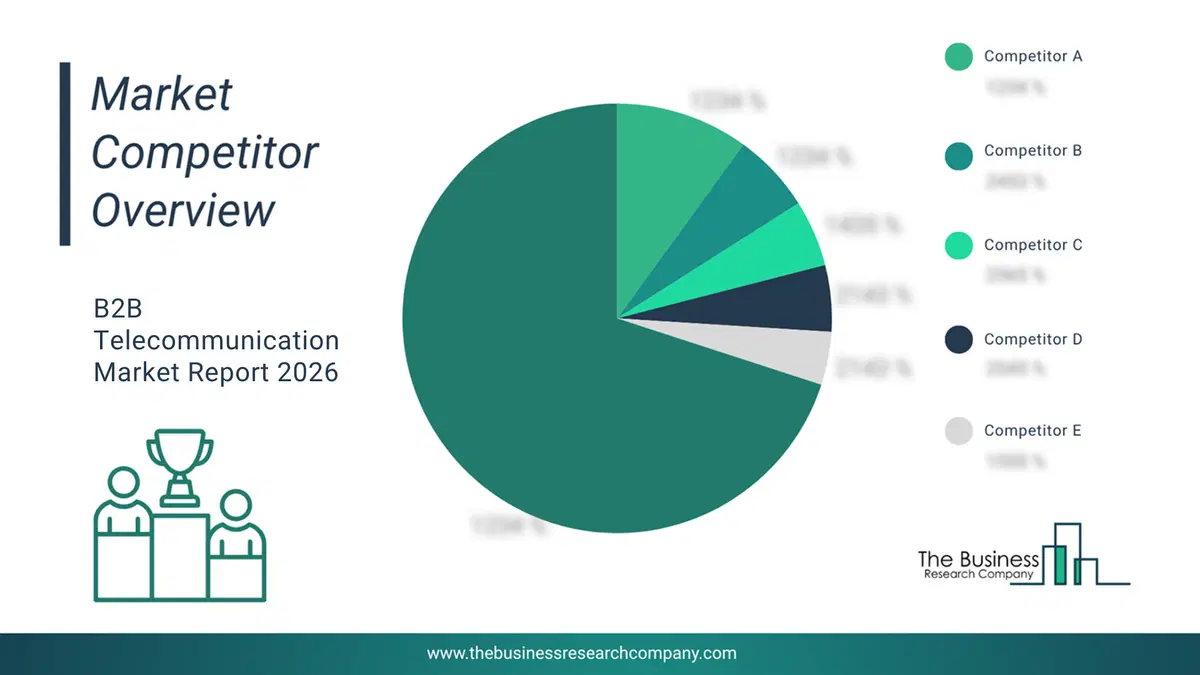
This chart is for illustrative purposes; the full report includes a detailed competitor analysis and comprehensive overview of the top 10 companies in the market.
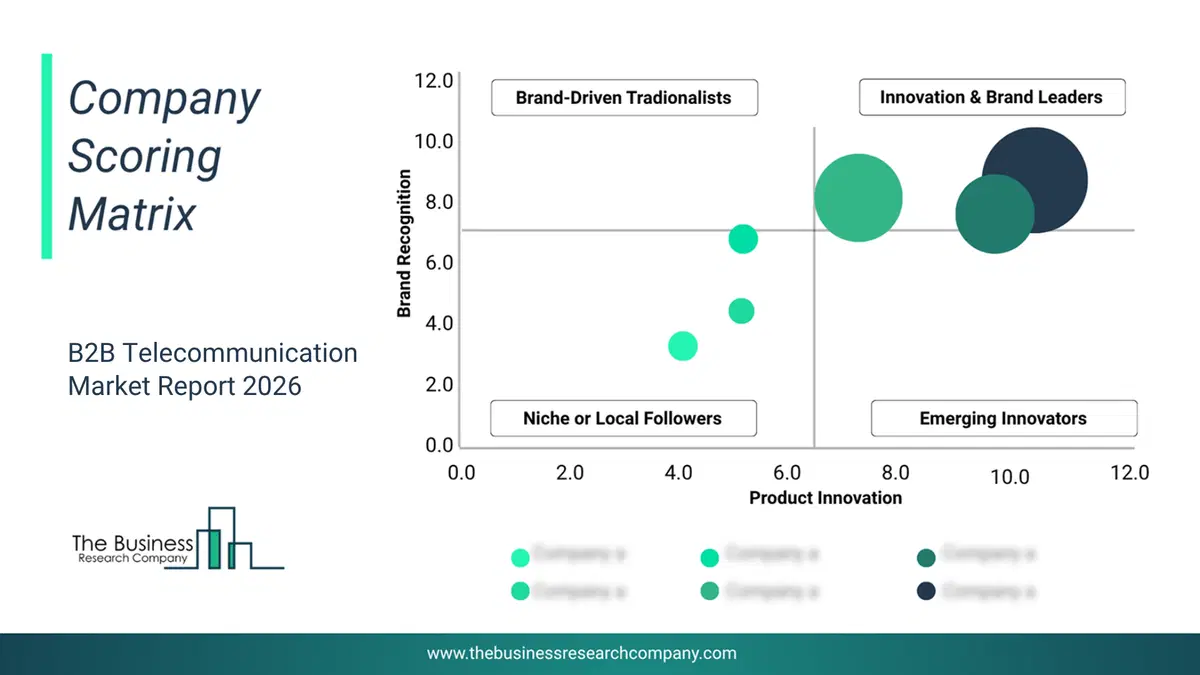
This chart maps companies by product innovation and brand strength, with bubble size indicating relative revenue, helping identify market leaders, challengers, and niche players. This is an illustrative chart; the full report provides a complete and accurate competitive analysis.
Global B2B Telecommunication Market Trends and Insights
Major companies operating in the B2B telecommunication market are focusing on developing, technological advancement such as network management solution for enterprise to enhance operational efficiency, improve network reliability, reduce downtime, and provide data-driven insights that support informed decision-making. A network management solution for enterprises a comprehensive system designed to monitor, control, and optimize a company's network infrastructure. For instance, in September 2024, Bharti Airtel's B2B arm, a India-based, while Cisco, a U.S-based, launched network management solution for enterprise, both companies are leaders in their respective fields, with Airtel focusing on telecommunications and digital services, and Cisco specializing in networking and cybersecurity solutions. A network management solution for enterprises encompasses tools for real-time performance monitoring, automated management of network tasks, advanced analytics for data-driven decision-making, security measures against threats, and scalability to adapt to changing business needs, ensuring a reliable and efficient network environment that supports overall operations and productivity.What Are Latest Mergers And Acquisitions In The B2B Telecommunication Market?
In June 2024, PAN (formerly known as PAN Communications), a U.S-based, company specializes in integrated marketing and public relations services, particularly for B2B tech clients acquired BLASTmedia for an undisclosed amount. The aim of PAN's acquisition of BLASTmedia is to enhance B2B tech expertise and expand digital marketing and public relations services. BLASTmedia, a U.S-based, agency focuses on public relations and digital marketing, particularly for technology and B2B companies.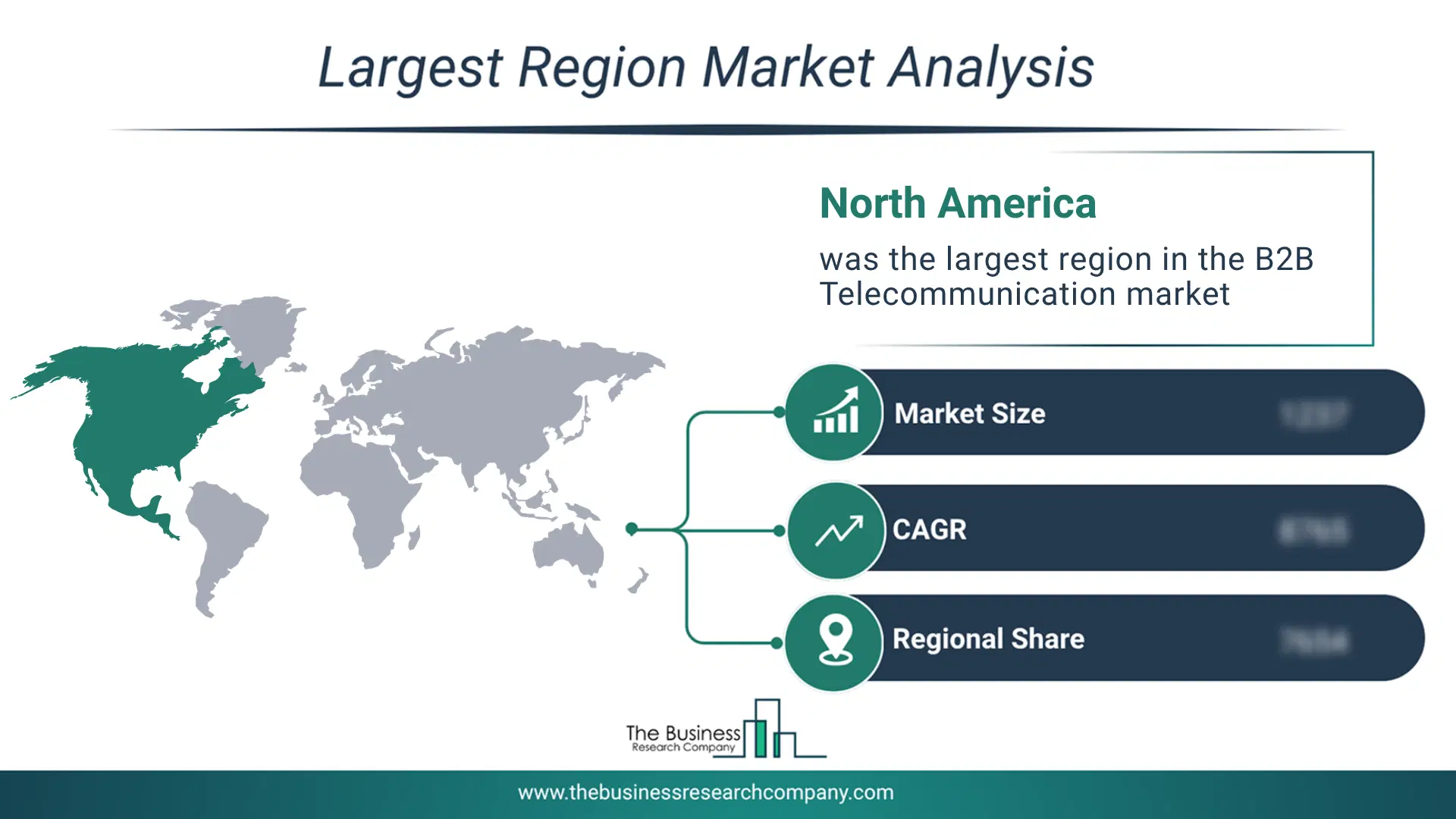
Regional Insights
North America was the largest region in the B2B telecommunication market in 2025. Asia-Pacific is expected to be the fastest-growing region in the forecast period. The regions covered in this market report are Asia-Pacific, South East Asia, Western Europe, Eastern Europe, North America, South America, Middle East, Africa. The countries covered in this market report are Australia, Brazil, China, France, Germany, India, Indonesia, Japan, Taiwan, Russia, South Korea, UK, USA, Canada, Italy, SpainWhat Defines the B2B Telecommunication Market?
The B2B telecommunication market consists of revenues earned by entities by providing B2B telecommunication through email, instant messaging and fax. Values in this market are ‘factory gate’ values, that is the value of goods sold by the manufacturers or creators of the goods, whether to other entities (including downstream manufacturers, wholesalers, distributors, and retailers) or directly to end customers. The value of goods in this market includes related services sold by the creators of the goods.How is Market Value Defined and Measured?
The market value is defined as the revenues that enterprises gain from the sale of goods and/or services within the specified market and geography through sales, grants, or donations in terms of the currency (in USD unless otherwise specified). The revenues for a specified geography are consumption values that are revenues generated by organizations in the specified geography within the market, irrespective of where they are produced. It does not include revenues from resales along the supply chain, either further along the supply chain or as part of other products.
This chart presents market attractiveness based on a quantitative evaluation of growth, competition, strategic alignment, and risk, offering a clear view of opportunity areas for decision-making. This chart is for illustrative purposes; the full report contains the complete analysis.

This chart highlights the Total Addressable Market (TAM) by estimating the maximum revenue opportunity using an assumption-driven approach, supporting strategic planning and opportunity sizing across markets. The chart is illustrative; the full report provides a more comprehensive analysis.
What Key Data and Analysis Are Included in the B2B Telecommunication Market Report 2026?
The b2b telecommunication market research report is one of a series of new reports from The Business Research Company that provides market statistics, including industry global market size, regional shares, competitors with the market share, detailed market segments, market trends and opportunities, and any further data you may need to thrive in the b2b telecommunication industry. The market research report delivers a complete perspective of everything you need, with an in-depth analysis of the current and future state of the industry.B2B Telecommunication Market Report Forecast Analysis
| Report Attribute | Details |
|---|---|
| Market Size Value In 2026 | $102.36 billion |
| Revenue Forecast In 2030 | $176.04 billion |
| Growth Rate | CAGR of 14.3% from 2026 to 2030 |
| Base Year For Estimation | 2025 |
| Actual Estimates/Historical Data | 2020-2025 |
| Forecast Period | 2026 - 2030 |
| Market Representation | Revenue in USD Billion and CAGR from 2026 to 2030 |
| Segments Covered | Solution, Enterprise Type, Industrial Verticals |
| Regional Scope | Asia-Pacific, Western Europe, Eastern Europe, North America, South America, Middle East, Africa |
| Country Scope | The countries covered in the report are Australia, Brazil, China, France, Germany, India, Indonesia, Japan, Taiwan, Russia, South Korea, UK, USA, Canada, Italy, Spain. |
| Key Companies Profiled | Comcast Corporation; AT&T Inc.; Deutsche Telekom AG; Huawei Technologies Co. Ltd.; T-Mobile US Inc.; SoftBank Group Corp.; Vodafone Group Plc; Cisco Systems Inc.; KDDI Corporation; Telefonica S.A.; BT Group plc; Nokia Corporation; Telefonaktiebolaget LM Ericsson; Korea Telecom Corporation; Telus Corporation; Saudi Telecom Company; CenturyLink Inc.; Telstra Corporation Limited; Reliance Jio Infocomm Limited; Swisscom AG; PT Telekomunikasi Indonesia Tbk; Singapore Telecommunications Limited; China Telecom Corporation Limited; Amdocs Limited; PLDT Inc.; Tata Communications Limited; Telecom Italia Sparkle S.p.A.; Comarch SA; NTT Communications Corporation |
| Customization Scope | Request for Customization |
| Pricing And Purchase Options | Explore Purchase Options |