
Bioenergy Market Report 2026
Global Outlook – By Type (Biomass And Renewable Municipal Waste, Biogas, Liquid Biofuels), By Technology (Gasification, Fast Pyrolysis, Fermentation, Other Technologies), By Application (Power Generation, Heat Generation, Transportation, Other Applications) – Market Size, Trends, Strategies, and Forecast to 2030
Bioenergy Market Overview
• Bioenergy market size has reached to $320.81 billion in 2025 • Expected to grow to $510.11 billion in 2030 at a compound annual growth rate (CAGR) of 9.7% • Growth Driver: Ambitious Carbon Reduction Targets Drive The Bioenergy Market • Market Trend: Focus On Product Innovations To Provide Reliable Services To Their Customers • North America was the largest region in 2025 and Asia-Pacific is the fastest growing region.Market Gains By 2030 – Top Opportunities By Segment
Market Gain identifies the most promising market opportunities by highlighting the segments or products expected to generate the highest incremental revenue growth over the next five years.
What Is Covered Under Bioenergy Market?
Bioenergy refers to biomass, a form of renewable energy from organic materials that are used to produce electricity, transportation fuels, and heat. The biomass is transformed into a solid, liquid, or gaseous fuel and used as a primary renewable energy source for power generation, heating buildings and industries, and transportation. The main types of bioenergy are biomass, renewable municipal waste, biogas, and liquid biofuels. Biomass and renewable municipal waste refer to a source of biomass that requires little extra input and can be used for the generation of bioenergy. The different technologies are gasification, fast pyrolysis, fermentation, and others that are used in power generation, heat generation, transportation, and others.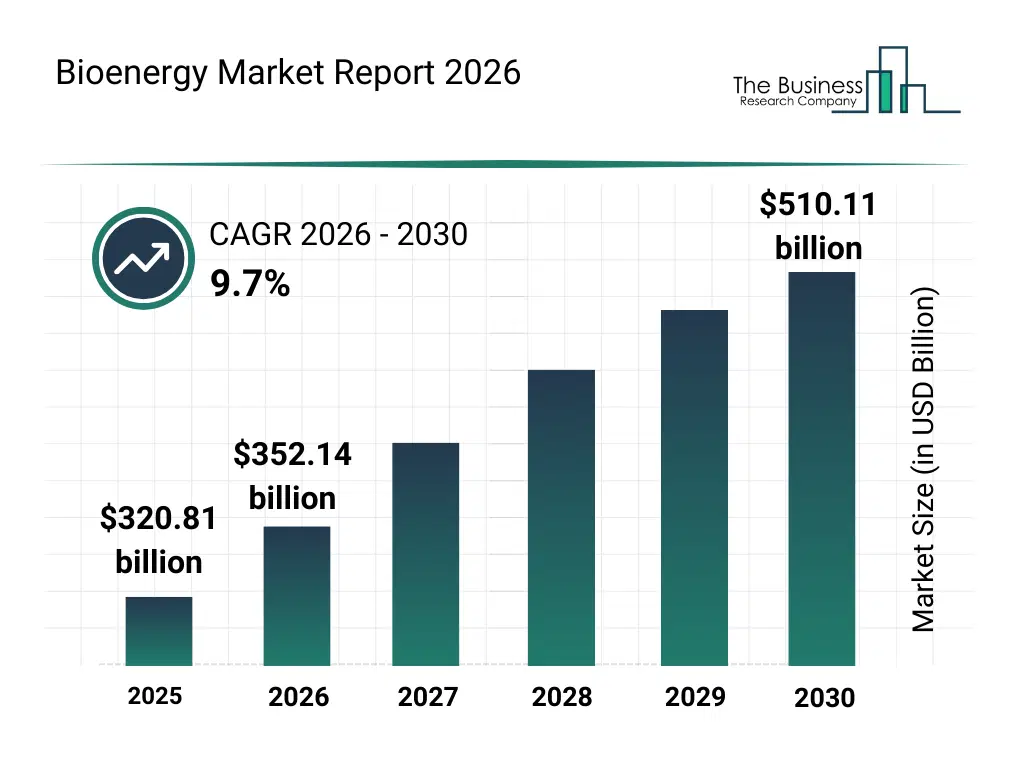
What Is The Bioenergy Market Size and Share 2026?
The bioenergy market size has grown strongly in recent years. It will grow from $320.81 billion in 2025 to $352.14 billion in 2026 at a compound annual growth rate (CAGR) of 9.8%. The growth in the historic period can be attributed to increasing demand for renewable energy, government incentives for biomass and biofuels, growth in power generation from waste, rising awareness of environmental sustainability, technological advancements in biomass conversion.What Is The Bioenergy Market Growth Forecast?
The bioenergy market size is expected to see strong growth in the next few years. It will grow to $510.11 billion in 2030 at a compound annual growth rate (CAGR) of 9.7%. The growth in the forecast period can be attributed to expansion of bioenergy infrastructure, increasing integration with smart grid systems, adoption of next-generation biofuel technologies, growth in commercial and industrial heat applications, rising investments in sustainable transportation fuels. Major trends in the forecast period include rising adoption of advanced biomass conversion technologies, growing use of anaerobic digestion for biogas production, expansion of biofuel applications in transportation sector, increasing deployment of fast pyrolysis for energy generation, rising preference for algae-based renewable energy solutions.
Global Bioenergy Market Segmentation
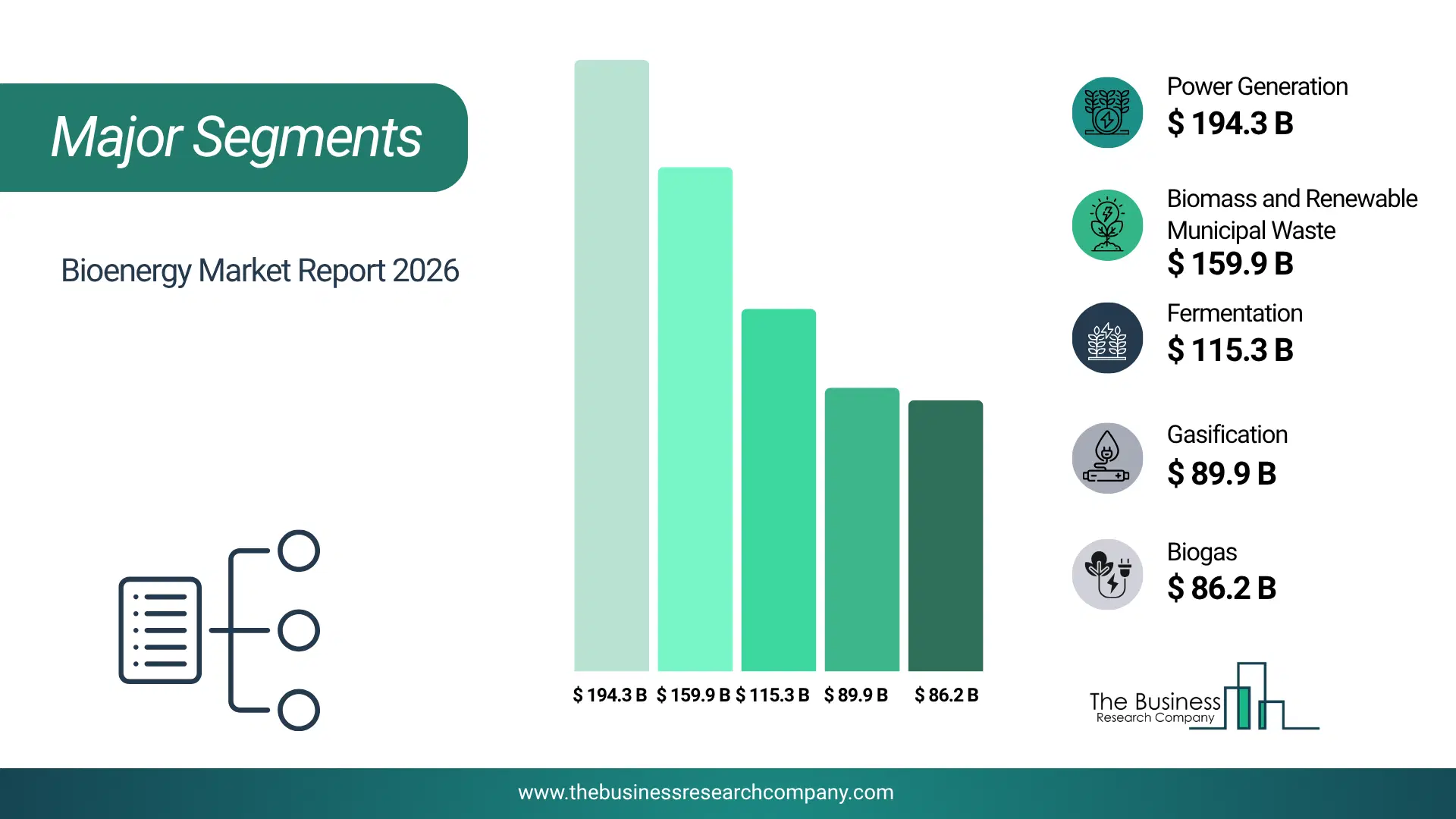
1) By Type: Biomass And Renewable Municipal Waste, Biogas, Liquid Biofuels 2) By Technology: Gasification, Fast Pyrolysis, Fermentation, Other Technologies 3) By Application: Power Generation, Heat Generation, Transportation, Other Applications Subsegments: 1) By Biomass And Renewable Municipal Waste: Wood And Agricultural Residues, Organic Waste, Algae 2) By Biogas: Anaerobic Digestion, Landfill Gas, Wastewater Treatment Biogas 3) By Liquid Biofuels: Bioethanol, Biodiesel, Bio-jet Fuel The top segments in the bioenergy market will be: • Power Generation will reach $194380.38 Million by 2025. • Biomass and Renewable Municipal Waste will reach $159921.31 Million by 2025. • Fermentation will reach $115343.3 Million by 2025. • Gasification will reach $89988.49 Million by 2025. • Biogas will reach $86207.35 Million by 2025.What Is The Driver Of The Bioenergy Market?
Increasing demand for energy targets to reduce carbon emissions is expected to propel the growth of the bioenergy market going forward. Greenhouse gas emissions from human activities are responsible for the greenhouse effect, in which carbon dioxide from burning fossil fuels affects the climate. To reduce these emissions, countries are taking several steps to reduce carbon emissions. Bioenergy helps in achieving those targets by reducing carbon emissions and providing natural sources. For instance, in February 2024, according to the reports published by the World Resources Institute, a US-based organization, in 2023, the U.S. installed a record 31 gigawatts (GW) of solar energy capacity, marking a 55% increase from installations in 2022. Therefore, increasing demand for energy targets to reduce carbon emissions drives the bioenergy industry.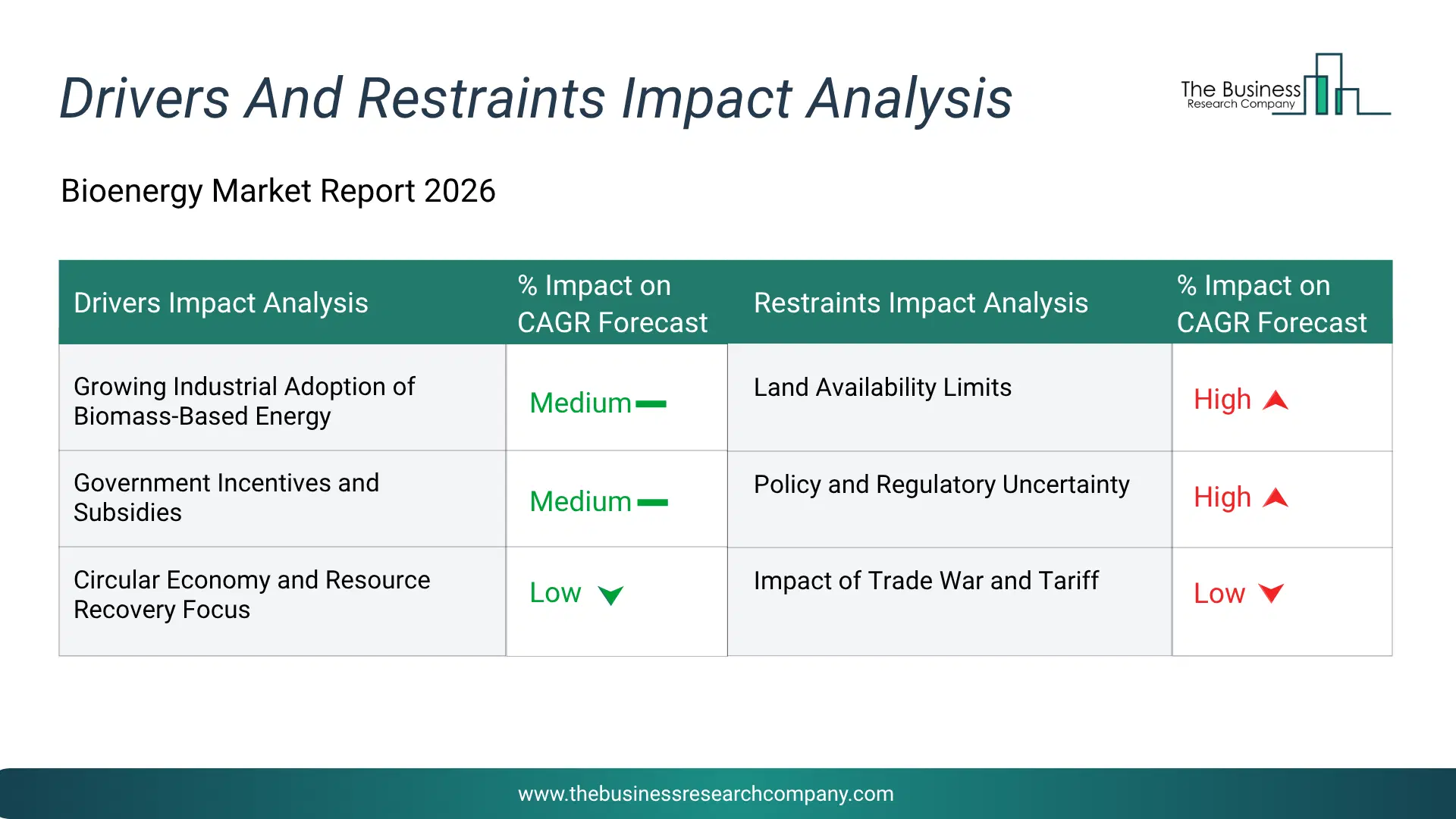
Infographic Chart Showing Key Market Drivers Analysis And Restraints For Bioenergy Market
The chart presents an impact analysis of key drivers and restraints, quantifying their relative influence on the market's growth rate and helping assess the balance between growth enablers and limiting factors. This chart offers a high-level perspective; the full report contains more detailed insights.
How Will The Drivers Impact Growth In The Global Bioenergy Market?
• Growing Industrial Adoption of Biomass-Based Energy (Medium) – The growing industrial adoption of biomass-based energy will become a key driver of growth in the bioenergy market by 2030. Across the globe, industries are incorporating biomass into their energy mix to improve sustainability, lower carbon emissions, and achieve a more reliable and secure energy supply. Biomass energy’s versatility—using feedstocks such as agricultural residues, forestry byproducts, and organic waste—makes it suitable for a wide range of industrial uses. This trend is further reinforced by technological advancements in biomass conversion, improved supply chain infrastructure, and supportive government policies promoting renewable energy. As more companies focus on decarbonization and energy efficiency, industrial demand for biomass is anticipated to rise significantly, fueling the expansion of the bioenergy market. As a result, the growing industrial adoption of biomass-based energy is anticipated to contributing to a 1.5% annual growth in the market. • Government Incentives and Subsidies (Medium) – The government incentives and subsidies will emerge as a major factor driving the expansion of the bioenergy market by 2030. Policy initiatives promoting bioenergy adoption—such as financial assistance, tax incentives, and supportive regulatory frameworks—are encouraging industries and energy producers to invest in biomass and biogas projects. These measures help lower project costs, improve the economic viability of bioenergy systems, and accelerate the shift from fossil fuels to renewable energy sources. By fostering sustainable energy development and facilitating the conversion of organic waste into power, government support is anticipated to significantly boost the expansion of the bioenergy market. Consequently, the government incentives and subsidies capabilities is projected to contributing to a 1.0% annual growth in the market. • Circular Economy and Resource Recovery Focus (Low) – The circular economy and resource recovery focus will serve as a key growth catalyst for the bioenergy market by 2030. Industries are increasingly implementing strategies that transform organic waste into valuable bioenergy products, promoting recycling and resource efficiency. This approach helps reduce waste and greenhouse gas emissions while supporting the development of sustainable energy solutions. Incorporating circular economy practices is becoming a key element of corporate sustainability initiatives, spurring innovation and investment in bioenergy technologies. Consequently, the bioenergy sector is well-positioned for substantial growth, driven by the global transition toward more sustainable and resource-efficient energy systems. Therefore, this circular economy and resource recovery focus is projected to supporting to a 0.8% annual growth in the market. • Growing Demand for Renewable Electricity (Low) – The growing demand for renewable electricity will become a significant driver contributing to the growth of the bioenergy market by 2030. As nations work to achieve ambitious climate goals and curb greenhouse gas emissions, there is a strong push to expand renewable energy capacity. The rapid growth of solar and wind power, while essential, also creates a need for flexible and reliable energy sources. Bioenergy, capable of providing baseload power and enhancing grid stability, is increasingly being integrated into the renewable energy mix. Its growing role in national energy strategies highlights its importance in building a sustainable and resilient energy future. Consequently, the growing demand for renewable electricity strategies is projected to contributing to a 0.5% annual growth in the market.How Will The Restraints Impact Growth In The Global Bioenergy Market?
• Land Availability Limits (Medium) – Land Availability Limits will restrict the growth of the Bioenergy market during the forecast period. Large-scale biomass cultivation requires significant land resources, competing with food production, forestry, and conservation needs. Land use conflicts and the limited availability of suitable agricultural land restrict biomass feedstock supply. Concerns about the environmental impact of converting natural habitats to energy crop cultivation further complicate land allocation for bioenergy production. • Policy and Regulatory Uncertainty (Medium) – Policy and Regulatory Uncertainty will restrict the growth of the Bioenergy market during the forecast period. The bioenergy sector is heavily dependent on government policies, subsidies, and mandates that are subject to frequent changes. Uncertainty about future policy directions, including changes in renewable fuel standards, carbon pricing, and incentive programs, creates investment uncertainty. This policy volatility can delay or cancel bioenergy projects, limiting market growth. • Impact of Trade War and Tariff (Low) – Impact of Trade War and Tariff will restrict the growth of the Bioenergy market during the forecast period. Bioenergy production involves international trade in biomass feedstocks, equipment, and technology. Trade tariffs and restrictions can affect the cost and availability of these essential inputs. Trade tensions may also limit market access for bioenergy products, affecting industry growth.Key Players In The Global Bioenergy Market
Major companies operating in the bioenergy market are Babcock and Wilcox Enterprises Inc., Orsted A/S, Hitachi Zosen Corporation, Pacific Bioenergy Corp., Enerkem Inc., MVV Energie AG, Enexor Energy LLC, Lignetics Inc., Green Plains Inc., Enviva Partners LP, POET LLC, Drax Group PLC, Ameresco Inc., Archer Daniels Midland Company, EnviTec Biogas AG, CropEnergies AG, Abengoa Bioenergy US Holding LLC, Novozymes A/S, Alto Ingredients Inc., Valero Energy Corporation, BP Biofuels North America LLC, Cargill Inc., DuPont Industrial Biosciences USA LLC, Gevo Inc., LanzaTech Inc., Amyris Inc., Butamax Advanced Biofuels LLC, Genomatica Inc., NexSteppe Inc., Renmatix Inc., Virent Inc., Algenol Biofuels Inc.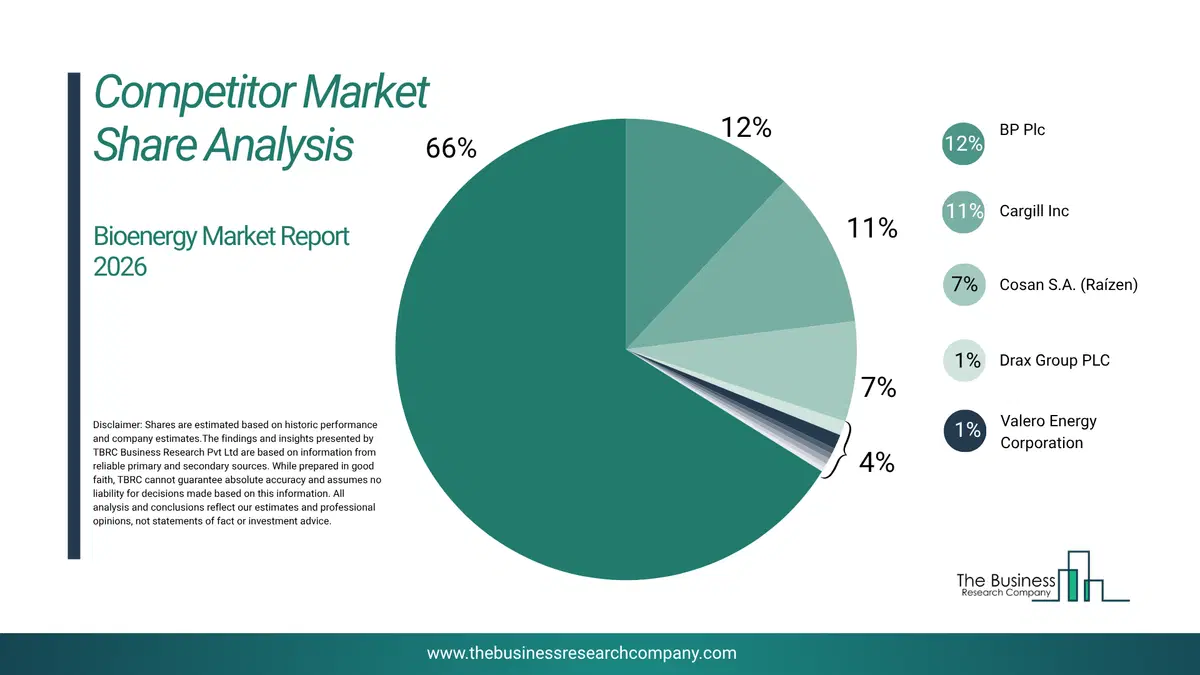
This chart is for illustrative purposes; the full report includes a detailed competitor analysis and comprehensive overview of the top 10 companies in the market.
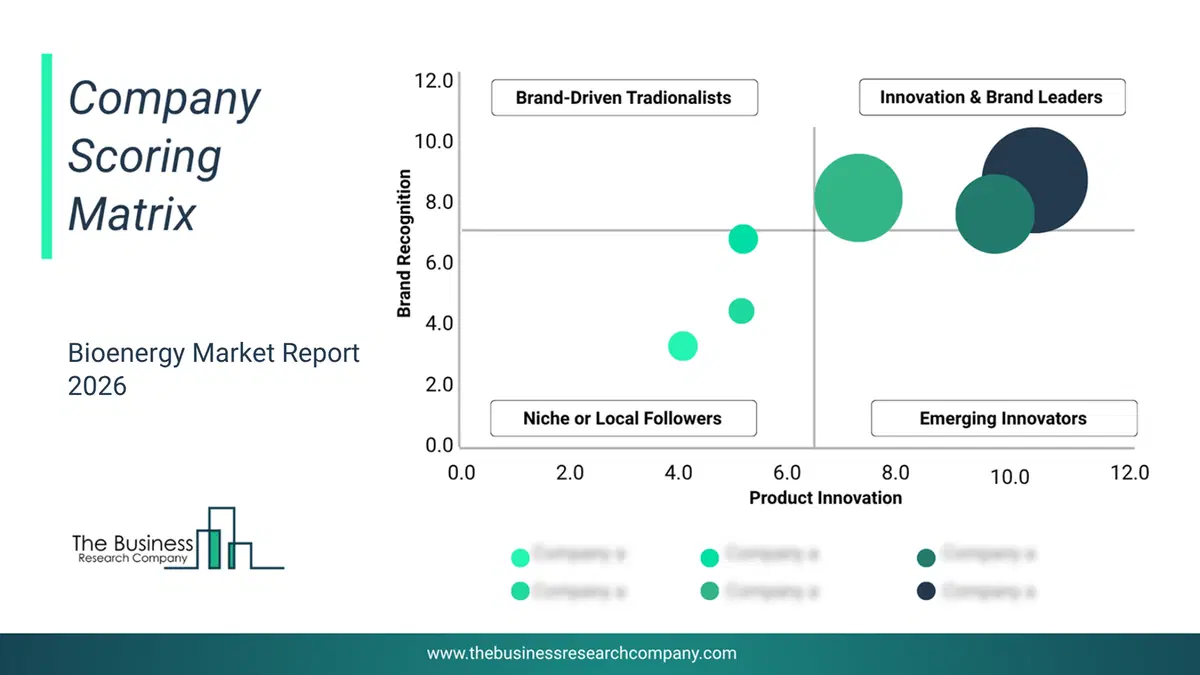
This chart maps companies by product innovation and brand strength, with bubble size indicating relative revenue, helping identify market leaders, challengers, and niche players. This is an illustrative chart; the full report provides a complete and accurate competitive analysis.
Global Bioenergy Market Trends and Insights
Major companies operating in the bioenergy market are focusing on products, such as biofuel, to drive revenues in their market. Biofuels are considered a renewable energy source because the carbon dioxide emitted during their combustion is roughly equal to the amount absorbed by the plants during their growth, creating a carbon-neutral cycle. For instance, in March 2023, BSBIOS Industria e Comercio de Biodiesel Sul Brasil S.A, a Brazil-based company specializing in the production and trading of biodiesel launched biofuel called Be8 BeVant. This biofuel is being marketed as an ‘immediate solution’ to assist businesses in meeting their decarbonization commitments in the short term. The solution is aimed specifically at businesses who use a substantial amount of conventional diesel oil and want to reduce emissions without investing heavily in engine replacement or new fueling infrastructure.What Are Latest Mergers And Acquisitions In The Bioenergy Market?
In October 2024, British Petroleum p.l.c., a UK-based multinational energy company, acquired 100% stake in BP Bunge Bioenergia from Bunge Global SA for an undisclosed amount. Through this acquisition, BP aims to consolidate its bioenergy operations in Brazil, expand sugarcane ethanol production, and enhance its portfolio of renewable fuels. Bunge Global SA is a Brazil-based bioenergy company that produces sugarcane ethanol for use as renewable fuel.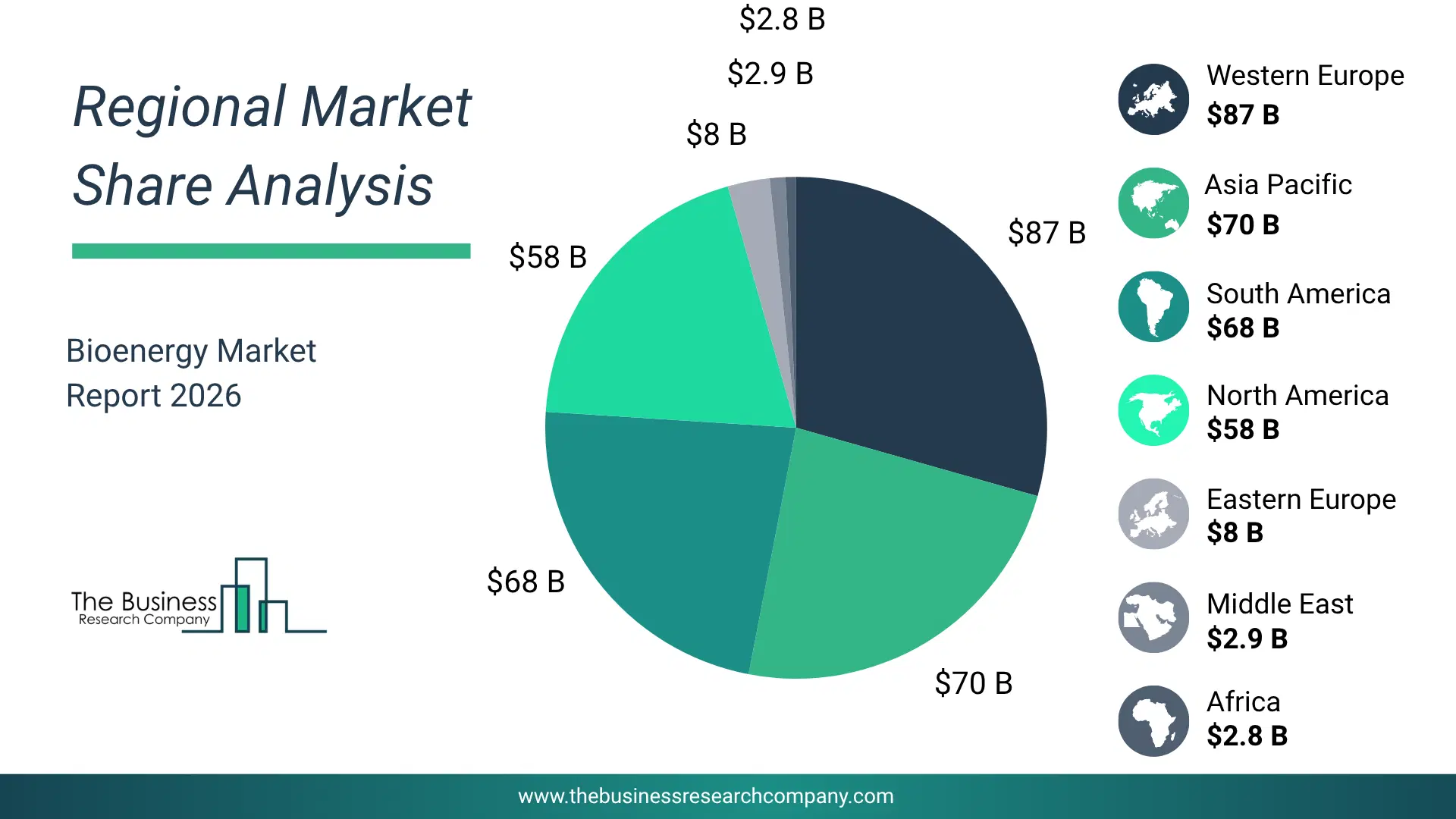
Regional Outlook
North America was the largest region in the bioenergy market in 2025. Asia-Pacific is expected to be the fastest-growing region in the forecast period. The regions covered in this market report are Asia-Pacific, South East Asia, Western Europe, Eastern Europe, North America, South America, Middle East, Africa. The countries covered in this market report are Australia, Brazil, China, France, Germany, India, Indonesia, Japan, Taiwan, Russia, South Korea, UK, USA, Canada, Italy, SpainWhat Defines the Bioenergy Market?
The bioenergy market consists of sales of renewable hydrocarbon fuels such as bioethanol, biodiesel, and cellulosic ethanol. Values in this market are ‘factory gate’ values, that is, the value of goods sold by the manufacturers or creators of the goods, whether to other entities (including downstream manufacturers, wholesalers, distributors, and retailers) or directly to end customers. The value of goods in this market includes related services sold by the creators of the goods.How is Market Value Defined and Measured?
The market value is defined as the revenues that enterprises gain from the sale of goods and/or services within the specified market and geography through sales, grants, or donations in terms of the currency (in USD unless otherwise specified). The revenues for a specified geography are consumption values that are revenues generated by organizations in the specified geography within the market, irrespective of where they are produced. It does not include revenues from resales along the supply chain, either further along the supply chain or as part of other products.
This chart presents market attractiveness based on a quantitative evaluation of growth, competition, strategic alignment, and risk, offering a clear view of opportunity areas for decision-making. This chart is for illustrative purposes; the full report contains the complete analysis.

This chart highlights the Total Addressable Market (TAM) by estimating the maximum revenue opportunity using an assumption-driven approach, supporting strategic planning and opportunity sizing across markets. The chart is illustrative; the full report provides a more comprehensive analysis.
What Key Data and Analysis Are Included in the Bioenergy Market Report 2026?
The bioenergy market research report is one of a series of new reports from The Business Research Company that provides market statistics, including Market Report 2026?global market size, regional shares, competitors with the market share, detailed market segments, market trends and opportunities, and any further data you may need to thrive in the bioenergy Market Report 2026? The market research report delivers a complete perspective of everything you need, with an in-depth analysis of the current and future state of the Market Report 2026?Bioenergy Market Report Forecast Analysis
| Report Attribute | Details |
|---|---|
| Market Size Value In 2026 | $352.14 billion |
| Revenue Forecast In 2030 | $510.11 billion |
| Growth Rate | CAGR of 9.8% from 2026 to 2030 |
| Base Year For Estimation | 2025 |
| Actual Estimates/Historical Data | 2020-2025 |
| Forecast Period | 2026 - 2030 |
| Market Representation | Revenue in USD Billion and CAGR from 2026 to 2030 |
| Segments Covered | Type, Technology, Application |
| Regional Scope | Asia-Pacific, Western Europe, Eastern Europe, North America, South America, Middle East, Africa |
| Country Scope | The countries covered in the report are Australia, Brazil, China, France, Germany, India, Indonesia, Japan, Taiwan, Russia, South Korea, UK, USA, Canada, Italy, Spain. |
| Key Companies Profiled | Babcock and Wilcox Enterprises Inc., Orsted A/S, Hitachi Zosen Corporation, Pacific Bioenergy Corp., Enerkem Inc., MVV Energie AG, Enexor Energy LLC, Lignetics Inc., Green Plains Inc., Enviva Partners LP, POET LLC, Drax Group PLC, Ameresco Inc., Archer Daniels Midland Company, EnviTec Biogas AG, CropEnergies AG, Abengoa Bioenergy US Holding LLC, Novozymes A/S, Alto Ingredients Inc., Valero Energy Corporation, BP Biofuels North America LLC, Cargill Inc., DuPont Industrial Biosciences USA LLC, Gevo Inc., LanzaTech Inc., Amyris Inc., Butamax Advanced Biofuels LLC, Genomatica Inc., NexSteppe Inc., Renmatix Inc., Virent Inc., Algenol Biofuels Inc. |
| Customization Scope | Request for Customization |
| Pricing And Purchase Options | Explore Purchase Options |