
Colorectal Cancer Drugs Market Report 2026
Global Outlook – By Type (Vascular Endothelial Growth Factor (VEGF) Inhibitors, Epidermal Growth Factor Receptor (EGFR) Inhibitors, Programmed Cell Death Protein 1 Or PD1 Ligand 1 (PD1 Or PDL– Inhibitors, BRAF Or MEK Inhibitors, Tyrosine Kinase (TKI) Inhibitors, Immunomodulators), By Class (Immunotherapy, Chemotherapy, Other Classes), By Distribution Channels (Hospitals Pharmacies, Retail Pharmacies, Other Distribution Channels) – Market Size, Trends, Strategies, and Forecast to 2030
Colorectal Cancer Drugs Market Overview
• Colorectal Cancer Drugs market size has reached to $21.72 billion in 2025 • Expected to grow to $28.57 billion in 2030 at a compound annual growth rate (CAGR) of 5.8% • Growth Driver: Rising Demand For Personalized Medicines Drives Growth In Colorectal Cancer Drugs Market • Market Trend: FDA Approval Of Lonsurf (Trifluridine/Tipiracil) For Metastatic Colorectal Cancer Treatment • North America was the largest region in 2025 and Middle East is the fastest growing region.Market Gains By 2030 – Top Opportunities By Segment
Market Gain identifies the most promising market opportunities by highlighting the segments or products expected to generate the highest incremental revenue growth over the next five years.
What Is Covered Under Colorectal Cancer Drugs Market?
Colorectal cancer (CRC) or bowel cancer, is a type of cancer affecting the large intestine and the rectum. Depending on where they begin, they are also known as colon tumors or rectal cancer. The main types of colorectal cancer drugs are vascular endothelial growth factor (VEGF) inhibitors, epidermal growth factor receptor (EGFR) inhibitors, and programmed cell death protein 1/PD1 ligand 1 (PD1/PDL1) inhibitors, BRAF or MEK inhibitors, tyrosine kinase (TKI) inhibitors, and immunomodulators. Vascular endothelial growth factors (VEGF) are drugs that block VEGF and VEGFR activity. The various classes of drugs include immunotherapy, chemotherapy, and others that are distributed by hospitals pharmacies, retail pharmacies, and others.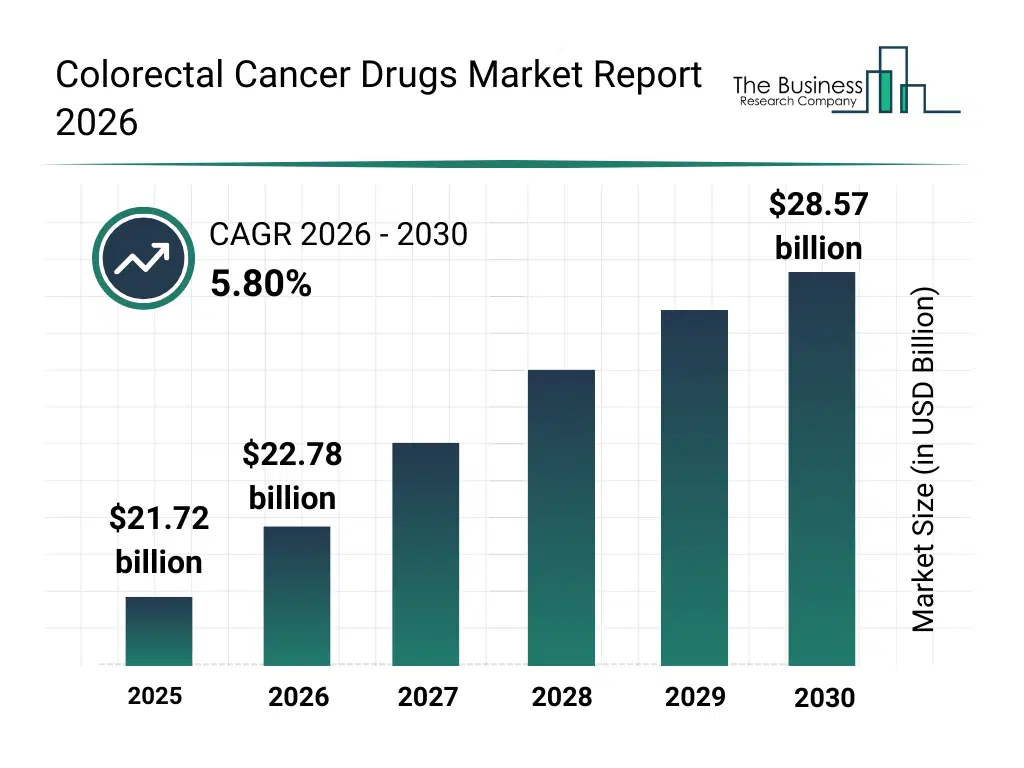
What Is The Colorectal Cancer Drugs Market Size and Share 2026?
The colorectal cancer drugs market size has grown steadily in recent years. It will grow from $21.72 billion in 2025 to $22.78 billion in 2026 at a compound annual growth rate (CAGR) of 4.9%. The growth in the historic period can be attributed to increasing incidence of colorectal cancer, advancements in chemotherapy drugs, rising awareness of cancer screening, growth in hospital infrastructure, availability of generic colorectal cancer drugs.What Is The Colorectal Cancer Drugs Market Growth Forecast?
The colorectal cancer drugs market size is expected to see strong growth in the next few years. It will grow to $28.57 billion in 2030 at a compound annual growth rate (CAGR) of 5.8%. The growth in the forecast period can be attributed to emergence of immunotherapy and targeted therapies, integration of ai in drug development, growth in precision medicine adoption, expansion of oncology research funding, rise in combination treatment protocols. Major trends in the forecast period include personalized cancer therapies, immunotherapy advancements, targeted molecular treatments, early detection & screening technologies, combination therapy approaches.
Global Colorectal Cancer Drugs Market Segmentation
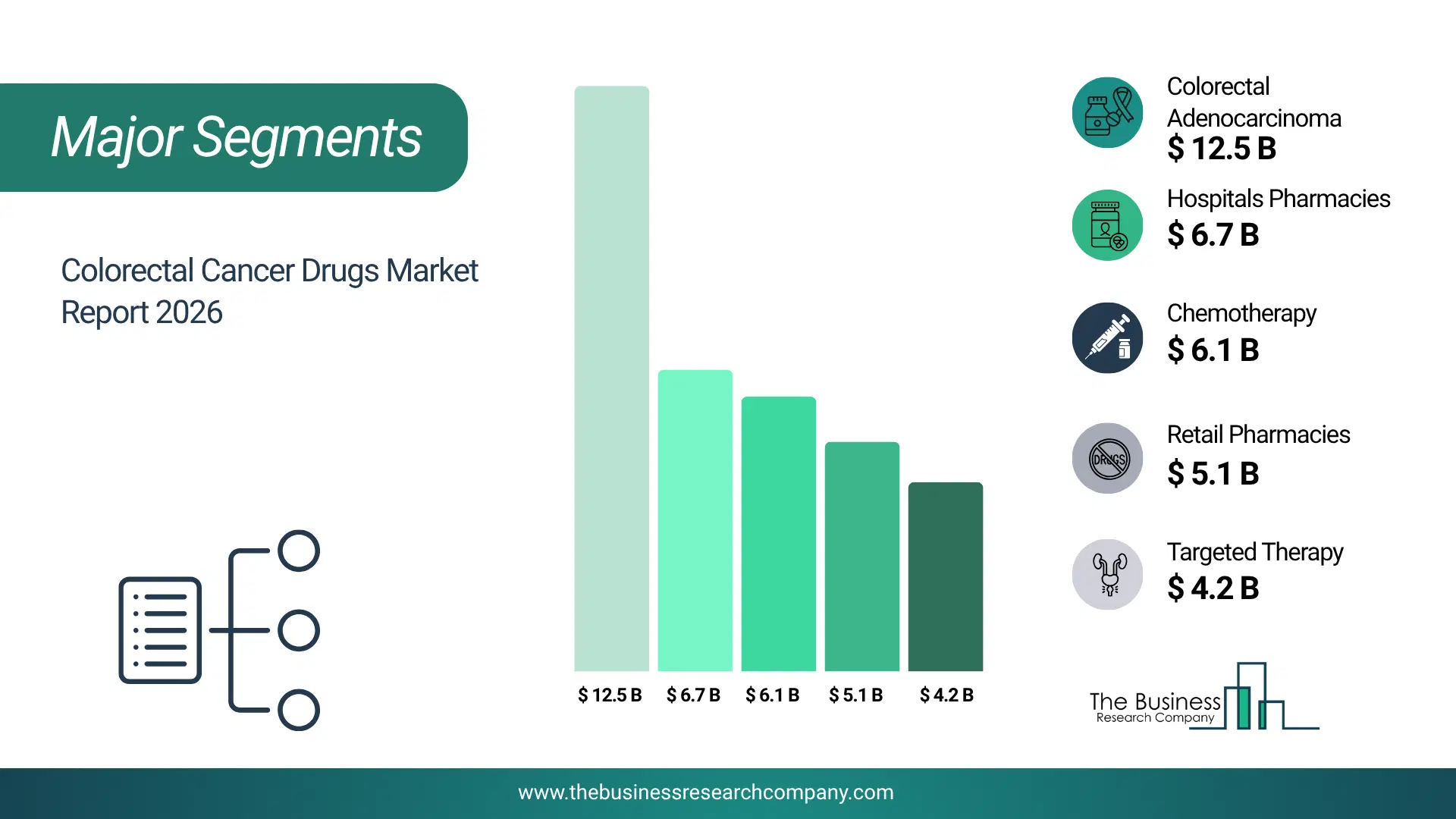
1) By Type: Vascular Endothelial Growth Factor (VEGF) Inhibitors, Epidermal Growth Factor Receptor (EGFR) Inhibitors, Programmed Cell Death Protein 1 Or PD1 Ligand 1 (PD1 Or PDL1) Inhibitors, BRAF Or MEK Inhibitors, Tyrosine Kinase (TKI) Inhibitors, Immunomodulators 2) By Class: Immunotherapy, Chemotherapy, Other Classes 3) By Distribution Channels: Hospitals Pharmacies, Retail Pharmacies, Other Distribution Channels Subsegments: 1) By Vascular Endothelial Growth Factor (VEGF) Inhibitors: Bevacizumab, Ramucirumab, Other VEGF Inhibitors 2) By Epidermal Growth Factor Receptor (EGFR) Inhibitors: Cetuximab, Panitumumab, Other EGFR Inhibitors 3) By Programmed Cell Death Protein 1 Or PD1 Ligand 1 (PD1 Or PDL1) Inhibitors: Pembrolizumab, Nivolumab, Other PD1 Or PDL1 Inhibitors 4) By BRAF Or MEK Inhibitors: Vemurafenib, Encorafenib, Trametinib, Other BRAF Or MEK Inhibitors 5) By Tyrosine Kinase (TKI) Inhibitors: Regorafenib, Sorafenib, Other TKI Inhibitors 6) By Immunomodulators: Checkpoint Inhibitors, Other Immunomodulating Agents The top segments in the colorectal cancer drugs market will be: • Colorectal Adenocarcinoma will reach $12543.72 Million by 2025. • Hospitals Pharmacies will reach $6789.69 Million by 2025. • Chemotherapy will reach $6110.77 Million by 2025. • Retail Pharmacies will reach $5152.02 Million by 2025. • Targeted Therapy will reach $4258.22 Million by 2025.What Is The Driver Of The Colorectal Cancer Drugs Market?
The increasing demand for personalized medicines is expected tom propel the growth of the colorectal cancer drugs market going forward. Personalized medicine, also known as precision medicine, is an approach to medical treatment and healthcare that takes into account individual variations in patients' genes, environments, and lifestyles. Personalized medicine is transforming the approach to CRC treatment, offering more individualized and effective care for patients. It is likely to continue driving the growth of the CRC drug market as research and drug development efforts become more tailored to specific genetic and molecular profiles. For instance, in February 2024, according to the Personalized Medicine Coalition, a US-based non-profit organization, in 2023, the FDA approved 16 new personalized therapies for patients with rare diseases, a significant increase from the six approved in 2022. Therefore, the increasing demand for personalized medicine is driving the growth of the colorectal cancer drugs industry.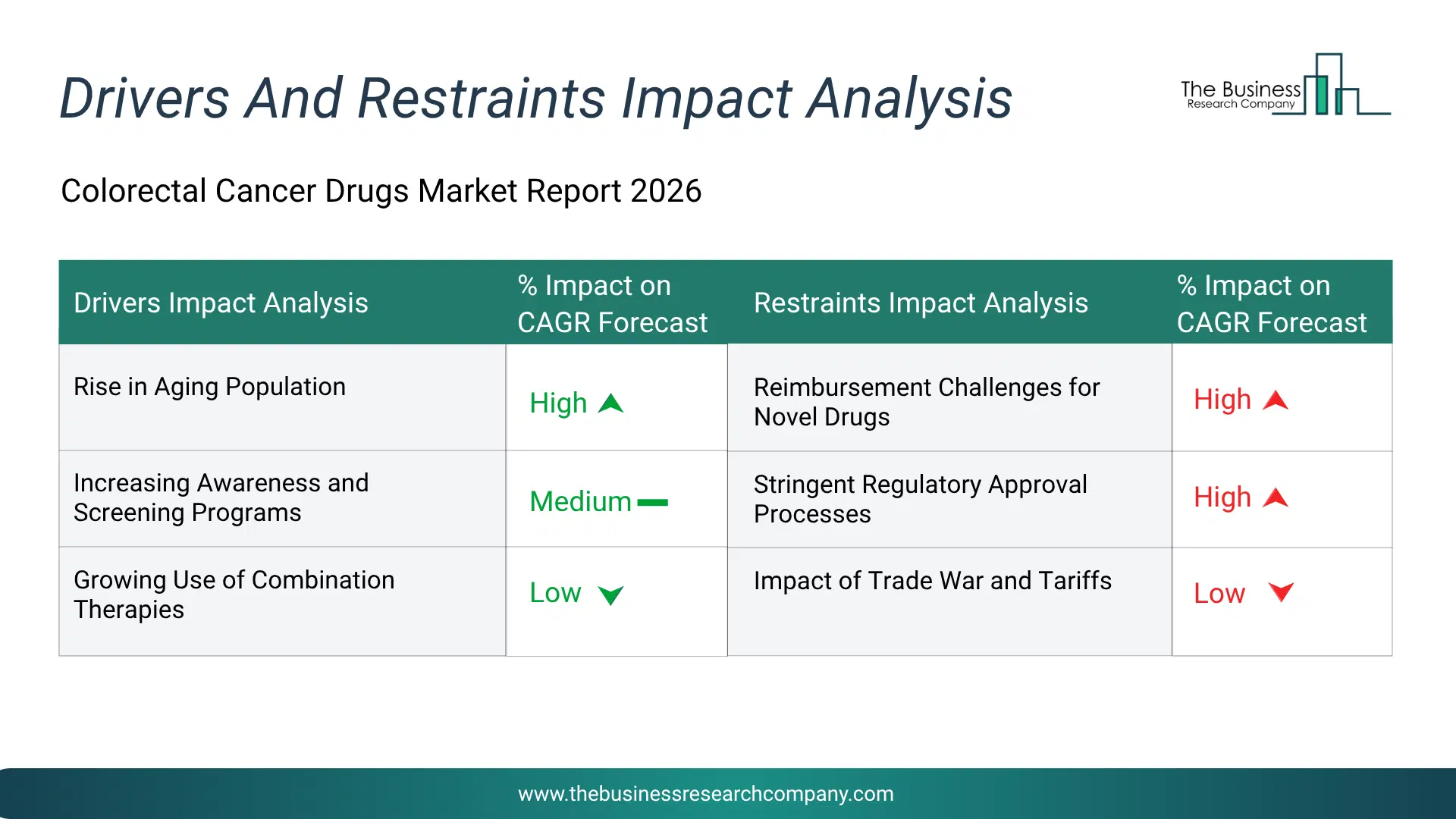
Infographic Chart Showing Key Market Drivers Analysis And Restraints For Colorectal Cancer Drugs Market
The chart presents an impact analysis of key drivers and restraints, quantifying their relative influence on the market's growth rate and helping assess the balance between growth enablers and limiting factors. This chart offers a high-level perspective; the full report contains more detailed insights.
How Will The Drivers Impact Growth In The Global Colorectal Cancer Drugs Market?
• Rise in Aging Population (High) – The rise in aging population will become a key driver of growth in the colorectal cancer drugs market by 2030. Older individuals face a higher risk of developing colorectal cancer due to factors such as age-related genetic mutations, long-term lifestyle influences and a decline in immune function. As the global population aged 60 and above continues to expand, the incidence of colorectal cancer is projected to rise accordingly, fueling increased demand for effective treatment options. This demographic trend also highlights the need for treatment approaches specifically designed for elderly patients, who often have comorbidities and greater sensitivity to drug toxicity. In response, healthcare systems are placing greater emphasis on geriatric oncology, enhanced screening efforts and preventive measures to address the growing cancer burden among older adults. As a result, the rise in aging population is anticipated to contributing to a 2.0% annual growth in the market. • Increasing Awareness and Screening Programs (Medium) – The increasing awareness and screening programs will emerge as a major factor driving the expansion of the market by 2030. Early detection through organized screening initiatives greatly enhances treatment outcomes and boosts demand for effective therapies. Colorectal cancer drugs tend to be more effective when administered during the early stages of the disease, underscoring the importance of timely diagnosis. In addition, government-backed programs and public health campaigns play a crucial role in educating communities about risk factors, symptoms and the value of regular screening, encouraging individuals to seek early medical intervention. As these efforts increase screening coverage—especially in regions that previously had limited access to cancer diagnostics—the demand for colorectal cancer treatments is projected to rise, contributing to overall market expansion. Consequently, the Increasing Awareness And Screening Programs is projected to contributing to a 1.0% annual growth in the market. • Growing Use of Combination Therapies (Low) – The growing use of combination therapies will serve as a key growth catalyst for the market by 2030These treatment approaches, which involve the use of two or more therapeutic agents, are gaining traction due to their ability to enhance efficacy, delay drug resistance and improve survival outcomes—particularly in patients with advanced-stage disease. In colorectal cancer, combining chemotherapy, targeted therapies and immunotherapies offers a more robust and comprehensive strategy, especially for those who do not respond well to monotherapy. This shift is further supported by clinical evidence showing improved progression-free survival among patients receiving combination regimens. Additionally, pharmaceutical companies are actively expanding their clinical pipelines to develop and test new drug combinations, often tailored to specific genetic subtypes of colorectal cancer. As oncologists and healthcare systems continue to emphasize multidrug strategies to optimize patient outcomes, the growing reliance on combination therapies is poised to be a key driver of demand in the colorectal cancer drugs market throughout the forecast period Therefore, this growing use of combination therapies is projected to supporting to a 0.7% annual growth in the market. • Increasing Healthcare Expenditure (Low) – The increasing healthcare expenditure will become a significant driver contributing to the growth of the market by 2030.Increased spending allows governments and healthcare systems to invest more heavily in cancer care, including the procurement of advanced drug therapies, improved diagnostic tools and comprehensive patient support services. Enhanced funding also contributes to better hospital infrastructure and expanded treatment capacity, enabling more patients to access timely and effective care. Furthermore, higher healthcare budgets support the rollout of national screening programs and early detection initiatives, which lead to an increase in diagnosed cases entering the treatment pipeline. With a growing focus on precision medicine, increased expenditure also facilitates the adoption of cutting-edge targeted therapies and immunotherapies, many of which are costlier than traditional treatments. As countries continue to prioritize healthcare investment to address the rising burden of chronic illnesses like cancer, this upward trend in healthcare spending is poised to be a key driver of demand in the colorectal cancer drugs market throughout the forecast period. Consequently, the Increasing Healthcare Expenditure is projected to contributing to a 0.5% annual growth in the market.How Will The Restraints Impact Growth In The Global Colorectal Cancer Drugs Market?
• Reimbursement Challenges for Novel Drugs (High) – Reimbursement Challenges for Novel Drugs will restrict the growth of the Colorectal Cancer Drugs market during the forecast period. New colorectal cancer therapies face significant reimbursement hurdles, with payers requiring extensive cost-effectiveness evidence and outcomes data before providing coverage. Limited reimbursement for expensive targeted therapies and immunotherapies restricts patient access, particularly in developing regions. This financial barrier limits the commercial potential of novel colorectal cancer treatments and impacts market growth. • Stringent Regulatory Approval Processes (Medium) – Stringent Regulatory Approval Processes will restrict the growth of the Colorectal Cancer Drugs market during the forecast period. Colorectal cancer therapeutics require rigorous regulatory approval through extensive clinical trials and safety evaluations. The lengthy and costly approval process, often taking 5-10 years from discovery to market, delays patient access to innovative therapies. Stringent regulatory standards for demonstrating improved survival outcomes and manageable side effects pose significant barriers for drug manufacturers, especially smaller biotech firms. • Impact of Trade War and Tariffs (Low) – Impact of Trade War and Tariffs will restrict the growth of the Colorectal Cancer Drugs market during the forecast period. Trade disputes affect the global pharmaceutical supply chain, impacting the cost and availability of active pharmaceutical ingredients and drug manufacturing equipment. Tariffs on imported medicines and raw materials increase production costs, which are often passed on to patients. Trade barriers may also restrict market access for pharmaceutical companies operating in multiple countries.Key Players In The Global Colorectal Cancer Drugs Market
Major companies operating in the colorectal cancer drugs market are Pfizer Inc., Merck & Co. Inc., AbbVie Inc., Bayer AG, Novartis AG, Sanofi SA, Bristol-Myers Squibb Company, AstraZeneca plc, Takeda Pharmaceutical Company Limited, F. Hoffmann-La Roche Ltd., Eli Lilly and Company, Amgen Inc., Servier Laboratories, Eisai Co. Ltd., Taiho Pharmaceutical Co. Ltd., Taiho Oncology Inc., Daiichi Sankyo Company Limited, Teva Pharmaceutical Industries Ltd., Johnson & Johnson Services Inc., Spectrum Pharmaceuticals Inc., Exelixis Inc., Seattle Genetics Inc., Incyte Corporation, Clovis Oncology Inc., Karyopharm Therapeutics Inc.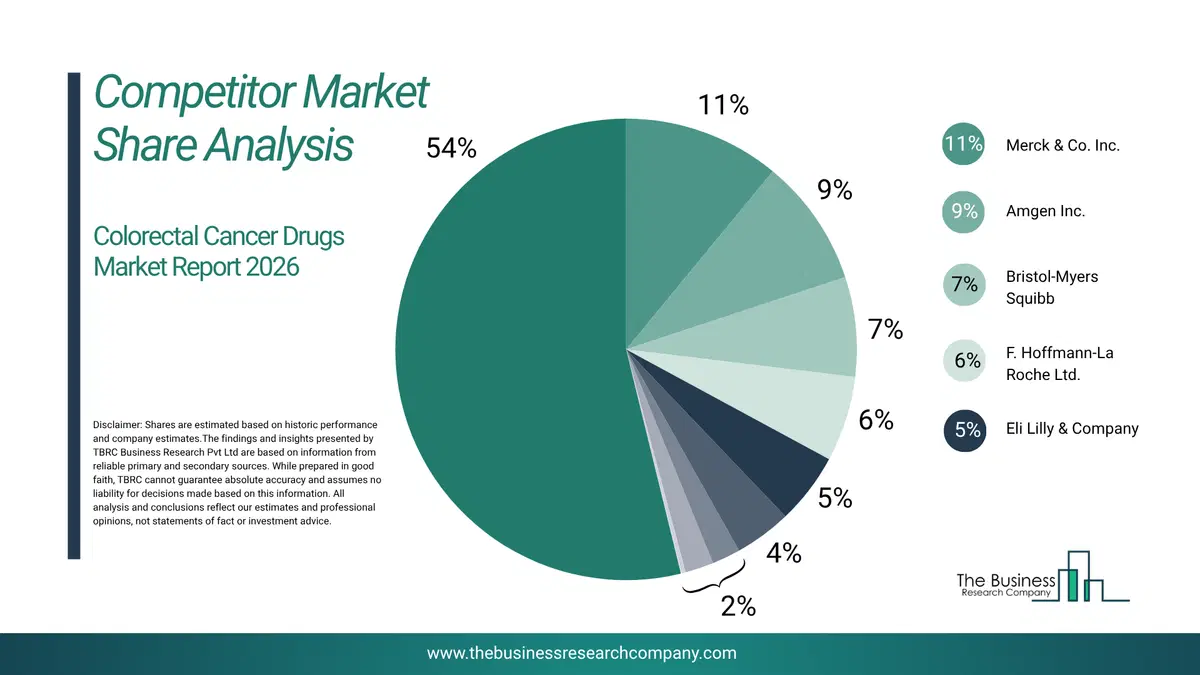
This chart is for illustrative purposes; the full report includes a detailed competitor analysis and comprehensive overview of the top 10 companies in the market.
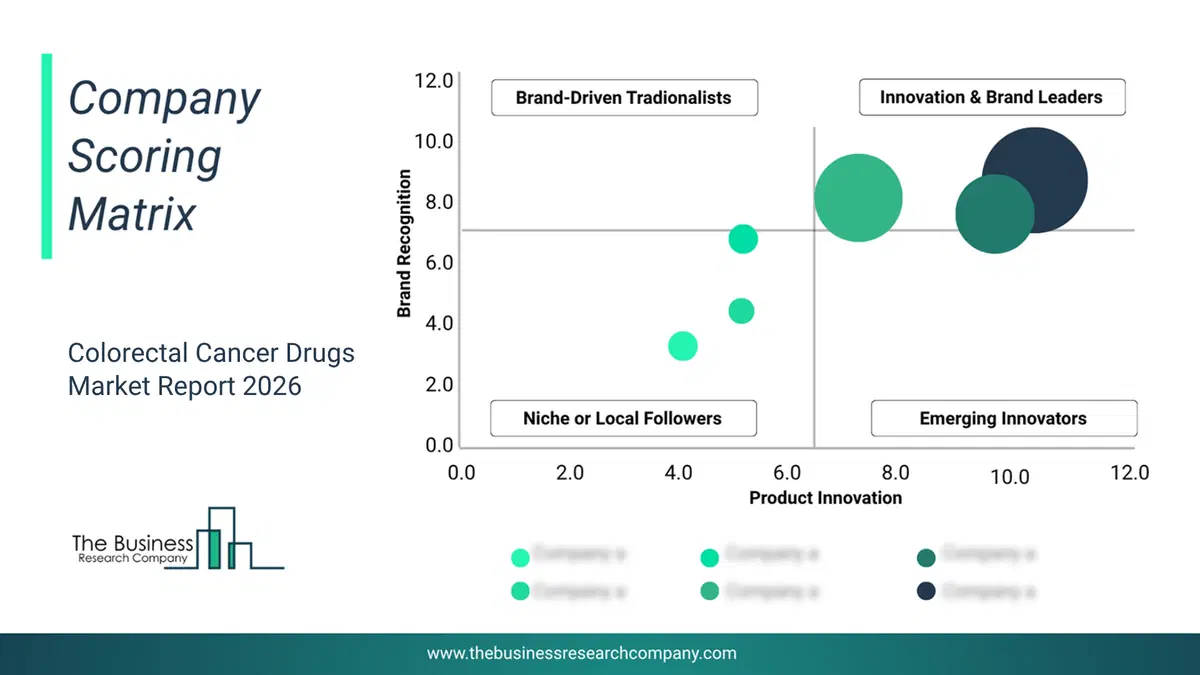
This chart maps companies by product innovation and brand strength, with bubble size indicating relative revenue, helping identify market leaders, challengers, and niche players. This is an illustrative chart; the full report provides a complete and accurate competitive analysis.
Global Colorectal Cancer Drugs Market Trends and Insights
Major companies operating in the colorectal cancer drugs market are receiving FDA approvals for new drugs such as LONSURF (trifluridine/tipiracil) to increase their profitability in the market. LONSURF (trifluridine/tipiracil) is an oral medication that is only available by prescription and is used to treat specific cancers, such as colon, rectal, and stomach cancer that has spread to other regions of the body. For instance, in August 2023, Taiho Pharmaceutical Co. Ltd., a Japan-based pharmaceutical company announced that Food and Drug Administration has approved LONSURF (trifluridine/tipiracil) combination with bevacizumab for the treatment of adult patients with metastatic colorectal cancer (mCRC). In comparison to LONSURF alone, the combination of LONSURF with bevacizumab significantly increased both overall survival (OS) and progression-free survival (PFS). With a hazard ratio of 0.61 (95% CI: 0.49, 0.77, 1-sided p0.001), the median OS was 10.8 months in the LONSURF + bevacizumab arm and 7.5 months in the LONSURF arm.What Are Latest Mergers And Acquisitions In The Colorectal Cancer Drugs Market?
In October 2023, The Bristol-Myers Squibb Company, a US-based pharmaceutical company acquired Mirati Therapeutics Inc for a deal amount of $5.8 Billion. The acquisition was made to add KRAZATI, a significant lung cancer drug, to Bristol Myers Squibb's commercial portfolio in order to improve and diversify the company's oncology portfolio. With the purchase, Mirati's therapies will be able to help more people, quicker, and will be able to fulfil the company's mission of uncovering the science that lies behind the promise of a life free from cancer. Mirati Therapeutics Inc is a US-based biotech company.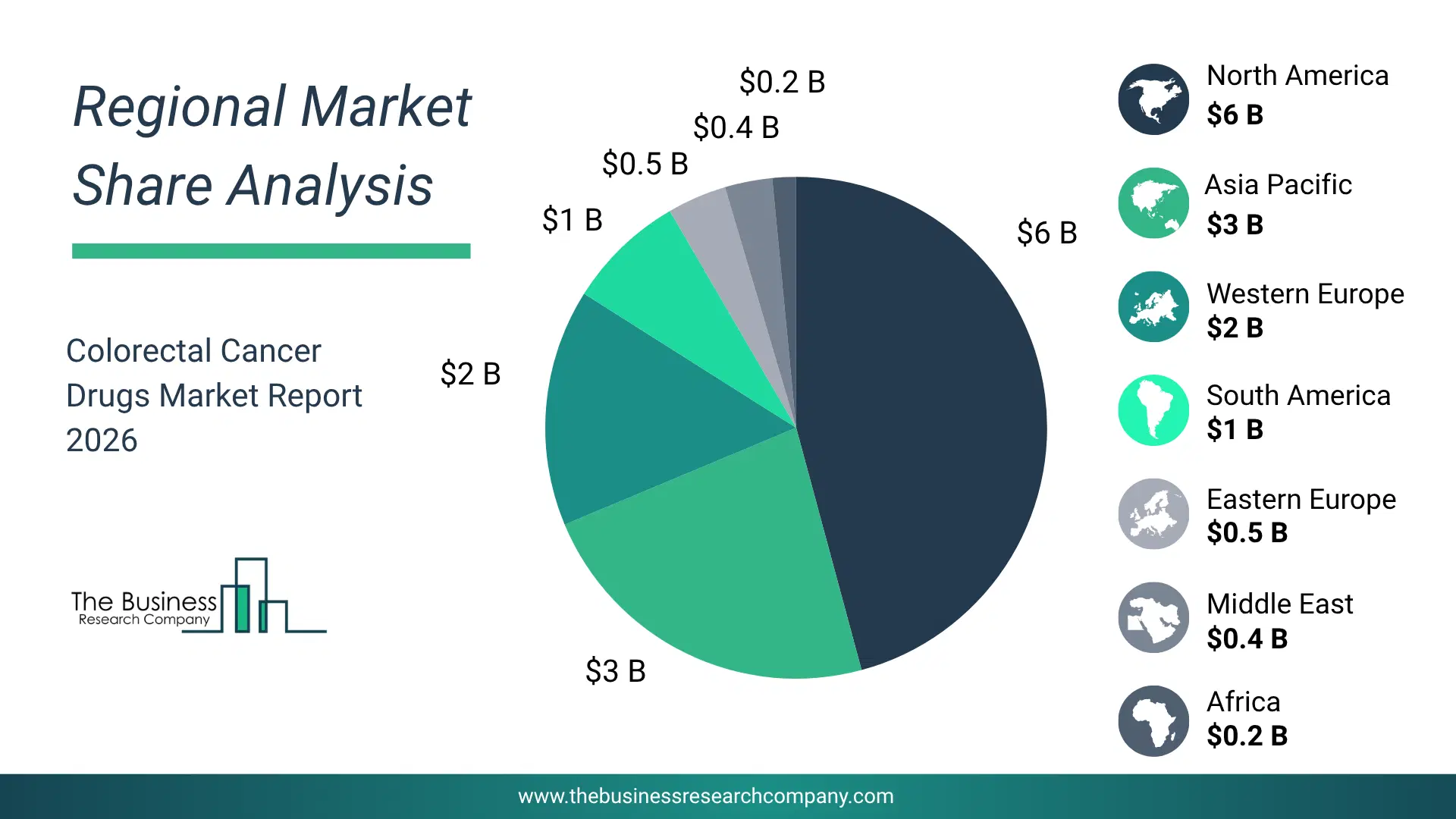
Regional Insights
North America was the largest region in the colorectal cancer drugs market in 2025. The Middle East is expected to be the fastest-growing region in the global colorectal cancer drugs market share during the forecast period. The regions covered in this market report are Asia-Pacific, South East Asia, Western Europe, Eastern Europe, North America, South America, Middle East, Africa. The countries covered in this market report are Australia, Brazil, China, France, Germany, India, Indonesia, Japan, Taiwan, Russia, South Korea, UK, USA, Canada, Italy, Spain.What Defines the Colorectal Cancer Drugs Market?
The colorectal cancer drugs market consists of sales of avastin, bevacizumab, and camptosar. Values in the colorectal cancer drugs market are factory gate values, that is the value of goods sold by the manufacturers or creators of the goods, whether to other entities (including downstream manufacturers, wholesalers, distributors, and retailers) or directly to end customers. The value of goods in this market includes related services sold by the creators of the goods.How is Market Value Defined and Measured?
The market value is defined as the revenues that enterprises gain from the sale of goods and/or services within the specified market and geography through sales, grants, or donations in terms of the currency (in USD unless otherwise specified). The revenues for a specified geography are consumption values that are revenues generated by organizations in the specified geography within the market, irrespective of where they are produced. It does not include revenues from resales along the supply chain, either further along the supply chain or as part of other products.
This chart presents market attractiveness based on a quantitative evaluation of growth, competition, strategic alignment, and risk, offering a clear view of opportunity areas for decision-making. This chart is for illustrative purposes; the full report contains the complete analysis.

This chart highlights the Total Addressable Market (TAM) by estimating the maximum revenue opportunity using an assumption-driven approach, supporting strategic planning and opportunity sizing across markets. The chart is illustrative; the full report provides a more comprehensive analysis.
What Key Data and Analysis Are Included in the Colorectal Cancer Drugs Market Report 2026?
The colorectal cancer drugs market research report is one of a series of new reports from The Business Research Company that provides market statistics, including industry global market size, regional shares, competitors with the market share, detailed market segments, market trends and opportunities, and any further data you may need to thrive in the colorectal cancer drugs industry. The market research report delivers a complete perspective of everything you need, with an in-depth analysis of the current and future state of the industry.Colorectal Cancer Drugs Market Report Forecast Analysis
| Report Attribute | Details |
|---|---|
| Market Size Value In 2026 | $22.78 billion |
| Revenue Forecast In 2030 | $28.57 billion |
| Growth Rate | CAGR of 4.9% from 2026 to 2030 |
| Base Year For Estimation | 2025 |
| Actual Estimates/Historical Data | 2020-2025 |
| Forecast Period | 2026 - 2030 |
| Market Representation | Revenue in USD Billion and CAGR from 2026 to 2030 |
| Segments Covered | Type, Class, Distribution Channels |
| Regional Scope | Asia-Pacific, Western Europe, Eastern Europe, North America, South America, Middle East, Africa |
| Country Scope | The countries covered in the report are Australia, Brazil, China, France, Germany, India, Indonesia, Japan, Taiwan, Russia, South Korea, UK, USA, Canada, Italy, Spain. |
| Key Companies Profiled | Pfizer Inc., Merck & Co. Inc., AbbVie Inc., Bayer AG, Novartis AG, Sanofi SA, Bristol-Myers Squibb Company, AstraZeneca plc, Takeda Pharmaceutical Company Limited, F. Hoffmann-La Roche Ltd., Eli Lilly and Company, Amgen Inc., Servier Laboratories, Eisai Co. Ltd., Taiho Pharmaceutical Co. Ltd., Taiho Oncology Inc., Daiichi Sankyo Company Limited, Teva Pharmaceutical Industries Ltd., Johnson & Johnson Services Inc., Spectrum Pharmaceuticals Inc., Exelixis Inc., Seattle Genetics Inc., Incyte Corporation, Clovis Oncology Inc., Karyopharm Therapeutics Inc. |
| Customization Scope | Request for Customization |
| Pricing And Purchase Options | Explore Purchase Options |