

E-Learning Market Report 2026
Global Outlook – By Hardware (Interactive Displays, Interactive Projectors), By Technology (Online E-Learning, Learning Management System, Mobile E-Learning, Rapid E-Learning, Virtual Classroom, Other Technologies), By Deployment Type (Cloud, On-Premises), By Application (Academic, Corporate, Government) – Market Size, Trends, Strategies, and Forecast to 2030
E-Learning Market Overview
• E-Learning market size has reached to $352.59 billion in 2025 • Expected to grow to $701.07 billion in 2030 at a compound annual growth rate (CAGR) of 14.6% • Growth Driver: Smartphone Revolution Is A Catalyst For E-Learning Market Growth • Market Trend: Innovations In AI-Based E-Learning Platforms Transforming Digital Education • North America was the largest region in 2025 and Asia-Pacific is the fastest growing region.Market Gains By 2030 – Top Opportunities By Segment
Market Gain identifies the most promising market opportunities by highlighting the segments or products expected to generate the highest incremental revenue growth over the next five years.
What Is Covered Under E-Learning Market?
E-learning is a type of learning that takes place digitally via an electronic medium, usually the internet. It is a convenient and adaptable approach for students to learn wherever they are because it can be accessible by the majority of electronic devices, including a computer, laptop, tablet, or smartphone. The major pieces of hardware included in e-learning are interactive displays and interactive projectors. An interactive display is a mounted gadget that enables users to create eye-catching visual presentations and manage on-screen information using touchscreen inputs. The major technologies involved in e-learning are online e-learning, learning management systems, mobile e-learning, rapid e-learning, virtual classrooms, and others. It can be deployed in the cloud or on-premises. E-learning is used in several applications, such as academic, corporate, and government.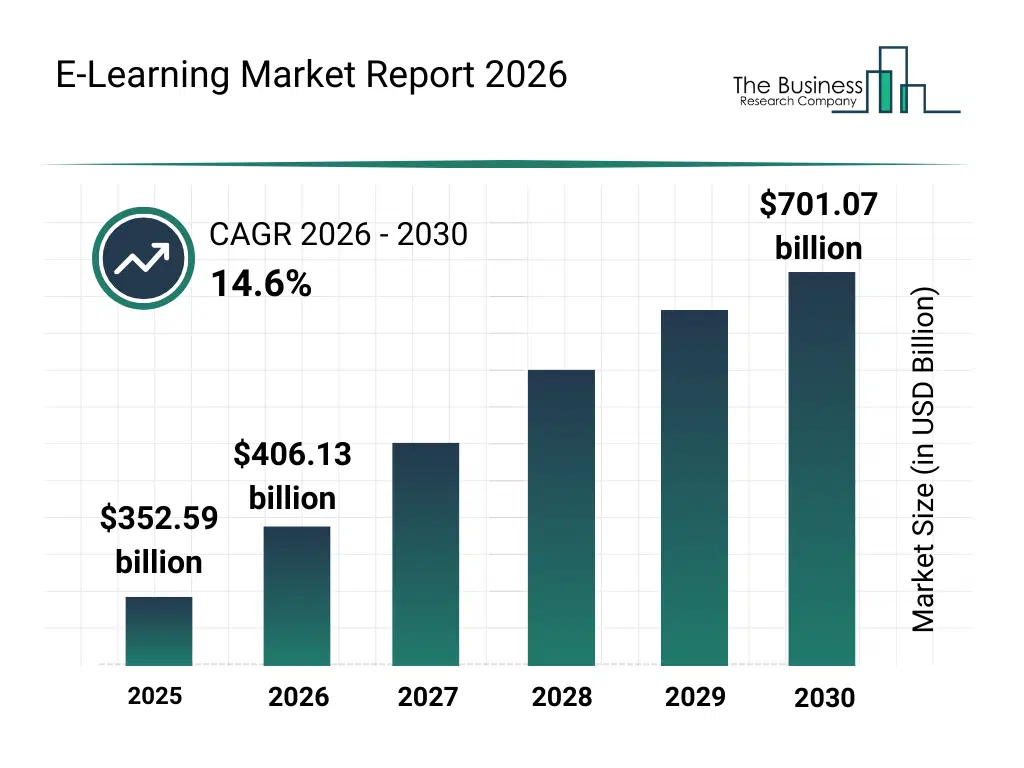
What Is The E-Learning Market Size and Share 2026?
The e-learning market size has grown rapidly in recent years. It will grow from $352.59 billion in 2025 to $406.13 billion in 2026 at a compound annual growth rate (CAGR) of 15.2%. The growth in the historic period can be attributed to expansion of internet accessibility, rising use of digital devices for education, increasing adoption of remote learning solutions, growth in online course offerings, acceptance of digital learning methodologies.What Is The E-Learning Market Growth Forecast?
The e-learning market size is expected to see rapid growth in the next few years. It will grow to $701.07 billion in 2030 at a compound annual growth rate (CAGR) of 14.6%. The growth in the forecast period can be attributed to increasing integration of ai-driven learning platforms, rising investments in immersive learning technologies, expansion of corporate e-learning adoption, growing demand for lifelong learning solutions, increasing use of data-driven learning analytics. Major trends in the forecast period include increasing adoption of mobile and cloud-based learning platforms, rising demand for personalized digital learning content, growing use of virtual classrooms and collaboration tools, expansion of self-paced online learning models, enhanced focus on learner engagement technologies.
Global E-Learning Market Segmentation
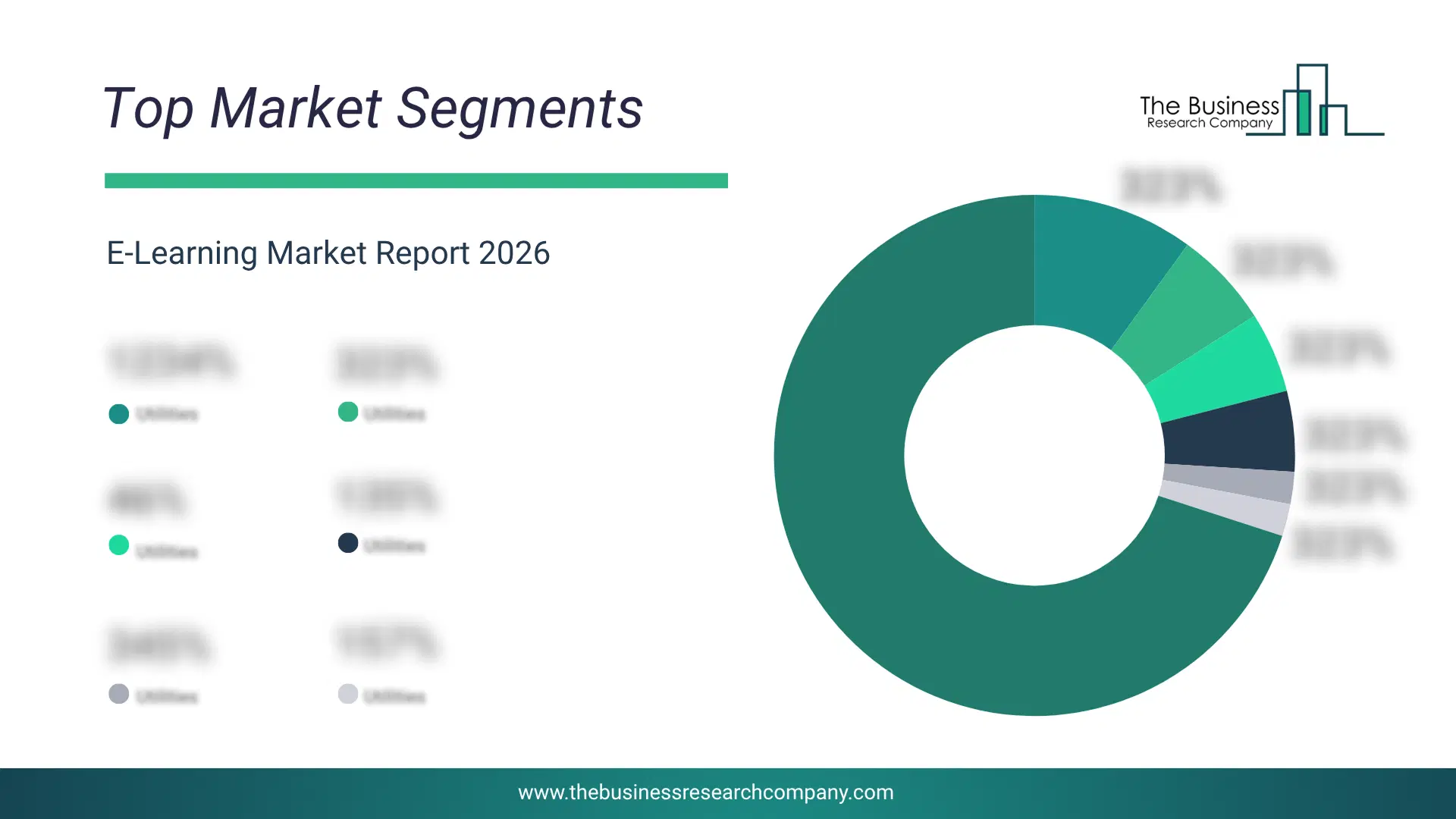
1) By Hardware: Interactive Displays, Interactive Projectors 2) By Technology: Online E-Learning, Learning Management System, Mobile E-Learning, Rapid E-Learning, Virtual Classroom, Other Technologies 3) By Deployment Type: Cloud, On-Premises 4) By Application: Academic, Corporate, Government Subsegments: 1) By Interactive Displays: Flat Panel Displays, Touchscreen Displays, Smart Boards, Digital Whiteboards 2) By Interactive Projectors: Short-Throw Projectors, Ultra-Short-Throw Projectors, Portable Projectors, 3D Projectors The top segments in the email marketing software market will be: • Cloud-Based will reach $2.03 Billion by 2030. • On-Premise will reach $1.42 Billion by 2030. The top segments in the e-learning market will be: • Interactive Displays will reach $523.91 Billion by 2030. • Interactive Projectors will reach $278.85 Billion by 2030.What Is The Driver Of The E-Learning Market?
The increasing adoption of smartphones is expected to propel the growth of the e-learning market going forward. A smartphone is a multifunctional electronic device that combines the capabilities of a mobile phone with those of a personal computer. Smartphones play a pivotal role in revolutionizing e-learning by providing accessibility, interactivity, personalization, and convenience, communication, personalized learning, ultimately contributing to a more engaging and effective educational experience. For instance, in February 2023, according to a report published by Uswitch Limited, a UK-based online and telephone comparison services provider, there were 71.8 million active mobile connections in 2022, and by 2025, the UK population is projected to reach 68.3 million, with an estimated 95% expected to own a smartphone. Therefore, the increasing adoption of smartphones is driving the growth of the e-learning industry.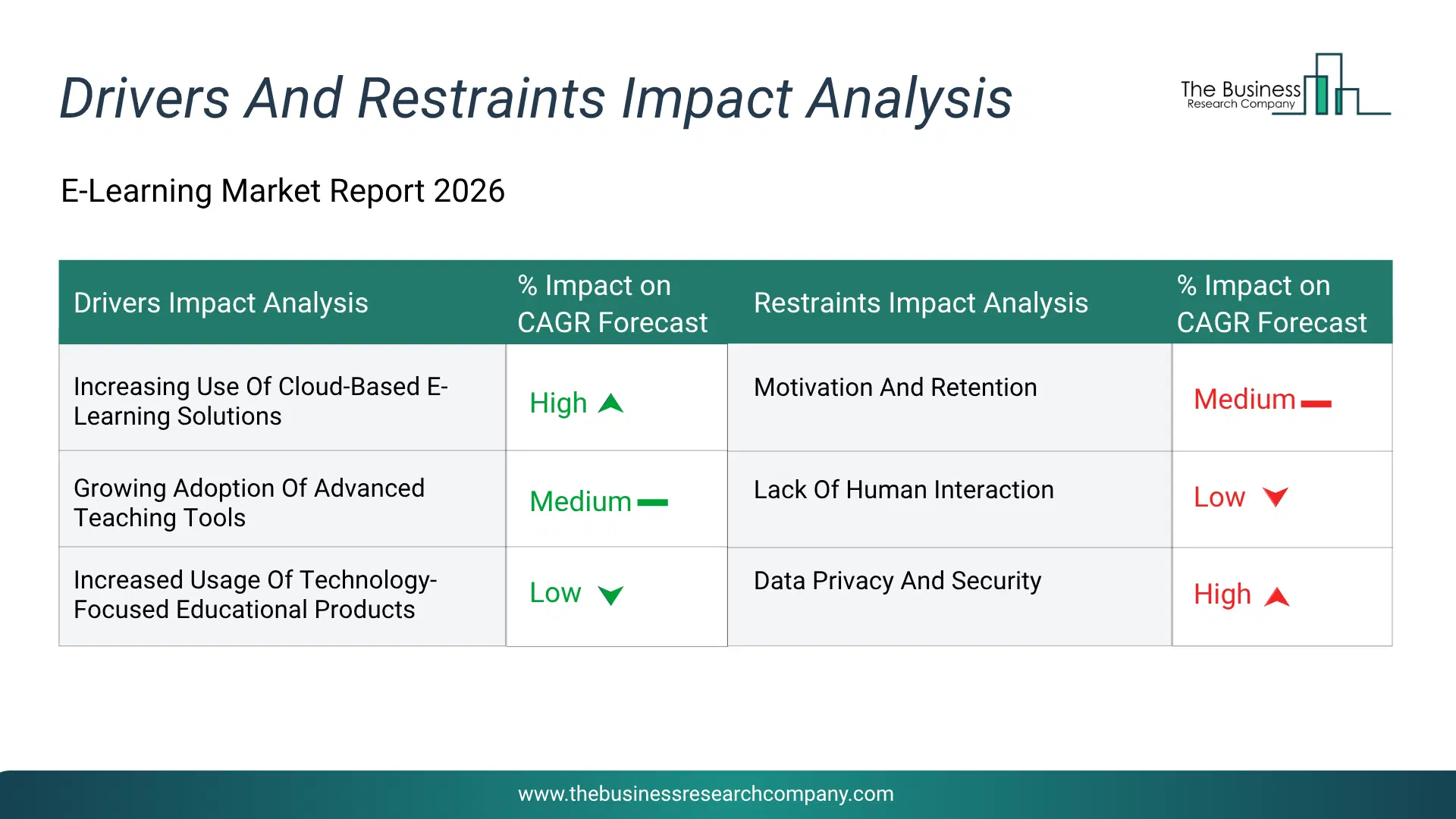
Infographic Chart Showing Key Market Drivers Analysis And Restraints For E-Learning Market
The chart presents an impact analysis of key drivers and restraints, quantifying their relative influence on the market's growth rate and helping assess the balance between growth enablers and limiting factors. This chart offers a high-level perspective; the full report contains more detailed insights.
How Will The Drivers Impact Growth In The Global E-Learning Market?
• Increasing Use Of Cloud-Based E-Learning Solutions (High) – During the forecast period, the increasing use of cloud-based e-learning solutions is expected to become a key growth driver for the e-learning market by 2030. The increasing use of cloud-based e-learning solutions is fueling the market by enabling scalable, flexible, and cost-efficient access to digital education. Cloud-based platforms allow institutions and organizations to deliver content globally without heavy infrastructure investments, improving reach and accessibility. These solutions support real-time updates, seamless collaboration, and integration with multiple devices, enhancing the overall learning experience. Advanced data analytics capabilities help track learner performance and enable personalized learning pathways. Educational institutions and enterprises increasingly prefer cloud deployment for its efficiency and reliability. This growing adoption drives continuous platform innovation and service expansion. Consequently, it accelerates market growth by increasing usage across academic, corporate, and individual learning segments. • Growing Adoption Of Advanced Teaching Tools (Medium) – During the forecast period, the growing adoption of advanced teaching tools is expected to emerge as a major factor driving the expansion of the e-learning market by 2030. Technologies such as interactive displays, simulations, gamification, and virtual labs enable immersive and practical learning experiences. These tools help educators deliver complex concepts more effectively through visual and hands-on methods. They also support adaptive learning by catering to diverse learner needs and improving knowledge retention. Educational institutions and training organizations are increasingly investing in such tools to modernize teaching methodologies and improve outcomes. This trend encourages continuous innovation in digital learning solutions. Consequently, it expands the market by driving higher adoption of technology-enabled education across multiple sectors. • Increased Usage Of Technology-Focused Educational Products (Low) – During the forecast period, the increased usage of technology-focused educational products is expected to act as a key growth catalyst for the e-learning market by 2030. The increased usage of technology-focused educational products is fueling the market by aligning learning with rapidly evolving digital skill requirements. Learners are increasingly adopting courses in areas such as coding, artificial intelligence, and data analytics, boosting demand for specialized e-learning solutions. These products offer interactive and application-based learning, improving skill development and employability. Organizations are also leveraging such solutions for workforce upskilling and reskilling initiatives. Continuous technological advancements create a need for updated and relevant learning content. This demand drives content development and platform innovation among providers. Consequently, it supports market expansion by increasing adoption of skill-oriented digital education across global industries.How Will The Restraints Impact Growth In The Global E-Learning Market?
• Motivation And Retention (High) – During the forecast period, the motivation and retention issues act as a significant restraint on the e-learning market by limiting course completion rates and long-term user engagement. Many learners struggle with self-discipline in digital environments, leading to higher dropout rates compared to traditional learning methods. The absence of structured supervision and peer pressure reduces accountability, affecting consistent participation. This challenge is particularly evident in lengthy or complex courses where sustained focus is required. Educational providers face difficulties in ensuring learner commitment despite investing in interactive content. As a result, the perceived effectiveness of e-learning solutions may decline among users and institutions. Consequently, this restricts market growth by reducing repeat usage and overall adoption rates. • Lack Of Human Interaction (Medium) – During the forecast period, the lack of human interaction acts as a restraint by reducing the effectiveness of communication, collaboration, and emotional engagement in the learning process. Unlike traditional classrooms, e-learning environments often limit face-to-face interaction, which can impact understanding and relationship building. Learners may find it difficult to clarify doubts instantly or engage in meaningful discussions with instructors and peers. This can lead to feelings of isolation and decreased satisfaction with the learning experience. Certain subjects that require hands-on guidance or group collaboration are particularly affected. Institutions may hesitate to fully replace conventional methods due to this limitation. Consequently, it slows market expansion by creating barriers to widespread acceptance of fully digital learning models. • Data Privacy And Security (Low) – During the forecast period, the data privacy and security concerns act as a major restraint by creating hesitation among users and organizations in adopting e-learning platforms. These platforms handle sensitive information such as personal data, academic records, and payment details, making them targets for cyber threats. Any breach or misuse of data can lead to loss of trust and reputational damage for service providers. Regulatory requirements and compliance standards further increase operational complexity and costs for companies. Organizations may delay or limit adoption due to concerns over data protection and system vulnerabilities. This challenge is more critical in large-scale deployments involving institutions and enterprises. Consequently, it restricts market growth by slowing adoption and increasing the need for secure infrastructure investments.Key Players In The Global E-Learning Market
Major companies operating in the e-learning market are Adobe Inc.; Aptara Inc.; Articulate Global LLC; D2L Corporation; Oracle Corporation; SAP SE; Blackboard Inc.; Coursera Inc.; FutureLearn; Compunnel Digital Inc.; Docebo Inc.; National Institute of Information Technology Ltd.; British Council; Moodle Pty Ltd.; Canvas LMS; Allen Communication Learning Services Inc.; Cegos SA; GP Strategies Corporation; Teachable Inc.; Udemy Inc.; Instructure Inc.; Pearson plc; Skillsoft Corporation; iSpring Solutions Inc.; eLearning Brothers; Epignosis; Udacity Inc.; Pluralsight LLC; Simplilearn Solutions Pvt Ltd.; Skillshare; Cornerstone OnDemand Inc.; Edmentum Inc.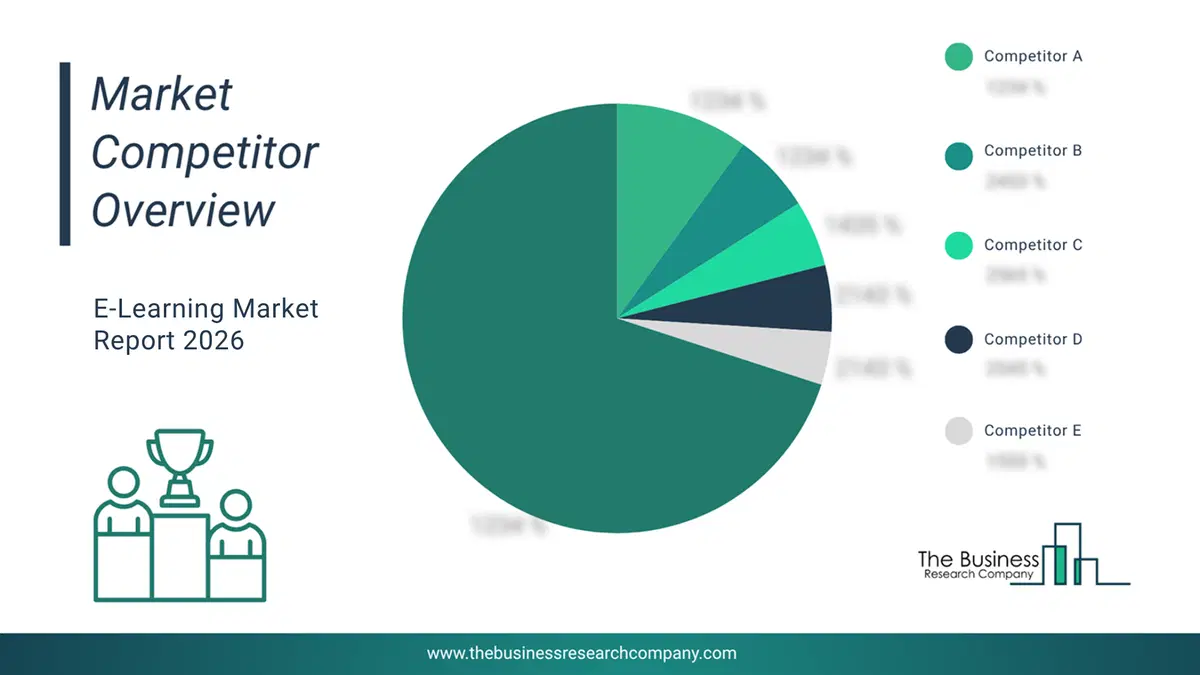
This chart is for illustrative purposes; the full report includes a detailed competitor analysis and comprehensive overview of the top 10 companies in the market.
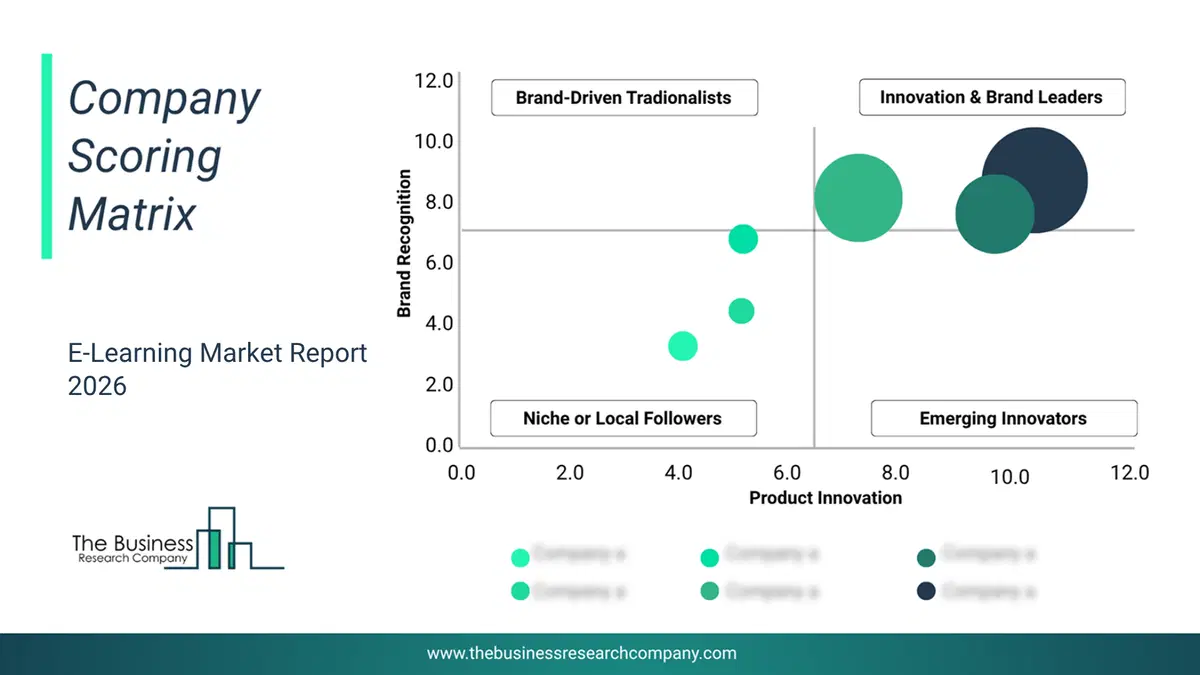
This chart maps companies by product innovation and brand strength, with bubble size indicating relative revenue, helping identify market leaders, challengers, and niche players. This is an illustrative chart; the full report provides a complete and accurate competitive analysis.
Global E-Learning Market Trends and Insights
Major companies operating in the e-learning market are focusing on developing innovative solutions, such as AI-based eLearning platforms, to enhance personalized learning experiences, improve learner engagement, and optimize educational outcomes through data-driven insights and adaptive content delivery. AI-based eLearning platforms are digital education systems that leverage artificial intelligence (AI) technologies to enhance teaching, learning, and administrative processes. For instance, in July 2024, e& Services LLC., a UAE-based technology company, launched GoLearning, an AI-based eLearning platform. It offers over 10,000 courses, including 4,000 free ones, covering business, languages, strategy, technology, and AI, through partnerships with global EdTech leaders like Coursera, edX, and Busuu. The platform features AI-driven personalized learning paths, mobile and desktop accessibility, and competitively priced subscription packages, making high-quality global courses more accessible and affordable. It caters to learners of all ages, including children, and provides certifications from prestigious institutions such as Johns Hopkins, Duke University, and IBM. GoLearning exemplifies a shift toward a comprehensive, one-stop-shop learning model that bridges the gap between traditional and modern digital education solutions.What Are Latest Mergers And Acquisitions In The E-Learning Market?
In May 2024, Accenture Plc, an Ireland-based provider of professional services, acquired Udacity Inc. for an undisclosed amount. With this acquisition, Accenture aims to expand its global skills training footprint and enhance its capabilities in delivering industry-specific technology learning programs, bridging online education with workplace relevance. Udacity Inc. is a US-based provider of e-learning platforms.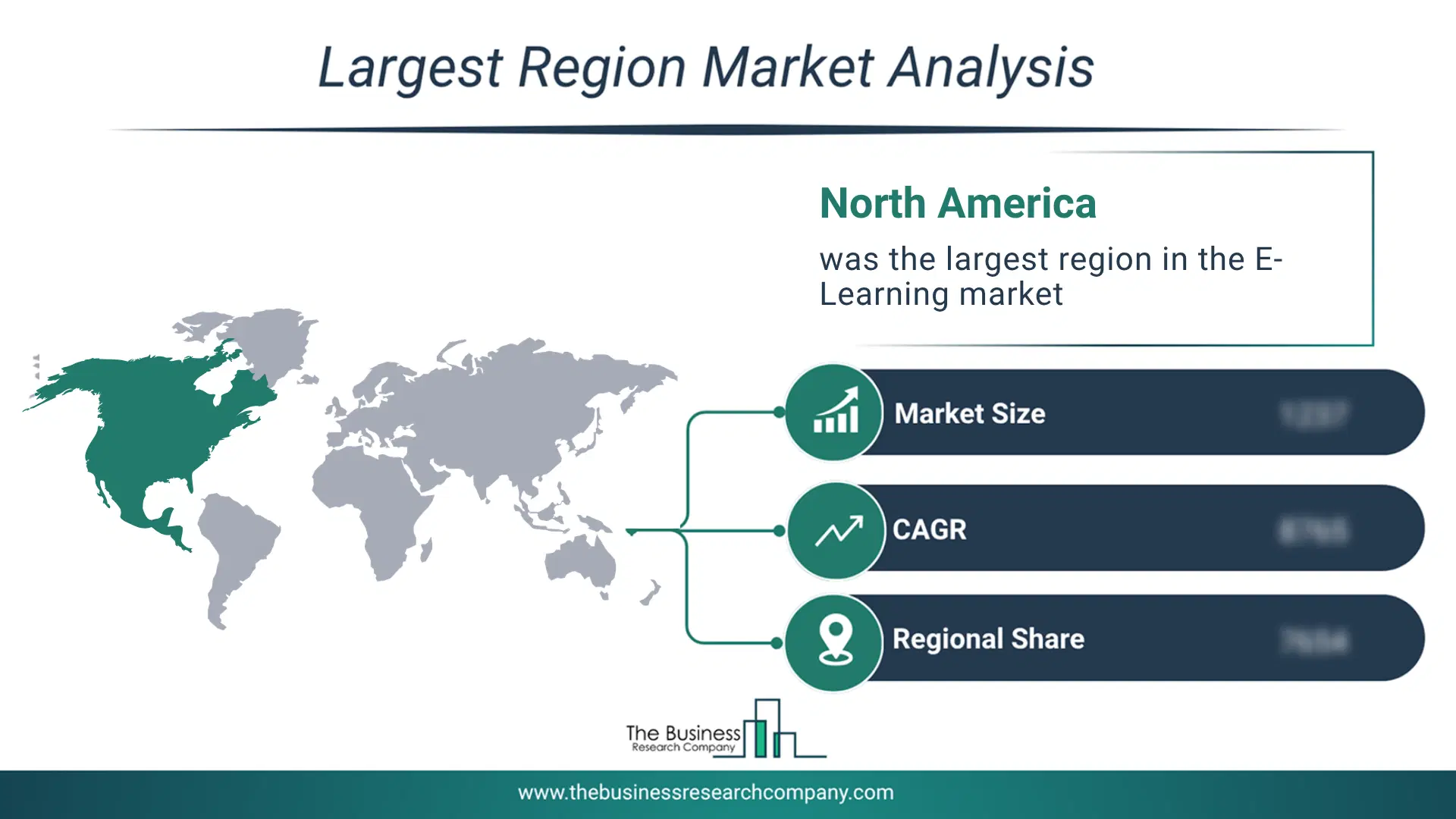
Regional Insights
North America was the largest region in the e-learning market report in 2025. Asia-Pacific is expected to be the fastest-growing region in the e-learning market report during the forecast period. The regions covered in this market report are Asia-Pacific, South East Asia, Western Europe, Eastern Europe, North America, South America, Middle East, Africa. The countries covered in this market report are Australia, Brazil, China, France, Germany, India, Indonesia, Japan, Taiwan, Russia, South Korea, UK, USA, Canada, Italy, SpainWhat Defines the E-Learning Market?
The e-learning market includes revenues earned by entities by providing computer-managed learning, fixed e-learning and synchronous online learning. The market value includes the value of related goods sold by the service provider or included within the service offering. Only goods and services traded between entities or sold to end consumers are included.How is Market Value Defined and Measured?
The market value is defined as the revenues that enterprises gain from the sale of goods and/or services within the specified market and geography through sales, grants, or donations in terms of the currency (in USD unless otherwise specified). The revenues for a specified geography are consumption values that are revenues generated by organizations in the specified geography within the market, irrespective of where they are produced. It does not include revenues from resales along the supply chain, either further along the supply chain or as part of other products.
This chart presents market attractiveness based on a quantitative evaluation of growth, competition, strategic alignment, and risk, offering a clear view of opportunity areas for decision-making. This chart is for illustrative purposes; the full report contains the complete analysis.

This chart highlights the Total Addressable Market (TAM) by estimating the maximum revenue opportunity using an assumption-driven approach, supporting strategic planning and opportunity sizing across markets. The chart is illustrative; the full report provides a more comprehensive analysis.
What Key Data and Analysis Are Included in the E-Learning Market Report 2026?
The e-learning market research report is one of a series of new reports from The Business Research Company that provides market statistics, including industry global market size, regional shares, competitors with the market share, detailed market segments, market trends and opportunities, and any further data you may need to thrive in the e-learning industry. The market research report delivers a complete perspective of everything you need, with an in-depth analysis of the current and future state of the industry.E-Learning Market Report Forecast Analysis
| Report Attribute | Details |
|---|---|
| Market Size Value In 2026 | $406.13 billion |
| Revenue Forecast In 2030 | $701.07 billion |
| Growth Rate | CAGR of 15.2% from 2026 to 2030 |
| Base Year For Estimation | 2025 |
| Actual Estimates/Historical Data | 2020-2025 |
| Forecast Period | 2026 - 2030 |
| Market Representation | Revenue in USD Billion and CAGR from 2026 to 2030 |
| Segments Covered | Hardware, Technology, Deployment Type, Application |
| Regional Scope | Asia-Pacific, Western Europe, Eastern Europe, North America, South America, Middle East, Africa |
| Country Scope | The countries covered in the report are Australia, Brazil, China, France, Germany, India, Indonesia, Japan, Taiwan, Russia, South Korea, UK, USA, Canada, Italy, Spain. |
| Key Companies Profiled | Adobe Inc.; Aptara Inc.; Articulate Global LLC; D2L Corporation; Oracle Corporation; SAP SE; Blackboard Inc.; Coursera Inc.; FutureLearn; Compunnel Digital Inc.; Docebo Inc.; National Institute of Information Technology Ltd.; British Council; Moodle Pty Ltd.; Canvas LMS; Allen Communication Learning Services Inc.; Cegos SA; GP Strategies Corporation; Teachable Inc.; Udemy Inc.; Instructure Inc.; Pearson plc; Skillsoft Corporation; iSpring Solutions Inc.; eLearning Brothers; Epignosis; Udacity Inc.; Pluralsight LLC; Simplilearn Solutions Pvt Ltd.; Skillshare; Cornerstone OnDemand Inc.; Edmentum Inc. |
| Customization Scope | Request for Customization |
| Pricing And Purchase Options | Explore Purchase Options |