

Hormonal Contraceptives Market Report 2026
Global Outlook – By Product (Pills, Injectable Birth Control, Vaginal Rings, Others), By End User (Hospitals, Homecare Settings, Gynecology Centers, Clinics, Ambulatory Surgical Centers), By Hormones (Progestin-Only, Combined Hormones), By Distribution Channel (Drug Stores, Gynecology Or Fertility Clinics, E-Commerce, Other Distribution Channels) – Market Size, Trends, Strategies, and Forecast to 2030
Hormonal Contraceptives Market Overview
• Hormonal Contraceptives market size has reached to $14.4 billion in 2025 • Expected to grow to $15.82 billion in 2030 at a compound annual growth rate (CAGR) of 2.1% • Growth Driver: Elevated Awareness Empowers The Hormonal Contraceptives Market • Market Trend: Innovation With The Launche Of Opill The First Nonprescription Daily Oral Contraceptive in a Landmark Development for Reproductive Health • North America was the largest region in 2025 and Middle East is the fastest growing region.What Is Covered Under Hormonal Contraceptives Market?
Hormonal contraceptives refer to a method of birth control that stops pregnancy using hormones. There are numerous types. Some can be undone, while others are irreversible. Some varieties can also aid in the prevention of STDs. The main types of products in oral contraceptive pills are injectable birth control, emergency contraceptive pills, vaginal rings, and others. Any class of synthetic steroid hormones which inhibit the release of follicle-stimulating hormone (FSH) and luteinizing hormone (LH) from the anterior lobe of the pituitary gland in the female body is known as oral contraceptive pills or birth control pills. The different hormones include progestin-only, and combined hormones and are used by hospitals, homecare settings, gynecology centers, clinics, and ambulatory surgical centers. It is distributed through various channels such as drug stores, gynecology or fertility clinics, e-commerce, and others.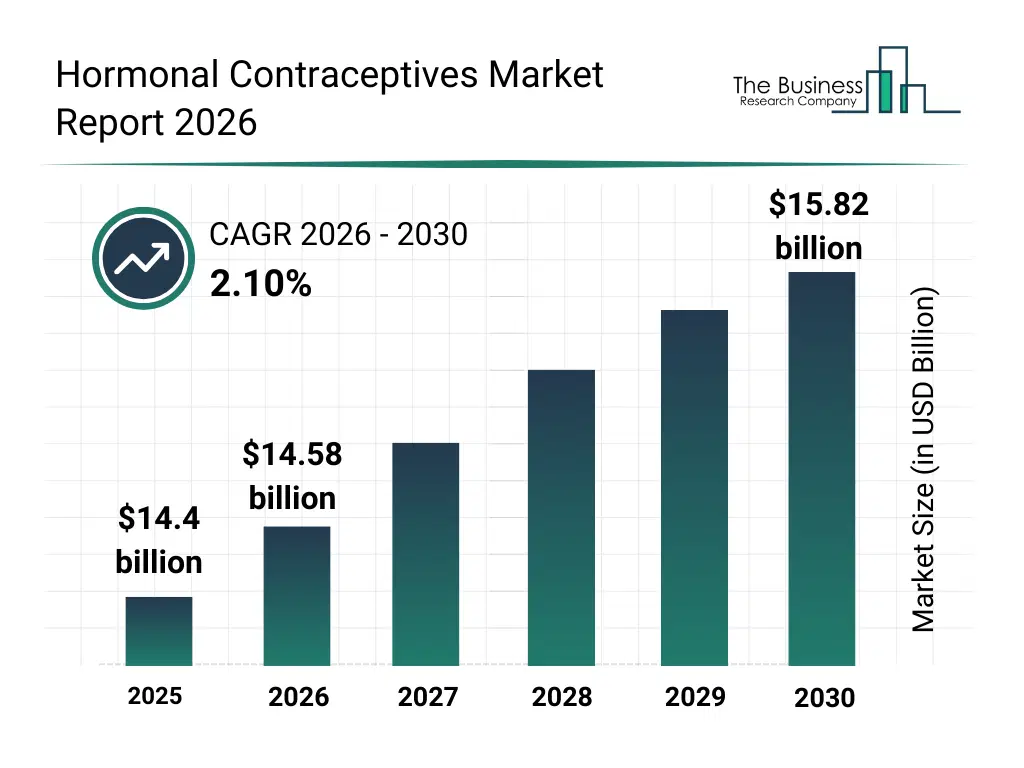
What Is The Hormonal Contraceptives Market Size and Share 2026?
The hormonal contraceptives market size has grown marginally in recent years. It will grow from $14.4 billion in 2025 to $14.58 billion in 2026 at a compound annual growth rate (CAGR) of 1.2%. The growth in the historic period can be attributed to rising awareness of family planning, introduction of combined oral contraceptives, government initiatives for reproductive health, increasing urbanization, growth of gynecology clinics.What Is The Hormonal Contraceptives Market Growth Forecast?
The hormonal contraceptives market size is expected to see steady growth in the next few years. It will grow to $15.82 billion in 2030 at a compound annual growth rate (CAGR) of 2.1%. The growth in the forecast period can be attributed to advancements in personalized hormone therapies, rise of male contraceptive products, expansion of e-commerce for contraceptives, integration of digital health platforms, increasing focus on STD prevention. Major trends in the forecast period include rise of hormone-based personalized contraceptives, increasing awareness of reversible and non-reversible options, growth in telemedicine and online contraceptive services, expansion of male contraceptive solutions, focus on contraceptives with dual protection against stds.
Global Hormonal Contraceptives Market Segmentation
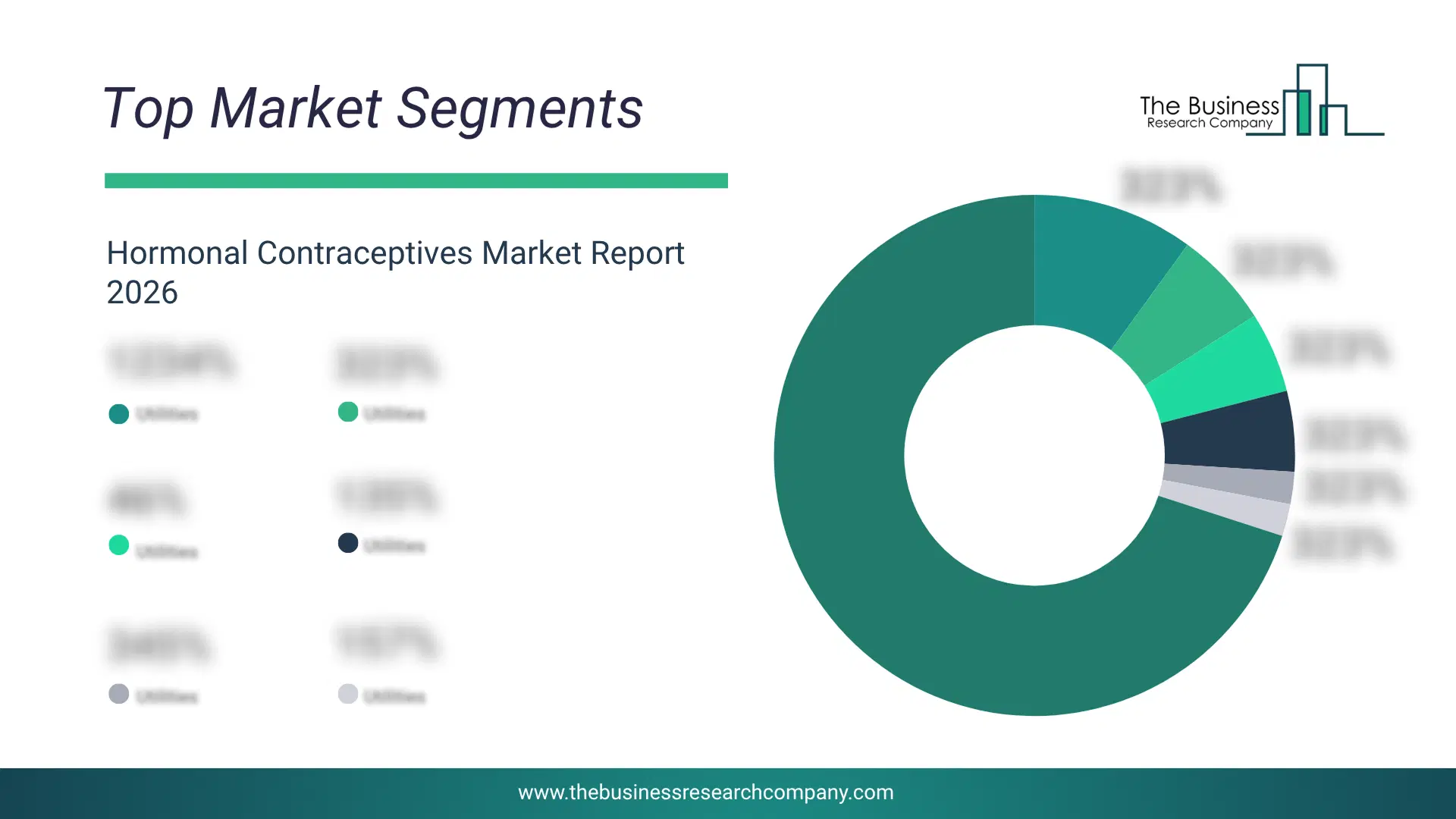
1) By Product: Pills, Injectable Birth Control, Vaginal Rings, Others 2) By End User: Hospitals, Homecare Settings, Gynecology Centers, Clinics, Ambulatory Surgical Centers 3) By Hormones: Progestin-Only, Combined Hormones 4) By Distribution Channel: Drug Stores, Gynecology Or Fertility Clinics, E-Commerce, Other Distribution Channels Subsegments: 1) By Pills: Combined Oral Contraceptives (COCs), Progestin-Only Pills (POPs), Emergency Contraceptive Pills 2) By Injectable Birth Control: Depot Medroxyprogesterone Acetate (DMPA), Combination Injectable Contraceptives, Subdermal Implants 3) By Vaginal Rings: NuvaRing, Annovera, Other Hormonal Vaginal Rings 4) By Others: Transdermal Patches, Intrauterine Devices (IUDs) with Hormones, Hormonal Implants, Contraceptive Tablets For MenWhat Are The Drivers Of The Hormonal Contraceptives Market?
The increased awareness about hormonal contraceptives has contributed to a more informed and empowered population, allowing individuals to make choices that align with their reproductive goals and lifestyles. As individuals become more informed about contraceptive options, they are empowered to make better decisions regarding their reproductive health, which, in turn, leads to increased adoption of hormonal contraceptives that align with their family planning and lifestyle preferences. For instance, in July 2025, according to the World Health Organization (WHO), a Switzerland-based specialized agency of the United Nations responsible for international public health, With 874 million women now using modern contraceptives, access to family planning supports public health, advances gender equality, strengthens health systems, and promotes economic development. An additional 70 million women are projected to gain access by 2030. Elevated awareness regarding the advantages and utilization of contraceptives significantly propels the hormonal contraceptives industry. The rising healthcare expenditure is expected to propel the growth of the hormonal contraceptives market going forward. Healthcare expenditure refers to the total financial resources spent by individuals, organizations, or governments on preventing, treating, and managing health conditions. Healthcare expenditure is increasing due to advancements in medical technology, as new diagnostic tools, treatments, and innovative therapies often come at higher costs, leading to greater overall spending in healthcare. Increasing healthcare expenditure promotes the use of hormonal contraceptives by improving access, affordability, awareness, and supporting R&D and family planning programs. For instance, in December 2024, according to the Centers for Medicare & Medicaid Services, a US-based agency responsible for administering the Medicare and Medicaid programs, in 2023, U.S. health care expenditures increased by 7.5%, climbing to $4.9 trillion, or roughly $14,570 for each individual. Therefore, the rising healthcare expenditure is driving the growth of the hormonal contraceptives industry.Key Players In The Global Hormonal Contraceptives Market
Major companies operating in the hormonal contraceptives market are Bayer AG, Merck & Co. Inc, Viatris, Gedeon Richter, AbbVie, Pfizer, Teva Pharmaceuticals, Mayne Pharma Group Limited, Lupin Limited, HLL Lifecare Limited, Amneal Pharmaceuticals, DKT International, Piramal Pharma Limited, Allergan, Afaxys Inc., Agile Therapeutic, Cipla Limited, Glenmark Pharmaceuticals, Novartis AG, Sun Pharmaceutical Industries Ltd., Apothecus Pharmaceutical Corporation, Famy Care, Mylan Laboratories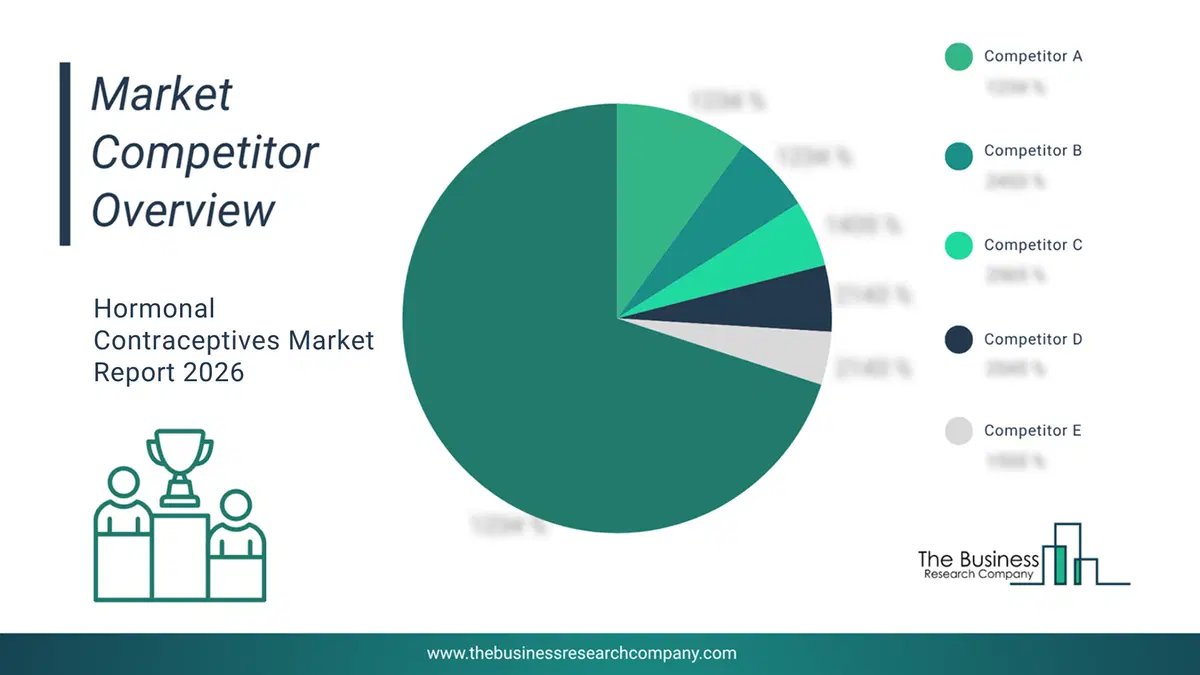
This chart is for illustrative purposes; the full report includes a detailed competitor analysis and comprehensive overview of the top 10 companies in the market.
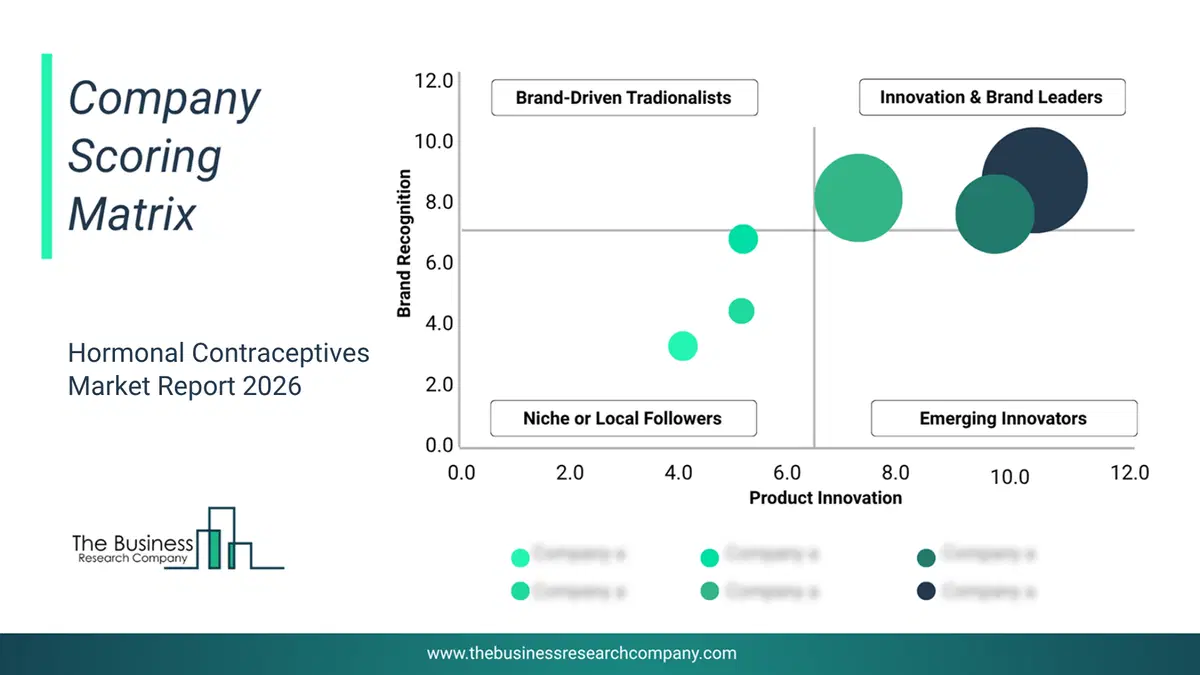
This chart maps companies by product innovation and brand strength, with bubble size indicating relative revenue, helping identify market leaders, challengers, and niche players. This is an illustrative chart; the full report provides a complete and accurate competitive analysis.
Global Hormonal Contraceptives Market Trends and Insights
Major companies operating in the hormonal contraceptives market are innovating advanced products, such as nonprescription daily oral contraceptives, to enhance accessibility and convenience for users. A nonprescription daily oral contraceptive is a type of birth control pill that can be purchased without a prescription from a healthcare provider. For instance, in July 2023, Perrigo Company PLC, a US-based manufacturer of private label over-the-counter pharmaceuticals received approval from from Food and Drug Administration (FDA), a US-based federal agency for protecting the public health for Opill. Opill is the first nonprescription daily oral contraceptive, which will be available to consumers without a prescription. The introduction of Opill marks a pivotal moment in reproductive health, as it allows individuals to access effective birth control without the barriers of needing a prescription or a healthcare appointment.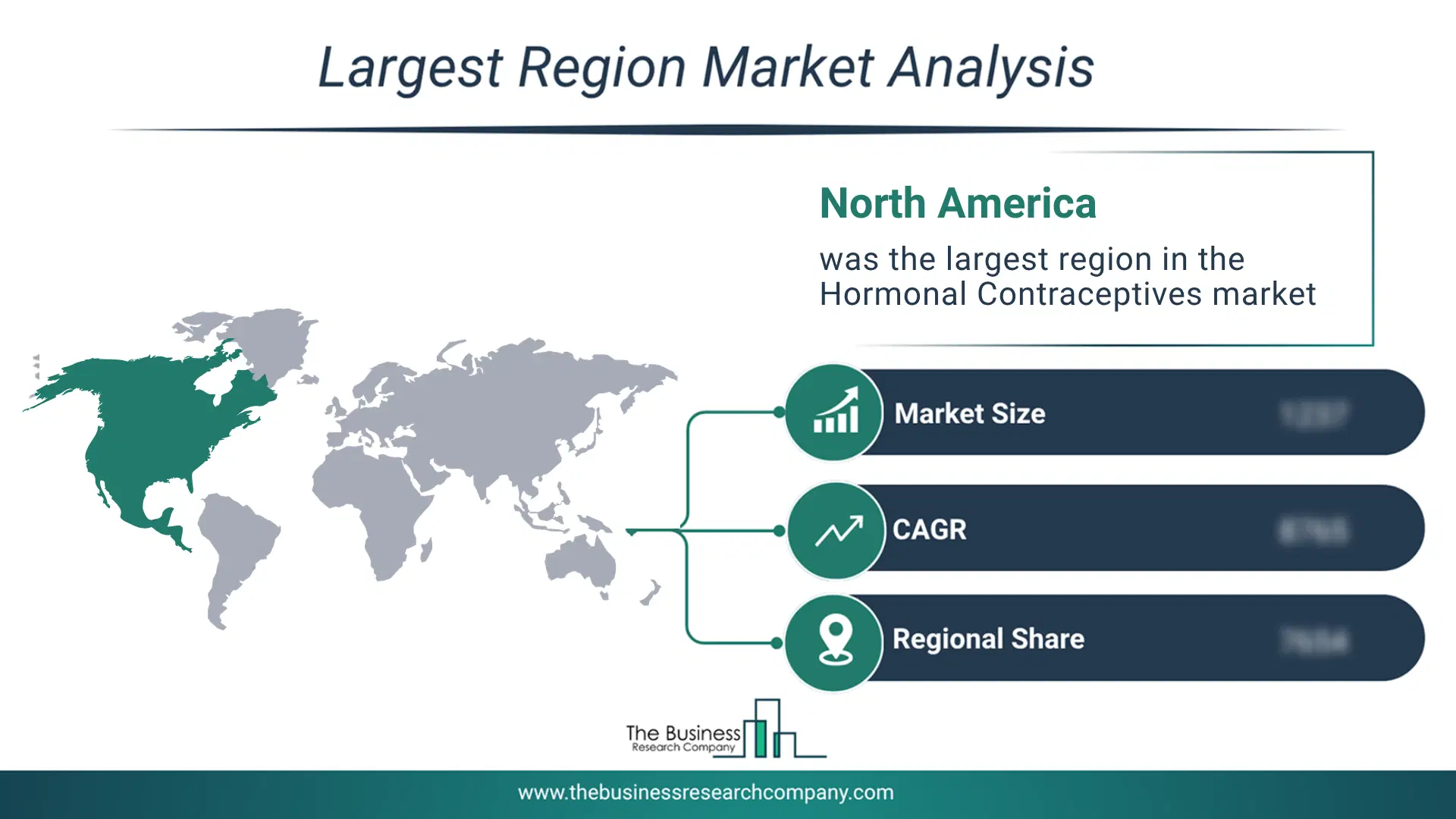
Regional Insights
North America was the largest region in the hormonal contraceptives market share in 2025. Middle East is expected to be the fastest-growing region in the global hormonal contraceptives market analysis during the forecast period. The regions covered in this market report are Asia-Pacific, South East Asia, Western Europe, Eastern Europe, North America, South America, Middle East, Africa. The countries covered in this market report are Australia, Brazil, China, France, Germany, India, Indonesia, Japan, Taiwan, Russia, South Korea, UK, USA, Canada, Italy, Spain.What Defines the Hormonal Contraceptives Market?
The hormonal contraceptive market includes revenues earned by entities by blocking the release of eggs from the ovaries and thinning the lining of the uterus to prevent pregnancy. The market value includes the value of related goods sold by the service provider or included within the service offering. Only goods and services traded between entities or sold to end consumers are included.How is Market Value Defined and Measured?
The market value is defined as the revenues that enterprises gain from the sale of goods and/or services within the specified market and geography through sales, grants, or donations in terms of the currency (in USD unless otherwise specified). The revenues for a specified geography are consumption values that are revenues generated by organizations in the specified geography within the market, irrespective of where they are produced. It does not include revenues from resales along the supply chain, either further along the supply chain or as part of other products.
This chart presents market attractiveness based on a quantitative evaluation of growth, competition, strategic alignment, and risk, offering a clear view of opportunity areas for decision-making. This chart is for illustrative purposes; the full report contains the complete analysis.

This chart highlights the Total Addressable Market (TAM) by estimating the maximum revenue opportunity using an assumption-driven approach, supporting strategic planning and opportunity sizing across markets. The chart is illustrative; the full report provides a more comprehensive analysis.
What Key Data and Analysis Are Included in the Hormonal Contraceptives Market Report 2026?
The hormonal contraceptives market research report is one of a series of new reports from The Business Research Company that provides market statistics, including industry global market size, regional shares, competitors with the market share, detailed market segments, market trends and opportunities, and any further data you may need to thrive in the hormonal contraceptives industry. The market research report delivers a complete perspective of everything you need, with an in-depth analysis of the current and future state of the industry.Hormonal Contraceptives Market Report Forecast Analysis
| Report Attribute | Details |
|---|---|
| Market Size Value In 2026 | $14.58 billion |
| Revenue Forecast In 2030 | $15.82 billion |
| Growth Rate | CAGR of 1.2% from 2026 to 2030 |
| Base Year For Estimation | 2025 |
| Actual Estimates/Historical Data | 2020-2025 |
| Forecast Period | 2026 - 2030 |
| Market Representation | Revenue in USD Billion and CAGR from 2026 to 2030 |
| Segments Covered | Product, End User, Hormones, Distribution Channel |
| Regional Scope | Asia-Pacific, Western Europe, Eastern Europe, North America, South America, Middle East, Africa |
| Country Scope | The countries covered in the report are Australia, Brazil, China, France, Germany, India, Indonesia, Japan, Taiwan, Russia, South Korea, UK, USA, Canada, Italy, Spain. |
| Key Companies Profiled | Bayer AG, Merck & Co. Inc, Viatris, Gedeon Richter, AbbVie, Pfizer, Teva Pharmaceuticals, Mayne Pharma Group Limited, Lupin Limited, HLL Lifecare Limited, Amneal Pharmaceuticals, DKT International, Piramal Pharma Limited, Allergan, Afaxys Inc., Agile Therapeutic, Cipla Limited, Glenmark Pharmaceuticals, Novartis AG, Sun Pharmaceutical Industries Ltd., Apothecus Pharmaceutical Corporation, Famy Care, Mylan Laboratories |
| Customization Scope | Request for Customization |
| Pricing And Purchase Options | Explore Purchase Options |