
Hydroxychloroquine Market Report 2026
Global Outlook – By Drug Activity (Anti-Malarial Drug, Anti-Rheumatic Drug, Lupus Suppressant Drug, Anti COVID-19 Drug, Other Drug Activity), By Formulation (Tablets, Injection), By Application (Malaria, Rheumatoid Arthritis, Lupus Erythematosus, COVID-19, Other Applications), By Distribution Channel (Hospital Pharmacy, Online Pharmacy, Specialty Drug Stores, Retail Pharmacy) – Market Size, Trends, Strategies, and Forecast to 2035
Hydroxychloroquine Market Overview
• Hydroxychloroquine market size has reached to $2.38 billion in 2025 • Expected to grow to $3.26 billion in 2030 at a compound annual growth rate (CAGR) of 6.6% • Growth Driver: Rising Rheumatoid Arthritis Cases Boosting Hydroxychloroquine Market • North America was the largest region in 2025 and Middle East is the fastest growing region.Market Gains By 2030 – Top Opportunities By Segment
Market Gain identifies the most promising market opportunities by highlighting the segments or products expected to generate the highest incremental revenue growth over the next five years.
What Is Covered Under Hydroxychloroquine Market?
Hydroxychloroquine refers to a quinolone-derived medication that is used to treat malaria. In countries or regions where it is recognized that other medications (such as chloroquine) may not be effective, it is also used to prevent malaria infection. In some hospitalized individuals, hydroxychloroquine may also be used to treat COVID-19 (COVID-19). The main types of drug activities in hydroxychloroquine are anti-malarial, anti-rheumatic, lupus suppressant, anti-COVID-19, and others. Antimalarial drugs, or simply 'antimalarials,' are antiparasitic chemical agents that can be utilized to cure or prevent malaria. They are generally organically sourced. The different formulations include tablets, and injections and are used in malaria, rheumatoid arthritis, lupus erythematosus, COVID-19, and others. It is distributed through various channels such as hospital pharmacies, online pharmacies, specialty drug stores, and retail pharmacies.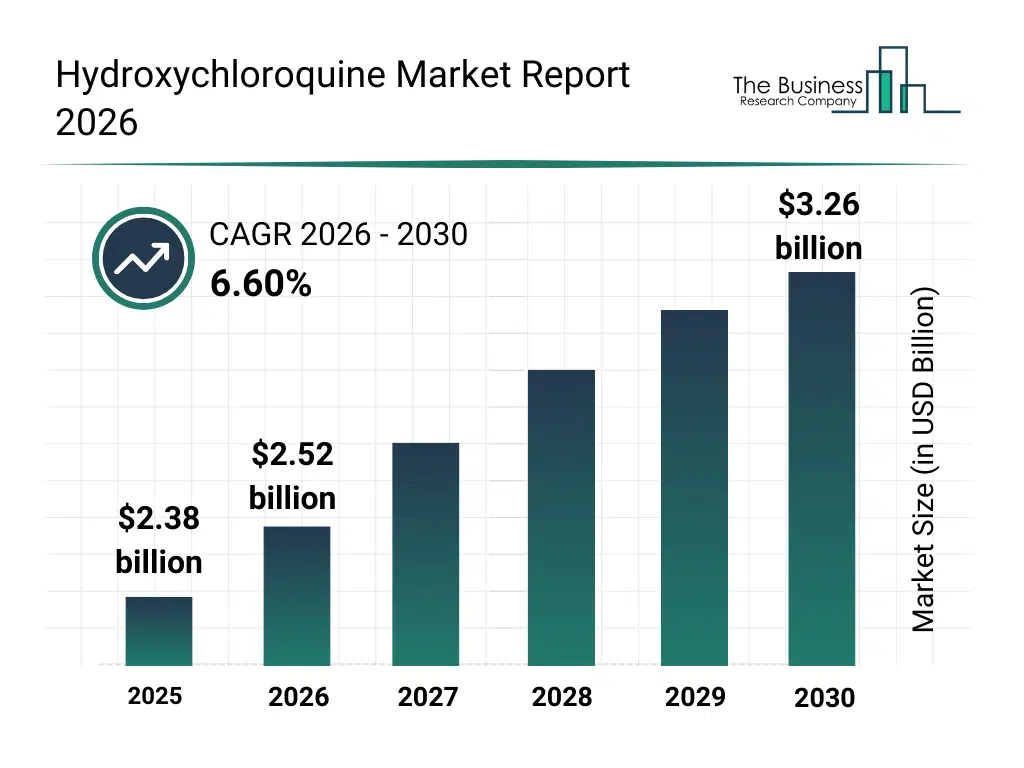
What Is The Hydroxychloroquine Market Size and Share 2026?
The hydroxychloroquine market size has grown strongly in recent years. It will grow from $2.38 billion in 2025 to $2.52 billion in 2026 at a compound annual growth rate (CAGR) of 6.2%. The growth in the historic period can be attributed to high prevalence of malaria in endemic regions, established use in autoimmune disorders, increasing awareness of hydroxychloroquine benefits, availability through hospital and retail pharmacies, growing clinical adoption for rheumatoid arthritis and lupus.What Is The Hydroxychloroquine Market Growth Forecast?
The hydroxychloroquine market size is expected to see strong growth in the next few years. It will grow to $3.26 billion in 2030 at a compound annual growth rate (CAGR) of 6.6%. The growth in the forecast period can be attributed to research on covid-19 applications, development of new formulations and delivery methods, expansion of online pharmacy channels, increasing government health initiatives for malaria prevention, rising investments in clinical trials and off-label studies. Major trends in the forecast period include rising use of hydroxychloroquine for malaria prevention and treatment, increasing adoption in rheumatoid arthritis and lupus management, growth in off-label uses and clinical research for covid-19, expansion of tablet formulations and injectable variants, rising distribution through hospital, online, and retail pharmacies.

Global Hydroxychloroquine Market Segmentation
1) By Drug Activity: Anti-Malarial Drug, Anti-Rheumatic Drug, Lupus Suppressant Drug, Anti COVID-19 Drug, Other Drug Activity 2) By Formulation: Tablets, Injection 3) By Application: Malaria, Rheumatoid Arthritis, Lupus Erythematosus, COVID-19, Other Applications 4) By Distribution Channel: Hospital Pharmacy, Online Pharmacy, Specialty Drug Stores, Retail Pharmacy Subsegments: 1) By Anti-Malarial Drug: Treatment Of Malaria, Prophylaxis For Malaria 2) By Anti-Rheumatic Drug: Treatment Of Rheumatoid Arthritis, Treatment Of Juvenile Idiopathic Arthritis 3) By Lupus Suppressant Drug: Treatment Of Systemic Lupus Erythematosus 4) By Anti COVID-19 Drug: Treatment Of COVID-19 Symptoms 5) By Other Drug Activity: Treatment Of Other Autoimmune Disorders, Additional Off-label uses The top segments in the hydroxychloroquine market will be: • Tablets will reach $722 Million by 2025. • Hospital Pharmacy will reach $399.9 Million by 2025. • Anti-Malarial Drug will reach $394.4 Million by 2025. • Anti-Rheumatic Drug will reach $298.3 Million by 2025. • Retail Pharmacy will reach $289.9 Million by 2025.What Are The Drivers Of The Hydroxychloroquine Market?
The growing cases of rheumatoid arthritis are expected to propel the growth of the hydroxychloroquine market going forward. Rheumatoid arthritis refers to an autoimmune and inflammatory condition where the immune system knowingly harms healthy cells in the body, leading to inflammation in the body areas affected. Hydroxychloroquine is beneficial for rheumatoid arthritis treatment as it can help reduce inflammation and alleviate symptoms, improving the overall quality of life for many patients. For instance, in June 2023, according to the Centers for Disease Control and Prevention, a US-based health protection agency, in the United States, there were 54.4 million adult-aged people diagnosed with arthritis, which is projected to reach 78 million by the year 2040. Therefore, the growing cases of rheumatoid arthritis are expected to drive the hydroxychloroquine industry. The rising healthcare expenditure is expected to propel the growth of the hydroxychloroquine market going forward. Healthcare expenditure refers to the total amount of resources, typically measured in monetary terms, that a country, organization, or individual allocates to health services and products. The increase in healthcare expenditure is driven by several factors, including an aging population, the prevalence of chronic diseases, advancements in medical technology, and rising consumer expectations for quality care. Hydroxychloroquine may alleviate rising healthcare costs by offering an affordable treatment alternative for multiple conditions, which can decrease the reliance on pricier medical interventions. For instance, in November 2023, according to the Canadian Institute for Health Information, a Canada-based non-profit organization, total health expenditure is projected to reach $344 billion in 2023, reflecting a modest growth of 2.8% compared to the previous year. Therefore, the rising healthcare expenditure is driving the growth of the hydroxychloroquine industry.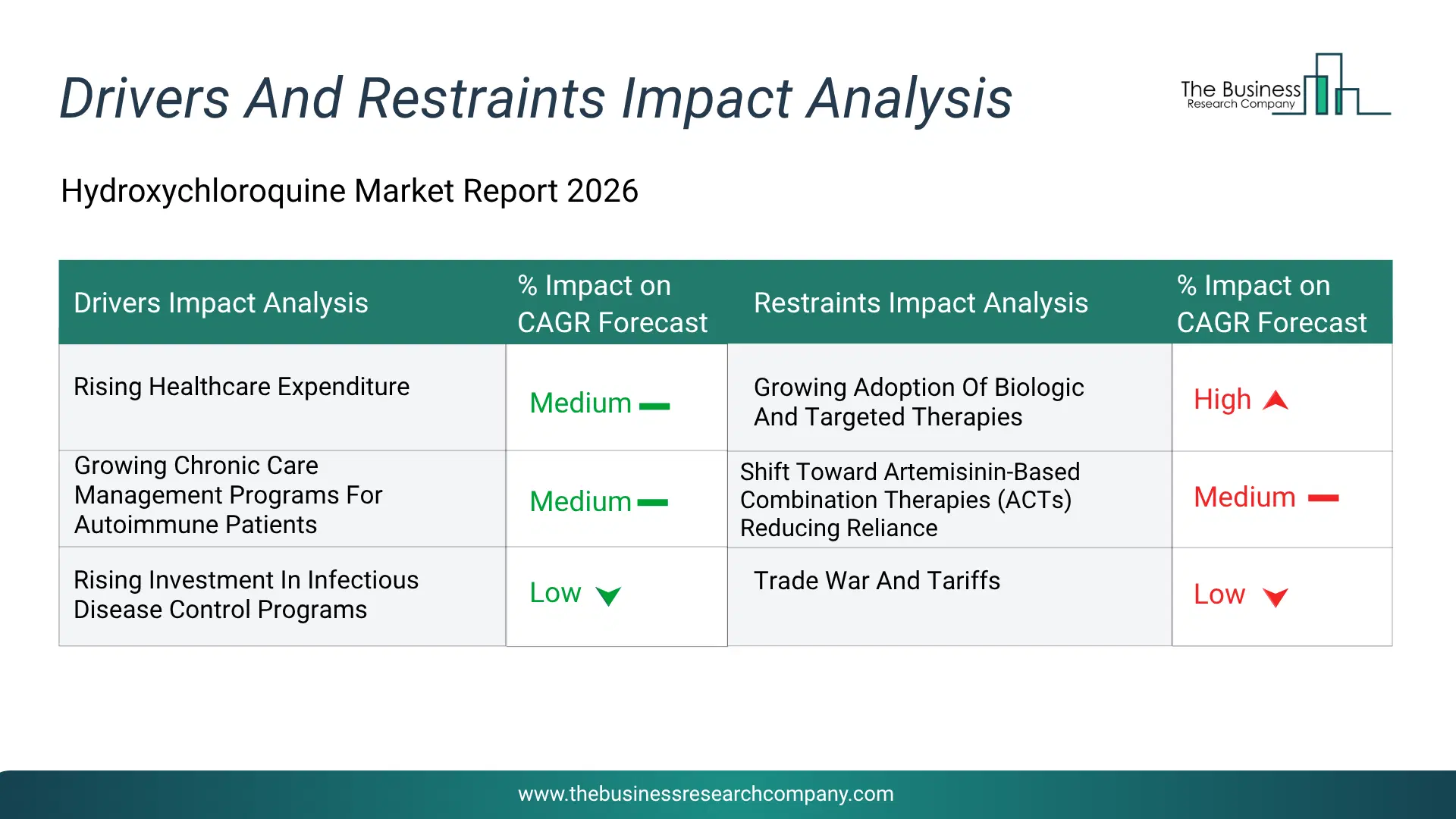
Infographic Chart Showing Key Market Drivers Analysis And Restraints For Hydroxychloroquine Market
The chart presents an impact analysis of key drivers and restraints, quantifying their relative influence on the market's growth rate and helping assess the balance between growth enablers and limiting factors. This chart offers a high-level perspective; the full report contains more detailed insights.
How Will The Drivers Impact Growth In The Global Hydroxychloroquine Market?
• Rising Healthcare Expenditure (Medium) – The rising healthcare expenditure will become a key driver of growth in the hydroxychloroquine market by 2030. As healthcare spending continues to increase across developed and emerging economies due to expanding healthcare infrastructure, growing insurance coverage, rising prevalence of chronic autoimmune and infectious diseases and increased government healthcare investments, demand for affordable and widely accessible therapeutic drugs such as hydroxychloroquine is projected to rise steadily across hospital, retail and specialty care settings. Higher healthcare expenditure supports improved patient access to diagnosis and long-term treatment for conditions including rheumatoid arthritis, systemic lupus erythematosus and malaria, contributing to greater prescription volumes and treatment continuity. As a result, hydroxychloroquine manufacturers and distributors are increasingly strengthening production capabilities, expanding geographic distribution networks and enhancing supply chain resilience to meet growing therapeutic demand and support sustained long-term growth in the global hydroxychloroquine market. As a result, the rising healthcare expenditure is anticipated to contributing to a 1.5% annual growth in the market. • Growing Chronic Care Management Programs For Autoimmune Patients (Medium) – The growing chronic care management programs for autoimmune patients will emerge as a major factor driving the expansion of the hydroxychloroquine market by 2030. As healthcare systems, insurers and specialty care providers increasingly prioritize long-term management of chronic autoimmune diseases such as rheumatoid arthritis and systemic lupus erythematosus, there is rising emphasis on coordinated treatment approaches focused on continuous monitoring, medication adherence, symptom control and prevention of disease flare-ups, leading to sustained demand for established disease-modifying therapies including hydroxychloroquine. As a result, pharmaceutical manufacturers, specialty pharmacies, healthcare providers and patient assistance organizations are increasingly strengthening autoimmune disease management services, expanding medication access programs and improving long-term treatment monitoring infrastructure to support rising patient demand and sustain growth in the global hydroxychloroquine market. Consequently, the growing chronic care management programs for autoimmune patients is projected to contributing to a 1.3% annual growth in the market. • Rising Investment In Infectious Disease Control Programs (Low) – The rising investment in infectious disease control programs will serve as a key growth catalyst for the hydroxychloroquine market by 2030. As governments, international health organizations and public health agencies continue to strengthen preparedness against infectious and vector-borne diseases, investments in disease surveillance, outbreak response infrastructure, antimicrobial access and emergency pharmaceutical stockpiling are increasing substantially. Expanding infectious disease control initiatives, particularly in malaria-endemic and outbreak-prone regions, are encouraging broader procurement and strategic distribution of antimalarial therapies such as hydroxychloroquine to support prevention and treatment capabilities. As a result, pharmaceutical manufacturers, public health procurement agencies and healthcare providers are increasingly expanding production capacity, strengthening distribution partnerships and investing in scalable supply networks to address rising institutional demand and support long-term growth in the global hydroxychloroquine market. Therefore, this rising investment in infectious disease control programs is projected to supporting to a 0.8% annual growth in the market. • Expanding Government-Supported Access To Antirheumatic Medications (Low) – The expanding government-supported access to antirheumatic medications will become a significant driver contributing to the growth of the hydroxychloroquine market by 2030. As governments and public healthcare agencies intensify efforts to improve access to affordable therapies for chronic autoimmune and inflammatory diseases such as rheumatoid arthritis and systemic lupus erythematosus, there is increasing emphasis on strengthening reimbursement coverage, reducing patient out-of-pocket expenses and expanding insurance-supported access to disease-modifying antirheumatic drugs (DMARDs), including hydroxychloroquine. As a result, pharmaceutical manufacturers, distributors and healthcare providers are increasing supply chain capabilities, strengthening partnerships with public healthcare systems and enhancing access initiatives to meet the growing demand for cost-effective antirheumatic medications and support long-term expansion of the global hydroxychloroquine market. Consequently, the expanding government-supported access to antirheumatic medications is projected to contributing to a 0.6% annual growth in the market.How Will The Restraints Impact Growth In The Global Hydroxychloroquine Market?
• Growing Adoption Of Biologic And Targeted Therapies (Medium) – Growing adoption of biologic and targeted therapies is expected to restrain market growth during the forecast period. It creates operational, financial, regulatory, or commercial challenges that can increase costs, delay projects, reduce investments, or discourage purchasing decisions depending on the market. These challenges can reduce product adoption, affect business confidence, and limit the ability of companies to expand efficiently across key regions. This can reduce operational efficiency, delay expansion plans, and affect the ability of companies to achieve sustainable business growth. • Shift Toward Artemisinin-Based Combination Therapies (ACTs) Reducing Reliance (Medium) – During the forecast period, shift toward artemisinin-based combination therapies (acts) reducing reliance is likely to limit market expansion. It creates operational, financial, regulatory, or commercial challenges that can increase costs, delay projects, reduce investments, or discourage purchasing decisions depending on the market. These challenges can reduce product adoption, affect business confidence, and limit the ability of companies to expand efficiently across key regions. As a result, businesses may face increased cost pressures, slower commercial adoption, and reduced revenue opportunities. • Trade War And Tariffs (Low) – The market is expected to face challenges due to trade war and tariffs over the forecast period. It creates operational, financial, regulatory, or commercial challenges that can increase costs, delay projects, reduce investments, or discourage purchasing decisions depending on the market. These challenges can reduce product adoption, affect business confidence, and limit the ability of companies to expand efficiently across key regions. This may discourage new investments, delay strategic expansion initiatives, and weaken the overall competitive position of market participants.Key Players In The Global Hydroxychloroquine Market
Major companies operating in the hydroxychloroquine market are Bayer AG, Dr. Reddy's Laboratories Ltd., Zydus Group, Ipca Laboratories Ltd., Wallace Pharma, Teva Pharmaceuticals Inc., Mylan Pharmaceuticals Inc., Novartis AG, Intas Pharmaceuticals Ltd., Lupin Limited, Shanghai Zhongxi Sanwei Pharmaceutical Co. Ltd., Torrent Pharmaceuticals Ltd., Hikma Pharmaceuticals plc, Sandoz International GmbH, Cipla Limited, Shenhua Pharmaceutical Co. Ltd., Sanofi S.A., Macleod Pharmaceuticals Ltd., Laurus Labs, TAJ Pharmaceuticals, Wuhan Wuyao Pharmaceutical Co. Ltd., Concordia Healthcare, Pfizer Inc., Cadila Pharmaceuticals, Hetero Drugs Ltd., Jubilant Generics Limited, Alembic Pharmaceuticals Limited, Sun Pharmaceutical Industries Ltd., Aurobindo Pharma USA Inc., Alkem Laboratories Ltd., Glenmark Pharmaceuticals Ltd., Unichem Laboratories Ltd., Wockhardt Limited, Emcure Pharmaceuticals Ltd., Strides Pharma Science Ltd., Indoco Remedies Ltd.
This chart is for illustrative purposes; the full report includes a detailed competitor analysis and comprehensive overview of the top 10 companies in the market.

This chart maps companies by product innovation and brand strength, with bubble size indicating relative revenue, helping identify market leaders, challengers, and niche players. This is an illustrative chart; the full report provides a complete and accurate competitive analysis.
What Are Latest Mergers And Acquisitions In The Hydroxychloroquine Market?
In August 2023, Ipca Laboratories, an India-based pharmaceutical company, acquired Unichem $0.118 billion. With this acquisition, Ipca aims to enhance its product portfolio and expand its market presence, leveraging Unichem's strengths in various therapeutic areas and boosting its capabilities in research and development. Unichem is an India-based pharmaceutical company that focuses on developing, manufacturing, and marketing a wide range of generic and branded medications across various therapeutic areas.
Regional Insights
North America was the largest region in the hydroxychloroquine market in 2025. Middle East is expected to be the fastest-growing region in the hydroxychloroquine market report. The regions covered in this market report are Asia-Pacific, South East Asia, Western Europe, Eastern Europe, North America, South America, Middle East, Africa. The countries covered in this market report are Australia, Brazil, China, France, Germany, India, Indonesia, Japan, Taiwan, Russia, South Korea, UK, USA, Canada, Italy, Spain.What Defines the Hydroxychloroquine Market?
The hydroxychloroquine market consists of sales of plaquenil, antimalarials, and immunosuppressants. Values in this market are factory gate values, that is the value of goods sold by the manufacturers or creators of the goods, whether to other entities (including downstream manufacturers, wholesalers, distributors and retailers) or directly to end customers. The value of goods in this market includes related services sold by the creators of the goods.How is Market Value Defined and Measured?
The market value is defined as the revenues that enterprises gain from the sale of goods and/or services within the specified market and geography through sales, grants, or donations in terms of the currency (in USD unless otherwise specified). The revenues for a specified geography are consumption values that are revenues generated by organizations in the specified geography within the market, irrespective of where they are produced. It does not include revenues from resales along the supply chain, either further along the supply chain or as part of other products.
This chart presents market attractiveness based on a quantitative evaluation of growth, competition, strategic alignment, and risk, offering a clear view of opportunity areas for decision-making. This chart is for illustrative purposes; the full report contains the complete analysis.

This chart highlights the Total Addressable Market (TAM) by estimating the maximum revenue opportunity using an assumption-driven approach, supporting strategic planning and opportunity sizing across markets. The chart is illustrative; the full report provides a more comprehensive analysis.
What Key Data and Analysis Are Included in the Hydroxychloroquine Market Report 2026?
The hydroxychloroquine market research report is one of a series of new reports from The Business Research Company that provides market statistics, including industry global market size, regional shares, competitors with the market share, detailed market segments, market trends and opportunities, and any further data you may need to thrive in the hydroxychloroquine industry. The market research report delivers a complete perspective of everything you need, with an in-depth analysis of the current and future state of the industry.Hydroxychloroquine Market Report Forecast Analysis
| Report Attribute | Details |
|---|---|
| Market Size Value In 2026 | $2.52 billion |
| Revenue Forecast In 2035 | $3.26 billion |
| Growth Rate | CAGR of 6.2% from 2026 to 2035 |
| Base Year For Estimation | 2025 |
| Actual Estimates/Historical Data | 2020-2025 |
| Forecast Period | 2026 - 2030 - 2035 |
| Market Representation | Revenue in USD Billion and CAGR from 2026 to 2035 |
| Segments Covered | Drug Activity, Formulation, Application, Distribution Channel |
| Regional Scope | Asia-Pacific, Western Europe, Eastern Europe, North America, South America, Middle East, Africa |
| Country Scope | The countries covered in the report are Australia, Brazil, China, France, Germany, India, ... |
| Key Companies Profiled | Bayer AG, Dr. Reddy's Laboratories Ltd., Zydus Group, Ipca Laboratories Ltd., Wallace Pharma, Teva Pharmaceuticals Inc., Mylan Pharmaceuticals Inc., Novartis AG, Intas Pharmaceuticals Ltd., Lupin Limited, Shanghai Zhongxi Sanwei Pharmaceutical Co. Ltd., Torrent Pharmaceuticals Ltd., Hikma Pharmaceuticals plc, Sandoz International GmbH, Cipla Limited, Shenhua Pharmaceutical Co. Ltd., Sanofi S.A., Macleod Pharmaceuticals Ltd., Laurus Labs, TAJ Pharmaceuticals, Wuhan Wuyao Pharmaceutical Co. Ltd., Concordia Healthcare, Pfizer Inc., Cadila Pharmaceuticals, Hetero Drugs Ltd., Jubilant Generics Limited, Alembic Pharmaceuticals Limited, Sun Pharmaceutical Industries Ltd., Aurobindo Pharma USA Inc., Alkem Laboratories Ltd., Glenmark Pharmaceuticals Ltd., Unichem Laboratories Ltd., Wockhardt Limited, Emcure Pharmaceuticals Ltd., Strides Pharma Science Ltd., Indoco Remedies Ltd. |
| Customization Scope | Request for Customization |
| Pricing And Purchase Options | Explore Purchase Options |