

IVF Services Market Report 2026
Global Outlook – By Cycle Type (Fresh IVF Cycles (Non-donor), Thawed IVF Cycles (Non-donor), Donor Egg IVF Cycles ), By Service Provider (Fertility Clinics, Hospitals), By End User (Infertile Couples, Single Women, Same-Sex Couples) - Market Size, Trends, And Global Forecast 2026-2030
IVF Services Market Overview
• IVF Services market size has reached to $21.89 billion in 2025 • Expected to grow to $37.46 billion in 2030 at a compound annual growth rate (CAGR) of 11.3% • Growth Driver: Government Initiatives For Fertility Treatment Access Fuel Growth Of Ivf Services Market • Market Trend: Digital-Managed Cryopreservation Tanks Enhance Safety And Efficiency In Services • Western Europe was the largest region in 2025 and North America is the fastest growing region.Market Gains By 2030 – Top Opportunities By Segment
Market Gain identifies the most promising market opportunities by highlighting the segments or products expected to generate the highest incremental revenue growth over the next five years.
What Is Covered Under IVF Services Market?
IVF is a process of fertilization where an egg is combined with sperm outside the body, in vitro (in glass). In vitro fertilization (IVF) is a sophisticated set of treatments intended to improve fertility, avoid genetic issues, and aid in child conception. It is used to address infertility. The main types of cycles in IVF services markets are fresh IVF cycles (non-donor), thawed IVF cycles (non-donor), and donor egg IVF cycles. When an IVF cycle is completed utilizing eggs and embryos that have never been frozen, it is referred to as a fresh IVF cycle. After the eggs are extracted, they are fertilized in the lab with semen. The different service providers include fertility clinics, hospitals, surgical centers, clinical research institutes and is used in various sectors such as fertility clinics, hospitals, and other settings.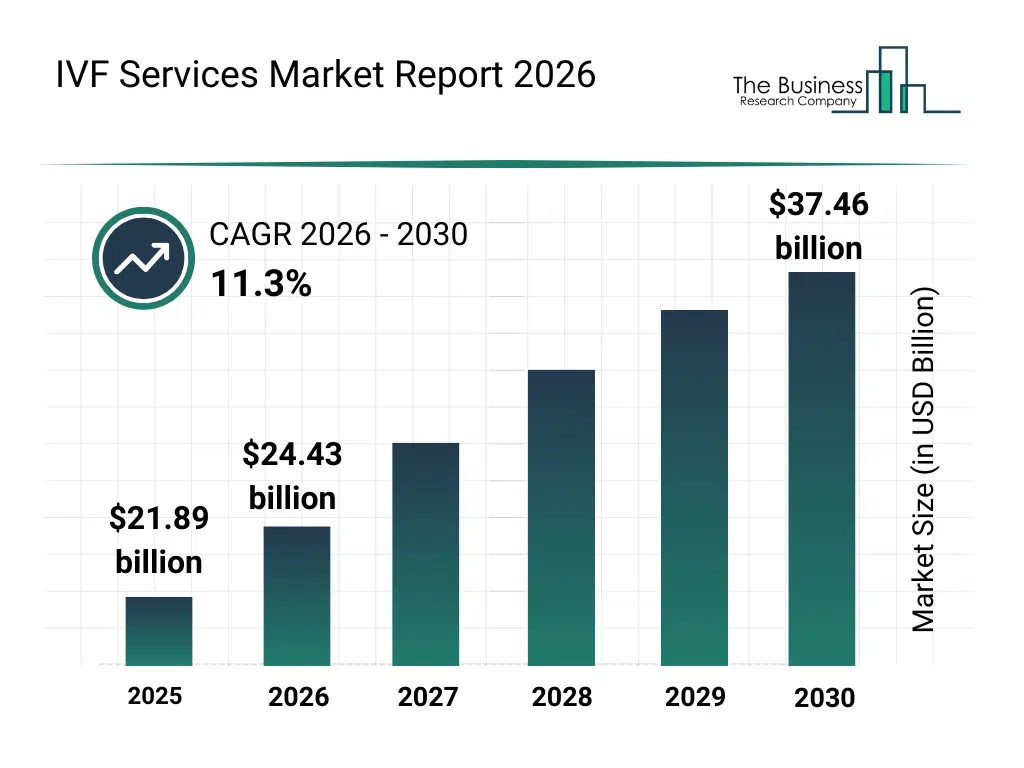
What Is The IVF Services Market Size and Share 2026?
The ivf services market size has grown rapidly in recent years. It will grow from $21.89 billion in 2025 to $24.43 billion in 2026 at a compound annual growth rate (CAGR) of 11.6%. The growth in the historic period can be attributed to increasing infertility rates, delayed parenthood trends, growing awareness of fertility treatments, advancements in embryology techniques, rising availability of specialized fertility clinics.What Is The IVF Services Market Growth Forecast?
The ivf services market size is expected to see rapid growth in the next few years. It will grow to $37.46 billion in 2030 at a compound annual growth rate (CAGR) of 11.3%. The growth in the forecast period can be attributed to increasing acceptance of ivf across age groups, rising demand for donor egg cycles, growing medical tourism for fertility treatments, improving affordability of ivf services, expanding insurance coverage for fertility procedures. Major trends in the forecast period include rising demand for assisted reproductive technologies, growing adoption of preimplantation genetic testing, increasing preference for frozen embryo transfer cycles, expansion of donor egg ivf programs, improved success rates through advanced clinical protocols.
Global IVF Services Market Segmentation
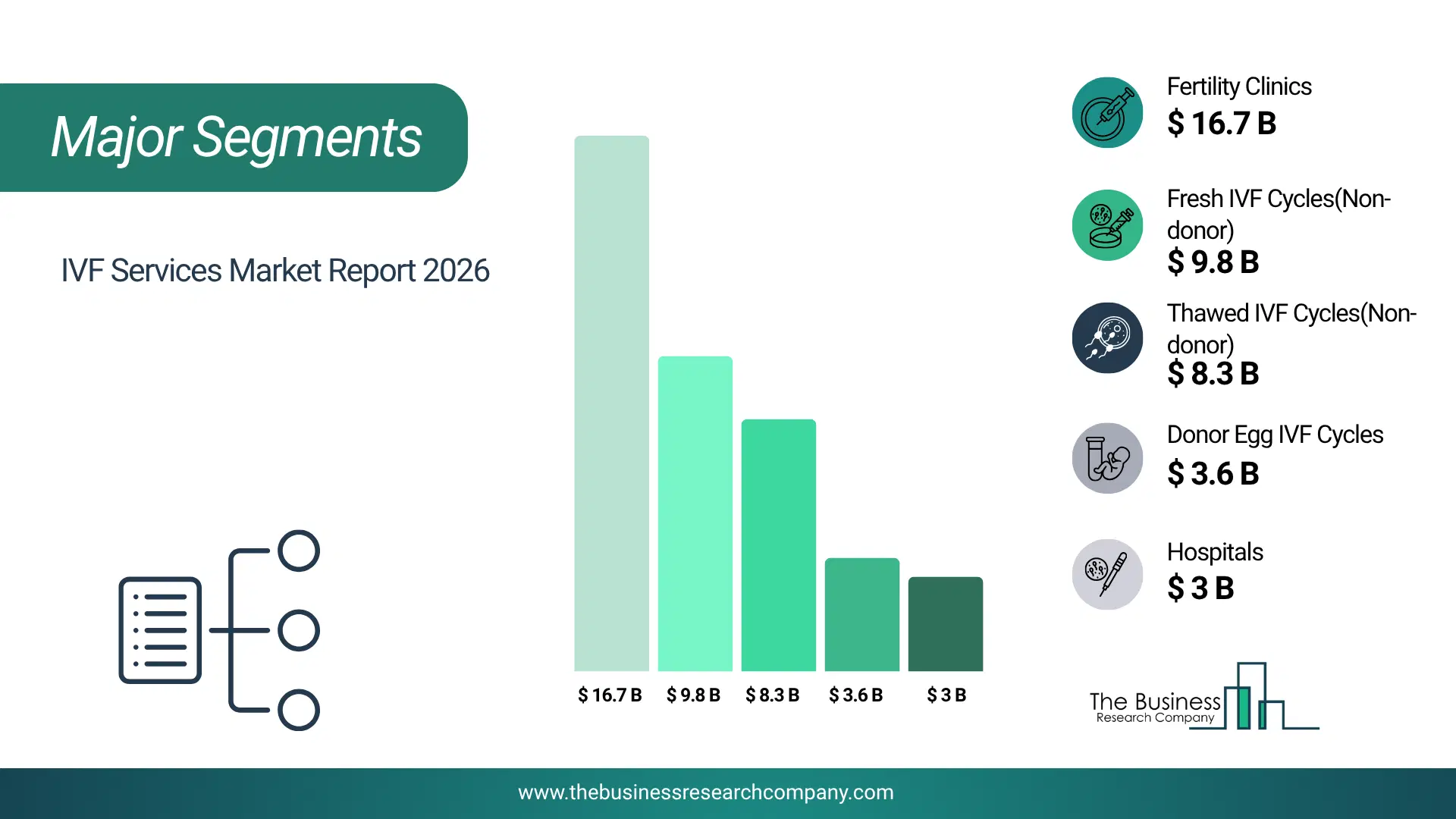
1) By Cycle Type: Fresh IVF Cycles (Non-donor), Thawed IVF Cycles (Non-donor), Donor Egg IVF Cycles 2) By Service Provider: Fertility Clinics, Hospitals 3) By End User: Infertile Couples, Single Women, Same-Sex Couples Subsegments: 1) By Fresh IVF Cycles (Non-donor): Standard Fresh IVF Cycles, IVF Cycles With Preimplantation Genetic Testing (PGT) 2) By Thawed IVF Cycles (Non-donor): Thawed Embryo Transfer (TET) Cycles, Thawed Blastocyst Transfer Cycles 3) By Donor Egg IVF Cycles: IVF Cycles Using Fresh Donor Eggs, IVF Cycles Using Frozen Donor Eggs The top segments in the ivf services market will be: • Fertility Clinics will reach $16783.02 Million by 2025. • Fresh IVF Cycles(Non-donor) will reach $9893.13 Million by 2025. • Thawed IVF Cycles(Non-donor) will reach $8364.69 Million by 2025. • Donor Egg IVF Cycles will reach $3629.97 Million by 2025. • Hospitals will reach $3082.92 Million by 2025.What Is The Driver Of The IVF Services Market?
Government initiatives for the access of fertility treatments is expected to propel the growth of the IVF services market going forward. Government initiatives refer to specific actions, programs, policies, or projects that are undertaken by a government or its various agencies to address specific issues, achieve particular goals, or promote certain outcomes within a society or nation. Several government authorities are initiating various initiatives to support the IVF services market. For instance, in January 2023, the New South Wales Ministry of Health, an Australia-based government organization, the New South Wales (NSW) government committed $80 million from 2022-23 to 2025-26 to increase access to affordable fertility treatments under the NSW Affordable IVF Program. Therefore, government initiatives for access of fertility treatments drives the IVF services industry.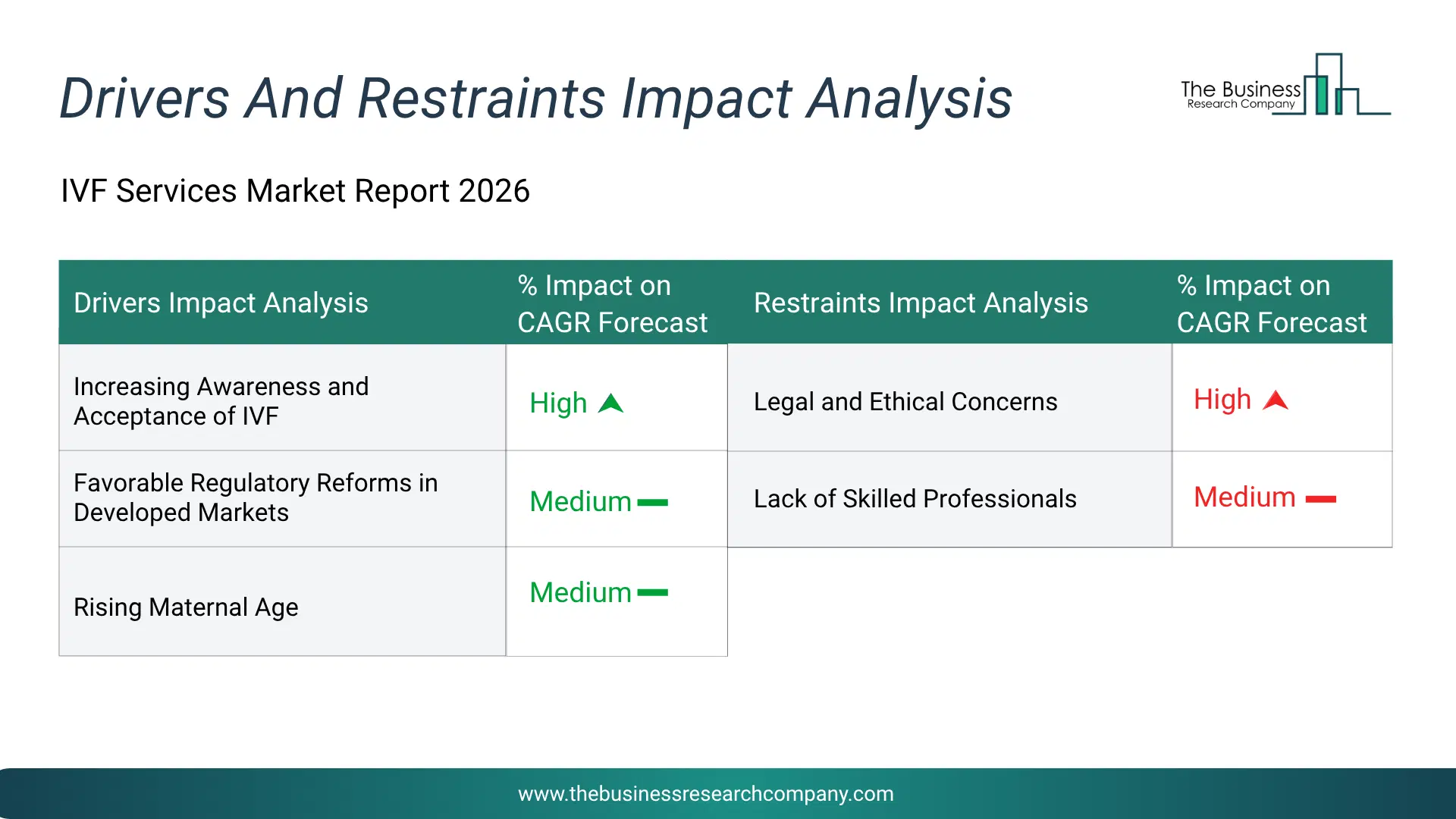
Infographic Chart Showing Key Market Drivers Analysis And Restraints For Ivf Services Market
The chart presents an impact analysis of key drivers and restraints, quantifying their relative influence on the market's growth rate and helping assess the balance between growth enablers and limiting factors. This chart offers a high-level perspective; the full report contains more detailed insights.
How Will The Drivers Impact Growth In The Global IVF Services Market?
• Increasing Awareness and Acceptance of IVF (High) – The increasing emphasis on awareness and acceptance of IVF will become a key driver of growth in the IVF services market by 2030. As fertility challenges become more widely discussed, people are increasingly aware of available reproductive technologies like IVF. Media, healthcare providers and fertility experts play a key role in spreading this knowledge. Social media campaigns and success stories have also made IVF more relatable and accessible. Improvements in IVF procedures, such as genetic screening, embryo freezing and improved success rates, have made IVF a more reliable option. Additionally, in the past, IVF was often seen as taboo, causing hesitation among couples seeking help. However, as societal norms evolve, IVF is now widely accepted as a mainstream solution for infertility, particularly in developed countries. As a result, the growing deployment of awareness and acceptance of IVF is anticipated to contributing to a 2.0% annual growth in the market. • Favorable Regulatory Reforms in Developed Markets (Medium) – The growing focus on regulatory reforms in developed will emerge as a major factor driving the expansion of the IVF services market by 2030. Governments in many developed markets are expanding insurance coverage for fertility treatments, including IVF, which reduces the financial burden on patients and makes treatments more accessible. Additionally, some countries offer tax incentives for IVF procedures, further lowering costs and encouraging more people to pursue treatment. By implementing clear regulations, governments ensure that IVF clinics meet high medical standards, improving the overall quality of services. Licensing and accreditation systems also enhance public trust, boosting confidence in IVF and encouraging more individuals to seek treatment. Consequently, the accelerating adoption of regulatory reforms in developed capabilities is projected to contributing to a 1.5% annual growth in the market. • Rising Maternal Age (Medium) – The expanding integration of maternal age processes will serve as a key growth catalyst for the IVF services market by 2030. As women delay starting a family, fertility naturally declines with age, particularly after 35, leading to increased challenges in conception. This results in a higher demand for IVF treatments, especially among women facing age-related fertility issues. Many women now choose to freeze their eggs in their early 30s, with plans to use them later, further driving the need for IVF when they decide to conceive. As maternal age rises, more women in their late 30s and early 40s are seeking IVF to overcome fertility challenges. Therefore, this growing integration of maternal age operations is projected to supporting to a 1.5% annual growth in the market. • Expansion of IVF Service Providers in Emerging Markets (Medium) – The increasing emphasis on IVF service providers in emerging will become a significant driver contributing to the growth of the IVF services market by 2030. Infertility rates in emerging markets are rising due to lifestyle changes, urbanization, delayed childbearing and environmental factors, increasing the demand for IVF. As fertility awareness grows, more people are turning to IVF as a solution, leading to the expansion of IVF clinics in both urban and rural areas. This geographical expansion improves accessibility, making IVF services available to a larger population. Additionally, the lower cost of IVF in emerging markets has attracted medical tourists, further boosting demand and expanding the global reach of IVF services. As more clinics open, treatments become increasingly accessible, reducing financial and logistical barriers. Consequently, the rising adoption of IVF service providers in emerging strategies is projected to contributing to a 1.0% annual growth in the market.How Will The Restraints Impact Growth In The Global IVF Services Market?
• Legal and Ethical Concerns (High) – Legal and Ethical Concerns will restrict the growth of the IVF Services market during the forecast period. IVF treatments raise complex legal and ethical issues regarding embryo status, selective reduction, genetic testing, and third-party reproduction. Legal frameworks vary significantly across countries, with some restricting or banning certain IVF procedures. Ethical debates about reproductive technologies may influence public policy and limit service availability in some regions, affecting market growth and access to treatment. • Lack of Skilled Professionals (Medium) – Lack of Skilled Professionals will restrict the growth of the IVF Services market during the forecast period. The IVF sector faces a shortage of qualified embryologists, reproductive endocrinologists, and fertility specialists with advanced training. The complexity of IVF procedures requires highly skilled personnel with technical expertise and extensive experience. The limited pool of trained professionals constrains the capacity of fertility clinics, leading to wait times and limiting market expansion, particularly in emerging markets.Key Players In The Global IVF Services Market
Major companies operating in the ivf services market are Monash IVF Group, Virtus Health Limited, Genea Limited, Boston IVF, IVF Spain, Bourn Hall Clinic, Indira IVF, Cloudnine Fertility, Chelsea and Westminster Hospital NHS Foundation Trust, Bumrungrad International Hospital, CHA Fertility Center, CREATE Fertility, The Centre for Reproductive & Genetic Health, The Bridge Centre, UNICA Clinic – Prague, Repromeda s.r.o., Australian Concept Infertility Medical Center (ACIMC), Dubai Gynecology and Fertility Centre, Cairo Fertility Centre, Queens Fertility Centre (Egypt), Instituto de Fertilidad Humana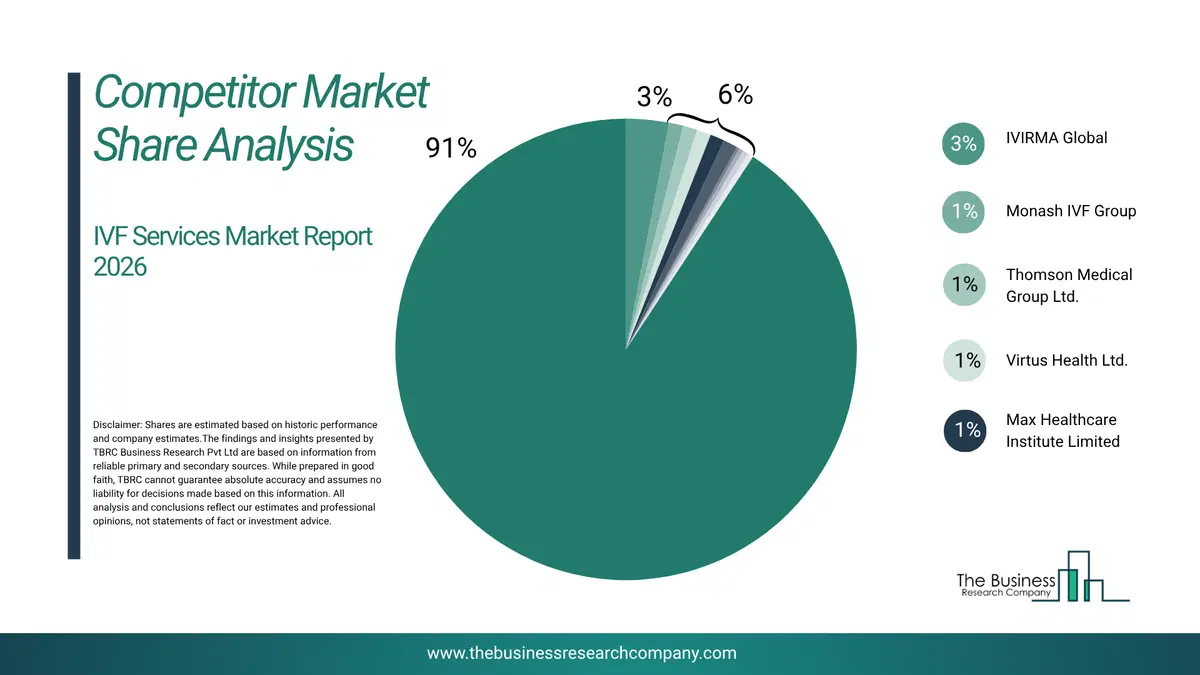
This chart is for illustrative purposes; the full report includes a detailed competitor analysis and comprehensive overview of the top 10 companies in the market.
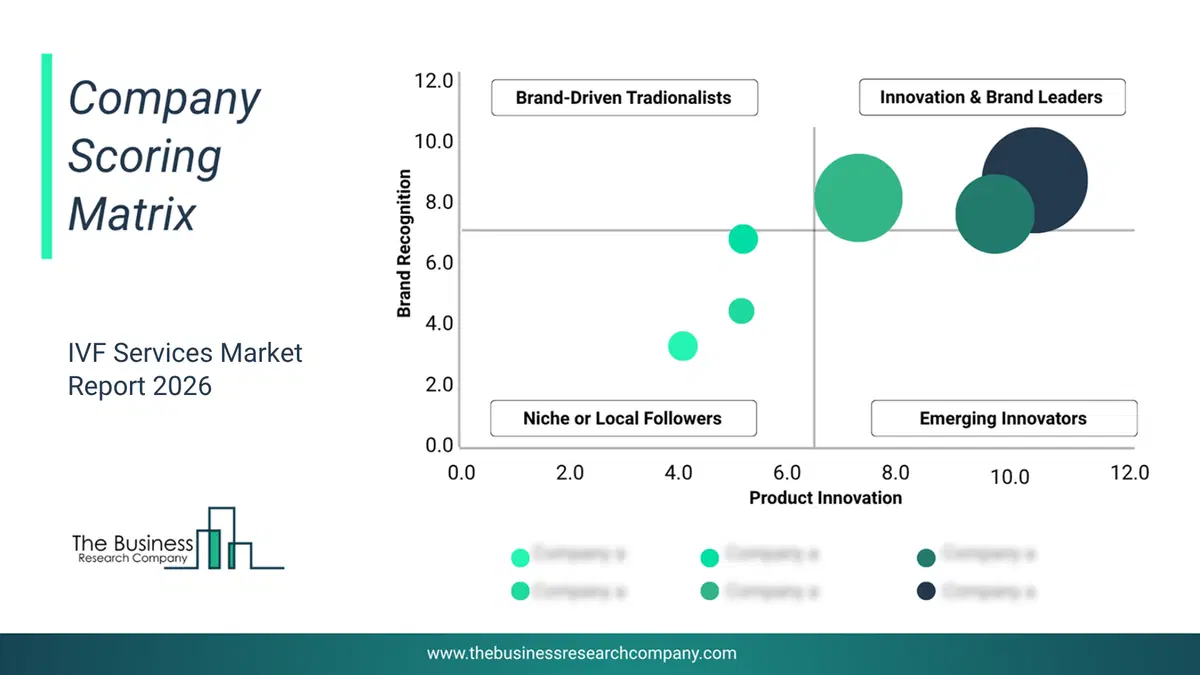
This chart maps companies by product innovation and brand strength, with bubble size indicating relative revenue, helping identify market leaders, challengers, and niche players. This is an illustrative chart; the full report provides a complete and accurate competitive analysis.
Global IVF Services Market Trends and Insights
Major companies operating in the IVF services market are focusing on developing innovative solutions, such as digitally managed cryopreservation tanks, to enhance specimen safety, improve storage scalability, and ensure accurate tracking of frozen eggs, embryos, and sperm. A digitally managed cryopreservation tank integrates a traditional liquid nitrogen storage system with advanced digital tracking, specimen verification, and remote monitoring, combining the reliability of manual storage with the security and traceability of an automated system. For instance, in March 2025, TMRW Life Sciences, a US-based fertility technology company, launched the TMRW Vault, a liquid nitrogen smart tank and digital workstation that uses RFID tagging and its proprietary ivfOS software to monitor frozen specimens with full chain-of-custody. It supports manual specimen access while performing thousands of daily environmental checks via its Overwatch system and scales capacity to hold as many as ten traditional dewars in a single tank. This solution enables IVF clinics to reduce risk, improve retrieval accuracy, and manage storage growth more efficiently.What Are Latest Mergers And Acquisitions In The IVF Services Market?
In July 2023, BPEA EQT, a Hong Kong-based investment company, acquired a 60% stake in Indira IVF for approximately $657 million. With this acquisition, Indira IVF aims to strengthen its footprint across India, explore expansion into neighboring markets, and make fertility services and reproductive health more accessible to couples. Indira IVF is an India-based company that provides IVF services.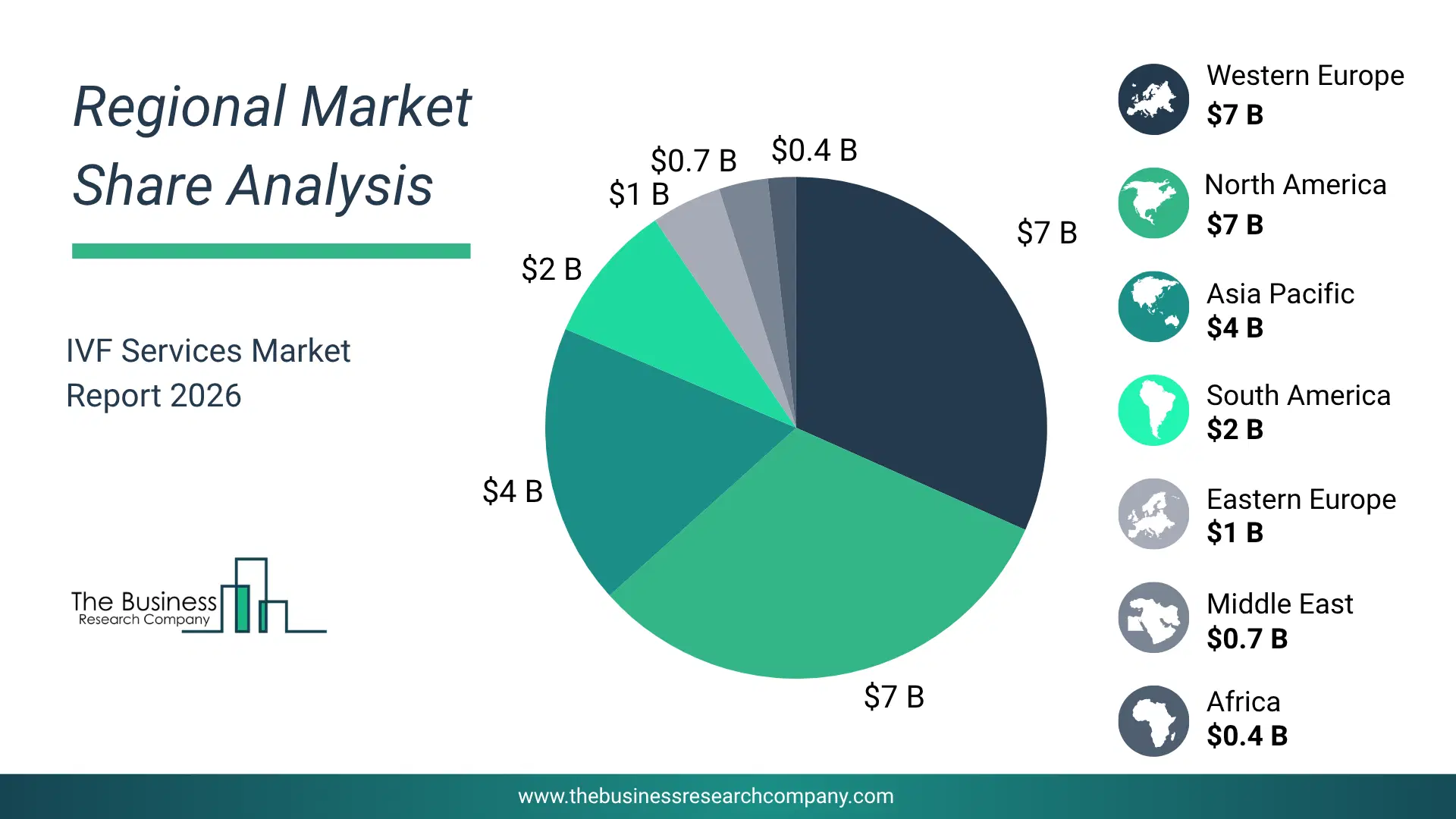
Regional Outlook
Western Europe was the largest region in the IVF services market in 2025. North America was the second largest region in global IVF services market share. The regions covered in this market report are Asia-Pacific, South East Asia, Western Europe, Eastern Europe, North America, South America, Middle East, Africa. The countries covered in this market report are Australia, Brazil, China, France, Germany, India, Indonesia, Japan, Taiwan, Russia, South Korea, UK, USA, Canada, Italy, Spain.What Defines the IVF Services Market?
The IVF services market includes revenues earned by entities by providing services such as conventional insemination services, and intracytoplasmic sperm injection services. The market value includes the value of related goods sold by the service provider or included within the service offering. Only goods and services traded between entities or sold to end consumers are included.How is Market Value Defined and Measured?
The market value is defined as the revenues that enterprises gain from the sale of goods and/or services within the specified market and geography through sales, grants, or donations in terms of the currency (in USD unless otherwise specified). The revenues for a specified geography are consumption values that are revenues generated by organizations in the specified geography within the market, irrespective of where they are produced. It does not include revenues from resales along the supply chain, either further along the supply chain or as part of other products.
This chart presents market attractiveness based on a quantitative evaluation of growth, competition, strategic alignment, and risk, offering a clear view of opportunity areas for decision-making. This chart is for illustrative purposes; the full report contains the complete analysis.

This chart highlights the Total Addressable Market (TAM) by estimating the maximum revenue opportunity using an assumption-driven approach, supporting strategic planning and opportunity sizing across markets. The chart is illustrative; the full report provides a more comprehensive analysis.
What Key Data and Analysis Are Included in the IVF Services Market Report 2026?
The ivf services market research report is one of a series of new reports from The Business Research Company that provides market statistics, including industry global market size, regional shares, competitors with the market share, detailed market segments, market trends and opportunities, and any further data you may need to thrive in the ivf services industry. The market research report delivers a complete perspective of everything you need, with an in-depth analysis of the current and future state of the industry.IVF Services Market Report Forecast Analysis
| Report Attribute | Details |
|---|---|
| Market Size Value In 2026 | $24.43 billion |
| Revenue Forecast In 2030 | $37.46 billion |
| Growth Rate | CAGR of 11.6% from 2026 to 2030 |
| Base Year For Estimation | 2025 |
| Actual Estimates/Historical Data | 2020-2025 |
| Forecast Period | 2026 - 2030 |
| Market Representation | Revenue in USD Billion and CAGR from 2026 to 2030 |
| Segments Covered | Cycle Type, Service Provider, End User |
| Regional Scope | Asia-Pacific, Western Europe, Eastern Europe, North America, South America, Middle East, Africa |
| Country Scope | The countries covered in the report are Australia, Brazil, China, France, Germany, India, Indonesia, Japan, Taiwan, Russia, South Korea, UK, USA, Canada, Italy, Spain. |
| Key Companies Profiled | Monash IVF Group, Virtus Health Limited, Genea Limited, Boston IVF, IVF Spain, Bourn Hall Clinic, Indira IVF, Cloudnine Fertility, Chelsea and Westminster Hospital NHS Foundation Trust, Bumrungrad International Hospital, CHA Fertility Center, CREATE Fertility, The Centre for Reproductive & Genetic Health, The Bridge Centre, UNICA Clinic – Prague, Repromeda s.r.o., Australian Concept Infertility Medical Center (ACIMC), Dubai Gynecology and Fertility Centre, Cairo Fertility Centre, Queens Fertility Centre (Egypt), Instituto de Fertilidad Humana |
| Customization Scope | Request for Customization |
| Pricing And Purchase Options | Explore Purchase Options |