

Interleukin Inhibitors Market Report 2026
Global Outlook – By Type (IL-17, IL-23, IL-1, IL-5, IL-6), By Application (Psoriasis, Psoriatic Arthritis, Rheumatoid Arthritis, Asthma, Inflammatory Bowel Disease, Other Applications), By Distribution Channel (Hospital Pharmacies, Retail Pharmacies, Online Pharmacies) – Market Size, Trends, Strategies, and Forecast to 2030
Interleukin Inhibitors Market Overview
• Interleukin Inhibitors market size has reached to $57.87 billion in 2025 • Expected to grow to $136.99 billion in 2030 at a compound annual growth rate (CAGR) of 18.9% • Growth Driver: Rising Cases Of Bacterial Infection • Market Trend: Advancements Shaping The Future Of Interleukin Inhibitor Therapies • North America was the largest region in 2025.Market Gains By 2030 – Top Opportunities By Segment
Market Gain identifies the most promising market opportunities by highlighting the segments or products expected to generate the highest incremental revenue growth over the next five years.
What Is Covered Under Interleukin Inhibitors Market?
Interleukin inhibitors refer to a substance used to suppress the immune system that prevents interleukins from working. Interleukins are a class of cytokines produced by white blood cells in response to infection (lymphocytes, monocytes, and macrophages). They are crucial to the control of the immune system. The main types of interleukin inhibitors are IL-17, IL-23, IL-1, IL-5, IL-6, and others. Interleukin 17 is a pro-inflammatory cystine knot cytokine family. In response to IL-23 stimulation, they are produced by a subset of T helper cells known as T helper 17 cells. The different applications include psoriasis, psoriatic arthritis, rheumatoid arthritis, asthma, inflammatory bowel disease, and others, and are distributed through various channels such as hospital pharmacies, retail pharmacies, and online pharmacies.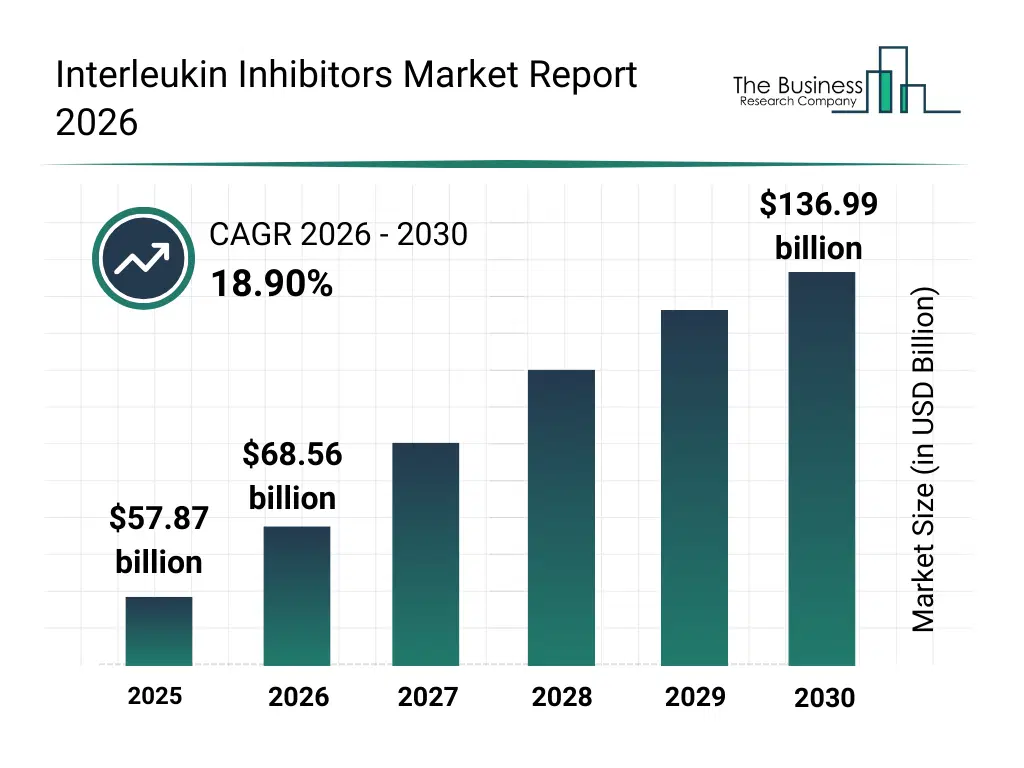
What Is The Interleukin Inhibitors Market Size and Share 2026?
The interleukin inhibitors market size has grown rapidly in recent years. It will grow from $57.87 billion in 2025 to $68.56 billion in 2026 at a compound annual growth rate (CAGR) of 18.5%. The growth in the historic period can be attributed to limited availability of interleukin inhibitors, growing prevalence of autoimmune diseases, increasing physician awareness and prescriptions, reliance on conventional therapies, expansion of hospital pharmacies and specialty clinics.What Is The Interleukin Inhibitors Market Growth Forecast?
The interleukin inhibitors market size is expected to see rapid growth in the next few years. It will grow to $136.99 billion in 2030 at a compound annual growth rate (CAGR) of 18.9%. The growth in the forecast period can be attributed to development of next-generation biologics, rising investment in personalized immunotherapies, expansion of online pharmacies and telemedicine platforms, increasing regulatory approvals for novel interleukin inhibitors, growing government and healthcare initiatives for chronic disease management. Major trends in the forecast period include rising adoption of interleukin inhibitors for autoimmune disorders, growth in biologic therapies targeting il-17, il-23, il-1, il-5, and il-6, increasing focus on personalized and targeted immunotherapies, expansion of hospital and specialty clinic distribution channels, integration of telemedicine and digital platforms in chronic disease management.
Global Interleukin Inhibitors Market Segmentation
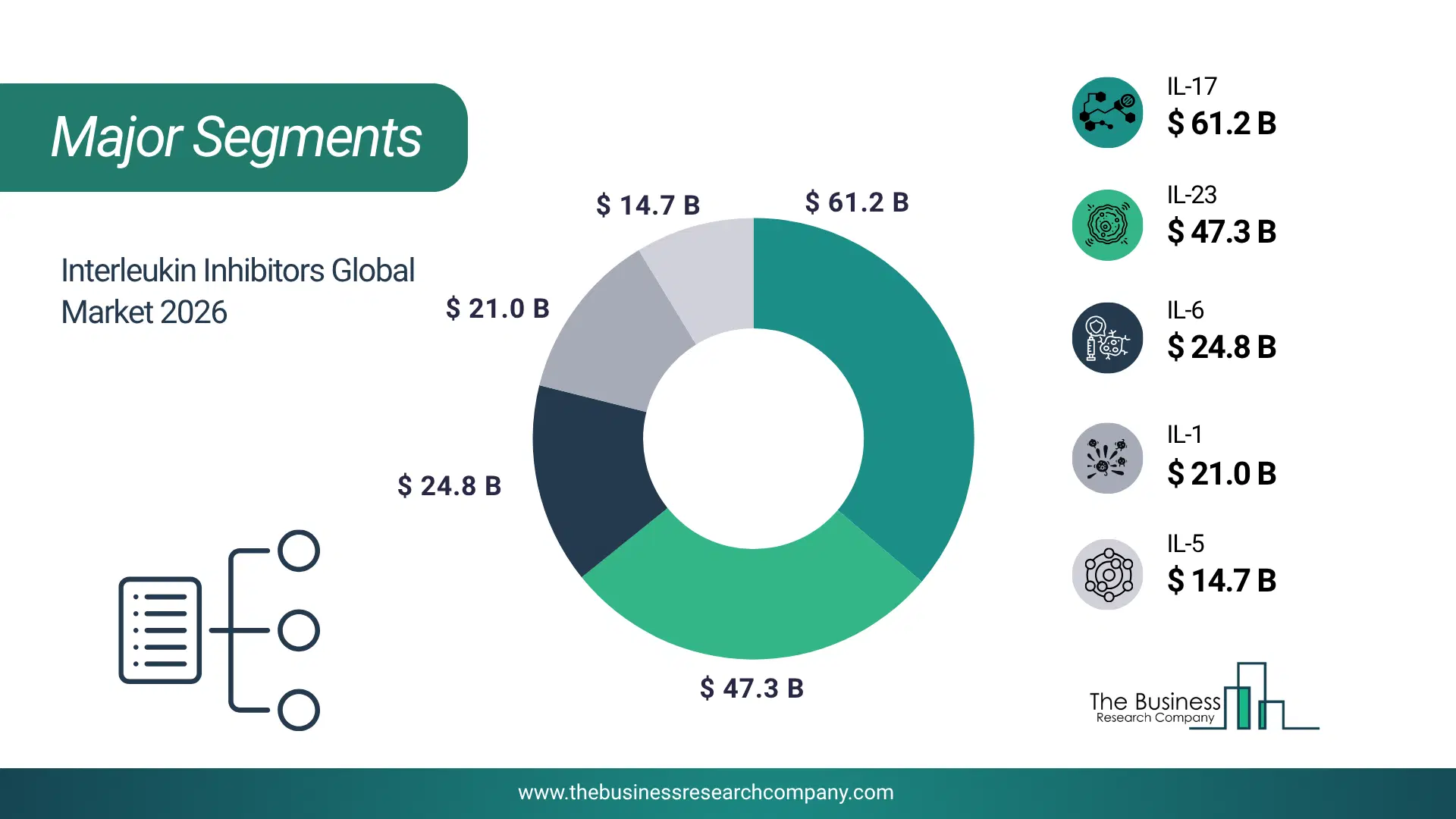
1) By Type: IL-17, IL-23, IL-1, IL-5, IL-6 2) By Application: Psoriasis, Psoriatic Arthritis, Rheumatoid Arthritis, Asthma, Inflammatory Bowel Disease, Other Applications 3) By Distribution Channel: Hospital Pharmacies, Retail Pharmacies, Online Pharmacies Subsegments: 1) By IL-17: Secukinumab, Ixekizumab, Brodalumab 2) By IL-23: Ustekinumab, Guselkumab, Tildrakizumab 3) By IL-1: Anakinra, Canakinumab 4) By IL-5: Mepolizumab, Reslizumab, Benralizumab 5) By IL-6: Tocilizumab, Sarilumab The top segments in the interleukin inhibitors market will be: • IL-17 will reach $61.24 billion by 2030. • IL-23 will reach $47.32 billion by 2030. • IL-6 will reach $24.82 billion by 2030. • IL-1 will reach $20.95 billion by 2030. • IL-5 will reach $14.67 billion by 2030.What Is The Driver Of The Interleukin Inhibitors Market?
The rising prevalence of bacterial infections is expected to drive the interleukin inhibitors market going forward. Bacterial infections refer to infections caused by bacteria, which are microscopic single-celled organisms. Interleukin inhibitors are extremely helpful in the treatment and prevention of bacterial diseases because they prevent the growth of bacteria. For instance, in March 2024, according to the Centers for Disease Control and Prevention, a US-based government agency, the number of tuberculosis cases rose from 8,320 in 2022 to 9,615 in 2023, reflecting an increase of 1,295 cases. Thus, the rising prevalence of bacterial infections is driving the interleukin inhibitors industry.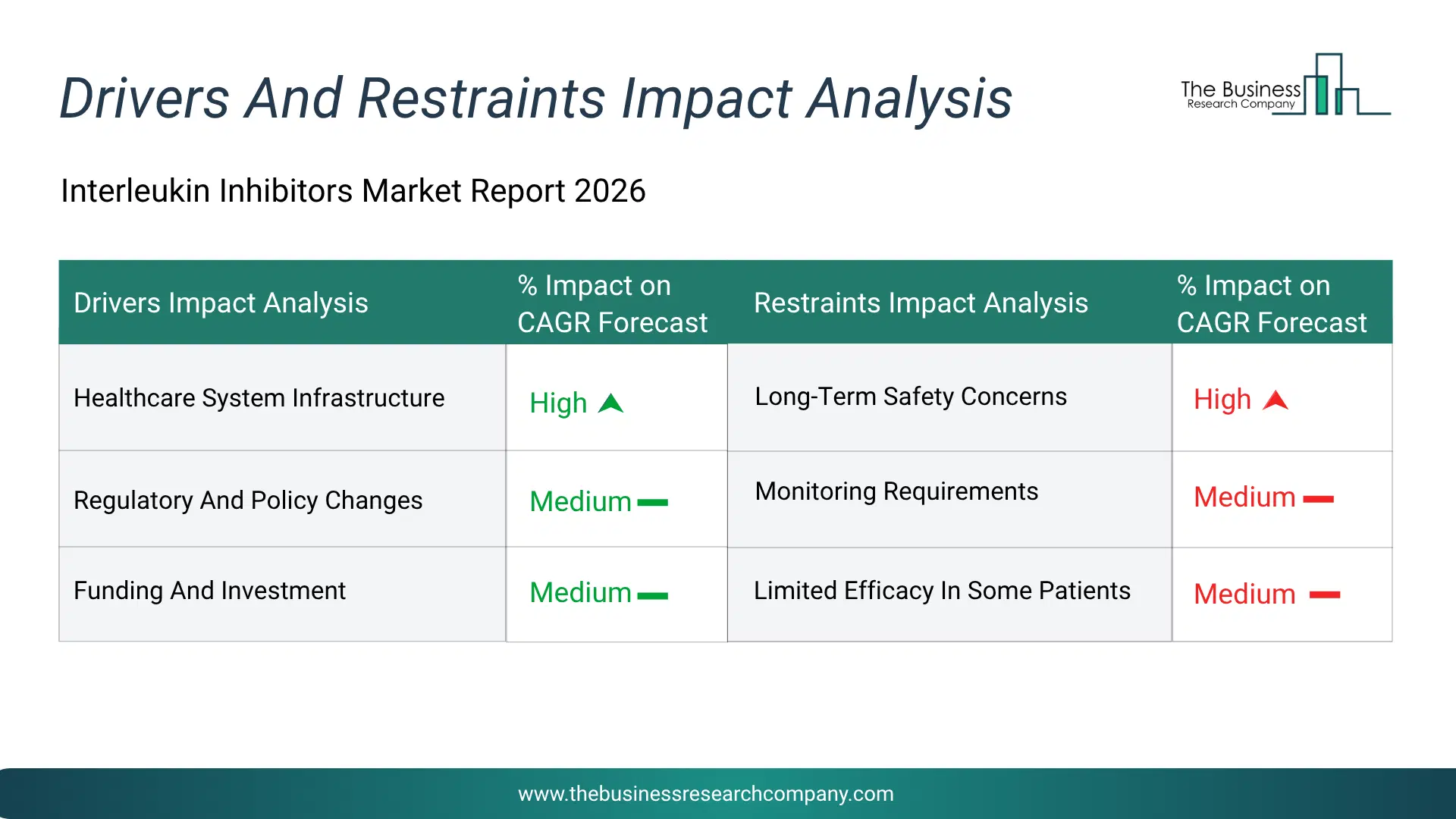
Infographic Chart Showing Key Market Drivers Analysis And Restraints For Interleukin Inhibitors Market
The chart presents an impact analysis of key drivers and restraints, quantifying their relative influence on the market's growth rate and helping assess the balance between growth enablers and limiting factors. This chart offers a high-level perspective; the full report contains more detailed insights.
How Will The Drivers Impact Growth In The Global Interleukin inhibitors Market?
• Healthcare System Infrastructure (High) – During the forecast period, the healthcare system infrastructure is expected to become a key growth driver for the interleukin inhibitors market by 2030. Well -developed healthcare infrastructure supports the diagnosis and long -term management of autoimmune and inflammatory diseases, which directly increases demand for interleukin inhibitors. Advanced hospital networks, specialty clinics, infusion centers, and biologics storage facilities enable proper administration and monitoring of these targeted therapies. Improved access to specialty care also facilitates earlier treatment initiation. In emerging markets, expanding tertiary care facilities and biologic handling capabilities are widening patient access. Strong infrastructure therefore directly enhances market penetration and sustained product utilization. • Regulatory And Policy Changes (Medium) – During the forecast period, the regulatory and policy changes is expected to emerge as a major factor driving the expansion of the interleukin inhibitors market by 2030. Supportive regulatory pathways, including accelerated approvals and priority reviews for biologics, help bring interleukin inhibitors to market faster. Clear biosimilar guidelines encourage competition while expanding affordability and patient access. Reimbursement policies and inclusion in national treatment guidelines significantly influence prescription volumes. Government-backed rare disease and immunology programs further stimulate adoption. Favorable policy environments therefore reduce market entry barriers and increase commercial uptake. • Funding And Investment (Medium) – During the forecast period, the funding and investment are expected to act as a key growth catalyst for the interleukin inhibitors market by 2030. Rising investment in immunology research and biologic drug development fuels innovation within the interleukin inhibitor space. Venture capital, strategic partnerships, and pharmaceutical r&d funding accelerate clinical trials and pipeline expansion. Public funding for inflammatory and autoimmune disease research also supports discovery of new cytokine targets. Strong financial backing reduces development risks and shortens time to commercialization. Sustained capital inflow, strengthens long-term market growth potential.How Will The Restraints Impact Growth In The Global Interleukin inhibitors Market?
• Long-Term Safety Concerns (High) – During the forecast period, the uncertainty regarding long-term safety outcomes acts as a restraint for the interleukin inhibitors market, particularly because these therapies are often used chronically. Extended immune modulation may raise concerns about cumulative risks such as malignancy or persistent immune suppression. Limited long-term real-world evidence in certain patient populations can make physicians cautious in prescribing. Regulatory agencies may also require post-marketing surveillance studies, adding complexity for manufacturers. These factors can slow widespread and sustained adoption. • Monitoring Requirements (Medium) – During the forecast period, the interleukin inhibitors often require regular laboratory testing and clinical monitoring to track liver function, infection markers, and overall immune response. This increases the burden on both healthcare providers and patients. Frequent hospital visits or laboratory assessments may reduce treatment convenience and adherence. In regions with limited healthcare access, monitoring requirements can restrict patient eligibility. The need for structured follow-up therefore acts as a practical barrier to market growth. • Limited Efficacy In Some Patients (Medium) – During the forecast period, the not all patients respond adequately to interleukin inhibitors, which can limit their universal applicability. Variability in disease biology and immune response may result in partial or non-response in certain individuals. This may lead physicians to switch to alternative biologics or combination therapies. Lack of predictive biomarkers in some indications further complicates treatment selection. As a result, inconsistent therapeutic outcomes can constrain overall market expansion.Key Players In The Global Interleukin Inhibitors Market
Major companies operating in the interleukin inhibitors market are Sanofi S.A., GlaxoSmithKline plc, Novartis International AG, Johnson & Johnson Services Inc., F. Hoffmann-La Roche Ltd., Eli Lilly and Company, AstraZeneca plc, Teva Pharmaceutical Industries Ltd., Regeneron Pharmaceuticals Inc., Bausch Health Companies Inc., AbbVie Inc., Sun Pharmaceutical Industries Limited, Boehringer Ingelheim International GmbH, Janssen Biotech Inc., Ortho Dermatologics, Amgen Inc., Celgene Corporation, Bristol-Myers Squibb Company, Pfizer Inc., Merck & Co. Inc., Takeda Pharmaceutical Company Limited, Biogen Inc., Incyte Corporation, Kyowa Kirin Co Ltd., Astellas Pharma Inc., Ipsen Biopharmaceuticals Inc.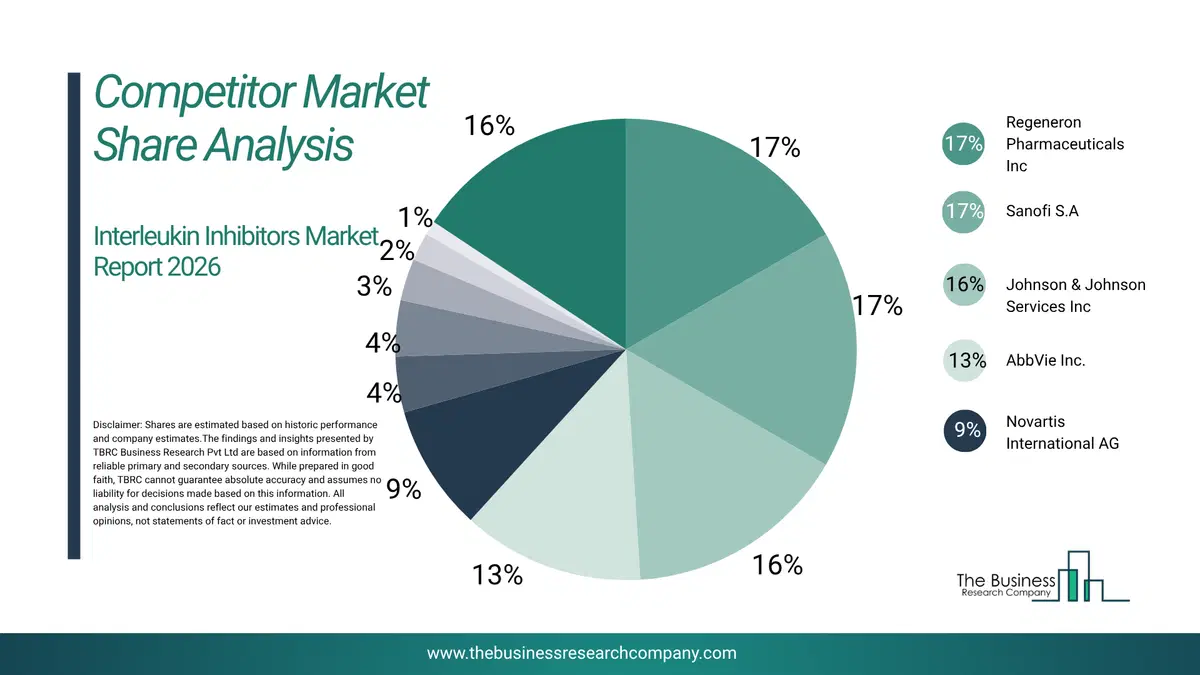
This chart is for illustrative purposes; the full report includes a detailed competitor analysis and comprehensive overview of the top 10 companies in the market.
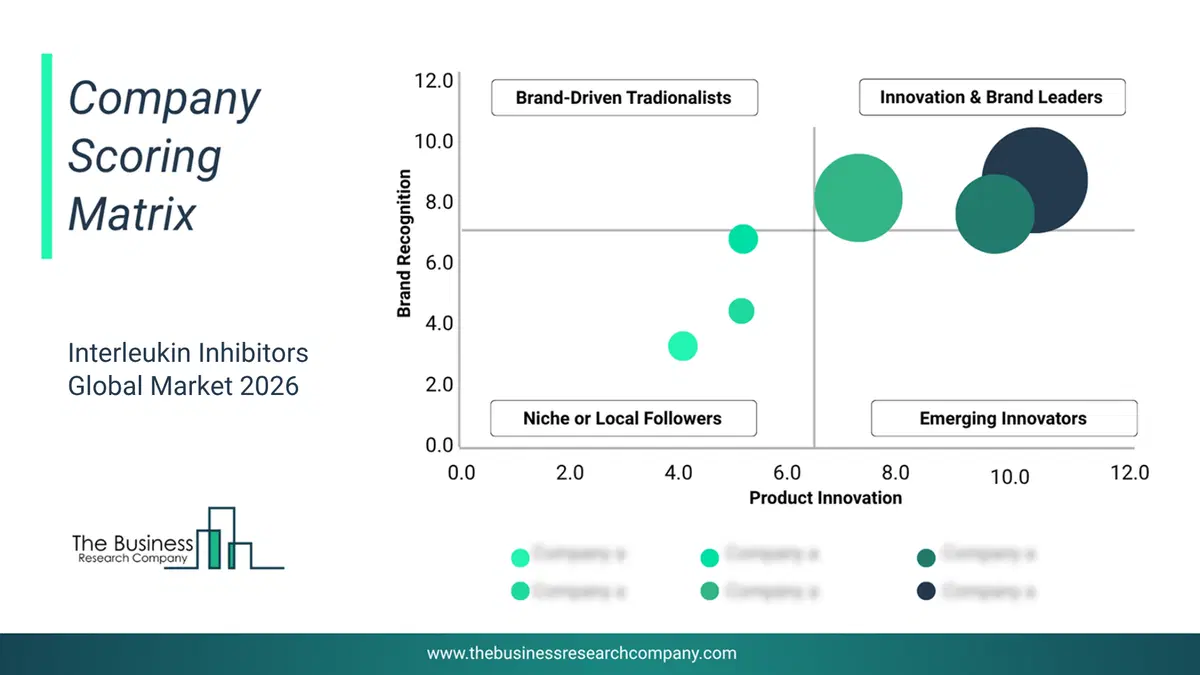
This chart maps companies by product innovation and brand strength, with bubble size indicating relative revenue, helping identify market leaders, challengers, and niche players. This is an illustrative chart; the full report provides a complete and accurate competitive analysis.
Global Interleukin Inhibitors Market Trends and Insights
Major companies operating in the interleukin inhibitors market are focusing on developing innovative therapies such as monoclonal antibody biosimilar to enhance treatment efficacy, reduce costs, and improve patient accessibility. A monoclonal antibody biosimilar is a biologic product highly similar to an approved reference antibody, with no clinically meaningful differences in safety or efficacy. For instance, in October 2025, Celltrion Inc., a South Korea-based biopharmaceutical company, launched AVTOZMA (tocilizumab-anoh) intravenous (IV) formulation in the United States. The therapy targets interleukin-6 receptors to manage conditions such as rheumatoid arthritis and other inflammatory disorders. By expanding the availability of advanced biologic treatments, the launch aims to improve patient access and clinical outcomes.What Are Latest Mergers And Acquisitions In The Interleukin Inhibitors Market?
In August 2023, Eli Lilly and Company, a US-based global pharmaceutical company, acquired DICE Therapeutics, Inc., for an undisclosed amount. With this acquisition, Lilly aims to expand its immunology portfolio, accelerate the development of novel therapies, and strengthen its pipeline in autoimmune and inflammatory diseases. DICE Therapeutics, Inc., is a US-based biopharmaceutical company that specializes in developing interleukin inhibitors.
Regional Insights
North America was the largest region in the interleukin inhibitors market in 2025. The regions covered in this market report are Asia-Pacific, South East Asia, Western Europe, Eastern Europe, North America, South America, Middle East, Africa. The countries covered in this market report are Australia, Brazil, China, France, Germany, India, Indonesia, Japan, Taiwan, Russia, South Korea, UK, USA, Canada, Italy, Spain.What Defines the Interleukin Inhibitors Market?
The interleukin inhibitors market consists of sales of anakinra, canakinumab, and rilonacept. Values in this market are ''factory gate values,'' that is the value of goods sold by the manufacturers or creators of the goods, whether to other entities (including downstream manufacturers, wholesalers, distributors, and retailers) or directly to end customers. The value of goods in this market includes related services sold by the creators of the goods.How is Market Value Defined and Measured?
The market value is defined as the revenues that enterprises gain from the sale of goods and/or services within the specified market and geography through sales, grants, or donations in terms of the currency (in USD unless otherwise specified). The revenues for a specified geography are consumption values that are revenues generated by organizations in the specified geography within the market, irrespective of where they are produced. It does not include revenues from resales along the supply chain, either further along the supply chain or as part of other products.
This chart presents market attractiveness based on a quantitative evaluation of growth, competition, strategic alignment, and risk, offering a clear view of opportunity areas for decision-making. This chart is for illustrative purposes; the full report contains the complete analysis.

This chart highlights the Total Addressable Market (TAM) by estimating the maximum revenue opportunity using an assumption-driven approach, supporting strategic planning and opportunity sizing across markets. The chart is illustrative; the full report provides a more comprehensive analysis.
What Key Data and Analysis Are Included in the Interleukin Inhibitors Market Report 2026?
The interleukin inhibitors market research report is one of a series of new reports from The Business Research Company that provides market statistics, including industry global market size, regional shares, competitors with the market share, detailed market segments, market trends and opportunities, and any further data you may need to thrive in the interleukin inhibitors industry. The market research report delivers a complete perspective of everything you need, with an in-depth analysis of the current and future state of the industry.Interleukin Inhibitors Market Report Forecast Analysis
| Report Attribute | Details |
|---|---|
| Market Size Value In 2026 | $68.56 billion |
| Revenue Forecast In 2030 | $136.99 billion |
| Growth Rate | CAGR of 18.5% from 2026 to 2030 |
| Base Year For Estimation | 2025 |
| Actual Estimates/Historical Data | 2020-2025 |
| Forecast Period | 2026 - 2030 |
| Market Representation | Revenue in USD Billion and CAGR from 2026 to 2030 |
| Segments Covered | Type, Application, Distribution Channel |
| Regional Scope | Asia-Pacific, Western Europe, Eastern Europe, North America, South America, Middle East, Africa |
| Country Scope | The countries covered in the report are Australia, Brazil, China, France, Germany, India, Indonesia, Japan, Taiwan, Russia, South Korea, UK, USA, Canada, Italy, Spain. |
| Key Companies Profiled | Sanofi S.A., GlaxoSmithKline plc, Novartis International AG, Johnson & Johnson Services Inc., F. Hoffmann-La Roche Ltd., Eli Lilly and Company, AstraZeneca plc, Teva Pharmaceutical Industries Ltd., Regeneron Pharmaceuticals Inc., Bausch Health Companies Inc., AbbVie Inc., Sun Pharmaceutical Industries Limited, Boehringer Ingelheim International GmbH, Janssen Biotech Inc., Ortho Dermatologics, Amgen Inc., Celgene Corporation, Bristol-Myers Squibb Company, Pfizer Inc., Merck & Co. Inc., Takeda Pharmaceutical Company Limited, Biogen Inc., Incyte Corporation, Kyowa Kirin Co Ltd., Astellas Pharma Inc., Ipsen Biopharmaceuticals Inc. |
| Customization Scope | Request for Customization |
| Pricing And Purchase Options | Explore Purchase Options |