
Kidney Cancer Drugs Market Report 2026
Global Outlook – By Cancer Type (Renal Cell Carcinoma (RCC), Transitional Cell Carcinoma (TCC) Or Urothelial Cell Carcinoma (UCC)), By Product (Nexavar (Sorafenib), Sutent (Sunitinib), Afinitor (Everolimus), Votrient (Pazopanib), Avastin (Bevacizumab), Inlyta (Axitinib), Other Products), By End Users (Hospitals, Clinics, Research Center, Other End-Users) – Market Size, Trends, Strategies, and Forecast to 2030
Kidney Cancer Drugs Market Overview
• Kidney Cancer Drugs market size has reached to $8.53 billion in 2025 • Expected to grow to $10.82 billion in 2030 at a compound annual growth rate (CAGR) of 5.1% • Growth Driver: Surging Incidence Of Renal Cancer Fuels Growth In The Kidney Cancer Drugs Market • Market Trend: Improving Drug Longevity And Accessibility Through Shelf Stability Technology • North America was the largest region in 2025 and Middle East is the fastest growing region.Market Gains By 2030 – Top Opportunities By Segment
Market Gain identifies the most promising market opportunities by highlighting the segments or products expected to generate the highest incremental revenue growth over the next five years.
What Is Covered Under Kidney Cancer Drugs Market?
Kidney cancer drugs that can treat kidney cancer. Because they can reach cancer cells practically anywhere in the body, these treatments are known as systemic therapy. Several different types of medications may be used, depending on the type of kidney cancer. It functions by stopping tyrosine kinases, which are crucial proteins in cancer cells that aid in growth and survival, or angiogenesis, the development of new blood vessels that feed malignancies. The main types of kidney cancer are renal cell carcinoma (RCC), urothelial carcinoma, and others (renal sarcoma, renal lymphoma). Renal cell carcinoma is a disease in which malignant (cancer) cells form in the kidney's tubules. The different products involved are Nexavar (sorafenib), Sutent (sunitinib), Afinitor (everolimus), Voting (pazopanib), Avastin (bevacizumab), Inlyta (axitinib), to rising (temsirolimus), Proleukin (aldesleukin), and others that are used by hospitals, clinics, research centers, etc.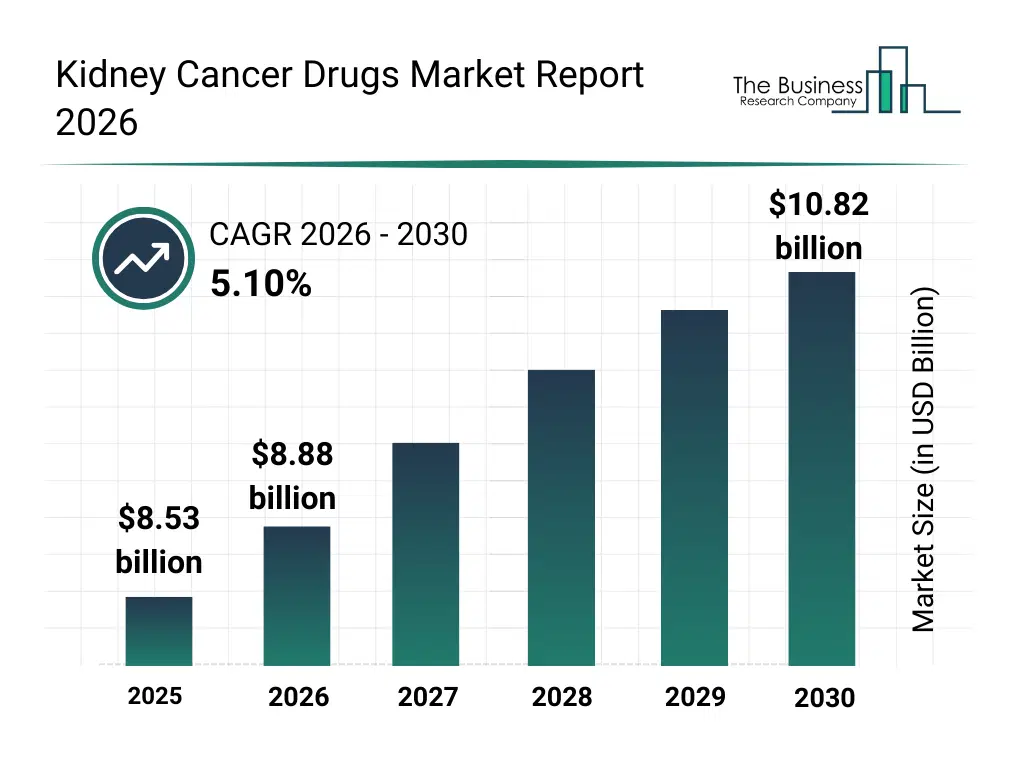
What Is The Kidney Cancer Drugs Market Size and Share 2026?
The kidney cancer drugs market size has grown steadily in recent years. It will grow from $8.53 billion in 2025 to $8.88 billion in 2026 at a compound annual growth rate (CAGR) of 4.1%. The growth in the historic period can be attributed to limited treatment options, late-stage diagnosis, conventional chemotherapy dependence, low immunotherapy adoption, lack of precision medicine,.What Is The Kidney Cancer Drugs Market Growth Forecast?
The kidney cancer drugs market size is expected to see strong growth in the next few years. It will grow to $10.82 billion in 2030 at a compound annual growth rate (CAGR) of 5.1%. The growth in the forecast period can be attributed to growth in targeted therapies, increasing r&d investment, advancement in genomics, rising awareness of precision medicine, integration of ai in drug discovery. Major trends in the forecast period include targeted therapy development, immunotherapy expansion, angiogenesis inhibition research, tyrosine kinase inhibitor optimization, combination therapy strategies.
Global Kidney Cancer Drugs Market Segmentation
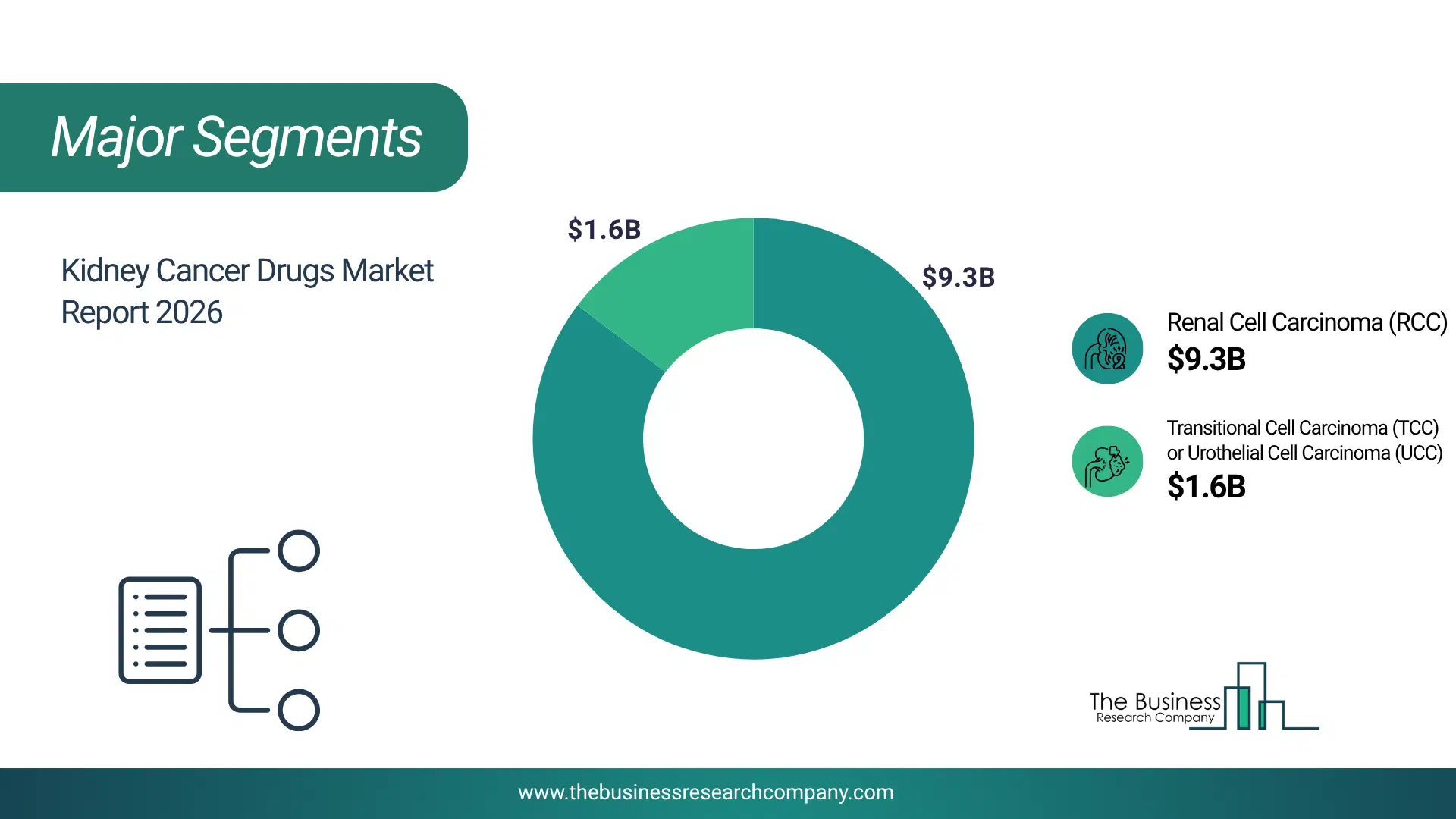
1) By Cancer Type: Renal Cell Carcinoma (RCC), Transitional Cell Carcinoma (TCC) Or Urothelial Cell Carcinoma (UCC) 2) By Product: Nexavar (Sorafenib), Sutent (Sunitinib), Afinitor (Everolimus), Votrient (Pazopanib), Avastin (Bevacizumab), Inlyta (Axitinib), Other Products 3) By End Users: Hospitals, Clinics, Research Center, Other End-Users Subsegments: 1) By Renal Cell Carcinoma (RCC): Targeted Therapies, Immune Checkpoint Inhibitors, Cytokine Therapies 2) By Transitional Cell Carcinoma (TCC) Or Urothelial Cell Carcinoma (UCC): Chemotherapy Agents, Immunotherapy Agents, Antibody-Drug Conjugates (ADCs) The top segments in the kidney cancer drugs market will be: • Renal Cell Carcinoma (RCC) will reach $9.3 billion by 2030. • Transitional Cell Carcinoma (TCC) or Urothelial Cell Carcinoma (UCC) will reach $1.52 billion by 2030.What Is The Driver Of The Kidney Cancer Drugs Market?
The rise in the incidence of renal cancer acts as one of the major drivers of the kidney cancer drugs market. Renal cancer is a type of cancer that originates in the kidneys, most commonly as renal cell carcinoma. Changes in the lifestyle of people, the consumption of tobacco, and an unhealthy diet are some factors that contribute to the growth of these renal cancer cells. Kidney cancer drugs help treat renal cancer by targeting and killing cancer cells, slowing tumor growth, or blocking signals that promote cancer spread. For instance, in 2025, according to the American Cancer Society, a US-based professional organization, in 2025, approximately 80,980 new cases of kidney (renal) cancer are expected to be diagnosed in the US, with an estimated 14,510 deaths resulting from the disease. Thus, driving the growth of the kidney cancer drugs industry.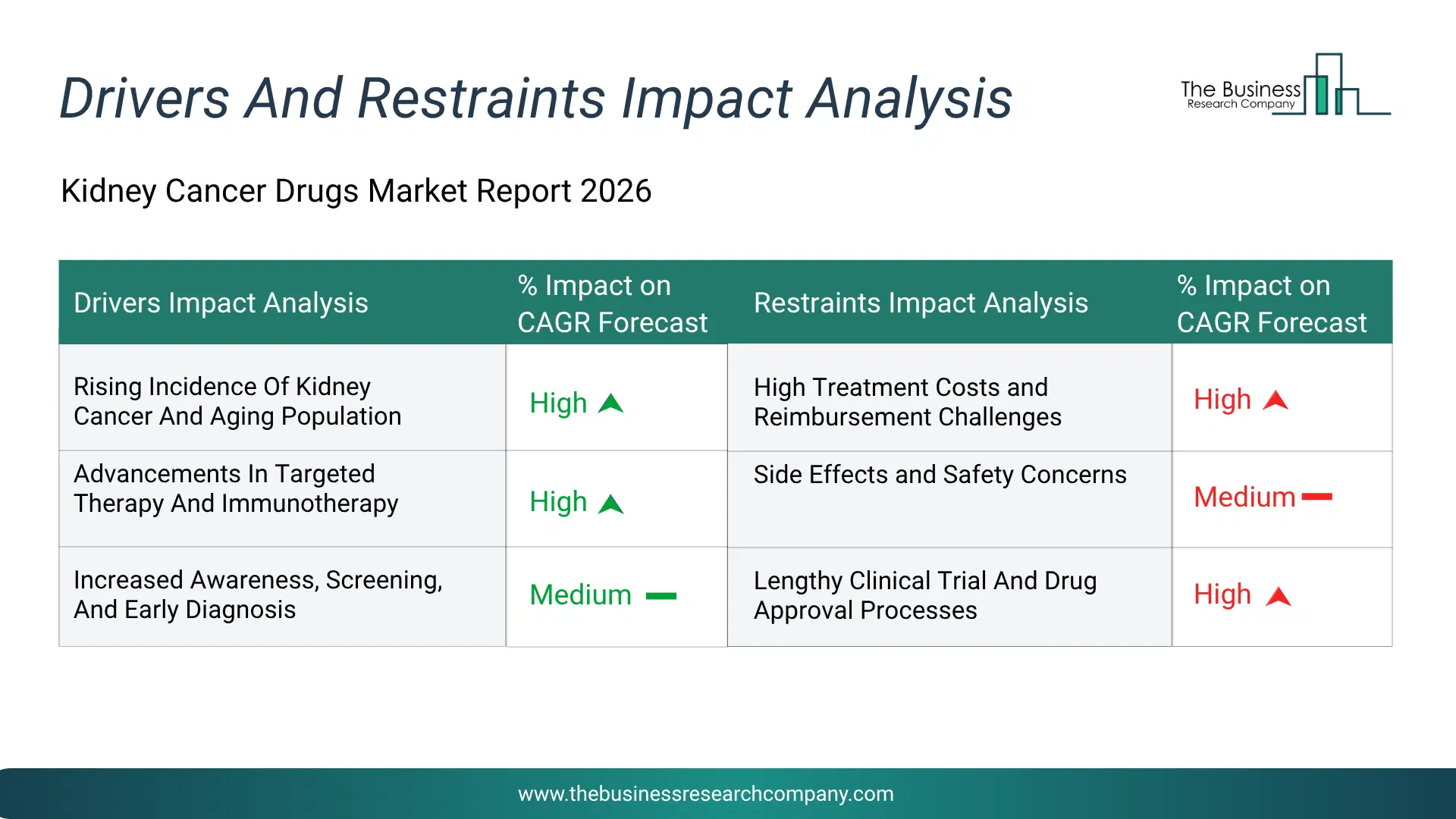
Infographic Chart Showing Key Market Drivers Analysis And Restraints For Kidney Cancer Drugs Market
The chart presents an impact analysis of key drivers and restraints, quantifying their relative influence on the market's growth rate and helping assess the balance between growth enablers and limiting factors. This chart offers a high-level perspective; the full report contains more detailed insights.
How Will The Drivers Impact Growth In The Global Kidney Cancer Drugs Market?
• Rising Incidence Of Kidney Cancer And Aging Population (High) – During the forecast period, the rising incidence of kidney cancer and aging population is expected to become a key growth driver for the kidney cancer drugs market by 2030. Lifestyle factors, including obesity, smoking, and environmental exposures, are contributing to increased cancer cases. As the elderly population grows, the demand for effective therapies for renal cell carcinoma and other kidney cancers rises, with healthcare systems and oncologists increasingly focusing on targeted treatments to enhance survival and quality of life, thereby boosting global adoption of advanced kidney cancer drugs. • Advancements In Targeted Therapy And Immunotherapy (High) – During the forecast period, the advancements in targeted therapy and immunotherapy is expected to emerge as a major factor driving the expansion of the kidney cancer drugs market by 2030. The development of targeted therapies, including tyrosine kinase inhibitors (tkis), immune checkpoint inhibitors (icis), and combination regimens, has significantly improved treatment outcomes for kidney cancer patients. These therapies provide personalized approaches that more effectively target cancer cells while minimizing systemic toxicity compared to traditional chemotherapy. Ongoing investment by pharmaceutical companies in r&d aims to develop novel drugs, improve efficacy, and broaden therapeutic indications, driving continuous innovation in kidney cancer treatment. • Increased Awareness, Screening, And Early Diagnosis (Medium) – During the forecast period, the increased awareness, screening, and early diagnosis is expected to act as a key growth catalyst for the kidney cancer drugs market by 2030. Enhanced awareness programs, early detection initiatives, and advanced diagnostic imaging are enabling timely diagnosis and treatment of kidney cancer. Detecting the disease at an early stage allows for more effective use of kidney cancer drugs, including targeted therapies and immunotherapies. Efforts by governments, ngos, and healthcare providers to educate populations on risk factors and screening methods are increasing patient enrollment for treatment, making rising awareness and improved access to early diagnosis key drivers of market growth.How Will The Restraints Impact Growth In The Global Kidney Cancer Drugs Market?
• High Treatment Costs and Reimbursement Challenges (High) – During the forecast period, the kidney cancer drugs, especially novel targeted therapies and immunotherapies, often come with high costs, which can limit patient access, particularly in emerging markets. Reimbursement policies vary widely, and out-of-pocket expenses may deter patients from continuing treatment. The high cost of therapy acts as a major restraint, potentially slowing market growth despite rising incidence and availability of advanced drugs. Price sensitivity and healthcare budget constraints in certain regions pose a significant barrier to widespread adoption. • Side Effects and Safety Concerns (Medium) – During the forecast period, the although targeted therapies and immunotherapies are more effective than traditional chemotherapy, they can still cause adverse effects such as fatigue, hypertension, immune-related complications, and organ toxicity. Concerns about drug safety, patient tolerability, and long-term side effects can impact physician prescribing behavior and patient compliance. These safety concerns act as a restraint, especially in populations with comorbidities or elderly patients who may be more susceptible to treatment-related complications. • Lengthy Clinical Trial And Drug Approval Processes (High) – During the forecast period, the developing kidney cancer drugs requires extensive clinical trials to demonstrate safety, efficacy, and long-term patient benefits. These trials are often expensive, time-consuming, and subject to strict regulatory scrutiny. Delays in approvals can postpone product launches and reduce revenue generation opportunities. The lengthy development cycle also increases investment risks for pharmaceutical companies.Key Players In The Global Kidney Cancer Drugs Market
Major companies operating in the kidney cancer drugs market are Pfizer Inc., Novartis AG, Exelixis Inc., F. Hoffmann-La Roche AG, Bristol Myers Squibb Company, Bayer AG, Merck & Co. Inc., EUSA Pharma Inc., UroGen Pharma Ltd., Natco Pharma, CStone Pharma, BeiGene, Takeda Pharmaceuticals, Astellas Pharma Inc, AstraZeneca plc, GlaxoSmithKline plc, Amgen Inc, Eli Lilly and Company, Abbvie, Johnson & Johnson, Sanofi, AVEO Oncology, Teva Pharmaceutical Industries Ltd.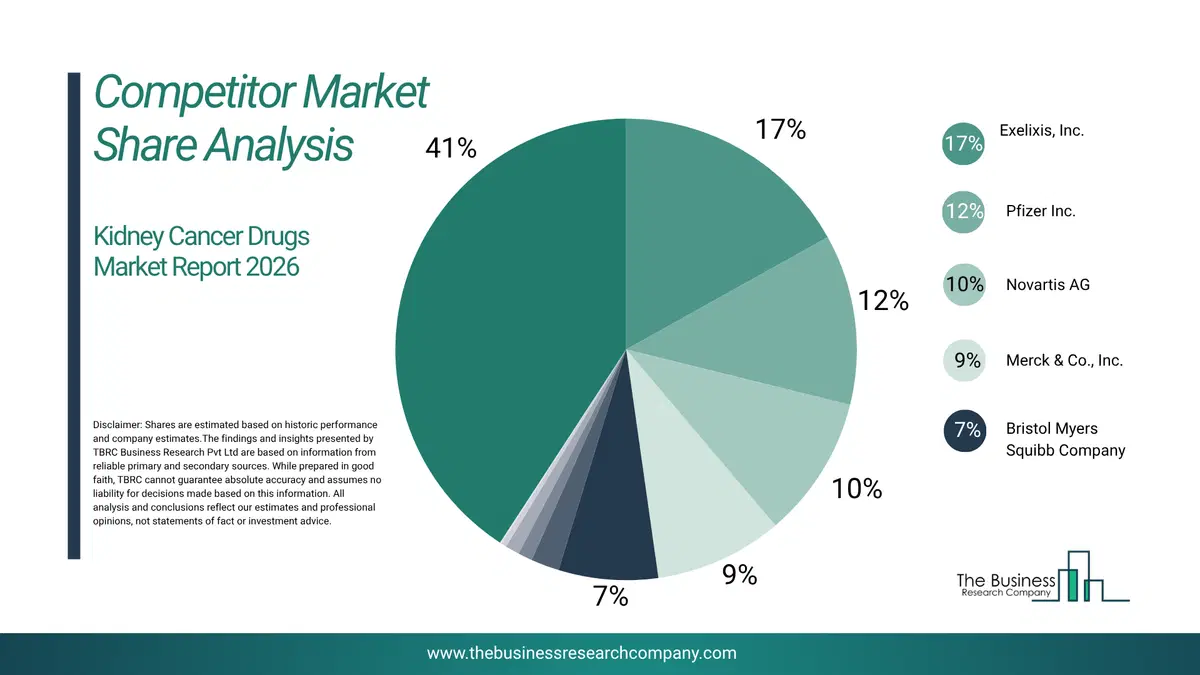
This chart is for illustrative purposes; the full report includes a detailed competitor analysis and comprehensive overview of the top 10 companies in the market.
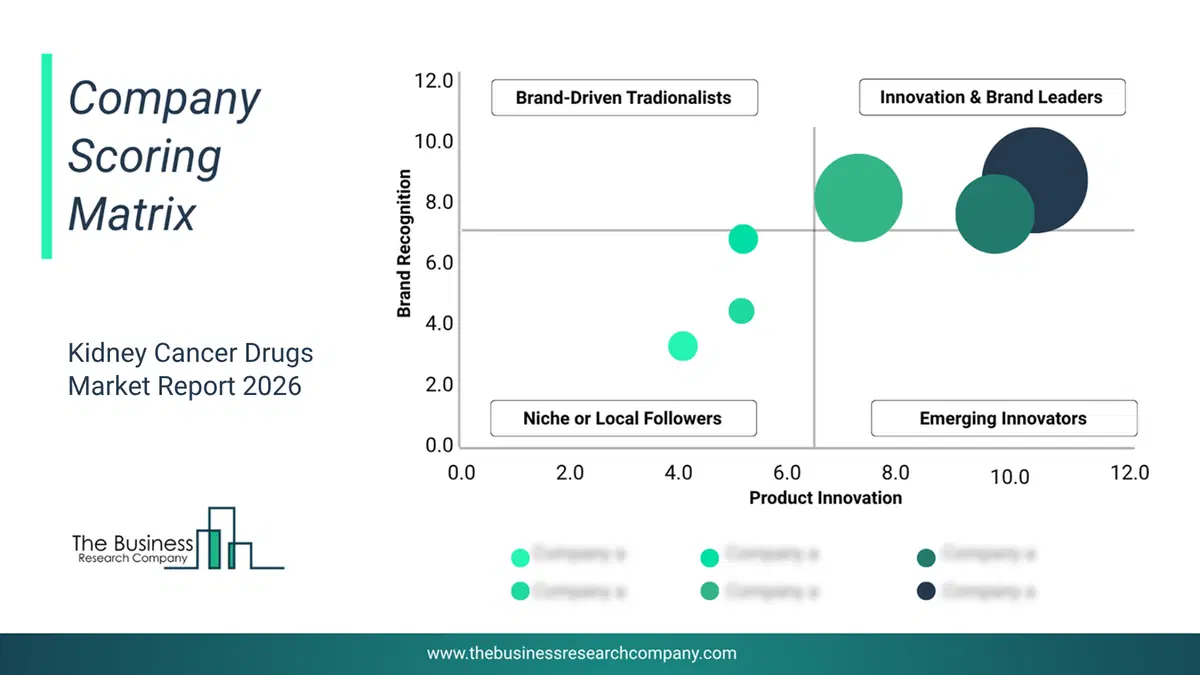
This chart maps companies by product innovation and brand strength, with bubble size indicating relative revenue, helping identify market leaders, challengers, and niche players. This is an illustrative chart; the full report provides a complete and accurate competitive analysis.
Global Kidney Cancer Drugs Market Trends and Insights
Major companies operating in the kidney cancer drugs market are focusing on technologies, such as shelf stability technology, to enhance product longevity, improve storage convenience, and ensure reliable access to critical treatments for patients and healthcare providers. Shelf stability technology refers to formulations and packaging methods that extend the shelf life of pharmaceutical products without the need for refrigeration or special handling. This technology ensures that drugs remain effective and safe for use over an extended period, improving accessibility and convenience in storage and distribution. For instance, in April 2024, Amneal Pharmaceuticals Inc., a US-based pharmaceutical company, launched PEMRYDI RTU. PEMRYDI RTU is the first and only ready-to-use presentation of pemetrexed for injection, which does not require reconstitution, dilution, or refrigeration. This innovation simplifies the preparation process for healthcare providers.What Are Latest Mergers And Acquisitions In The Kidney Cancer Drugs Market?
In March 2024, Johnson & Johnson, a US-based multinational healthcare company, completed the acquisition of Ambrx, Inc., for an undisclosed amount. With this acquisition, Johnson & Johnson aims to strengthen its biologics and protein therapeutics pipeline, enhance its capabilities in next-generation antibody and protein engineering, and accelerate the development of innovative therapies. Ambrx, Inc., is a US-based biopharmaceutical company, that offers kidney cancer drugs.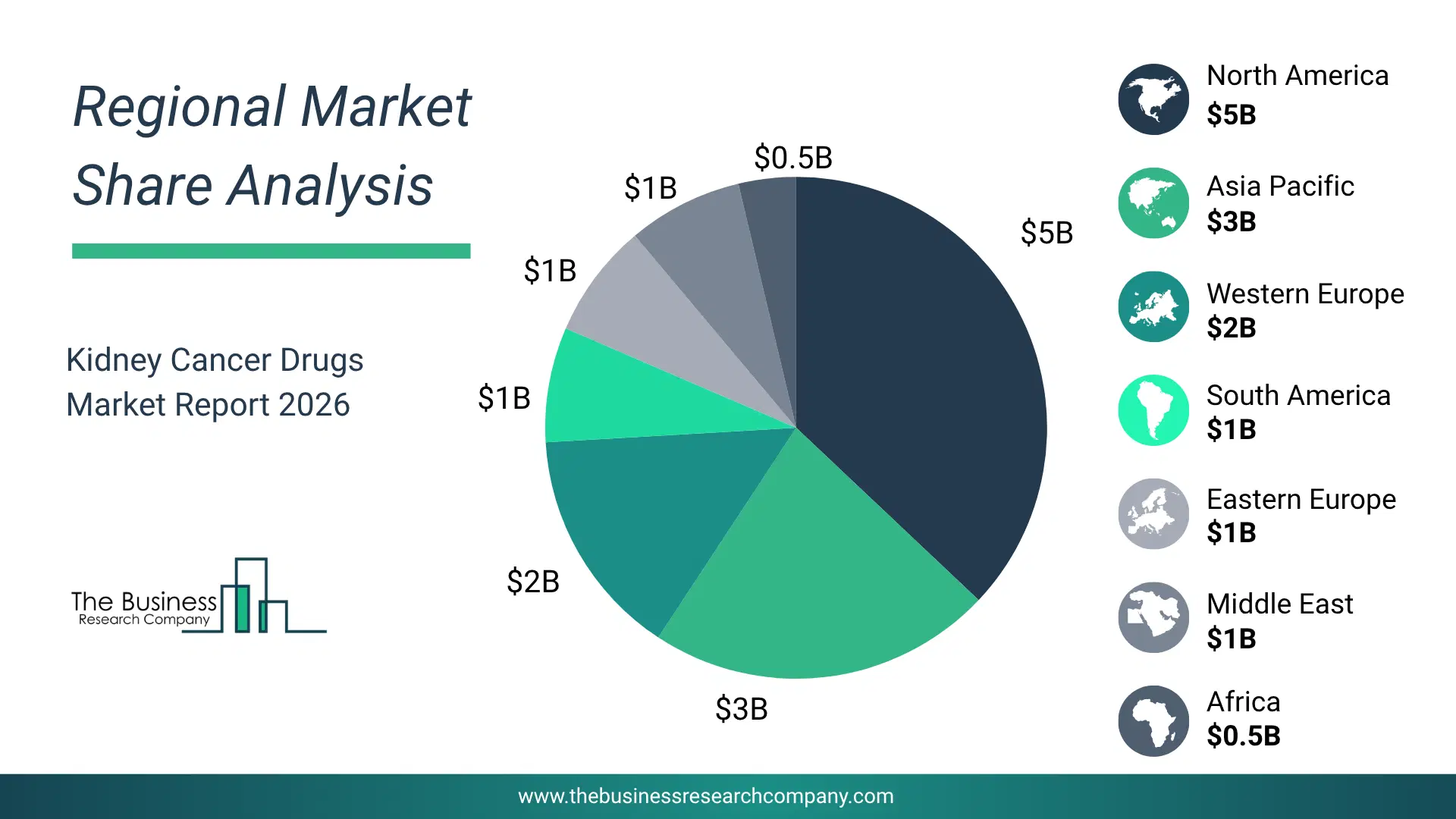
Regional Insights
North America was the largest region in the kidney cancer drugs market in 2025. Middle East is expected to be the fastest-growing region in the global kidney cancer drugs market share during the forecast period. The regions covered in this market report are Asia-Pacific, South East Asia, Western Europe, Eastern Europe, North America, South America, Middle East, Africa. The countries covered in this market report are Australia, Brazil, China, France, Germany, India, Indonesia, Japan, Taiwan, Russia, South Korea, UK, USA, Canada, Italy, Spain.What Defines the Kidney Cancer Drugs Market?
The kidney cancer drugs market consists of sales of axitinib (Inlyta), cabozantinib (cabometyx), and pazopanib. Values in this market are factory gate values, that is the value of goods sold by the manufacturers or creators of the goods, whether to other entities (including downstream manufacturers, wholesalers, distributors and retailers) or directly to end customers. The value of goods in this market includes related services sold by the creators of the goods.How is Market Value Defined and Measured?
The market value is defined as the revenues that enterprises gain from the sale of goods and/or services within the specified market and geography through sales, grants, or donations in terms of the currency (in USD unless otherwise specified). The revenues for a specified geography are consumption values that are revenues generated by organizations in the specified geography within the market, irrespective of where they are produced. It does not include revenues from resales along the supply chain, either further along the supply chain or as part of other products.
This chart presents market attractiveness based on a quantitative evaluation of growth, competition, strategic alignment, and risk, offering a clear view of opportunity areas for decision-making. This chart is for illustrative purposes; the full report contains the complete analysis.

This chart highlights the Total Addressable Market (TAM) by estimating the maximum revenue opportunity using an assumption-driven approach, supporting strategic planning and opportunity sizing across markets. The chart is illustrative; the full report provides a more comprehensive analysis.
What Key Data and Analysis Are Included in the Kidney Cancer Drugs Market Report 2026?
The kidney cancer drugs market research report is one of a series of new reports from The Business Research Company that provides market statistics, including industry global market size, regional shares, competitors with the market share, detailed market segments, market trends and opportunities, and any further data you may need to thrive in the kidney cancer drugs industry. The market research report delivers a complete perspective of everything you need, with an in-depth analysis of the current and future state of the industry.Kidney Cancer Drugs Market Report Forecast Analysis
| Report Attribute | Details |
|---|---|
| Market Size Value In 2026 | $8.88 billion |
| Revenue Forecast In 2030 | $10.82 billion |
| Growth Rate | CAGR of 5.1% from 2026 to 2030 |
| Base Year For Estimation | 2025 |
| Actual Estimates/Historical Data | 2020-2025 |
| Forecast Period | 2026 - 2030 |
| Market Representation | Revenue in USD Billion and CAGR from 2026 to 2030 |
| Segments Covered | Cancer Type, Product, End Users |
| Regional Scope | Asia-Pacific, Western Europe, Eastern Europe, North America, South America, Middle East, Africa |
| Country Scope | The countries covered in the report are Australia, Brazil, China, France, Germany, India, ... |
| Key Companies Profiled | Pfizer Inc., Novartis AG, Exelixis Inc., F. Hoffmann-La Roche AG, Bristol Myers Squibb Company, Bayer AG, Merck & Co. Inc., EUSA Pharma Inc., UroGen Pharma Ltd., Natco Pharma, CStone Pharma, BeiGene, Takeda Pharmaceuticals, Astellas Pharma Inc, AstraZeneca plc, GlaxoSmithKline plc, Amgen Inc, Eli Lilly and Company, Abbvie, Johnson & Johnson, Sanofi, AVEO Oncology, Teva Pharmaceutical Industries Ltd. |
| Customization Scope | Request for Customization |
| Pricing And Purchase Options | Explore Purchase Options |