
Proteomics Market Report 2026
Global Outlook – By Component (Reagents, Instruments, Software), By Instrument (Protein Microarrays, Spectroscopy, X-ray Crystallography, Chromatography, Electrophoresis, Surface Plasmon Resonance, Protein Fractionation ), By Type (Core Instrument Services, Proteomic Analytical Services) - Market Size, Trends, And Global Forecast 2026-2030
Proteomics Market Overview
• Proteomics market size has reached to $39.37 billion in 2025 • Expected to grow to $73.33 billion in 2030 at a compound annual growth rate (CAGR) of 13.2% • Growth Driver: Proteomics Market Growth Driven By The Expanding Pharmaceutical Industry • Market Trend: Increasing Focus On Developing Precise Quantitative Analysis Kit To Gain A Competitive Edge • North America was the largest region in 2025 and Western Europe is the fastest growing region.Market Gains By 2030 – Top Opportunities By Segment
Market Gain identifies the most promising market opportunities by highlighting the segments or products expected to generate the highest incremental revenue growth over the next five years.
What Is Covered Under Proteomics Market?
Proteomics is the study of the structure and functions of proteins that are used in drug discovery, diagnosis, and treatment of diseases. Proteomics is used to evaluate the protein production rate, the involvement of proteins in metabolic pathways, and the modifications of proteins. The main types of proteomics are protein microarrays, spectroscopy, X-ray crystallography, chromatography, electrophoresis, surface plasmon resonance, and protein fractionation. The various components used are reagents, instruments, and software that are used for proteomic analytical services and instrument services.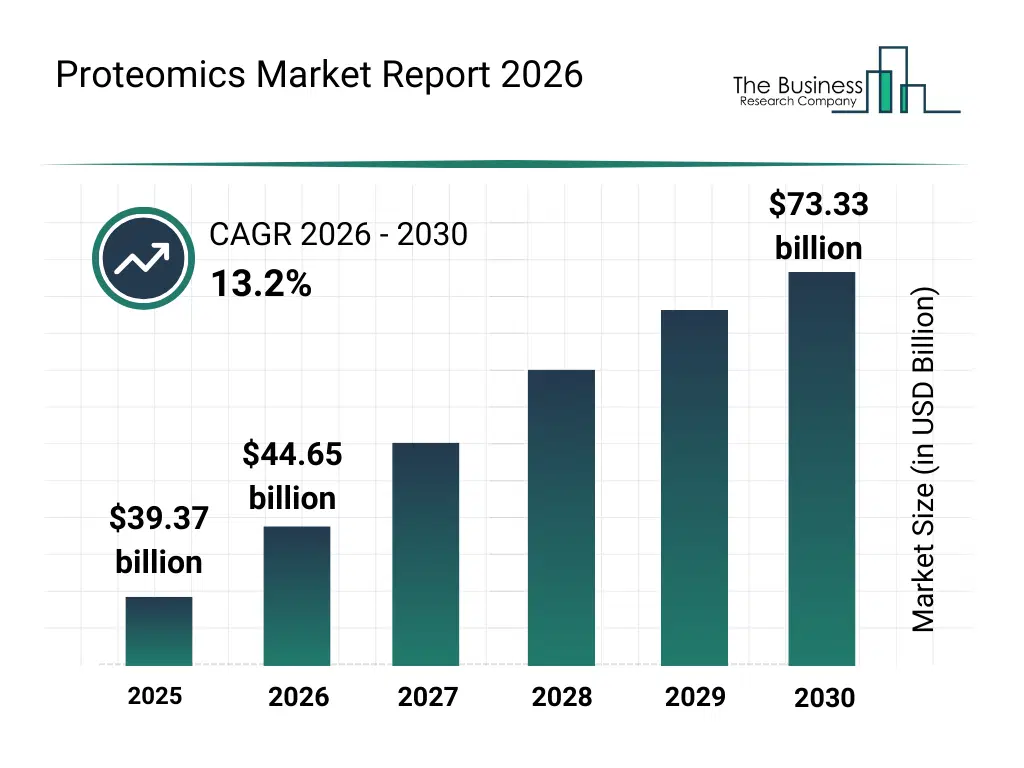
What Is The Proteomics Market Size and Share 2026?
The proteomics market size has grown rapidly in recent years. It will grow from $39.37 billion in 2025 to $44.65 billion in 2026 at a compound annual growth rate (CAGR) of 13.4%. The growth in the historic period can be attributed to expansion of life sciences research funding, increasing use of proteomics in drug discovery, availability of high-performance analytical instruments, growth of academic research programs, rising demand for biomarker discovery.What Is The Proteomics Market Growth Forecast?
The proteomics market size is expected to see rapid growth in the next few years. It will grow to $73.33 billion in 2030 at a compound annual growth rate (CAGR) of 13.2%. The growth in the forecast period can be attributed to increasing investments in precision medicine initiatives, growing demand for multi-omics analysis, expansion of clinical proteomics applications, rising adoption of AI-driven data analysis tools, increasing focus on disease pathway analysis. Major trends in the forecast period include increasing adoption of advanced proteomic analysis techniques, rising use of mass spectrometry-based proteomics, growing integration of proteomics with genomics data, expansion of cloud-based proteomics platforms, enhanced focus on quantitative proteomics.
Global Proteomics Market Segmentation
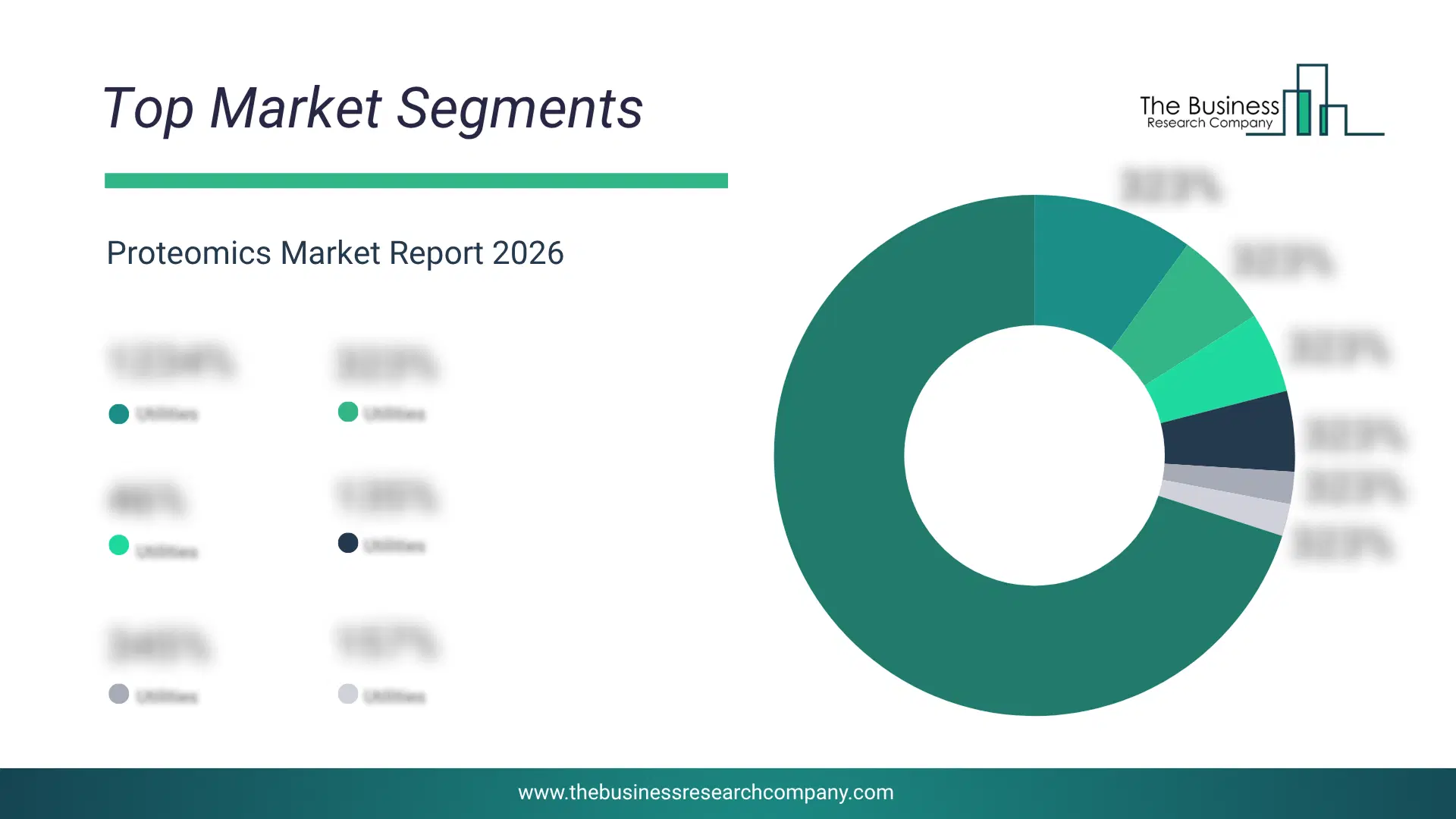
1) By Component: Reagents, Instruments, Software 2) By Instrument: Protein Microarrays, Spectroscopy, X-ray Crystallography, Chromatography, Electrophoresis, Surface Plasmon Resonance, Protein Fractionation 3) By Type: Core Instrument Services, Proteomic Analytical Services Subsegments: 1) By Reagents: Protein Assays, Immunoassay Reagents, Spectroscopy Reagents, Chromatography Reagents, Electrophoresis Reagents 2) By Instruments: Mass Spectrometry, Chromatography Equipment, Electrophoresis Equipment, Microarray Instruments, X-ray Crystallography Instruments 3) By Software: Data Analysis Software, Bioinformatics Tools, Cloud-Based Platforms For Proteomics The top segments in the proteomics market will be: • Reagents will reach $46.67 Billion by 2030. • Instruments will reach $19.72 Billion by 2030. • Software will reach $6.48 Billion by 2030.What Is The Driver Of The Proteomics Market?
The growing pharmaceutical industry is expected to propel the growth of the proteomics market going forward. The pharmaceutical industry is a sector focused on researching, developing, manufacturing, and distributing drugs and medications for medical use. The pharmaceutical industry is rising because the growing global burden of chronic diseases is increasing the need for continuous drug development and advanced therapeutic solutions, driving sustained market expansion. Proteomics plays a crucial role in drug development by identifying, characterizing, and monitoring proteins for drug targets and biomarker discovery. For instance, in June 2023, according to the European Federation of Pharmaceutical Industries and Associations (EFPIA), a Belgium-based trade association that represents the pharmaceutical industry in Europe, the total pharmaceutical production in Europe accounted for €390,000 million ($422,803 million) in 2023, up from €363,300 million ($393,857 million) in 2022. Therefore, the growing pharmaceutical industry is driving the growth of the proteomics industry.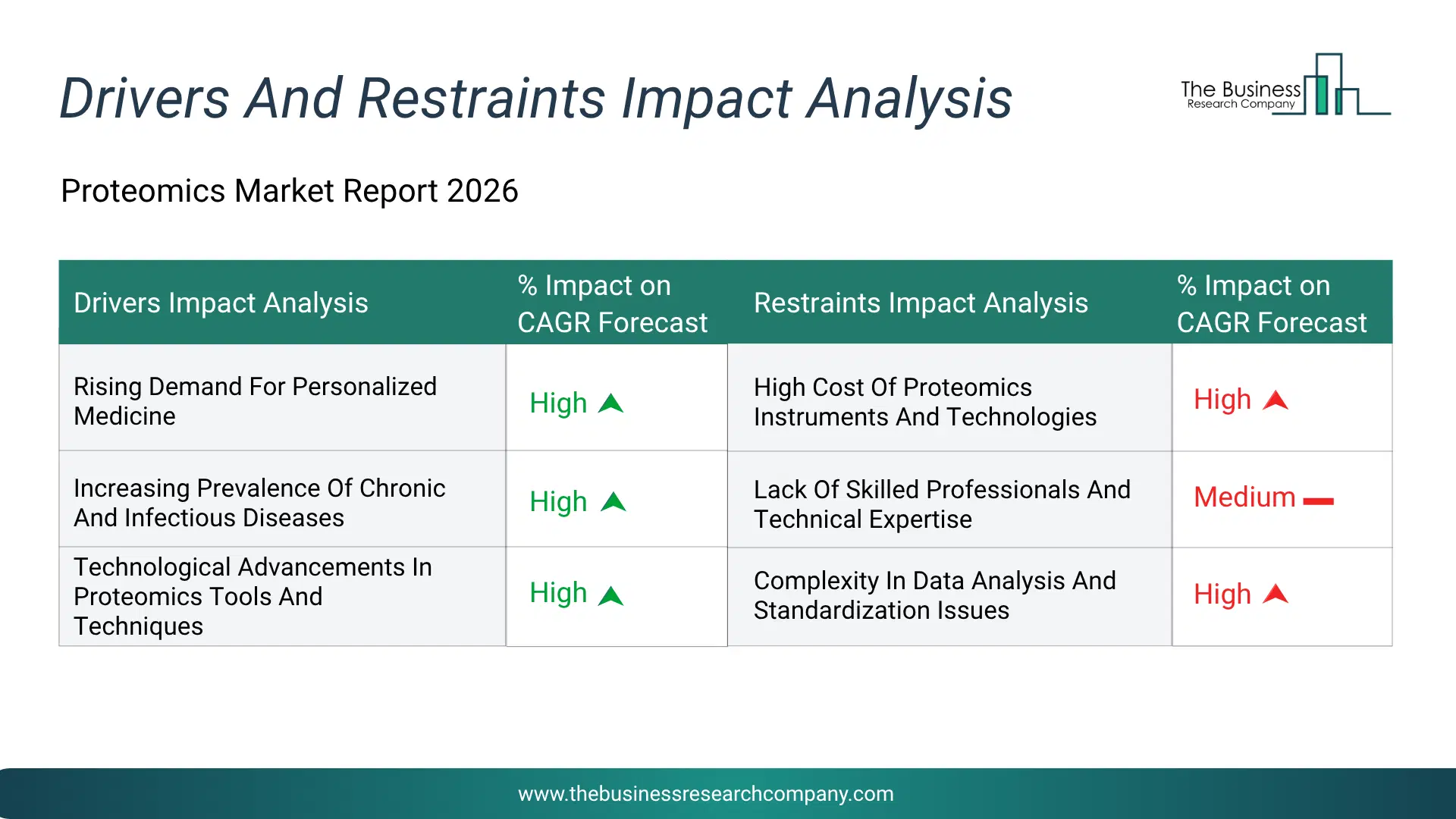
Infographic Chart Showing Key Market Drivers Analysis And Restraints For Proteomics Market
The chart presents an impact analysis of key drivers and restraints, quantifying their relative influence on the market's growth rate and helping assess the balance between growth enablers and limiting factors. This chart offers a high-level perspective; the full report contains more detailed insights.
How Will The Drivers Impact Growth In The Global Proteomics Market?
• Rising Demand For Personalized Medicine (High) – During the forecast period, the rising demand for personalized medicine is expected to become a key growth driver for the proteomics market by 2030. Healthcare providers and researchers are increasingly utilizing protein profiling technologies to better understand individual disease mechanisms and treatment responses. Proteomics enables the identification of patient-specific biomarkers that support targeted therapies and improve clinical outcomes. As precision healthcare continues to gain prominence, demand for advanced protein analysis solutions is expanding across research and clinical settings. This growing focus on individualized treatment approaches is reinforcing sustained market development. • Increasing Prevalence Of Chronic And Infectious Diseases (High) – During the forecast period, the increasing prevalence of chronic and infectious diseases is expected to emerge as a major factor driving the expansion of the proteomics market by 2030. The growing global burden of conditions such as cancer, cardiovascular disorders, diabetes, and infectious diseases is creating greater demand for comprehensive protein-based research and diagnostic applications. Proteomic technologies provide critical insights into disease progression, molecular pathways, and therapeutic targets, supporting more effective disease management strategies. The need for earlier detection and improved treatment monitoring is further accelerating adoption across healthcare systems. • Technological Advancements In Proteomics Tools And Techniques (High) – During the forecast period, the technological advancements in proteomics tools and techniques are expected to act as a key growth catalyst for the proteomics market by 2030. Continuous improvements in protein separation, identification, quantification, and data interpretation technologies are enhancing the speed, accuracy, and scalability of proteomic research. Advanced analytical platforms are enabling researchers to generate deeper biological insights while improving workflow efficiency and reproducibility. The growing availability of high-throughput and automated solutions is also expanding accessibility across academic, pharmaceutical, and clinical laboratories.How Will The Restraints Impact Growth In The Global Proteomics Market?
• High Cost Of Proteomics Instruments And Technologies (High) – During the forecast period, the high cost of proteomics instruments and technologies acts as a major restraint for the proteomics market by creating significant entry barriers for small and mid-sized laboratories. Advanced tools such as mass spectrometers and protein microarrays require substantial capital investment along with high maintenance and operational costs. This limits adoption, particularly in developing regions where research budgets are constrained. Additionally, continuous upgrades and calibration needs further increase the financial burden on end users. As a result, the widespread commercialization and accessibility of proteomics solutions are restricted. • Lack Of Skilled Professionals And Technical Expertise (High) – During the forecast period, the lack of skilled professionals and technical expertise acts as a restraint by slowing down the effective utilization of complex proteomics technologies. Proteomics workflows involve advanced data analysis, bioinformatics tools, and precise experimental handling, which require highly trained personnel. The shortage of such expertise leads to inefficiencies, errors in interpretation, and underutilization of available technologies. This gap also increases training costs and time for organizations adopting proteomics solutions. Consequently, the growth and scalability of the market are hindered due to limited human resource capabilities. • Complexity In Data Analysis And Standardization Issues (High) – During the forecast period, the complexity in data analysis and standardization issues act as a restraint by making proteomics research and commercialization more challenging. Large-scale protein studies generate vast and complex datasets that require sophisticated analytical tools and standardized protocols for accurate interpretation. The lack of uniform standards across laboratories leads to variability in results and reduces reproducibility. This complexity slows down research progress and affects confidence in proteomics-based findings for clinical applications. As a result, adoption in diagnostics and drug development is constrained, limiting overall market growth.Key Players In The Global Proteomics Market
Major companies operating in the proteomics market are Thermo Fisher Scientific Inc., Merck KGaA, Agilent Technologies Inc., PerkinElmer Inc., Bruker Corporation, Bio-Rad Laboratories Inc., Promega Corporation, Waters Corporation, Creative Proteomics, Sino Biological, EIAab, DIMA Biotechnology, GE Healthcare, Perseus Proteomics Inc., JEOL, APTBIO, Vproteomics, Shimadzu Corporation, Abcam plc, MRM Proteomics Inc., Biognosys AG, Olink Proteomics, Horiba, MS Bioworks, LC Sciences, MtoZ Biolabs, Integrated Proteomics Applications, Quantumbio Inc., Luminex Corporation, Applied Biomics Inc., Isoplexis Corporation, Caprion Proteomics Inc.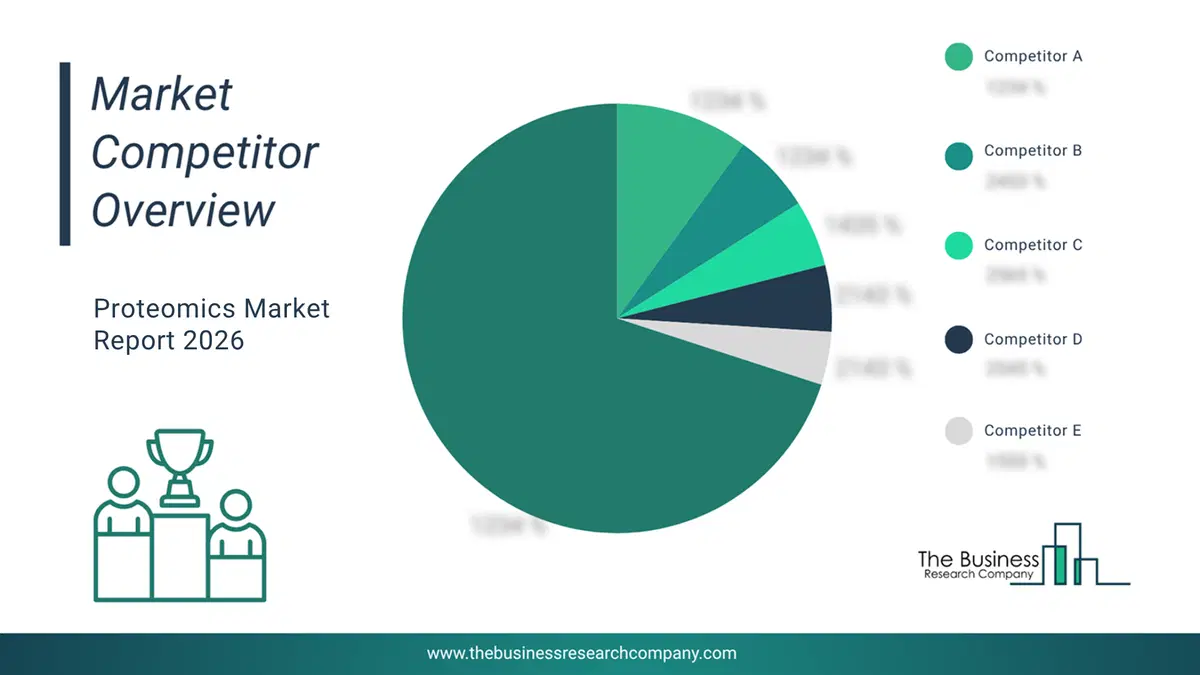
This chart is for illustrative purposes; the full report includes a detailed competitor analysis and comprehensive overview of the top 10 companies in the market.
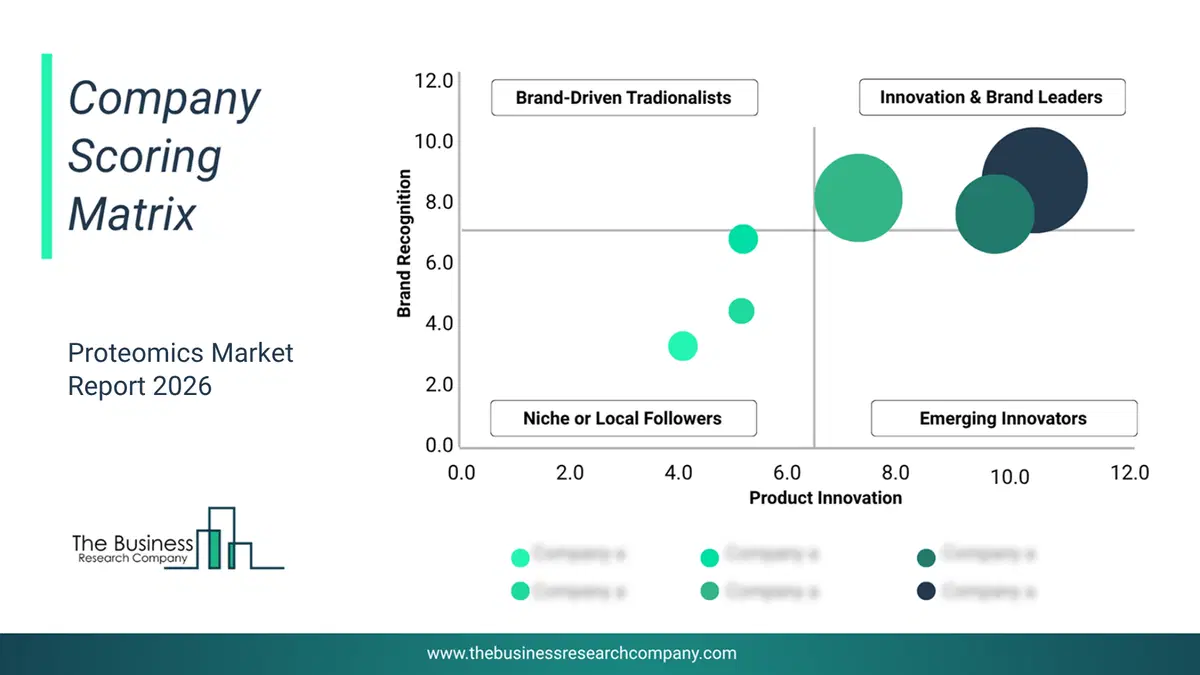
This chart maps companies by product innovation and brand strength, with bubble size indicating relative revenue, helping identify market leaders, challengers, and niche players. This is an illustrative chart; the full report provides a complete and accurate competitive analysis.
Global Proteomics Market Trends and Insights
Major companies operating in the proteomics market are focused on developing precise quantitative analysis kits to gain a competitive edge in the market. Precise quantitative analyses kits are kit used for accurately measuring protein expression levels and identifying biomarkers in various biological samples. For instance, in January 2023, SCIEX, a US-based manufacturer of mass spectrometry instrumentation, introduced the Fast Glycan Labeling and Analysis kit, designed for precise quantitative glycan analysis and an update for the Biologics Explorer software, which aims to enhance key workflows for the analysis of protein therapeutics. These solutions are designed to accelerate the examination and recognition of glycans associated with proteins. They furnish researchers with advanced resources for in-depth biopharmaceutical analysis. The software empowers researchers to make informed decisions regarding the most suitable analytical methods and tools for their specific applications. This, in turn, enhances the efficiency and effectiveness of protein characterization studies.What Are Latest Mergers And Acquisitions In The Proteomics Market?
In July 2024, Thermo Fisher Scientific, a US-based life science and clinical research company, acquired Olink Holding, for approximately $3.1 billion. This acquisition aligns with Thermo Fisher's strategy to enhance its portfolio of innovative technologies. The company aims to leverage Olink's proprietary Proximity Extension Assay (PEA) technology, which enables high-throughput protein analysis for quantitative polymerase chain reaction and next-generation sequencing readout systems. PEA boasts a library of over 5,300 validated protein biomarker targets, enhancing Thermo Fisher's capabilities in proteomics research. Olink Holding, a Sweden-based provider of next-generation proteomics solutions.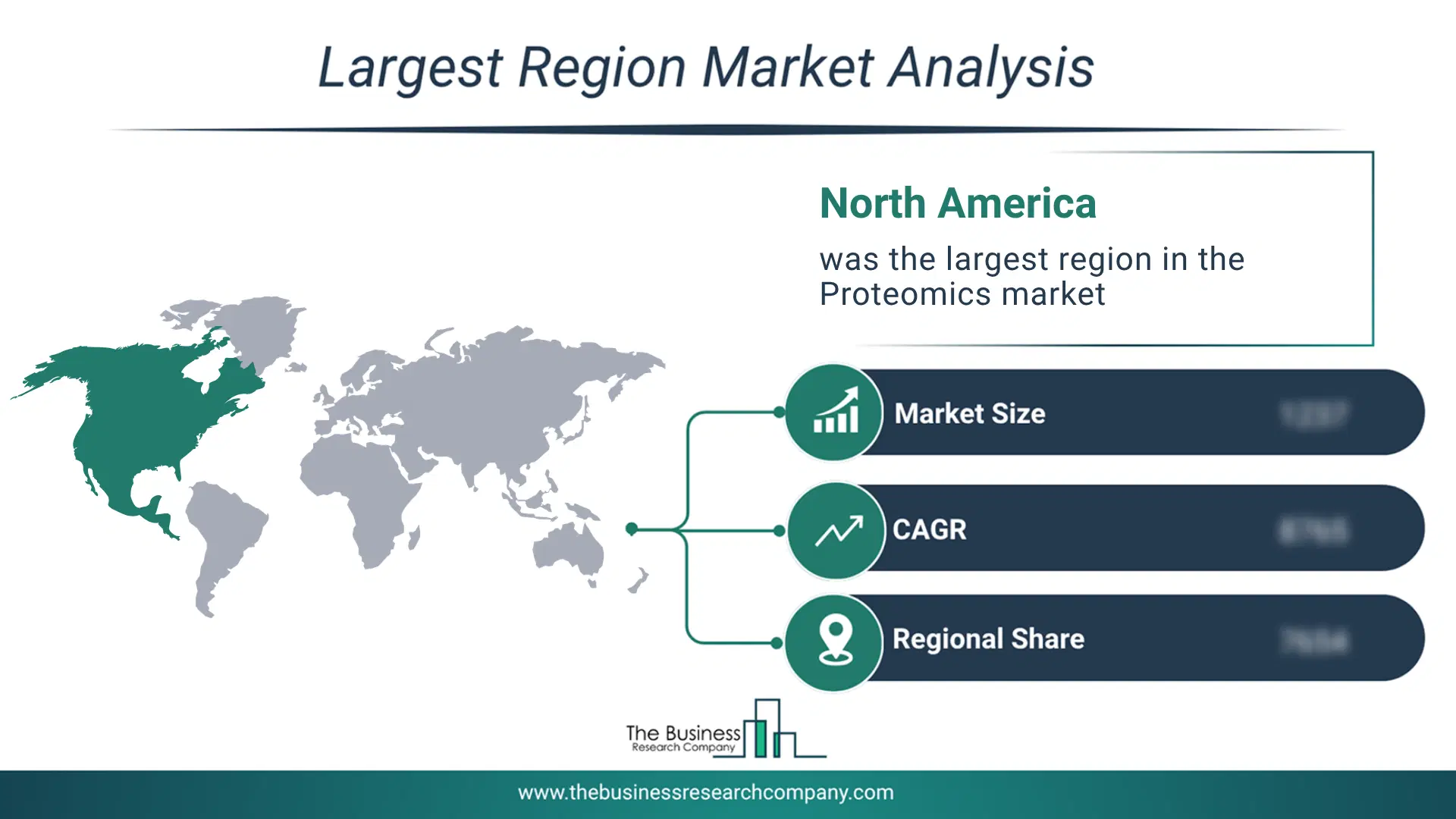
Regional Outlook
North America was the largest region in the proteomics market in 2025. Western Europe was the second largest region in the global proteomics market share. The regions covered in this market report are Asia-Pacific, South East Asia, Western Europe, Eastern Europe, North America, South America, Middle East, Africa. The countries covered in this market report are Australia, Brazil, China, France, Germany, India, Indonesia, Japan, Taiwan, Russia, South Korea, UK, USA, Canada, Italy, Spain.What Defines the Proteomics Market?
The proteomics market consists of sales of proteins that are used for drug discovery, clinical diagnosis, molecular medicine and others. Values in this market are factory gate values, that is the value of goods sold by the manufacturers or creators of the goods, whether to other entities (including downstream manufacturers, wholesalers, distributors and retailers) or directly to end customers. The value of goods in this market includes related services sold by the creators of the goods.How is Market Value Defined and Measured?
The market value is defined as the revenues that enterprises gain from the sale of goods and/or services within the specified market and geography through sales, grants, or donations in terms of the currency (in USD unless otherwise specified). The revenues for a specified geography are consumption values that are revenues generated by organizations in the specified geography within the market, irrespective of where they are produced. It does not include revenues from resales along the supply chain, either further along the supply chain or as part of other products.
This chart presents market attractiveness based on a quantitative evaluation of growth, competition, strategic alignment, and risk, offering a clear view of opportunity areas for decision-making. This chart is for illustrative purposes; the full report contains the complete analysis.

This chart highlights the Total Addressable Market (TAM) by estimating the maximum revenue opportunity using an assumption-driven approach, supporting strategic planning and opportunity sizing across markets. The chart is illustrative; the full report provides a more comprehensive analysis.
What Key Data and Analysis Are Included in the Proteomics Market Report 2026?
The proteomics market research report is one of a series of new reports from The Business Research Company that provides market statistics, including industry global market size, regional shares, competitors with the market share, detailed market segments, market trends and opportunities, and any further data you may need to thrive in the proteomics industry. The market research report delivers a complete perspective of everything you need, with an in-depth analysis of the current and future state of the industry.Proteomics Market Report Forecast Analysis
| Report Attribute | Details |
|---|---|
| Market Size Value In 2026 | $44.65 billion |
| Revenue Forecast In 2030 | $73.33 billion |
| Growth Rate | CAGR of 13.4% from 2026 to 2030 |
| Base Year For Estimation | 2025 |
| Actual Estimates/Historical Data | 2020-2025 |
| Forecast Period | 2026 - 2030 |
| Market Representation | Revenue in USD Billion and CAGR from 2026 to 2030 |
| Segments Covered | Component, Instrument, Type |
| Regional Scope | Asia-Pacific, Western Europe, Eastern Europe, North America, South America, Middle East, Africa |
| Country Scope | The countries covered in the report are Australia, Brazil, China, France, Germany, India, Indonesia, Japan, Taiwan, Russia, South Korea, UK, USA, Canada, Italy, Spain. |
| Key Companies Profiled | Thermo Fisher Scientific Inc., Merck KGaA, Agilent Technologies Inc., PerkinElmer Inc., Bruker Corporation, Bio-Rad Laboratories Inc., Promega Corporation, Waters Corporation, Creative Proteomics, Sino Biological, EIAab, DIMA Biotechnology, GE Healthcare, Perseus Proteomics Inc., JEOL, APTBIO, Vproteomics, Shimadzu Corporation, Abcam plc, MRM Proteomics Inc., Biognosys AG, Olink Proteomics, Horiba, MS Bioworks, LC Sciences, MtoZ Biolabs, Integrated Proteomics Applications, Quantumbio Inc., Luminex Corporation, Applied Biomics Inc., Isoplexis Corporation, Caprion Proteomics Inc. |
| Customization Scope | Request for Customization |
| Pricing And Purchase Options | Explore Purchase Options |