

RNA Targeting Small Molecules Therapeutics Market Report 2026
Global Outlook – By Offering (mRNA (Messenger Ribonucleic Acid) Translation Modulators, RNA (Ribonucleic Acid) Splicing Modification, Direct RNA (Ribonucleic Acid) Targeting, Other Offerings), By Therapeutic Indication (Lung Fibrosis, Cancer, Neurodegenerative Diseases, Autoimmune, Inflammatory, Other Therapeutic Indications), By End User (Hospitals, Research Laboratories, Pharmaceutical And Biotechnology Companies, Other End-Users) – Market Size, Trends, Strategies, and Forecast to 2030
RNA Targeting Small Molecules Therapeutics Market Overview
• RNA Targeting Small Molecules Therapeutics market size has reached to $2.93 billion in 2025 • Expected to grow to $4.84 billion in 2030 at a compound annual growth rate (CAGR) of 11.7% • Growth Driver: Surge In Cancer Cases Fuels Expansion Of The RNA-Targeting Small Molecule Therapeutics Market • Market Trend: Strategic Partnerships Drive Innovation In The RNA-Targeting Small Molecule Therapeutics Market • North America was the largest region in 2025.Market Gains By 2030 – Top Opportunities By Segment
Market Gain identifies the most promising market opportunities by highlighting the segments or products expected to generate the highest incremental revenue growth over the next five years.
What Is Covered Under RNA Targeting Small Molecules Therapeutics Market?
RNA-targeting small molecule therapeutics refers to small molecule therapeutics that precisely interact with RNA molecules to modify their function or stability. These treatments treat diseases by employing small-molecule drugs to target disease-causing RNA molecules. The main offerings of RNA targeting small molecule therapeutics are mRNA (messenger ribonucleic acid) translation modulators, RNA (ribonucleic acid) splicing modification, direct RNA (ribonucleic acid) targeting, and others. mRNA translation modulators are substances or factors that influence the process of protein synthesis by altering the efficiency or rate of mRNA translation. These are indicated for the treatment of lung fibrosis, cancer, neurodegenerative diseases, autoimmune, inflammatory, and others, with applications including drug discovery, oncology research, and disease identification performed by hospitals, research laboratories, pharmaceutical and biotechnology companies, and others.
What Is The RNA Targeting Small Molecules Therapeutics Market Size and Share 2026?
The rna targeting small molecules therapeutics market size has grown strongly in recent years. It will grow from $2.93 billion in 2025 to $3.1 billion in 2026 at a compound annual growth rate (CAGR) of 5.8%. The growth in the historic period can be attributed to limited efficacy of protein-targeted drugs, growth in genomic research funding, increasing prevalence of cancer and genetic disorders, early success of rna-based therapies, expansion of academic-industry collaborations.What Is The RNA Targeting Small Molecules Therapeutics Market Growth Forecast?
The rna targeting small molecules therapeutics market size is expected to see rapid growth in the next few years. It will grow to $4.84 billion in 2030 at a compound annual growth rate (CAGR) of 11.7%. The growth in the forecast period can be attributed to advances in rna structure prediction, increasing demand for precision therapeutics, rising biotech investments in small molecules, regulatory support for novel rna drugs, growing pipeline of rna-targeting clinical trials. Major trends in the forecast period include expansion of rna-targeted drug pipelines, growing focus on undruggable disease targets, increased collaboration between pharma and biotech firms, advances in rna structural biology and chemistry, rising investment in rare and genetic disease therapies.
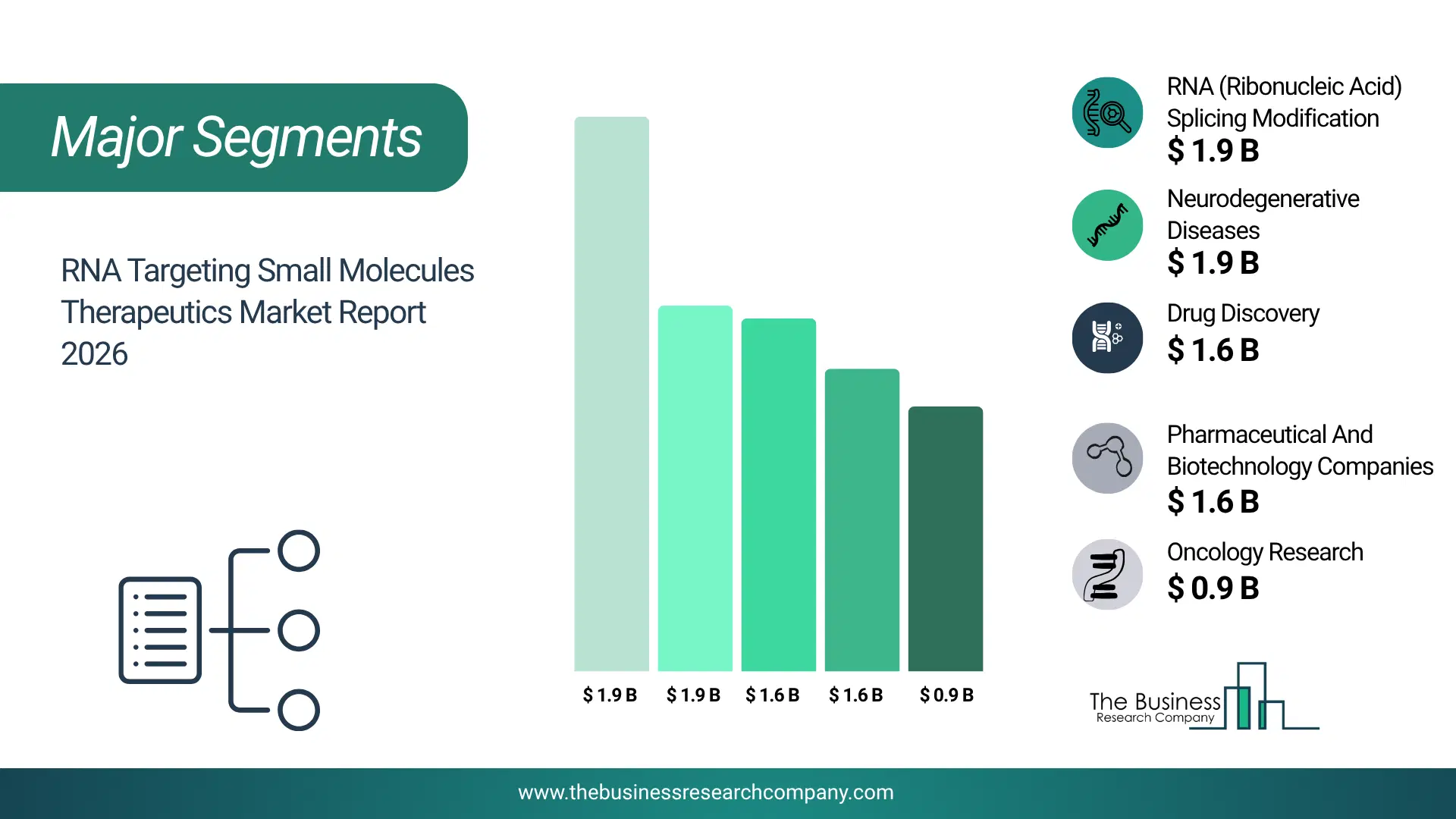
Global RNA Targeting Small Molecules Therapeutics Market Segmentation
1) By Offering: mRNA (Messenger Ribonucleic Acid) Translation Modulators, RNA (Ribonucleic Acid) Splicing Modification, Direct RNA (Ribonucleic Acid) Targeting, Other Offerings 2) By Therapeutic Indication: Lung Fibrosis, Cancer, Neurodegenerative Diseases, Autoimmune, Inflammatory, Other Therapeutic Indications 3) By End User: Hospitals, Research Laboratories, Pharmaceutical And Biotechnology Companies, Other End-Users The top segments in the rna targeting small molecules therapeutics market will be: • RNA (Ribonucleic Acid) Splicing Modification will reach $1975.58 Million by 2025. • Neurodegenerative Diseases will reach $1975.58 Million by 2025. • Drug Discovery will reach $1642.48 Million by 2025. • Pharmaceutical And Biotechnology Companies will reach $1626.3 Million by 2025. • Oncology Research will reach $983.73 Million by 2025.What Are The Drivers Of The RNA Targeting Small Molecules Therapeutics Market?
The increasing number of cancer cases is expected to propel the growth of the RNA-targeting small molecule therapeutics market going forward. Cancer is a category of illnesses that can develop in nearly any organ or tissue in the body when aberrant cells proliferate uncontrollably, cross their usual boundaries, and either spread to other organs or invade neighboring body parts. Cancer is treated with RNA-targeting small molecules created and investigated to target RNA molecules associated with cancer selectively. For instance, in February 2024, according to the World Health Organization, a Switzerland-based intergovernmental organization, by 2050, over 35 million new cancer cases are projected, representing a 77% increase compared to the estimated 20 million cases in 2022. Therefore, the increasing number of cancer cases is driving the growth of the RNA-targeting small molecule therapeutics market. The rising incidence of genetic disorders is expected to boost the growth of the RNA-targeting small-molecule therapeutics market going forward. Genetic disorders are conditions caused by abnormalities or mutations in an individual's genetic material, such as DNA or chromosomes. RNA-targeting small-molecule therapeutics are an exciting emerging field with immense potential for treating genetic disorders. Some genetic disorders involve toxic expansions of repeated RNA sequences. Small molecules can stabilize or destabilize these expansions, potentially mitigating their harmful effects. For instance, in October 2024, according to the Cystic Fibrosis Trust, a UK-based national charity, there were 11,148 people living with cystic fibrosis (CF) in the UK in 2022, increasing to 11,318 in 2023. Therefore, the rising incidence of genetic disorders is driving the growth of the RNA-targeting small-molecule therapeutic market.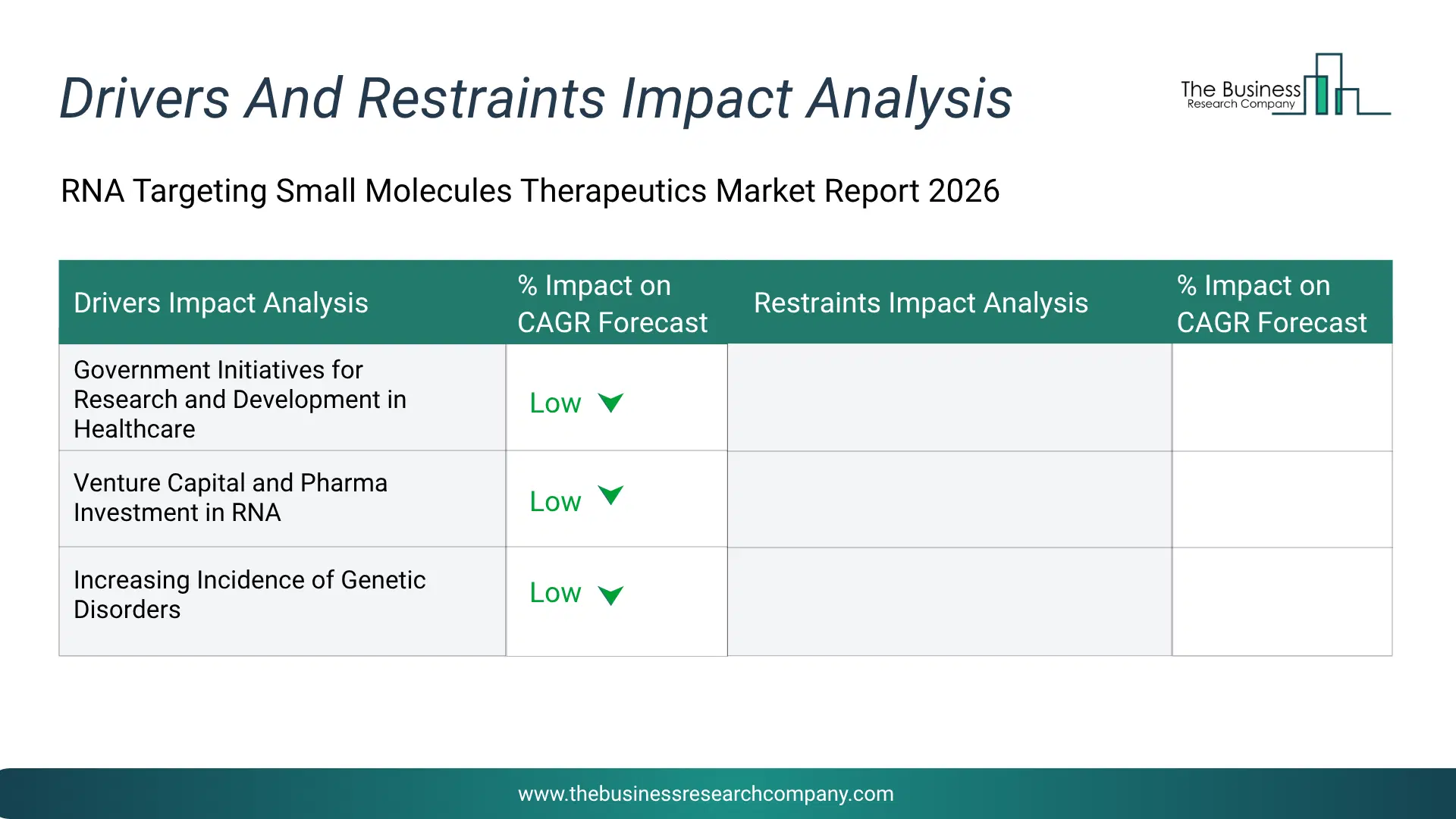
Infographic Chart Showing Key Market Drivers Analysis And Restraints For Rna Targeting Small Molecules Therapeutics Market
The chart presents an impact analysis of key drivers and restraints, quantifying their relative influence on the market's growth rate and helping assess the balance between growth enablers and limiting factors. This chart offers a high-level perspective; the full report contains more detailed insights.
How Will The Drivers Impact Growth In The Global RNA Targeting Small Molecules Therapeutics Market?
• Government Initiatives for Research and Development in Healthcare (Low) – The government initiatives for research and development in healthcare will become a key driver of growth in the RNA targeting small molecules therapeutics market by 2030. Government initiatives in healthcare research and development are expected to drive the growth of the RNA-targeting small molecule therapeutics market by offering financial support, tax incentives and research grants to biotechnology and pharmaceutical companies. These measures help ease the high costs of drug discovery and clinical trials, enabling faster innovation. Public–private partnerships further support the development of advanced therapies and broader access to new technologies. In addition, favorable regulatory policies streamline approval processes, encouraging greater investment in novel RNA-targeting treatments. As a result, the government initiatives for research and development in healthcare is anticipated to contributing to a 1.0% annual growth in the market. • Venture Capital and Pharma Investment in RNA (Low) – The venture capital and pharma investment in RNA will emerge as a major factor driving the expansion of the RNA targeting small molecules therapeutics market by 2030. These funding sources provide the necessary capital for research, preclinical studies and clinical trials, which are otherwise highly resource intensive. Strategic investments from pharmaceutical companies also bring technical expertise, regulatory support and global market access, accelerating product development. Venture capital fosters innovation by enabling startups to explore advanced technologies and high-risk projects. Such financial backing reduces barriers to entry, strengthens the competitive landscape and expedites commercialization. Consequently, venture capital and pharma investment in RNA capabilities is projected to contributing to a 0.8% annual growth in the market. • Increasing Incidence of Genetic Disorders (Low) – The increasing incidence of genetic disorders will serve as a key growth catalyst for the RNA targeting small molecules therapeutics market by 2030. RNA-targeting therapies offer an innovative approach to addressing the underlying causes of genetic disorders by modulating gene expression or correcting defective RNA mechanisms. With the rising prevalence of genetic conditions, demand for advanced and targeted treatments is increasing. This trend presents significant opportunities for pharmaceutical and biotechnology companies to accelerate research, expand clinical trial pipelines and introduce innovative RNA-based therapies to the market. Therefore, this increasing incidence of genetic disorders operations is projected to supporting to a 0.5% annual growth in the market. • Rising Prevalence of Cancer (Low) – The rising prevalence of cancer will become a significant driver contributing to the growth of the RNA targeting small molecules therapeutics market by 2030. The growing prevalence of cancer is driving demand for innovative and effective treatment solutions, boosting interest in RNA-targeting small molecule therapeutics. By addressing cancer at the genetic and molecular level, these therapies are attracting increased research investments and accelerating clinical adoption, thereby supporting market expansion. Many types of cancer are linked to errors in Ribonucleic Acid (RNA) processes such as splicing, translation, or the activity of non-coding RNAs. With the rising number of cancer cases, there is an increasing need for small molecule therapeutics that specifically target these RNA-related abnormalities. Consequently, the rising prevalence of cancer strategies is projected to contributing to a 0.2% annual growth in the market.How Will The Restraints Impact Growth In The Global RNA Targeting Small Molecules Therapeutics Market?
• Instability and Degradation of RNA Targets (Low) – Instability and Degradation of RNA Targets will restrict the growth of the RNA Targeting Small Molecules Therapeutics market during the forecast period. RNA molecules are inherently unstable and susceptible to degradation by ribonucleases, creating challenges for therapeutic development. The instability of RNA targets affects the reliability of screening and validation studies. Developing small molecules that effectively bind to dynamic RNA structures while maintaining specificity remains technically challenging, limiting market progress. • Off-Target Effects and Toxicity Risks (Low) – Off-Target Effects and Toxicity Risks will restrict the growth of the RNA Targeting Small Molecules Therapeutics market during the forecast period. Small molecules targeting RNA may have off-target effects on other RNA molecules or cellular processes, leading to potential toxicity. The risk of unintended interactions limits the therapeutic window and raises safety concerns for clinical development. Off-target effects require extensive optimization and testing, increasing development costs and timelines. • Trade War and Tariffs (Low) – Trade War and Tariffs will restrict the growth of the RNA Targeting Small Molecules Therapeutics market during the forecast period. RNA therapeutics development relies on international supply chains for research reagents, specialized equipment, and manufacturing materials. Trade tariffs and restrictions can increase R&D costs and affect the availability of critical inputs. Trade barriers may also limit international collaboration in RNA research, slowing scientific advancement.Key Players In The Global RNA Targeting Small Molecules Therapeutics Market
Major companies operating in the rna targeting small molecules therapeutics market are F Hoffmann La Roche Ltd, Novartis AG, Sanofi SA, AstraZeneca plc, Eli Lilly and Company, Amgen Inc, Bayer AG, Vertex Pharmaceuticals Inc, PTC Therapeutics Inc, Arrakis Therapeutics, Anima Biotech Inc, Skyhawk Therapeutics Inc, Remix Therapeutics, Accent Therapeutics Inc, STORM Therapeutics Ltd, eFFECTOR Therapeutics Inc, EPICS Therapeutics, Expansion Therapeutics Inc, Ribometrix Inc, Redona Therapeutics, Eloxx Pharmaceuticals Inc, 858 Therapeutics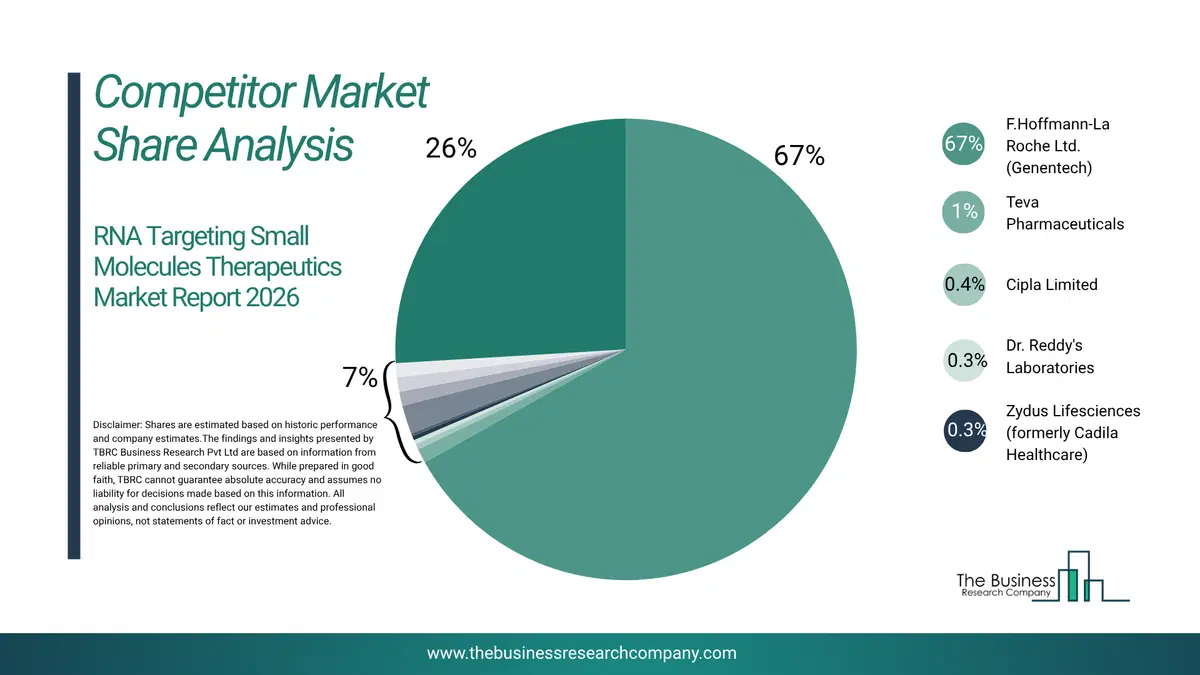
This chart is for illustrative purposes; the full report includes a detailed competitor analysis and comprehensive overview of the top 10 companies in the market.
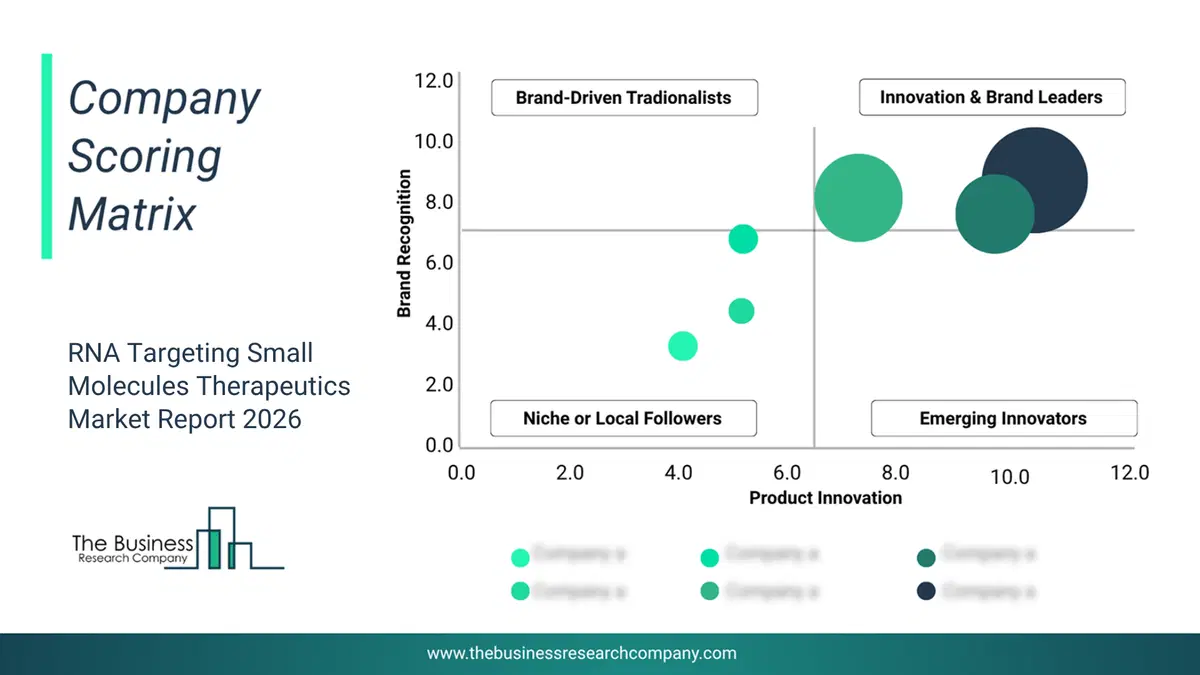
This chart maps companies by product innovation and brand strength, with bubble size indicating relative revenue, helping identify market leaders, challengers, and niche players. This is an illustrative chart; the full report provides a complete and accurate competitive analysis.
Global RNA Targeting Small Molecules Therapeutics Market Trends and Insights
Major companies operating in the RNA-targeting small molecule therapeutics market are focusing on forming strategic partnerships to enhance the discovery and development of novel therapies. Strategic partnerships in this context involve collaborations between two or more organizations to combine expertise, share data, and accelerate the creation of innovative RNA-targeting small molecules. For instance, in June 2022, Otsuka Pharmaceutical Co. Ltd., a Japan-based pharmaceutical manufacturing company, collaborated with xFOREST Therapeutics Co. Ltd., a Japan-based developer of drug discovery platforms. With this partnership, xFOREST will offer Otsuka with its Forest technology to advance systemic small-molecule drug discovery research focusing on RNA structures. Furthermore, in April 2024, Ipsen, a France-based biopharmaceutical company partnered with Skyhawk Therapeutics, a US-based clinical-stage biotechnology company that provides RNA-targeting small molecule therapeutics. With this collaboration, Ipsen aimed at developing RNA-targeting small molecule drugs for rare neurological diseases and integrates various data sets to identify and develop small molecules that can modulate RNA.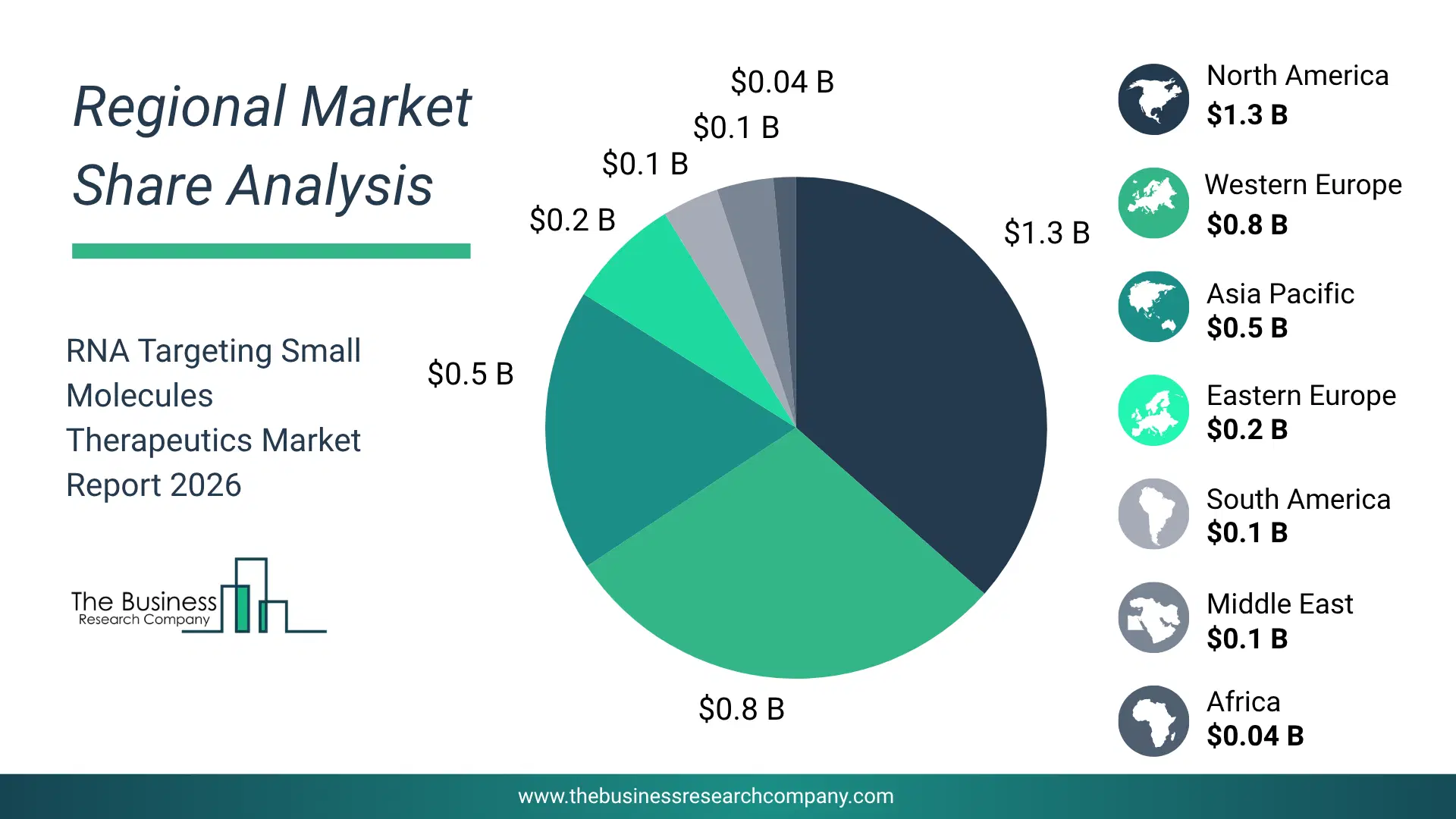
Regional Insights
North America was the largest region in the RNA targeting small molecules therapeutics market in 2025. The regions covered in this market report are Asia-Pacific, South East Asia, Western Europe, Eastern Europe, North America, South America, Middle East, Africa. The countries covered in this market report are Australia, Brazil, China, France, Germany, India, Indonesia, Japan, Taiwan, Russia, South Korea, UK, USA, Canada, Italy, Spain.What Defines the RNA Targeting Small Molecules Therapeutics Market?
The RNA-targeting small molecule therapeutics market consists of sales of nusinersen, inotersen, givosiran, and patisiran. Values in this market are ‘factory gate’ values, that is, the value of goods sold by the manufacturers or creators of the goods, whether to other entities (including downstream manufacturers, wholesalers, distributors, and retailers) or directly to end customers. The value of goods in this market includes related services sold by the creators of the goods.How is Market Value Defined and Measured?
The market value is defined as the revenues that enterprises gain from the sale of goods and/or services within the specified market and geography through sales, grants, or donations in terms of the currency (in USD unless otherwise specified). The revenues for a specified geography are consumption values that are revenues generated by organizations in the specified geography within the market, irrespective of where they are produced. It does not include revenues from resales along the supply chain, either further along the supply chain or as part of other products.
This chart presents market attractiveness based on a quantitative evaluation of growth, competition, strategic alignment, and risk, offering a clear view of opportunity areas for decision-making. This chart is for illustrative purposes; the full report contains the complete analysis.

This chart highlights the Total Addressable Market (TAM) by estimating the maximum revenue opportunity using an assumption-driven approach, supporting strategic planning and opportunity sizing across markets. The chart is illustrative; the full report provides a more comprehensive analysis.
What Key Data and Analysis Are Included in the RNA Targeting Small Molecules Therapeutics Market Report 2026?
The rna targeting small molecules therapeutics market research report is one of a series of new reports from The Business Research Company that provides market statistics, including industry global market size, regional shares, competitors with the market share, detailed market segments, market trends and opportunities, and any further data you may need to thrive in the rna targeting small molecules therapeutics industry. The market research report delivers a complete perspective of everything you need, with an in-depth analysis of the current and future state of the industry.RNA Targeting Small Molecules Therapeutics Market Report Forecast Analysis
| Report Attribute | Details |
|---|---|
| Market Size Value In 2026 | $3.1 billion |
| Revenue Forecast In 2030 | $4.84 billion |
| Growth Rate | CAGR of 5.8% from 2026 to 2030 |
| Base Year For Estimation | 2025 |
| Actual Estimates/Historical Data | 2020-2025 |
| Forecast Period | 2026 - 2030 |
| Market Representation | Revenue in USD Billion and CAGR from 2026 to 2030 |
| Segments Covered | Offering, Therapeutic Indication, End User |
| Regional Scope | Asia-Pacific, Western Europe, Eastern Europe, North America, South America, Middle East, Africa |
| Country Scope | The countries covered in the report are Australia, Brazil, China, France, Germany, India, Indonesia, Japan, Taiwan, Russia, South Korea, UK, USA, Canada, Italy, Spain. |
| Key Companies Profiled | F Hoffmann La Roche Ltd, Novartis AG, Sanofi SA, AstraZeneca plc, Eli Lilly and Company, Amgen Inc, Bayer AG, Vertex Pharmaceuticals Inc, PTC Therapeutics Inc, Arrakis Therapeutics, Anima Biotech Inc, Skyhawk Therapeutics Inc, Remix Therapeutics, Accent Therapeutics Inc, STORM Therapeutics Ltd, eFFECTOR Therapeutics Inc, EPICS Therapeutics, Expansion Therapeutics Inc, Ribometrix Inc, Redona Therapeutics, Eloxx Pharmaceuticals Inc, 858 Therapeutics |
| Customization Scope | Request for Customization |
| Pricing And Purchase Options | Explore Purchase Options |