
Signals Intelligence (SIGINT) Market Report 2026
Global Outlook – By Type (Electronic Intelligence (ELINT), Communications Intelligence (COMINT), Foreign Instrumentation Signal Intelligence (FISINT)), By Mobility (Fixed, Man Portable), By Application (Cyber Intelligence, Ground-Based Intelligence, Naval Intelligence, Space Intelligence, Airborne Intelligence) – Market Size, Trends, Strategies, and Forecast to 2030
Signals Intelligence (SIGINT) Market Overview
• Signals Intelligence (SIGINT) market size has reached to $15.44 billion in 2025 • Expected to grow to $20.05 billion in 2030 at a compound annual growth rate (CAGR) of 5.4% • Growth Driver: Expanding Defense Budgets Worldwide Propel The Signals Intelligence Market • Market Trend: Rapid Advancements In Technology Reshape Signals Intelligence Market • North America was the largest region in 2025 and Asia-Pacific is the fastest growing region.Market Gains By 2030 – Top Opportunities By Segment
Market Gain identifies the most promising market opportunities by highlighting the segments or products expected to generate the highest incremental revenue growth over the next five years.
What Is Covered Under Signals Intelligence (SIGINT) Market?
Signals intelligence refers to collecting foreign intelligence through electronic signals and systems which used by foreign targets, such as radars, communications systems, and weapons systems, that provide a critical window for a nation into foreign adversaries' capabilities, actions, and intentions. It can help used any government in the world, to gather data about international terrorists and foreign persons, organizations, or powers. The main types of signals intelligence are electronic, communications, and foreign instrumentation signal intelligence. Electronic signal intelligence offers situational intelligence, ELINT (electronic intelligence) records, and analyses of non-communication radio signals, most commonly radar broadcasts. It uses a chain of analytical modules and a specific passive or active electronic sensor, as well as updating databases of recorded radar signals. The signals intelligence is further divided by mobility into fixed and man portable and used in applications such as cyber, ground-based, naval, space, and airborne intelligence.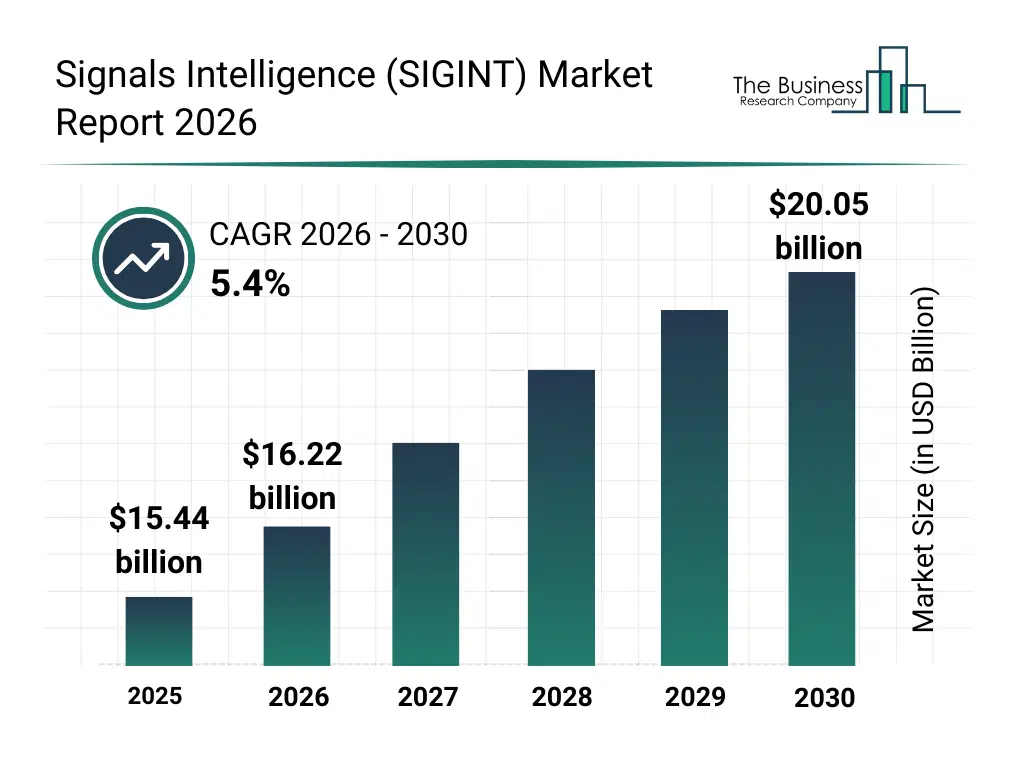
What Is The Signals Intelligence (SIGINT) Market Size and Share 2026?
The signals intelligence (sigint) market size has grown strongly in recent years. It will grow from $15.44 billion in 2025 to $16.22 billion in 2026 at a compound annual growth rate (CAGR) of 5.1%. The growth in the historic period can be attributed to rising geopolitical tensions, increased military modernization efforts, expansion of electronic warfare capabilities, growing reliance on surveillance systems, increased investments in national defense intelligence.What Is The Signals Intelligence (SIGINT) Market Growth Forecast?
The signals intelligence (sigint) market size is expected to see strong growth in the next few years. It will grow to $20.05 billion in 2030 at a compound annual growth rate (CAGR) of 5.4%. The growth in the forecast period can be attributed to increasing adoption of ai-powered intelligence systems, expansion of space-based signal intelligence platforms, rising demand for cyber-electromagnetic dominance, growing focus on integrated defense intelligence networks, increasing investments in advanced analytics for sigint. Major trends in the forecast period include increasing deployment of ai-driven signal analysis systems, rising adoption of automated intelligence processing platforms, growing integration of multi-domain signal intelligence, expansion of real-time threat detection capabilities, enhanced focus on secure data fusion.
Global Signals Intelligence (SIGINT) Market Segmentation
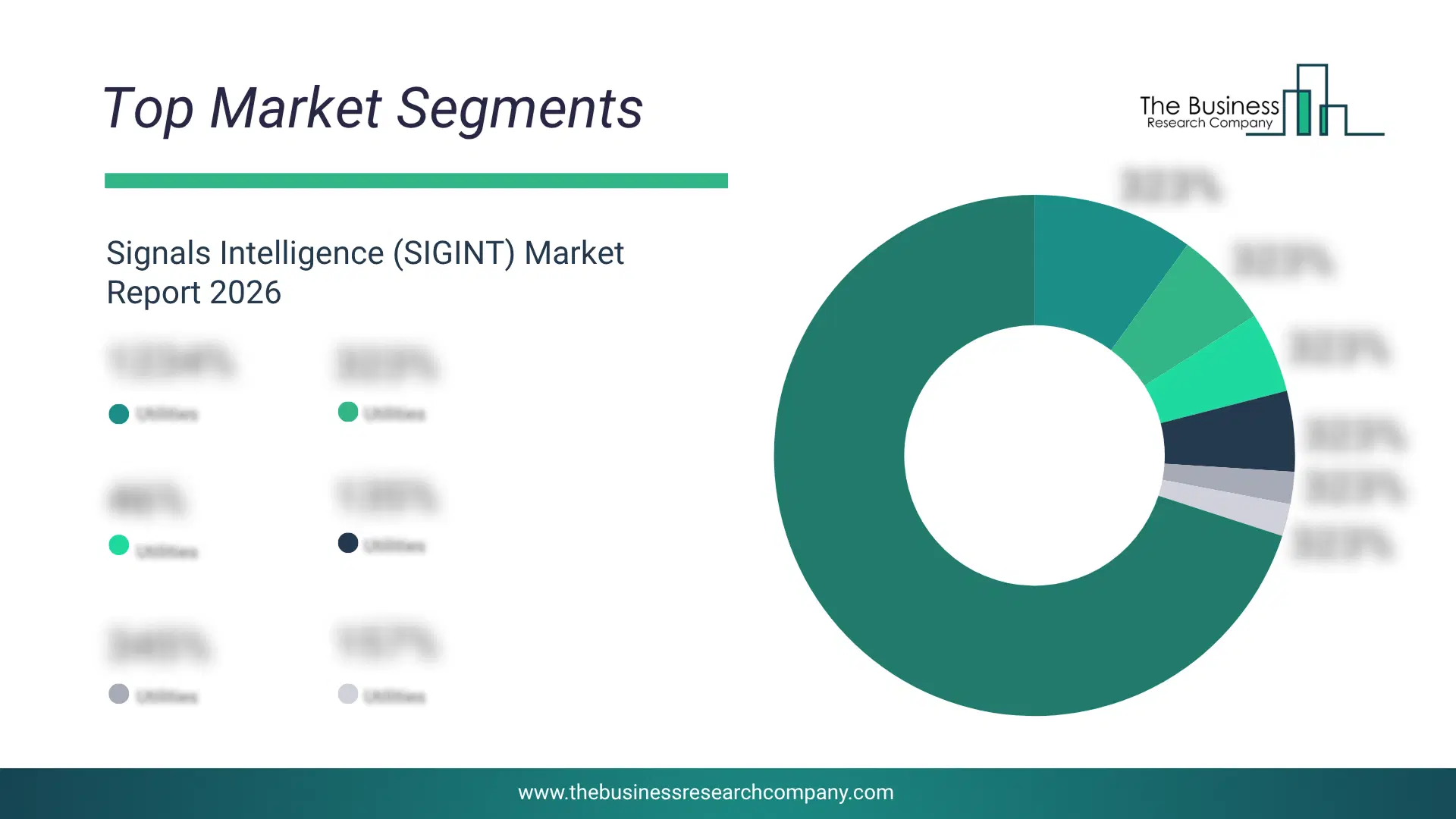
1) By Type: Electronic Intelligence (ELINT), Communications Intelligence (COMINT), Foreign Instrumentation Signal Intelligence (FISINT) 2) By Mobility: Fixed, Man Portable 3) By Application: Cyber Intelligence, Ground-Based Intelligence, Naval Intelligence, Space Intelligence, Airborne Intelligence Subsegments: 1) By Electronic Intelligence (ELINT): Radar Signal Analysis, Electronic Warfare Support, Electronic Order Of Battle 2) By Communications Intelligence (COMINT): Voice Communications Interception, Data Communications Analysis, Network Traffic Monitoring 3) By Foreign Instrumentation Signal Intelligence (FISINT): Missile Telemetry Interception, Space Communications Analysis, Instrumentation Signal Monitoring The top segments in the signals intelligence (sigint) market will be: • Electronic Intelligence (ELINT) will reach $12.01 Billion by 2030. • Communications Intelligence (COMINT) will reach $6.61 Billion by 2030. • Foreign Instrumentation Signal Intelligence (FISINT) will reach $1.31 Billion by 2030.What Is The Driver Of The Signals Intelligence (SIGINT) Market?
The growing defense budget of major countries across the globe is expected to drive the growth of the signals intelligence market going forward. The protection of a country is viewed as a government responsibility. It encompasses the inhabitants, economy, and institutions of the country. National security is a top concern in many countries around the world, and it necessitates a sizable expenditure to build and maintain. For instance, in April 2024, according to the Stockholm International Peace Research Institute (SIPRI), a Sweden-based research institute, Global military spending totaled $2,443 billion in 2023, marking a 6.8% increase in real terms compared to 2022. Therefore, the growing defense budget of major countries drives the market for signals intelligence.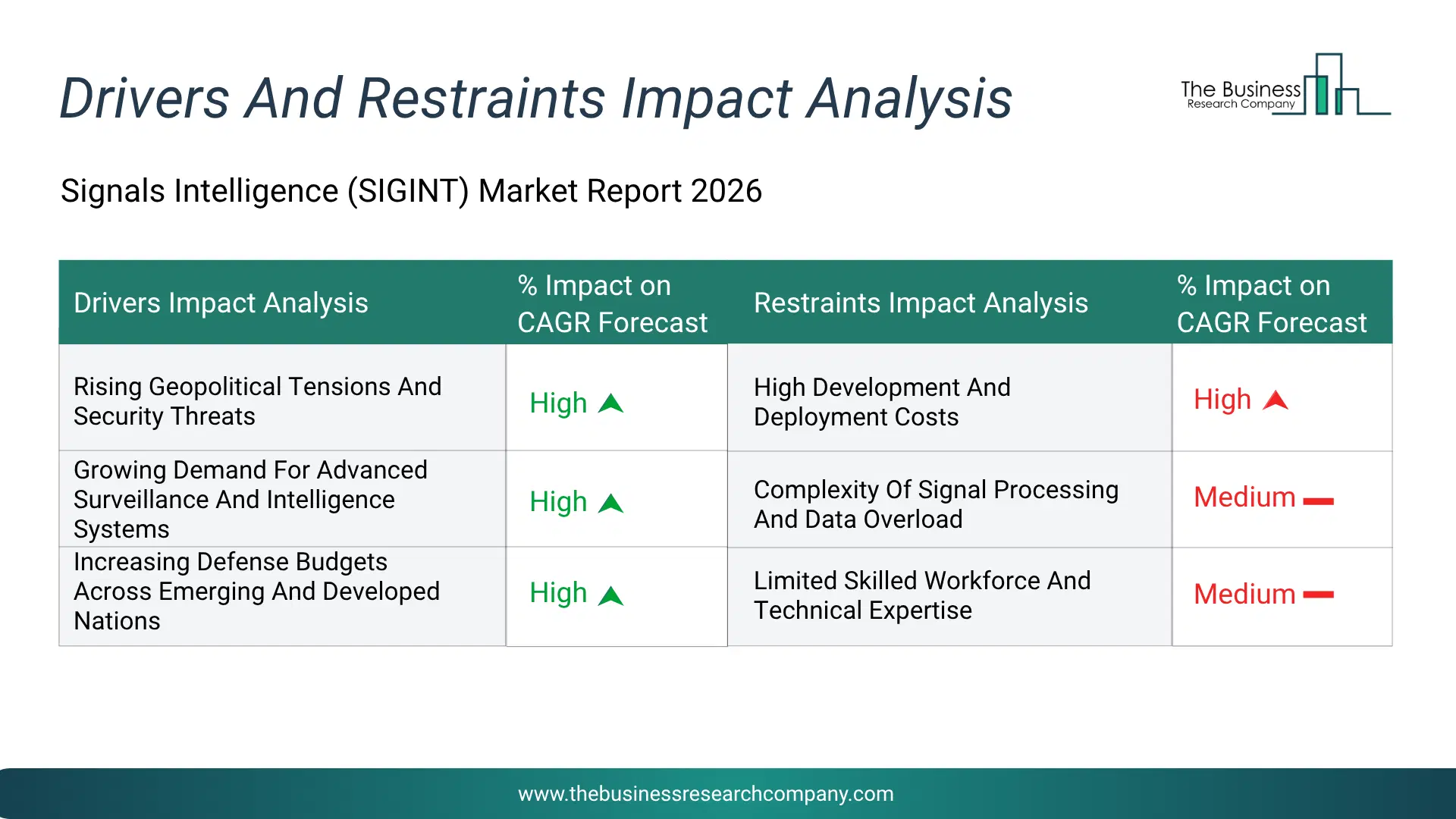
Infographic Chart Showing Key Market Drivers Analysis And Restraints For Signals Intelligence (Sigint) Market
The chart presents an impact analysis of key drivers and restraints, quantifying their relative influence on the market's growth rate and helping assess the balance between growth enablers and limiting factors. This chart offers a high-level perspective; the full report contains more detailed insights.
How Will The Drivers Impact Growth In The Global Signals Intelligence (SIGINT) Market?
• Rising Geopolitical Tensions And Security Threats (High) – During the forecast period, the rising geopolitical tensions and security threats are expected to become a key growth driver for the signals intelligence (SIGINT) market by 2030. Increasing cross-border conflicts, regional military confrontations, and evolving asymmetric warfare tactics are compelling governments to strengthen intelligence-gathering capabilities. Defense agencies are expanding investments in advanced signal interception, threat detection, and battlefield awareness systems to improve operational readiness. The growing requirement for early warning mechanisms and strategic decision-making support is further accelerating the deployment of sophisticated SIGINT platforms. • Growing Demand For Advanced Surveillance And Intelligence Systems (High) – During the forecast period, the growing demand for advanced surveillance and intelligence systems is expected to emerge as a major factor driving the expansion of the signals intelligence (SIGINT) market by 2030. Military and security organizations are increasingly adopting integrated intelligence solutions capable of processing large volumes of electronic and communication data across multiple domains. The need for enhanced situational awareness, persistent monitoring, and rapid information dissemination is encouraging the deployment of next-generation SIGINT technologies. Advances in data analytics, sensor fusion, and automated intelligence processing are further strengthening the effectiveness of surveillance operations. • Increasing Defense Budgets Across Emerging And Developed Nations (High) – During the forecast period, the increasing defense budgets across emerging and developed nations are expected to act as a key growth catalyst for the signals intelligence (SIGINT) market by 2030. Governments are allocating greater resources toward strengthening national security infrastructure and modernizing intelligence capabilities to address evolving defense requirements. Rising procurement of specialized intelligence platforms, surveillance assets, and secure communication monitoring systems is creating sustained demand for SIGINT solutions. In addition, long-term military modernization programs are supporting the integration of advanced intelligence technologies across land, air, naval, cyber, and space operations.How Will The Restraints Impact Growth In The Global Signals Intelligence (SIGINT) Market?
• High Development And Deployment Costs (High) – During the forecast period, the signals intelligence systems require highly advanced infrastructure, including sophisticated sensors, satellites, interception platforms, and secure data processing centers. The research and development involved in designing such systems is extremely capital-intensive, often requiring long timelines and continuous upgrades to keep up with evolving threats. Governments and organizations must also invest heavily in cybersecurity, encryption technologies, and maintenance of existing systems. These high upfront and operational costs can limit adoption, especially for smaller nations or agencies with constrained budgets. Additionally, procurement processes in defense sectors are lengthy and expensive, further slowing market growth. The need for customized solutions tailored to specific national security requirements also increases overall expenditure. As a result, financial barriers restrict widespread deployment and reduce the number of new entrants in the market. • Complexity Of Signal Processing And Data Overload (High) – During the forecast period, the signals intelligence involves collecting vast volumes of data from multiple sources such as communication networks, radar systems, and electronic transmissions. Processing and analyzing this massive data in real time is highly complex and requires advanced algorithms, artificial intelligence, and high-performance computing systems. The challenge lies not only in collecting data but also in filtering relevant intelligence from noise and redundant information. As data volumes grow exponentially, organizations may struggle with storage, processing speed, and accuracy of analysis. Misinterpretation or delayed processing of signals can lead to critical intelligence failures. This complexity increases the need for continuous technological upgrades and integration of advanced analytics tools, which can slow adoption and implementation. Consequently, operational inefficiencies and technological challenges act as significant restraints on market growth. • Limited Skilled Workforce And Technical Expertise (High) – During the forecast period, the signals intelligence domain demands a highly specialized workforce with expertise in areas such as electronic engineering, cybersecurity, data analytics, cryptography, and artificial intelligence. However, there is a global shortage of professionals who possess the required technical knowledge and practical experience. Training personnel for such complex roles is time-consuming and costly, and retaining skilled experts is equally challenging due to competition from private technology sectors. The lack of qualified professionals can lead to underutilization of advanced systems and reduced operational efficiency. Moreover, rapid technological advancements require continuous upskilling, which further adds to organizational burden. This talent gap slows down innovation, deployment, and effective use of signals intelligence systems, thereby acting as a key restraint on the overall market growth.Key Players In The Global Signals Intelligence (SIGINT) Market
Major companies operating in the signals intelligence (sigint) market are BAE Systems PLC; Elbit Systems Ltd.; General Dynamics Corporation; L3Harris Technologies Inc.; Israel Aerospace Industries; The Boeing Company; Cobham PLC; Hensoldt AG; Honeywell International; Indra Sistemas S. A.; Lockheed Martin Corporation; Mercury Systems Inc.; National Instruments Corporation; Raytheon Technologies Corporation; Rheinmetall AG; Rohde & Schwarz GmbH & Co KG; Saab AB; Systematic A/S; Thales Group SA; ThinkRF Corp.; Booz Allen Hamilton Holding Corporation; Northrop Grumman Corporation; Safran Group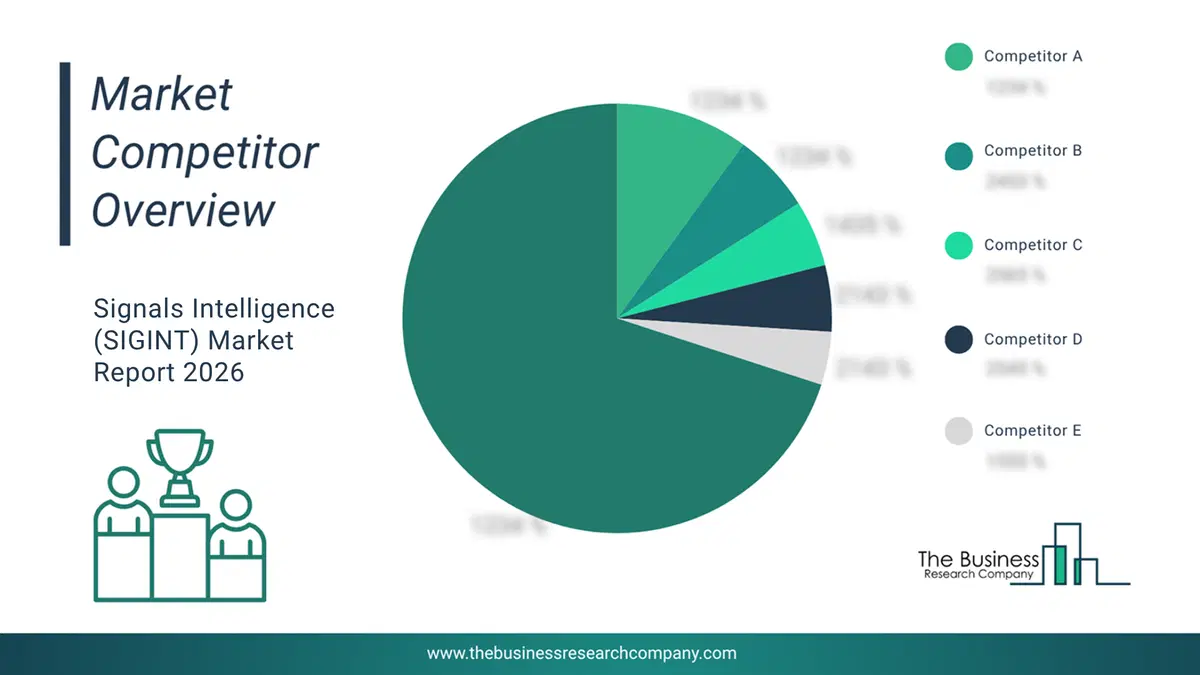
This chart is for illustrative purposes; the full report includes a detailed competitor analysis and comprehensive overview of the top 10 companies in the market.
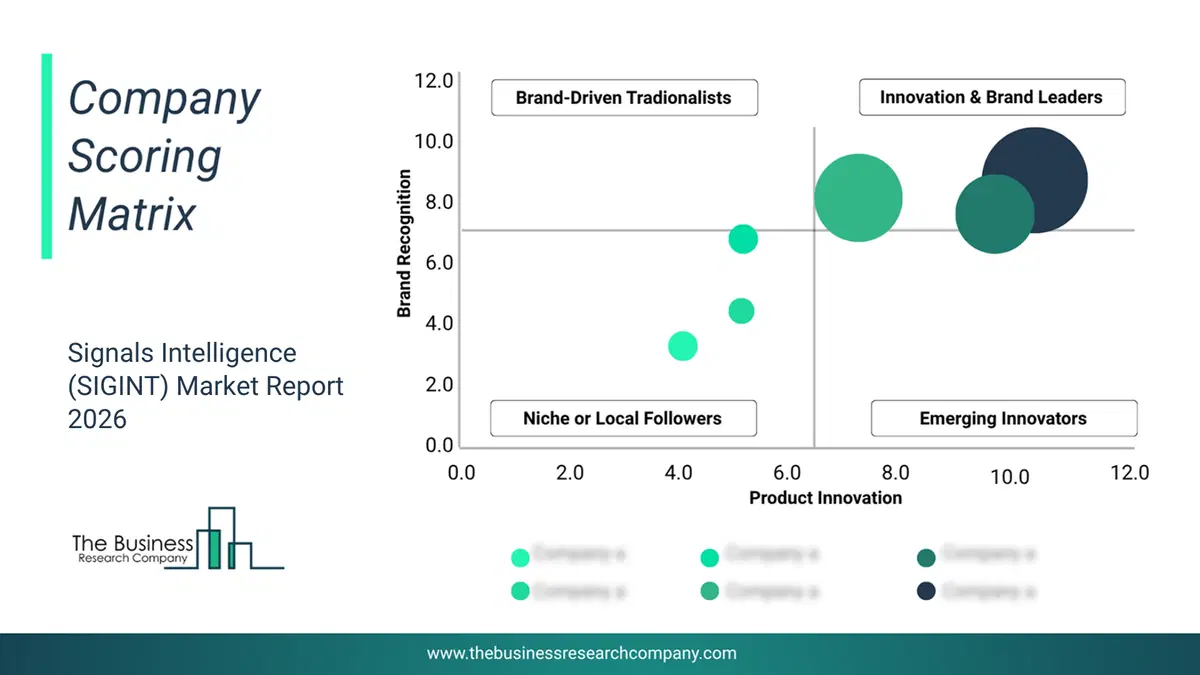
This chart maps companies by product innovation and brand strength, with bubble size indicating relative revenue, helping identify market leaders, challengers, and niche players. This is an illustrative chart; the full report provides a complete and accurate competitive analysis.
Global Signals Intelligence (SIGINT) Market Trends and Insights
Major companies operating in the signals intelligence (SIGINT) market are focusing on leveraging innovative technologies, such as artificial intelligence (AI)-powered solutions to enhance real-time data analysis and predictive threat detection. AI-powered solutions use artificial intelligence to analyze large volumes of data, identify patterns, and make predictions, helping organizations detect threats faster, optimize decision-making, and improve operational efficiency. For instance, in May 2023, Cohere Health, an US-based clinical intelligence company, launched the early trend of signal intelligence. A new feature that utilizes advanced artificial intelligence is a predictive analytics tool created by Cohere Health that utilizes proprietary prior authorization data to forecast medical utilization trends up to three months ahead of claims data. It focuses on identifying utilization trends, enabling health plans to analyze prior authorization data for early detection of shifts in healthcare usage compared to traditional methods.What Are Latest Mergers And Acquisitions In The Signals Intelligence (SIGINT) Market?
In March 2023, Altamira Technologies Corporation, a US-based defense and intelligence technology company, acquired Virginia Systems & Technology Inc. (VaST) for an undisclosed amount. With this acquisition, Altamira Technologies Corporation aims to integrate VaST’s advanced signals intelligence (SIGINT) capabilities, expand end-to-end SIGINT tasking, collection, processing, exploitation, and dissemination (TCPED), and enhance services for national security and defense customers. Virginia Systems & Technology Inc. (VaST) is a US-based technology company specializing in SIGINT mission execution, bridging operations and engineering to deliver intelligence solutions and emerging threat identification.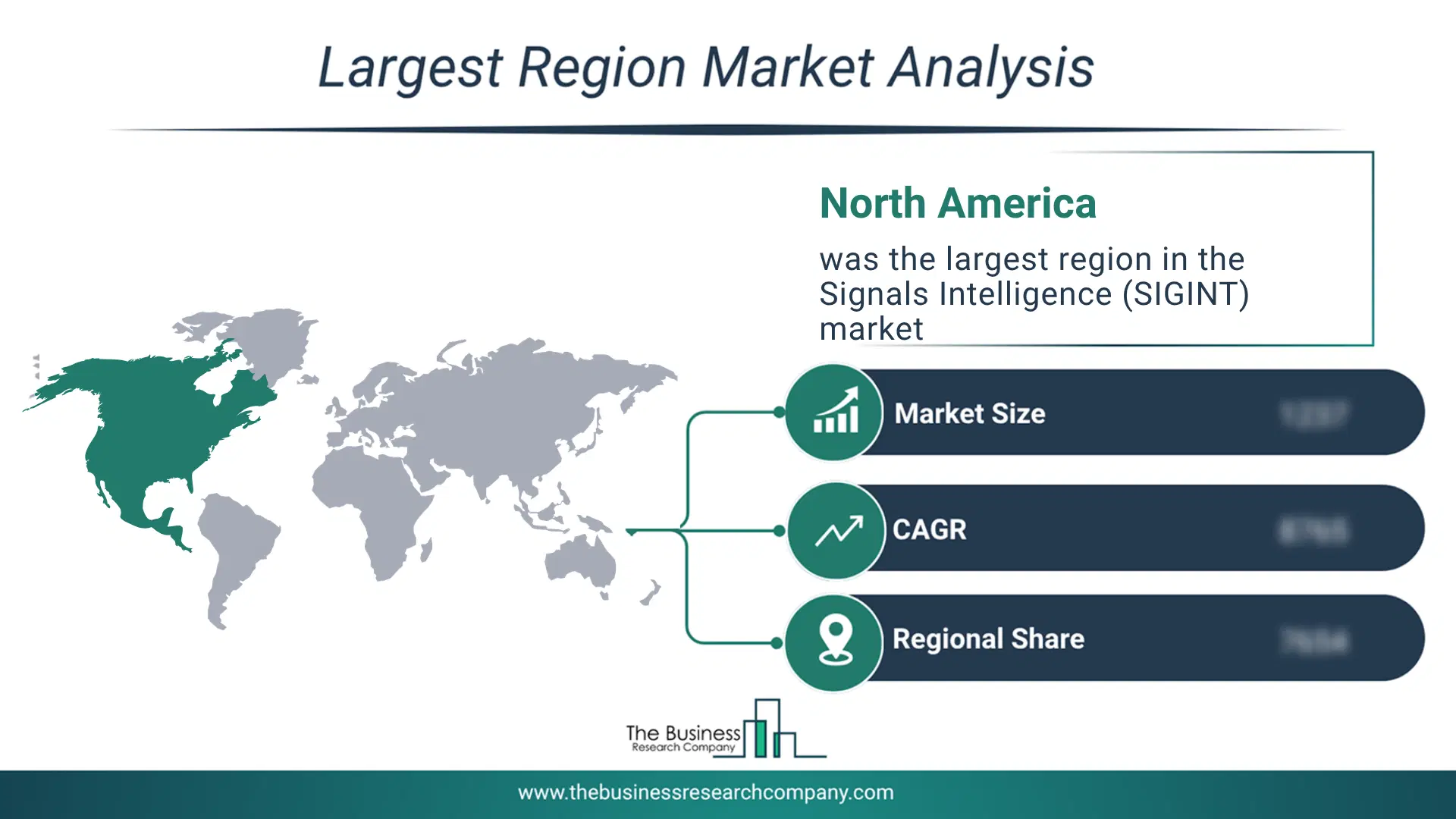
Regional Insights
North America was the largest region in the signal’s intelligence market in 2025. Asia-Pacific is expected to be the fastest-growing region in the forecast period. The regions covered in this market report are Asia-Pacific, South East Asia, Western Europe, Eastern Europe, North America, South America, Middle East, Africa. The countries covered in this market report are Australia, Brazil, China, France, Germany, India, Indonesia, Japan, Taiwan, Russia, South Korea, UK, USA, Canada, Italy, SpainWhat Defines the Signals Intelligence (SIGINT) Market?
The signals intelligence market includes revenues earned by entities by providing information about terrorizations, activities, capabilities, and intentions of a country's rivals. The market value includes the value of related goods sold by the service provider or included within the service offering. Only goods and services traded between entities or sold to end consumers are included.How is Market Value Defined and Measured?
The market value is defined as the revenues that enterprises gain from the sale of goods and/or services within the specified market and geography through sales, grants, or donations in terms of the currency (in USD unless otherwise specified). The revenues for a specified geography are consumption values that are revenues generated by organizations in the specified geography within the market, irrespective of where they are produced. It does not include revenues from resales along the supply chain, either further along the supply chain or as part of other products.
This chart presents market attractiveness based on a quantitative evaluation of growth, competition, strategic alignment, and risk, offering a clear view of opportunity areas for decision-making. This chart is for illustrative purposes; the full report contains the complete analysis.

This chart highlights the Total Addressable Market (TAM) by estimating the maximum revenue opportunity using an assumption-driven approach, supporting strategic planning and opportunity sizing across markets. The chart is illustrative; the full report provides a more comprehensive analysis.
What Key Data and Analysis Are Included in the Signals Intelligence (SIGINT) Market Report 2026?
The signals intelligence (sigint) market research report is one of a series of new reports from The Business Research Company that provides market statistics, including industry global market size, regional shares, competitors with the market share, detailed market segments, market trends and opportunities, and any further data you may need to thrive in the signals intelligence (sigint) industry. The market research report delivers a complete perspective of everything you need, with an in-depth analysis of the current and future state of the industry.Signals Intelligence (SIGINT) Market Report Forecast Analysis
| Report Attribute | Details |
|---|---|
| Market Size Value In 2026 | $16.22 billion |
| Revenue Forecast In 2030 | $20.05 billion |
| Growth Rate | CAGR of 5.1% from 2026 to 2030 |
| Base Year For Estimation | 2025 |
| Actual Estimates/Historical Data | 2020-2025 |
| Forecast Period | 2026 - 2030 |
| Market Representation | Revenue in USD Billion and CAGR from 2026 to 2030 |
| Segments Covered | Type, Mobility, Application |
| Regional Scope | Asia-Pacific, Western Europe, Eastern Europe, North America, South America, Middle East, Africa |
| Country Scope | The countries covered in the report are Australia, Brazil, China, France, Germany, India, Indonesia, Japan, Taiwan, Russia, South Korea, UK, USA, Canada, Italy, Spain. |
| Key Companies Profiled | BAE Systems PLC; Elbit Systems Ltd.; General Dynamics Corporation; L3Harris Technologies Inc.; Israel Aerospace Industries; The Boeing Company; Cobham PLC; Hensoldt AG; Honeywell International; Indra Sistemas S. A.; Lockheed Martin Corporation; Mercury Systems Inc.; National Instruments Corporation; Raytheon Technologies Corporation; Rheinmetall AG; Rohde & Schwarz GmbH & Co KG; Saab AB; Systematic A/S; Thales Group SA; ThinkRF Corp.; Booz Allen Hamilton Holding Corporation; Northrop Grumman Corporation; Safran Group |
| Customization Scope | Request for Customization |
| Pricing And Purchase Options | Explore Purchase Options |