
Single-Family Modular and Prefabricated Housing Construction Market Report 2026
Global Outlook – By Type (Permanent, Re-locatable ), By Material (Steel, Wood, Concrete, Other Materials ), By Application (Residential, Commercial, Industrial ) – Market Size, Trends, Strategies, and Forecast to 2030
Single-Family Modular and Prefabricated Housing Construction Market Overview
• Single-Family Modular and Prefabricated Housing Construction market size has reached to $52.24 billion in 2025 • Expected to grow to $65.92 billion in 2030 at a compound annual growth rate (CAGR) of 4.8% • Growth Driver: Residential Housing Demand Fuels Growth In The Single-Family Modular And Prefabricated Construction Market • Market Trend: Revolutionizing Prefabricated Construction In Building Information Modeling (BIM) • Asia-Pacific was the largest region and fastest growing region.Market Gains By 2030 – Top Opportunities By Segment
Market Gain identifies the most promising market opportunities by highlighting the segments or products expected to generate the highest incremental revenue growth over the next five years.
What Is Covered Under Single-Family Modular and Prefabricated Housing Construction Market?
Single-family modular and prefabricated housing construction is the process of building, altering, repairing, improving, or demolishing any single-family residential building or structure developed off-site using the same resources and constructing the same codes and specifications as conventionally designed structures but in about half the time. The main types of single-family modular and prefabricated housing construction are permanent and relocatable houses. A partially or fully assembled building that is created at a building manufacturing facility employing a modular construction technique and meets applicable codes or state standards is referred to as relocatable home construction. Relocatable buildings are intended to be reused or repurposed several times before being transferred to new construction locations. The different materials include steel, wood, concrete, and others and are used in residential, commercial, and industrial applications.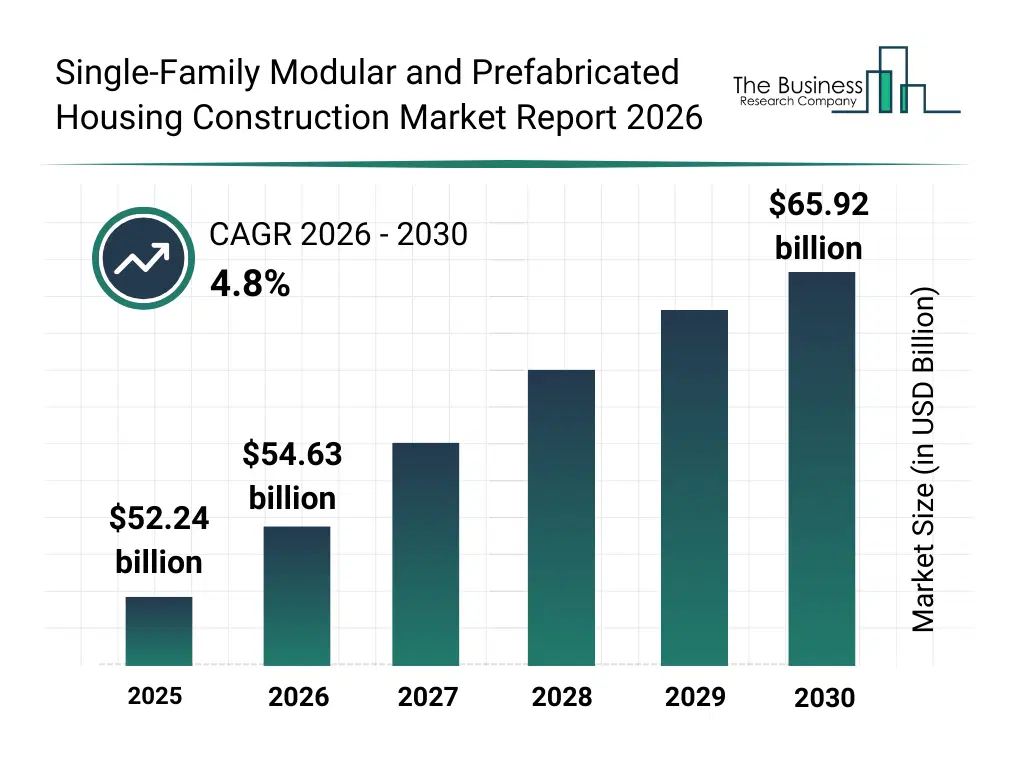
What Is The Single-Family Modular and Prefabricated Housing Construction Market Size and Share 2026?
The single-family modular and prefabricated housing construction market size has grown steadily in recent years. It will grow from $52.24 billion in 2025 to $54.63 billion in 2026 at a compound annual growth rate (CAGR) of 4.6%. The growth in the historic period can be attributed to rising availability of modular construction methods, early growth of off-site fabrication technologies, increasing adoption of prefab housing in urban regions, rising demand for rapid affordable home development, emergence of standardized prefab building codes.What Is The Single-Family Modular and Prefabricated Housing Construction Market Growth Forecast?
The single-family modular and prefabricated housing construction market size is expected to see steady growth in the next few years. It will grow to $65.92 billion in 2030 at a compound annual growth rate (CAGR) of 4.8%. The growth in the forecast period can be attributed to growing use of AI-driven modular design tools, increasing adoption of sustainable prefab materials, expansion of automated manufacturing lines, rising integration of smart-home systems in prefab units, growth in government-backed prefab housing incentives. Major trends in the forecast period include increasing adoption of modular automation tools, rise in off-site construction efficiency, growth in prefab structural innovation, increasing demand for rapid-deployment housing, expansion of high-precision residential fabrication.
Global Single-Family Modular and Prefabricated Housing Construction Market Segmentation
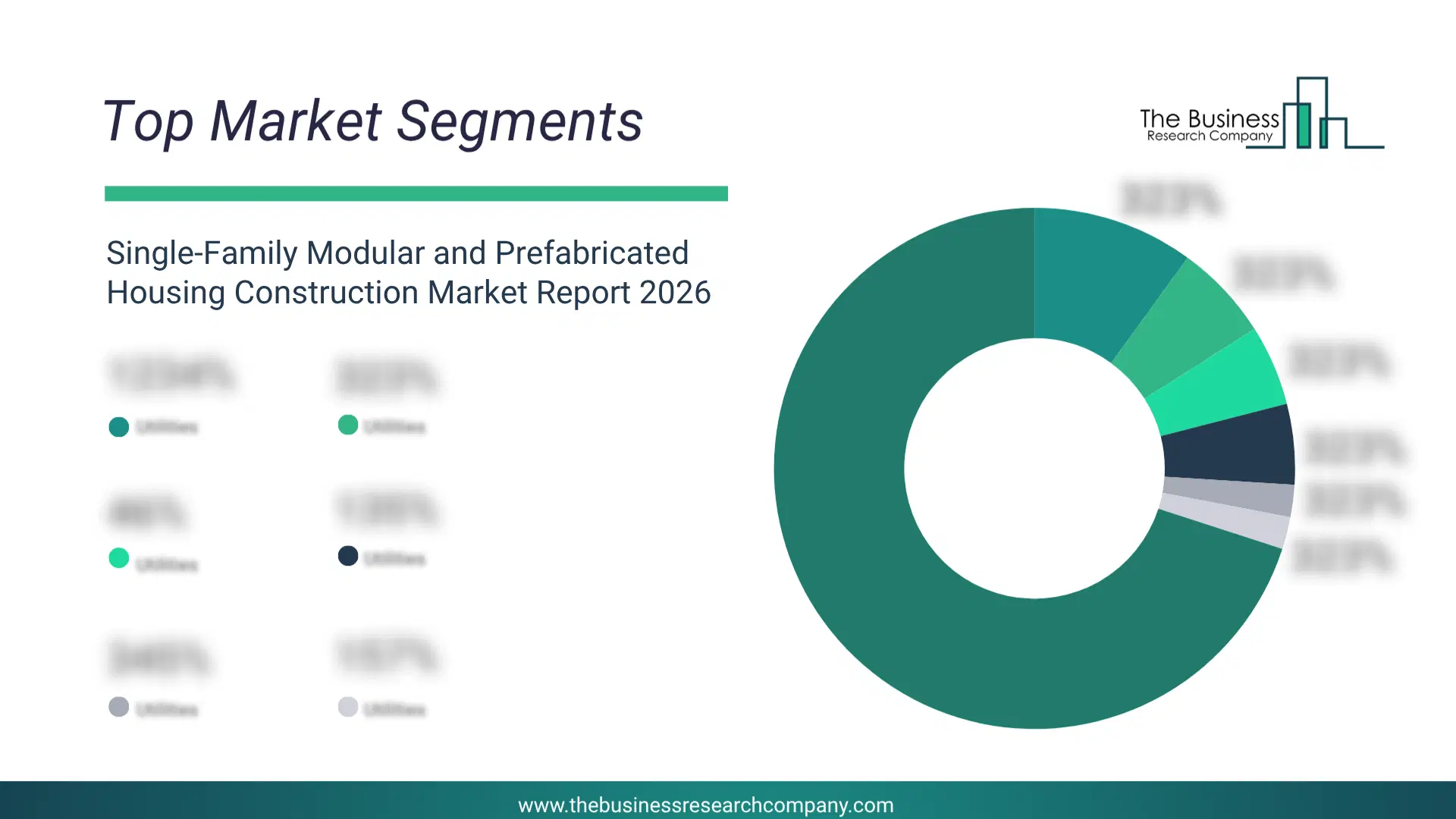
1) By Type: Permanent, Re-locatable 2) By Material: Steel, Wood, Concrete, Other Materials 3) By Application: Residential, Commercial, Industrial Subsegments: 1) By Permanent: Modular Homes, Prefabricated Concrete Homes, Timber-framed Prefab Homes 2) By Re-locatable: Portable Modular Homes, Temporary Housing Units, Mobile Prefabricated Homes The top segments in the single-family modular and prefabricated housing construction market will be: • Permanent will reach $46.95 Billion by 2030. • Re-locatable will reach $18.68 Billion by 2030.What Is The Driver Of The Single-Family Modular and Prefabricated Housing Construction Market?
The growing demand for residential housing is expected to propel the growth of the single-family modular and prefabricated housing construction market in the coming years. Residential housing is defined as structures or buildings that are primarily constructed or designed for living purposes. Residential housing plays a main role in defining the development and evolution of the single-family modular and prefabricated home construction sector, which is forced by consumer demand for inexpensive, sustainable, and adaptable housing options. For instance, in June 2023, according to the U.S. Census Bureau and the U.S. Department of Housing and Urban Development, US-based government administrations, in May 2023, privately owned home starts were occurring at a seasonally adjusted annual pace of 1,631,000, representing a 21.7% increase over the revised April 2023 prediction of 1,340,000 and a 5.7% increase over the May 2022 rate of 1,543,000. The number of privately owned home completions in May 2023 was 1,518,000 on a seasonally adjusted yearly basis. This is 5.0% over the May 2022 rate of 1,446,000 and 9.5% above the revised April 2023 estimate of 1,386,000. Therefore, the growing demand for residential housing is driving the single-family modular and prefabricated housing construction industry.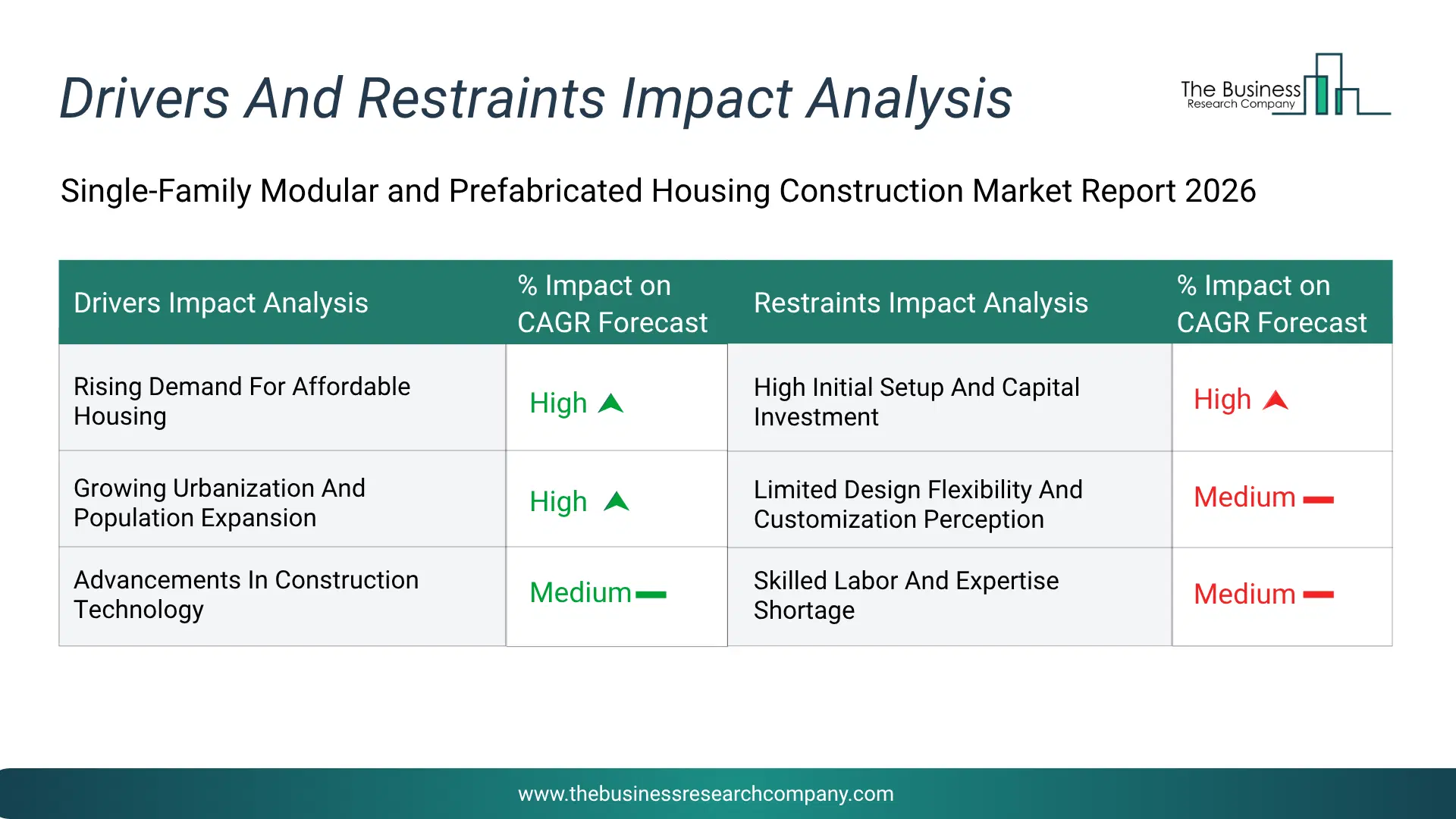
Infographic Chart Showing Key Market Drivers Analysis And Restraints For Single-Family Modular And Prefabricated Housing Construction Market
The chart presents an impact analysis of key drivers and restraints, quantifying their relative influence on the market's growth rate and helping assess the balance between growth enablers and limiting factors. This chart offers a high-level perspective; the full report contains more detailed insights.
How Will The Drivers Impact Growth In The Global Single-Family Modular and Prefabricated Housing Construction Market?
• Rising Demand For Affordable Housing (High) – During the forecast period, the rising demand for affordable housing is expected to become a key growth driver for the single-family modular and prefabricated housing construction market by 2030. Escalating home prices and increasing housing affordability challenges are encouraging developers and homebuyers to seek cost-effective construction alternatives. Modular and prefabricated housing solutions offer reduced labor requirements, optimized material utilization, and shorter construction timelines, helping lower overall project costs. Governments and private developers are increasingly incorporating these housing models into residential projects to address supply gaps and improve accessibility. • Growing Urbanization And Population Expansion (High) – During the forecast period, the growing urbanization and population expansion is expected to emerge as a major factor driving the expansion of the single-family modular and prefabricated housing construction market by 2030. Rapid population growth and migration toward urban and suburban areas are creating sustained demand for new housing developments. Prefabricated construction methods enable faster deployment of residential units while maintaining consistent quality standards, making them well-suited for meeting large-scale housing requirements. Developers are increasingly leveraging factory-built construction approaches to accelerate project completion and address rising occupancy needs. • Advancements In Construction Technology (Medium) – During the forecast period, the advancements in construction technology are expected to act as a key growth catalyst for the single-family modular and prefabricated housing construction market by 2030. Innovations in digital design platforms, automated manufacturing systems, precision engineering, and building information modeling are improving the efficiency and accuracy of modular construction processes. These technologies enable enhanced customization, reduced material waste, and greater consistency across production cycles. The adoption of advanced construction solutions is also strengthening quality control and streamlining project execution from design to installation.How Will The Restraints Impact Growth In The Global Single-Family Modular and Prefabricated Housing Construction Market?
• High Initial Setup And Capital Investment (High) – During the forecast period, the single-family modular and prefabricated housing construction requires substantial upfront investment in manufacturing facilities, specialized machinery, transportation logistics, and digital design systems. Unlike traditional construction, companies must establish factory-based production lines and maintain inventory for standardized components, which significantly increases capital intensity. These high initial costs can deter new entrants and limit expansion for small and mid-sized firms. Additionally, financing such projects can be challenging due to perceived risks and longer payback periods, especially in developing markets. The need for land acquisition for factories and compliance with regulatory standards further adds to the financial burden. As a result, market growth may be constrained by reduced participation and slower capacity scaling. • Limited Design Flexibility And Customization Perception (High) – During the forecast period, the despite advancements in modular construction technology, there remains a widespread perception that prefabricated homes offer limited design flexibility compared to traditionally built houses. Buyers often associate modular homes with standardized layouts and less aesthetic variety, which can discourage adoption among consumers seeking personalized housing solutions. This perception can influence developers and builders to favor conventional methods to meet diverse client demands. Even when customization is technically possible, it may involve higher costs or longer lead times, reducing the cost-efficiency advantage of prefabrication. Consequently, this constraint can limit demand, particularly in premium housing segments where uniqueness and design differentiation are key decision factors. • Skilled Labor And Expertise Shortage (Medium) – During the forecast period, the modular and prefabricated housing sector depends on a workforce skilled in specialized areas such as off-site manufacturing, precision engineering, digital modeling, and on-site assembly of prefabricated components. However, there is a shortage of trained professionals with expertise in these areas, particularly in emerging economies. This skills gap can lead to inefficiencies, production delays, and quality issues, ultimately increasing project timelines and costs. Furthermore, the transition from traditional construction methods to modular techniques requires retraining existing labor, which can be time-consuming and expensive. The lack of adequate training infrastructure and awareness further exacerbates this issue, limiting the industry's ability to scale efficiently and meet growing housing demand.Key Players In The Global Single-Family Modular and Prefabricated Housing Construction Market
Major companies operating in the single-family modular and prefabricated housing construction market are Red Sea Housing Services, Skanska AB, Bouygues Construction, ACS Actividades de Construcción y Servicios SA, Lindal Cedar Homes Inc., Kiewit Corporation, Balfour Beatty Plc., Taisei Corporation, System House R & C Co. Ltd, Larsen & Toubro Limited, Algeco Scotsman, Skyline Champion Corporation, Kirby Building Systems LLC, Butler Manufacturing, Astron Buildings, Modular Engineering, Niko Prefab Building Systems Pvt Ltd, Par-Kut International, Schulte Building Systems Inc., United Partition Systems Inc., Vardhman Pre-Engineered Building Systems, Laing O'Rourke, Palomar Modular Buildings, Guerdon Enterprises LLC, JL Modular Inc., Julius Berger Nigeria PLC, Katerra, Speed House Group of Companies, Supertech Industries LLC, Tempohousing, Cavco Industries Inc, Lendlease, Clayco, Suffolk Construction, DPR Construction, PCL Construction Enterprises, Walsh Group, BL Harbert, Level 10 Construction, Austin Commercial, James G. Davis Construction, Turner Construction Co., Clark Group, AECOM, Hensel Phelps, Holder Construction, Whiting-Turner Contracting Co., Gilbane Building Co., Structure Tone, Webcor Builders, Power Construction, Consigli Building Group, McCarthy Holdings, Hoffman Construction, Brasfield & Gorrie, Mortenson Const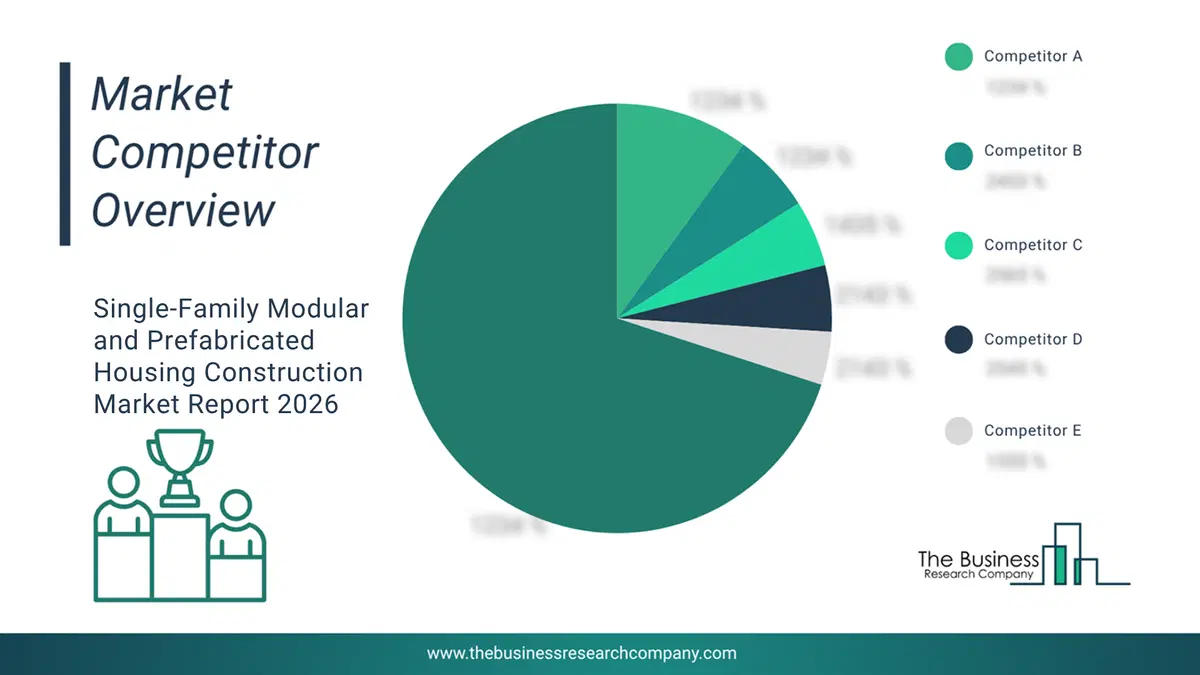
This chart is for illustrative purposes; the full report includes a detailed competitor analysis and comprehensive overview of the top 10 companies in the market.
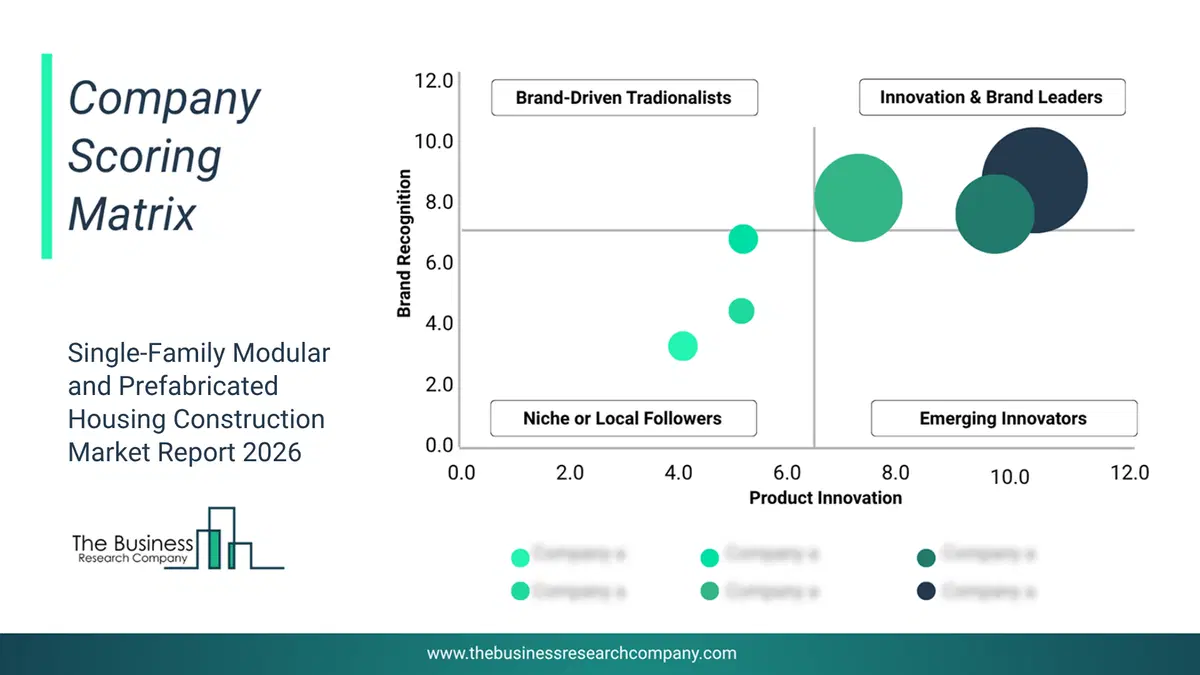
This chart maps companies by product innovation and brand strength, with bubble size indicating relative revenue, helping identify market leaders, challengers, and niche players. This is an illustrative chart; the full report provides a complete and accurate competitive analysis.
Global Single-Family Modular and Prefabricated Housing Construction Market Trends and Insights
Implementation of Building Information Modeling (BIM) in modular construction is an emerging trend in the single-family modular and prefabricated housing construction market. Building Information Modeling (BIM) is a revolutionary technique for designing, building, and managing construction models. This 3D model-based technology provides a digital representation of a building's physical and functional qualities. The technology enables all parties engaged in the built asset's creation and lifespan management to share data and collaborate. During the pre-construction phase, BIM provides specialists with a 3D picture of the structure. It allows specialists to detect potential incompatibilities in mechanical, electrical, and plumbing (MEP) systems and address them at an early stage. For instance, in June 2023, OpenSpace, a US-based software company, partnered with Revizto, a Switzerland-based software company, to launch OpenSpace BIM+. It offers a user-friendly suite of 3D tools tailored for field and virtual design and construction (VDC) teams, enhancing on-site BIM coordination to improve workflow efficiency and expedite project completion. It allows users to easily compare 2D drawings with 3D models, enabling field teams to evaluate site conditions against the project's BIM. The design prioritizes simplicity, making it accessible for teams to effectively utilize BIM technology. Its goal is to boost BIM adoption rates among teams committed to investing in these technologies.What Are Latest Mergers And Acquisitions In The Single-Family Modular and Prefabricated Housing Construction Market?
In September 2024, ATCO Structures & Logistics Ltd. (ATCO Structures), a Canada-based manufacturer and seller of residential housing and space rental products, acquired NRB Modular Solutions for $40 million. The deal enhances ATCO Structures' capabilities and presence in the modular construction industry. NRB Modular Solutions is a Canada-based provider of modular residential building solutions.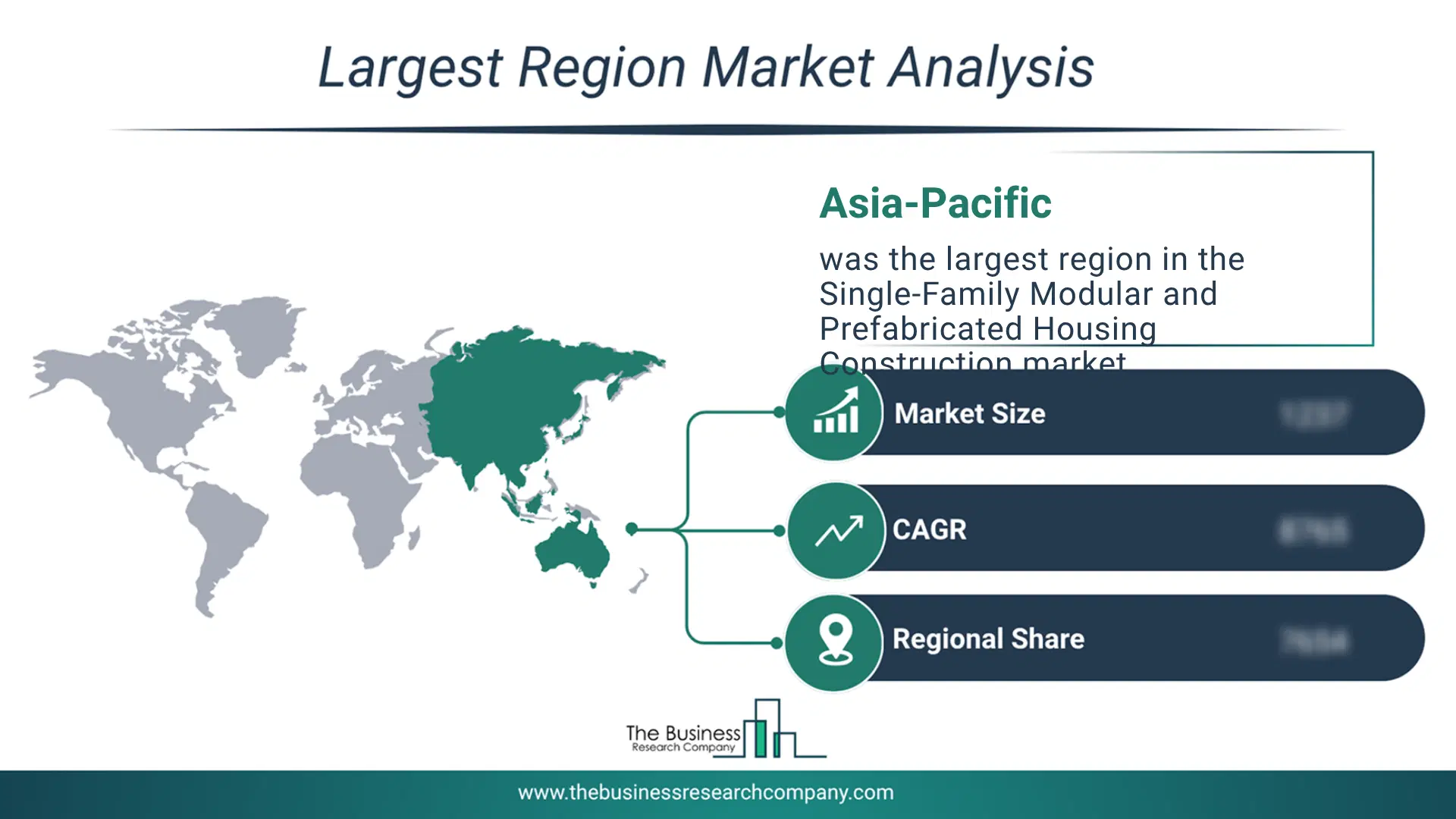
Regional Insights
Asia-Pacific was the largest region in the single-family modular and prefabricated housing construction market in 2025. Eastern Europe is expected to be the fastest-growing region in the single-family modular and prefabricated housing construction market during the forecast period. The regions covered in this market report are Asia-Pacific, South East Asia, Western Europe, Eastern Europe, North America, South America, Middle East, Africa. The countries covered in this market report are Australia, Brazil, China, France, Germany, India, Indonesia, Japan, Taiwan, Russia, South Korea, UK, USA, Canada, Italy, Spain.What Defines the Single-Family Modular and Prefabricated Housing Construction Market?
The single-family modular and prefabricated housing construction market includes revenues earned by entities by residential structures, residential project construction management firms, and residential design-build firms. The market value includes the value of related goods sold by the service provider or included within the service offering. Only goods and services traded between entities or sold to end consumers are included.How is Market Value Defined and Measured?
The market value is defined as the revenues that enterprises gain from the sale of goods and/or services within the specified market and geography through sales, grants, or donations in terms of the currency (in USD unless otherwise specified). The revenues for a specified geography are consumption values that are revenues generated by organizations in the specified geography within the market, irrespective of where they are produced. It does not include revenues from resales along the supply chain, either further along the supply chain or as part of other products.
This chart presents market attractiveness based on a quantitative evaluation of growth, competition, strategic alignment, and risk, offering a clear view of opportunity areas for decision-making. This chart is for illustrative purposes; the full report contains the complete analysis.

This chart highlights the Total Addressable Market (TAM) by estimating the maximum revenue opportunity using an assumption-driven approach, supporting strategic planning and opportunity sizing across markets. The chart is illustrative; the full report provides a more comprehensive analysis.
What Key Data and Analysis Are Included in theSingle-Family Modular and Prefabricated Housing Construction Market Report 2026?
The single-family modular and prefabricated housing construction market research report is one of a series of new reports from The Business Research Company that provides market statistics, including industry global market size, regional shares, competitors with the market share, detailed market segments, market trends and opportunities, and any further data you may need to thrive in the single-family modular and prefabricated housing construction industry. The market research report delivers a complete perspective of everything you need, with an in-depth analysis of the current and future state of the industry.Single-Family Modular and Prefabricated Housing Construction Market Report Forecast Analysis
| Report Attribute | Details |
|---|---|
| Market Size Value In 2026 | $54.63 billion |
| Revenue Forecast In 2030 | $65.92 billion |
| Growth Rate | CAGR of 4.6% from 2026 to 2030 |
| Base Year For Estimation | 2025 |
| Actual Estimates/Historical Data | 2020-2025 |
| Forecast Period | 2026 - 2030 |
| Market Representation | Revenue in USD Billion and CAGR from 2026 to 2030 |
| Segments Covered | Type, Material, Application |
| Regional Scope | Asia-Pacific, Western Europe, Eastern Europe, North America, South America, Middle East, Africa |
| Country Scope | The countries covered in the report are Australia, Brazil, China, France, Germany, India, Indonesia, Japan, Taiwan, Russia, South Korea, UK, USA, Canada, Italy, Spain. |
| Key Companies Profiled | Red Sea Housing Services, Skanska AB, Bouygues Construction, ACS Actividades de Construcción y Servicios SA, Lindal Cedar Homes Inc., Kiewit Corporation, Balfour Beatty Plc., Taisei Corporation, System House R & C Co. Ltd, Larsen & Toubro Limited, Algeco Scotsman, Skyline Champion Corporation, Kirby Building Systems LLC, Butler Manufacturing, Astron Buildings, Modular Engineering, Niko Prefab Building Systems Pvt Ltd, Par-Kut International, Schulte Building Systems Inc., United Partition Systems Inc., Vardhman Pre-Engineered Building Systems, Laing O'Rourke, Palomar Modular Buildings, Guerdon Enterprises LLC, JL Modular Inc., Julius Berger Nigeria PLC, Katerra, Speed House Group of Companies, Supertech Industries LLC, Tempohousing, Cavco Industries Inc, Lendlease, Clayco, Suffolk Construction, DPR Construction, PCL Construction Enterprises, Walsh Group, BL Harbert, Level 10 Construction, Austin Commercial, James G. Davis Construction, Turner Construction Co., Clark Group, AECOM, Hensel Phelps, Holder Construction, Whiting-Turner Contracting Co., Gilbane Building Co., Structure Tone, Webcor Builders, Power Construction, Consigli Building Group, McCarthy Holdings, Hoffman Construction, Brasfield & Gorrie, Mortenson Const |
| Customization Scope | Request for Customization |
| Pricing And Purchase Options | Explore Purchase Options |