
Single-Family Smart Homes Market Report 2026
Global Outlook – By Product (Home Monitoring And Security, Smart Lighting, Entertainment, Smart Appliances, Combination, Other Products ), By Software and Service (Proactive, Behavioral), By Technology (Wi-Fi, Bluetooth, GSM/GPRS, RFID, Other Technologies) – Market Size, Trends, Strategies, and Forecast to 2030
Single-Family Smart Homes Market Overview
• Single-Family Smart Homes market size has reached to $137.17 billion in 2025 • Expected to grow to $314.46 billion in 2030 at a compound annual growth rate (CAGR) of 18.1% • Growth Driver: IOT Paves The Way, Fueling Growth In The Single-Family Smart Home Market • Market Trend: Innovative Connected Home Solutions Driving Growth in the Single-Family Smart Homes Market • Asia-Pacific was the largest region and fastest growing region.Market Gains By 2030 – Top Opportunities By Segment
Market Gain identifies the most promising market opportunities by highlighting the segments or products expected to generate the highest incremental revenue growth over the next five years.
What Is Covered Under Single-Family Smart Homes Market?
Single-family smart homes are futuristic single-family buildings equipped with advanced electronics and wireless devices. The smart home system requires a web portal or smartphone application to interact with the automated system as a user interface. The main types of products in single-family smart homes are smart lighting, entertainment, smart appliances, and others. Smart lighting is a type of lighting that is designed to save energy while also providing security and convenience. This could incorporate energy-efficient fixtures and automatic controls that adjust based on factors including occupancy or daylight availability. The different technologies include Wi-Fi, Bluetooth, GSM/GPRS, RFID, and others, and the software and services used include proactive and behavioral. These types of services are provided by large contractors and small contractors.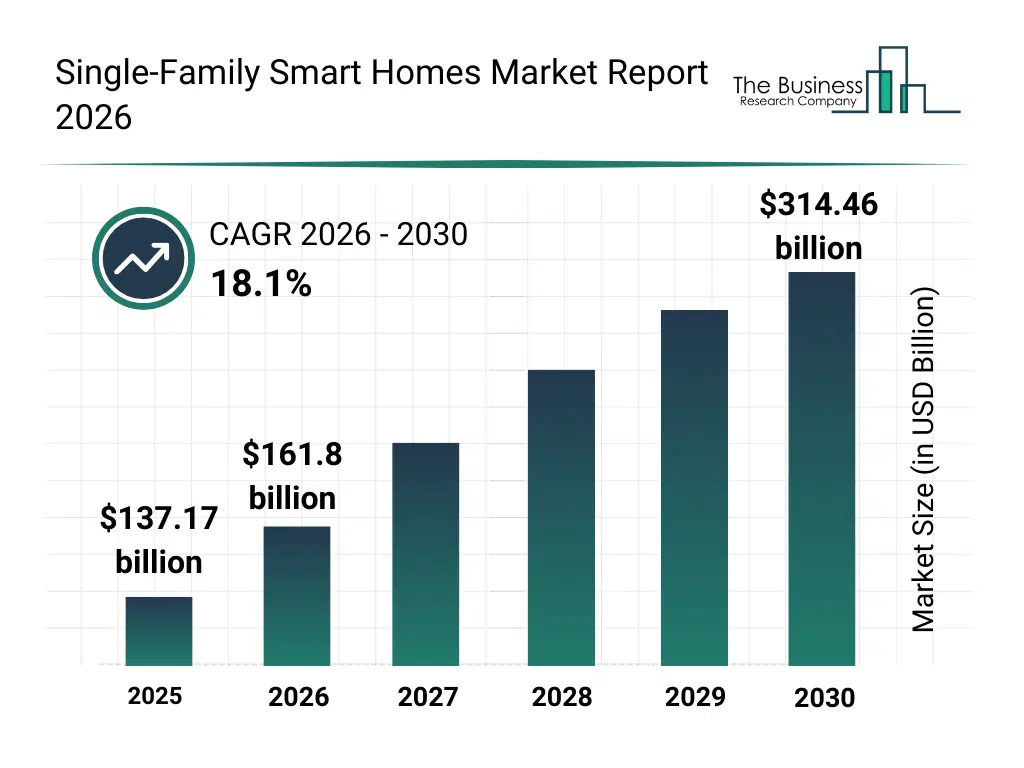
What Is The Single-Family Smart Homes Market Size and Share 2026?
The single-family smart homes market size has grown rapidly in recent years. It will grow from $137.17 billion in 2025 to $161.8 billion in 2026 at a compound annual growth rate (CAGR) of 18.0%. The growth in the historic period can be attributed to rising adoption of basic home automation devices, historical reliance on imported electronic components, growth of residential construction, increased consumer interest in convenience technologies, early integration of security and monitoring systems.What Is The Single-Family Smart Homes Market Growth Forecast?
The single-family smart homes market size is expected to see rapid growth in the next few years. It will grow to $314.46 billion in 2030 at a compound annual growth rate (CAGR) of 18.1%. The growth in the forecast period can be attributed to rapid expansion of integrated smart ecosystems, increasing demand for energy-efficient connected devices, rise in AI-driven home automation, growing availability of cost-effective smart appliances, expanding use of wireless and sensor-based technologies. Major trends in the forecast period include rising adoption of integrated smart home ecosystems, increased demand for smart security and monitoring solutions, expansion of energy-efficient and automated household systems, growth in smart entertainment and connected appliance adoption, rising use of voice-controlled and app-based home management.
Global Single-Family Smart Homes Market Segmentation
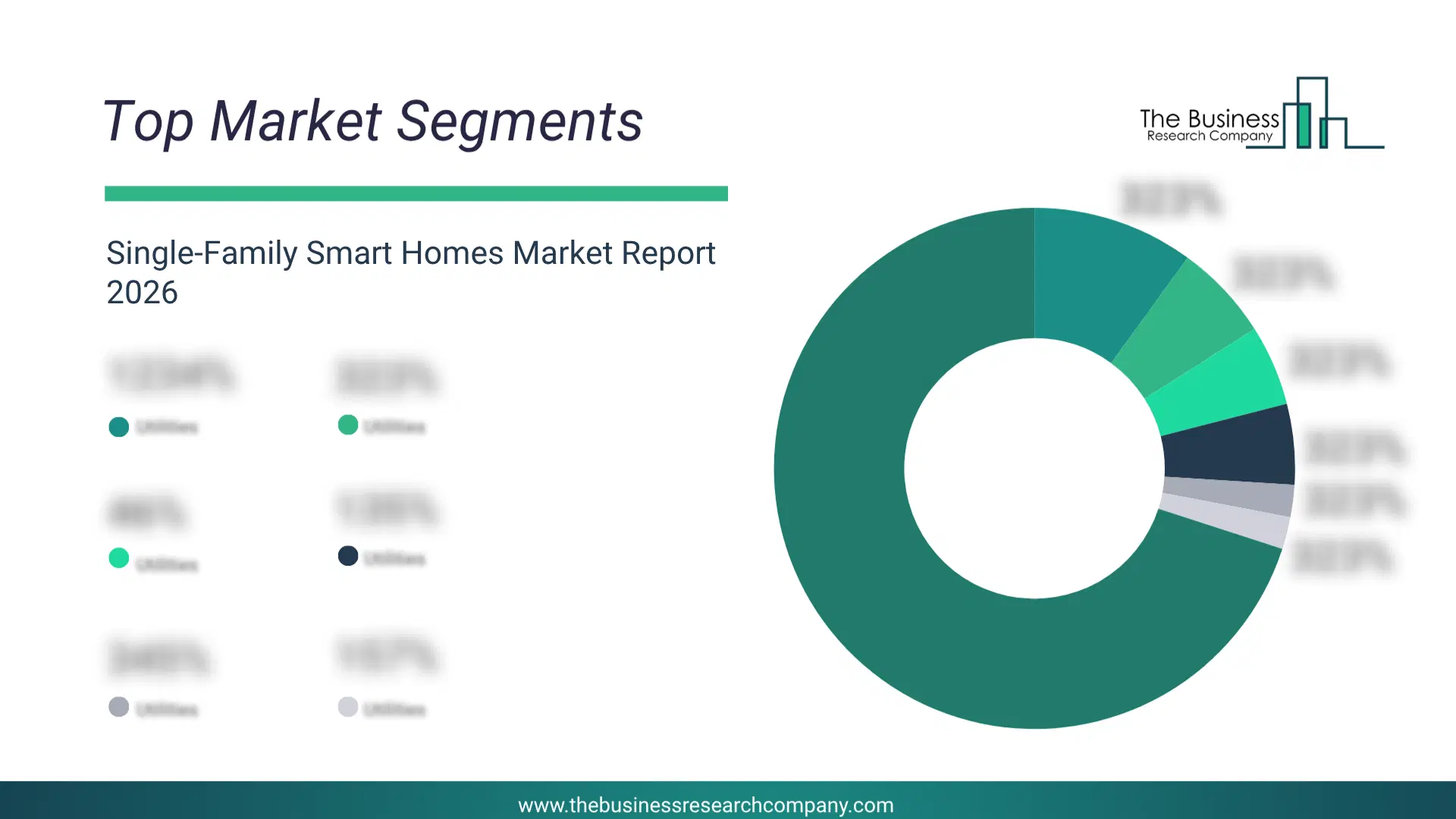
1) By Product: Home Monitoring And Security, Smart Lighting, Entertainment, Smart Appliances, Combination, Other Products 2) By Software and Service: Proactive, Behavioral 3) By Technology: Wi-Fi, Bluetooth, GSM/GPRS, RFID, Other Technologies Subsegments: 1) By Home Monitoring And Security: Smart Cameras And Video Doorbells, Motion Sensors And Alarms, Smart Locks And Access Control Systems 2) By Smart Lighting: Smart Bulbs And Fixtures, Lighting Control Systems, Automated Lighting Schedules And Scenes 3) By Entertainment: Smart Speakers And Audio Systems, Streaming Devices And Smart TVs, Home Theater Systems 4) By Smart Appliances: Smart Refrigerators, Smart Ovens And Cooking Appliances, Smart Thermostats And HVAC Systems 5) By Combination: Integrated Smart Home Systems, Packages That Include Multiple Smart Products 6) By Other Products: Smart Blinds And Shades, Smart Irrigation Systems, Home Health Monitoring Devices The top segments in the single-family smart homes market will be: • Home Monitoring And Security will reach $79 Billion by 2030. • Combination will reach $58 Billion by 2030. • Other Products will reach $58 Billion by 2030. • Smart Appliances will reach $51 Billion by 2030. • Smart Lighting will reach $36 Billion by 2030.What Is The Driver Of The Single-Family Smart Homes Market?
The increasing adoption of the Internet of Things (IoT) is expected to propel the growth of the single-family smart home market in the coming years. IoT-enabled smart homes, also known as connected homes, are residences that use internet-connected devices to enable the remote monitoring and management of appliances and systems. The Internet of Things (IoT) is essential in smart homes because it allows objects and systems to connect, interact, and exchange data. Homeowners benefit from this communication and data sharing in a variety of ways, making their everyday activities more comfortable, efficient, and secure. For instance, in May 2023, according to IoT Analytics GmbH, a Germany-based information analysis platform, globally, the overall number of connected IoT devices will have increased by 16% to 16.7 billion in 2023. Therefore, the increasing adoption of the Internet of Things (IoT) is driving the single-family smart home industry.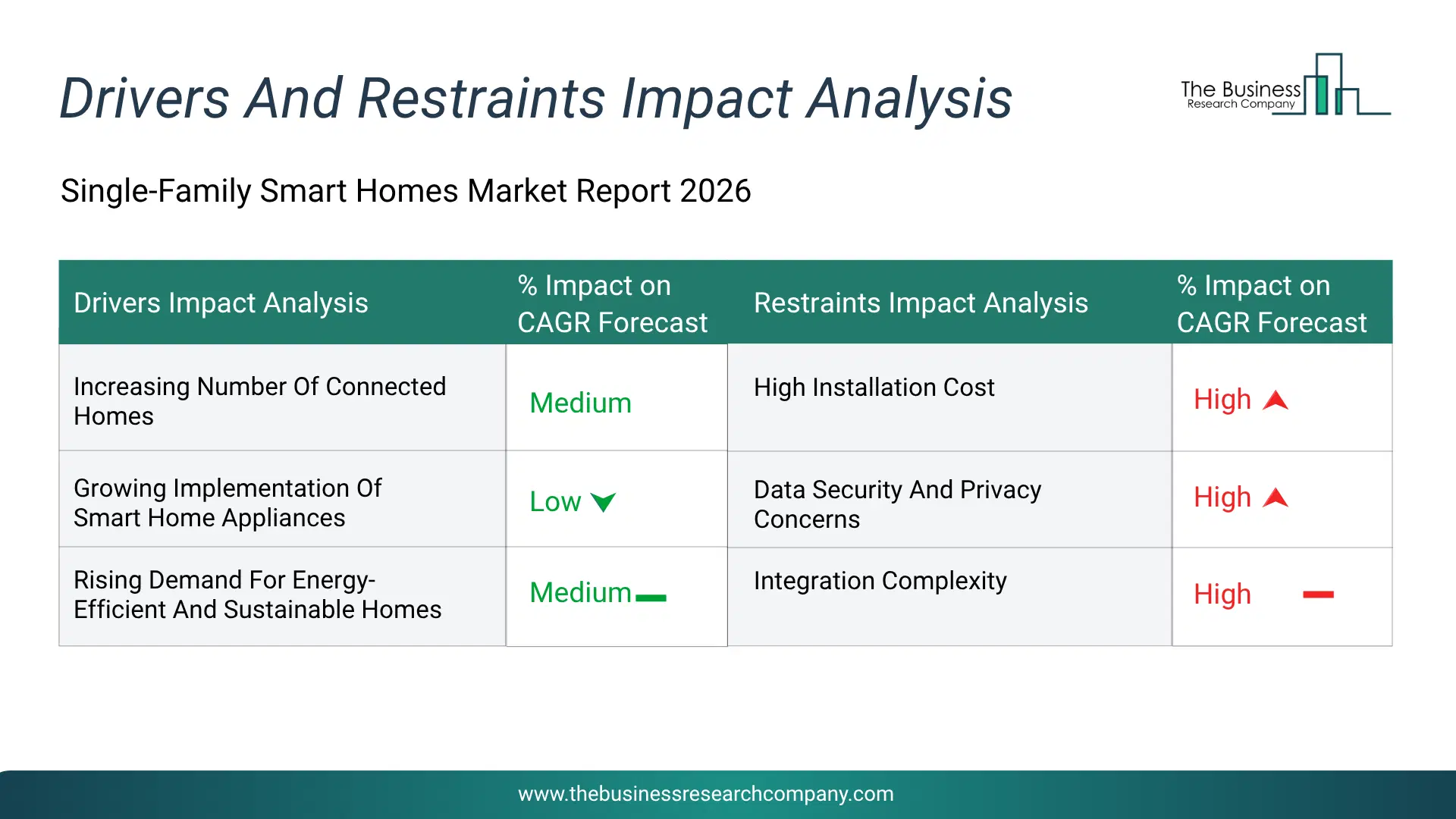
Infographic Chart Showing Key Market Drivers Analysis And Restraints For Single-Family Smart Homes Market
The chart presents an impact analysis of key drivers and restraints, quantifying their relative influence on the market's growth rate and helping assess the balance between growth enablers and limiting factors. This chart offers a high-level perspective; the full report contains more detailed insights.
How Will The Drivers Impact Growth In The Global Single-Family Smart Homes Market?
• Increasing Number Of Connected Homes (Medium) – During the forecast period, the increasing number of connected homes is expected to emerge as a major factor driving the expansion of the single-family smart homes market by 2030. the growing adoption of IoT-enabled devices is creating a robust ecosystem that supports integrated home automation and centralized device management. homebuilders are increasingly incorporating smart infrastructure during construction to enable seamless connectivity across security systems, lighting, climate control, and other digital applications. • Growing Implementation Of Smart Home Appliances (Low) – During the forecast period, the growing implementation of smart home appliances is expected to emerge as a major factor driving the expansion of the single-family smart homes market by 2030. the rising use of intelligent refrigerators, washing machines, HVAC systems, and other connected appliances is encouraging developers to design homes with built-in compatibility for advanced automation technologies. continuous product innovation, improved interoperability, and greater affordability are further expanding consumer adoption of integrated smart home ecosystems. • Rising Demand For Energy-Efficient And Sustainable Homes (Medium) – During the forecast period, the rising demand for energy-efficient and sustainable homes is expected to act as a key growth catalyst for the single-family smart homes market by 2030. smart energy management solutions, including automated lighting, intelligent climate control, and real-time energy monitoring, help homeowners reduce electricity consumption and operating costs while supporting environmental sustainability goals. in addition, green building initiatives and evolving consumer preferences for environmentally responsible housing are encouraging wider adoption of smart residential technologies.How Will The Restraints Impact Growth In The Global Single-Family Smart Homes Market?
• High Installation Cost (Medium) – During the forecast period, high installation cost acts as a major restraint for the Single-Family Smart Homes market by limiting adoption among price-sensitive consumers. The integration of advanced technologies such as IoT devices, sensors, and centralized control systems significantly increases initial construction expenses. Many homeowners find it difficult to justify the high upfront investment despite long-term savings. This cost burden is especially impactful in developing regions where affordability is a key concern. Additionally, installation often requires skilled professionals, further adding to expenses. Builders may hesitate to include smart features in standard housing projects due to pricing constraints. As a result, high installation costs slow down widespread market penetration. • Data Security And Privacy Concerns (Low) – During the forecast period, data security and privacy concerns restrict market growth as smart homes rely heavily on internet-connected devices that collect and transmit personal data. Homeowners are increasingly worried about potential cyberattacks, hacking, and unauthorized access to their systems. Vulnerabilities in connected devices can expose sensitive information and compromise home safety. This lack of trust discourages consumers from fully adopting smart home technologies. Additionally, inconsistent security standards across devices create further uncertainty. Regulatory challenges related to data protection also add complexity for manufacturers and developers. Consequently, these concerns act as a barrier to large-scale adoption. • Integration Complexity (Medium) – During the forecast period, integration complexity acts as a restraint due to the challenges involved in connecting multiple smart devices and systems into a unified platform. Different devices often operate on varied protocols and standards, making seamless communication difficult. This creates compatibility issues during installation and operation. Homeowners may face difficulties managing multiple applications instead of a single interface. Builders and developers also require technical expertise to ensure proper system integration. Any malfunction or lack of synchronization can reduce user satisfaction. Therefore, complexity in integration slows down adoption and limits market growth.Key Players In The Global Single-Family Smart Homes Market
Major companies operating in the single-family smart homes market are Lennar Corporation, PulteGroup, Inc., Meritage Homes Corporation, KB Smart Home, TRI Pointe Group Inc., Shea Homes, McGuyer Homebuilders, Inc., Porter Davis, Henley and home automation, Carlisle and home automation, Plantation homes, Tianjin Quick Smart House Co.Ltd, Larsen & Toubro, Gera Developments Company, Panchshil developers, Daiwa House Industry Co, Ltd, Kier Group plc, ELAN home, Loxone, D.R. Horton, Toll Brothers, Taylor Morrison, Ryan Homes, Ashton Woods, Smart home building contracting LLC, Simpletech, Qi Systems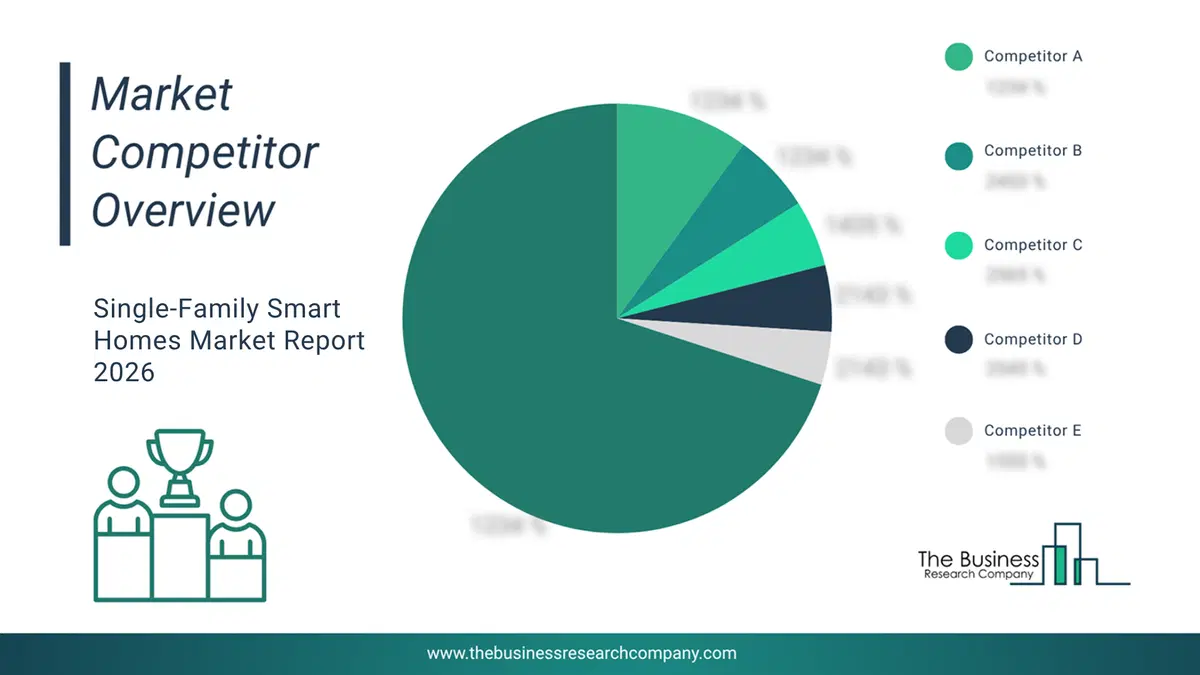
This chart is for illustrative purposes; the full report includes a detailed competitor analysis and comprehensive overview of the top 10 companies in the market.
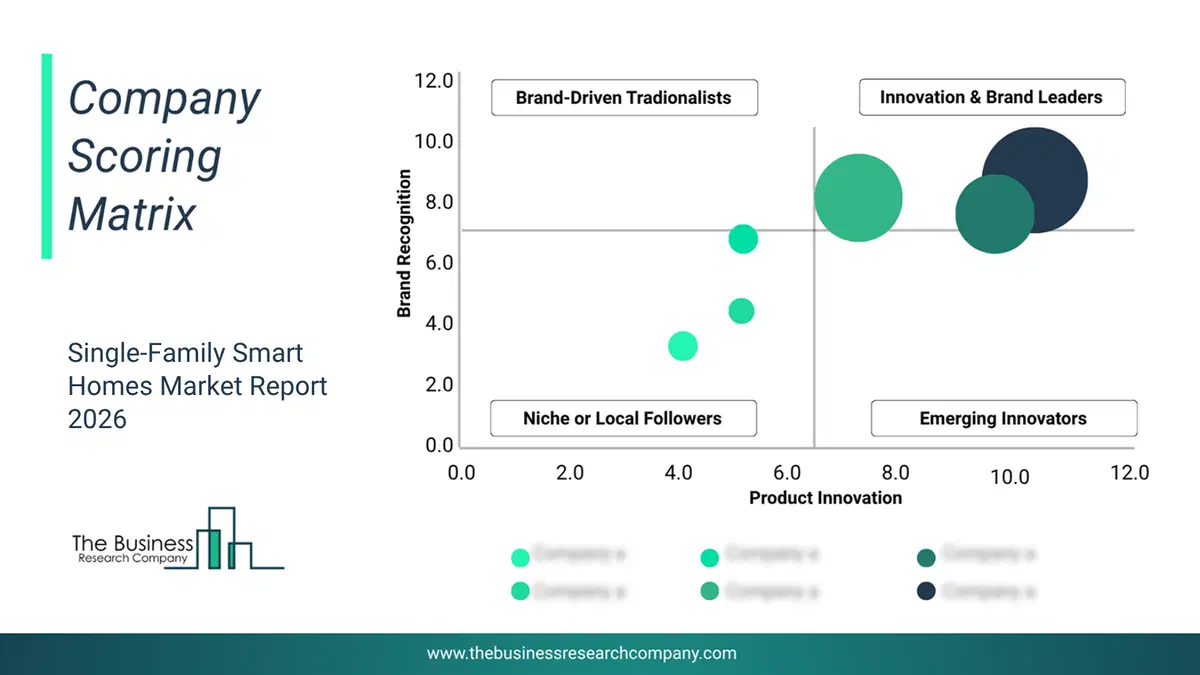
This chart maps companies by product innovation and brand strength, with bubble size indicating relative revenue, helping identify market leaders, challengers, and niche players. This is an illustrative chart; the full report provides a complete and accurate competitive analysis.
Global Single-Family Smart Homes Market Trends and Insights
Major companies operating in the single-family smart homes market are focusing on innovative products such as, suite of connected home products, to better meet the needs of their existing consumers. A suite of connected household products is a set of smart appliances and gadgets intended to operate collectively to create a smart home environment. These items are often internet-connected and may be operated remotely via a smartphone or other device. For instance, in April 2023, Resideo Technologies, a US-based manufacturer and distributor of technology-driven products and solutions for homes and buildings, launched the Honeywell Home T10+ Smart Thermostat Kits. Honeywell Home T10+ Smart Thermostat Kits are advanced home climate control systems designed to enhance indoor air quality (IAQ) and overall comfort. Enhancing its previous model with advanced features for indoor air quality (IAQ) management. This new thermostat utilizes Resideo's proprietary RedLINK 3.0 technology, which allows for simultaneous control of humidification, dehumidification, and ventilation systems.What Are Latest Mergers And Acquisitions In The Single-Family Smart Homes Market?
In March 2023, NRG Energy, Inc., a U.S.-based nuclear electric power generation company, acquired Vivint Smart Home Inc. for an undisclosed amount. With this acquisition, NRG Energy aims to create an integrated essential home services platform by combining energy supply and smart home technology to enhance customer engagement and value. Vivint Smart Home Inc. is a US-based provider of smart home technology and services, such as integrated home security, designed for single-family residences.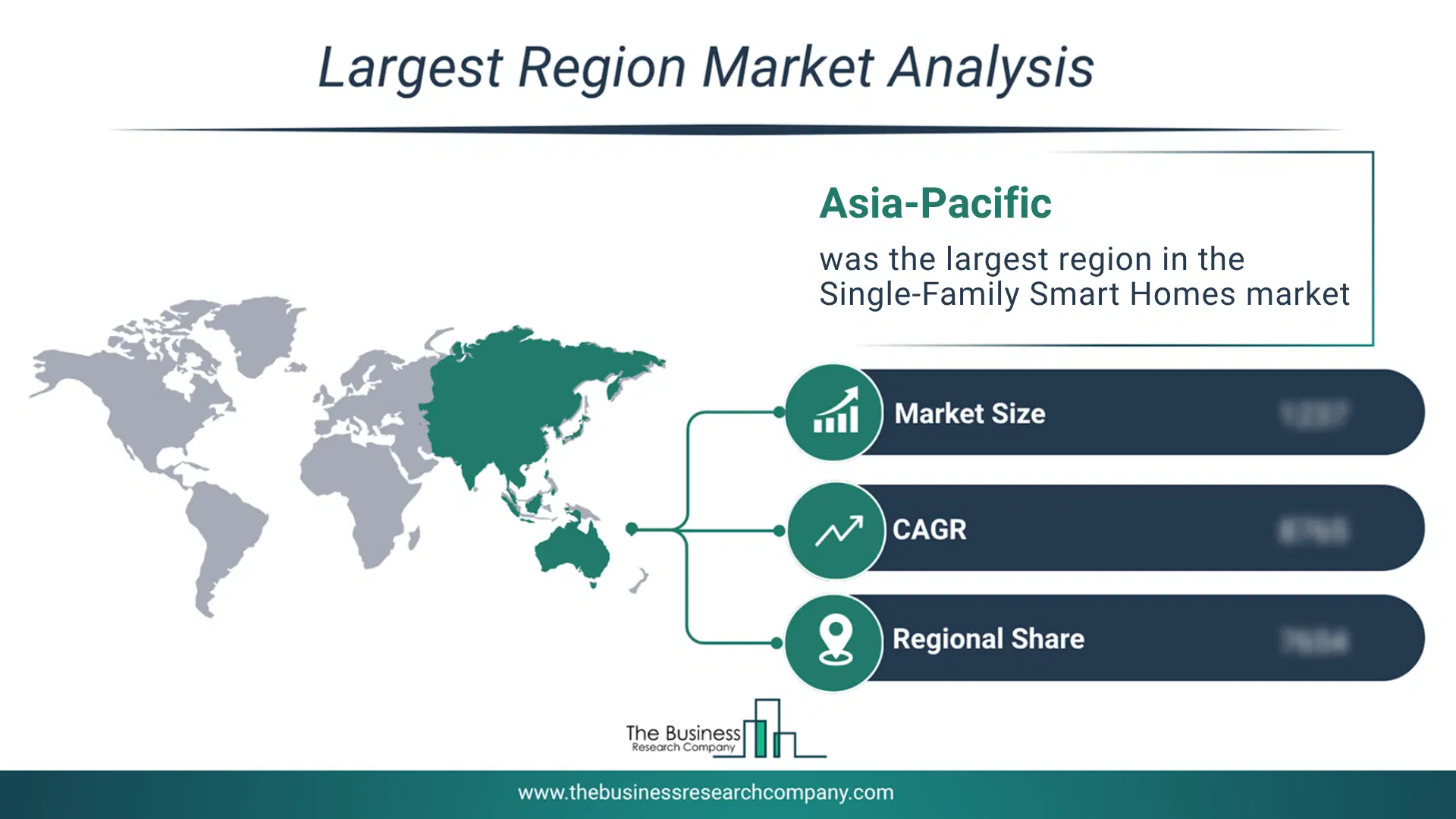
Regional Insights
Asia-Pacific was the largest region in the single-family smart homes market in 2025. Eastern Europe is expected to be the fastest-growing region in the global single-family smart homes market during the forecast period. The regions covered in this market report are Asia-Pacific, South East Asia, Western Europe, Eastern Europe, North America, South America, Middle East, Africa. The countries covered in this market report are Australia, Brazil, China, France, Germany, India, Indonesia, Japan, Taiwan, Russia, South Korea, UK, USA, Canada, Italy, Spain.What Defines the Single-Family Smart Homes Market?
The single-family smart homes market consists of sales of smart appliances such as smart lighting, entertainment, smart appliances, and others and their related services used in single-family homes. Values in this market are factory gate values, that is the value of goods sold by the manufacturers or creators of the goods, whether to other entities (including downstream manufacturers, wholesalers, distributors and retailers) or directly to end customers. The value of goods in this market includes related services sold by the creators of the goods.How is Market Value Defined and Measured?
The market value is defined as the revenues that enterprises gain from the sale of goods and/or services within the specified market and geography through sales, grants, or donations in terms of the currency (in USD unless otherwise specified). The revenues for a specified geography are consumption values that are revenues generated by organizations in the specified geography within the market, irrespective of where they are produced. It does not include revenues from resales along the supply chain, either further along the supply chain or as part of other products.
This chart presents market attractiveness based on a quantitative evaluation of growth, competition, strategic alignment, and risk, offering a clear view of opportunity areas for decision-making. This chart is for illustrative purposes; the full report contains the complete analysis.

This chart highlights the Total Addressable Market (TAM) by estimating the maximum revenue opportunity using an assumption-driven approach, supporting strategic planning and opportunity sizing across markets. The chart is illustrative; the full report provides a more comprehensive analysis.
What Key Data and Analysis Are Included in theSingle-Family Smart Homes Market Report 2026?
The single-family smart homes market research report is one of a series of new reports from The Business Research Company that provides market statistics, including industry global market size, regional shares, competitors with the market share, detailed market segments, market trends and opportunities, and any further data you may need to thrive in the single-family smart homes industry. The market research report delivers a complete perspective of everything you need, with an in-depth analysis of the current and future state of the industry.Single-Family Smart Homes Market Report Forecast Analysis
| Report Attribute | Details |
|---|---|
| Market Size Value In 2026 | $161.8 billion |
| Revenue Forecast In 2030 | $314.46 billion |
| Growth Rate | CAGR of 18.1% from 2026 to 2030 |
| Base Year For Estimation | 2025 |
| Actual Estimates/Historical Data | 2020-2025 |
| Forecast Period | 2026 - 2030 |
| Market Representation | Revenue in USD Billion and CAGR from 2026 to 2030 |
| Segments Covered | Product, Software and Service, Technology |
| Regional Scope | Asia-Pacific, Western Europe, Eastern Europe, North America, South America, Middle East, Africa |
| Country Scope | The countries covered in the report are Australia, Brazil, China, France, Germany, India, Indonesia, Japan, Taiwan, Russia, South Korea, UK, USA, Canada, Italy, Spain. |
| Key Companies Profiled | Lennar Corporation, PulteGroup, Inc., Meritage Homes Corporation, KB Smart Home, TRI Pointe Group Inc., Shea Homes, McGuyer Homebuilders, Inc., Porter Davis, Henley and home automation, Carlisle and home automation, Plantation homes, Tianjin Quick Smart House Co.Ltd, Larsen & Toubro, Gera Developments Company, Panchshil developers, Daiwa House Industry Co, Ltd, Kier Group plc, ELAN home, Loxone, D.R. Horton, Toll Brothers, Taylor Morrison, Ryan Homes, Ashton Woods, Smart home building contracting LLC, Simpletech, Qi Systems |
| Customization Scope | Request for Customization |
| Pricing And Purchase Options | Explore Purchase Options |