
Stem Cell Therapy Market Report 2026
Global Outlook – By Type (Allogeneic Stem Cell Therapy, Autologous Stem Cell Therapy), By Cell Source (Adult Stem Cells, Induced Pluripotent Stem Cells, Embryonic Stem Cells), By Application (Musculoskeletal Disorders and Wounds & Injuries, Cancer, Autoimmune Disorders, Others), By End-Users (Hospitals And Clinics, Research Centers, Others) – Market Size, Trends, Strategies, and Forecast to 2030
Stem Cell Therapy Market Overview
• Stem Cell Therapy market size has reached to $9.26 billion in 2025 • Expected to grow to $16.12 billion in 2030 at a compound annual growth rate (CAGR) of 11.3% • Growth Driver: Growing Development Of Personalized Medicine To Drive Market Growth • Market Trend: Advancements In Automated Platforms For Cell Therapy Manufacturing • North America was the largest region in 2025 and Middle East is the fastest growing region.Market Gains By 2030 – Top Opportunities By Segment
Market Gain identifies the most promising market opportunities by highlighting the segments or products expected to generate the highest incremental revenue growth over the next five years.
What Is Covered Under Stem Cell Therapy Market?
Stem cell therapy refers to a form of regenerative medicine that uses stem cells or their byproducts to stimulate the body's natural repair process in damaged, malfunctioning, or wounded tissue. It is the next step in the transplantation of organs, replacing donor organs which are scarce with cells. The main types of stem cell therapy are allogeneic stem cell therapy and autologous stem cell therapy. Allogeneic stem cell transplantation involves transferring stem cells from a healthy person (the donor) to the patient's body after high-intensity chemotherapy or radiation. The various sources of the cells include adult stem cells, induced pluripotent stem cells, and embryonic stem cells that are used for the treatment of musculoskeletal disorders, wounds and injuries, cancer, autoimmune disorders, and others. The therapies are used by hospitals and clinics.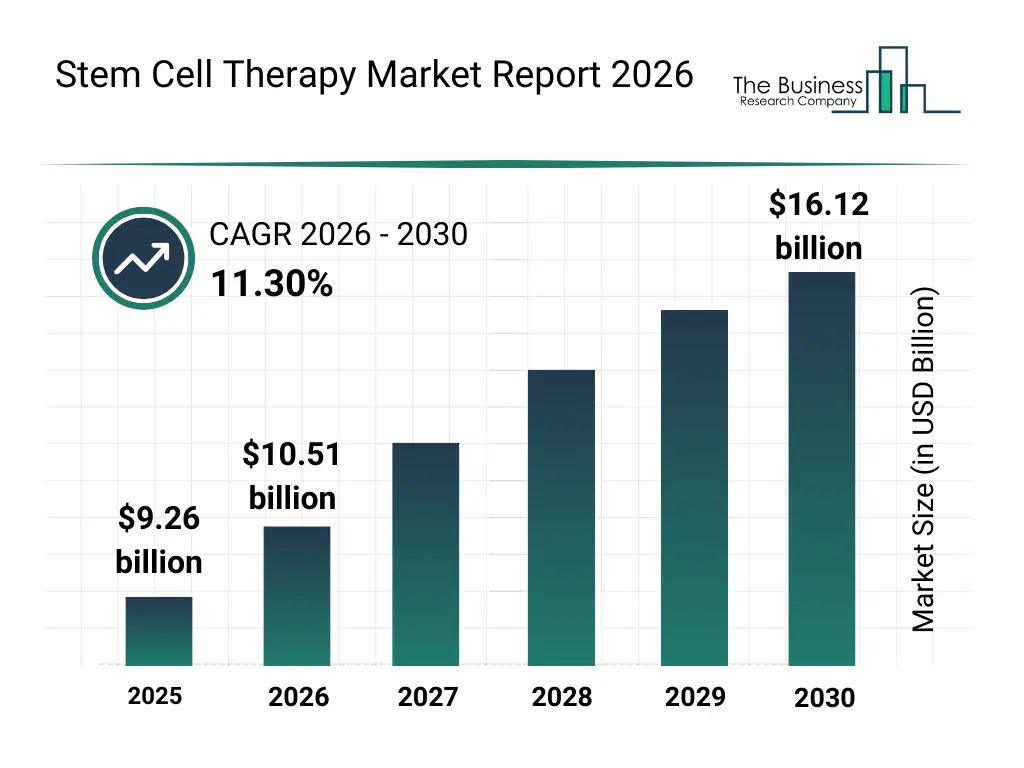
What Is The Stem Cell Therapy Market Size and Share 2026?
The stem cell therapy market size has grown rapidly in recent years. It will grow from $9.26 billion in 2025 to $10.51 billion in 2026 at a compound annual growth rate (CAGR) of 13.5%. The growth in the historic period can be attributed to limited effectiveness of conventional treatments, increasing prevalence of chronic and degenerative diseases, growth in academic and clinical research funding, early success of bone marrow transplantation, rising awareness of regenerative medicine.What Is The Stem Cell Therapy Market Growth Forecast?
The stem cell therapy market size is expected to see rapid growth in the next few years. It will grow to $16.12 billion in 2030 at a compound annual growth rate (CAGR) of 11.3%. The growth in the forecast period can be attributed to expanding therapeutic applications beyond hematology, improving clinical outcomes through combination therapies, rising investment from biotechnology firms, increasing acceptance by regulatory authorities, growing demand for personalized medicine. Major trends in the forecast period include expansion of cell-based regenerative therapies, rising adoption of autologous stem cell procedures, increasing clinical trials for multisystem disorders, advancements in stem cell banking infrastructure, growing integration of stem cell therapy in oncology.
Global Stem Cell Therapy Market Segmentation
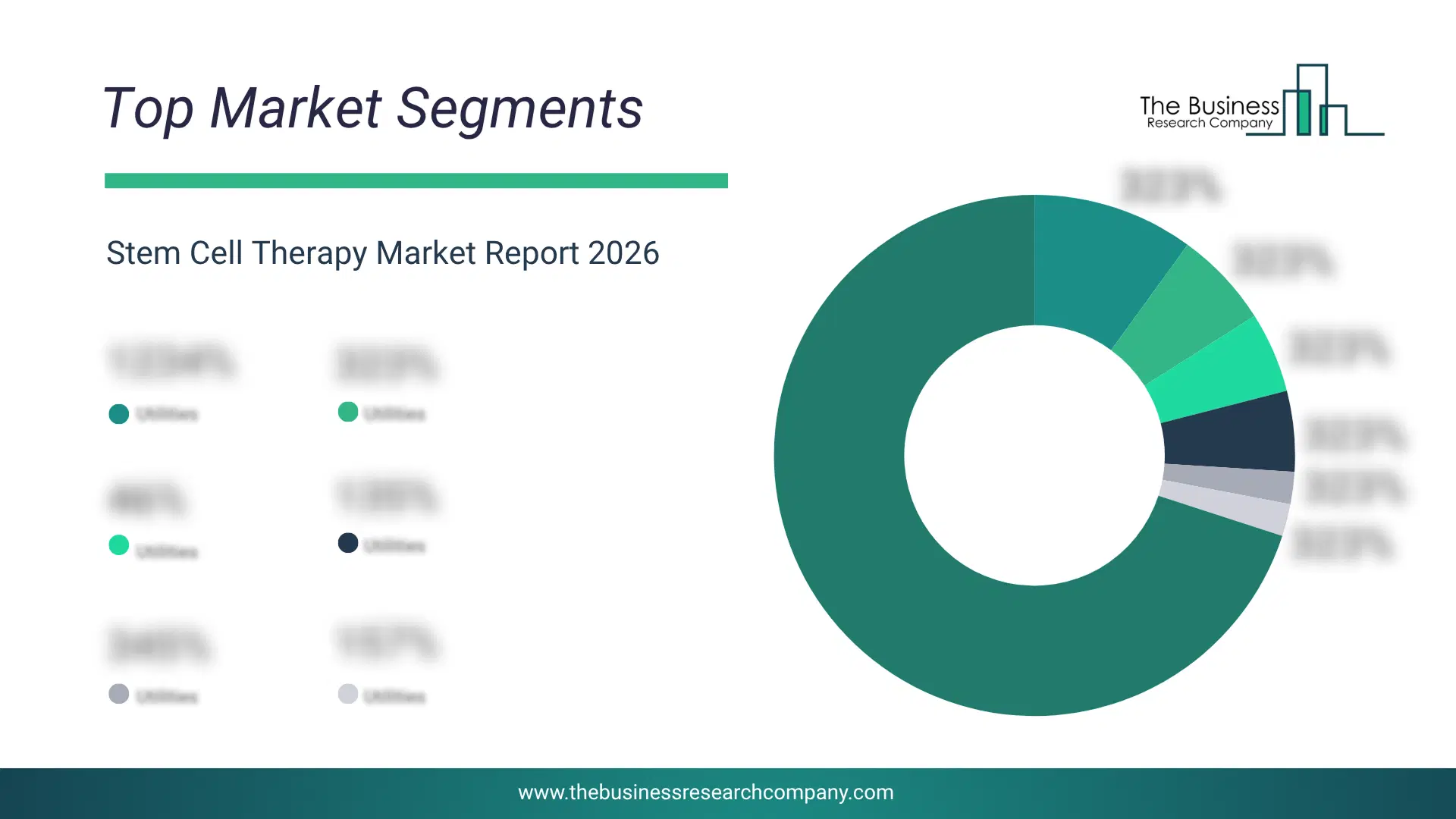
1) By Type: Allogeneic Stem Cell Therapy, Autologous Stem Cell Therapy 2) By Cell Source: Adult Stem Cells, Induced Pluripotent Stem Cells, Embryonic Stem Cells 3) By Application: Musculoskeletal Disorders and Wounds & Injuries, Cancer, Autoimmune Disorders, Others 4) By End-Users: Hospitals And Clinics, Research Centers, Others The top segments in the stem cell therapy market will be: • Allogeneic Stem Cell Therapy will reach $9.93 Billion by 2030. • Autologous Stem Cell Therapy will reach $5.87 Billion by 2030.What Is The Driver Of The Stem Cell Therapy Market?
The increasing development of personalized medicine is expected to propel the growth of stem cell therapy market going forward. Personalized medicine, also known as precision medicine, is an approach to medical treatment and healthcare that takes into account individual variability in genes, environment, and lifestyle when developing treatment plans for patients. Personalized medicine tailors stem cell treatments to individual patients based on their unique genetic and medical profiles, enhancing treatment effectiveness, reducing adverse effects, and prioritizing patient well-being. This patient-centred approach, coupled with precise patient selection, more effective clinical trials, and market expansion, is expected to make stem cell therapies more appealing and fuel market growth. For instance, in February 2024, according to the Personalized Medicine Coalition, a US-based non-profit organization, in 2023, FDA approved 16 new personalized treatments for rare disease patients, up from six in 2022. The newly approved personalized treatments for 2023 also include seven cancer drugs and three for other diseases and conditions. Therefore, the increasing development of personalized medicine is driving the growth of stem cell therapy industry.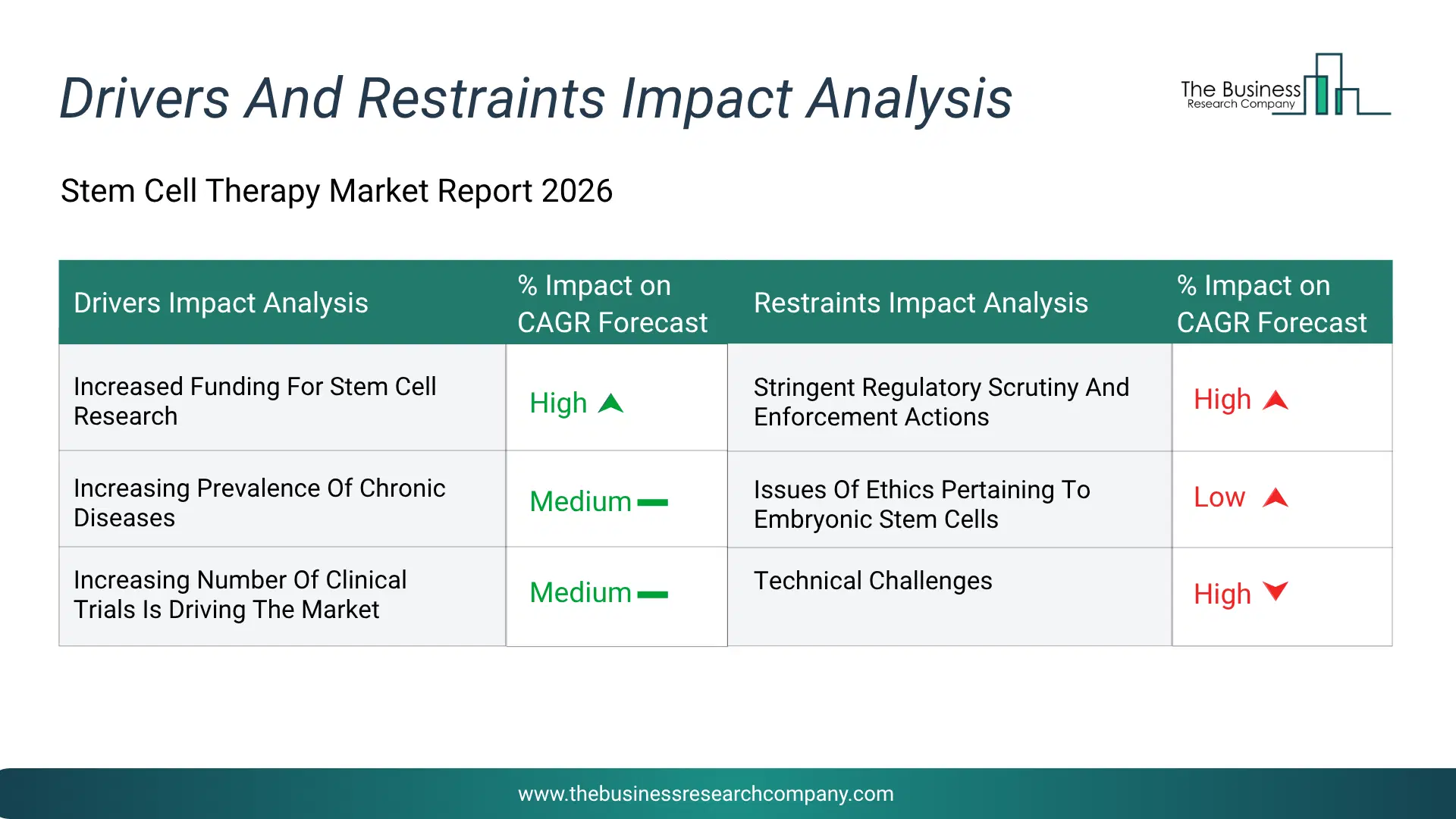
Infographic Chart Showing Key Market Drivers Analysis And Restraints For Stem Cell Therapy Market
The chart presents an impact analysis of key drivers and restraints, quantifying their relative influence on the market's growth rate and helping assess the balance between growth enablers and limiting factors. This chart offers a high-level perspective; the full report contains more detailed insights.
How Will The Drivers Impact Growth In The Global Stem Cell Therapy Market?
• Increased Funding For Stem Cell Research (High) – During the forecast period, the increased funding for stem cell research is expected to become a key growth driver for the stem cell therapy market by 2030. Increasing funding for stem cell research is driving the stem cell therapy market by supporting the development of innovative regenerative treatments for chronic and degenerative diseases. Governments, private investors, and biotechnology companies are investing heavily in research programs, clinical studies, and advanced laboratory infrastructure to accelerate therapy commercialization. Higher financial support enables researchers to improve stem cell processing technologies, enhance treatment safety, and expand therapeutic applications across multiple medical fields. Funding also encourages collaborations between research institutions, pharmaceutical companies, and healthcare providers, leading to faster product development and regulatory approvals. • Increasing Prevalence Of Chronic Diseases (Medium) – During the forecast period, the increasing prevalence of chronic diseases is expected to emerge as a major factor driving the expansion of the stem cell therapy market by 2030. The increasing prevalence of chronic diseases is driving the stem cell therapy market by creating greater demand for regenerative and long-term treatment solutions. Conditions such as cancer, cardiovascular diseases, diabetes, orthopedic disorders, and neurological diseases require advanced therapies that can repair damaged tissues and improve patient outcomes. Stem cell therapies offer potential benefits in reducing disease progression, restoring cellular function, and enhancing recovery compared to conventional treatment methods. The growing aging population and changing lifestyles are further increasing the number of patients affected by chronic illnesses worldwide. • Increasing Number Of Clinical Trials Is Driving The Market (Medium) – During the forecast period, the increasing number of clinical trials is driving the market and is expected to act as a key growth catalyst for the stem cell therapy market by 2030. The increasing number of clinical trials is driving the stem cell therapy market by validating the safety, efficacy, and therapeutic potential of stem cell-based treatments. Pharmaceutical companies, biotechnology firms, and research organizations are conducting extensive clinical studies to develop therapies for cancer, autoimmune disorders, neurological diseases, and tissue regeneration applications. A higher volume of clinical trials improves scientific understanding, supports regulatory approvals, and increases confidence among healthcare providers and patients regarding stem cell therapies. Successful trial outcomes also encourage additional investments and partnerships aimed at expanding commercial treatment availability.How Will The Restraints Impact Growth In The Global Stem Cell Therapy Market?
• Stringent Regulatory Scrutiny And Enforcement Actions (High) – During the forecast period, the stringent regulatory scrutiny and enforcement actions act as a major restraint on the stem cell therapy market because stem cell-based treatments require extensive clinical validation and regulatory approvals before commercialization. Regulatory agencies closely monitor the safety, efficacy, manufacturing standards, and ethical compliance of stem cell products, resulting in lengthy approval timelines and high compliance costs. Frequent inspections, changing regulatory frameworks, and strict documentation requirements increase operational complexity for manufacturers and research organizations. Delays in approvals can slow product launches and limit the availability of innovative therapies to patients. Consequently, stringent regulations create barriers for market entry and restrain the overall growth of the stem cell therapy market. • Issues Of Ethics Pertaining To Embryonic Stem Cells (Medium) – During the forecast period, the issues of ethics pertaining to embryonic stem cells restrain the stem cell therapy market because the use of human embryos in research and treatment development raises moral, religious, and social concerns across many countries. Ethical debates regarding embryo destruction have resulted in strict government policies, funding limitations, and legal restrictions on embryonic stem cell research activities. Public opposition and varying international regulations create uncertainty for companies and research institutions involved in developing such therapies. These concerns also discourage investment and delay clinical advancements in certain regions. As a result, ethical controversies continue to hinder the widespread adoption and commercialization of embryonic stem cell therapies. • Technical Challenges (Medium) – During the forecast period, the technical challenges act as a significant restraint on the stem cell therapy market because stem cell isolation, cultivation, storage, and transplantation require highly advanced technologies and precise handling procedures. Maintaining cell viability, preventing contamination, and ensuring consistent therapeutic outcomes remain difficult for researchers and manufacturers. Variability in stem cell behavior and the risk of immune rejection or tumor formation further complicate the development of safe and effective treatments. In addition, large-scale manufacturing and standardization of stem cell products remain technologically demanding and costly. Consequently, these technical limitations slow clinical progress and restrict the broader commercialization of stem cell therapies.Key Players In The Global Stem Cell Therapy Market
Major companies operating in the stem cell therapy market are Fujifilm Holding Corporation, Thermo Fisher Scientific Inc., Takara Bio Inc., MEDIPOST Co. Ltd., Astellas Pharma Inc., Catalent Inc., Pharmicell Co. Ltd., JCR Pharmaceuticals Co. Ltd., Stemedica Cell Technologies Inc., Pluristem Technologies Ltd, Becton Dickinson Private Limited, Stem Cell Technologies India Pvt. Ltd, Cordlife India Pvt. Ltd, Lifecell International Pvt. Ltd, Stemcyte India Therapeutics Private Limited, Stempeutics Research Private Limited, Anterogen Co. Ltd, Tonghua Dongbao Pharmaceutical Co, China Biologic Products Holdings Inc, Cellerix, Cellgenix, NSgene, Tigenix, Renuron Group, Smart Cells, Genenta Science, Amsterdam Molecular Therapeutics (AMT), Ark Therapeutics, Arthrogen Bv, Diamyd Medical Ab, Oxford Biomedica, Transgene, Oncoarendi Therapeutics, Celon Pharma, Osiris Therapeutics, Capricortherapeutics, Cellular Dynamics, Discgenics, Takeda Pharmaceuticals, Kolon Tissue Gene, Athersys, Cyro-Cell International, Geron Corporation, Mesoblast Ltd, Astrom Biosciences Inc, Invitrogen, Cytori Therapeutics Inc, Nuvasive Inc, Aldagen Inc, Caladrius Biosciences Inc, Biogen Sa, Gamida Cell Ltd, Hisun Pharma, Novartis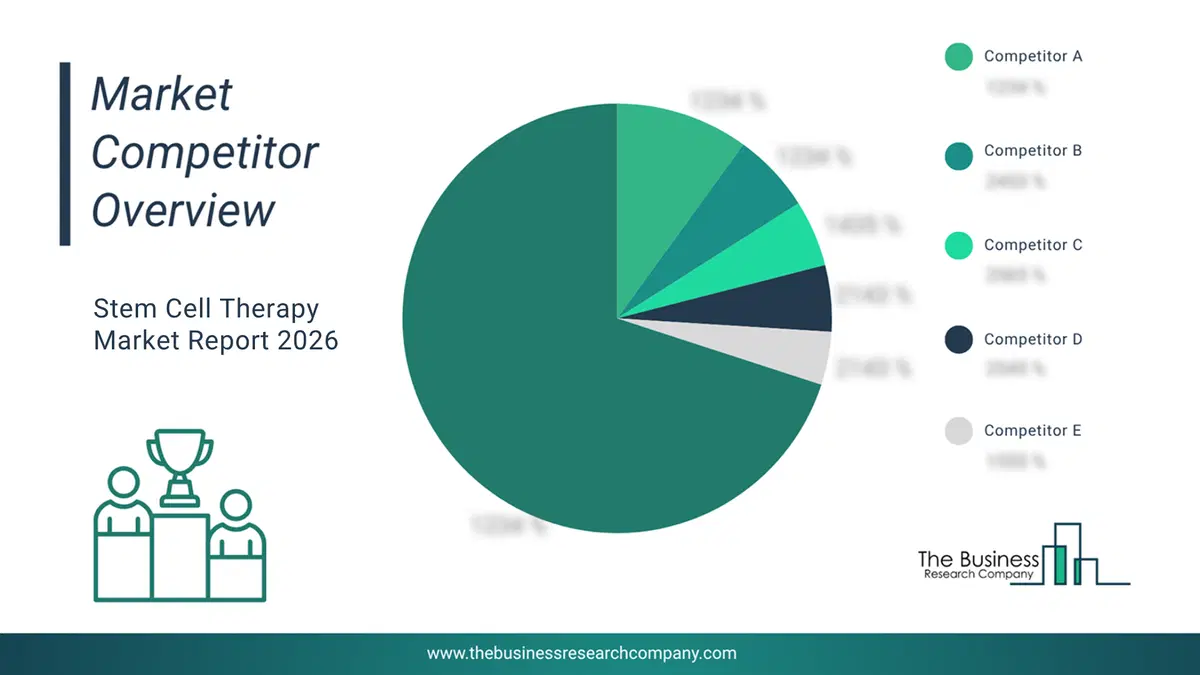
This chart is for illustrative purposes; the full report includes a detailed competitor analysis and comprehensive overview of the top 10 companies in the market.
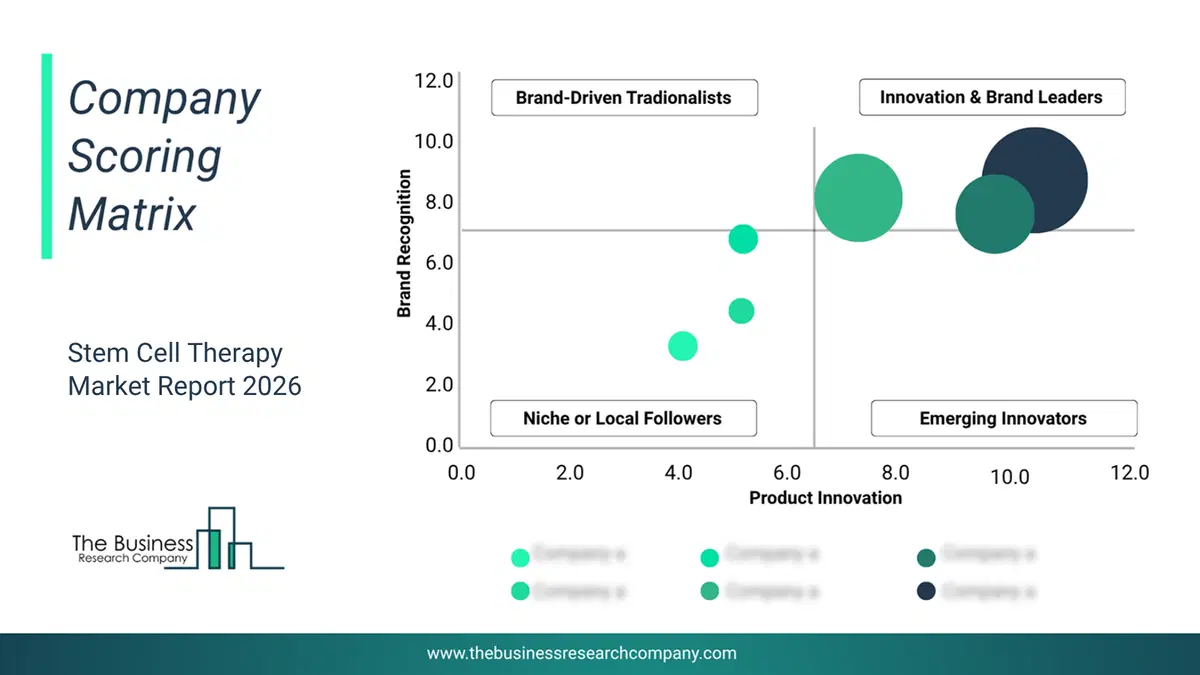
This chart maps companies by product innovation and brand strength, with bubble size indicating relative revenue, helping identify market leaders, challengers, and niche players. This is an illustrative chart; the full report provides a complete and accurate competitive analysis.
Global Stem Cell Therapy Market Trends and Insights
Major companies operating in the stem cell therapy market are focusing on developing advanced automated manufacturing technologies such as end-to-end microfluidic-based cell processing platforms to improve scalability, consistency, and efficiency in cell therapy production. End-to-end microfluidic-based cell processing platforms are integrated automated systems that use microfluidic technology to perform all key steps of cell therapy manufacturing within a single closed, precise, and scalable unit. For instance, in March 2025, Limula SA, a Switzerland-based cell therapy technology company, launched LimONE, designed to streamline the production of autologous and allogeneic cell therapies. LimONE combines automated cell enrichment, bioprocessing, and final product formulation within one modular system, enabling standardized, scalable, and cost-efficient cell therapy manufacturing. By minimizing process variability and enabling continuous, closed-system production, LimONE enhances manufacturing reliability and supports broader clinical and commercial adoption of stem cell and other cell-based therapies.What Are Latest Mergers And Acquisitions In The Stem Cell Therapy Market?
In April 2024, Century Therapeutics Inc., a US-based biotechnology company, acquired Clade Therapeutics Inc. for an undisclosed amount. This acquisition is aimed at strengthening Century Therapeutics’ pipeline by integrating Clade’s advanced stem cell engineering technologies, accelerating the development of next-generation allogeneic therapies, and expanding its capabilities across immuno-oncology applications. Clade Therapeutics Inc. is a US-based biotechnology company focused on developing engineered stem cell–derived therapeutics.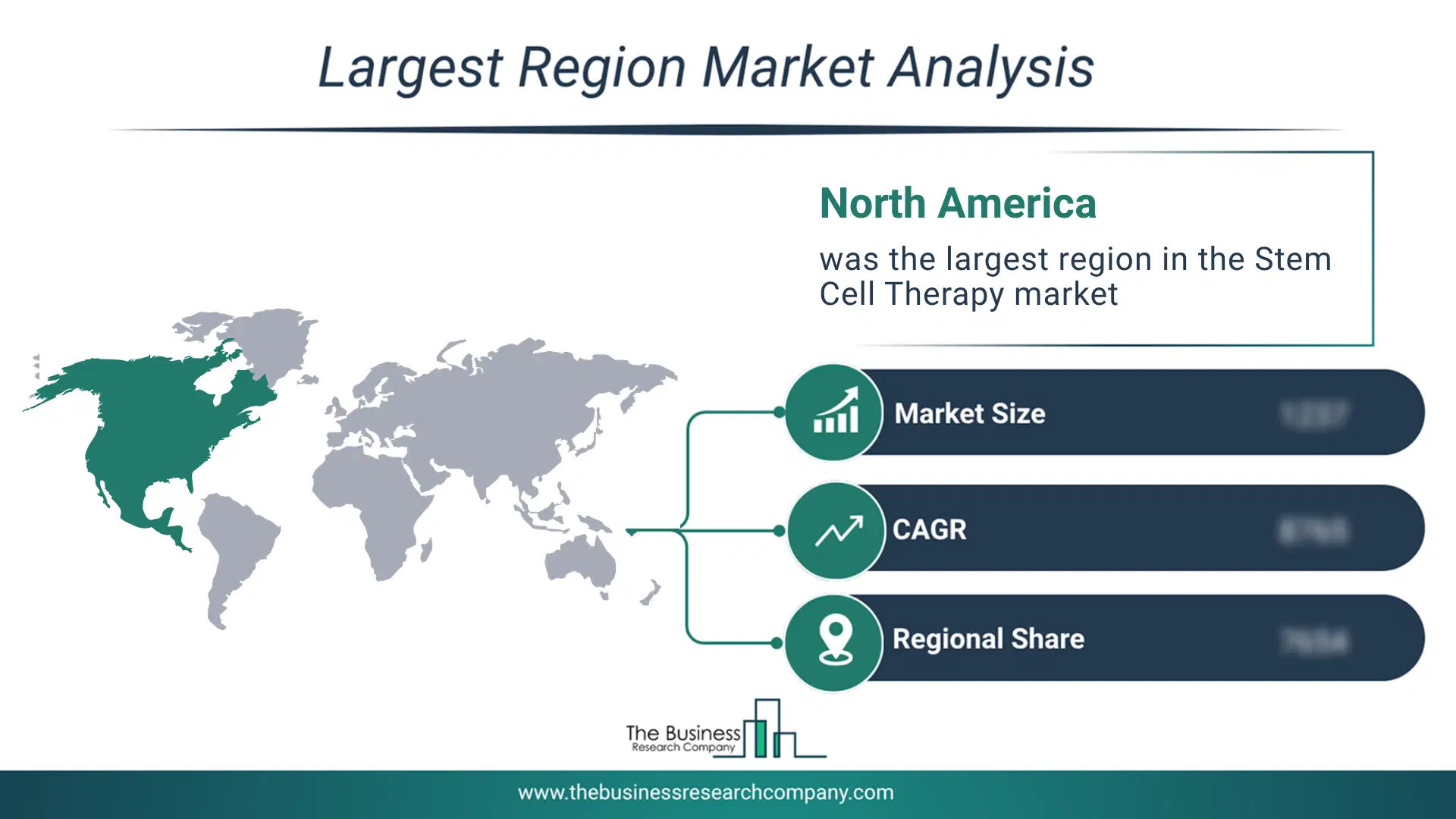
Regional Insights
North America was the largest region in the stem cell therapy market in 2025. The Middle East is expected to be the fastest-growing region in the global stem cell therapy market during the forecast period. The regions covered in this market report are Asia-Pacific, South East Asia, Western Europe, Eastern Europe, North America, South America, Middle East, Africa. The countries covered in this market report are Australia, Brazil, China, France, Germany, India, Indonesia, Japan, Taiwan, Russia, South Korea, UK, USA, Canada, Italy, Spain.What Defines the Stem Cell Therapy Market?
The stem cell therapy market includes revenues earned by entities by hematopoietic stem cells, skin stem cells, neural stem cells, and mesenchymal stem cells. The market value includes the value of related goods sold by the service provider or included within the service offering. Only goods and services traded between entities or sold to end consumers are included.How is Market Value Defined and Measured?
The market value is defined as the revenues that enterprises gain from the sale of goods and/or services within the specified market and geography through sales, grants, or donations in terms of the currency (in USD unless otherwise specified). The revenues for a specified geography are consumption values that are revenues generated by organizations in the specified geography within the market, irrespective of where they are produced. It does not include revenues from resales along the supply chain, either further along the supply chain or as part of other products.
This chart presents market attractiveness based on a quantitative evaluation of growth, competition, strategic alignment, and risk, offering a clear view of opportunity areas for decision-making. This chart is for illustrative purposes; the full report contains the complete analysis.

This chart highlights the Total Addressable Market (TAM) by estimating the maximum revenue opportunity using an assumption-driven approach, supporting strategic planning and opportunity sizing across markets. The chart is illustrative; the full report provides a more comprehensive analysis.
What Key Data and Analysis Are Included in the Stem Cell Therapy Market Report 2026?
The stem cell therapy market research report is one of a series of new reports from The Business Research Company that provides market statistics, including industry global market size, regional shares, competitors with the market share, detailed market segments, market trends and opportunities, and any further data you may need to thrive in the stem cell therapy industry. The market research report delivers a complete perspective of everything you need, with an in-depth analysis of the current and future state of the industry.Stem Cell Therapy Market Report Forecast Analysis
| Report Attribute | Details |
|---|---|
| Market Size Value In 2026 | $10.51 billion |
| Revenue Forecast In 2030 | $16.12 billion |
| Growth Rate | CAGR of 13.5% from 2026 to 2030 |
| Base Year For Estimation | 2025 |
| Actual Estimates/Historical Data | 2020-2025 |
| Forecast Period | 2026 - 2030 |
| Market Representation | Revenue in USD Billion and CAGR from 2026 to 2030 |
| Segments Covered | Type, Cell Source, Application, End-Users |
| Regional Scope | Asia-Pacific, Western Europe, Eastern Europe, North America, South America, Middle East, Africa |
| Country Scope | The countries covered in the report are Australia, Brazil, China, France, Germany, India, Indonesia, Japan, Taiwan, Russia, South Korea, UK, USA, Canada, Italy, Spain. |
| Key Companies Profiled | Fujifilm Holding Corporation, Thermo Fisher Scientific Inc., Takara Bio Inc., MEDIPOST Co. Ltd., Astellas Pharma Inc., Catalent Inc., Pharmicell Co. Ltd., JCR Pharmaceuticals Co. Ltd., Stemedica Cell Technologies Inc., Pluristem Technologies Ltd, Becton Dickinson Private Limited, Stem Cell Technologies India Pvt. Ltd, Cordlife India Pvt. Ltd, Lifecell International Pvt. Ltd, Stemcyte India Therapeutics Private Limited, Stempeutics Research Private Limited, Anterogen Co. Ltd, Tonghua Dongbao Pharmaceutical Co, China Biologic Products Holdings Inc, Cellerix, Cellgenix, NSgene, Tigenix, Renuron Group, Smart Cells, Genenta Science, Amsterdam Molecular Therapeutics (AMT), Ark Therapeutics, Arthrogen Bv, Diamyd Medical Ab, Oxford Biomedica, Transgene, Oncoarendi Therapeutics, Celon Pharma, Osiris Therapeutics, Capricortherapeutics, Cellular Dynamics, Discgenics, Takeda Pharmaceuticals, Kolon Tissue Gene, Athersys, Cyro-Cell International, Geron Corporation, Mesoblast Ltd, Astrom Biosciences Inc, Invitrogen, Cytori Therapeutics Inc, Nuvasive Inc, Aldagen Inc, Caladrius Biosciences Inc, Biogen Sa, Gamida Cell Ltd, Hisun Pharma, Novartis |
| Customization Scope | Request for Customization |
| Pricing And Purchase Options | Explore Purchase Options |