

Acute Care Syndromic Testing Market Report 2026
Global Outlook – By Disease Type (Respiratory Diseases, Gastrointestinal Diseases, Genitourinary Diseases, Tropical Diseases, Other Disease Types), By Sample Type (Blood, Urine, Biofluids, Stool, Swabs, Other Sample Types), By Target (Bacteria, Viruses, Fungi, Parasites), By End User (Hospitals, Clinical And Diagnostic Laboratories, Research And Academic Institutions, Other End Users) – Market Size, Trends, Strategies, and Forecast to 2030
Acute Care Syndromic Testing Market Overview
• Acute Care Syndromic Testing market size has reached to $4.59 billion in 2025 • Expected to grow to $8.3 billion in 2030 at a compound annual growth rate (CAGR) of 12.5% • Growth Driver: Increasing Infectious Diseases Drive Demand For Rapid Diagnostic Solutions • Market Trend: Advancements In Syndromic Testing Through Multiplex Real-Time PCR Technology • North America was the largest region in 2025.What Is Covered Under Acute Care Syndromic Testing Market?
Acute care syndromic testing refers to a rapid molecular diagnostic approach that detects multiple pathogens simultaneously from a single patient sample. It is used in emergency and critical care settings to quickly diagnose infectious diseases. This enables faster treatment decisions, improved patient outcomes, and reduced hospital stays. The main disease types in the acute care syndromic testing market are respiratory diseases, gastrointestinal diseases, genitourinary diseases, tropical diseases, and other disease types. Respiratory diseases are infections that affect the lungs, airways, and respiratory tract, leading to symptoms such as coughing, shortness of breath, and fever. Various sample types used include blood, urine, biofluids, stool, swabs, and others. Targets for testing include bacteria, viruses, fungi, and parasites and it is used in settings such as hospitals, clinical and diagnostic laboratories, research and academic institutions, and others.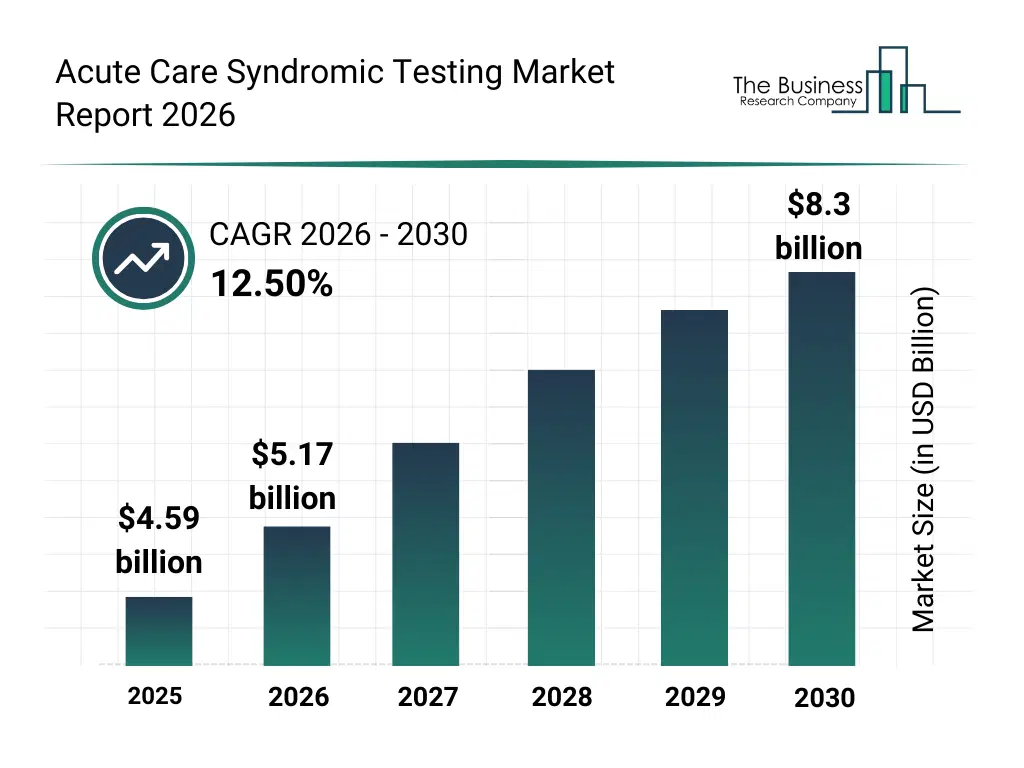
What Is The Acute Care Syndromic Testing Market Size and Share 2026?
The acute care syndromic testing market size has grown rapidly in recent years. It will grow from $4.59 billion in 2025 to $5.17 billion in 2026 at a compound annual growth rate (CAGR) of 12.8%. The growth in the historic period can be attributed to emergency infection diagnosis demand, hospital ICU expansion, outbreak preparedness initiatives, molecular diagnostic adoption, critical care workflow optimization.What Is The Acute Care Syndromic Testing Market Growth Forecast?
The acute care syndromic testing market size is expected to see rapid growth in the next few years. It will grow to $8.3 billion in 2030 at a compound annual growth rate (CAGR) of 12.5%. The growth in the forecast period can be attributed to AI-enabled syndromic panels, expansion of emergency testing, antimicrobial stewardship programs, point-of-care molecular systems, pandemic preparedness focus. Major trends in the forecast period include rapid multiplex pathogen detection, emergency department molecular testing, single-sample multi-disease panels, faster clinical decision support, reduced diagnostic turnaround time.
Global Acute Care Syndromic Testing Market Segmentation
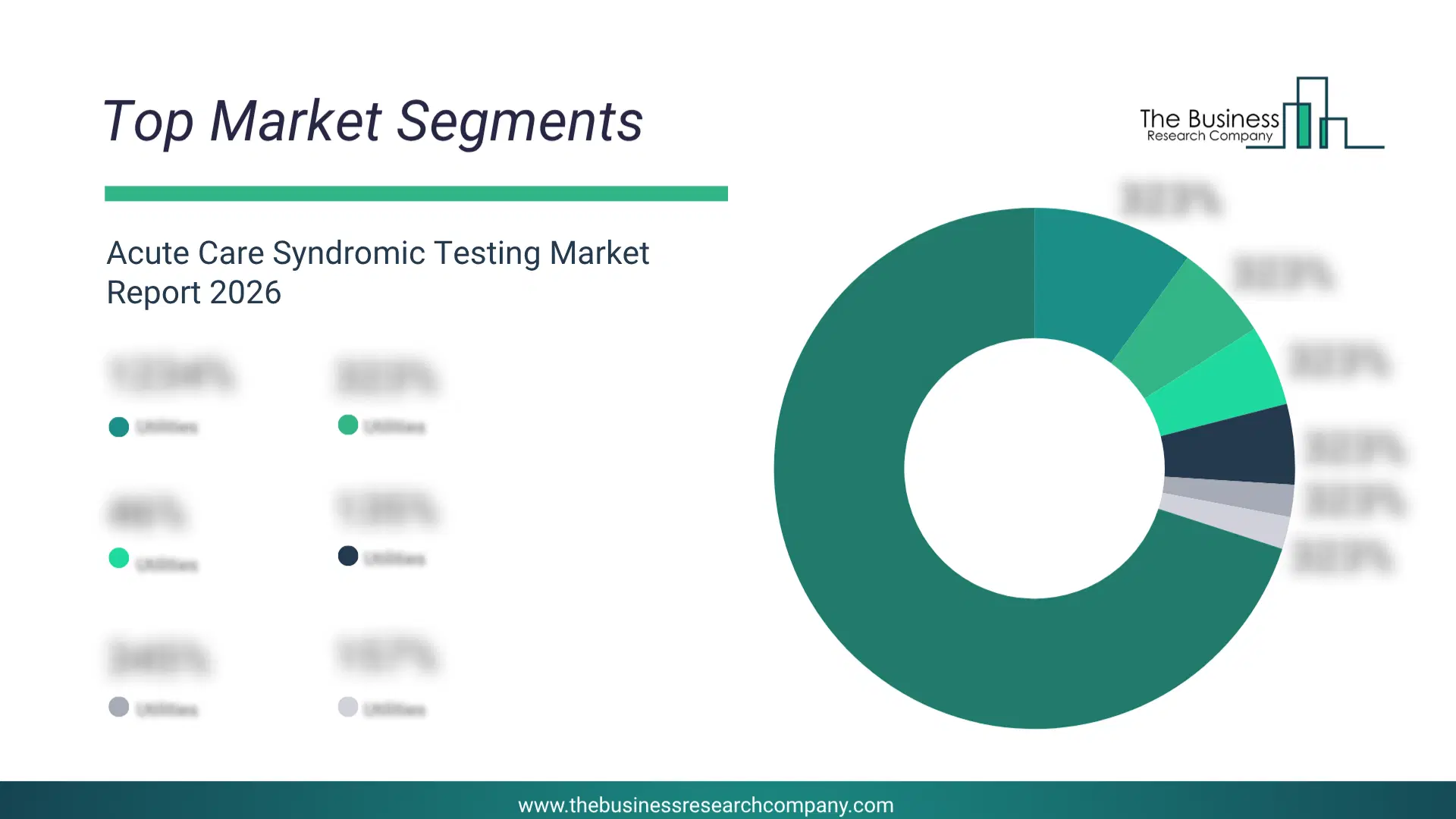
1) By Disease Type: Respiratory Diseases, Gastrointestinal Diseases, Genitourinary Diseases, Tropical Diseases, Other Disease Types 2) By Sample Type: Blood, Urine, Biofluids, Stool, Swabs, Other Sample Types 3) By Target: Bacteria, Viruses, Fungi, Parasites 4) By End User: Hospitals, Clinical And Diagnostic Laboratories, Research And Academic Institutions, Other End Users Subsegments: 1) By Respiratory Diseases: Influenza, Respiratory Syncytial Virus (RSV), COVID-19, Tuberculosis, Other Respiratory Diseases 2) By Gastrointestinal Diseases: Clostridium Difficile Infection, Norovirus, Rotavirus, Salmonella, Other Gastrointestinal Diseases 3) By Genitourinary Diseases: Urinary Tract Infections (UTIs), Sexually Transmitted Infections (STIs), Vaginal Infections, Other Genitourinary Diseases 4) By Tropical Diseases: Malaria, Dengue, Chikungunya, Zika Virus, Other Tropical Diseases 5) By Other Disease Types: Meningitis, Sepsis, Other Emerging Infectious DiseasesWhat Is The Driver Of The Acute Care Syndromic Testing Market?
The growing incidence of infectious diseases is expected to propel the acute care syndromic testing market going forward. Infectious diseases are illnesses caused by harmful microorganisms such as bacteria, viruses, fungi, or parasites that can spread from person to person, animals, or the environment. The growing incidence of infectious diseases is driven by factors such as population growth, urbanization, global travel, antimicrobial resistance, and climate change, increasing the need for effective prevention and treatment. Acute care syndromic testing is used in infectious diseases to rapidly identify pathogens and co-infections through multiplex molecular diagnostics, enabling targeted treatment decisions. For instance, in February 2024, according to the Health Security Agency, a UK-based government agency, in week 4 of 2024, the influenza positivity rate increased to 16.6%, up from 14.0% the previous week. Influenza-like illness (ILI) consultations also rose, reaching 9.8 per 100,000 people, compared to 7.5 per 100,000 in the prior week. Additionally, influenza hospitalizations climbed to 7.63 per 100,000, up from 5.12 per 100,000 the week before. Therefore, the growing incidence of infectious diseases is driving the acute care syndromic testing industry.Key Players In The Global Acute Care Syndromic Testing Market
Major companies operating in the acute care syndromic testing market are Siemens Healthineers AG, F. Hoffmann-La Roche Ltd, Thermo Fisher Scientific Inc., Danaher Corporation, Becton Dickinson and Company, Seegene Inc., bioMérieux SA, Sysmex Corporation, Bio-Rad Laboratories Inc., QIAGEN N.V., Werfen, DiaSorin S.p.A., Quidel Corporation, Luminex Corporation, Biocartis NV, Microbiologics Inc., QuantuMDx Group Ltd., Curetis GmbH by OpGen Inc., Genetic Signatures Ltd., Applied BioCode Inc.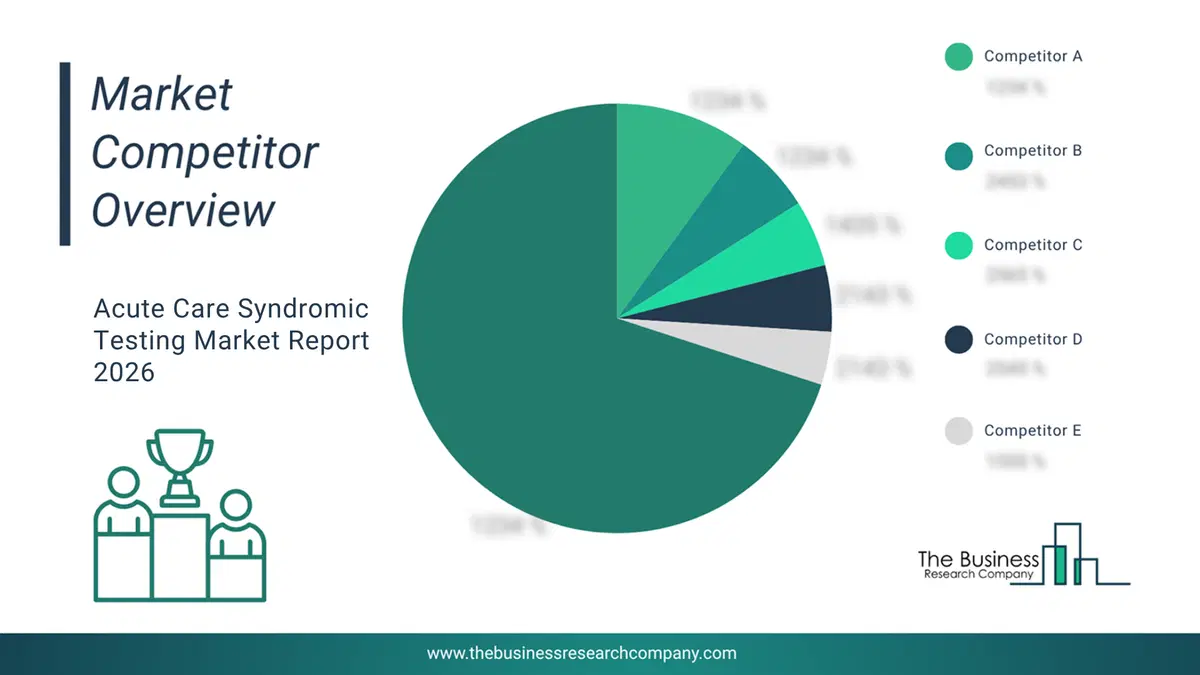
This chart is for illustrative purposes; the full report includes a detailed competitor analysis and comprehensive overview of the top 10 companies in the market.
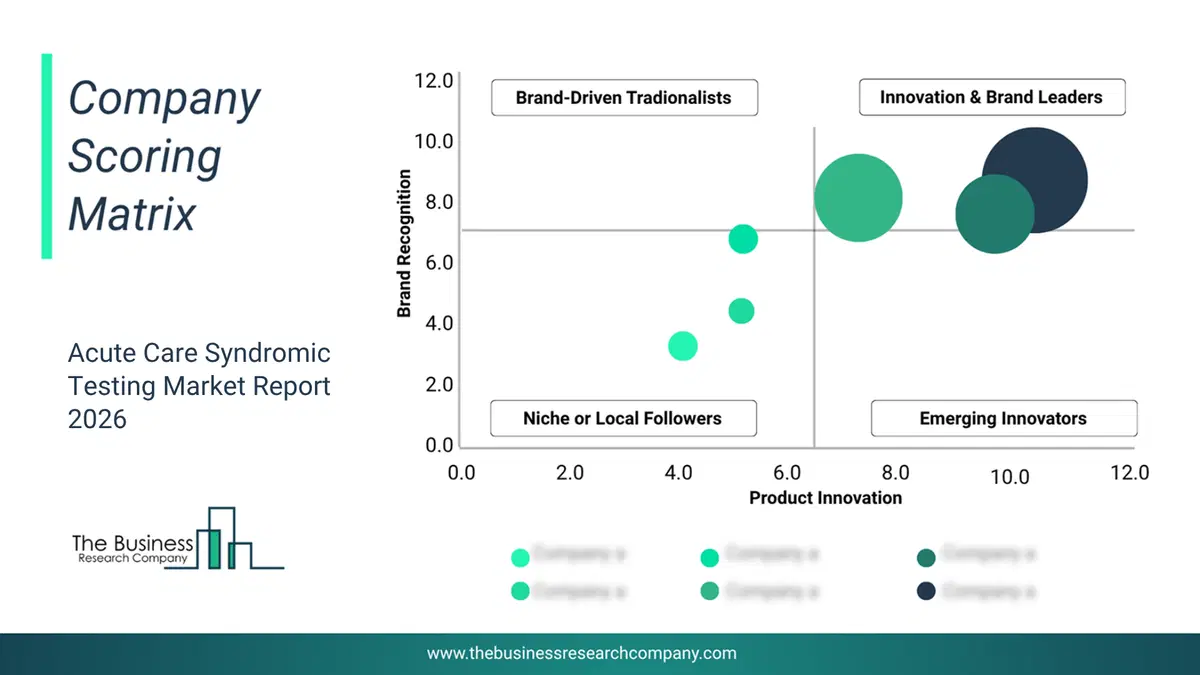
This chart maps companies by product innovation and brand strength, with bubble size indicating relative revenue, helping identify market leaders, challengers, and niche players. This is an illustrative chart; the full report provides a complete and accurate competitive analysis.
Global Acute Care Syndromic Testing Market Trends and Insights
Major companies operating in the acute care syndromic testing market are focusing on technological advancements such as multiplex real-time polymerase chain reaction (PCR) technology to enhance diagnostic accuracy, enable rapid pathogen detection, streamline laboratory workflows, reduce turnaround time, and improve patient outcomes through precise and timely treatment interventions. Multiplex real-time PCR technology is an advanced molecular diagnostic method that simultaneously detects and quantifies multiple pathogens or genetic targets in a single PCR reaction, improving efficiency and accuracy in disease diagnosis. For instance, in April 2023, QIAGEN N.V., a Netherlands-based biotechnology research company, launched the QIAstat-Dx syndromic testing solution in Japan, featuring a SARS-CoV-2 respiratory panel that detects over 20 pathogens from a single sample. Using multiplex real-time PCR technology, it delivers rapid results with minimal labor compared to individual PCR assays. The system is available in over 100 countries, enhancing syndromic testing accessibility worldwide.What Are Latest Mergers And Acquisitions In The Acute Care Syndromic Testing Market?
In May 2023, Applied BioCode, a US-based biotechnology company, partnered with Medline Industries to expand the distribution of the BioCode MDx-3000 System. This collaboration aims to improve access to diagnostic testing for hospitals and reference laboratories across the U.S. Medline Industries LP is a US-based healthcare company that manufactures and distributes medical supplies and provides healthcare services.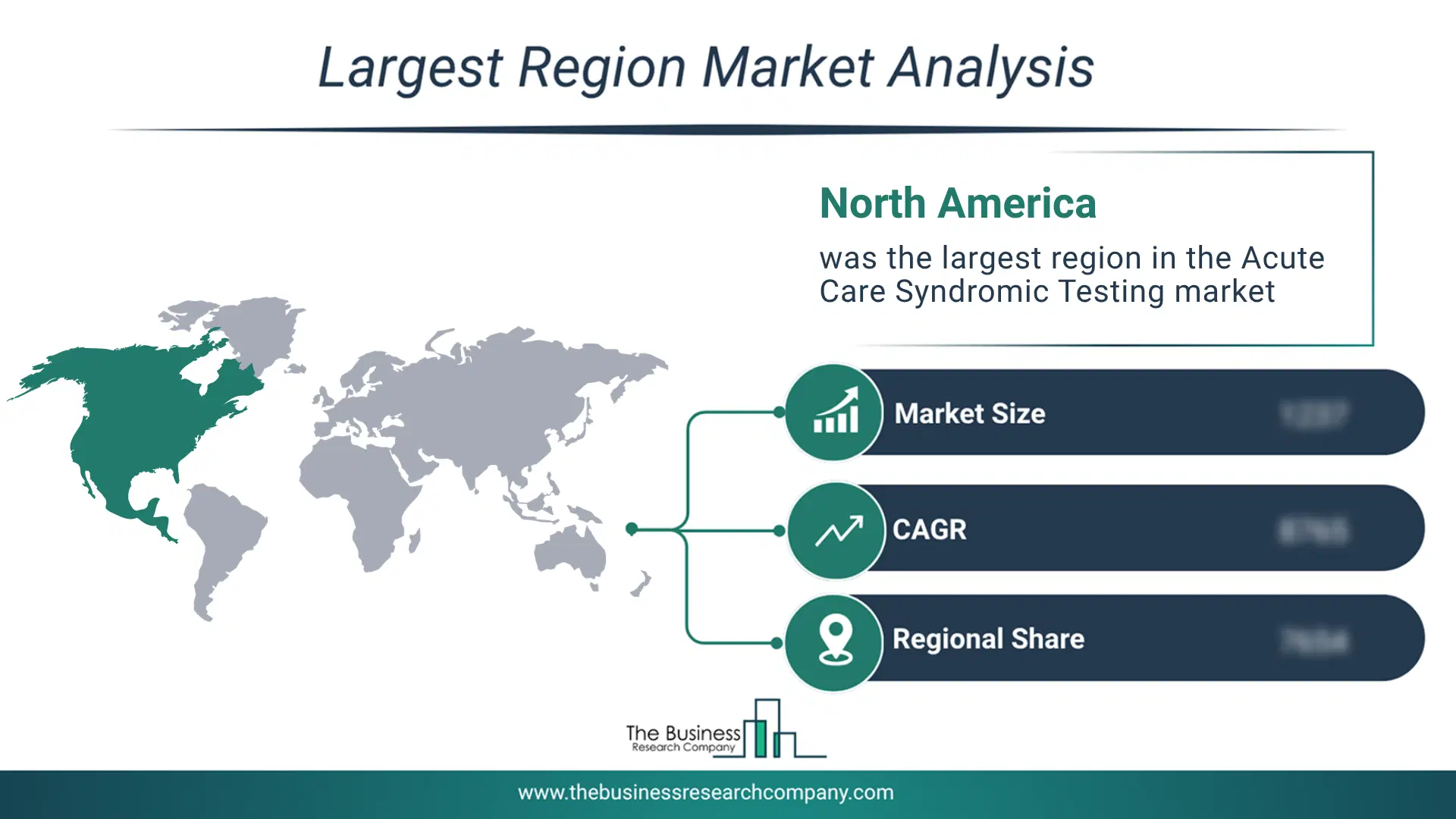
Regional Outlook
North America was the largest region in the acute care syndromic testing market in 2025. The regions covered in this market report are Asia-Pacific, South East Asia, Western Europe, Eastern Europe, North America, South America, Middle East, Africa. The countries covered in this market report are Australia, Brazil, China, France, Germany, India, Indonesia, Japan, Taiwan, Russia, South Korea, UK, USA, Canada, Italy, SpainWhat Defines the Acute Care Syndromic Testing Market?
The acute care syndromic testing market consists of revenues earned by entities by providing services such as comprehensive pathogen detection, rapid turnaround time, and support for antimicrobial stewardship. The market value includes the value of related goods sold by the service provider or included within the service offering. The acute care syndromic testing market also includes sales of blood collection tubes, or urine containers, PCR and RT-PCR machines, and reader devices. Values in this market are ‘factory gate’ values, that is the value of goods sold by the manufacturers or creators of the goods, whether to other entities (including downstream manufacturers, wholesalers, distributors and retailers) or directly to end customers. The value of goods in this market includes related services sold by the creators of the goods.How is Market Value Defined and Measured?
The market value is defined as the revenues that enterprises gain from the sale of goods and/or services within the specified market and geography through sales, grants, or donations in terms of the currency (in USD unless otherwise specified). The revenues for a specified geography are consumption values that are revenues generated by organizations in the specified geography within the market, irrespective of where they are produced. It does not include revenues from resales along the supply chain, either further along the supply chain or as part of other products.
This chart presents market attractiveness based on a quantitative evaluation of growth, competition, strategic alignment, and risk, offering a clear view of opportunity areas for decision-making. This chart is for illustrative purposes; the full report contains the complete analysis.

This chart highlights the Total Addressable Market (TAM) by estimating the maximum revenue opportunity using an assumption-driven approach, supporting strategic planning and opportunity sizing across markets. The chart is illustrative; the full report provides a more comprehensive analysis.
What Key Data and Analysis Are Included in the Acute Care Syndromic Testing Market Report 2026?
The acute care syndromic testing market research report is one of a series of new reports from The Business Research Company that provides market statistics, including industry global market size, regional shares, competitors with the market share, detailed market segments, market trends and opportunities, and any further data you may need to thrive in the acute care syndromic testing industry. The market research report delivers a complete perspective of everything you need, with an in-depth analysis of the current and future state of the industry.Acute Care Syndromic Testing Market Report Forecast Analysis
| Report Attribute | Details |
|---|---|
| Market Size Value In 2026 | $5.17 billion |
| Revenue Forecast In 2030 | $8.3 billion |
| Growth Rate | CAGR of 12.5% from 2026 to 2030 |
| Base Year For Estimation | 2025 |
| Actual Estimates/Historical Data | 2020-2025 |
| Forecast Period | 2026 - 2030 |
| Market Representation | Revenue in USD Billion and CAGR from 2026 to 2030 |
| Segments Covered | Disease Type, Sample Type, Target, End User |
| Regional Scope | Asia-Pacific, Western Europe, Eastern Europe, North America, South America, Middle East, Africa |
| Country Scope | The countries covered in the report are Australia, Brazil, China, France, Germany, India, Indonesia, Japan, Taiwan, Russia, South Korea, UK, USA, Canada, Italy, Spain. |
| Key Companies Profiled | Siemens Healthineers AG, F. Hoffmann-La Roche Ltd, Thermo Fisher Scientific Inc., Danaher Corporation, Becton Dickinson and Company, Seegene Inc., bioMérieux SA, Sysmex Corporation, Bio-Rad Laboratories Inc., QIAGEN N.V., Werfen, DiaSorin S.p.A., Quidel Corporation, Luminex Corporation, Biocartis NV, Microbiologics Inc., QuantuMDx Group Ltd., Curetis GmbH by OpGen Inc., Genetic Signatures Ltd., Applied BioCode Inc. |
| Customization Scope | Request for Customization |
| Pricing And Purchase Options | Explore Purchase Options |