

Adaptive Security Market Report 2026
Global Outlook – By Component (Solutions, Service), By Deployment Mode (On-Premise, Cloud), By Application (Network Security, Application Security, Endpoint Security, Cloud Security, Other Applications), By Industry Vertical (Banking, Financial Services, And Insurance, Information Technology And Telecommunications, Retail And Ecommerce, Manufacturing, Healthcare, Energy And Utilities, Government And Defense, Other Industry Verticals) – Market Size, Trends, Strategies, and Forecast to 2035
Adaptive Security Market Overview
• Adaptive Security market size has reached to $12.84 billion in 2025 • Expected to grow to $27.37 billion in 2030 at a compound annual growth rate (CAGR) of 16.3% • Growth Driver: Rising Sophistication Of Cyberattacks Driving The Market Growth Through The Need For Advanced Threat Detection And Adaptive Defense Capabilities • Market Trend: Adaptive Runtime Security Policies Strengthen Real-Time Protection For Enterprise AI Environments • North America was the largest region in 2025 and Asia-Pacific is the fastest growing region.What Is Covered Under Adaptive Security Market?
Adaptive security is a cybersecurity approach that continuously monitors users, devices, networks, and system activities to identify and respond to changing cyber threats in real time. It uses automation, artificial intelligence, and ongoing risk analysis to detect, prevent, and respond to attacks more effectively. Adaptive security adjusts security measures based on current risks, which helps organizations improve protection, reduce security gaps, and maintain smooth business operations. The main components of adaptive security include solutions and services. Solutions refer to security systems that continuously assess changing threats, vulnerabilities, and user or network behaviors to dynamically adjust security controls and protect digital environments. These offerings are deployed through On-Premise and cloud models. They find application in network security, application security, endpoint security, cloud security, and others, serving industrial verticals including banking, financial services, and insurance, information technology and telecommunications, retail and ecommerce, manufacturing, healthcare, energy and utilities, government and defense, and others.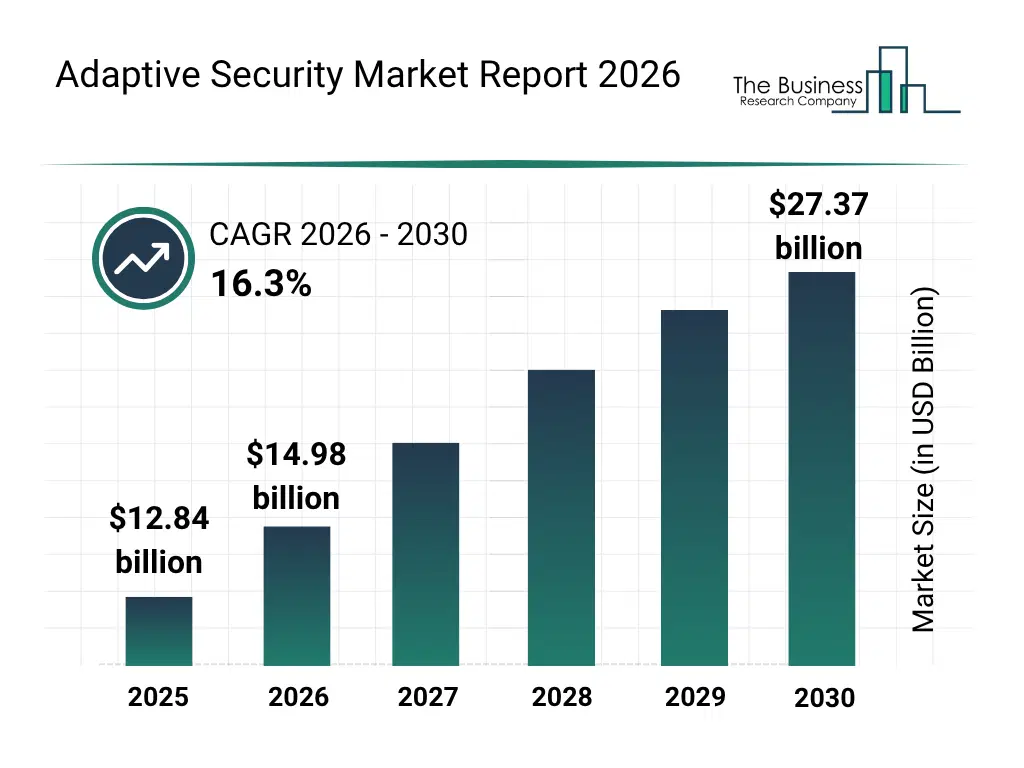
What Is The Adaptive Security Market Size and Share 2026?
The adaptive security market size has grown rapidly in recent years. It will grow from $12.84 billion in 2025 to $14.98 billion in 2026 at a compound annual growth rate (CAGR) of 16.7%. The growth in the historic period can be attributed to increasing frequency of sophisticated cyberattacks, rising cybersecurity spending, growing adoption of cloud-based security, expanding remote workforce environments, increasing regulatory compliance requirements.What Is The Adaptive Security Market Growth Forecast?
The adaptive security market size is expected to see rapid growth in the next few years. It will grow to $27.37 billion in 2030 at a compound annual growth rate (CAGR) of 16.3%. The growth in the forecast period can be attributed to growing demand for autonomous threat response, rising adoption of adaptive identity and access controls, increasing need for continuous risk assessment, expanding use of behavioral threat detection, growing demand for managed adaptive security services. Major trends in the forecast period include increasing adoption of continuous threat monitoring, rising demand for real-time threat detection, growing use of automated security response, expanding risk-based security controls, increasing demand for dynamic user and device risk assessment.Tariff Impact On Adaptive Security Market
Tariffs are impacting the adaptive security market by increasing the cost of imported cybersecurity hardware, network equipment, security appliances, and technology infrastructure used to deploy adaptive security solutions. This can raise implementation costs and create procurement pressures for organizations, particularly across North America, Europe, and Asia-Pacific where cybersecurity infrastructure and technology supply chains are globally interconnected. Cloud security, endpoint security, network security, and on-premise deployment segments may be affected through higher equipment and infrastructure costs, while industries such as banking, information technology and telecommunications, manufacturing, and government face greater cost sensitivity. However, tariffs can also encourage domestic cybersecurity infrastructure sourcing, regional supplier diversification, and investment in locally developed security capabilities.
Global Adaptive Security Market Segmentation
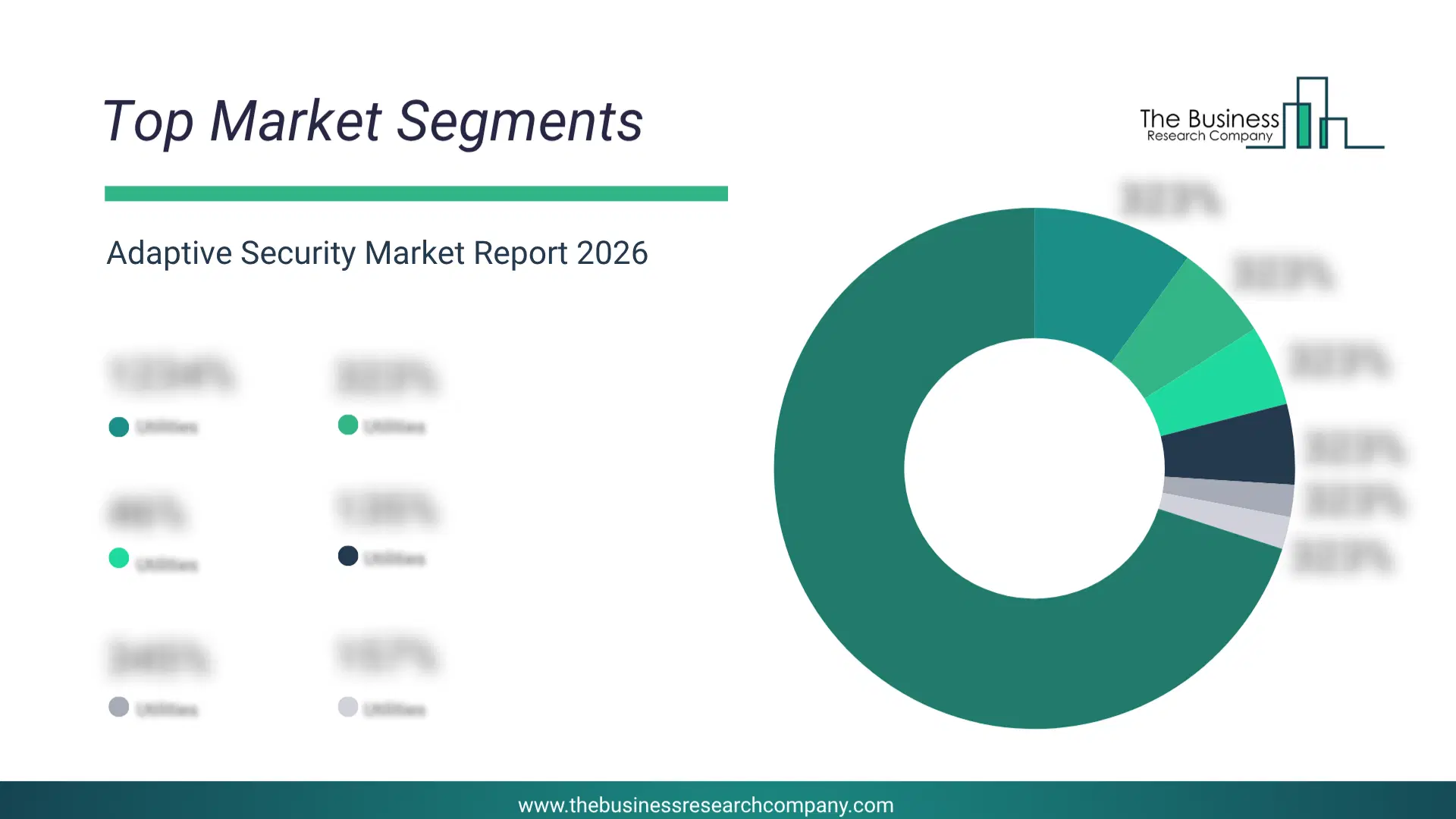
2) By Deployment Mode: On-Premise, Cloud 3) By Application: Network Security, Application Security, Endpoint Security, Cloud Security, Other Applications 4) By Industry Vertical: Banking, Financial Services, And Insurance, Information Technology And Telecommunications, Retail And Ecommerce, Manufacturing, Healthcare, Energy And Utilities, Government And Defense, Other Industry Verticals Subsegments: 1) By Solutions: Adaptive Threat Intelligence Platforms, Security Analytics Platforms, Identity And Access Management Solutions, Security Orchestration And Automation Platforms 2) By Service: Managed Security Services, Professional Security Services, Consulting Services, Implementation And Integration Services, Support And Maintenance Services, Training And Education ServicesWhat Is The Driver Of The Adaptive Security Market?
The rising sophistication of cyberattacks is expected to propel the growth of the adaptive security market going forward. Cyberattacks are malicious attempts by individuals or groups to gain unauthorized access to, disrupt, damage, or steal data from computer systems, networks, or digital devices. The increasing sophistication of cyberattacks is driven in part by the growing use of artificial intelligence (AI) by cybercriminals, enabling them to automate attacks, evade detection, and create more convincing phishing and malware campaigns. The increasing sophistication of cyberattacks is driving demand for adaptive security solutions by increasing the need for intelligent, real-time threat detection, automated response, and continuous risk mitigation across digital environments. For instance, in October 2025, according to the National Cyber Security Centre, a UK-based government agency, the number of nationally significant cyberattacks rose sharply to a record 204 in the year ending September, compared with 89 incidents during the previous 12-month period. Therefore, the rising sophistication of cyberattacks is driving the growth of the adaptive security industry.Key Players In The Global Adaptive Security Market
Major companies operating in the adaptive security market are Microsoft Corporation, International Business Machines Corporation, Cisco Systems Inc, Palo Alto Networks Inc, CrowdStrike Holdings Inc, Fortinet Inc, Check Point Software Technologies Ltd, Zscaler Inc, Trend Micro Incorporated, CyberArk Software Ltd, Cloudflare Inc, Akamai Technologies Inc, Okta Inc, Trellix, Tenable Holdings Inc, Rapid7 Inc, SentinelOne Inc, Qualys Inc, Snyk Limited, Vectra AI Inc, Illumio Inc, Orca Security Ltd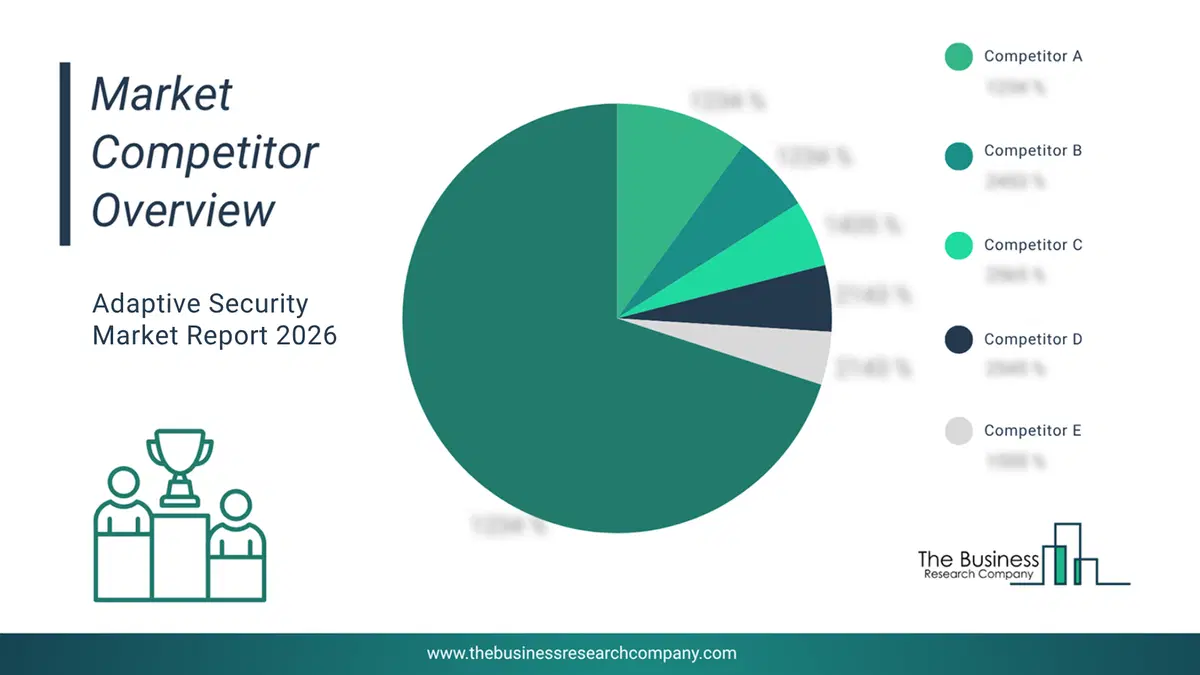
This chart is for illustrative purposes; the full report includes a detailed competitor analysis and comprehensive overview of the top 10 companies in the market.
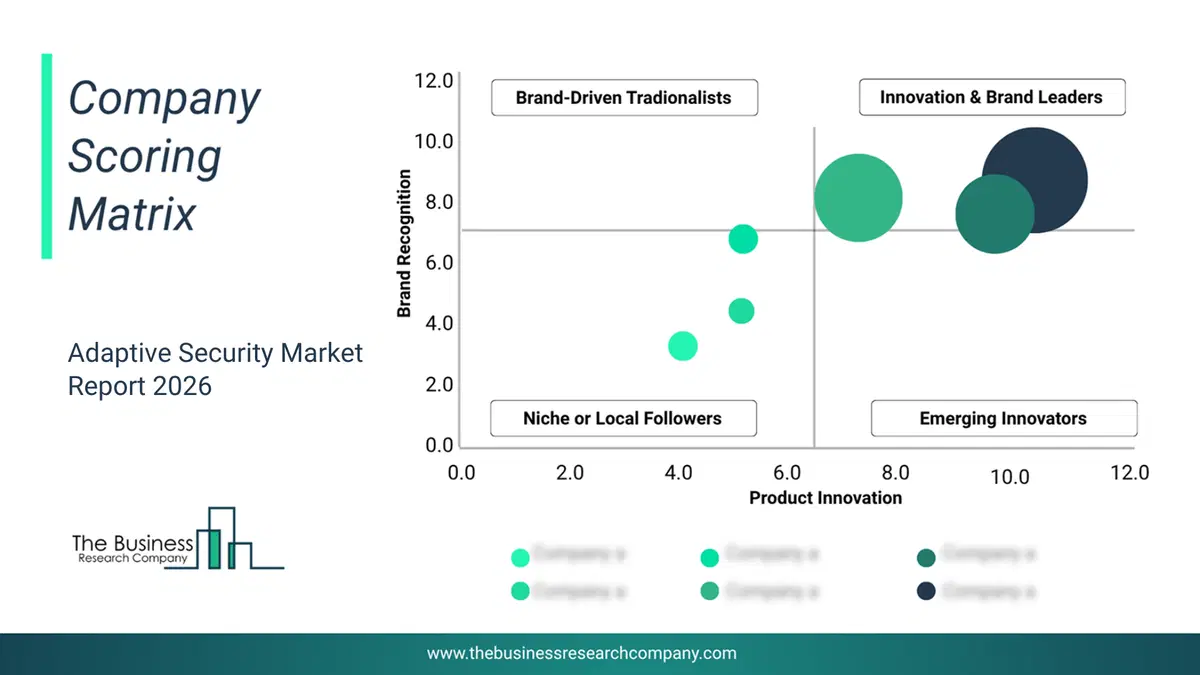
This chart maps companies by product innovation and brand strength, with bubble size indicating relative revenue, helping identify market leaders, challengers, and niche players. This is an illustrative chart; the full report provides a complete and accurate competitive analysis.
Global Adaptive Security Market Trends and Insights
Major companies operating in the adaptive security market are focusing on developing advanced solutions, such as adaptive runtime security policies, to continuously adjust security controls based on evolving user behavior, operational workflows, and emerging cyber threats. Adaptive runtime security policies are intelligent security mechanisms that dynamically modify protection measures based on system activity and changing risk conditions to detect and prevent malicious actions in real time. For instance, in July 2026, Codenotary Inc., a US-based AI security company, launched AgentMon 3, the latest version of its enterprise AI security platform featuring adaptive runtime security policies and expanded availability on AWS Marketplace. The platform continuously adapts to customer workflows, behavioral patterns, and evolving threats to enhance runtime security for AI agents. It also enables organizations to monitor, analyze, and protect over five million AI agent interactions daily across enterprise environments.What Are Latest Mergers And Acquisitions In The Adaptive Security Market?
In July 2025, Palo Alto Networks, a US-based cybersecurity company acquired CyberArk for approximately $25 billion. The acquisition aims to strengthen Palo Alto Networks’ Identity Security capabilities by integrating CyberArk’s Privileged Access Management expertise with its AI-powered cybersecurity platforms. CyberArk is a US-based AI-powered Identity Security Platform applies intelligent privilege controls to every identity with continuous threat prevention, detection and response across the identity lifecycle.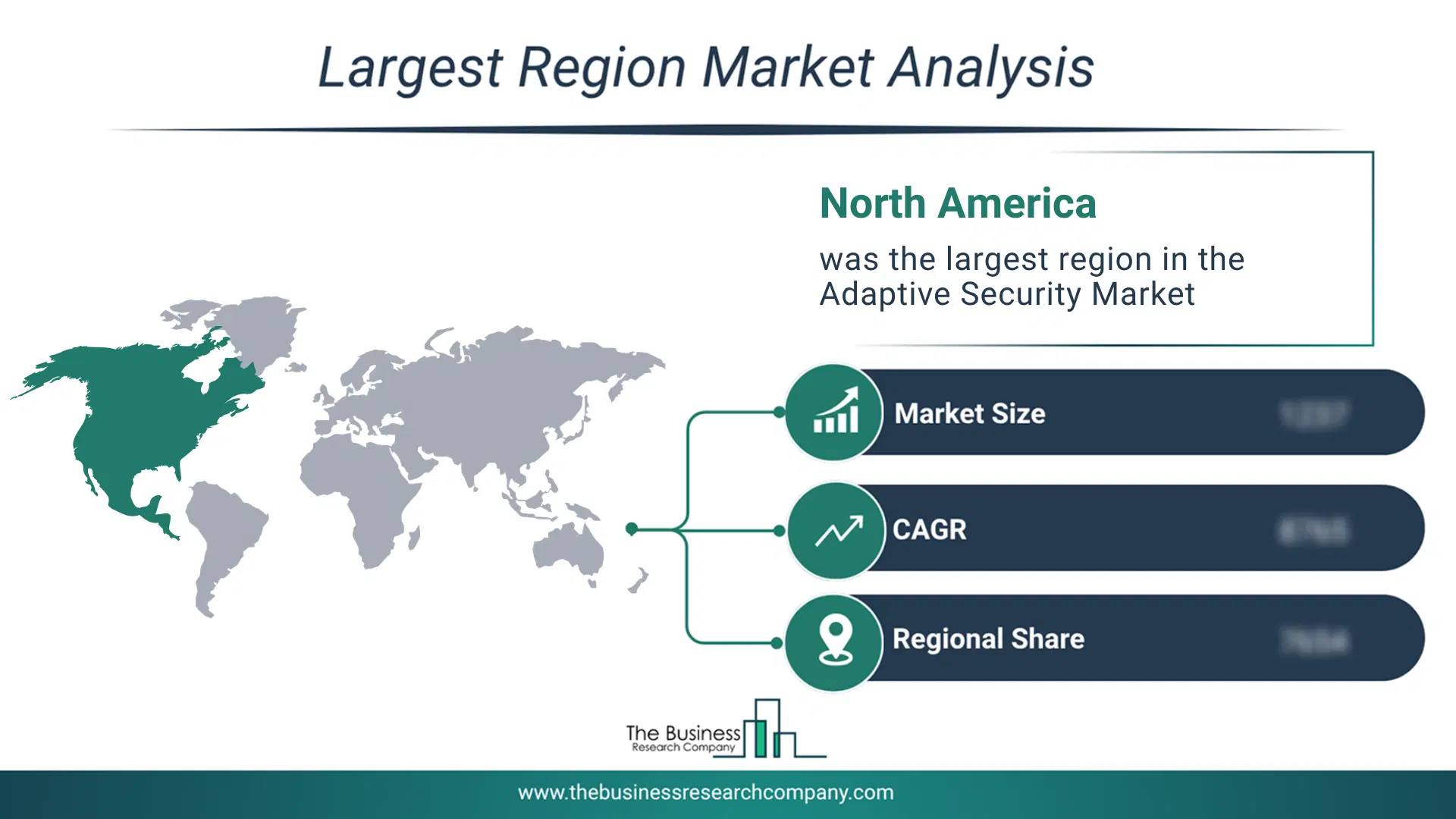
Regional Outlook/Insights
North America was the largest region in the adaptive security market in 2025. Asia-Pacific is expected to be the fastest-growing region in the forecast period. The regions covered in this market report are Asia-Pacific, South East Asia, Western Europe, Eastern Europe, North America, South America, Middle East, Africa. The countries covered in this market report are Australia, Brazil, China, France, Germany, India, Indonesia, Japan, Taiwan, Russia, South Korea, UK, USA, Canada, Italy, Spain.What Defines the Adaptive Security Market?
The adaptive security market consists of revenues earned by entities by providing services such as security consulting services, security assessment and penetration testing services, incident response and digital forensics services, security awareness and training services, and security integration and implementation services. The market value includes the value of related goods sold by the service provider or included within the service offering. Only goods and services traded between entities or sold to end consumers are included.How is Market Value Defined and Measured?
The market value is defined as the revenues that enterprises gain from the sale of goods and/or services within the specified market and geography through sales, grants, or donations in terms of the currency (in USD unless otherwise specified). The revenues for a specified geography are consumption values that are revenues generated by organizations in the specified geography within the market, irrespective of where they are produced. It does not include revenues from resales along the supply chain, either further along the supply chain or as part of other products.
This chart presents market attractiveness based on a quantitative evaluation of growth, competition, strategic alignment, and risk, offering a clear view of opportunity areas for decision-making. This chart is for illustrative purposes; the full report contains the complete analysis.

This chart highlights the Total Addressable Market (TAM) by estimating the maximum revenue opportunity using an assumption-driven approach, supporting strategic planning and opportunity sizing across markets. The chart is illustrative; the full report provides a more comprehensive analysis.
What Key Data and Analysis Are Included in the Adaptive Security Market Report 2026?
The adaptive security market research report is one of a series of new reports from The Business Research Company that provides market statistics, including industry global market size, regional shares, competitors with the market share, detailed market segments, market trends and opportunities, and any further data you may need to thrive in the adaptive security industry. The market research report delivers a complete perspective of everything you need, with an in-depth analysis of the current and future state of the industry.Adaptive Security Market Report Forecast Analysis
| Report Attribute | Details |
|---|---|
| Market Size Value In 2026 | $14.98 billion |
| Revenue Forecast In 2030 | $27.37 billion |
| Growth Rate | CAGR of 16.3% from 2026 to 2035 |
| Base Year For Estimation | 2025 |
| Actual Estimates/Historical Data | 2020-2025 |
| Forecast Period | 2026 - 2030 |
| Market Representation | Revenue in USD Billion and CAGR from 2026 to 2030 |
| Segments Covered | Component, Deployment Mode, Application, Industry Vertical |
| Regional Scope | Asia-Pacific, Western Europe, Eastern Europe, North America, South America, Middle East, Africa |
| Country Scope | The countries covered in the report are Australia, Brazil, China, France, Germany, India, Indonesia, Japan, Taiwan, Russia, South Korea, UK, USA, Canada, Italy, Spain. |
| Customization Scope | Request for Customization |
| Pricing And Purchase Options | Explore Purchase Options |