
Adhesion Barriers Market Report 2026
Global Outlook – By Type (Natural Adhesion Barriers, Collagen And Protein, Fibrin, Synthetic Adhesion Barriers, Hyaluronic Acid, Regenerated Cellulose, Polyethylene Glycol), By Formulation (Film Formulations, Gel Formulations, Liquid Formulations), By Application Area Or Surgical Procedure (Gynecological Surgeries, General Or Abdominal Surgeries, Orthopedic Surgeries, Cardiovascular Surgeries, Neurological Surgeries, Urological Surgeries, Reconstructive Surgeries), By End User (Hospitals And Clinics, Ambulatory Surgical Centers, Other End Users) – Market Size, Trends, Strategies, and Forecast to 2030
Adhesion Barriers Market Overview
• Adhesion Barriers market size has reached to $0.89 billion in 2025 • Expected to grow to $1.24 billion in 2030 at a compound annual growth rate (CAGR) of 6.8% • Growth Driver: Rising Sports Injuries To Boost Adhesion Barriers Market • Market Trend: Innovative Low-Cyclics Silicone Adhesives Advancing Gentle, Long-Wear Solutions For Sensitive Skin Applications • North America was the largest region in 2025 and Asia-Pacific is the fastest growing region.What Is Covered Under Adhesion Barriers Market?
Adhesion barriers are medical devices used to prevent or reduce the formation of scar tissue or adhesions that can occur after surgery. They are typically applied between tissues or organs to minimize postoperative complications and improve recovery outcomes. By preventing these adhesions, adhesion barriers help reduce pain and improve the functional recovery of patients following surgical procedures. The main types of adhesion barriers are natural adhesion barriers, collagen and protein, fibrin, synthetic adhesion barriers, hyaluronic acid, regenerated cellulose, and polyethylene glycol. Natural adhesion barriers are materials derived from natural sources such as collagen or fibrin that prevent tissues from sticking together during and after surgery. The different formulations are film formulations, gel formulations, and liquid formulations, and their application area or surgical procedure includes gynecological surgeries, general or abdominal surgeries, orthopedic surgeries, cardiovascular surgeries, neurological surgeries, urological surgeries, and reconstructive surgeries. It is used by various end users, such as hospitals and clinics, ambulatory surgical centers, and others.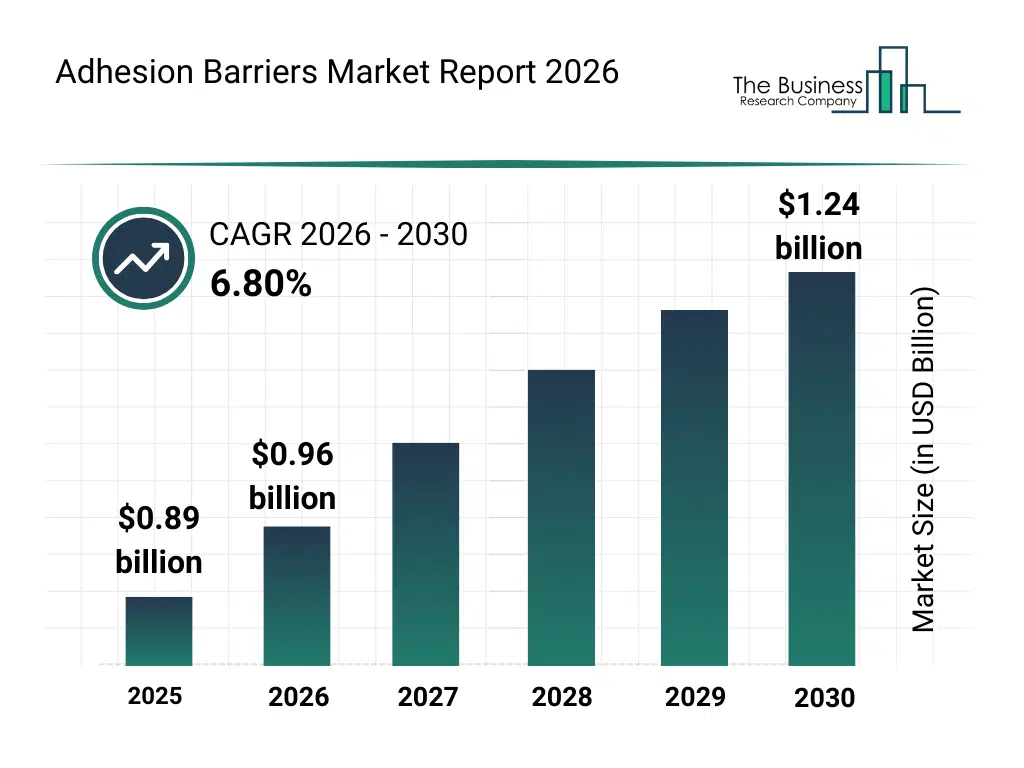
What Is The Adhesion Barriers Market Size and Share 2026?
The adhesion barriers market size has grown strongly in recent years. It will grow from $0.89 billion in 2025 to $0.96 billion in 2026 at a compound annual growth rate (CAGR) of 7.1%. The growth in the historic period can be attributed to limited availability of adhesion barrier types, reliance on conventional film and gel formulations, increasing surgical procedures globally, rising awareness of postoperative complications, dependence on hospital-centric applications.What Is The Adhesion Barriers Market Growth Forecast?
The adhesion barriers market size is expected to see strong growth in the next few years. It will grow to $1.24 billion in 2030 at a compound annual growth rate (CAGR) of 6.8%. The growth in the forecast period can be attributed to development of advanced hydrogel and thermoreversible barriers, increasing adoption of cross-linked hyaluronic acid products, expansion of ambulatory surgical centers, integration of adhesion barriers in orthopedic and cardiovascular surgeries, growing investment in patient-centric postoperative care. Major trends in the forecast period include increased adoption of collagen and protein-based adhesion barriers, rising use of synthetic hydrogels and polylactide barriers, expansion of minimally invasive surgical procedures, growth in gynecological and abdominal surgeries, focus on postoperative complication reduction and patient recovery.
Global Adhesion Barriers Market Segmentation
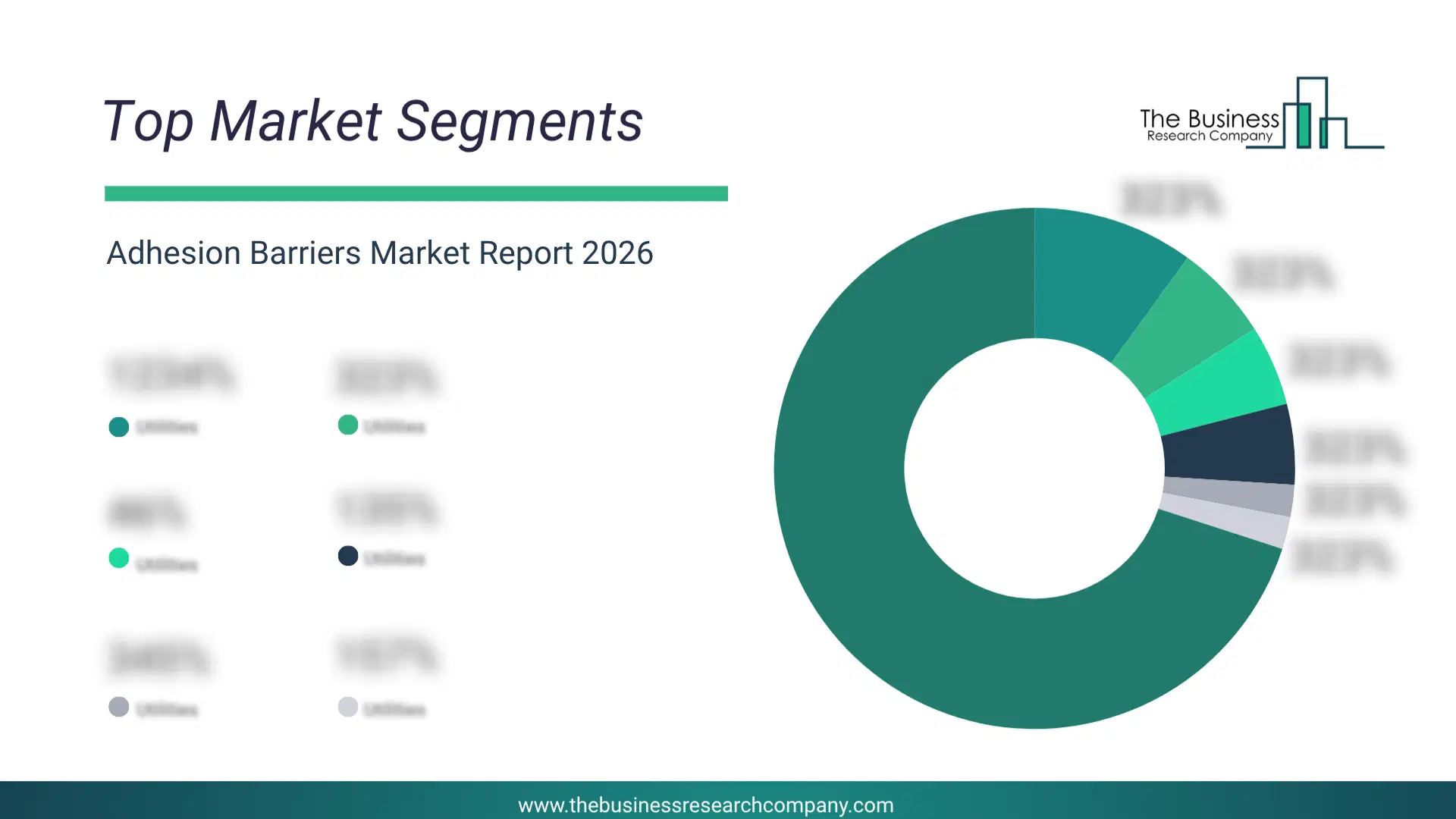
1) By Type: Natural Adhesion Barriers, Collagen And Protein, Fibrin, Synthetic Adhesion Barriers, Hyaluronic Acid, Regenerated Cellulose, Polyethylene Glycol 2) By Formulation: Film Formulations, Gel Formulations, Liquid Formulations 3) By Application Area Or Surgical Procedure: Gynecological Surgeries, General Or Abdominal Surgeries, Orthopedic Surgeries, Cardiovascular Surgeries, Neurological Surgeries, Urological Surgeries, Reconstructive Surgeries 4) By End User: Hospitals And Clinics, Ambulatory Surgical Centers, Other End Users Subsegments: 1) By Natural Adhesion Barriers: Collagen-Based Adhesion Barriers, Protein-Based Adhesion Barriers, Fibrin-Based Adhesion Barriers 2) By Collagen And Protein: Bovine-Derived Collagen Adhesion Barriers, Porcine-Derived Collagen Adhesion Barriers, Human-Derived Protein Adhesion Barriers 3) By Fibrin: Fibrin Sealant Adhesion Barriers, Fibrin Matrix Adhesion Barriers 4) By Synthetic Adhesion Barriers: Hydrogels, Thermoreversible Adhesion Barriers, Polylactide Adhesion Barriers, Silicon-Based Adhesion Barriers 5) By Hyaluronic Acid: Cross-Linked Hyaluronic Acid Adhesion Barriers, Non-Cross-Linked Hyaluronic Acid Adhesion Barriers 6) By Regenerated Cellulose: Oxidized Regenerated Cellulose Adhesion Barriers, Non-Oxidized Regenerated Cellulose Adhesion Barriers 7) By Polyethylene Glycol: Hydrophilic Polyethylene Glycol Adhesion Barriers, Polyethylene Glycol Hydrogel Adhesion BarriersWhat Is The Driver Of The Adhesion Barriers Market?
The growing incidence of sports-related injuries is expected to propel the growth of the adhesion barriers market going forward. Sports-related injuries refer to physical harm sustained during athletic activities or exercise. The growing sports-related injuries is due to several factors such as increased participation, higher levels of competition, inadequate training, and insufficient recovery time. Adhesion barriers are used for sports-related injuries to prevent scar tissue from binding to surrounding tissues and facilitate smoother recovery and rehabilitation. For instance, in July 2025, according to the Australian Institute of Health and Welfare, an Australia-based government department, Cycling had the highest proportion of sports injury hospitalisations in 2023–24, accounting for 12% (or 7,500 cases) of all sports injury hospitalisations, followed by Australian rules football (8.7% or 5,400 cases), and soccer (8.6% or 5,300 cases). Therefore, the growing incidence of sports-related injuries is going to drive the growth of adhesion barriers industry.Key Players In The Global Adhesion Barriers Market
Major companies operating in the adhesion barriers market are Johnson & Johnson Services Inc., Terumo Corporation, Atrium Medical Corporation, Integra LifeSciences Holdings Corporation, Gunze Industries Co. Ltd., Anika Therapeutics Inc., CG Bio Inc., Seikagaku Corporation, Hangzhou Singclean Medical Products Co. Ltd., FzioMed Inc., MAST Biosurgery Inc., Betatech Medical Ltd., PlantTec Medical GmbH, Actamax Surgical Materials LLC, Arc Medical Devices Inc., CorMatrix Cardiovascular Inc., Innocoll Biotherapeutics N.A. Inc., Leader Biomedical, BiosCompass Inc.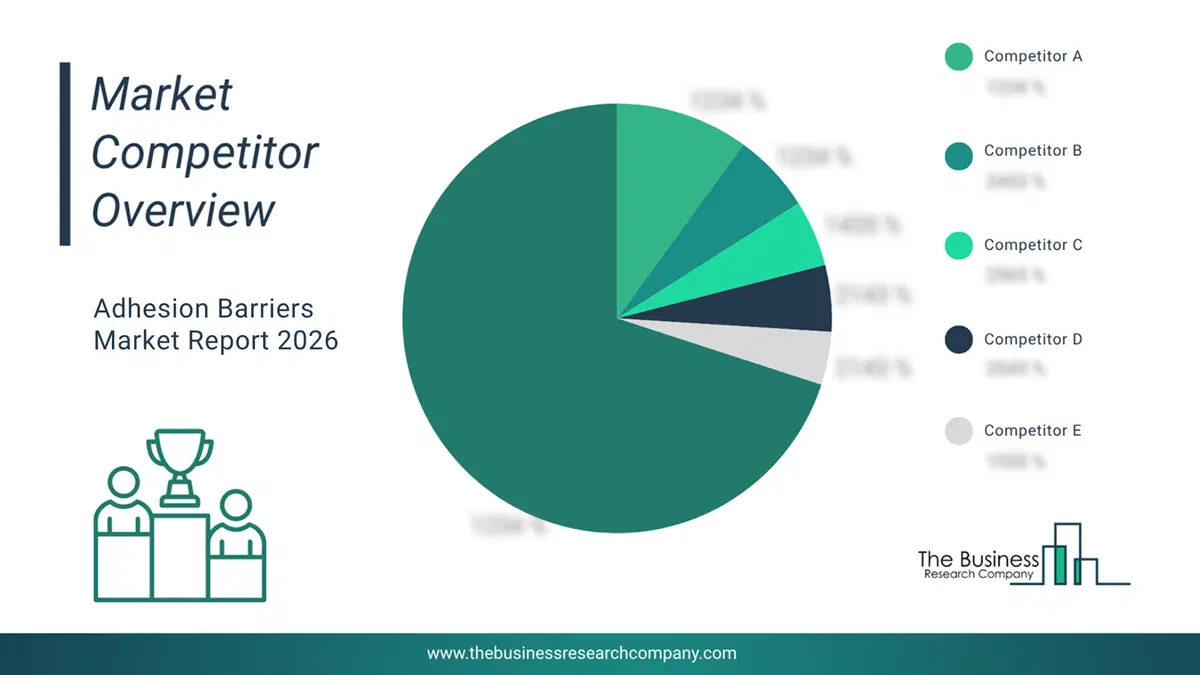
This chart is for illustrative purposes; the full report includes a detailed competitor analysis and comprehensive overview of the top 10 companies in the market.
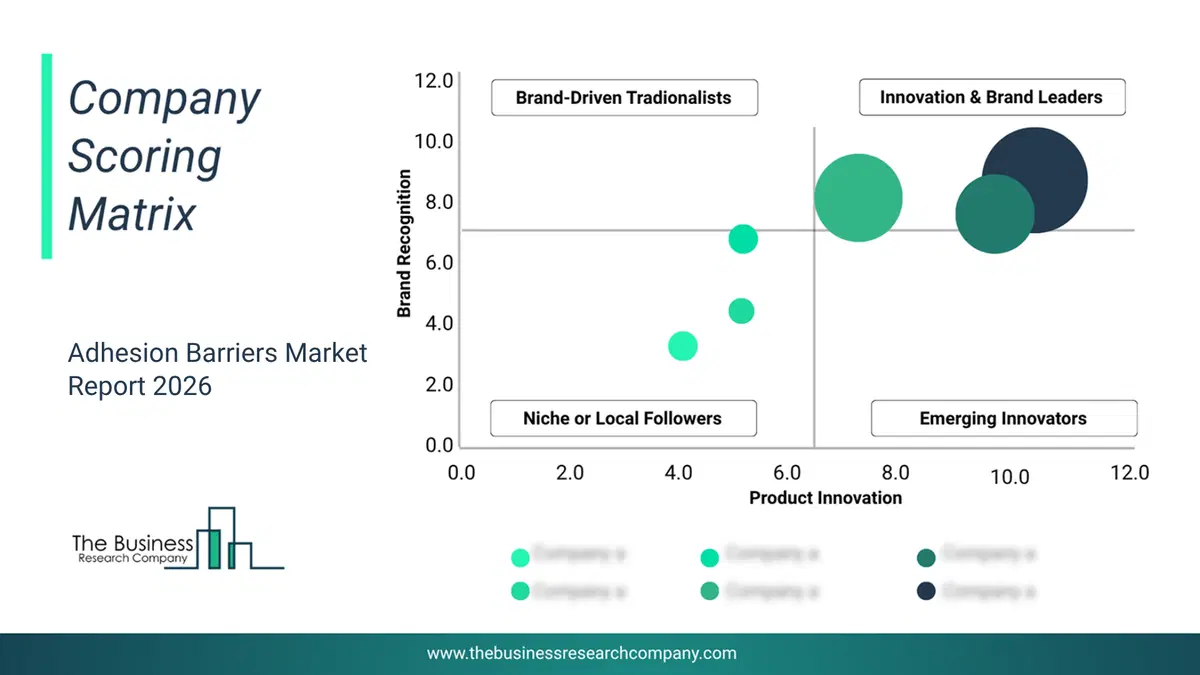
This chart maps companies by product innovation and brand strength, with bubble size indicating relative revenue, helping identify market leaders, challengers, and niche players. This is an illustrative chart; the full report provides a complete and accurate competitive analysis.
Global Adhesion Barriers Market Trends and Insights
Major companies operating in the adhesion barriers market are focusing on developing innovative products, such as low-cyclics silicone soft-skin adhesives, to improve long wear-time and gentle, atraumatic removal on sensitive skin. Soft-skin adhesive (SSA) is a biocompatible silicone-based adhesive engineered to adhere securely to skin over extended periods while minimizing damage or irritation during removal. For instance, in October 2023, DuPont, a US-based chemical company, launched its new DuPont Liveo MG 7-9960 Soft Skin Adhesive. This adhesive offers the highest peel adhesion in the Liveo SSA family, providing strong, durable attachment, high repositionability, improved wear performance, excellent conformability, and atraumatic removal, making it ideal for advanced wound dressings and wearable medical devices. The product is non-sensitizing, non-irritating, and non-cytotoxic, protecting fragile skin, including that of children, the elderly, or patients with open wounds. Additionally, DuPont allows device manufacturers to customize performance by adjusting the adhesive coat weight to meet specific device design requirements, expanding the adoption of advanced wound care solutions.What Are Latest Mergers And Acquisitions In The Adhesion Barriers Market?
In February 2023, Advanced Medical Solutions Group plc., a UK-based medical technology company, acquired Connexicon Medical Limited for $7.49 million (€7 million). This acquisition is aimed at strengthening Advanced Medical Solutions' portfolio of adhesion barriers, enhancing their surgical wound care solutions, and fostering innovation in the prevention of post-surgical adhesions. Connexicon Medical Limited is an Ireland-based medical device company.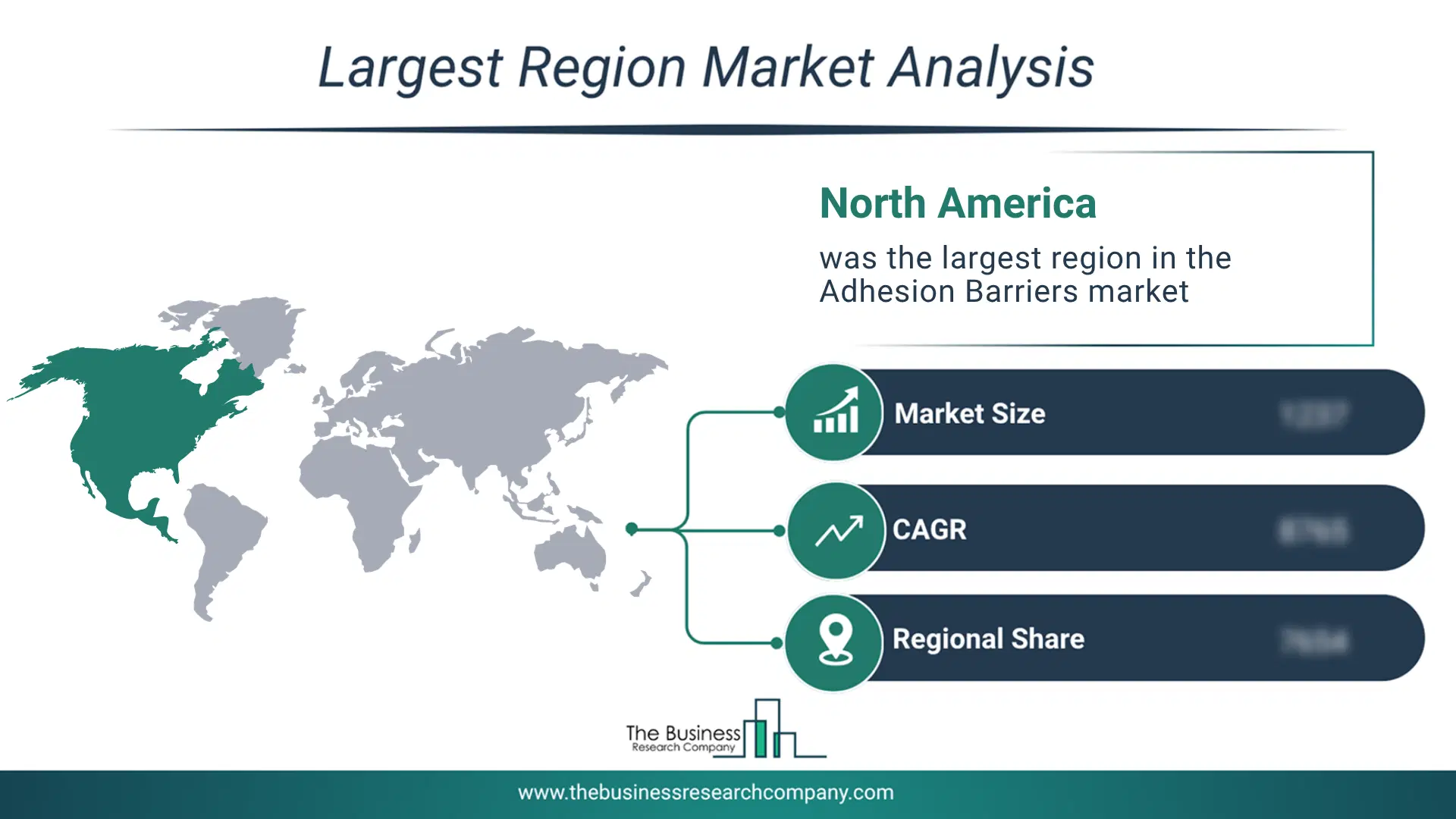
Regional Outlook
North America was the largest region in the adhesion barriers market in 2025. Asia-Pacific is expected to be the fastest-growing region in the forecast period. The regions covered in this market report are Asia-Pacific, South East Asia, Western Europe, Eastern Europe, North America, South America, Middle East, Africa. The countries covered in this market report are Australia, Brazil, China, France, Germany, India, Indonesia, Japan, Taiwan, Russia, South Korea, UK, USA, Canada, Italy, SpainWhat Defines the Adhesion Barriers Market?
The adhesion barriers market consists of sales of seprafilm, glycosaminoglycans (GAGs) adhesion barrier, evarrest, coseal, bioGlue, and floseal. Values in this market are ‘factory gate’ values, that is the value of goods sold by the manufacturers or creators of the goods, whether to other entities (including downstream manufacturers, wholesalers, distributors, and retailers) or directly to end customers. The value of goods in this market includes related services sold by the creators of the goods.How is Market Value Defined and Measured?
The market value is defined as the revenues that enterprises gain from the sale of goods and/or services within the specified market and geography through sales, grants, or donations in terms of the currency (in USD unless otherwise specified). The revenues for a specified geography are consumption values that are revenues generated by organizations in the specified geography within the market, irrespective of where they are produced. It does not include revenues from resales along the supply chain, either further along the supply chain or as part of other products.
This chart presents market attractiveness based on a quantitative evaluation of growth, competition, strategic alignment, and risk, offering a clear view of opportunity areas for decision-making. This chart is for illustrative purposes; the full report contains the complete analysis.

This chart highlights the Total Addressable Market (TAM) by estimating the maximum revenue opportunity using an assumption-driven approach, supporting strategic planning and opportunity sizing across markets. The chart is illustrative; the full report provides a more comprehensive analysis.
What Key Data and Analysis Are Included in the Adhesion Barriers Market Report 2026?
The adhesion barriers market research report is one of a series of new reports from The Business Research Company that provides market statistics, including industry global market size, regional shares, competitors with the market share, detailed market segments, market trends and opportunities, and any further data you may need to thrive in the adhesion barriers industry. The market research report delivers a complete perspective of everything you need, with an in-depth analysis of the current and future state of the industry.Adhesion Barriers Market Report Forecast Analysis
| Report Attribute | Details |
|---|---|
| Market Size Value In 2026 | $0.96 billion |
| Revenue Forecast In 2030 | $1.24 billion |
| Growth Rate | CAGR of 6.8% from 2026 to 2030 |
| Base Year For Estimation | 2025 |
| Actual Estimates/Historical Data | 2020-2025 |
| Forecast Period | 2026 - 2030 |
| Market Representation | Revenue in USD Billion and CAGR from 2026 to 2030 |
| Segments Covered | Type, Formulation, Application Area Or Surgical Procedure, End User |
| Regional Scope | Asia-Pacific, Western Europe, Eastern Europe, North America, South America, Middle East, Africa |
| Country Scope | The countries covered in the report are Australia, Brazil, China, France, Germany, India, Indonesia, Japan, Taiwan, Russia, South Korea, UK, USA, Canada, Italy, Spain. |
| Key Companies Profiled | Johnson & Johnson Services Inc., Terumo Corporation, Atrium Medical Corporation, Integra LifeSciences Holdings Corporation, Gunze Industries Co. Ltd., Anika Therapeutics Inc., CG Bio Inc., Seikagaku Corporation, Hangzhou Singclean Medical Products Co. Ltd., FzioMed Inc., MAST Biosurgery Inc., Betatech Medical Ltd., PlantTec Medical GmbH, Actamax Surgical Materials LLC, Arc Medical Devices Inc., CorMatrix Cardiovascular Inc., Innocoll Biotherapeutics N.A. Inc., Leader Biomedical, BiosCompass Inc. |
| Customization Scope | Request for Customization |
| Pricing And Purchase Options | Explore Purchase Options |