

Advanced Materials Market Report 2026
Global Outlook – By Product Type (Polymers, Metals And Alloys, Glasses, Composites), By Distribution Channel (Direct, Indirect), By Application (Medical Devices, Automotive, Aerospace, Electrical And Electronics, Industrial, Power, Other Applications) – Market Size, Trends, Strategies, and Forecast to 2030
Advanced Materials Market Overview
• Advanced Materials market size has reached to $91.27 billion in 2025 • Expected to grow to $134.03 billion in 2030 at a compound annual growth rate (CAGR) of 8.1% • Growth Driver: Aerospace And Defense Industry's Role In Accelerating Advanced Materials Market Growth • Market Trend: Innovative Breakthrough In Advanced Material-Based Corrosion Protection • North America was the largest region in 2025.Market Gains By 2030 – Top Opportunities By Segment
Market Gain identifies the most promising market opportunities by highlighting the segments or products expected to generate the highest incremental revenue growth over the next five years.
What Is Covered Under Advanced Materials Market?
Advanced materials refer to a class of materials that possess superior or enhanced properties compared to traditional materials. These materials are designed and engineered to exhibit specific characteristics, such as high strength, durability, conductivity, flexibility, heat resistance, or lightness, which surpass those of conventional materials. The main types of products in advanced materials are polymer, metals and alloys, glasses, composites, and ceramics. A polymer refers to a large molecule composed of repeating subunits called monomers. These monomers are chemically bonded together to form a long chain or network structure. It was distributed through direct and indirect channels for medical devices, automotive, aerospace, electrical and electronic, industrial, power, and other applications.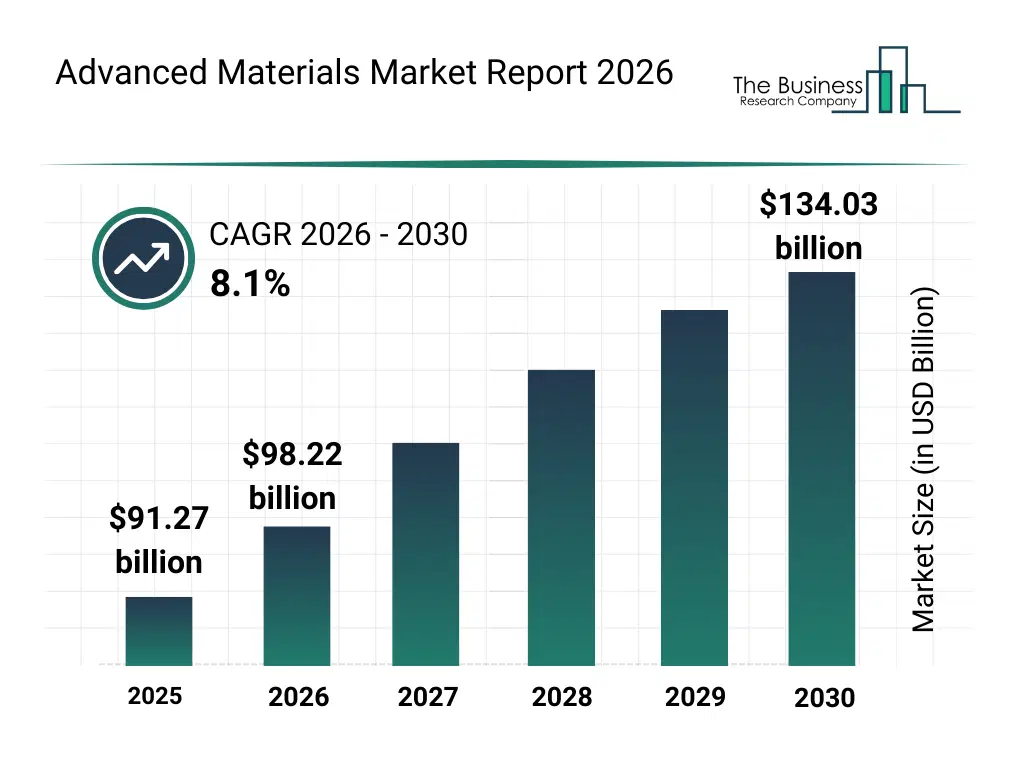
What Is The Advanced Materials Market Size and Share 2026?
The advanced materials market size has grown strongly in recent years. It will grow from $91.27 billion in 2025 to $98.22 billion in 2026 at a compound annual growth rate (CAGR) of 7.6%. The growth in the historic period can be attributed to growth in aerospace and defense manufacturing, increasing industrialization and infrastructure development, rising demand for durable and high-strength materials, expansion of automotive production volumes, technological progress in material science research.What Is The Advanced Materials Market Growth Forecast?
The advanced materials market size is expected to see strong growth in the next few years. It will grow to $134.03 billion in 2030 at a compound annual growth rate (CAGR) of 8.1%. The growth in the forecast period can be attributed to rising adoption of electric vehicles, increasing demand for advanced medical devices, growth in renewable energy and power systems, expanding use of advanced materials in electronics, continued innovation in composite and ceramic technologies. Major trends in the forecast period include rising adoption of lightweight and high-strength materials, increasing demand for high-performance materials in extreme environments, growing use of advanced composites across multiple industries, expansion of customized and application-specific material solutions, increasing focus on material durability and lifecycle performance.
Global Advanced Materials Market Segmentation
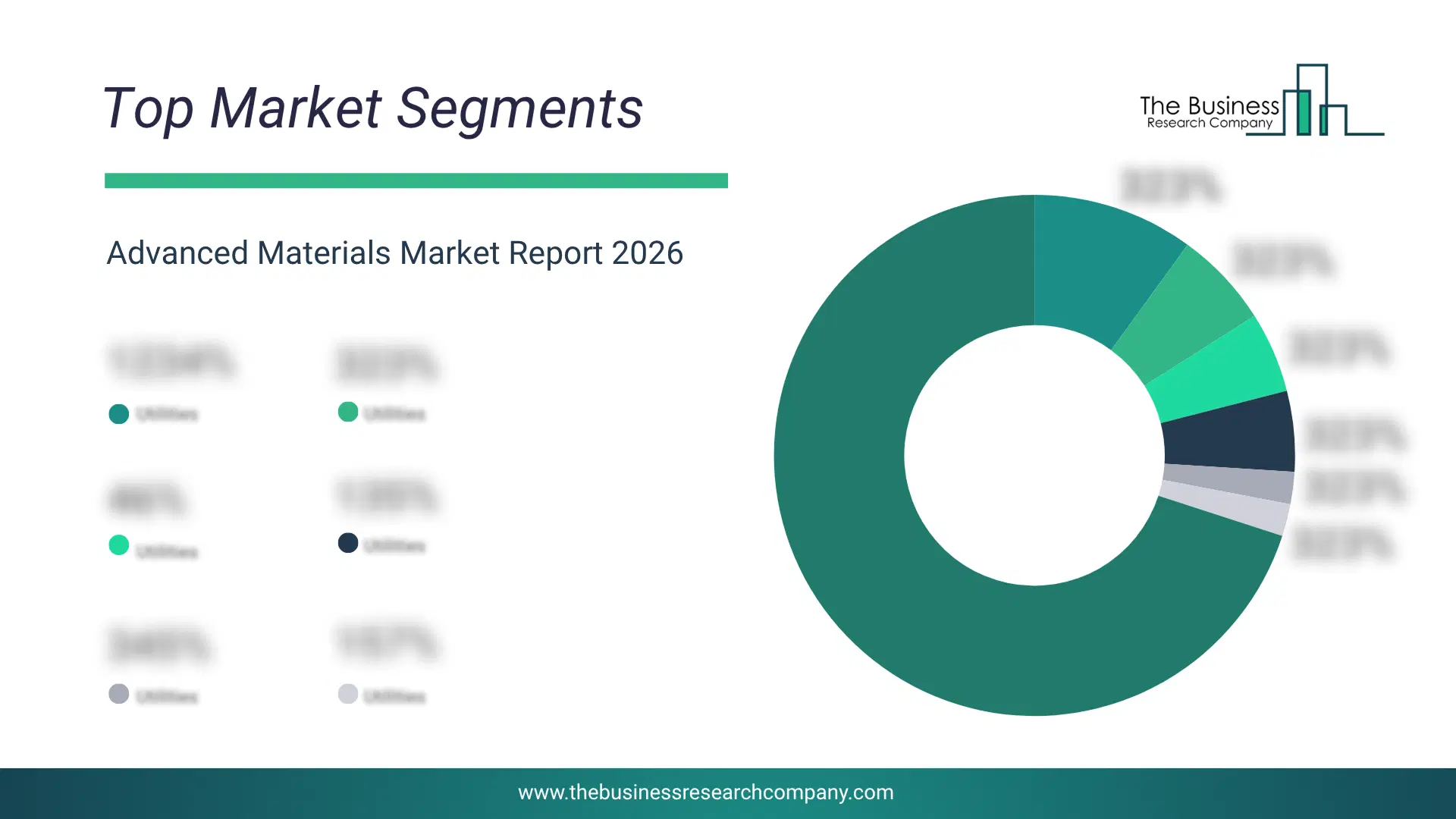
1) By Product Type: Polymers, Metals And Alloys, Glasses, Composites 2) By Distribution Channel: Direct, Indirect 3) By Application: Medical Devices, Automotive, Aerospace, Electrical And Electronics, Industrial, Power, Other Applications Subsegments: 1) By Polymers: Thermoplastics, Thermosetting Plastics, Biopolymers 2) By Metals And Alloys: Aluminum Alloys, Titanium Alloys, Specialty Metals 3) By Glasses: Specialty Glasses, Glass-Ceramics, Photonic Glasses 4) By Composites: Polymer Matrix Composites (PMCs), Metal Matrix Composites (MMCs), Ceramic Matrix Composites (CMCs) The top segments in the advanced materials market will be: • Polymers will reach $51.03 Billion by 2030. • Metals And Alloys will reach $39.35 Billion by 2030. • Composites will reach $27.55 Billion by 2030. • Glasses will reach $15.03 Billion by 2030.What Is The Driver Of The Advanced Materials Market?
The growing aerospace and defense industry is expected to propel the growth of the advanced materials market going forward. The aerospace and defense industry refers to a sector that encompasses the development, production, and maintenance of aerospace systems, including aircraft, spacecraft, missiles, rockets, and related components, as well as defense systems and equipment. The aerospace and defense industry uses advanced materials to enhance aircraft performance, durability, and overall capabilities, incorporating materials such as composites, alloys, and high-strength metals to reduce weight, increase fuel efficiency, and ensure superior structural integrity in challenging operational environments. For instance, in September 2024, according to the Facts and Figures published by the Aerospace Industries Association (AIA), a US-based trade association, the U.S. aerospace and defense industry achieved a notable milestone in 2023, with sales surpassing $955 billion, reflecting 7.1% growth compared to the previous year. Therefore, the growing aerospace and defense industry is driving the growth of the advanced materials industry.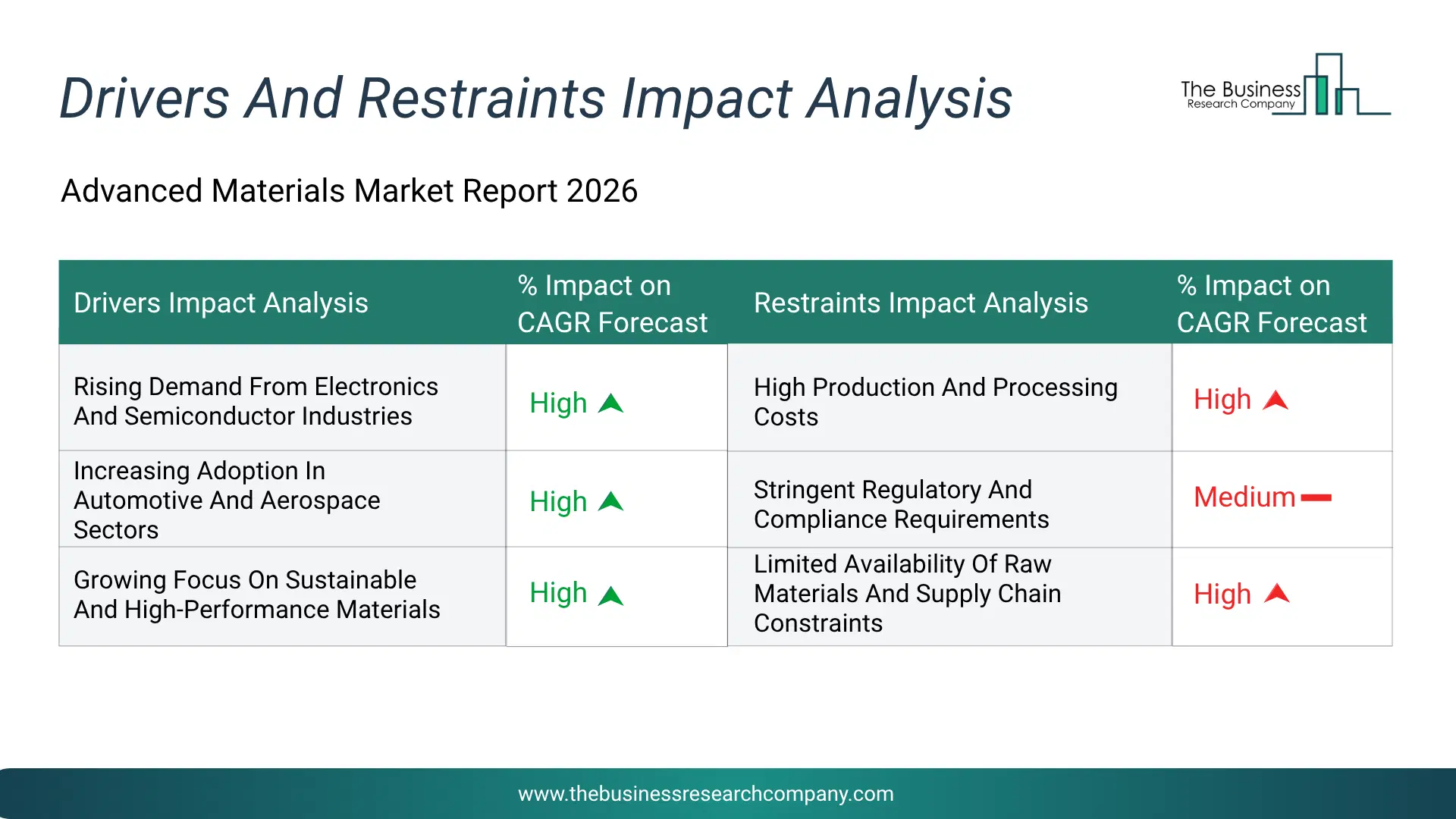
Infographic Chart Showing Key Market Drivers Analysis And Restraints For Advanced Materials Market
The chart presents an impact analysis of key drivers and restraints, quantifying their relative influence on the market's growth rate and helping assess the balance between growth enablers and limiting factors. This chart offers a high-level perspective; the full report contains more detailed insights.
How Will The Drivers Impact Growth In The Global Advanced Materials Market?
• Rising Demand From Electronics And Semiconductor Industries (High) – During the forecast period,the rising demand from electronics and semiconductor industries is expected to become a key growth driver for the advanced materials market by 2030. Rising demand from electronics and semiconductor industries acts as a major driver for the advanced materials market because modern electronic devices require materials with superior conductivity, flexibility, and thermal performance. Increasing consumption of smartphones, wearables, and smart devices is pushing manufacturers to adopt nanomaterials and advanced polymers for enhanced functionality. Technological advancements in semiconductors and flexible electronics further accelerate the need for high-performance materials. These materials enable miniaturization and improved efficiency of electronic components. As a result, the rapid expansion of the electronics sector significantly drives advanced materials demand. • Increasing Adoption In Automotive And Aerospace Sectors (High) – During the forecast period,the increasing adoption in automotive and aerospace sectors is expected to emerge as a major factor driving the expansion of the advanced materials market by 2030. Increasing adoption in automotive and aerospace sectors acts as a major driver for the advanced materials market because these industries demand lightweight, high-strength, and durable materials to improve fuel efficiency and performance. Advanced composites, alloys, and engineered plastics help reduce vehicle weight while maintaining safety and structural integrity. The growing shift toward electric vehicles and stringent emission regulations is further accelerating the use of such materials. These materials also support thermal management and energy efficiency in next-generation mobility solutions. Consequently, the expanding use of advanced materials in transportation sectors boosts overall market growth. • Growing Focus On Sustainable And High-Performance Materials (High) – During the forecast period,the growing focus on sustainable and high-performance materials is expected to act as a key growth catalyst for the advanced materials market by 2030. Growing focus on sustainable and high-performance materials acts as a major driver for the advanced materials market because industries are increasingly aligning with environmental regulations and sustainability goals. Advanced materials offer recyclability, reduced emissions, and improved lifecycle performance, making them suitable for green applications. Governments and industries are promoting eco-friendly materials for energy, construction, and manufacturing sectors. Continuous innovation in bio-based and recyclable materials further strengthens their adoption. As a result, sustainability-driven demand significantly accelerates investment and expansion in the advanced materials market.How Will The Restraints Impact Growth In The Global Advanced Materials Market?
• High Production And Processing Costs (High) – During the forecast period,the high production and processing costs act as a significant restraint in the advanced materials market because these materials often require complex manufacturing techniques, specialized equipment, and high-quality raw inputs. This raises the overall cost structure, making them less accessible for mass adoption across price-sensitive industries. Small and medium enterprises may find it difficult to invest in such expensive materials, limiting market penetration. Additionally, high costs can reduce competitiveness against conventional materials that offer acceptable performance at lower prices. As a result, widespread commercialization and scalability are slowed despite the superior properties of advanced materials. • Stringent Regulatory And Compliance Requirements (High) – During the forecast period,the stringent regulatory and compliance requirements act as a restraint by imposing strict standards on the development, testing, and commercialization of advanced materials, especially in sectors like healthcare, aerospace, and electronics. Regulatory approvals often involve lengthy validation processes, increasing time-to-market and operational expenses. Companies must also ensure environmental and safety compliance, which adds to the complexity of production and innovation. These challenges can discourage new entrants and delay the introduction of novel materials into the market. Consequently, regulatory burdens can hinder rapid technological advancements and limit overall market growth. • Limited Availability Of Raw Materials And Supply Chain Constraints (High) – During the forecast period,the limited availability of raw materials and supply chain constraints restrain the advanced materials market by creating inconsistencies in production and increasing dependency on specific regions for critical inputs. Many advanced materials rely on rare or specialized elements, which are subject to geopolitical risks and supply fluctuations. Disruptions in the supply chain can lead to delays, increased costs, and reduced production capacity. This uncertainty makes it difficult for manufacturers to maintain stable operations and meet growing demand. As a result, supply-side limitations restrict the scalability and reliability of the advanced materials market.Key Players In The Global Advanced Materials Market
Major companies operating in the advanced materials market report are BASF SE, Dow Inc., 3M Company, Saint-Gobain, Toray Industries Inc., Teijin Limited, Akzo Nobel N.V., Hexcel Corporation, Owens Corning, Morgan Advanced Materials PLC., Momentive Performance Materials Inc., Hitachi Chemical Co. Ltd., Evonik Industries AG, Solvay S.A., Arkema S.A., LANXESS AG, Showa Denko K.K., Nippon Steel Corporation, Alcoa Corporation, PPG Industries Inc.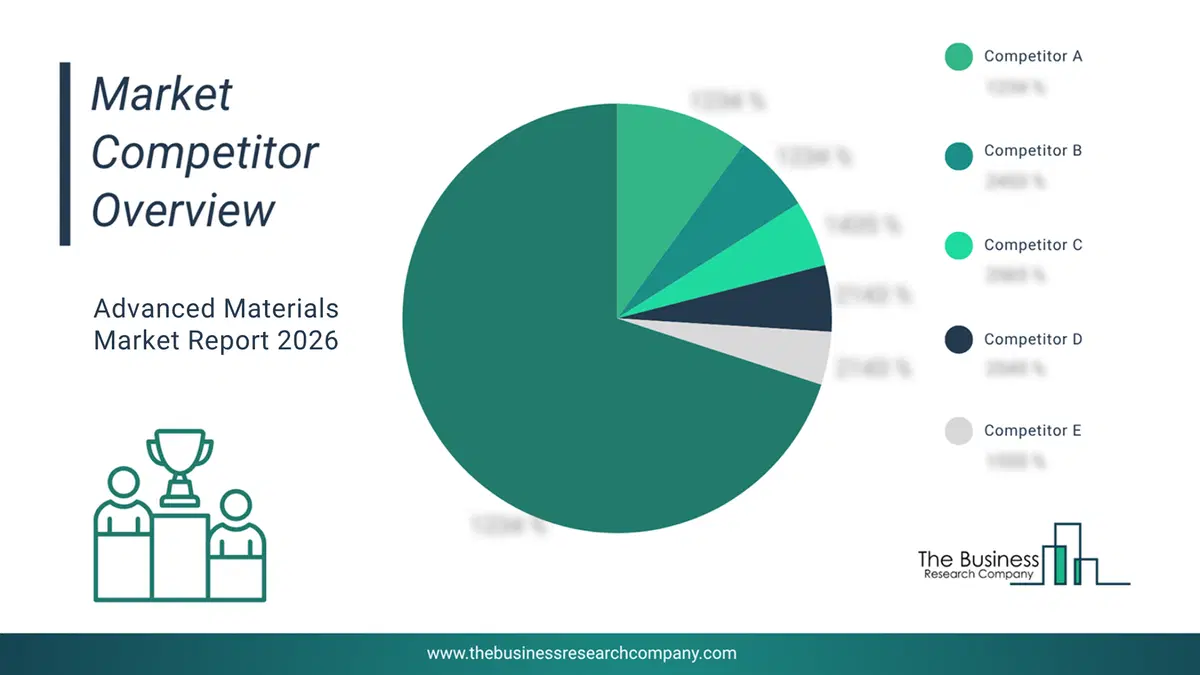
This chart is for illustrative purposes; the full report includes a detailed competitor analysis and comprehensive overview of the top 10 companies in the market.
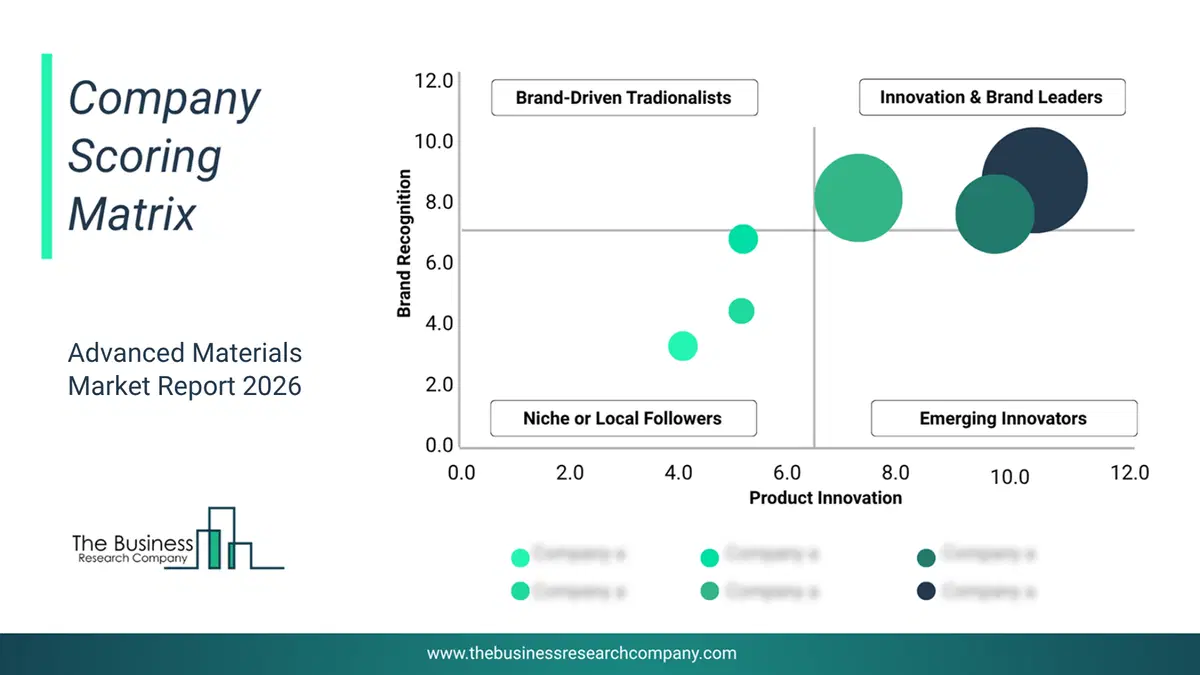
This chart maps companies by product innovation and brand strength, with bubble size indicating relative revenue, helping identify market leaders, challengers, and niche players. This is an illustrative chart; the full report provides a complete and accurate competitive analysis.
Global Advanced Materials Market Trends and Insights
Major companies operating in the advanced materials market are focusing on developing product innovations such as graphene-based corrosion protection technologies to enhance material performance and extend asset lifespan. Graphene-based additives leverage the exceptional strength and barrier properties of graphene to improve coating durability and resistance to harsh environments. For instance, in April 2023, Petroliam Nasional Berhad (PETRONAS), a Malaysia-based energy and solutions corporation, launched Proshield+, its first advanced material-based corrosion protection technology. This innovative Proshield+ is a paint additive that is made from graphene, an ultra-high barrier material. Graphene is a two-dimensional material that is made up of a single layer of carbon atoms arranged in a hexagonal lattice. It is one of the strongest and lightest materials known to science, and it has a number of other unique properties, such as high electrical conductivity and thermal conductivity. Proshield+ works by forming a tortuous pathway in the coating, which hinders corroding agents from reaching the steel surface.What Are Latest Mergers And Acquisitions In The Advanced Materials Market?
In February 2023, Mo-Sci LCC, a US-based provider of advanced high-tech glass development and manufacturing, acquired the assets of 3M’s Advanced Materials business for an undisclosed amount. Through this acquisition, Mo-Sci sought to strengthen its technological capabilities and manufacturing capacity by integrating specialized equipment and intellectual property, enabling faster product innovation, expanded market reach, and enhanced customer support across key industries including healthcare, energy, industrial, automotive, and defense. 3M’s Advanced Materials business is a US-based provider of advanced engineered materials and specialized technologies focused on high-performance materials and components for diverse industrial and technological applications.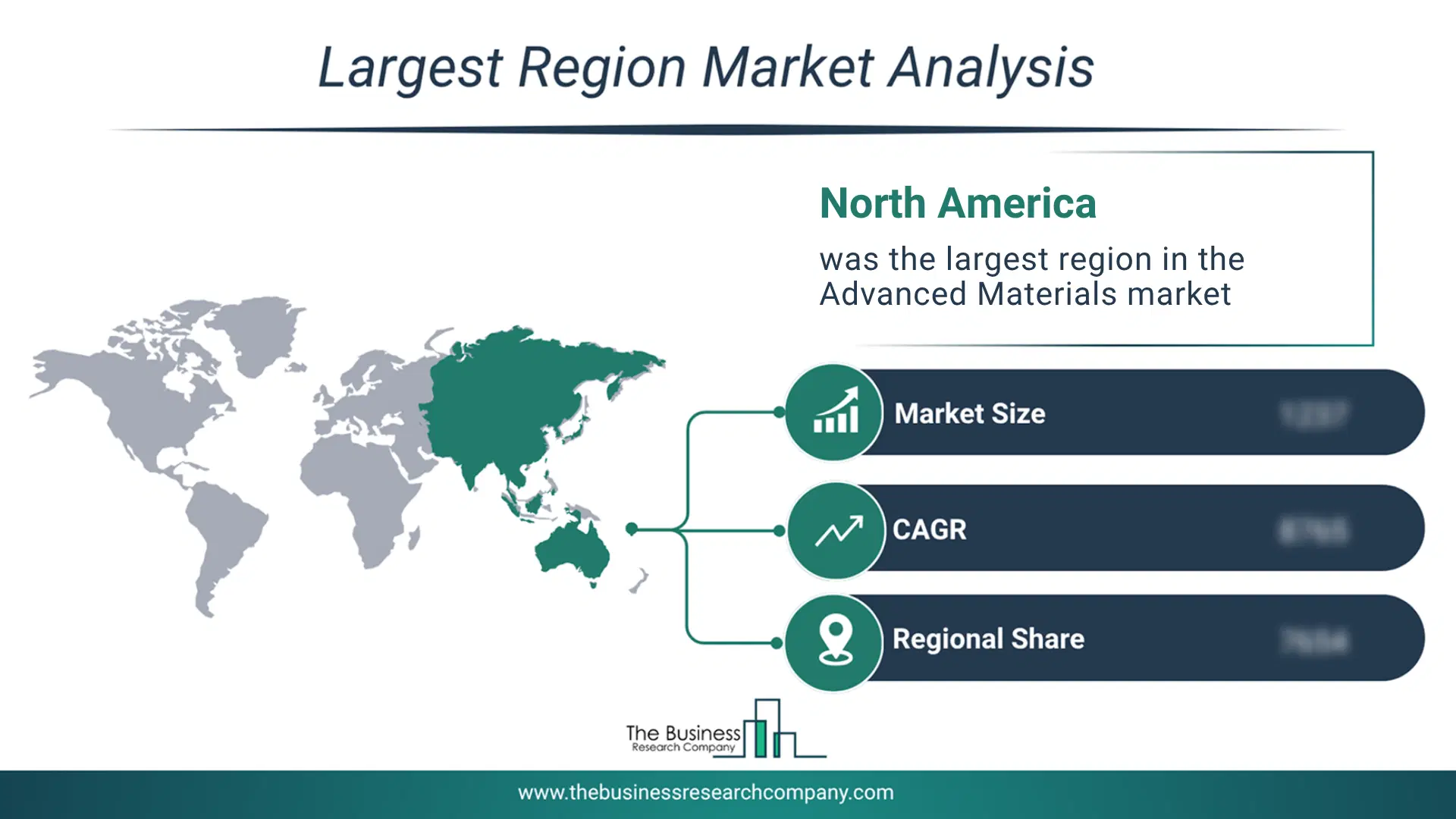
Regional Outlook
North America was the largest region in the advanced materials market in 2025. The regions covered in the advanced materials market are Asia-Pacific, South East Asia, Western Europe, Eastern Europe, North America, South America, Middle East, Africa. The countries covered in the advanced materials market are Australia, Brazil, China, France, Germany, India, Indonesia, Japan, Taiwan, Russia, South Korea, UK, USA, Canada, Italy, Spain.What Defines the Advanced Materials Market?
The advanced materials market consists of sales of fluoropolymers, multifunctional materials, nanomaterials, smart textiles, wearables, flexible batteries, biomedical implant devices, and fiber optics. Values in this market are ‘factory gate’ values, that is, the value of goods sold by the manufacturers or creators of the goods, whether to other entities (including downstream manufacturers, wholesalers, distributors, and retailers) or directly to end customers. The value of goods in this market includes related services sold by the creators of the goods.How is Market Value Defined and Measured?
The market value is defined as the revenues that enterprises gain from the sale of goods and/or services within the specified market and geography through sales, grants, or donations in terms of the currency (in USD unless otherwise specified). The revenues for a specified geography are consumption values that are revenues generated by organizations in the specified geography within the market, irrespective of where they are produced. It does not include revenues from resales along the supply chain, either further along the supply chain or as part of other products.
This chart presents market attractiveness based on a quantitative evaluation of growth, competition, strategic alignment, and risk, offering a clear view of opportunity areas for decision-making. This chart is for illustrative purposes; the full report contains the complete analysis.

This chart highlights the Total Addressable Market (TAM) by estimating the maximum revenue opportunity using an assumption-driven approach, supporting strategic planning and opportunity sizing across markets. The chart is illustrative; the full report provides a more comprehensive analysis.
What Key Data and Analysis Are Included in the Advanced Materials Market Report 2026?
The advanced materials market research report is one of a series of new reports from The Business Research Company that provides market statistics, including Market Report 2026?global market size, regional shares, competitors with the market share, detailed market segments, market trends and opportunities, and any further data you may need to thrive in the advanced materials Market Report 2026? The market research report delivers a complete perspective of everything you need, with an in-depth analysis of the current and future state of the Market Report 2026?Advanced Materials Market Report Forecast Analysis
| Report Attribute | Details |
|---|---|
| Market Size Value In 2026 | $98.22 billion |
| Revenue Forecast In 2030 | $134.03 billion |
| Growth Rate | CAGR of 7.6% from 2026 to 2030 |
| Base Year For Estimation | 2025 |
| Actual Estimates/Historical Data | 2020-2025 |
| Forecast Period | 2026 - 2030 |
| Market Representation | Revenue in USD Billion and CAGR from 2026 to 2030 |
| Segments Covered | Product Type, Distribution Channel, Application |
| Regional Scope | Asia-Pacific, Western Europe, Eastern Europe, North America, South America, Middle East, Africa |
| Country Scope | The countries covered in the report are Australia, Brazil, China, France, Germany, India, Indonesia, Japan, Taiwan, Russia, South Korea, UK, USA, Canada, Italy, Spain. |
| Key Companies Profiled | BASF SE, Dow Inc., 3M Company, Saint-Gobain, Toray Industries Inc., Teijin Limited, Akzo Nobel N.V., Hexcel Corporation, Owens Corning, Morgan Advanced Materials PLC., Momentive Performance Materials Inc., Hitachi Chemical Co. Ltd., Evonik Industries AG, Solvay S.A., Arkema S.A., LANXESS AG, Showa Denko K.K., Nippon Steel Corporation, Alcoa Corporation, PPG Industries Inc. |
| Customization Scope | Request for Customization |
| Pricing And Purchase Options | Explore Purchase Options |