
Advanced Therapy Medicinal Products Market Report 2026
Global Outlook – By Product (Somatic Cell Therapy Medicinal Products, Tissue Engineered Medicinal Products, Gene Therapy Medicinal Products), By Technology (Gene Editing Technologies, Viral Vector Technology, Stem Cell Technology, Automation And Artificial Intelligence-Driven Processes), By Application (Muscular Dystrophies, Alzheimer’s, Hemophilia, Cystic Fibrosis, Other Applications), By Distribution Channel (Hospital Pharmacy, Retail Pharmacy), By End User (Hospitals, Specialty Clinics, Other End Users) – Market Size, Trends, Strategies, and Forecast to 2030
Advanced Therapy Medicinal Products Market Overview
• Advanced Therapy Medicinal Products market size has reached to $51.34 billion in 2025 • Expected to grow to $124.43 billion in 2030 at a compound annual growth rate (CAGR) of 19.3% • Growth Driver: Rise In Personalized Medicine Tailoring Treatment Approaches For Chronic And Rare Diseases • Market Trend: Advancements In Gene-Editing Cell Therapies Drive Precision Treatment In Genetic Blood Disorders • North America was the largest region in 2025 and Asia-Pacific is the fastest growing region.Market Gains By 2030 – Top Opportunities By Segment
Market Gain identifies the most promising market opportunities by highlighting the segments or products expected to generate the highest incremental revenue growth over the next five years.
What Is Covered Under Advanced Therapy Medicinal Products Market?
Advanced therapy medicinal products are medicines based on genes, cells, or tissue engineering that offer innovative treatments for a wide range of diseases and injuries. These therapies work by repairing, replacing, or regenerating human cells, tissues, or organs to restore normal function. The main product types of advanced therapy medicinal products are somatic cell therapy medicinal products, tissue-engineered medicinal products, and gene therapy medicinal products. Somatic cell therapy medicinal products refer to treatments that use cells from the human body (excluding reproductive cells) that are manipulated or processed to treat, prevent, or cure diseases by repairing or replacing damaged tissues or cells. These therapies utilize a range of technologies such as gene editing technologies, viral vector technology, stem cell technology, and automation and artificial intelligence-driven processes. They are applied in the treatment of various conditions, including muscular dystrophies, Alzheimer’s, hemophilia, cystic fibrosis, and other applications. Distribution channels include hospital pharmacy, retail pharmacy, and online pharmacy. serving a broad range of end users such as hospitals, specialty clinics, and other end users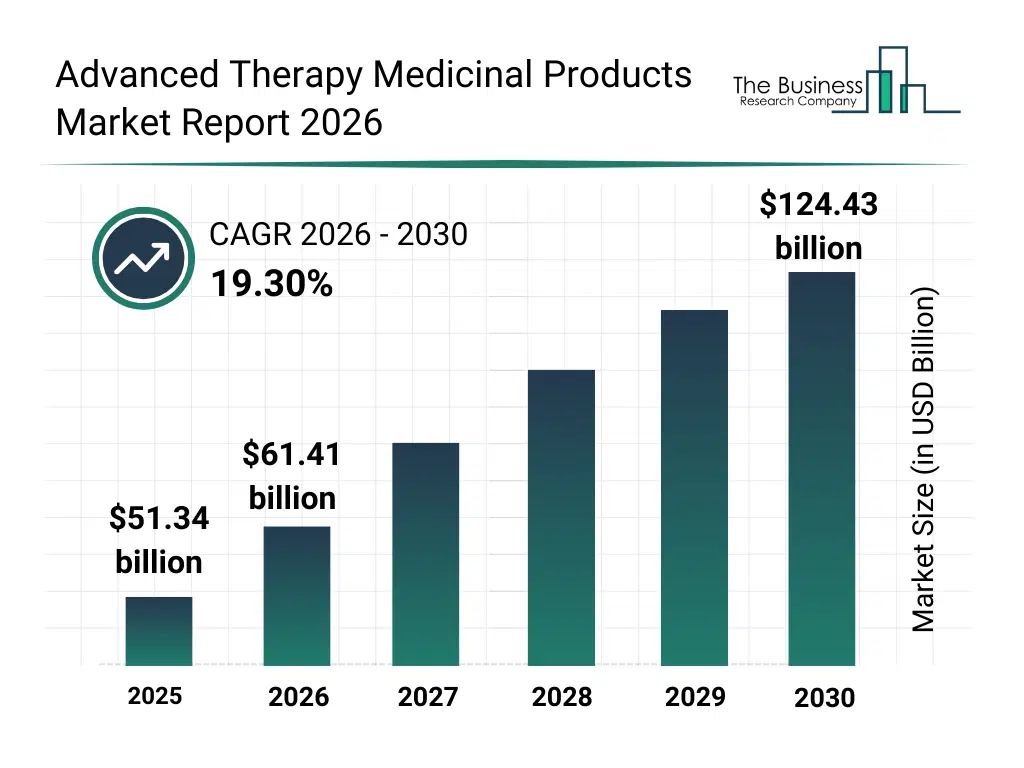
What Is The Advanced Therapy Medicinal Products Market Size and Share 2026?
The advanced therapy medicinal products market size has grown rapidly in recent years. It will grow from $51.34 billion in 2025 to $61.41 billion in 2026 at a compound annual growth rate (CAGR) of 19.6%. The growth in the historic period can be attributed to limited availability of advanced therapy products, reliance on traditional biologics, nascent regulatory frameworks, high cost of gene and cell therapies, limited distribution channels.What Is The Advanced Therapy Medicinal Products Market Growth Forecast?
The advanced therapy medicinal products market size is expected to see rapid growth in the next few years. It will grow to $124.43 billion in 2030 at a compound annual growth rate (CAGR) of 19.3%. The growth in the forecast period can be attributed to technological advancements in gene editing and stem cell therapies, rising investment in personalized medicine, increasing prevalence of rare and chronic diseases, expansion of hospital pharmacy and specialty clinic networks, integration of ai-driven manufacturing and automation processes. Major trends in the forecast period include rising adoption of autologous and allogeneic therapies, expansion of gene editing and viral vector technologies, increasing focus on rare disease treatments, integration of automation in therapy manufacturing, growing hospital and specialty clinic collaborations.
Global Advanced Therapy Medicinal Products Market Segmentation
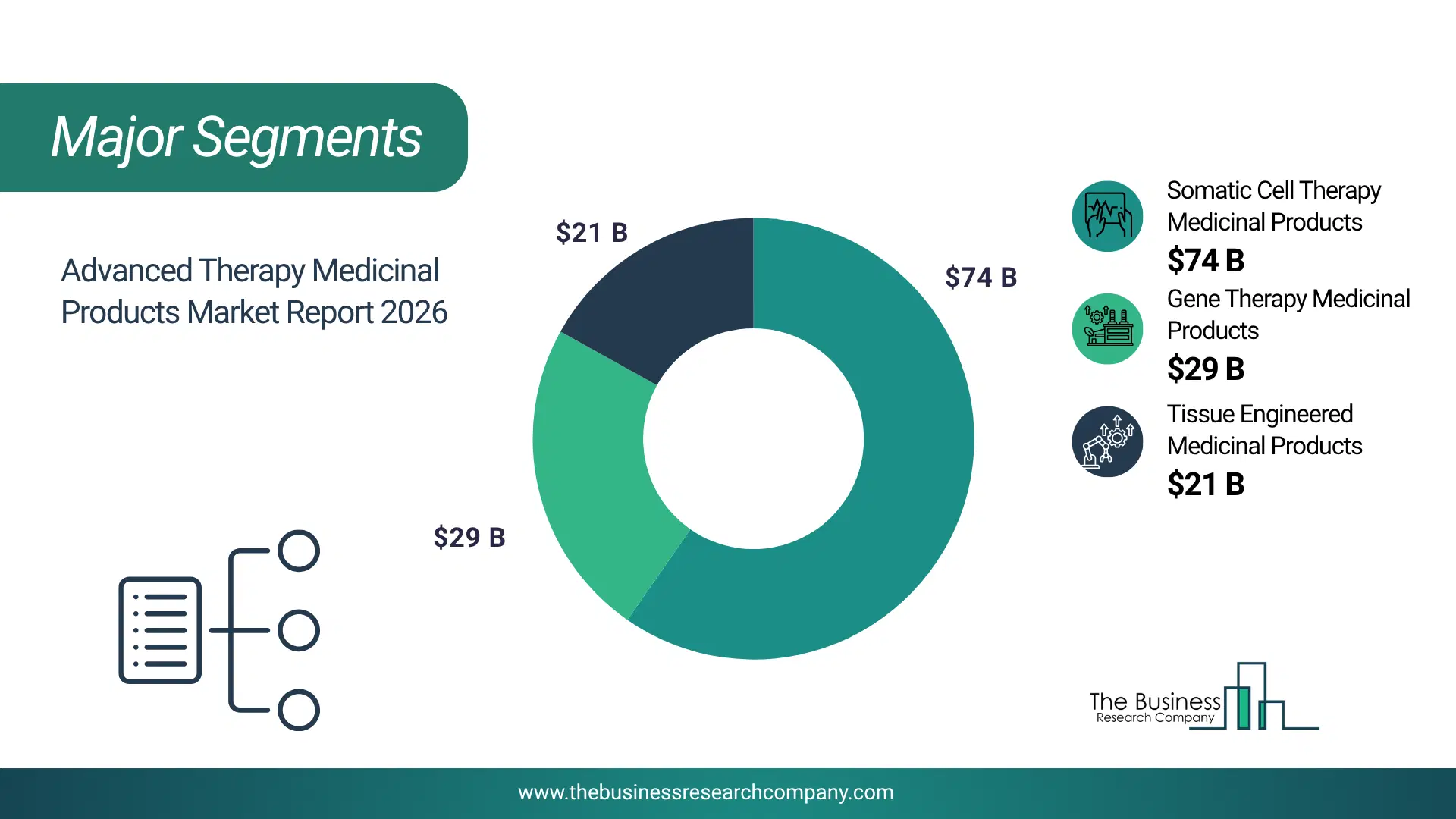
1) By Product: Somatic Cell Therapy Medicinal Products, Tissue Engineered Medicinal Products, Gene Therapy Medicinal Products 2) By Technology: Gene Editing Technologies, Viral Vector Technology, Stem Cell Technology, Automation And Artificial Intelligence-Driven Processes 3) By Application: Muscular Dystrophies, Alzheimer’s, Hemophilia, Cystic Fibrosis, Other Applications 4) By Distribution Channel: Hospital Pharmacy, Retail Pharmacy 5) By End User: Hospitals, Specialty Clinics, Other End Users Subsegments: 1) By Somatic Cell Therapy Medicinal Products: Autologous Cell Therapy, Allogeneic Cell Therapy, Stem Cell Therapy, Dendritic Cell Therapy, Natural Killer Cell Therapy 2) By Tissue Engineered Medicinal Products: Autologous Tissue-Engineered Products, Allogeneic Tissue-Engineered Products, Scaffold-Based Tissue Engineering, Scaffold-Free Tissue Engineering, Skin Substitutes 3) By Gene Therapy Medicinal Products: In Vivo Gene Therapy, Ex Vivo Gene Therapy, Viral Vector-Based Gene Therapy, Non-Viral Vector-Based Gene Therapy, Gene Editing Therapies The top segments in the advanced therapy medicinal products market will be: • Somatic Cell Therapy Medicinal Products will reach $73.68 Billion by 2030. • Gene Therapy Medicinal Products will reach $28.64 Billion by 2030. • Tissue Engineered Medicinal Products will reach $20.67 Billion by 2030.What Is The Driver Of The Advanced Therapy Medicinal Products Market?
The rising demand for personalized medicine is expected to propel the growth of the advanced therapy medicinal products market going forward. Personalized medicine refers to a medical approach that tailors treatment and prevention strategies to an individual’s unique genetic makeup, lifestyle, and environment. The rising demand for personalized medicine is primarily due to the increasing prevalence of chronic diseases, as it enables tailored treatments that improve outcomes and reduce side effects for individual patients. Advanced therapy medicinal products enable personalized medicine by offering tailored treatments such as gene, cell, and tissue-engineered therapies that target the unique genetic and biological profiles of individual patients. for instance, in February 2024, according to the Personalized Medicine Coalition, a US-based non-profit organization, reported that in 2023, the FDA approved 16 new personalized treatments for rare disease patients, up from 6 in 2022. The newly approved personalized treatments for 2023 also include seven cancer drugs and three for other diseases and conditions. Therefore, the rising demand for personalized medicine drives the growth of the advanced therapy medicinal products industry.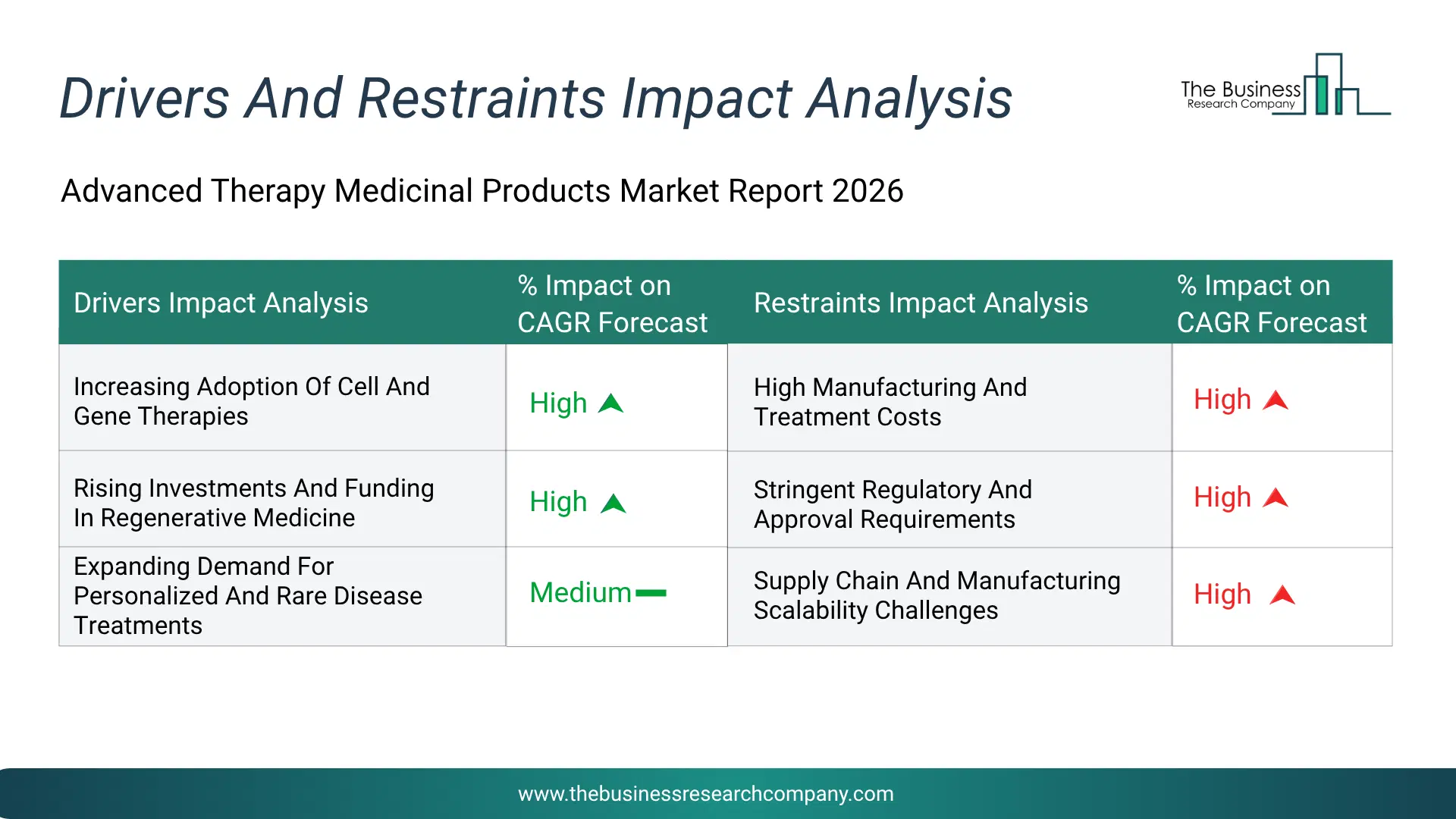
Infographic Chart Showing Key Market Drivers Analysis And Restraints For Advanced Therapy Medicinal Products Market
The chart presents an impact analysis of key drivers and restraints, quantifying their relative influence on the market's growth rate and helping assess the balance between growth enablers and limiting factors. This chart offers a high-level perspective; the full report contains more detailed insights.
How Will The Drivers Impact Growth In The Global Advanced Therapy Medicinal Products Market?
• Increasing Adoption Of Cell And Gene Therapies (High) – During the forecast period, the increasing adoption of cell and gene therapies is expected to become a key growth driver for the advanced therapy medicinal products market by 2030. The increasing adoption of cell and gene therapies is acting as a major driver for the advanced therapy medicinal products market because these therapies directly align with the market definition involving genes, cells, and tissue engineering technologies. Growing success rates of CAR-T therapies, stem cell therapies, and gene replacement therapies are encouraging healthcare providers and biopharmaceutical companies to expand investments in advanced therapeutic solutions. Rising approvals of innovative therapies for cancer, rare genetic disorders, and autoimmune diseases are accelerating demand for viral vector production, analytical testing, and process scale-up services included within the ATMP market. In addition, continuous technological advancements in gene editing and cellular engineering are improving treatment efficacy and safety profiles. Increasing physician confidence and patient awareness regarding regenerative medicine are further supporting market expansion. The growing number of clinical trials and commercialization activities worldwide is also increasing revenues generated from manufacturing and development services. As healthcare systems shift toward precision medicine and curative therapies, the adoption of advanced cell and gene therapies continues to strengthen long-term demand across the ATMP ecosystem. • Rising Investments And Funding In Regenerative Medicine (High) – During the forecast period, the rising investments and funding in regenerative medicine is expected to emerge as a major factor driving the expansion of the advanced therapy medicinal products market by 2030. Rising investments and funding in regenerative medicine are significantly driving the growth of the advanced therapy medicinal products market by supporting innovation, commercialization, and manufacturing expansion. Governments, venture capital firms, and pharmaceutical companies are increasing financial support for research involving gene therapies, cell therapies, and tissue-engineered products. These investments are enabling companies to establish advanced viral vector manufacturing facilities, improve analytical testing capabilities, and scale up commercial production processes. Increased funding is also accelerating clinical trial activities and regulatory submissions for novel therapies targeting rare diseases and chronic conditions. Strategic partnerships and mergers among biotechnology firms are further strengthening research infrastructure and accelerating technology transfer within the industry. In addition, financial support for regenerative medicine is encouraging the development of personalized therapies with higher therapeutic effectiveness. Expanding investments are also improving supply chain capabilities and quality control systems necessary for ATMP commercialization. As capital inflows continue to rise globally, the market is witnessing stronger product pipelines, faster commercialization timelines, and broader adoption of advanced therapeutic technologies. • Expanding Demand For Personalized And Rare Disease Treatments (Medium) – During the forecast period, the expanding demand for personalized and rare disease treatments is expected to act as a key growth catalyst for the advanced therapy medicinal products market by 2030. Expanding demand for personalized and rare disease treatments is acting as a key growth driver for the advanced therapy medicinal products market because ATMPs are specifically designed to provide targeted and regenerative therapeutic solutions. Increasing prevalence of rare genetic disorders, cancers, and chronic degenerative diseases is creating strong demand for highly customized treatments based on cellular and genetic engineering technologies. Many conventional therapies offer limited effectiveness for rare diseases, which is encouraging healthcare providers to adopt advanced therapies capable of repairing or replacing damaged cells and tissues. Growing awareness regarding personalized medicine is also increasing patient acceptance of gene and cell-based treatments. In addition, favourable regulatory incentives for orphan drugs and rare disease therapies are encouraging pharmaceutical companies to expand research and commercialization efforts. Rising demand for individualized treatment approaches is boosting the need for clinical trial support, process development, and analytical testing services included within the ATMP market. Continuous advancements in genomic sequencing and biomarker identification are further supporting personalized therapy development. As healthcare systems increasingly focus on precision medicine and long-term treatment outcomes, demand for advanced therapy medicinal products continues to expand globally.How Will The Restraints Impact Growth In The Global Advanced Therapy Medicinal Products Market?
• High Manufacturing And Treatment Costs (High) – During the forecast period, the high manufacturing and treatment costs are acting as a major restraint for the advanced therapy medicinal products market because the development and commercialization of gene, cell, and tissue-engineered therapies require highly specialized infrastructure and complex production processes. Manufacturing ATMPs involves expensive viral vector production systems, sterile laboratory environments, advanced bioprocessing equipment, and strict quality control procedures. In addition, many therapies are patient-specific, requiring individualized production that significantly increases operational expenses and limits economies of scale. The costs associated with clinical trials, regulatory compliance, storage, and transportation further increase the overall financial burden on manufacturers and healthcare providers. Advanced therapies often require cold-chain logistics and specialized handling to maintain product stability and efficacy, adding additional distribution costs. High treatment prices also create reimbursement challenges for healthcare systems and insurance providers, limiting patient accessibility in several regions. Smaller biotechnology firms may face difficulties securing sufficient capital to support long-term manufacturing and commercialization activities. The high cost structure can delay product adoption, reduce market penetration, and restrict large-scale commercialization opportunities within the ATMP industry. As a result, cost-related challenges remain a significant barrier to broader market expansion and accessibility. • Stringent Regulatory And Approval Requirements (High) – During the forecast period, the stringent regulatory and approval requirements are restraining the growth of the advanced therapy medicinal products market because ATMPs involve highly complex biological materials and innovative therapeutic mechanisms that require extensive safety and efficacy evaluations. Regulatory agencies impose rigorous clinical trial requirements, long approval timelines, and strict manufacturing standards for gene therapies, cell therapies, and tissue-engineered products. Companies must conduct comprehensive analytical testing, characterization studies, and quality assurance procedures before obtaining commercial approval. Regulatory uncertainty regarding long-term safety monitoring and post-treatment effects can further delay product commercialization. In addition, variations in regulatory frameworks across countries create additional compliance challenges for multinational manufacturers and developers. The need for continuous documentation, process validation, and pharmacovigilance significantly increases administrative and operational costs for market participants. Small and emerging biotechnology companies may face difficulties managing the financial and technical burden associated with complex regulatory pathways. Delays in approvals can slow innovation, reduce investor confidence, and postpone revenue generation opportunities within the market. As a result, stringent regulatory requirements continue to act as a major barrier to faster commercialization and broader adoption of advanced therapy medicinal products globally. • Supply Chain And Manufacturing Scalability Challenges (Medium) – During the forecast period, the supply chain and manufacturing scalability challenges are significantly restraining the advanced therapy medicinal products market because ATMP production requires highly controlled processes, specialized raw materials, and complex logistics networks. Many advanced therapies depend on limited sources of viral vectors, cellular materials, and biological reagents, creating supply shortages and procurement delays. Manufacturing processes for gene and cell therapies are highly sensitive and difficult to scale while maintaining product consistency, safety, and therapeutic effectiveness. In addition, patient-specific therapies often require decentralized manufacturing and rapid transportation systems, increasing logistical complexity. The requirement for cold-chain storage and transportation further complicates distribution activities and increases operational risks. Limited large-scale manufacturing facilities and insufficient skilled workforce availability also restrict production capacity across several regions. Disruptions in global supply chains, including transportation delays and raw material shortages, can directly impact clinical trial timelines and commercial product delivery. Companies must invest heavily in automation, process optimization, and infrastructure expansion to improve manufacturing scalability. These operational and logistical challenges can slow commercialization activities, increase production costs, and limit the widespread availability of advanced therapy medicinal products in the global market.Key Players In The Global Advanced Therapy Medicinal Products Market
Major companies operating in the advanced therapy medicinal products market are F. Hoffmann-La Roche Limited., Novartis AG, Bristol-Myers Squibb Company, Takeda Pharmaceutical Company Limited., Lonza Group AG, Catalent Inc., BioMarin Pharmaceutical Inc., AGC Biologics Inc., ViaCyte Inc., Rentschler Biopharma SE, JCR Pharmaceuticals Co. Ltd., Vericel Corporation, UniQure N.V., Fate Therapeutics Inc., WuXi Advanced Therapies Inc., Celonic Group AG, Pharmicell Co. Ltd., Magenta Therapeutics Inc, MEDIPOST Co. Ltd., Kolon TissueGene Inc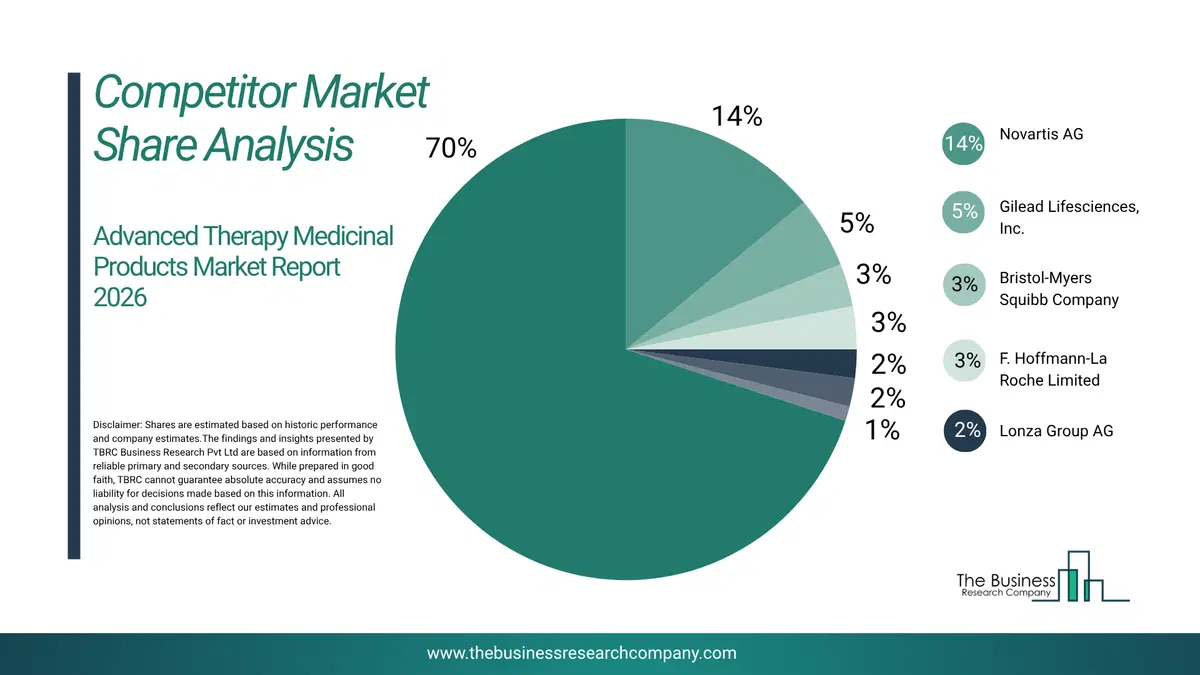
This chart is for illustrative purposes; the full report includes a detailed competitor analysis and comprehensive overview of the top 10 companies in the market.
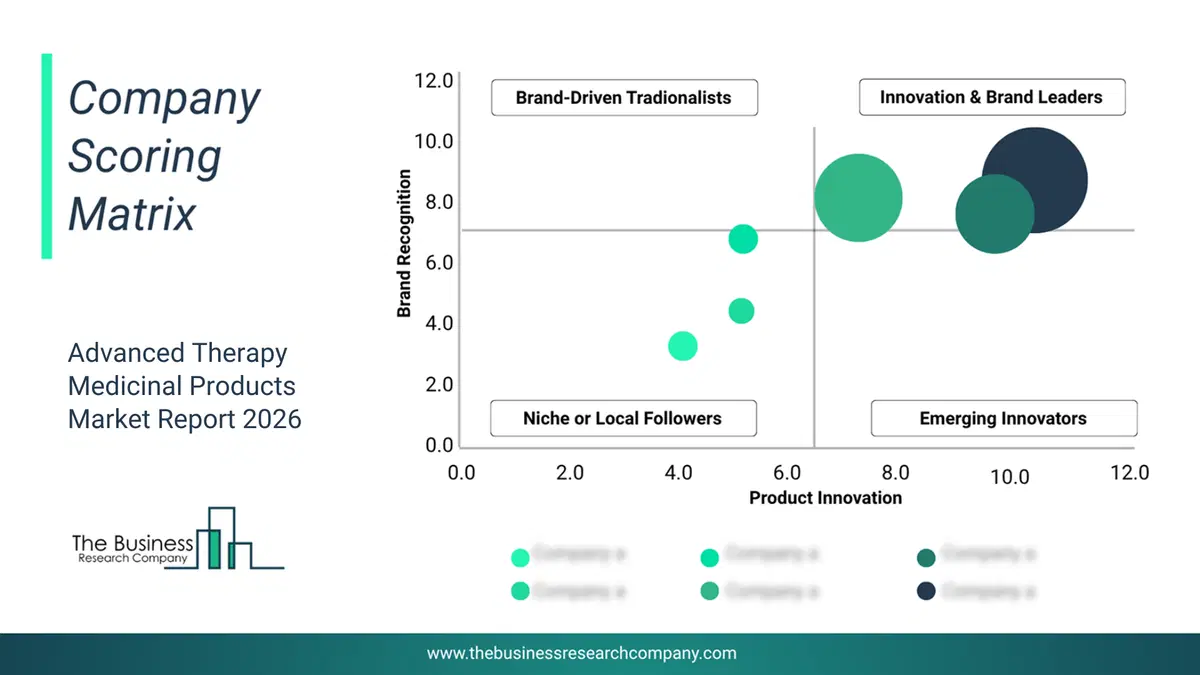
This chart maps companies by product innovation and brand strength, with bubble size indicating relative revenue, helping identify market leaders, challengers, and niche players. This is an illustrative chart; the full report provides a complete and accurate competitive analysis.
Global Advanced Therapy Medicinal Products Market Trends and Insights
Major companies operating in the advanced therapy medicinal products (ATMP) market are focusing on developing innovative treatments, such as gene editing cell therapies, to offer targeted and potentially curative treatments for conditions like β thalassemia and sickle cell disease. Gene editing cell therapies involve collecting a patient’s hematopoietic stem cells and precisely modifying their genome ex vivo, often using CRISPR Cas9 to correct harmful mutations or activate beneficial genetic pathways, providing a personalized alternative to traditional allogeneic bone marrow transplantation, which relies on donor matching and carries risks such as graft versus host disease. For instance, in January 2024, Vertex Pharmaceuticals, a US based biotechnology company, received US Food and Drug Administration (FDA) approval for CASGEVY (exagamglogene autotemcel, or exa cel), a CRISPR Cas9 based gene editing cell therapy for transfusion dependent β thalassemia. The therapy uses autologous CD34+ stem and progenitor cells, edits the erythroid specific BCL11A enhancer to elevate fetal hemoglobin levels, and has demonstrated sustained clinical improvements, with the potential to achieve transfusion independence for many patients and significantly reduce or eliminate the need for regular blood transfusions.What Are Latest Mergers And Acquisitions In The Advanced Therapy Medicinal Products Market?
In May 2024, Tri-Tech Forensics Inc., a US-based forensic company, acquired SAM Medical Products for an undisclosed amount. The acquisition is expected to help Tri-Tech Forensics expand its emergency medical product portfolio and strengthen its position in the market. SAM Medical Products is a US-based company that develops, manufactures and markets orthopedic splints, and wound care devices, medical services products designed for various professionals in the medical field.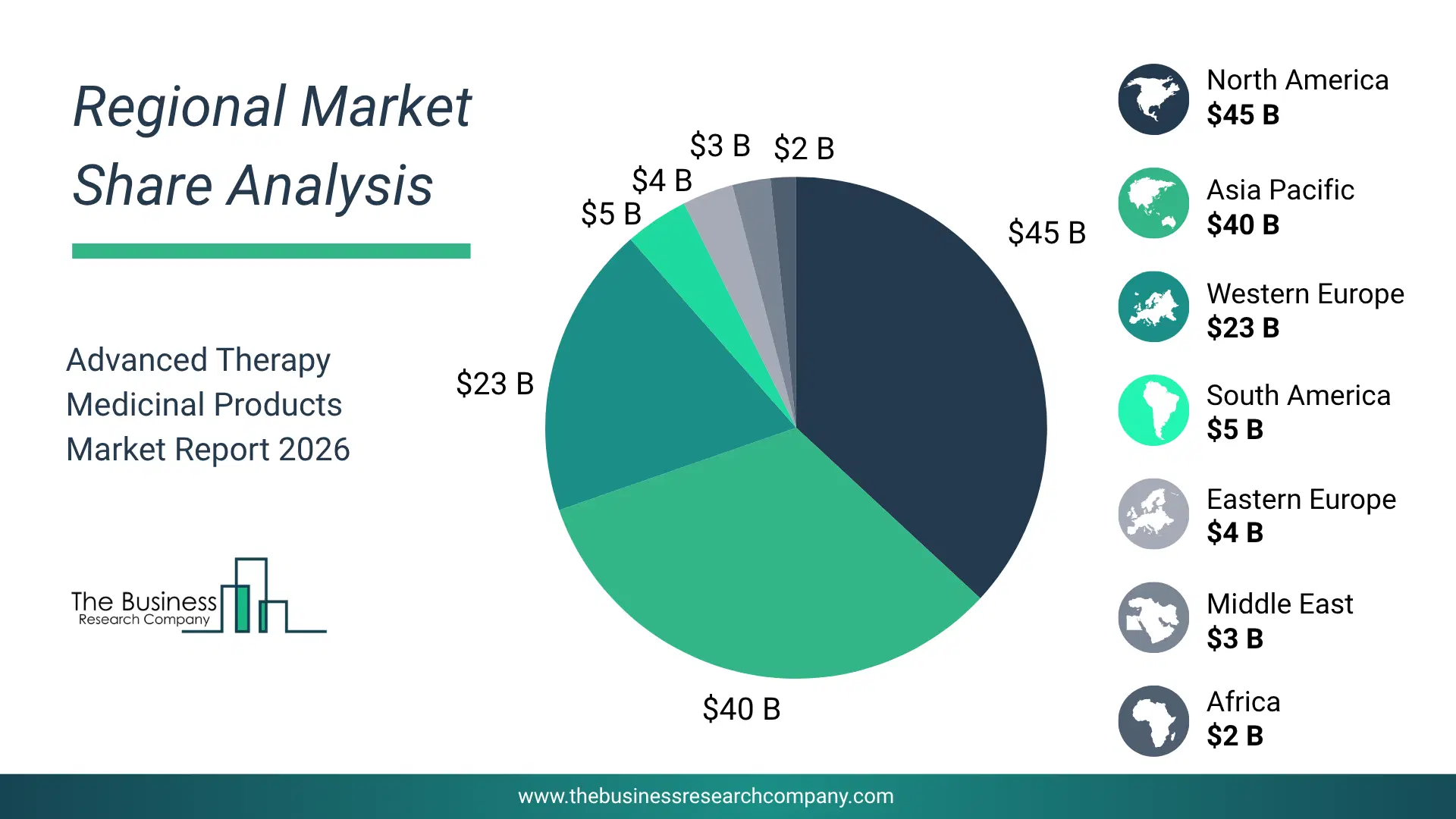
Regional Insights
North America was the largest region in the advanced therapy medicinal products market in 2025. Asia-Pacific is expected to be the fastest-growing region in the forecast period. The regions covered in this market report are Asia-Pacific, South East Asia, Western Europe, Eastern Europe, North America, South America, Middle East, Africa. The countries covered in this market report are Australia, Brazil, China, France, Germany, India, Indonesia, Japan, Taiwan, Russia, South Korea, UK, USA, Canada, Italy, Spain.What Defines the Advanced Therapy Medicinal Products Market?
The advanced therapy medicinal products market consists of revenues earned by entities by providing services such as cell and gene therapy development services, viral vector production and characterization, regulatory and clinical trial support, analytical testing and quality control services, and process development and scale-up services. The market value includes the value of related goods sold by the service provider or included within the service offering. The advanced therapy medicinal products market also includes sales of gene therapy vectors, engineered tissue scaffolds, bioengineered skin substitutes, and encapsulated cell therapies. Values in this market are ‘factory gate’ values; that is, the value of goods sold by the manufacturers or creators of the goods, whether to other entities (including downstream manufacturers, wholesalers, distributors, and retailers) or directly to end customers. The value of goods in this market includes related services sold by the creators of the goods.How is Market Value Defined and Measured?
The market value is defined as the revenues that enterprises gain from the sale of goods and/or services within the specified market and geography through sales, grants, or donations in terms of the currency (in USD unless otherwise specified). The revenues for a specified geography are consumption values that are revenues generated by organizations in the specified geography within the market, irrespective of where they are produced. It does not include revenues from resales along the supply chain, either further along the supply chain or as part of other products.
This chart presents market attractiveness based on a quantitative evaluation of growth, competition, strategic alignment, and risk, offering a clear view of opportunity areas for decision-making. This chart is for illustrative purposes; the full report contains the complete analysis.

This chart highlights the Total Addressable Market (TAM) by estimating the maximum revenue opportunity using an assumption-driven approach, supporting strategic planning and opportunity sizing across markets. The chart is illustrative; the full report provides a more comprehensive analysis.
What Key Data and Analysis Are Included in the Advanced Therapy Medicinal Products Market Report 2026?
The advanced therapy medicinal products market research report is one of a series of new reports from The Business Research Company that provides market statistics, including industry global market size, regional shares, competitors with the market share, detailed market segments, market trends and opportunities, and any further data you may need to thrive in the advanced therapy medicinal products industry. The market research report delivers a complete perspective of everything you need, with an in-depth analysis of the current and future state of the industry.Advanced Therapy Medicinal Products Market Report Forecast Analysis
| Report Attribute | Details |
|---|---|
| Market Size Value In 2026 | $61.41 billion |
| Revenue Forecast In 2030 | $124.43 billion |
| Growth Rate | CAGR of 19.6% from 2026 to 2030 |
| Base Year For Estimation | 2025 |
| Actual Estimates/Historical Data | 2020-2025 |
| Forecast Period | 2026 - 2030 |
| Market Representation | Revenue in USD Billion and CAGR from 2026 to 2030 |
| Segments Covered | Product, Technology, Application, Distribution Channel, End User |
| Regional Scope | Asia-Pacific, Western Europe, Eastern Europe, North America, South America, Middle East, Africa |
| Country Scope | The countries covered in the report are Australia, Brazil, China, France, Germany, India, Indonesia, Japan, Taiwan, Russia, South Korea, UK, USA, Canada, Italy, Spain. |
| Key Companies Profiled | F. Hoffmann-La Roche Limited., Novartis AG, Bristol-Myers Squibb Company, Takeda Pharmaceutical Company Limited., Lonza Group AG, Catalent Inc., BioMarin Pharmaceutical Inc., AGC Biologics Inc., ViaCyte Inc., Rentschler Biopharma SE, JCR Pharmaceuticals Co. Ltd., Vericel Corporation, UniQure N.V., Fate Therapeutics Inc., WuXi Advanced Therapies Inc., Celonic Group AG, Pharmicell Co. Ltd., Magenta Therapeutics Inc, MEDIPOST Co. Ltd., Kolon TissueGene Inc |
| Customization Scope | Request for Customization |
| Pricing And Purchase Options | Explore Purchase Options |