

Aerospace Adhesives Market Report 2026
Global Outlook – By Adhesive Type (Epoxy Adhesives, Polyurethane Adhesives, Acrylic Adhesives, Phenolic Adhesives, Other Adhesive Types), By Aircraft Type (Commercial Aircraft, Military Aircraft, General Aviation Aircraft, Helicopters, Spacecraft), By Technology (Water Based, Solvent Based, Reactive, Other Technologies), By Application (Structural Bonding, Non-Structural Bonding, Composite Bonding, Repair And Maintenance, Other Applications), By End-User (Aircraft Manufacturers, Maintenance Repair And Overhaul Providers, Aerospace Contractors, Military Organizations, Other End-Users) – Market Size, Trends, Strategies, and Forecast to 2030
Aerospace Adhesives Market Overview
• Aerospace Adhesives market size has reached to $0.82 billion in 2025 • Expected to grow to $1.11 billion in 2030 at a compound annual growth rate (CAGR) of 6.1% • Growth Driver: Increasing Aircraft Production Driving The Market Growth Due To Rising Passenger Air Travel Demand • Market Trend: Innovation In Next-Generation Light-Curing Adhesives Strengthens Aerospace Electronics Reliability And Sustainability • North America was the largest region in 2025 and Asia-Pacific is the fastest growing region.What Is Covered Under Aerospace Adhesives Market?
Aerospace adhesives are high-performance bonding materials formulated to permanently join aerospace components while withstanding extreme mechanical stress, temperature variations, vibration, moisture, and chemical exposure. They provide strong structural integrity, lightweight bonding, and long-term durability across a wide range of aerospace materials, including metals, composites, and engineered plastics. These adhesives enhance assembly efficiency, improve fatigue resistance, and contribute to the overall performance and reliability of aerospace structures. The main adhesive types of aerospace adhesives include epoxy adhesives, polyurethane adhesives, acrylic adhesives, phenolic adhesives, and other adhesive types. Epoxy adhesives refer to high-strength bonding materials that provide strong adhesion, durability, and resistance to temperature, chemicals, and environmental conditions, making them suitable for demanding aerospace applications. These adhesives are used across commercial aircraft, military aircraft, general aviation aircraft, helicopters, and spacecraft and are available in water based, solvent based, reactive, and other technologies. They find application in structural bonding, non-structural bonding, composite bonding, repair and maintenance, and others, serving end users including aircraft manufacturers, maintenance repair and overhaul providers, aerospace contractors, military organizations, and others.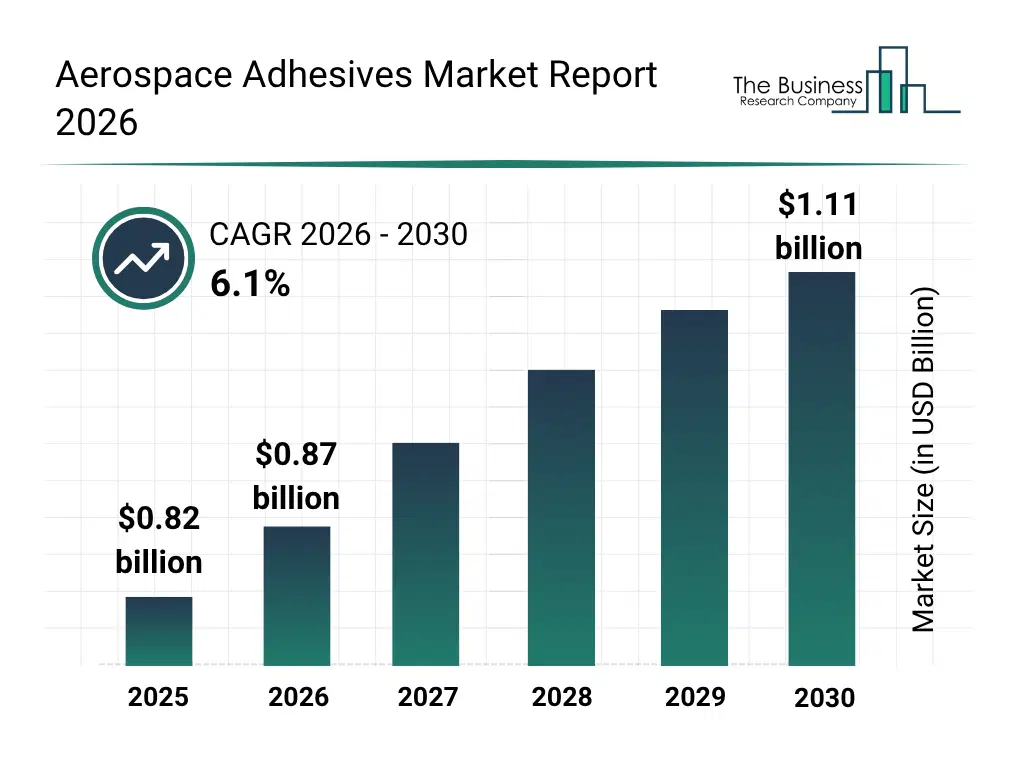
What Is The Aerospace Adhesives Market Size and Share 2026?
The aerospace adhesives market size has grown strongly in recent years. It will grow from $0.82 billion in 2025 to $0.87 billion in 2026 at a compound annual growth rate (CAGR) of 6.5%. The growth in the historic period can be attributed to increasing aerospace aircraft production, growing use of composite materials in aircraft, rising demand for lightweight aircraft structures, increasing aircraft maintenance repair and overhaul activities, growing adoption of adhesive bonding in aerospace assembly.What Is The Aerospace Adhesives Market Growth Forecast?
The aerospace adhesives market size is expected to see strong growth in the next few years. It will grow to $1.11 billion in 2030 at a compound annual growth rate (CAGR) of 6.1%. The growth in the forecast period can be attributed to expansion of commercial aviation fleets, increasing production of next-generation aircraft, rising demand for fuel-efficient lightweight structures, growth in spacecraft and satellite manufacturing, increasing adoption of advanced composite aerospace components. Major trends in the forecast period include increasing adoption of lightweight adhesive bonding, growing demand for high-temperature resistant adhesives, rising use of toughened and impact-resistant adhesives, increasing adoption of faster-curing adhesive systems, growing use of adhesives for composite material repair.Tariff Impact On Aerospace Adhesives Market
Tariffs are impacting the aerospace adhesives market by increasing the cost of imported specialty chemicals, resin systems, additives, and aerospace-grade raw materials required for adhesive manufacturing and aerospace assembly. This is increasing production costs and may delay aircraft manufacturing and maintenance activities, particularly in regions dependent on imported specialty chemicals such as North America, Europe, and Asia-Pacific. Hardware- and material-intensive segments such as structural bonding and composite bonding are most affected due to their dependence on high-performance adhesive materials and imported inputs. However, tariffs are also encouraging domestic adhesive production, regional supplier diversification, and increased investment in local specialty chemical manufacturing, creating greater supply-chain resilience in the market.
Global Aerospace Adhesives Market Segmentation
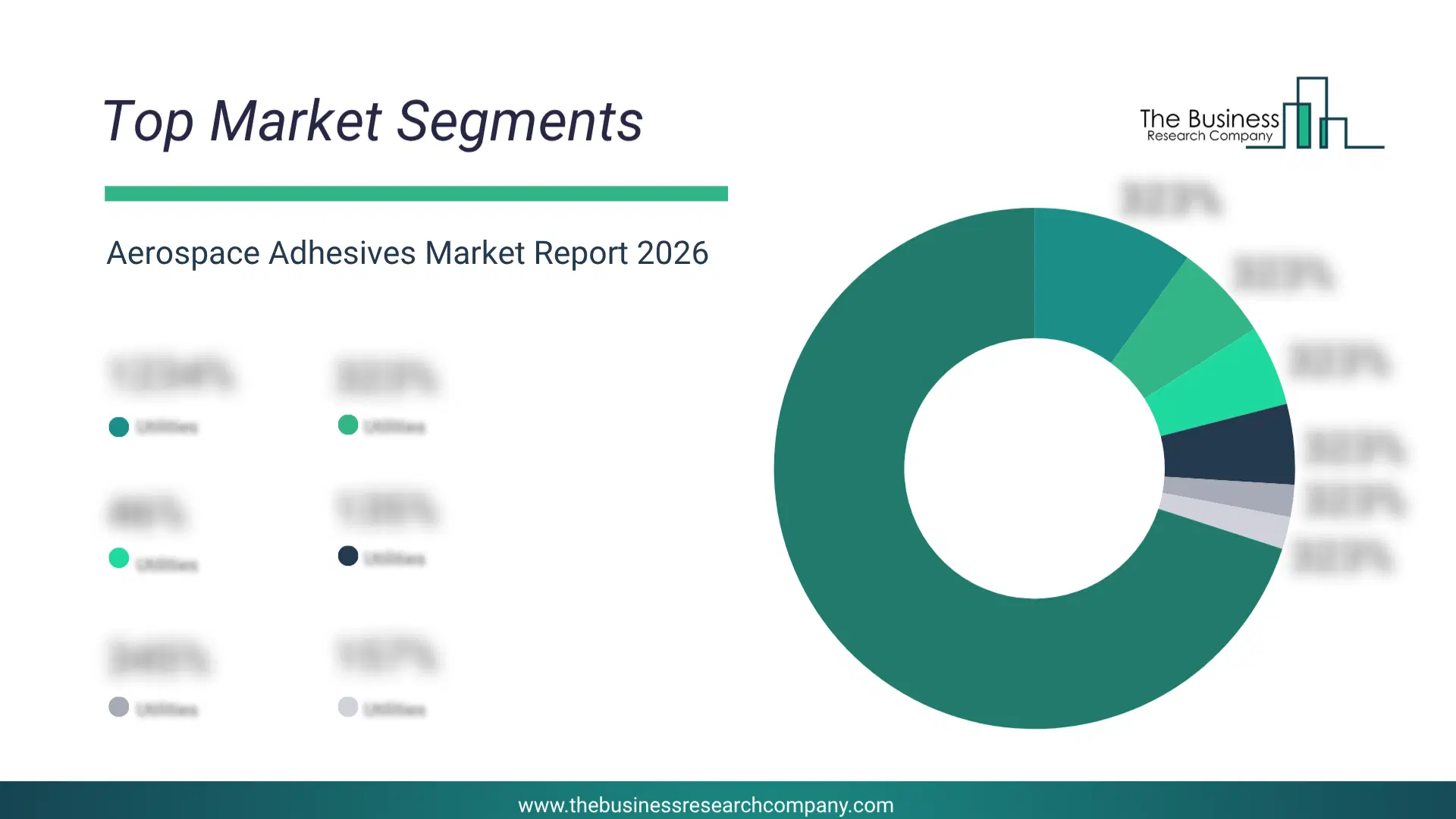
1) By Adhesive Type: Epoxy Adhesives, Polyurethane Adhesives, Acrylic Adhesives, Phenolic Adhesives, Other Adhesive Types 2) By Aircraft Type: Commercial Aircraft, Military Aircraft, General Aviation Aircraft, Helicopters, Spacecraft 3) By Technology: Water Based, Solvent Based, Reactive, Other Technologies 4) By Application: Structural Bonding, Non-Structural Bonding, Composite Bonding, Repair And Maintenance, Other Applications 5) By End-User: Aircraft Manufacturers, Maintenance Repair And Overhaul Providers, Aerospace Contractors, Military Organizations, Other End-Users Subsegments: 1) By Epoxy Adhesives: One Component Epoxy Adhesives, Two Component Epoxy Adhesives, Toughened Epoxy Adhesives, Film Epoxy Adhesives, Paste Epoxy Adhesives 2) By Polyurethane Adhesives: One Component Polyurethane Adhesives, Two Component Polyurethane Adhesives, Moisture Curing Polyurethane Adhesives, Structural Polyurethane Adhesives, Flexible Polyurethane Adhesives 3) By Acrylic Adhesives: Two Component Acrylic Adhesives, Modified Acrylic Adhesives, Structural Acrylic Adhesives, Impact Resistant Acrylic Adhesives, Fast Curing Acrylic Adhesives 4) By Phenolic Adhesives: Resol Phenolic Adhesives, Novolac Phenolic Adhesives, Heat Resistant Phenolic Adhesives, Structural Phenolic Adhesives, High Temperature Phenolic Adhesives 5) By Other Adhesive Types: Cyanate Ester Adhesives, Anaerobic Adhesives, Polychloroprene Adhesives, Polysulfide AdhesivesWhat Is The Driver Of The Aerospace Adhesives Market?
The increasing production of aircraft is expected to propel the growth of the aerospace adhesives market going forward. Aircraft production refers to the manufacturing and assembly of commercial, military, and general aviation aircraft to meet the growing demand for air transportation, fleet expansion, and modernization programs. Production of aircraft is rising due to increasing passenger air travel, as airlines are expanding their fleets to meet growing passenger demand, replace aging aircraft, and improve operational efficiency through the adoption of newer, fuel-efficient aircraft. Increasing aircraft production drives demand for aerospace adhesives by enabling efficient assembly of composite materials, reducing aircraft weight, improving structural integrity, and enhancing manufacturing efficiency compared to traditional mechanical fastening methods. For instance, in January 2026, according to Airbus, a France-based aerospace and aircraft manufacturer, the company delivered 793 commercial aircraft in 2025, compared with 766 aircraft in 2024, representing a 3.5% increase. Therefore, the increasing aircraft production is driving the growth of the aerospace adhesives industry.Key Players In The Global Aerospace Adhesives Market
Major companies operating in the aerospace adhesives market are Dow Inc., 3M Company, Henkel AG & Co. KGaA, Parker-Hannifin Corporation, PPG Industries Inc., Illinois Tool Works Inc., Sika AG, Arkema S.A., Mitsui Chemicals Inc., Syensqo SA, Huntsman Corporation, Nitto Denko Corporation, Daicel Corporation, H.B. Fuller Company, Hexcel Corporation, Gurit Holding AG, L&L Products Inc., ThreeBond Co. Ltd., DELO Industrie Klebstoffe GmbH & Co. KGaA, Dymax Corporation, Chemence Inc., Permabond LLC, Master Bond Inc., Parson Adhesives Inc.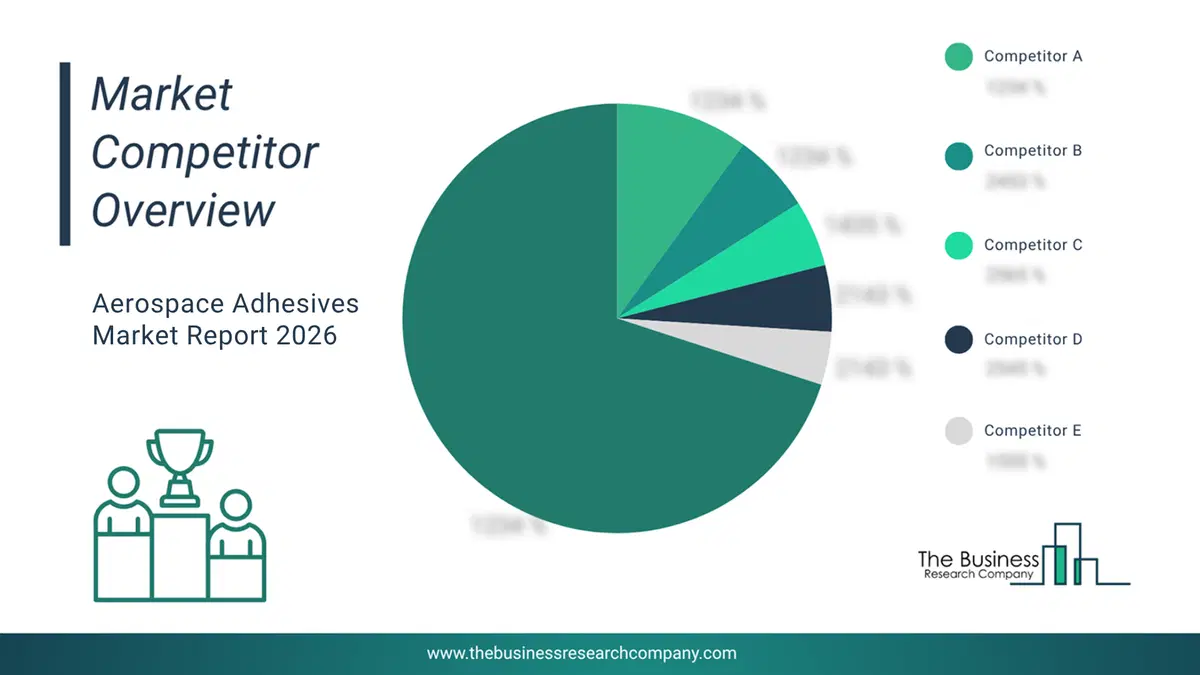
This chart is for illustrative purposes; the full report includes a detailed competitor analysis and comprehensive overview of the top 10 companies in the market.
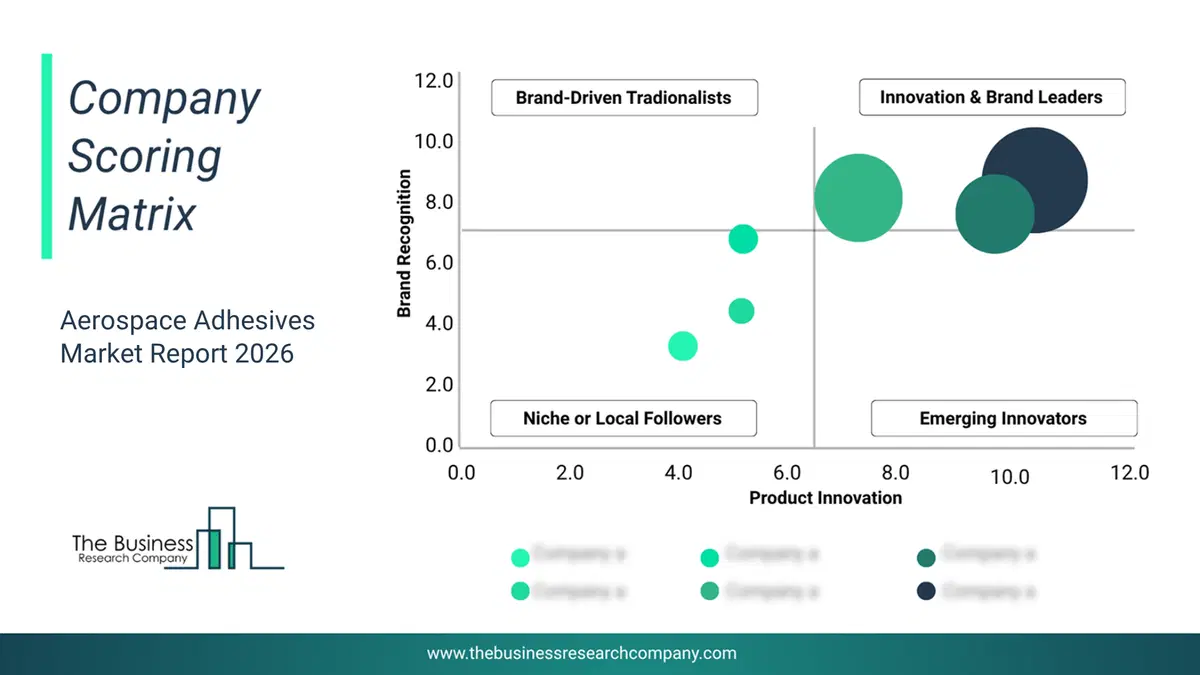
This chart maps companies by product innovation and brand strength, with bubble size indicating relative revenue, helping identify market leaders, challengers, and niche players. This is an illustrative chart; the full report provides a complete and accurate competitive analysis.
Global Aerospace Adhesives Market Trends and Insights
Major companies operating in the aerospace adhesives market are focusing on developing innovative products such as, light-curing adhesives, to enhance aerospace electronics reliability, manufacturing efficiency, and performance in extreme operating environments. Light-curing adhesives are advanced single-component bonding materials that use UV or visible light energy to rapidly cure and create strong, durable bonds, offering benefits such as low outgassing, dielectric stability, and high-temperature resistance compared with traditional multi-part epoxies and silicones. For instance, in January 2026, Intertronics, a UK-based adhesives specialist company, launched Dymax 9773, a National Aeronautics and Space Administration (NASA)-approved light-curing adhesive designed for aerospace and defence electronics applications. The adhesive is developed for ruggedising and staking critical electronic components onto printed circuit boards, combining low outgassing, dielectric stability, and rapid UV curing capabilities to meet high-reliability performance requirements. Dymax 9773 complies with ASTM E595 outgassing standards and is listed on NASA’s MAPTIS database, helping prevent contamination of sensitive aerospace optics and electronics in vacuum environments. The adhesive also meets MIL-STD-883 Method 5011 requirements, ensuring electrical insulation and stability after prolonged exposure to high temperatures, while its solvent-free, halogen-free, and RoHS-compliant formulation supports environmentally responsible aerospace manufacturing.What Are Latest Mergers And Acquisitions In The Aerospace Adhesives Market?
In June 2025, Syensqo, a Belgium-based advanced materials company that specializes in high-performance adhesive, composite, and specialty polymer materials, partnered with Terma to strengthen collaboration in aerospace and defense applications. Through this strategic collaboration agreement, Syensqo and Terma aim to develop a growth framework for joint initiatives, leverage their respective expertise and resources, and integrate Syensqo’s high-performance adhesive, composite, and specialty polymer materials into Terma’s systems to advance the adoption of advanced materials for challenging aerospace and defense applications. Terma is a Denmark-based aerospace and defense company that specializes in mission-critical systems and components, including composite component manufacturing.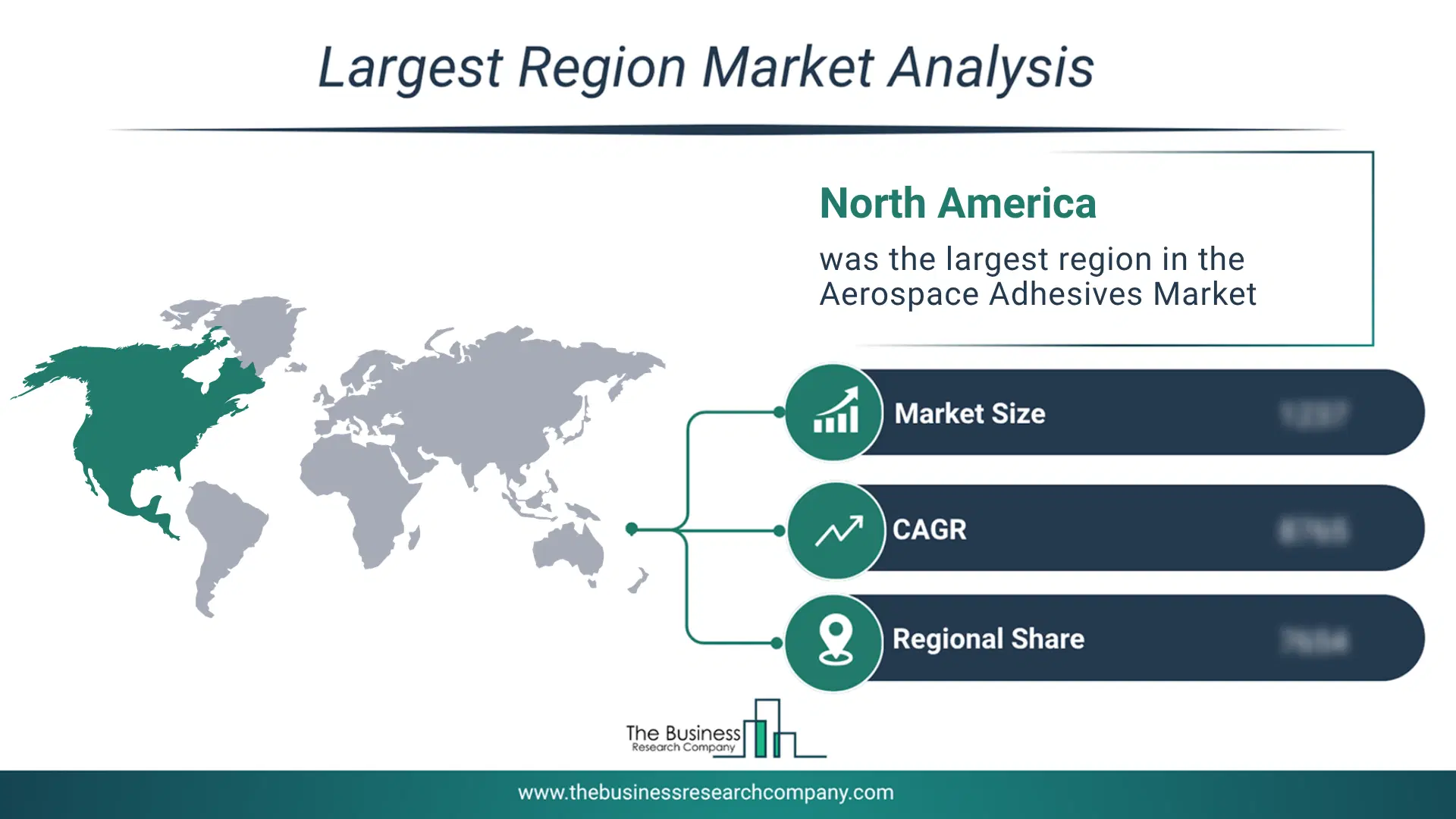
Regional Outlook
North America was the largest region in the aerospace adhesives market in 2025. Asia-Pacific is expected to be the fastest-growing region in the forecast period. The regions covered in this market report are Asia-Pacific, South East Asia, Western Europe, Eastern Europe, North America, South America, Middle East, Africa. The countries covered in this market report are Australia, Brazil, China, France, Germany, India, Indonesia, Japan, Taiwan, Russia, South Korea, UK, USA, Canada, Italy, Spain.What Defines the Aerospace Adhesives Market?
The aerospace adhesives market consists of sales of epoxy adhesives, polyurethane adhesives, acrylic adhesives, silicone adhesives, cyanoacrylate adhesives, polysulfide adhesives, polyimide adhesives, and other specialty aerospace bonding adhesives. Values in this market are ‘factory gate’ values, that is, the value of goods sold by the manufacturers or creators of the goods, whether to other entities (including downstream manufacturers, wholesalers, distributors, and retailers) or directly to end customers. The value of goods in this market includes related services sold by the creators of the goods.How is Market Value Defined and Measured?
The market value is defined as the revenues that enterprises gain from the sale of goods and/or services within the specified market and geography through sales, grants, or donations in terms of the currency (in USD unless otherwise specified). The revenues for a specified geography are consumption values that are revenues generated by organizations in the specified geography within the market, irrespective of where they are produced. It does not include revenues from resales along the supply chain, either further along the supply chain or as part of other products.
This chart presents market attractiveness based on a quantitative evaluation of growth, competition, strategic alignment, and risk, offering a clear view of opportunity areas for decision-making. This chart is for illustrative purposes; the full report contains the complete analysis.

This chart highlights the Total Addressable Market (TAM) by estimating the maximum revenue opportunity using an assumption-driven approach, supporting strategic planning and opportunity sizing across markets. The chart is illustrative; the full report provides a more comprehensive analysis.
What Key Data and Analysis Are Included in the Aerospace Adhesives Market Report 2026?
The aerospace adhesives market research report is one of a series of new reports from The Business Research Company that provides market statistics, including industry global market size, regional shares, competitors with the market share, detailed market segments, market trends and opportunities, and any further data you may need to thrive in the aerospace adhesives industry. The market research report delivers a complete perspective of everything you need, with an in-depth analysis of the current and future state of the industry.Aerospace Adhesives Market Report Forecast Analysis
| Report Attribute | Details |
|---|---|
| Market Size Value In 2026 | $0.87 billion |
| Revenue Forecast In 2030 | $1.11 billion |
| Growth Rate | CAGR of 6.1% from 2026 to 2030 |
| Base Year For Estimation | 2025 |
| Actual Estimates/Historical Data | 2020-2025 |
| Forecast Period | 2026 - 2030 |
| Market Representation | Revenue in USD Billion and CAGR from 2026 to 2030 |
| Segments Covered | Adhesive Type, Aircraft Type, Technology, Application, End-User |
| Regional Scope | Asia-Pacific, Western Europe, Eastern Europe, North America, South America, Middle East, Africa |
| Country Scope | The countries covered in the report are Australia, Brazil, China, France, Germany, India, Indonesia, Japan, Taiwan, Russia, South Korea, UK, USA, Canada, Italy, Spain. |
| Key Companies Profiled | Dow Inc., 3M Company, Henkel AG & Co. KGaA, Parker-Hannifin Corporation, PPG Industries Inc., Illinois Tool Works Inc., Sika AG, Arkema S.A., Mitsui Chemicals Inc., Syensqo SA, Huntsman Corporation, Nitto Denko Corporation, Daicel Corporation, H.B. Fuller Company, Hexcel Corporation, Gurit Holding AG, L&L Products Inc., ThreeBond Co. Ltd., DELO Industrie Klebstoffe GmbH & Co. KGaA, Dymax Corporation, Chemence Inc., Permabond LLC, Master Bond Inc., Parson Adhesives Inc. |
| Customization Scope | Request for Customization |
| Pricing And Purchase Options | Explore Purchase Options |