

Aerospace & Defense PCB Market Report 2026
Global Outlook – By Type ( Single Sided, Double Sided, Multilayer), By Design ( Rigid PCB, Flexible PCB, Rigid-Flex PCB, High-Density Interconnect), By Aircraft ( Narrow-Body Aircraft, Wide-Body Aircraft, Regional Aircraft, General Aviation, Helicopter, Military Aircraft, UAV, Spacecraft), By Application ( Radar Installations, Power Supplies, Power Conversion, Radio Communication, Lighting, Engine Control Systems, Other Applications) – Market Size, Trends, Strategies, and Forecast to 2030
Aerospace & Defense PCB Market Overview
• Aerospace & Defense PCB market size has reached to $1.36 billion in 2025 • Expected to grow to $1.59 billion in 2030 at a compound annual growth rate (CAGR) of 3.2% • Growth Driver: Unmanned Aerial Vehicles (UAVS) Surge Is A Catalyst For Growth In The Aerospace And Defense PCB Market • Market Trend: Advancing Domestic Microelectronics Manufacturing For National Security • North America was the largest region in 2025 and Asia-pacific is the fastest growing region.Market Gains By 2030 – Top Opportunities By Segment
Market Gain identifies the most promising market opportunities by highlighting the segments or products expected to generate the highest incremental revenue growth over the next five years.
What Is Covered Under Aerospace & Defense PCB Market?
Aerospace and defense printed circuit boards (PCB) are specialized circuit boards that are designed to be used in aerospace and defense applications. These PCBs are designed to meet the specific requirements and standards of the aerospace and defense industries. Aerospace and defense PCBs are used as flight control systems, communication systems, and navigation systems. The main aerospace & defense PCB types are single-sided, double-sided, and multilayer. A single-sided PCB is a type of PCB in which all components and traces are assembled on one side of the board. The various designs are rigid PCB, flexible PCB, rigid-flex PCB, and high-density interconnect that are used in various aircraft such as narrow-body aircraft, wide-body aircraft, regional aircraft, general aviation, helicopter, military aircraft, UAVs, and spacecraft. The various applications include radar installations, power supplies, power conversion, radio communication, lighting, engine control systems, and others.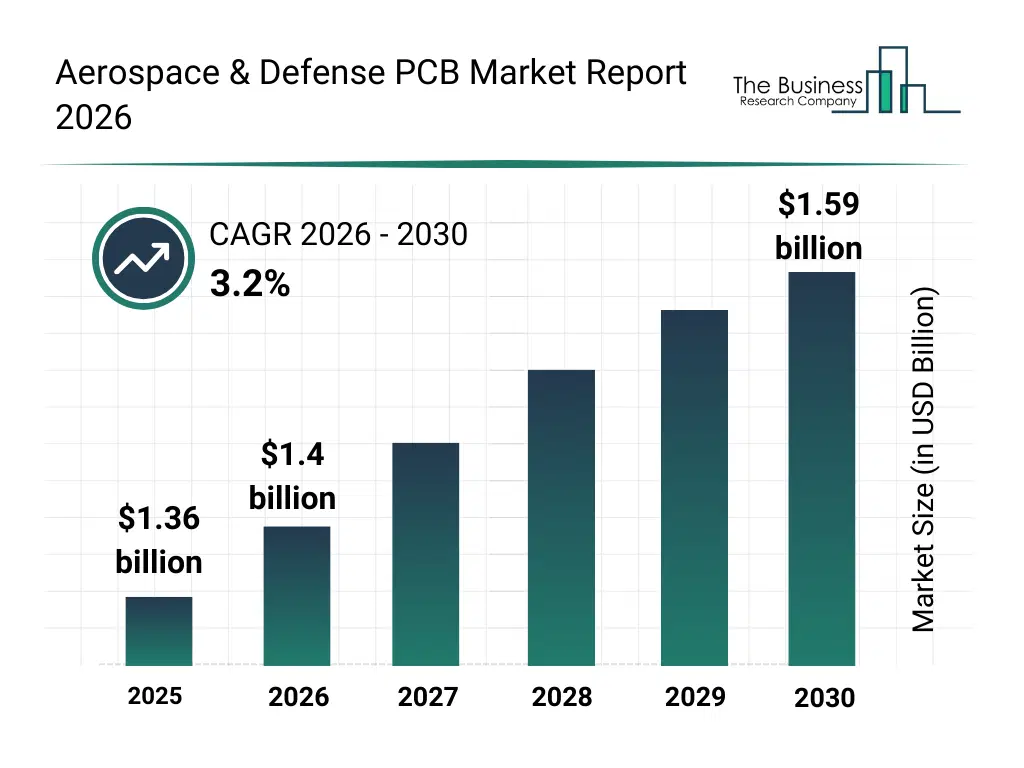
What Is The Aerospace & Defense PCB Market Size 2026 And Growth Rate?
The aerospace & defense pcb market size has grown steadily in recent years. It will grow from $1.36 billion in 2025 to $1.4 billion in 2026 at a compound annual growth rate (CAGR) of 3.0%. The growth in the historic period can be attributed to growth in traditional aerospace electronics manufacturing, increasing demand for ruggedized pcb materials, early adoption in military communication systems, expansion of radar and navigation electronics, development of multilayer pcb architectures.What Is The Aerospace & Defense PCB Market Growth Forecast?
The aerospace & defense pcb market size is expected to see steady growth in the next few years. It will grow to $1.59 billion in 2030 at a compound annual growth rate (CAGR) of 3.2%. The growth in the forecast period can be attributed to increasing production of next-generation aircraft, rising demand for lightweight high-density pcbs, expansion of space electronics manufacturing, growth in unmanned aerial vehicle platforms, adoption of advanced avionics and mission systems. Major trends in the forecast period include adoption of cybersecure high-reliability pcb architectures, expansion of advanced aerospace manufacturing systems, development of autonomous flight control electronics, integration of AI-enhanced mission-critical circuitry, advancement of IoT-connected avionics platforms.
Global Aerospace & Defense PCB Market Segmentation
1) By Type: Single Sided, Double Sided, Multilayer 2) By Design: Rigid PCB, Flexible PCB, Rigid-Flex PCB, High-Density Interconnect 3) By Aircraft: Narrow-Body Aircraft, Wide-Body Aircraft, Regional Aircraft, General Aviation, Helicopter, Military Aircraft, UAV, Spacecraft 4) By Application: Radar Installations, Power Supplies, Power Conversion, Radio Communication, Lighting, Engine Control Systems, Other Applications Subsegments: 1) By Single Sided: Standard Single-Sided PCBs, High-Frequency Single-Sided PCBs 2) By Double Sided: Standard Double-Sided PCBs, High-Density Double-Sided PCBs, Blind Or Buried Via Double-Sided PCBs 3) By Multilayer: 4-Layer PCBs, 6-Layer PCBs, 8-Layer PCBs and Above, High-Speed Multilayer PCBs The top segments in the aerospace & defense pcb market will be: • Multilayer will reach $959.24 Million by 2030. • Rigid PCB will reach $785.46 Million by 2030. • Commercial Aircraft will reach $717.01 Million by 2030. • Double Sided will reach $484.19 Million by 2030. • Radar Installations will reach $441.83 Million by 2030.What Is The Driver Of The Aerospace & Defense PCB Market?
The increasing demand for commercial and military UAVs is expected to propel the growth of the aerospace and defense PCB market going forward. Military unmanned aerial vehicles (UAVs), also known as military drones, are unmanned aerial vehicles designed and used by the military for a variety of purposes. These UAVs can be remotely piloted or fly autonomously using pre-programmed flight plans or artificial intelligence. Aerospace and defense PCBs are critical in the design and manufacture of military UAVs, allowing these advanced systems to operate safely and reliably in the most demanding environments and missions. For instance, in December 2022, according to Skykam Technical Inspections, a UK-based drone solutions company, the global drone market worth $43 billion in 2022, where personal drones are 94% of unit sales in the drone. Further, according to the Federal Aviation Administration, there were 855,860 registered drones in the United States in 2023 and therefore, the increasing demand for commercial and military UAVs is driving the growth of the aerospace and defense PCB market going forward.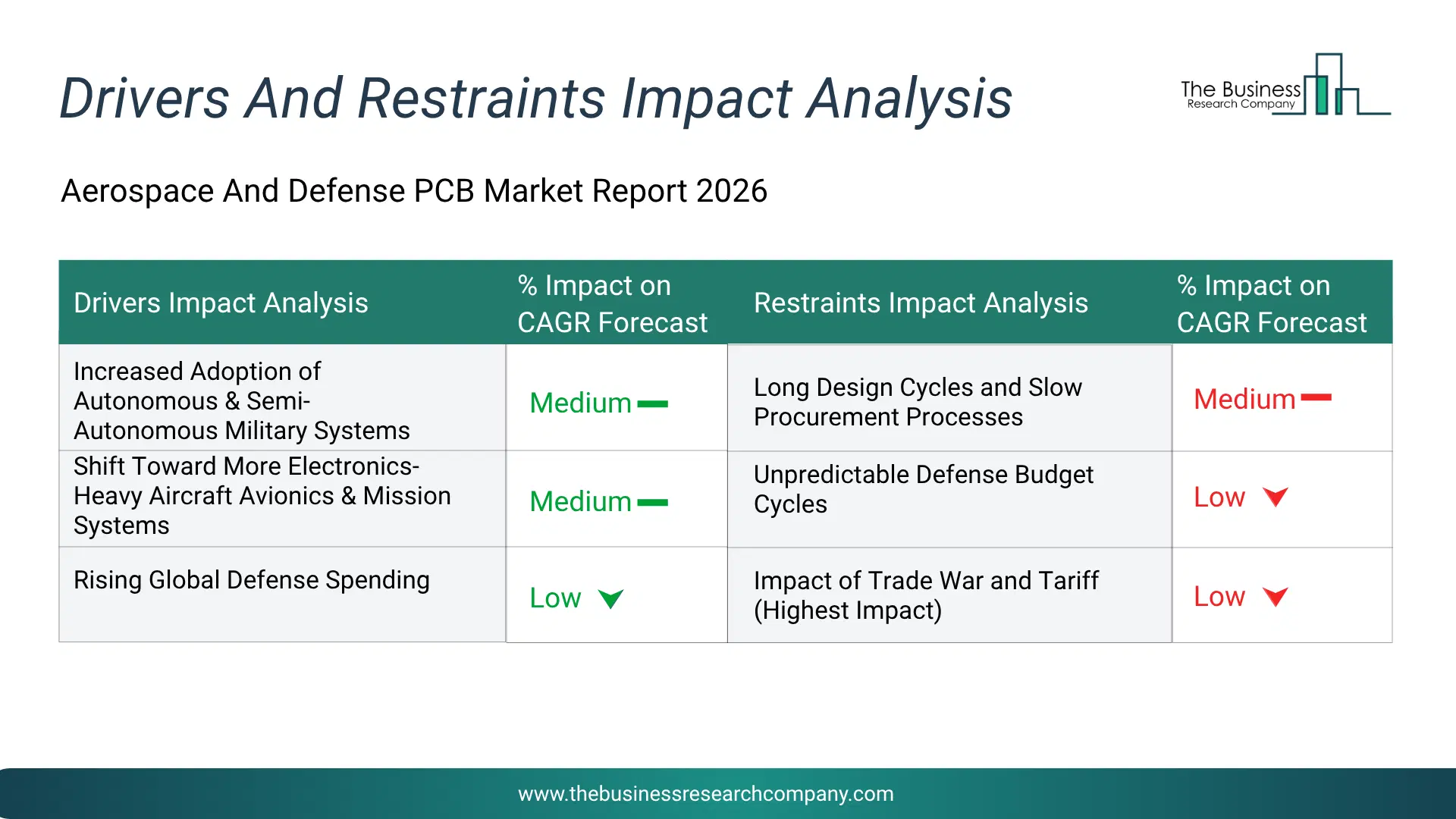
Infographic Chart Showing Key Market Drivers Analysis And Restraints For Aerospace & Defense Pcb Market
The chart presents an impact analysis of key drivers and restraints, quantifying their relative influence on the market's growth rate and helping assess the balance between growth enablers and limiting factors. This chart offers a high-level perspective; the full report contains more detailed insights.
How Will The Drivers Impact Growth In The Global Aerospace And Defense PCB Market?
• Increased Adoption of Autonomous & Semi-Autonomous Military Systems (Medium) – During the forecast period, the increased adoption of autonomous and semi-autonomous military systems will become a key driver of growth in the aerospace and defense pcb market by 2030. as defense forces around the world accelerate deployment of unmanned aerial vehicles (uavs), autonomous drones, robotics platforms and remotely operated weapon systems, demand will rise for high-reliability, high-performance electronic systems, including control units, sensor modules, communication subsystems and mission-critical computing hardware, all of which depend heavily on specialized printed circuit boards. these systems often require multilayer, ruggedized and high-density pcbs that can handle the demands of mobility, shielding, thermal stability, vibration resistance and long-term reliability under field conditions. as procurement of autonomous and semi-autonomous platforms grows, pcb manufacturers are likely to see increasing orders, leading to expanded production capacity and further innovation in defense-grade board technologies. as a result, the increased adoption of autonomous and semi-autonomous military systems is anticipated to contributing to a 1.5% annual growth in the market. • Shift Toward More Electronics-Heavy Aircraft Avionics & Mission Systems (Medium) – During the forecast period, the shift toward more electronics-heavy aircraft avionics and mission systems will emerge as a major factor driving the expansion of the aerospace and defense pcb market by 2030. as aircraft manufacturers increasingly integrate advanced avionics, digital flight controls, onboard communication, navigation systems, sensor arrays and mission-critical electronics into both military and commercial aircraft, there will be rising demand for high-density, high-reliability printed circuit boards to support these complex electronic architectures. these sophisticated avionics and mission systems require multilayer pcbs with high signal integrity, compact design, thermal and vibration resilience and long-term reliability, attributes that only advanced aerospace-grade pcbs can deliver. with aircraft systems becoming ever more electronics-centric, pcb suppliers can expect increasing orders for ruggedized, miniaturized and high-performance board solutions tailored for avionics and mission-critical applications. consequently, the shift toward more electronics-heavy aircraft avionics and mission systems is projected to contributing to a 1.3% annual growth in the market. • Rising Global Defense Spending (Low) – During the forecast period, the rising global burden of age-related multimorbidity will serve as a key growth catalyst for the market by 2030. as more people live longer, the prevalence of multiple concurrent chronic conditions increases, driving urgent demand for therapies that can slow biological ageing and improve overall health span. the growing incidence of age-related diseases and functional decline will push individuals and healthcare systems to seek comprehensive anti-senescence solutions. this expanding health burden ensures that demand for longevity therapies rises steadily, fueling further growth in the longevity and anti-senescence therapy market. therefore, this rising global burden of age-related multimorbidity is projected to supporting to a 0.8% annual growth in the market. • Miniaturization of Military Electronics (Low) – During the forecast period, the miniaturization of military electronics will propel the growth of the aerospace and defense PCB market. Modern defense systems increasingly require compact, lightweight and high-performance electronic architectures to support next-generation missions across air, land, sea and space. Miniaturized electronics enable greater payload efficiency, improved mission flexibility and reduced power consumption, all of which are essential for platforms such as small satellites, UAVs, precision-guided munitions and advanced communication systems. Moreover, miniaturization enhances system resilience and allows for modular designs that can be easily upgraded or reconfigured based on mission needs. As military programs continue shifting toward compact, high-density electronics to support evolving defense requirements, the demand for advanced, reliable and space-efficient PCB solutions will increase correspondingly. The miniaturization of military electronics growth contribution during the forecast period in 2025 is 0.8%.How Will The Restraints Impact Growth In The Global Aerospace And Defense PCB Market?
• Long Design Cycles and Slow Procurement Processes (Medium) – During the forecast period, long design cycles and slow procurement processes are restricting the growth of the aerospace and defense pcb market during the forecast period. extended development timelines, rigorous testing protocols and bureaucratic approval chains for defense electronics lead to delays in awarding contracts and finalizing orders for new pcbs. as a result, even when demand for advanced avionics, communication systems and mission-critical boards rises, manufacturers face uncertainty and slow turnover, which discourages rapid production ramp-up. this sluggish procurement rhythm tends to postpone or reduce orders for multilayer, high-reliability pcbs, thereby constraining growth in the aerospace and defense pcb market. growth affected by long design cycles and slow procurement processes across regions during the forecast period in 2025 is -1.5%. • Unpredictable Defense Budget Cycles (Medium) – During the forecast period, unpredictable defense budget cycles are restricting the growth of the aerospace and defense pcb market during the forecast period. fluctuating annual budget allocations, shifting priorities and delays in funding approvals lead to uncertainty for defense contractors and pcb manufacturers, discouraging long-term investment and capacity expansion. as a result, orders for high-performance multilayer and high-reliability pcbs may be postponed or reduced when budgets are cut or delayed, even if demand from modernization programs remains. this unpredictability in fiscal planning undermines stability in pcb supply chains and constrains the growth prospects of the aerospace and defense pcb market. growth affected by unpredictable defense budget cycles across regions during the forecast period in 2025 is -1.0% • Impact of Trade War and Tariff (Highest Impact) (Low) – During the forecast period, impact of trade wars and tariff pressures is restricting the growth of the aerospace and defense pcb market during the forecast period. heightened tariffs on critical electronic components, raw materials and pcb manufacturing inputs increase costs for producers and can cause delays in supply, undermining project budgets and timelines. trade tensions and import-export restrictions also create uncertainty in procurement planning for defense contractors relying on a global supply chain. as a result, aerospace and defense manufacturers may postpone or scale back orders for multilayer, high-reliability pcbs, slowing expansion of the pcb market despite rising demand for advanced military electronics. growth affected by trade war and tariffs across regions during the forecast period in 2025 is -0.2%.Key Players In The Global Aerospace & Defense PCB Market
Major companies operating in the aerospace & defense pcb market are Epec Engineered Technologies LLC, Amitron Corporation, Corintech Ltd., Delta Circuits Inc., Advanced Circuits, Advanced Circuits Inc., SCHMID Group, Technotronix, Surface Mount Technology Centre Corporation, Sanmina Corporation, IEC Electronics Corporation, Firan Technology Group Corporation, Amphenol Printed Circuits Inc., Unimicron Technology Corporation, Mer-Mar Electronics, Coat-X AG, IDEAS Engineering & Technology, Q-FLEX Industries, Rogers Corporation, Isola Group, Park Electrochemical Corp., Ventec International Group, Arlon Electronic Materials, Taconic Advanced Dielectric Division, Wurth Electronics Midcom Inc., Cirexx International, Multilayer Prototypes Inc., Sierra Circuits Inc., Sunstone Circuits, Bittele Electronics Inc.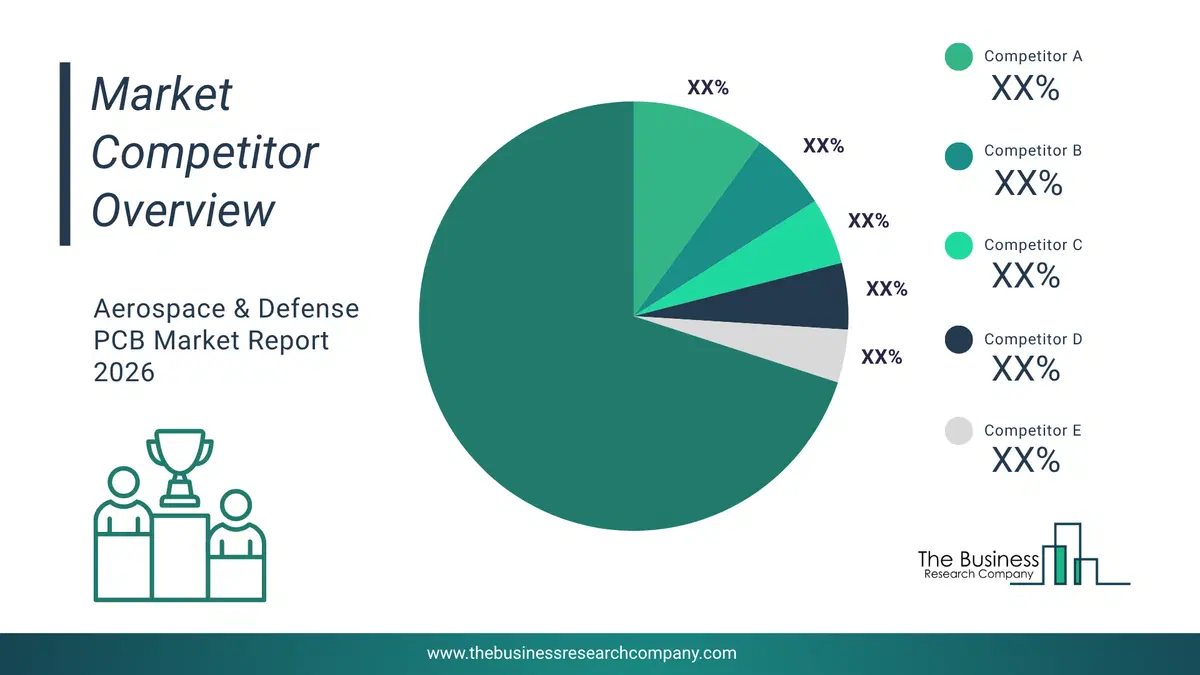
This chart is for illustrative purposes; the full report includes a detailed competitor analysis and comprehensive overview of the top 10 companies in the market.
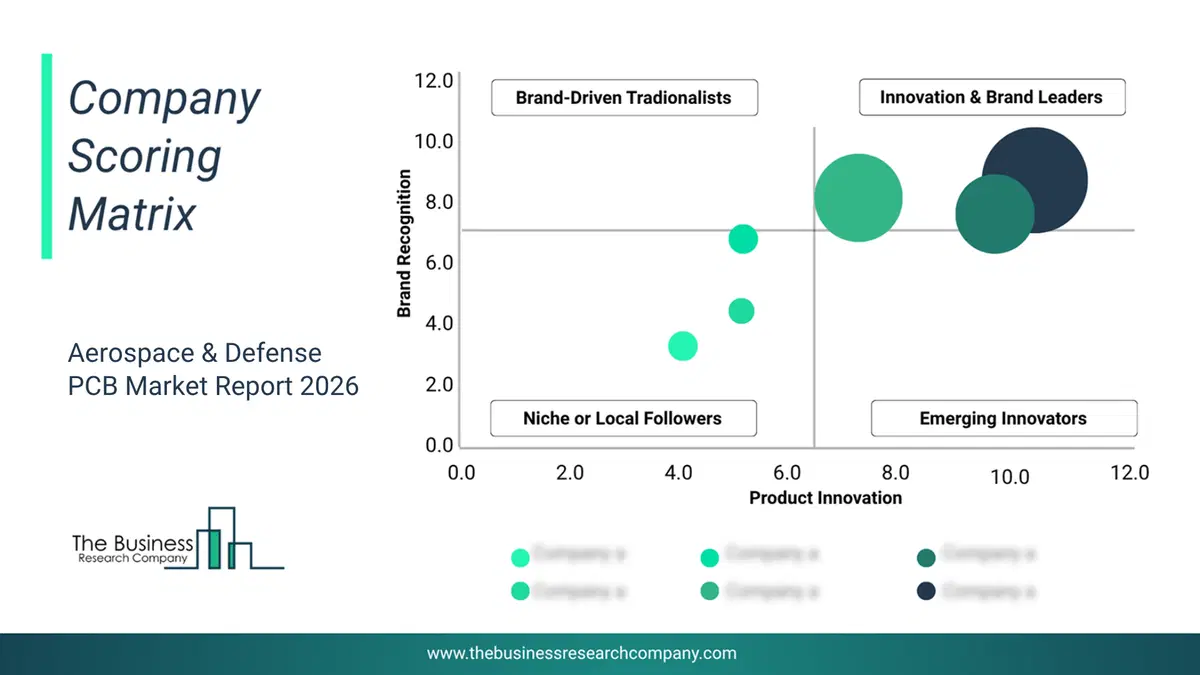
This chart maps companies by product innovation and brand strength, with bubble size indicating relative revenue, helping identify market leaders, challengers, and niche players. This is an illustrative chart; the full report provides a complete and accurate competitive analysis.
Global Aerospace & Defense PCB Market Trends and Insights
Major companies operating in the aerospace and defense PCB market are focusing on reshoring advanced microelectronics and expanding domestic ultra-HDI (high density interconnect) production to strengthen supply-chain resilience and meet national security needs. Ultra-HDI PCBs are extremely high-density circuit boards that enable compact, high-performance electronic systems used in mission-critical aerospace and defense applications by supporting greater routing density, higher signal integrity, and more complex multi-layer assemblies. For instance, in November 2023, TTM Technologies, a US-based PCB manufacturer, announced it had selected Central New York (Syracuse) for a proposed greenfield facility to produce ultra-HDI PCBs in support of national security requirements. It is projected to create around 400 new manufacturing and engineering jobs and will be located next to TTM’s existing 160,000-square-foot RF/microwave and microelectronics campus in Syracuse, New York. It aims to establish the most advanced PCB manufacturing capability in North America, reducing lead times and boosting domestic capacity for ultra-HDI PCBs. Additionally, the new site is designed to be TTM’s most sustainable facility in the region, supporting the expansion of the U.S. aerospace and defense microelectronics ecosystem.What Are Latest Mergers And Acquisitions In The Aerospace & Defense PCB Market?
In April 2023, Firan Technology Group Corporation (FTG), a Canada-based aerospace and defense electronics supplier, acquired Holaday Circuits and IMI Inc. for $27 million. Through this acquisition, FTG aims to expand its U.S. manufacturing capacity for RF and high-technology circuit boards and strengthen its presence in the aerospace and defense PCB market. Holaday Circuits and IMI Inc. are US-based manufacturer of aerospace and defense PCBs.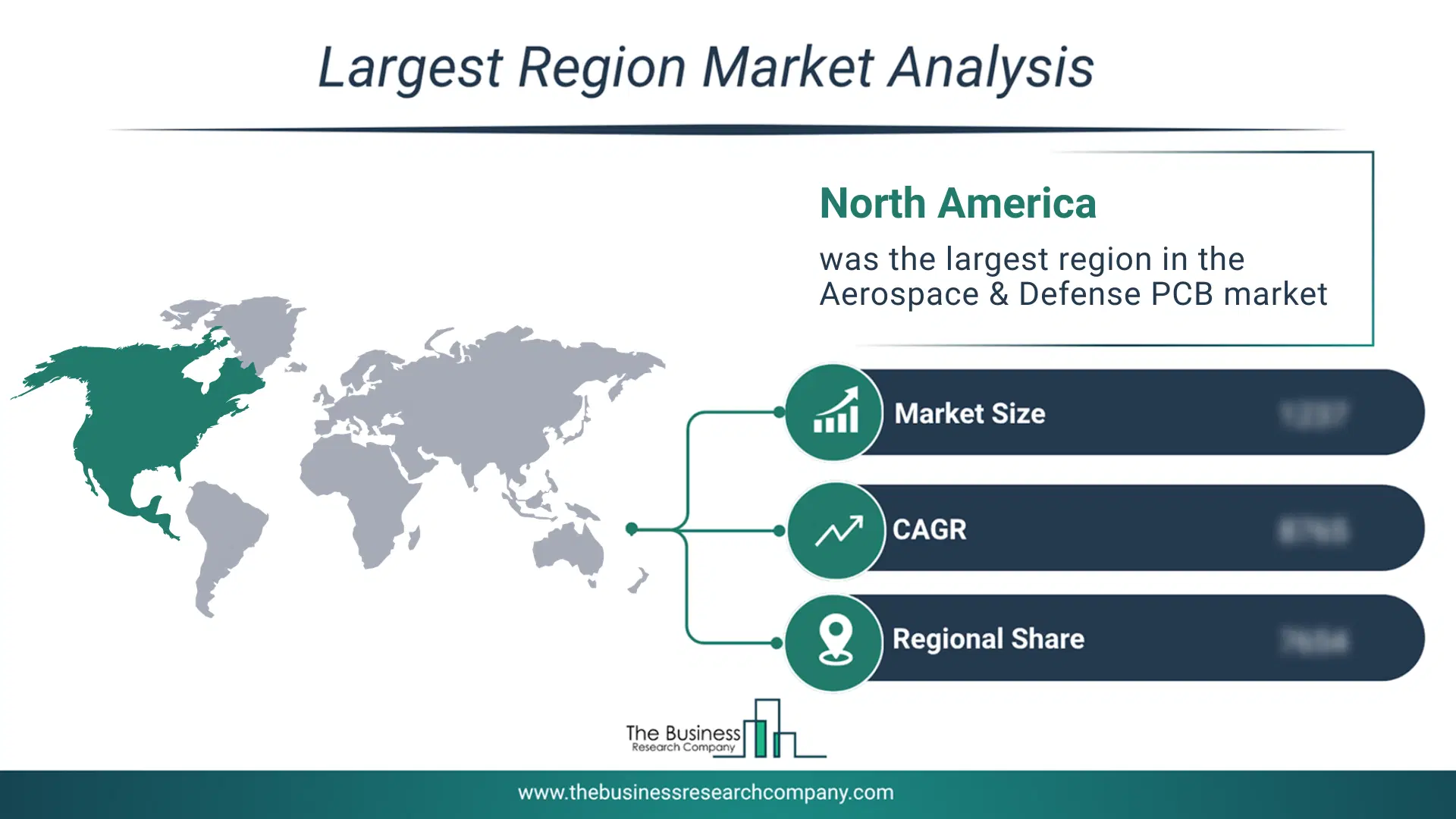
Regional Outlook
North America was the largest region in the aerospace & defense PCB market in 2025. Asia-pacific is expected to be the fastest-growing region in the aerospace and defense PCB market report forecast period. The regions covered in this market report are Asia-Pacific, South East Asia, Western Europe, Eastern Europe, North America, South America, Middle East, Africa. The countries covered in this market report are Australia, Brazil, China, France, Germany, India, Indonesia, Japan, Taiwan, Russia, South Korea, UK, USA, Canada, Italy, Spain.What Defines the Aerospace & Defense PCB Market?
The aerospace and defense PCB market consists of sales of auxiliary power units for radar control systems, control tower systems, LED lighting systems, jet instrumentation, and jamming systems. Values in this market are ‘factory gate’ values, that is the value of goods sold by the manufacturers or creators of the goods, whether to other entities (including downstream manufacturers, wholesalers, distributors and retailers) or directly to end customers. The value of goods in this market includes related services sold by the creators of the goods.How is Market Value Defined and Measured?
The market value is defined as the revenues that enterprises gain from the sale of goods and/or services within the specified market and geography through sales, grants, or donations in terms of the currency (in USD unless otherwise specified). The revenues for a specified geography are consumption values that are revenues generated by organizations in the specified geography within the market, irrespective of where they are produced. It does not include revenues from resales along the supply chain, either further along the supply chain or as part of other products.
This chart presents market attractiveness based on a quantitative evaluation of growth, competition, strategic alignment, and risk, offering a clear view of opportunity areas for decision-making. This chart is for illustrative purposes; the full report contains the complete analysis.

This chart highlights the Total Addressable Market (TAM) by estimating the maximum revenue opportunity using an assumption-driven approach, supporting strategic planning and opportunity sizing across markets. The chart is illustrative; the full report provides a more comprehensive analysis.
What Key Data and Analysis Are Included in the Aerospace & Defense PCB Market Report 2026?
The aerospace & defense pcb market research report is one of a series of new reports from The Business Research Company that provides market statistics, including industry global market size, regional shares, competitors with the market share, detailed market segments, market trends and opportunities, and any further data you may need to thrive in the aerospace & defense pcb industry. The market research report delivers a complete perspective of everything you need, with an in-depth analysis of the current and future state of the industry.Aerospace & Defense PCB Market Report 2026 Market Report Forecast Analysis
| Report Attribute | Details |
|---|---|
| Market Size Value In 2026 | $1.4 billion |
| Revenue Forecast In 2030 | $1.59 billion |
| Growth Rate | CAGR of 3.0% from 2026 to 2030 |
| Base Year For Estimation | 2025 |
| Actual Estimates/Historical Data | 2020-2025 |
| Forecast Period | 2026 - 2030 - 2035 |
| Market Representation | Revenue in USD Billion and CAGR from 2026 to 2030 |
| Segments Covered | Type, Design, Aircraft, Application |
| Regional Scope | Asia-Pacific, Western Europe, Eastern Europe, North America, South America, Middle East, Africa |
| Country Scope | The countries covered in the report are Australia, Brazil, China, France, Germany, India, Indonesia, Japan, Taiwan, Russia, South Korea, UK, USA, Canada, Italy, Spain. |
| Key Companies Profiled | Epec Engineered Technologies LLC, Amitron Corporation, Corintech Ltd., Delta Circuits Inc., Advanced Circuits, Advanced Circuits Inc., SCHMID Group, Technotronix, Surface Mount Technology Centre Corporation, Sanmina Corporation, IEC Electronics Corporation, Firan Technology Group Corporation, Amphenol Printed Circuits Inc., Unimicron Technology Corporation, Mer-Mar Electronics, Coat-X AG, IDEAS Engineering & Technology, Q-FLEX Industries, Rogers Corporation, Isola Group, Park Electrochemical Corp., Ventec International Group, Arlon Electronic Materials, Taconic Advanced Dielectric Division, Wurth Electronics Midcom Inc., Cirexx International, Multilayer Prototypes Inc., Sierra Circuits Inc., Sunstone Circuits, Bittele Electronics Inc. |
| Customization Scope | Request for Customization |
| Pricing And Purchase Options | Explore Purchase Options |