
Aerospace Artificial Intelligence Market Report 2026
Global Outlook – By Offering (Software, Hardware, Services), By Technology (Machine Learning, Natural Language Processing, Computer Vision, Context Awareness Computing), By Application (Customer Service, Smart Maintenance, Manufacturing, Training, Flight Operations, Other Applications) – Market Size, Trends, Strategies, and Forecast to 2030
Aerospace Artificial Intelligence Market Overview
• Aerospace Artificial Intelligence market size has reached to $1.3 billion in 2025 • Expected to grow to $5.98 billion in 2030 at a compound annual growth rate (CAGR) of 35.6% • Growth Driver: Surging Air Travel Demand Fuels Growth In The Aerospace Artificial Intelligence Market • Market Trend: AI-Powered Engine Analysis Tool Revolutionizing Aircraft Engine Management For Efficient Pre- And Post-Lease Analysis • North America was the largest region in 2025 and Asia-Pacific is the fastest growing region.What Is Covered Under Aerospace Artificial Intelligence Market?
Aerospace artificial intelligence (AI) refers to artificial intelligence technology used to manage complexity, increase production, and solve disruptions in the aerospace industry. Aerospace artificial intelligence assists in aircraft maintenance, factory automation, fuel monitoring and efficiency, and aircraft design and manufacturing. The main offerings in aerospace artificial intelligence are software, hardware, and services. Software is a collection of commands, information, and applications used to run machines and perform certain functions, such as aircraft maintenance, product design, safety, and security management. Aerospace artificial intelligence technologies are categorized into machine learning, natural language processing, computer vision, and context awareness computing that are used in several applications such as customer service, smart maintenance, manufacturing, training, flight operations, and others.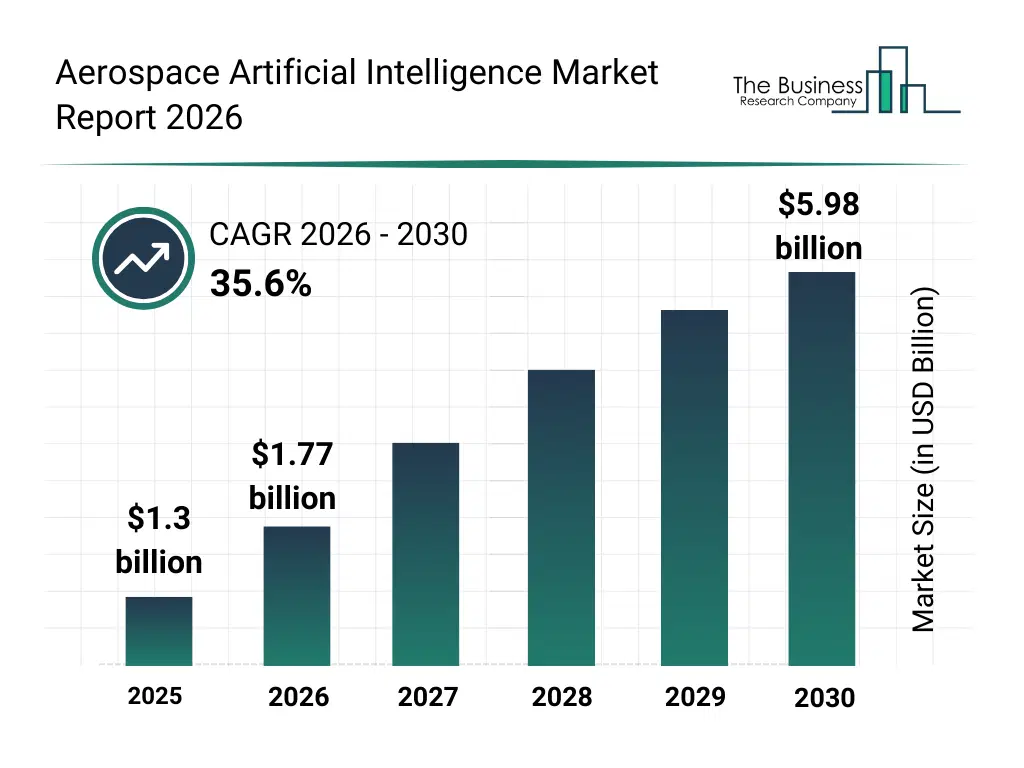
What Is The Aerospace Artificial Intelligence Market Size and Share 2026?
The aerospace artificial intelligence market size has grown exponentially in recent years. It will grow from $1.3 billion in 2025 to $1.77 billion in 2026 at a compound annual growth rate (CAGR) of 36.4%. The growth in the historic period can be attributed to adoption of AI in aircraft maintenance, implementation of factory automation systems, use of AI for fuel monitoring and efficiency, integration of cognitive cockpit systems, early deployment of AI in aircraft design and manufacturing.What Is The Aerospace Artificial Intelligence Market Growth Forecast?
The aerospace artificial intelligence market size is expected to see exponential growth in the next few years. It will grow to $5.98 billion in 2030 at a compound annual growth rate (CAGR) of 35.6%. The growth in the forecast period can be attributed to growth in predictive maintenance solutions, expansion of autonomous systems development, adoption of AI for real-time flight operations optimization, increasing use of AI-driven cybersecurity devices, development of advanced training and simulation services. Major trends in the forecast period include increasing adoption of ai-based predictive maintenance, growing use of intelligent flight operation optimization tools, rising deployment of ai-driven autonomous cockpit systems, expansion of ai applications in aviation training and simulation, advancements in ai-powered aerospace cybersecurity solutions.
Global Aerospace Artificial Intelligence Market Segmentation
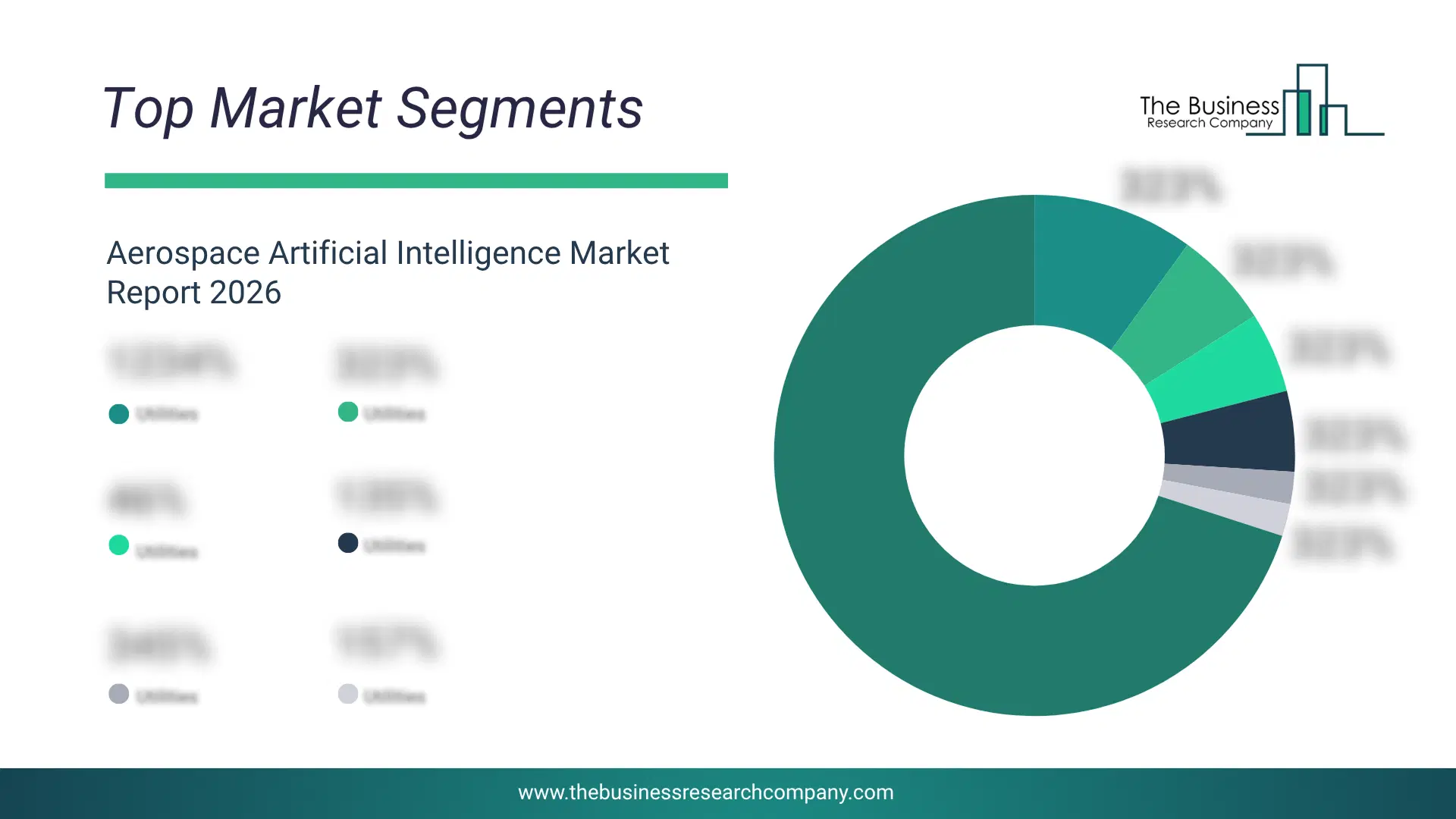
1) By Offering: Software, Hardware, Services 2) By Technology: Machine Learning, Natural Language Processing, Computer Vision, Context Awareness Computing 3) By Application: Customer Service, Smart Maintenance, Manufacturing, Training, Flight Operations, Other Applications Subsegments: 1) By Software: Predictive Maintenance Software, Flight Planning And Optimization Software, Autonomous Systems Software 2) By Hardware: AI-Enabled Sensors, Processing Units, Robotics And Automation Systems 3) By Services: Consulting Services, Integration And Implementation Services, Maintenance And Support ServicesWhat Is Driver Of The Aerospace Artificial Intelligence Market?
The growing demand for air travel is expected to propel the growth of the aerospace artificial intelligence market in the coming years. Air travel is the process of moving from one location to another utilizing flying objects such as aircraft, helicopters, air balloons, or any other kind of vehicle capable of continuous flight. Air travel integrates aerospace artificial intelligence to improve flight management, maintenance prediction, and autonomous systems in the aviation industry, therefore increasing safety, efficiency, and passenger experience. For instance, in November 2024, according to Eurostat, a Luxembourg-based statistical office of the European Union (EU), in 2023, air travel in the EU rose significantly, with 973 million passengers, marking a 19.3% increase compared to 2022. Therefore, the growing demand for air travel is driving the growth of the aerospace artificial intelligence market. Therefore, the growing demand for air travel is driving the aerospace artificial intelligence industry.Key Players In The Global Aerospace Artificial Intelligence Market
Major companies operating in the aerospace artificial intelligence market are Microsoft Corporation, Raytheon Technologies Corp., The Boeing Company, Lockheed Martin Corp., General Electric Company, Airbus S.A.S., International Business Machines Corporation (IBM), Intel Corporation, Northrop Grumman Corp., NVIDIA Corp., BAE Systems plc, Infosys Ltd., Thales Groups, L3Harris Technologies, Inc., Textron Systems, Dassault Systèmes SA, Embraer SA, Indra Sistemas SA, Kongsberg Gruppen, Honeywell Aerospace, Curtiss-Wright Corporation, Meggitt PLC, SITA, Kratos Defense & Security Solutions, AeroVironment, PAL Aerospace, Shield AI, Spark Cognition, Iris Automation Inc.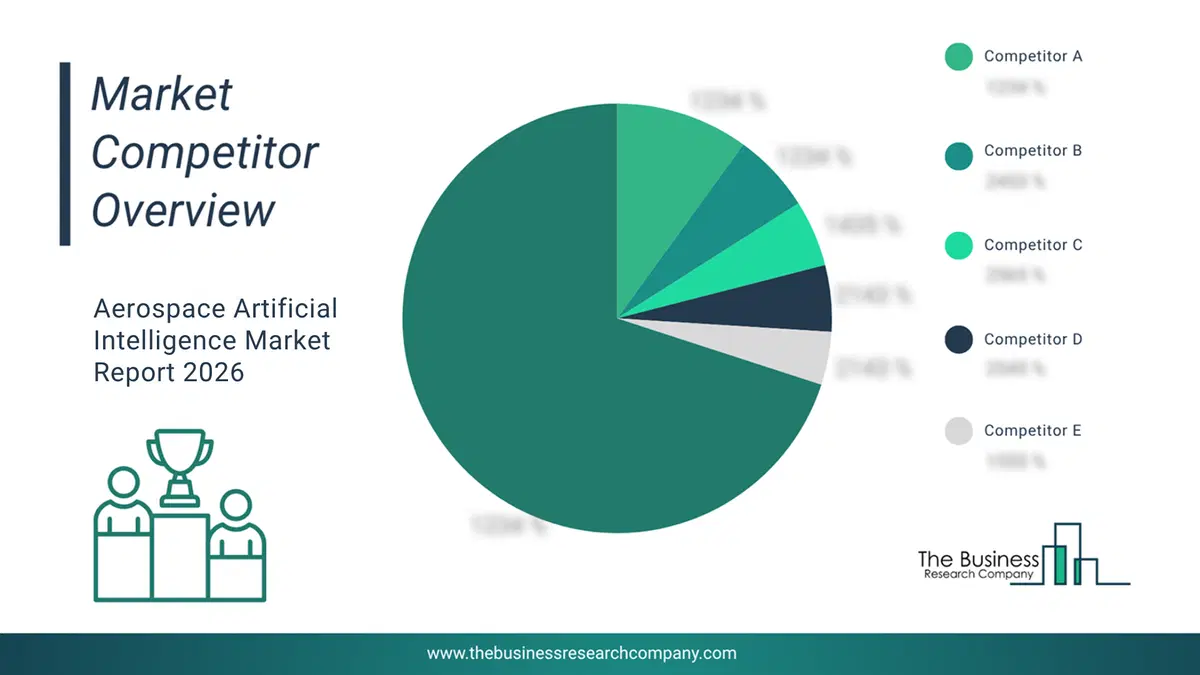
This chart is for illustrative purposes; the full report includes a detailed competitor analysis and comprehensive overview of the top 10 companies in the market.
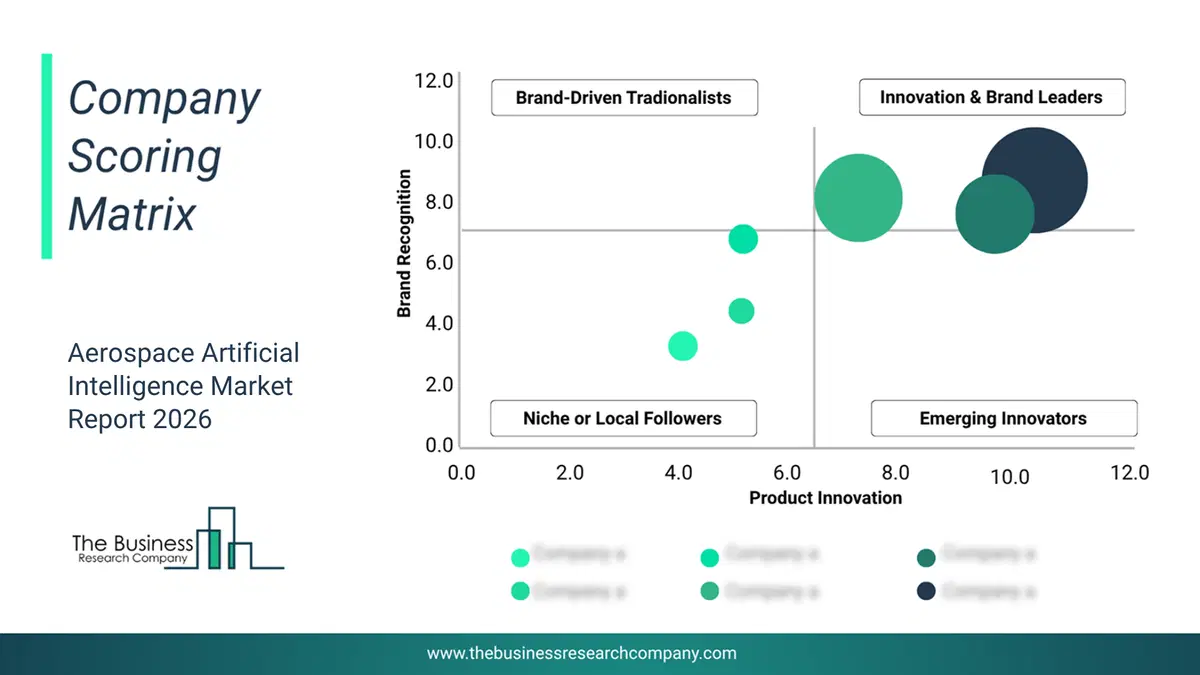
This chart maps companies by product innovation and brand strength, with bubble size indicating relative revenue, helping identify market leaders, challengers, and niche players. This is an illustrative chart; the full report provides a complete and accurate competitive analysis.
Global Aerospace Artificial Intelligence Market Trends and Insights
Major companies operating in the aerospace artificial intelligence market are focusing on strategic collaboration to provide reliable services to customers. A strategic collaboration is a partnership formed between two or more entities to achieve specific goals that would be difficult or impossible to reach individually. For instance, in June 2023, Pratt & Whitney, a US-based company manufacturing AI-based solutions for airplanes, collaborated with Awiros, an India-based artificial intelligence startup company, to launch Percept. Percept is an AI-based aircraft engine analysis tool that runs on the Awiros Video Intelligence Operating System (OS). Its cloud-based interface enables users to shoot pictures and videos of aircraft engines using their mobile devices while receiving real-time updates on their availability. This facilitates a faster and more cost-effective turnover of rented engine assets. Instead of having an inspector examine an engine and verify it part by component, Percept automates the examination, saving over 90% of the time.What Are Latest Mergers And Acquisitions In The Aerospace Artificial Intelligence Market? IFS Enhances Enterprise Cloud Software With Falkonry AI's Anomaly Detection Solutions
In August 2023, IFS AB, a Sweden-based provider of AI-driven enterprise cloud software for the aerospace sector, acquired Falkonry AI for an undisclosed amount. Through the acquisition, integrating Falkonry's self-learning anomaly detection solution to IFS's current enterprise simulation and AI-based scheduling and optimization capabilities demonstrates the company's aim of utilizing AI throughout to give end-to-end intelligent insights. Falkonry AI is a US-based provider of AI software for the aerospace sector.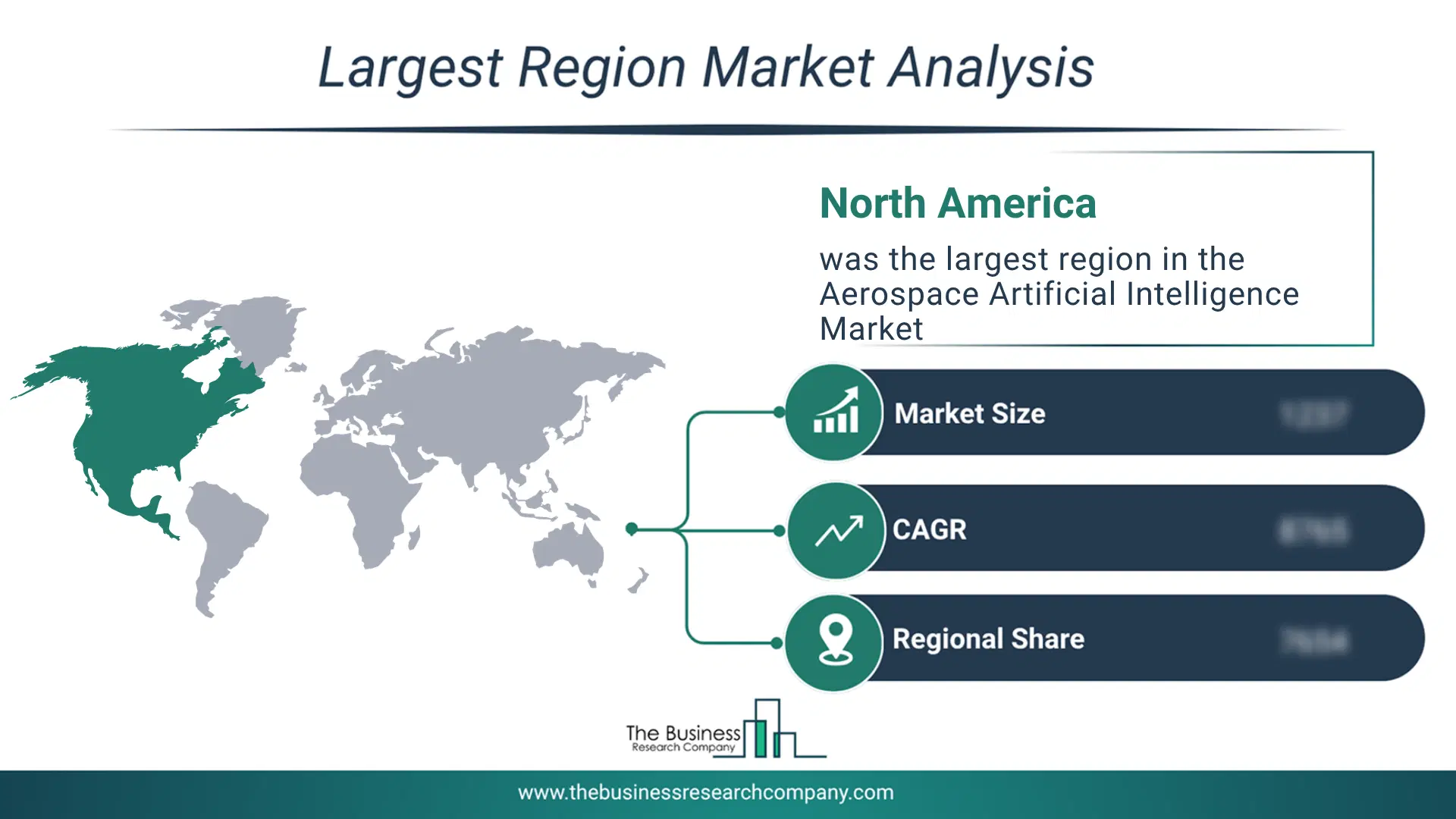
Regional Insights
North America was the largest region in the aerospace artificial intelligence market in 2025. Asia-Pacific is expected to be the fastest-growing region in the forecast period. The regions covered in this market report are Asia-Pacific, South East Asia, Western Europe, Eastern Europe, North America, South America, Middle East, Africa. The countries covered in this market report are Australia, Brazil, China, France, Germany, India, Indonesia, Japan, Taiwan, Russia, South Korea, UK, USA, Canada, Italy, SpainWhat Defines the Aerospace Artificial Intelligence Market?
The aerospace artificial intelligence market consists of revenues earned by entities by providing services such as autonomous systems development, cognitive cockpit development, predictive maintenance, training, and simulation services. The market value includes the value of related goods sold by the service provider or included within the service offering. The aerospace artificial intelligence market also includes sales of flight operations optimization devices, cybersecurity devices, and communication systems. Values in this market are ‘factory gate’ values, that is the value of goods sold by the manufacturers or creators of the goods, whether to other entities (including downstream manufacturers, wholesalers, distributors and retailers) or directly to end customers. The value of goods in this market includes related services sold by the creators of the goods.How is Market Value Defined and Measured?
The market value is defined as the revenues that enterprises gain from the sale of goods and/or services within the specified market and geography through sales, grants, or donations in terms of the currency (in USD unless otherwise specified). The revenues for a specified geography are consumption values that are revenues generated by organizations in the specified geography within the market, irrespective of where they are produced. It does not include revenues from resales along the supply chain, either further along the supply chain or as part of other products.
This chart presents market attractiveness based on a quantitative evaluation of growth, competition, strategic alignment, and risk, offering a clear view of opportunity areas for decision-making. This chart is for illustrative purposes; the full report contains the complete analysis.

This chart highlights the Total Addressable Market (TAM) by estimating the maximum revenue opportunity using an assumption-driven approach, supporting strategic planning and opportunity sizing across markets. The chart is illustrative; the full report provides a more comprehensive analysis.
What Key Data and Analysis Are Included in the Aerospace Artificial Intelligence Market Report 2026?
The aerospace artificial intelligence market research report is one of a series of new reports from The Business Research Company that provides market statistics, including industry global market size, regional shares, competitors with the market share, detailed market segments, market trends and opportunities, and any further data you may need to thrive in the aerospace artificial intelligence industry. The market research report delivers a complete perspective of everything you need, with an in-depth analysis of the current and future state of the industry.Aerospace Artificial Intelligence Market Report Forecast Analysis
| Report Attribute | Details |
|---|---|
| Market Size Value In 2026 | $1.77 billion |
| Revenue Forecast In 2030 | $5.98 billion |
| Growth Rate | CAGR of 35.6% from 2026 to 2030 |
| Base Year For Estimation | 2025 |
| Actual Estimates/Historical Data | 2020-2025 |
| Forecast Period | 2026 - 2030 |
| Market Representation | Revenue in USD Billion and CAGR from 2026 to 2030 |
| Segments Covered | Offering, Technology, Application |
| Regional Scope | Asia-Pacific, Western Europe, Eastern Europe, North America, South America, Middle East, Africa |
| Country Scope | The countries covered in the aerospace artificial intelligence market report are Australia, Brazil, China, France, Germany, India, Indonesia, Japan, Taiwan, Russia, South Korea, UK, USA, Canada, Italy, Spain |
| Key Companies Profiled | Microsoft Corporation, Raytheon Technologies Corp., The Boeing Company, Lockheed Martin Corp., General Electric Company, Airbus S.A.S., International Business Machines Corporation (IBM), Intel Corporation, Northrop Grumman Corp., NVIDIA Corp., BAE Systems plc, Infosys Ltd., Thales Groups, L3Harris Technologies, Inc., Textron Systems, Dassault Systèmes SA, Embraer SA, Indra Sistemas SA, Kongsberg Gruppen, Honeywell Aerospace, Curtiss-Wright Corporation, Meggitt PLC, SITA, Kratos Defense & Security Solutions, AeroVironment, PAL Aerospace, Shield AI, Spark Cognition, Iris Automation Inc. |
| Customization Scope | Request for Customization |
| Pricing And Purchase Options | Explore Purchase Options |