
Aerospace Sealants Market Report 2026
Global Outlook – By Resin (Polysulfide, Silicone, Fluorosilicone, Polyacrylate, Polyurethane, Polythioether, Other Resins), By Formulation Technology (Solvent-Based, Water-Based, Other Formulation Technologies), By Aircraft Type (Commercial Aircraft, Military Aircraft, General Aviation Aircraft, Helicopters, Unmanned Aerial Vehicles, Spacecraft And Launch Vehicles), By Application (Fuel Tank, Flight Line Repair, Aircraft Windshield And Canopy, Fuselage, Other Applications) – Market Size, Trends, Strategies, and Forecast to 2030
Aerospace Sealants Market Overview
• Aerospace Sealants market size has reached to $1.53 billion in 2025 • Expected to grow to $2 billion in 2030 at a compound annual growth rate (CAGR) of 5.5% • Growth Driver: Increasing Commercial Aircraft Deliveries Driving The Market Growth Due To Rising Demand For High-Performance Sealing Solutions • Market Trend: Innovation In Advanced Dry Sealant Technologies For Next-Generation Aircraft Manufacturing And Structural Performance • North America was the largest region in 2025 and Asia-Pacific is the fastest growing region.What Is Covered Under Aerospace Sealants Market?
Aerospace sealants refer to specialized materials designed to create durable, leak-proof barriers in aircraft and spacecraft structures and components. They prevent the passage of air, fuel, water, hydraulic fluids, and other contaminants while providing protection against corrosion, vibration, pressure fluctuations, and extreme environmental conditions. These materials are engineered to maintain structural integrity, improve operational reliability, and ensure long-term performance in demanding aerospace applications. The main resins of aerospace sealants include polysulfide, silicone, fluorosilicone, polyacrylate, polyurethane, polythioether, and other resins. Polysulfide refers to a resin-based sealant material known for its flexibility, chemical resistance, and durability in demanding aerospace sealing applications. These sealants are available in solvent-based, water-based, and other formulation technologies and are used across commercial aircraft, military aircraft, general aviation aircraft, helicopters, unmanned aerial vehicles, and spacecraft and launch vehicles. The various applications involved are fuel tanks, flight line repair, aircraft windshields and canopies, fuselages, and others.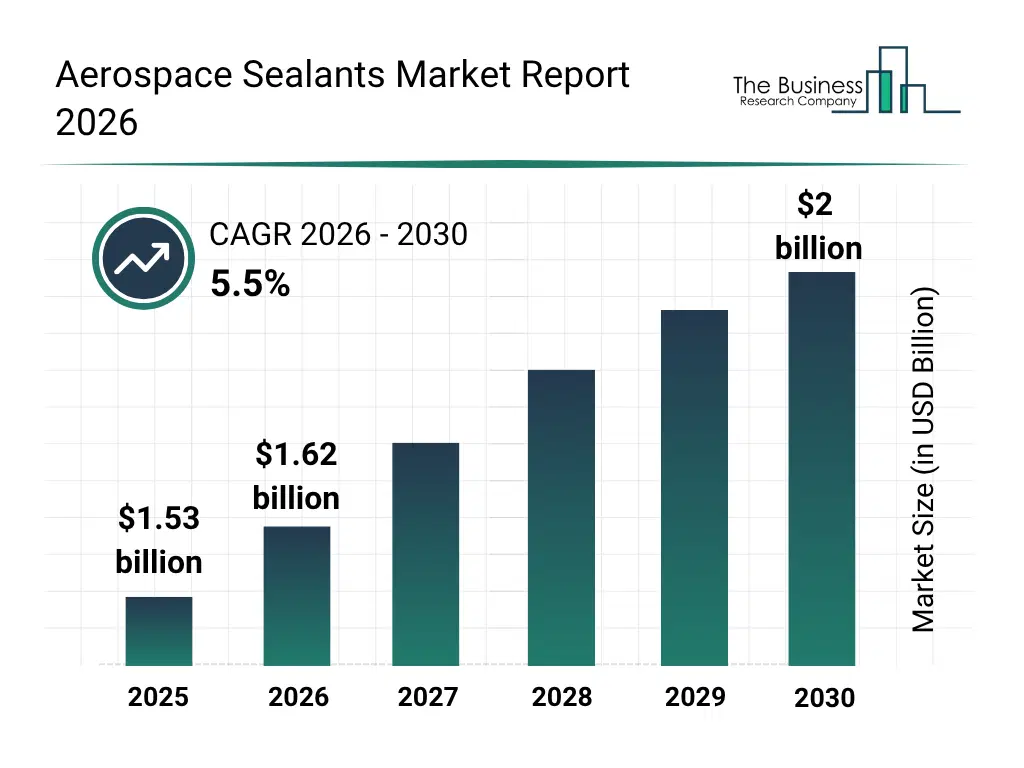
What Is The Aerospace Sealants Market Size and Share 2026?
The aerospace sealants market size has grown strongly in recent years. It will grow from $1.53 billion in 2025 to $1.62 billion in 2026 at a compound annual growth rate (CAGR) of 5.9%. The growth in the historic period can be attributed to increasing aircraft production, rising commercial air travel, growth in military aircraft procurement, expansion of aircraft maintenance and repair activities, increasing demand for fuel tank protection.What Is The Aerospace Sealants Market Growth Forecast?
The aerospace sealants market size is expected to see strong growth in the next few years. It will grow to $2 billion in 2030 at a compound annual growth rate (CAGR) of 5.5%. The growth in the forecast period can be attributed to growing demand for lightweight aerospace components, increasing spacecraft and launch vehicle production, rising adoption of next-generation aircraft, increasing use of unmanned aerial vehicles, growing demand for high-performance sealing solutions. Major trends in the forecast period include development of low-VOC and environmentally compliant sealants, rising adoption of fuel-resistant and chemically resistant sealants, increasing demand for rapid-curing aerospace sealants, development of lightweight and high-performance sealant formulations, growing use of advanced sealants for extreme-temperature applications.Tariff Impact On Aerospace Sealants Market
Tariffs are impacting the aerospace sealants market by increasing the cost of imported resins, specialty chemicals, additives, and aerospace-grade raw materials required for sealant production. This is raising manufacturing costs and potentially increasing prices for aerospace sealing solutions, particularly in North America, Europe, and Asia-Pacific, where aerospace supply chains rely on cross-border sourcing. Resin-intensive segments such as polysulfide, fluorosilicone, and polythioether sealants are most affected due to their dependence on specialized chemical inputs, while commercial aircraft and fuel tank applications face greater cost pressures. However, tariffs are also encouraging regional sourcing, domestic chemical production, supplier diversification, and localized manufacturing, strengthening long-term supply-chain resilience in the aerospace sealants market.
Global Aerospace Sealants Market Segmentation
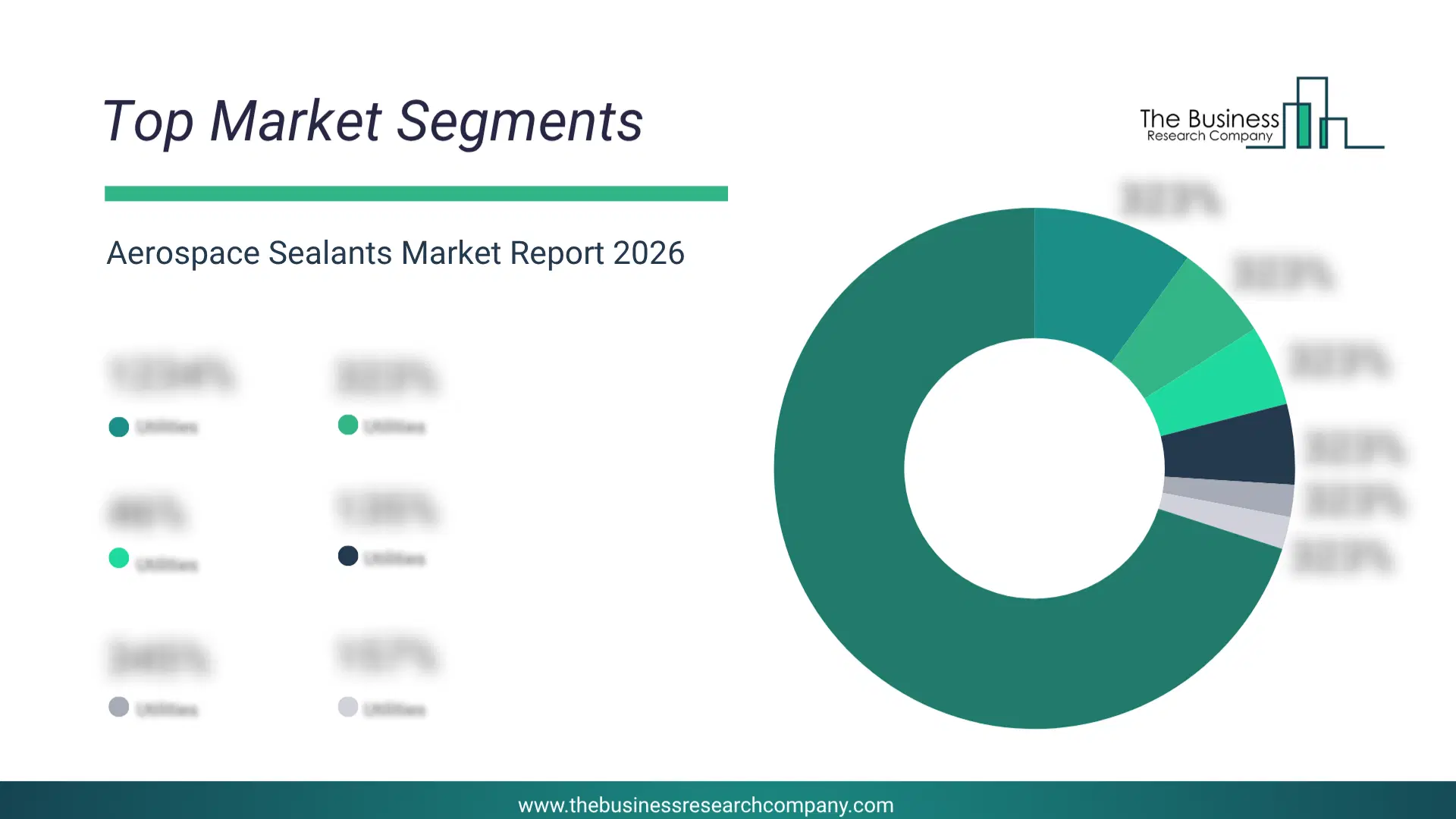
1) By Resin: Polysulfide, Silicone, Fluorosilicone, Polyacrylate, Polyurethane, Polythioether, Other Resins 2) By Formulation Technology: Solvent-Based, Water-Based, Other Formulation Technologies 3) By Aircraft Type: Commercial Aircraft, Military Aircraft, General Aviation Aircraft, Helicopters, Unmanned Aerial Vehicles, Spacecraft And Launch Vehicles 4) By Application: Fuel Tank, Flight Line Repair, Aircraft Windshield And Canopy, Fuselage, Other Applications Subsegments: 1) By Polysulfide: One-Part Polysulfide Sealants, Two-Part Polysulfide Sealants, Fuel Tank Grade Polysulfide Sealants, General Airframe Polysulfide Sealants 2) By Silicone: Room Temperature Vulcanizing Silicone Sealants, Heat-Curing Silicone Sealants, Neutral-Cure Silicone Sealants, Acetoxy-Cure Silicone Sealants 3) By Fluorosilicone: One-Part Fluorosilicone Sealants, Two-Part Fluorosilicone Sealants, Fuel-Resistant Fluorosilicone Sealants, High-Temperature Fluorosilicone Sealants 4) By Polyacrylate: Water-Based Polyacrylate Sealants, Solvent-Based Polyacrylate Sealants, Ultraviolet-Curable Polyacrylate Sealants 5) By Polyurethane: One-Part Polyurethane Sealants, Two-Part Polyurethane Sealants, Moisture-Curing Polyurethane Sealants, High-Strength Structural Polyurethane Sealants 6) By Polythioether: One-Part Polythioether Sealants, Two-Part Polythioether Sealants, Fuel Tank Polythioether Sealants, Low Volatile Organic Compound Polythioether Sealants 7) By Other Resins: Epoxy Sealants, Butyl Rubber Sealants, Hybrid Polymer, Acrylic SealantsWhat Is The Driver Of The Aerospace Sealants Market?
The increasing commercial aircraft deliveries are expected to propel the growth of the aerospace sealants market going forward. Commercial aircraft are airplanes designed to transport passengers and cargo for airline operations, requiring durable materials that ensure structural integrity, safety, and long-term performance. Commercial aircraft deliveries are increasing due to growing global air passenger traffic, as airlines expand their fleets to meet rising travel demand. Rising commercial aircraft deliveries drive demand for aerospace sealants by increasing the need for advanced sealing materials that provide reliable bonding, prevent fuel and fluid leakage, protect against harsh environmental conditions, and enhance the durability and safety of aircraft structures. For instance, in January 2026, according to Airbus SE, a Netherlands-based aerospace and defense corporation, the company delivered 793 commercial aircraft to 91 customers worldwide in 2025, representing a 3.5% increase compared to the 766 aircraft delivered in 2024. Therefore, the increasing commercial aircraft deliveries are driving the growth of the aerospace sealants industry.Key Players In The Global Aerospace Sealants Market
Major companies operating in the aerospace sealants market are Chemetall GmbH, Dow Inc., 3M Company, PPG Industries Inc., Henkel AG & Co. KGaA, Shin-Etsu Chemical Co. Ltd., Arkema S.A., Syensqo S.A., Huntsman Corporation, Socomore SAS, Momentive Performance Materials Inc., Master Bond Inc.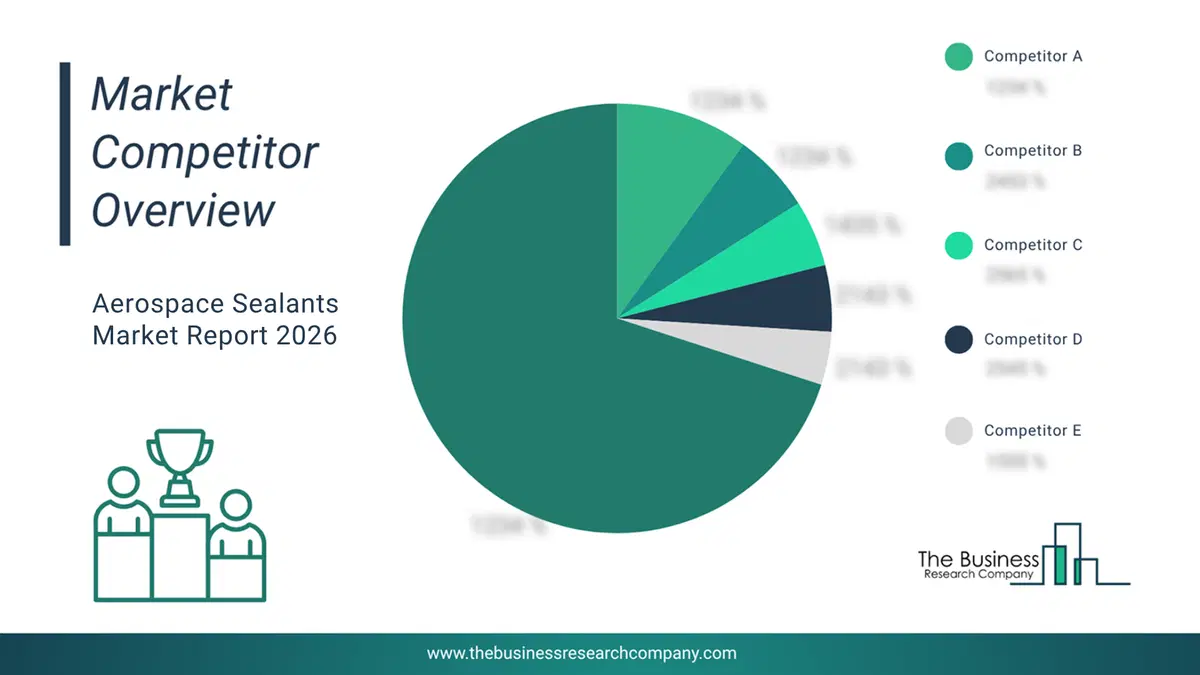
This chart is for illustrative purposes; the full report includes a detailed competitor analysis and comprehensive overview of the top 10 companies in the market.
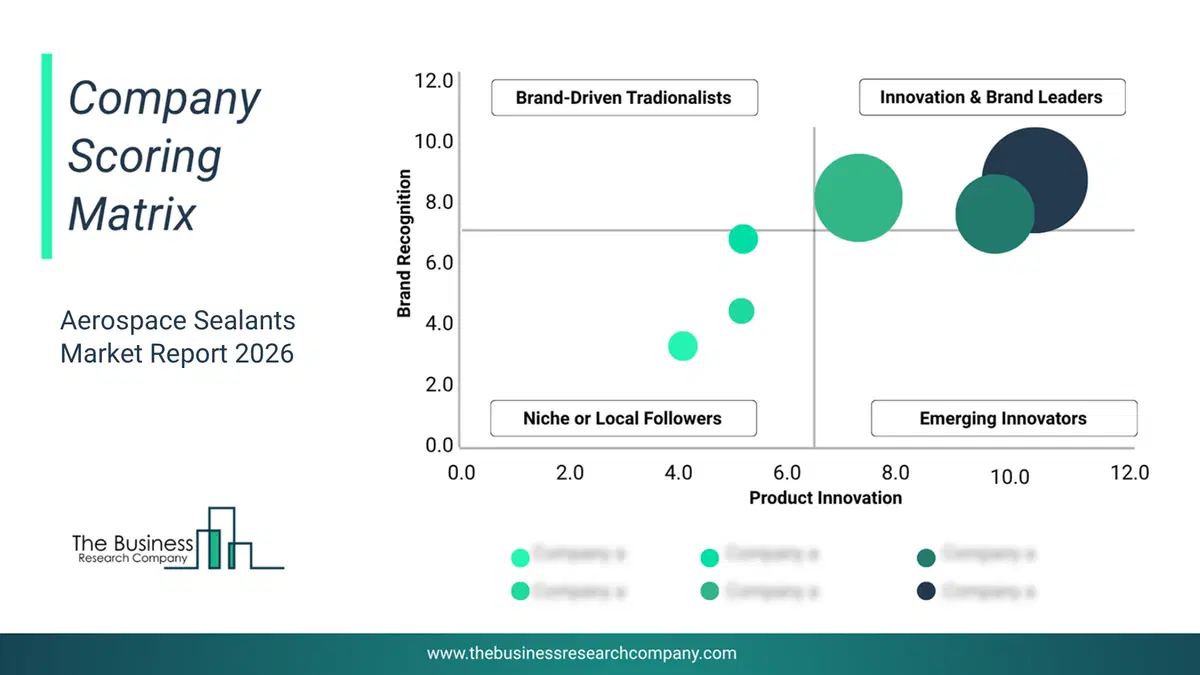
This chart maps companies by product innovation and brand strength, with bubble size indicating relative revenue, helping identify market leaders, challengers, and niche players. This is an illustrative chart; the full report provides a complete and accurate competitive analysis.
Global Aerospace Sealants Market Trends and Insights
Major companies operating in the aerospace sealants market are focusing on developing innovative solutions such as dry sealant technologies for permanent aircraft structures, to enhance aircraft manufacturing efficiency, sealing reliability, weight reduction, and sustainability. Dry sealant technologies are pre-formed sealing materials designed to replace traditional wet sealants by eliminating the need for mixing, curing, and cleanup processes, while providing consistent sealing performance, reduced material waste, improved assembly speed, and long-term protection against corrosion, vibration, and temperature variations. For instance, in March 2026, W. L. Gore & Associates, Inc., a US-based materials science company, launched GORE SKYFLEX Aerospace Materials PX1 Series, a ready-to-use dry sealant technology developed for permanent aircraft structures. The PX1 Series is a pre-formed dry sealant engineered to replace traditional form-in-place wet sealing methods in aerostructure manufacturing, enabling one-way and robotic assembly processes while improving process control and reducing labor requirements. The technology contains no volatile organic compounds (VOCs) or hazardous substances, minimizes sealant over-application and waste, and delivers reliable sealing and corrosion protection under demanding aerospace conditions, including vibration and extreme temperature cycles. The product has been validated through independent testing and aerospace customer programs, supporting applications across commercial aircraft, defense platforms, eVTOL systems, rockets, and other advanced aerospace structures.What Are Latest Mergers And Acquisitions In The Aerospace Sealants Market?
In August 2025, Bron Tapes Holding, a US-based producer of engineered films, fabrics, foils, foams, tapes, and adhesive solutions, acquired NSL Aerospace for an undisclosed amount. Through this acquisition, Bron Tapes aims to broaden its aerospace product portfolio with high-performance materials, specialized liquid adhesive and sealant packaging capabilities, and expanded technical expertise. NSL Aerospace, a US-based provider of aerospace sealants, offers aerospace-approved adhesives, silicones, sealants, and surface preparation products, including FAA-approved PMA sealants for aerospace applications.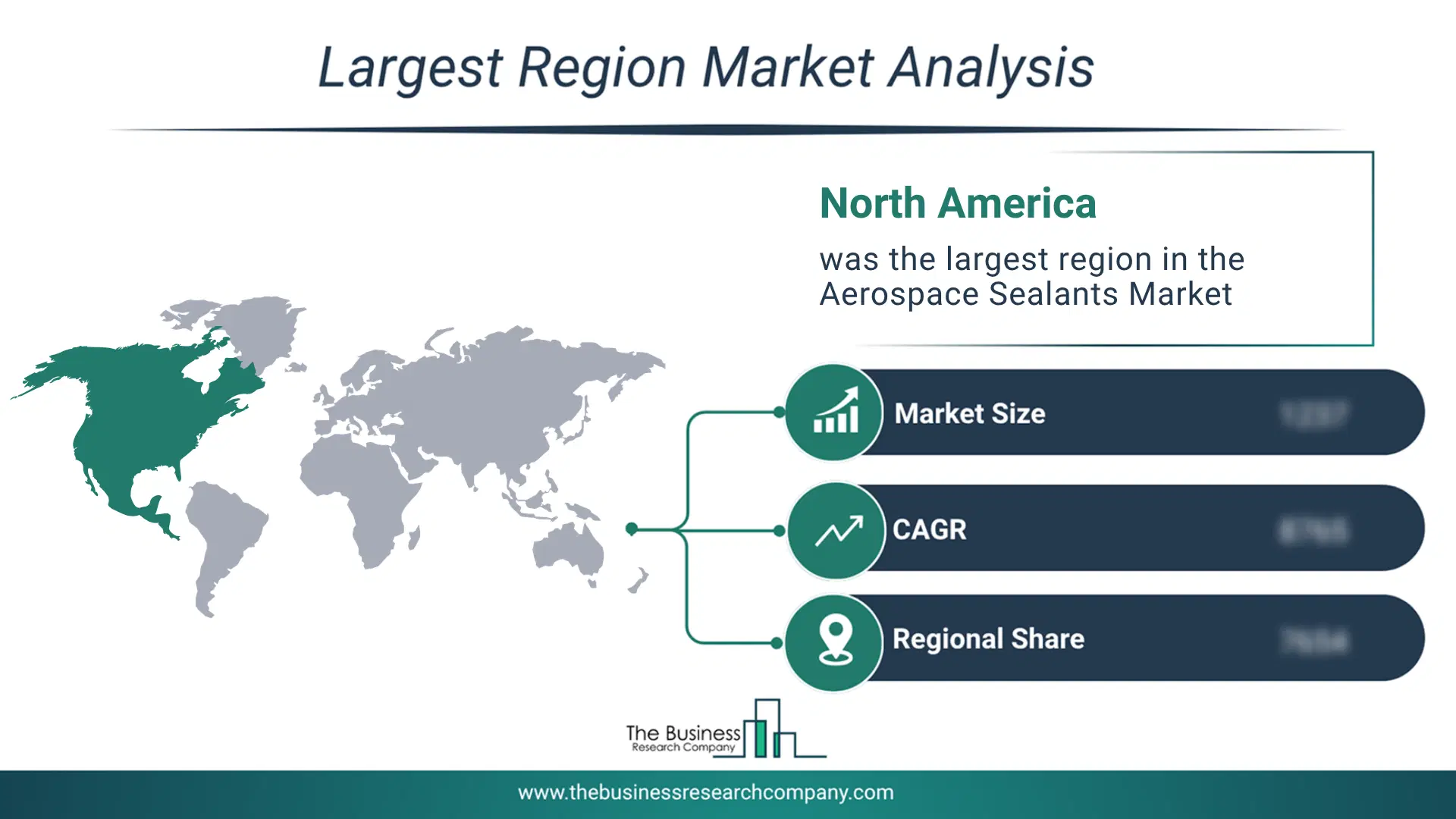
Regional Outlook
North America was the largest region in the aerospace sealants market in 2025. Asia-Pacific is expected to be the fastest-growing region in the forecast period. The regions covered in this market report are Asia-Pacific, South East Asia, Western Europe, Eastern Europe, North America, South America, Middle East, Africa. The countries covered in this market report are Australia, Brazil, China, France, Germany, India, Indonesia, Japan, Taiwan, Russia, South Korea, UK, USA, Canada, Italy, Spain.What Defines the Aerospace Sealants Market?
The aerospace sealants market consists of sales of fuel system sealing materials, fuselage joint sealing materials, windshield and canopy sealing materials, cabin pressure sealing materials, firewall sealing materials, and wing assembly sealing materials. Values in this market are ‘factory gate’ values, that is, the value of goods sold by the manufacturers or creators of the goods, whether to other entities (including downstream manufacturers, wholesalers, distributors, and retailers) or directly to end customers. The value of goods in this market includes related services sold by the creators of the goods.How is Market Value Defined and Measured?
The market value is defined as the revenues that enterprises gain from the sale of goods and/or services within the specified market and geography through sales, grants, or donations in terms of the currency (in USD unless otherwise specified). The revenues for a specified geography are consumption values that are revenues generated by organizations in the specified geography within the market, irrespective of where they are produced. It does not include revenues from resales along the supply chain, either further along the supply chain or as part of other products.
This chart presents market attractiveness based on a quantitative evaluation of growth, competition, strategic alignment, and risk, offering a clear view of opportunity areas for decision-making. This chart is for illustrative purposes; the full report contains the complete analysis.

This chart highlights the Total Addressable Market (TAM) by estimating the maximum revenue opportunity using an assumption-driven approach, supporting strategic planning and opportunity sizing across markets. The chart is illustrative; the full report provides a more comprehensive analysis.
What Key Data and Analysis Are Included in the Aerospace Sealants Market Report 2026?
The aerospace sealants market research report is one of a series of new reports from The Business Research Company that provides market statistics, including industry global market size, regional shares, competitors with the market share, detailed market segments, market trends and opportunities, and any further data you may need to thrive in the aerospace sealants industry. The market research report delivers a complete perspective of everything you need, with an in-depth analysis of the current and future state of the industry.Aerospace Sealants Market Report Forecast Analysis
| Report Attribute | Details |
|---|---|
| Market Size Value In 2026 | $1.62 billion |
| Revenue Forecast In 2030 | $2 billion |
| Growth Rate | CAGR of 5.5% from 2026 to 2030 |
| Base Year For Estimation | 2025 |
| Actual Estimates/Historical Data | 2020-2025 |
| Forecast Period | 2026 - 2030 |
| Market Representation | Revenue in USD Billion and CAGR from 2026 to 2030 |
| Segments Covered | Resin, Formulation Technology, Aircraft Type, Application |
| Regional Scope | Asia-Pacific, Western Europe, Eastern Europe, North America, South America, Middle East, Africa |
| Country Scope | The countries covered in the report are Australia, Brazil, China, France, Germany, India, Indonesia, Japan, Taiwan, Russia, South Korea, UK, USA, Canada, Italy, Spain. |
| Key Companies Profiled | Chemetall GmbH, Dow Inc., 3M Company, PPG Industries Inc., Henkel AG & Co. KGaA, Shin-Etsu Chemical Co. Ltd., Arkema S.A., Syensqo S.A., Huntsman Corporation, Socomore SAS, Momentive Performance Materials Inc., Master Bond Inc. |
| Customization Scope | Request for Customization |
| Pricing And Purchase Options | Explore Purchase Options |