
Agricultural Microbial Market Report 2026
Global Outlook – By Type (Bacteria, Fungi, Virus, Other Types ), By Formulation (Dry Formulation, Liquid Formulation ), By Function (Crop Protection, Soil Amendment ), By Mode Of Application (Soil Treatment, Foliar Spray, Seed Treatment ), By Application (Cereals And Grains, Oilseeds And Pulses, Fruits And Vegetables, Turf And Ornamentals) – Market Size, Trends, Strategies, and Forecast to 2030
Agricultural Microbial Market Overview
• Agricultural Microbial market size has reached to $7.73 billion in 2025 • Expected to grow to $15.52 billion in 2030 at a compound annual growth rate (CAGR) of 14.8% • Growth Driver: Organic Farming Movement's Impact On The Agricultural Microbials Market • Market Trend: Innovations Redefining The Agricultural Microbial Market • North America was the largest region in 2025.What Is Covered Under Agricultural Microbial Market?
Agricultural microbial refers to a characteristic of a microorganism concerned with plant-associated microbes. It intends to deal with issues in farming techniques typically brought on by a lack of biodiversity in microbial populations. It seeks to deal with issues in farming techniques typically brought on by a lack of biodiversity in microbial populations. The main types of agricultural microbial are bacteria, fungi, viruses, and others. Microbials are formulated through dry and liquid formulation and are used for crop protection and soil amendment. Bacteria is a type of soil microorganism that helps in the transformation of the soil. These are also used as a biofertilizer for crop production so as to produce the yield organically. The various mode of applications includes soil treatment, foliar spray, and seed treatment that are applied in different crops such as cereals and grains, oilseeds and pulses, fruits and vegetables, turf, and ornamentals.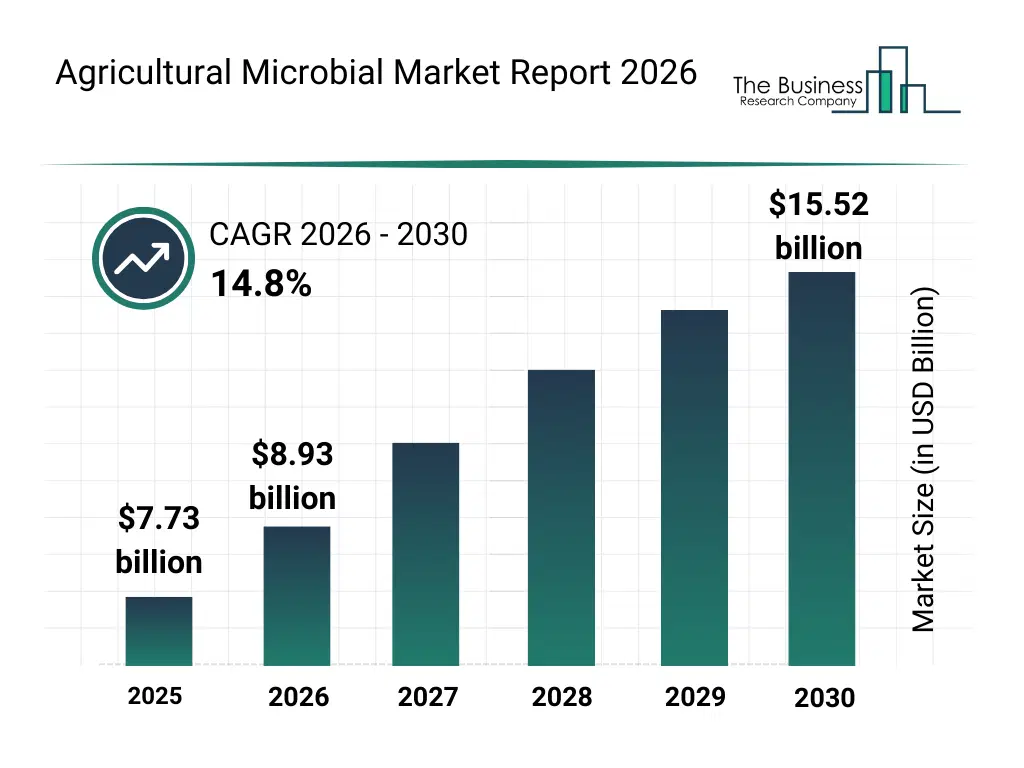
What Is The Agricultural Microbial Market Size and Share 2026?
The agricultural microbial market size has grown rapidly in recent years. It will grow from $7.73 billion in 2025 to $8.93 billion in 2026 at a compound annual growth rate (CAGR) of 15.7%. The growth in the historic period can be attributed to early adoption of microbial inoculants, rising concerns about soil degradation, growth of organic farming practices, increased awareness of plant-microbe interactions, demand for chemical-free crop protection.What Is The Agricultural Microbial Market Growth Forecast?
The agricultural microbial market size is expected to see rapid growth in the next few years. It will grow to $15.52 billion in 2030 at a compound annual growth rate (CAGR) of 14.8%. The growth in the forecast period can be attributed to shift toward regenerative agriculture, development of next-generation microbial strains, expansion of precision microbial application, increasing regulatory support for bio-based inputs, focus on enhancing soil microbiome diversity. Major trends in the forecast period include growing adoption of microbial biofertilizers and biopesticides, rising use of mycorrhizal and trichoderma-based solutions, increasing demand for soil biodiversity restoration products, expansion of seed-and-soil microbial treatment programs, development of multi-strain microbial consortia.
Global Agricultural Microbial Market Segmentation
1) By Type: Bacteria, Fungi, Virus, Other Types 2) By Formulation: Dry Formulation, Liquid Formulation 3) By Function: Crop Protection, Soil Amendment 4) By Mode Of Application: Soil Treatment, Foliar Spray, Seed Treatment 5) By Application: Cereals And Grains, Oilseeds And Pulses, Fruits And Vegetables, Turf And Ornamentals Subsegments: 1) By Bacteria: Nitrogen-Fixing Bacteria, Phosphate-Solubilizing Bacteria, Biocontrol Bacteria, Others 2) By Fungi: Mycorrhizal Fungi, Trichoderma Species, Plant Growth-Promoting Fungi, Others 3) By Virus: Plant Virus Biocontrol Agents, Insect Virus Biocontrol Agents 4) By Other Types: Algae, Protozoa, ActinomycetesWhat Is Driver Of The Agricultural Microbial Market?
Rising awareness about organic farming is expected to propel the growth of the agricultural microbial market going forward. Organic farming is a type of farming that does not use chemical pesticides, fertilizers, or other additives in farming. Organic farming makes use of a varied community of microorganisms to protect plants from illness and maintain soil health and productivity. For instance, in February 2024, according to the IFOAM (International Federation of Organic Agriculture Movements), a Germany-based an international organization, the global area under organic farming expanded by 2.5 million hectares in 2023, bringing the total to nearly 99 million hectares. Meanwhile, global sales of organic food rose to approximately 136 billion euros that same year. Therefore, raising awareness about organic farming drives the agricultural microbials industry.Key Players In The Global Agricultural Microbial Market
Major companies operating in the agricultural microbial market are BASF SE, Syngenta AG, Koppert BV, Novozymes A/S, Bayer CropScience, Arysta Lifescience Limited, AgBiome LLC, Certis Usa LLC, Chr. Hansen A/S, BioAg Alliance, Marrone Bio Innovations, Monsanto Company, Corteva Agriscience, Valent BioSciences, Lallemand Plant Care, Camson Bio Technologies, Becker Underwood, BioConsortia Inc., Phyllom BioProducts Inc., Rizobacter Argentina S. A., Terramera Inc., BioWorks Inc., Biochimex S. A. S., BioForest Technologies Inc., Andermatt Biocontrol AG, Verdesian Life Sciences LLC, Metagenomics Inc., Qingdao Future Group, BioNovelus Inc.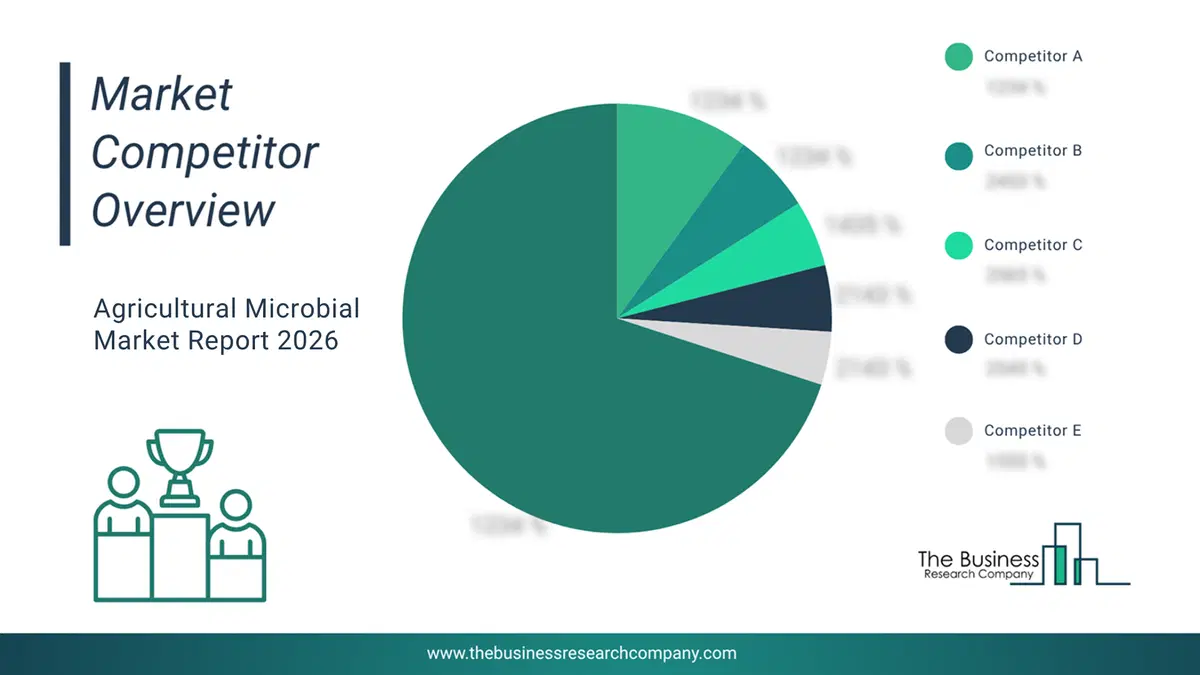
This chart is for illustrative purposes; the full report includes a detailed competitor analysis and comprehensive overview of the top 10 companies in the market.
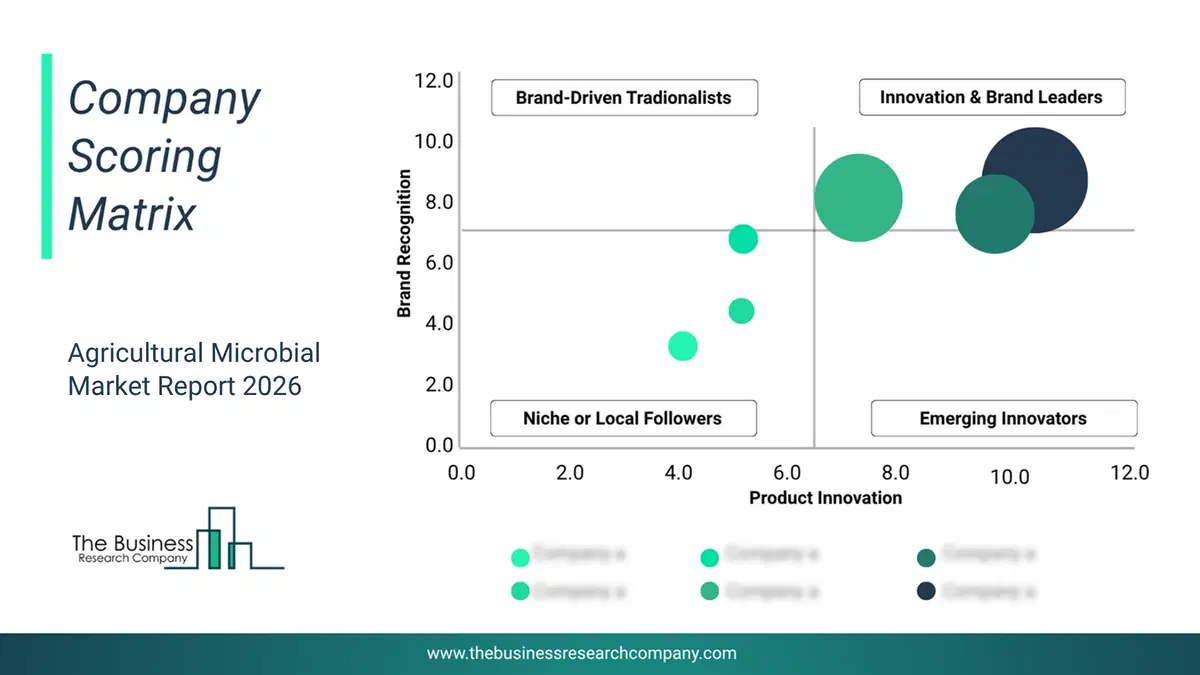
This chart maps companies by product innovation and brand strength, with bubble size indicating relative revenue, helping identify market leaders, challengers, and niche players. This is an illustrative chart; the full report provides a complete and accurate competitive analysis.
Global Agricultural Microbial Market Trends and Insights
Major players operating in agricultural microbial market are concentrating their efforts on establishing new partnerships to strengthen their position in the market. A business strategic partnership refers to a structured affiliation between two or more commercial enterprises, typically established via one or more business agreements or contracts. For instance, in January 2023, Indigo Ag, a US-based agricultural technology company, partnered with ISAOSA, a Mexico-based fertilizer distributor, to launch innovative microbial technology for increased nutrient use efficiency in Mexico. The microbial product Indigo 30, which is a member of Indigo's biotrinsic range, increases corn crop yields. The new formulation will make it possible for Indigo 30 to be combined directly with fertilizer for the first time, greatly extending the product's window of use for farmers.What Are Latest Mergers And Acquisitions In The Agricultural Microbial Market? Alltech Crop Science Expands Portfolio With Acquisition Of Ideagro, Boosting Soil And Crop Research
In January 2023, Alltech Crop Science, a Brazil-based innovative, reliable, sustainable biological solutions company, acquired Ideagro for an undisclosed amount. The acquisition aims to enhance the biological and other microorganism-based offerings of the company and to also accelerate soil and crop research. Ideagro is a Spain-based agri-food research and development company with expertise in developing beneficial organisms for the soil.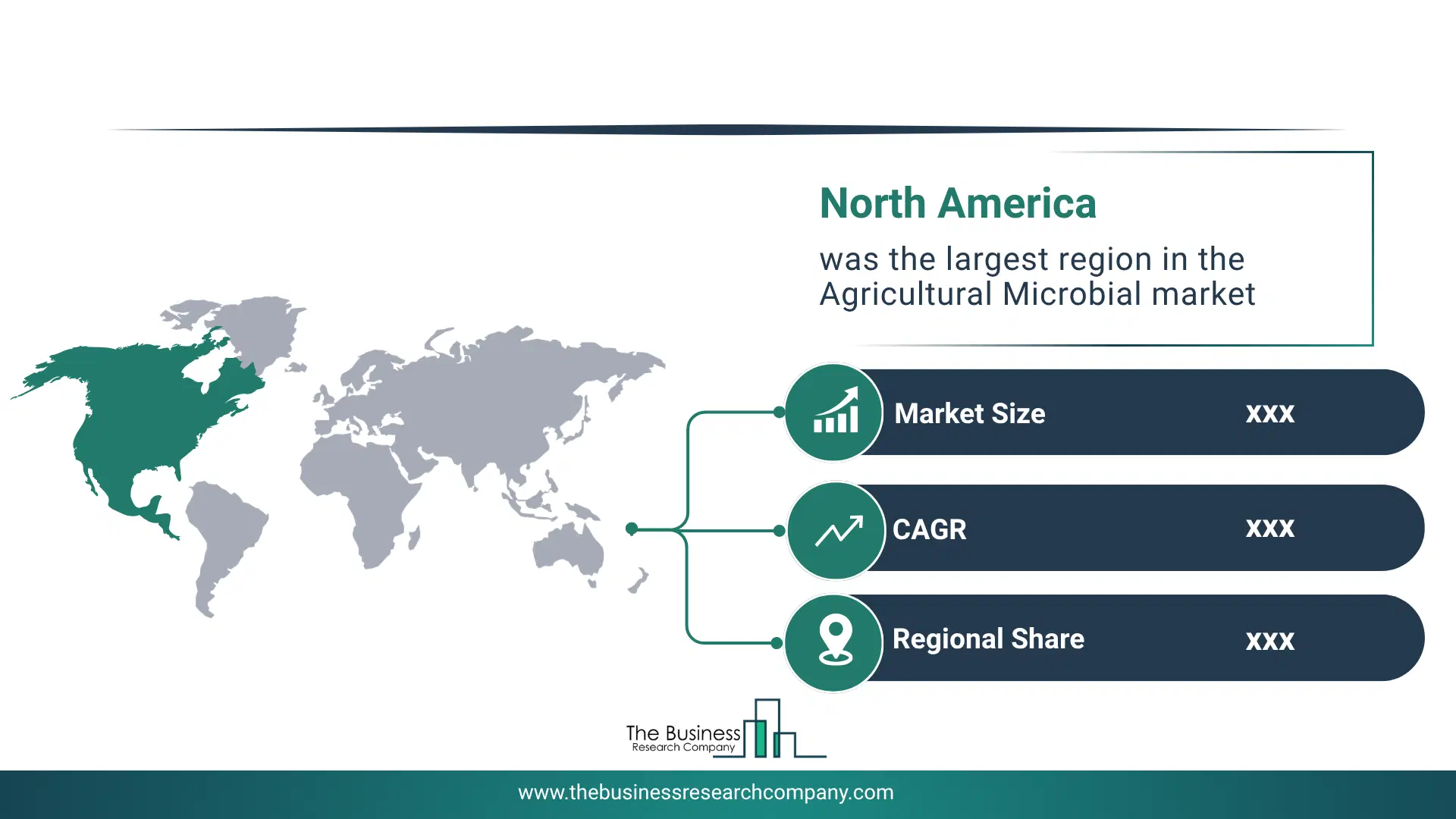
Regional Outlook
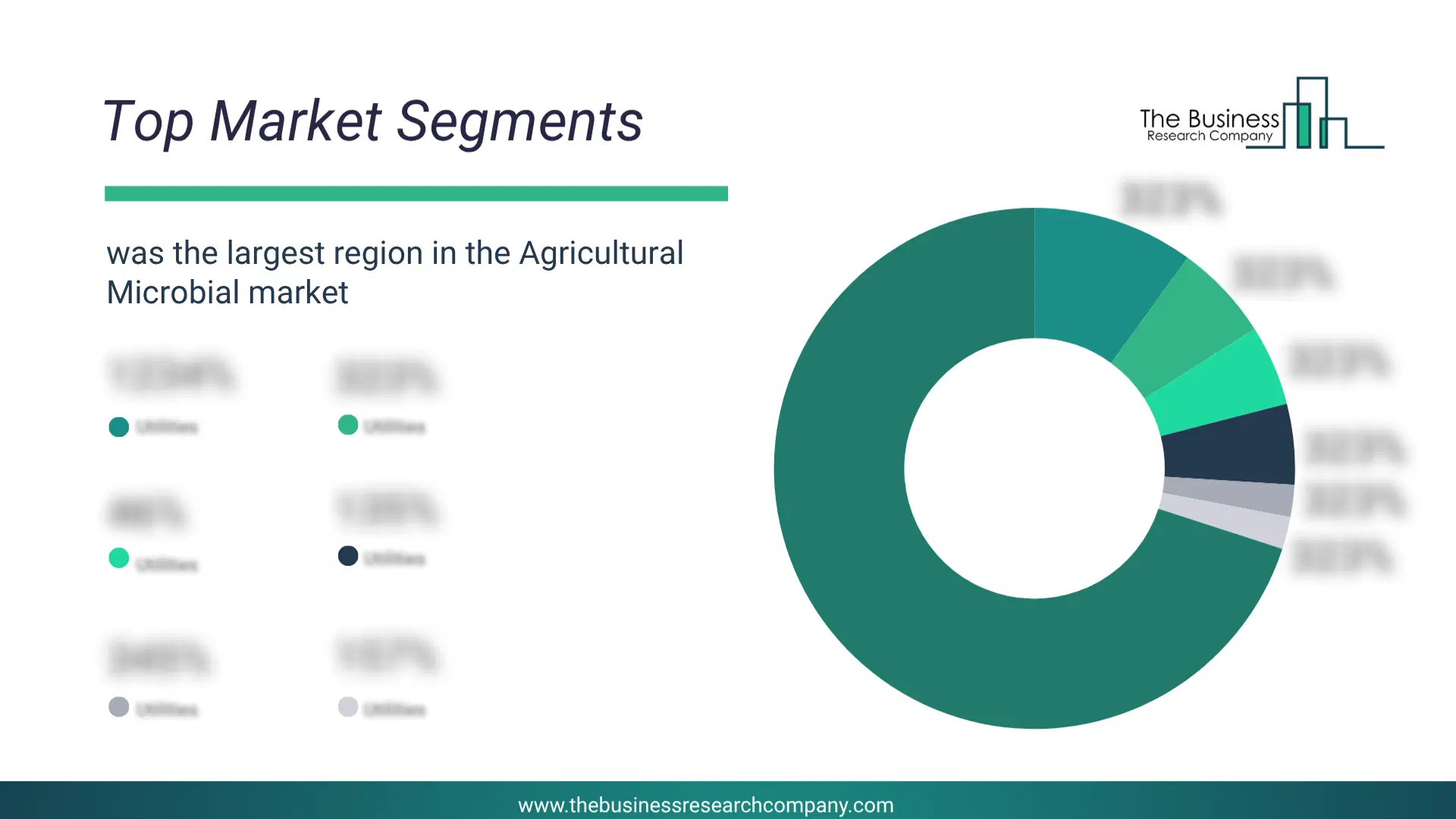
North America was the largest region in the microbial agriculture market in 2025. The regions covered in this market report are Asia-Pacific, South East Asia, Western Europe, Eastern Europe, North America, South America, Middle East, Africa. The countries covered in this market report are Australia, Brazil, China, France, Germany, India, Indonesia, Japan, Taiwan, Russia, South Korea, UK, USA, Canada, Italy, SpainWhat Defines the Agricultural Microbial Market?
The agricultural microbial market consists of sales of arbuscular mycorrhizal fungi, plant growth-promoting rhizobacteria, and nitrogen-fixing rhizobia. Values in this market are ‘factory gate’ values, that is the value of goods sold by the manufacturers or creators of the goods, whether to other entities (including downstream manufacturers, wholesalers, distributors and retailers) or directly to end customers. The value of goods in this market includes related services sold by the creators of the goods.How is Market Value Defined and Measured?
The market value is defined as the revenues that enterprises gain from the sale of goods and/or services within the specified market and geography through sales, grants, or donations in terms of the currency (in USD unless otherwise specified). The revenues for a specified geography are consumption values that are revenues generated by organizations in the specified geography within the market, irrespective of where they are produced. It does not include revenues from resales along the supply chain, either further along the supply chain or as part of other products.
This chart presents market attractiveness based on a quantitative evaluation of growth, competition, strategic alignment, and risk, offering a clear view of opportunity areas for decision-making. This chart is for illustrative purposes; the full report contains the complete analysis.

This chart highlights the Total Addressable Market (TAM) by estimating the maximum revenue opportunity using an assumption-driven approach, supporting strategic planning and opportunity sizing across markets. The chart is illustrative; the full report provides a more comprehensive analysis.
What Key Data and Analysis Are Included in the Agricultural Microbial Market Report 2026?
The agricultural microbial market research report is one of a series of new reports from The Business Research Company that provides market statistics, including industry global market size, regional shares, competitors with the market share, detailed market segments, market trends and opportunities, and any further data you may need to thrive in the agricultural microbial industry. The market research report delivers a complete perspective of everything you need, with an in-depth analysis of the current and future state of the industry.Agricultural Microbial Market Report Forecast Analysis
| Report Attribute | Details |
|---|---|
| Market Size Value In 2026 | $8.93 billion |
| Revenue Forecast In 2030 | $15.52 billion |
| Growth Rate | CAGR of 14.8% from 2026 to 2030 |
| Base Year For Estimation | 2025 |
| Actual Estimates/Historical Data | 2020-2025 |
| Forecast Period | 2026 - 2030 |
| Market Representation | Revenue in USD Billion and CAGR from 2026 to 2030 |
| Segments Covered | Type, Formulation, Function, Mode Of Application, Application |
| Regional Scope | Asia-Pacific, Western Europe, Eastern Europe, North America, South America, Middle East, Africa |
| Country Scope | The countries covered in the report are Australia, Brazil, China, France, Germany, India, Indonesia, Japan, Taiwan, Russia, South Korea, UK, USA, Canada, Italy, Spain |
| Key Companies Profiled | BASF SE, Syngenta AG, Koppert BV, Novozymes A/S, Bayer CropScience, Arysta Lifescience Limited, AgBiome LLC, Certis Usa LLC, Chr. Hansen A/S, BioAg Alliance, Marrone Bio Innovations, Monsanto Company, Corteva Agriscience, Valent BioSciences, Lallemand Plant Care, Camson Bio Technologies, Becker Underwood, BioConsortia Inc., Phyllom BioProducts Inc., Rizobacter Argentina S. A., Terramera Inc., BioWorks Inc., Biochimex S. A. S., BioForest Technologies Inc., Andermatt Biocontrol AG, Verdesian Life Sciences LLC, Metagenomics Inc., Qingdao Future Group, BioNovelus Inc. |
| Customization Scope | Request for Customization |
| Pricing And Purchase Options | Explore Purchase Options |