
AI in Mental Health Market Report 2026
Global Outlook – By Component (Software-As-A-Service (SaaS), Hardware), By Technology (Natural Language Processing (NLP), Context-Aware Computing, Computer Vision, Machine learning), By Application (Conversational Interfaces, Patient Behavioral Pattern Recognition), By End-User (Hospitals And Clinics, Mental Health Centers, Research Institutions) - Market Size, Trends, And Global Forecast 2026-2030
AI in Mental Health Market Overview
• AI in Mental Health market size has reached to $2 billion in 2025 • Expected to grow to $8.89 billion in 2030 at a compound annual growth rate (CAGR) of 34.8% • Growth Driver: Rising Suicidal Cases Fueling The Expansion Of AI In Mental Health Services • Market Trend: AI-Powered Post-Discharge Monitoring Systems Revolutionize Mental Health Care • North America was the largest region in 2025 and Asia-Pacific is the fastest growing region.Market Gains By 2030 – Top Opportunities By Segment
Market Gain identifies the most promising market opportunities by highlighting the segments or products expected to generate the highest incremental revenue growth over the next five years.
What Is Covered Under AI in Mental Health Market?
Artificial Intelligence (AI) in mental health refers to the application of advanced technology, particularly AI algorithms and computational models, to enhance the understanding, diagnosis, treatment, and support mental health conditions. It enhance overall support for individuals facing mental health challenges to track progress and identify potential issues. The main types of AI in mental health are software-as-a-service (SaaS), and hardware. Software-as-a-Service (SaaS) is a software licensing and delivery model in which software is licensed on a subscription basis and is centrally hosted by a third-party provider, allowing users to access the software through the internet. It uses technologies such as natural language processing (NLP), context-aware computing, computer vision, and machine learning. These are applied in conversational interfaces, and patient behavioral pattern recognition, and are used in various end-user such as hospitals and clinics, mental health centers, and research institutions.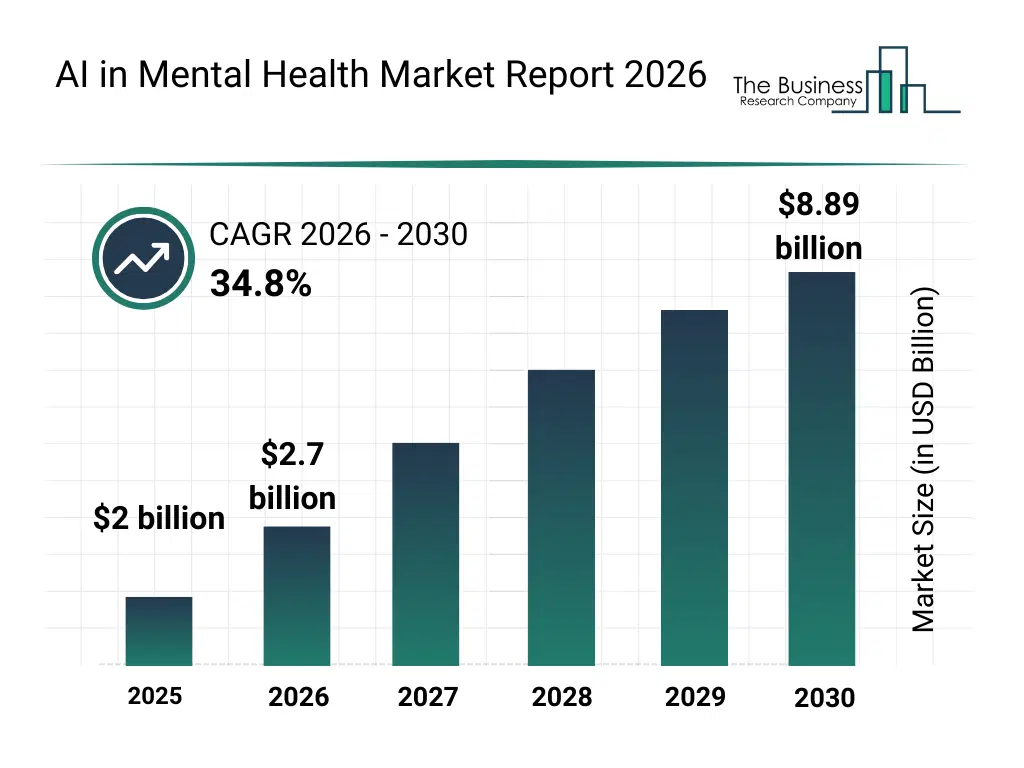
What Is The AI in Mental Health Market Size and Share 2026?
The ai in mental health market size has grown exponentially in recent years. It will grow from $2 billion in 2025 to $2.7 billion in 2026 at a compound annual growth rate (CAGR) of 34.7%. The growth in the historic period can be attributed to limited adoption of ai in healthcare, reliance on traditional therapy methods, increasing prevalence of mental health disorders, growth in digital health initiatives, early-stage investments in ai tools for healthcare.What Is The AI in Mental Health Market Growth Forecast?
The ai in mental health market size is expected to see exponential growth in the next few years. It will grow to $8.89 billion in 2030 at a compound annual growth rate (CAGR) of 34.8%. The growth in the forecast period can be attributed to advancement in machine learning algorithms for mental health, increasing demand for remote patient monitoring, expansion of virtual therapy and saas solutions, integration of ai with wearable and vr devices, growing collaborations between hospitals and tech companies. Major trends in the forecast period include integration of ai chatbots and virtual therapy platforms, adoption of predictive analytics for patient monitoring, growth in wearable devices and brain-computer interfaces, expansion of context-aware computing in mental health care, rising use of AI-based patient behavioral pattern recognition.
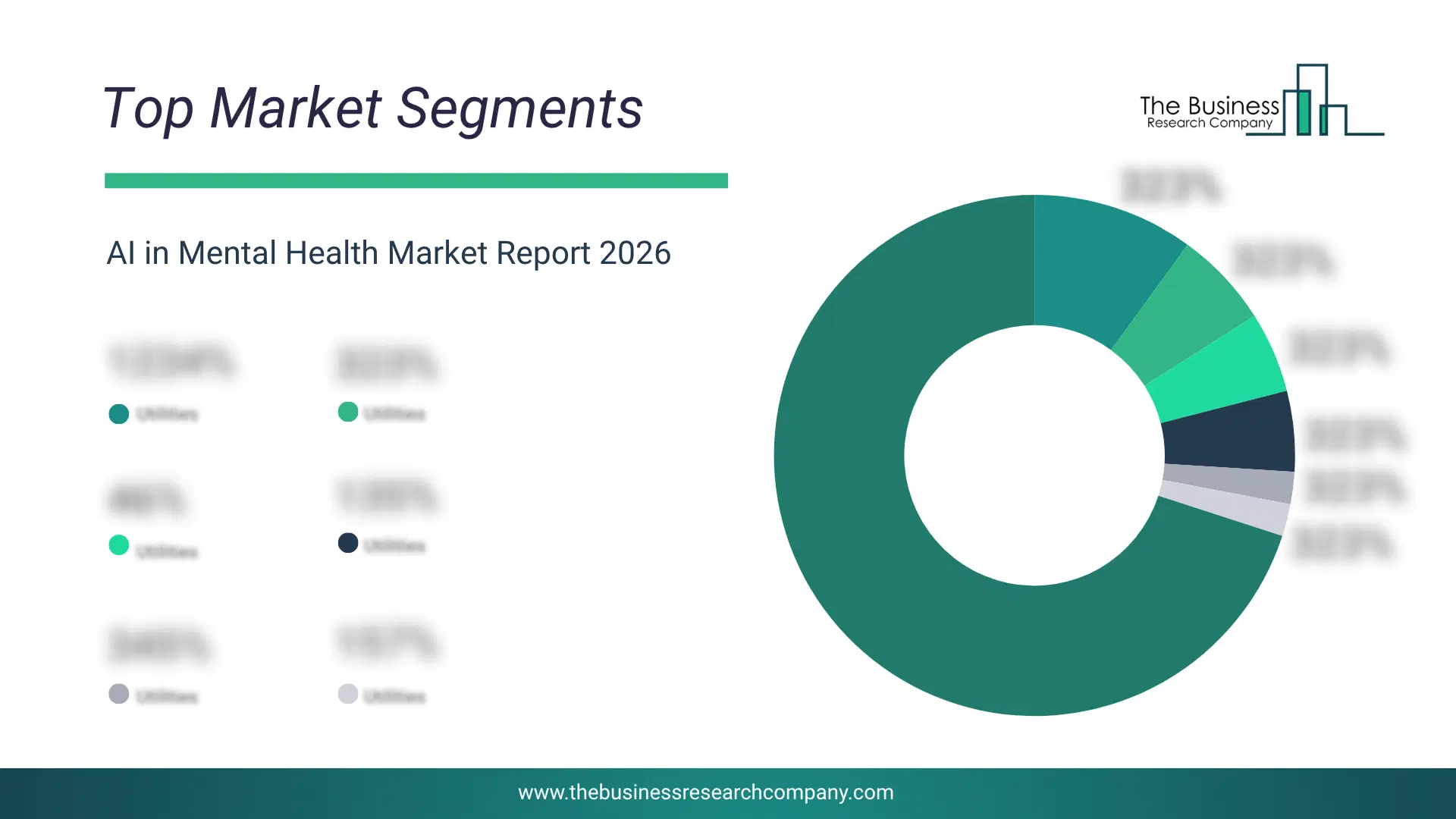
Global AI in Mental Health Market Segmentation
1) By Component: Software-As-A-Service (SaaS), Hardware 2) By Technology: Natural Language Processing (NLP), Context-Aware Computing, Computer Vision, Machine learning 3) By Application: Conversational Interfaces, Patient Behavioral Pattern Recognition 4) By End-User: Hospitals And Clinics, Mental Health Centers, Research Institutions Subsegments: 1) By Software-As-A-Service (SaaS): AI-Powered Chatbots, Virtual Therapy Platforms, Mental Health Assessment Tools, Predictive Analytics Solutions 2) By Hardware: Wearable Devices, Brain-Computer Interfaces, Virtual Reality Systems For Therapy The top segments in the ai in mental health market will be: • Software-As-A-Service (SaaS) will reach $8.09 Billion by 2030. • Hardware will reach $0.71 Billion by 2030.What Is The Driver Of The AI in Mental Health Market?
An increasing number of suicidal cases is expected to propel the growth of AI in the mental health market going forward. Suicidal cases refer to situations in which individuals experience thoughts, feelings, or behaviors related to intentionally causing harm to themselves with the intent to end their own lives. Mental health disorders, such as depression, bipolar disorder, schizophrenia, and substance abuse, are significant contributors to suicidal thoughts and behaviors. AI in mental health is used to identify early signs of suicidal risk by analyzing patterns in user data and facilitating timely intervention and support. For instance, in April 2025, according to the American Foundation for Suicide Prevention, a US-based voluntary health organization, the overall age-adjusted suicide rate in the United States remains nearly unchanged, recorded at 14.21 per 100,000 in 2022 and 14.12 per 100,000 in 2023. Therefore, the increasing number of suicidal cases is driving the growth of AI in the mental health market.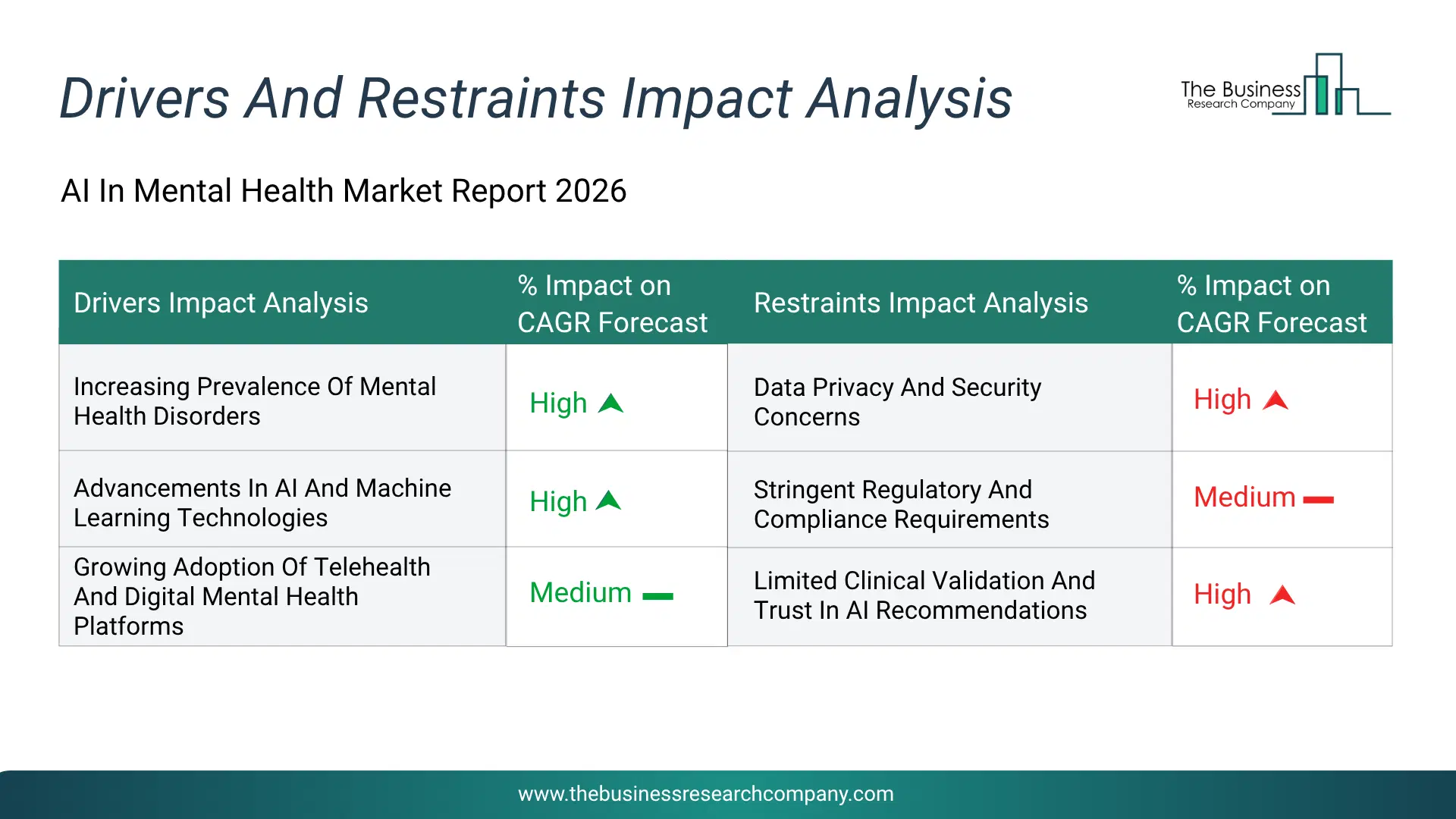
Infographic Chart Showing Key Market Drivers Analysis And Restraints For Ai In Mental Health Market
The chart presents an impact analysis of key drivers and restraints, quantifying their relative influence on the market's growth rate and helping assess the balance between growth enablers and limiting factors. This chart offers a high-level perspective; the full report contains more detailed insights.
How Will The Drivers Impact Growth In The Global AI In Mental Health Market?
• Increasing Prevalence Of Mental Health Disorders (High) – During the forecast period, the increasing prevalence of mental health disorders is expected to become a key growth driver for the AI in mental health market by 2030. Rising cases of anxiety, depression, stress-related conditions, and behavioral health challenges are increasing the need for accessible and efficient mental healthcare solutions. AI-powered platforms support early identification of mental health risks, continuous patient monitoring, and personalized digital interventions to improve care delivery. The shortage of mental health professionals and growing demand for scalable support systems are encouraging healthcare providers to integrate AI-based solutions into clinical workflows. This shift toward intelligent mental healthcare technologies is strengthening market expansion. • Advancements In AI And Machine Learning Technologies (High) – During the forecast period, advancements in AI and machine learning technologies are expected to emerge as a major factor driving the expansion of the AI in mental health market by 2030. Continuous improvements in natural language processing, deep learning models, and predictive analytics are enhancing the ability of AI systems to analyze patient behavior and provide accurate mental health insights. These technologies enable personalized treatment recommendations, automated assessments, and real-time interaction through virtual mental health assistants. Increasing investments in AI innovation and digital healthcare infrastructure are further accelerating the adoption of intelligent behavioral health solutions. • Growing Adoption Of Telehealth And Digital Mental Health Platforms (Medium) – During the forecast period, the growing adoption of telehealth and digital mental health platforms is expected to act as a key growth catalyst for the AI in mental health market by 2030. The expansion of virtual healthcare services is increasing demand for AI-enabled tools that improve remote therapy delivery, patient engagement, and mental wellness management. Healthcare organizations are deploying AI solutions to enhance symptom tracking, provide automated support, and improve access to mental health services across diverse populations. Additionally, increasing acceptance of digital care models and remote consultation platforms is creating opportunities for AI integration in behavioral healthcare.How Will The Restraints Impact Growth In The Global AI In Mental Health Market?
• Data Privacy And Security Concerns (High) – During the forecast period, data privacy and security concerns act as a major restraint on the AI in mental health market. AI-based mental health solutions collect and process highly sensitive patient information, including personal, behavioral, and medical data. Concerns regarding data breaches, unauthorized access, and misuse of confidential information can reduce patient trust and limit adoption. Healthcare providers must comply with strict data protection regulations, which increases implementation complexity and costs. As a result, privacy and security challenges can slow the deployment and widespread adoption of AI-driven mental health solutions. • Stringent Regulatory And Compliance Requirements (High) – During the forecast period, stringent regulatory and compliance requirements restrain the growth of the AI in mental health market. AI-based mental health solutions must comply with various healthcare regulations related to patient safety, data protection, and clinical effectiveness. Obtaining regulatory approvals and meeting compliance standards can be time-consuming and costly for developers and healthcare providers. Differences in regulations across countries further complicate the deployment of AI solutions on a global scale. These regulatory challenges may delay product launches and limit the adoption of AI technologies in mental healthcare. • Limited Clinical Validation And Trust In AI Recommendations (Medium) – During the forecast period, limited clinical validation and trust in AI recommendations act as a significant restraint on the AI in mental health market because many AI-driven mental health solutions require extensive clinical evidence to demonstrate their accuracy, reliability, and effectiveness across diverse patient populations. Healthcare professionals are often cautious about relying on AI-generated assessments and treatment recommendations without sufficient real-world validation and peer-reviewed clinical studies. Variations in patient behavior, cultural differences, and the complexity of mental health conditions can further affect the consistency of AI outcomes. This lack of confidence may discourage healthcare providers from integrating AI tools into routine clinical practice. Additionally, concerns regarding accountability for incorrect diagnoses or treatment recommendations can slow adoption. Consequently, limited clinical validation and trust in AI recommendations can restrain the growth of the AI in mental health market.Key Players In The Global AI in Mental Health Market
Major companies operating in the ai in mental health market are BetterHelp, Lyra Health, American Well Corporation, Doctor on Demand, Cerebral, MDLive, Talkspace Inc., Ginger, Quartet Health, Meditopia, Mantra Health, Happify Health, Woebot Health, Kintsugi, Marigold Health, SilverCloud Health, Cognoa, BioBeats, MeQuilibrium, Mightier, Nue Life, Mindstrong Health, Oliva Health, Wysa Ltd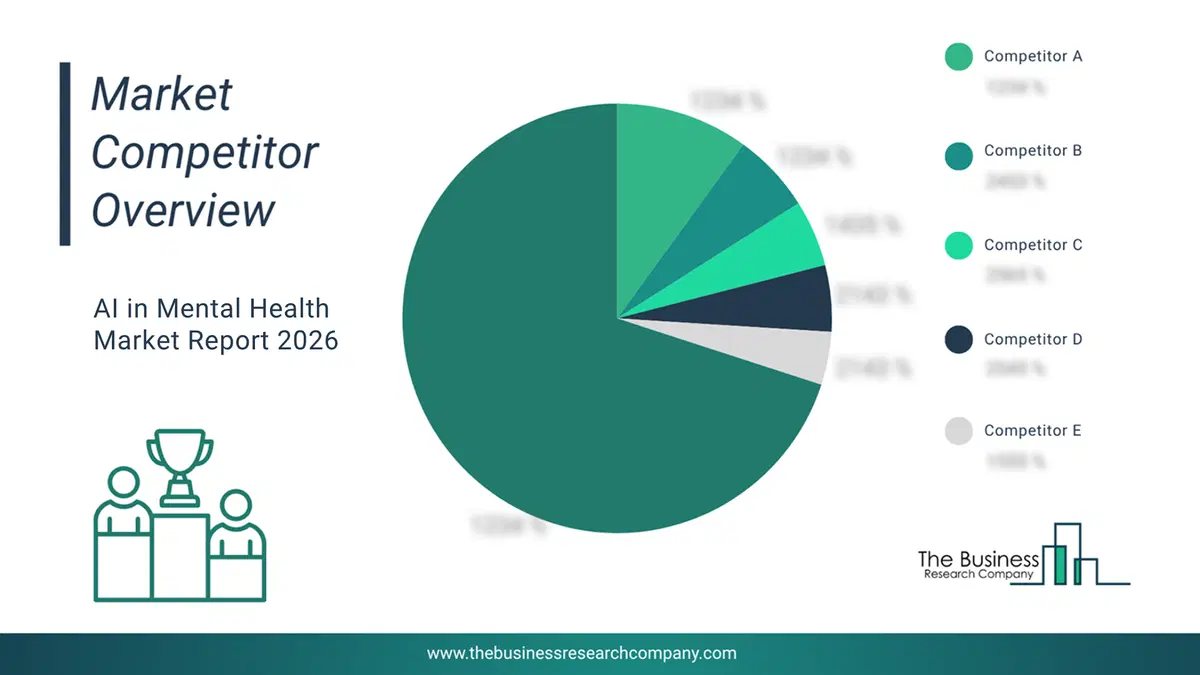
This chart is for illustrative purposes; the full report includes a detailed competitor analysis and comprehensive overview of the top 10 companies in the market.
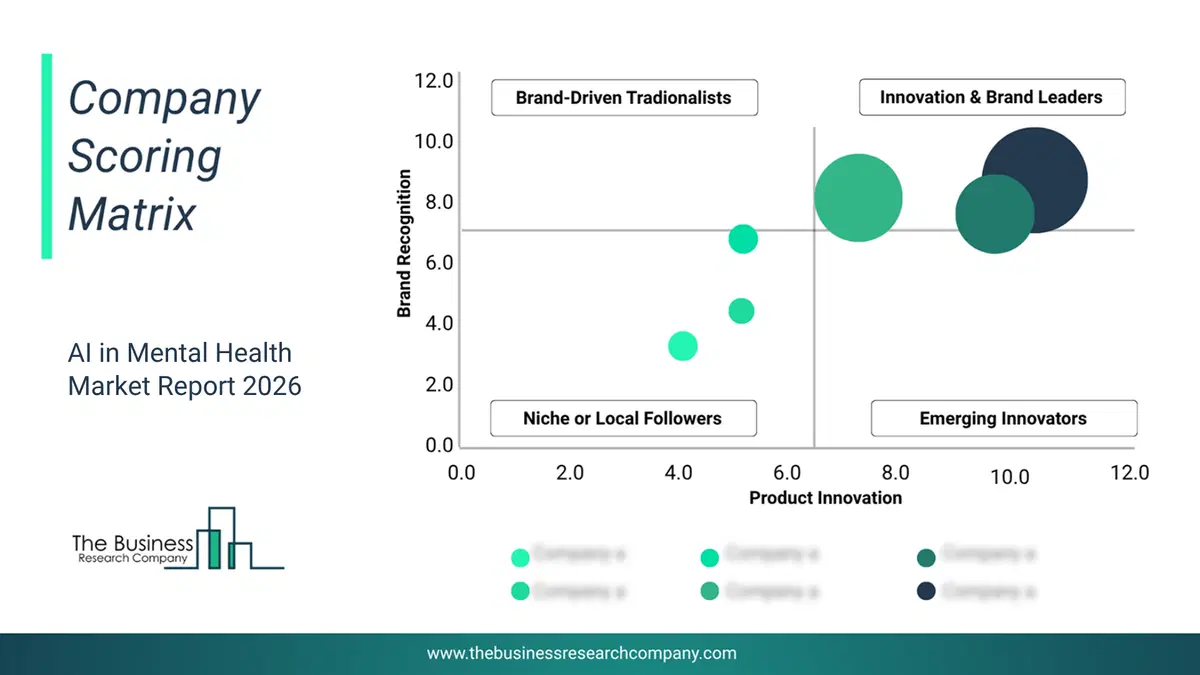
This chart maps companies by product innovation and brand strength, with bubble size indicating relative revenue, helping identify market leaders, challengers, and niche players. This is an illustrative chart; the full report provides a complete and accurate competitive analysis.
Global AI in Mental Health Market Trends and Insights
Major companies operating in the AI in the mental health market are developing innovative technology, such as an AI-powered behavioral health system named Discovery365, to increase their market offerings. Discovery365 is a system that is used to monitor patient progress for one year after discharge from a behavioral treatment program, during which time relapse rates are high. For instance, in September 2023, Discovery Behavioral Health Inc., a US-based mental health service company, and Videra Health and Brigham and Women's Hospital, a US-based academic medical center, launched Discovery365, which is the first of its kind AI-powered system that aims to address the one-year recovery gap in behavioral health. This platform utilizes advanced AI technology to analyze patient data post-discharge, focusing on video-captured analytics to evaluate patient progress and identify potential signs of struggle or relapse. Discovery365 aims to reduce relapse rates and support patients during the critical year following treatment completion by extending care beyond treatment programs.What Are Latest Mergers And Acquisitions In The AI in Mental Health Market?
In September 2025, MentalHealth.com, a US-based digital mental health platform, acquired Therapy.ai for an undisclosed amount. Through this acquisition, MentalHealth.com aims to enhance its AI-driven mental health capabilities by integrating Therapy.ai’s personalized therapy solutions, improving user engagement, and expanding access to scalable, high-quality mental health care. Therapy.ai is a US-based company that develops artificial intelligence-powered platforms to deliver personalized mental health therapy, assessments, and treatment recommendations.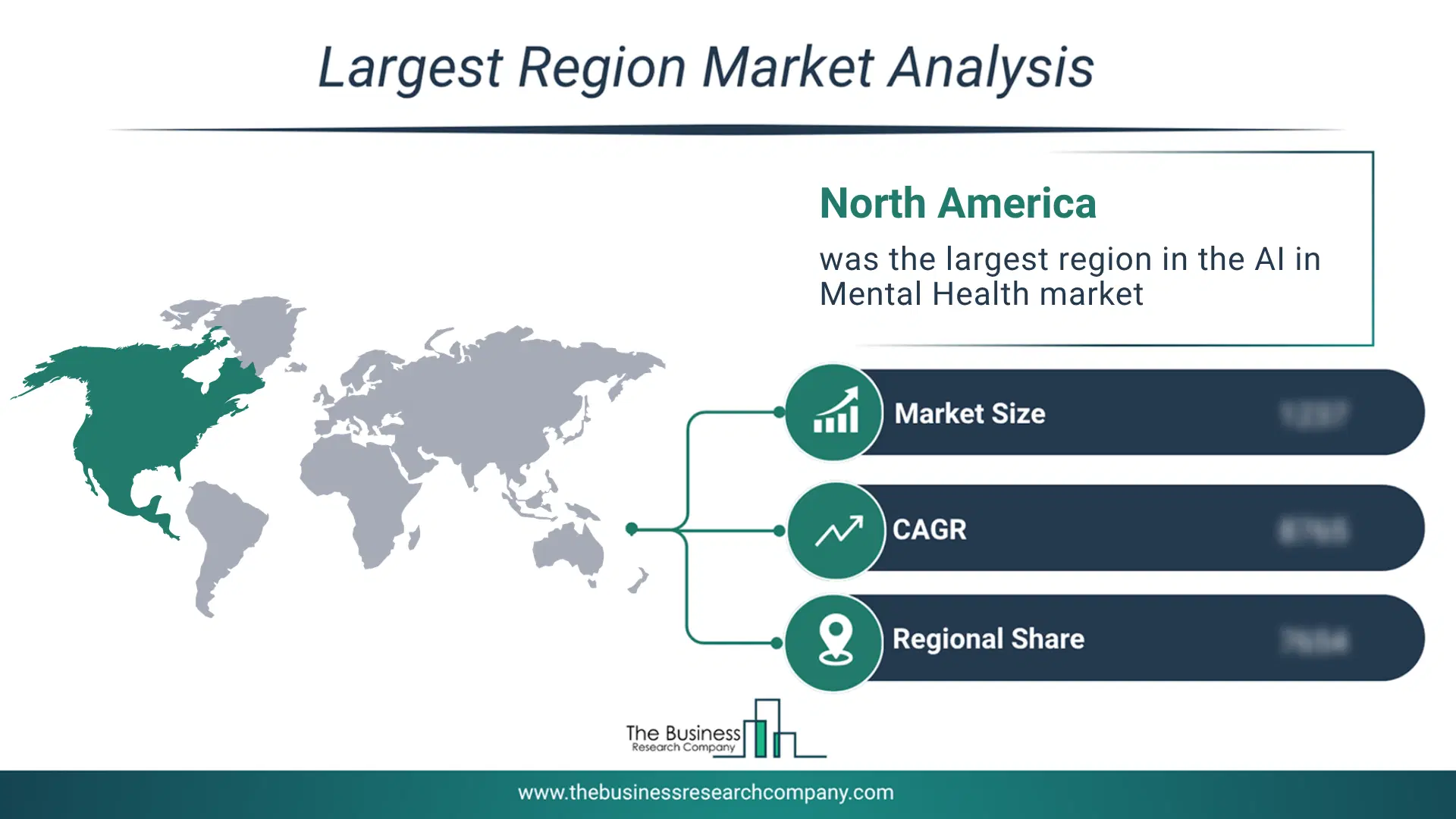
Regional Outlook
North America was the largest region in the AI in mental health market in 2025. Asia-Pacific is expected to be the fastest-growing region in the forecast period. The regions covered in this market report are Asia-Pacific, South East Asia, Western Europe, Eastern Europe, North America, South America, Middle East, Africa. The countries covered in this market report are Australia, Brazil, China, France, Germany, India, Indonesia, Japan, Taiwan, Russia, South Korea, UK, USA, Canada, Italy, Spain.What Defines the AI in Mental Health Market?
The AI in mental health market includes revenues earned by entities by providing services such as assessment and screening, therapy and support, monitoring and tracking, research, and analysis. The market value includes the value of related goods sold by the service provider or included within the service offering. The AI in mental health market also consists of sales of wearable devices, predictive analytics, and mental health chatbots. Values in this market are ‘factory gate’ values, that is the value of goods sold by the manufacturers or creators of the goods, whether to other entities (including downstream manufacturers, wholesalers, distributors and retailers) or directly to end customers. The value of goods in this market includes related services sold by the creators of the goods.How is Market Value Defined and Measured?
The market value is defined as the revenues that enterprises gain from the sale of goods and/or services within the specified market and geography through sales, grants, or donations in terms of the currency (in USD unless otherwise specified). The revenues for a specified geography are consumption values that are revenues generated by organizations in the specified geography within the market, irrespective of where they are produced. It does not include revenues from resales along the supply chain, either further along the supply chain or as part of other products.
This chart presents market attractiveness based on a quantitative evaluation of growth, competition, strategic alignment, and risk, offering a clear view of opportunity areas for decision-making. This chart is for illustrative purposes; the full report contains the complete analysis.

This chart highlights the Total Addressable Market (TAM) by estimating the maximum revenue opportunity using an assumption-driven approach, supporting strategic planning and opportunity sizing across markets. The chart is illustrative; the full report provides a more comprehensive analysis.
What Key Data and Analysis Are Included in the AI in Mental Health Market Report 2026?
The ai in mental health market research report is one of a series of new reports from The Business Research Company that provides market statistics, including industry global market size, regional shares, competitors with the market share, detailed market segments, market trends and opportunities, and any further data you may need to thrive in the ai in mental health industry. The market research report delivers a complete perspective of everything you need, with an in-depth analysis of the current and future state of the industry.AI in Mental Health Market Report Forecast Analysis
| Report Attribute | Details |
|---|---|
| Market Size Value In 2026 | $2.7 billion |
| Revenue Forecast In 2030 | $8.89 billion |
| Growth Rate | CAGR of 34.7% from 2026 to 2030 |
| Base Year For Estimation | 2025 |
| Actual Estimates/Historical Data | 2020-2025 |
| Forecast Period | 2026 - 2030 |
| Market Representation | Revenue in USD Billion and CAGR from 2026 to 2030 |
| Segments Covered | Component, Technology, Application, End-User |
| Regional Scope | Asia-Pacific, Western Europe, Eastern Europe, North America, South America, Middle East, Africa |
| Country Scope | The countries covered in the report are Australia, Brazil, China, France, Germany, India, ... |
| Key Companies Profiled | BetterHelp, Lyra Health, American Well Corporation, Doctor on Demand, Cerebral, MDLive, Talkspace Inc., Ginger, Quartet Health, Meditopia, Mantra Health, Happify Health, Woebot Health, Kintsugi, Marigold Health, SilverCloud Health, Cognoa, BioBeats, MeQuilibrium, Mightier, Nue Life, Mindstrong Health, Oliva Health, Wysa Ltd |
| Customization Scope | Request for Customization |
| Pricing And Purchase Options | Explore Purchase Options |