

AI In Sports Global Market Opportunities And Strategies To 2035
By Solution (Software, Hardware, Services), By Game Type (Badminton, Baseball, Basketball, Cricket, Cycling, Hockey, Ice Hockey, Racing, Rugby, Soccer, Table Tennis, Tennis Volleyball, Wrestling/Boxing, Mixed Martial Arts, American Football, Golf, Other Game Types), By Deployment (Cloud, On-Premise), By Technology (Machine Learning, Computer Vision, Natural Language Processing, Data Analytics, Other Technologies), By Application (Game Planning, Game Strategies, Performance Improvement, Injury Prevention, Sports Recruitment, Other Applications), And By Region, Opportunities And Strategies – Global Forecast To 2035
Ai In Sports Market Definition
AI in sports refers to the application of artificial intelligence technologies in various sporting activities to enhance performance, improve strategy, and streamline operations. It involves the use of machine learning, computer vision, natural language processing, and other AI techniques to analyze player data, monitor performance, predict injuries, support coaching decisions, and personalize training regimens. The AI in sports market consists of sales by entities (organizations, sole traders and partnerships) of AI in sports that is used by a wide range of stakeholders including professional and amateur athletes, sports teams, coaches, analysts, medical professionals, broadcasters, and event organizers. It is employed throughout the sports ecosystem from training sessions to live matches to post-game evaluations.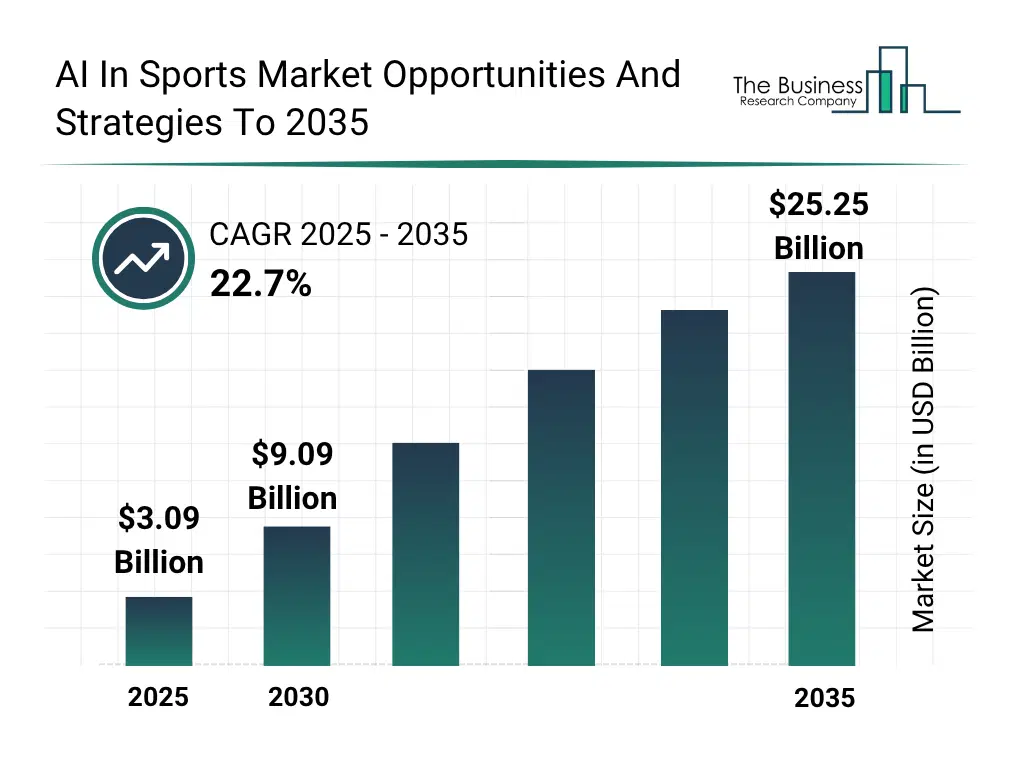
Ai In Sports Market Size
The global AI in sports market reached a value of nearly $3,088.3 million in 2025, having grown at a compound annual growth rate (CAGR) of 26.9% since 2020. The market is expected to grow from $3,088.3 million in 2025 to $9,088.6 million in 2030 at a rate of 24.1%. The market is then expected to grow at a CAGR of 22.7% from 2030 and reach $25,249.5 million in 2035. Growth in the historic period resulted from expansion of scalable cloud-based service adoption, rising demand for wearable technology in sports, rise in mobile and app-based sports platforms and rising emphasis on athlete health and safety. Factors that negatively affected growth in the historic period were high implementation and maintenance costs for AI systems and data privacy and security concerns. Going forward, rise in integration with IoT and AR/VR, rise in demand for fan engagement and personalization, rise in demand for skill development and rise in demand for real-time data analytics will drive the growth. Factors that could hinder the growth of the AI in sports market in the future include shortage of skilled professionals with dual expertise in AI and sports, complexity in integrating ai with existing sports infrastructure and impact of trade war and tariff.
Ai In Sports Market Segmentation
The Ai in sports market is segmented by solution, by game type, by deployment, by technology and by application.By Solution –
The Ai in sports market is segmented by solution into:
- a) Software
- b) Hardware
By Game Type –
The Ai in sports market is segmented by game type into:
- a) Football
- b) Cricket
- c) Tennis
- d) Basketball
By Deployment –
The Ai in sports market is segmented by deployment into:
- a) Cloud
- b) On-Premise
By Technology –
The Ai in sports market is segmented by technology into:
- a) Machine Learning
- b) Computer Vision
- c) Data Analytics
- d) Other Technologies
By Application –
The Ai in sports market is segmented by application into:
- a) Game Planning
- b) Game Strategies
- c) Performance Improvement
- d) Injury Prevention
- e) Sports Recruitment
- f) Other Applications
By Geography - The Ai in sports market is segmented by geography into:
- China
- India
- Japan
- Australia
- Indonesia
- South Korea
- USA
- Canada
- Brazil
- France
- Germany
- UK
- Italy
- Spain
- Russia
-
o Asia Pacific
o Africa