
AI In Telecommunication Market Report 2026
Global Outlook – By Component (Solution, Service), By Technology (Machine Learning, Natural Language Processing (NLP), Data Analytics, Other Technologies), By Deployment Model (On-Premise, Cloud), By Application (Customer Analytics, Network Security, Network Optimization, Self-Diagnostics, Virtual Assistance, Other Applications) – Market Size, Trends, Strategies, and Forecast to 2030
AI In Telecommunication Market Overview
• AI In Telecommunication market size has reached to $4.72 billion in 2025 • Expected to grow to $27.33 billion in 2030 at a compound annual growth rate (CAGR) of 42.2% • Growth Driver: 5G Network Expansion Propelling The Surge In AI Integration Within The Telecommunications Market • Market Trend: Advancements in Responsible AI Practices for the Telecommunications Sector • North America was the largest region in 2025 and Asia-Pacific is the fastest growing region.Market Gains By 2030 – Top Opportunities By Segment
Market Gain identifies the most promising market opportunities by highlighting the segments or products expected to generate the highest incremental revenue growth over the next five years.
What Is Covered Under AI In Telecommunication Market?
AI (artificial intelligence) in telecommunication refers to the use of machine learning algorithms and other advanced technologies to improve telecommunication services and processes. They are used to improve and optimize the network infrastructure and build a stable network. The main types of AI in telecommunication components are solution and service. A solution refers to an algorithm or model that is designed to solve a specific problem or task using machine learning techniques. The deployment models are on-premise, and cloud with various technologies that include machine learning, natural language processing (NLP), data analytics, and others. The various applications are customer analytics, network security, network optimization, self-diagnostics, virtual assistance, and others.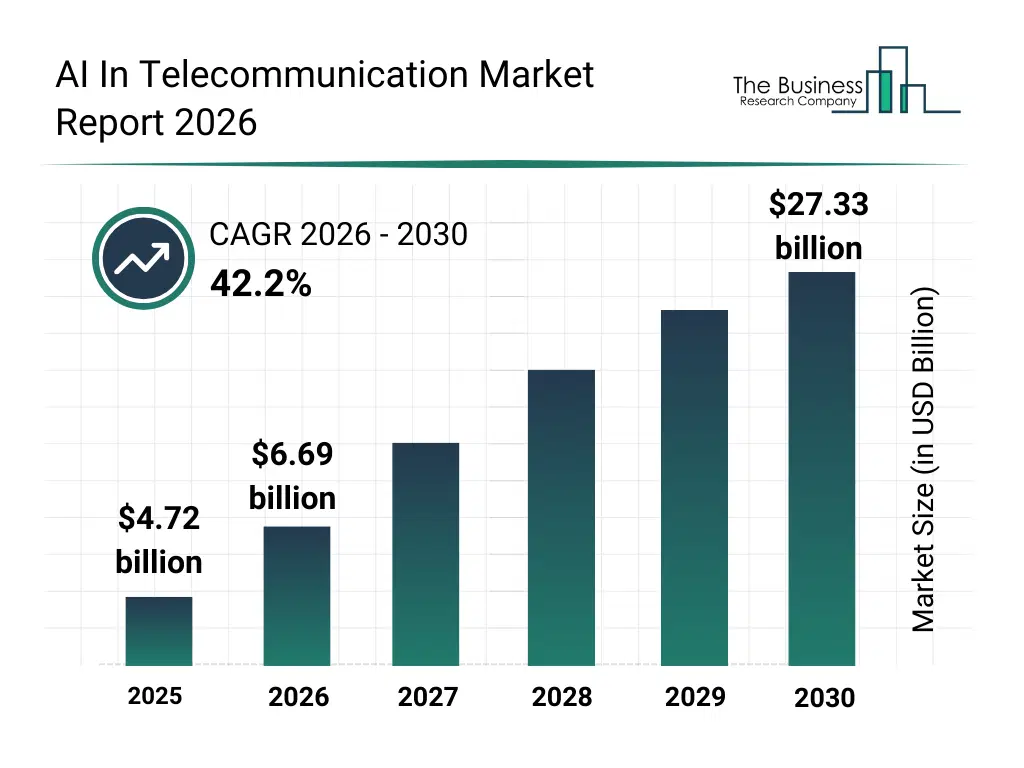
What Is The AI In Telecommunication Market Size and Share 2026?
The AI in telecommunication market size has grown exponentially in recent years. It will grow from $4.72 billion in 2025 to $6.69 billion in 2026 at a compound annual growth rate (CAGR) of 41.9%. The growth in the historic period can be attributed to rapid growth in mobile subscribers, expansion of broadband networks, rising network complexity, demand for improved service quality, adoption of data analytics in telecom operations.What Is The AI In Telecommunication Market Growth Forecast?
The AI in telecommunication market size is expected to see exponential growth in the next few years. It will grow to $27.33 billion in 2030 at a compound annual growth rate (CAGR) of 42.2%. The growth in the forecast period can be attributed to deployment of 5G networks, increasing use of AI for self-healing networks, demand for low-latency services, growth of edge computing, rising focus on customer experience automation. Major trends in the forecast period include ai-driven network optimization, predictive network maintenance, virtual network assistants, customer analytics and personalization, automated network security.
Global AI In Telecommunication Market Segmentation
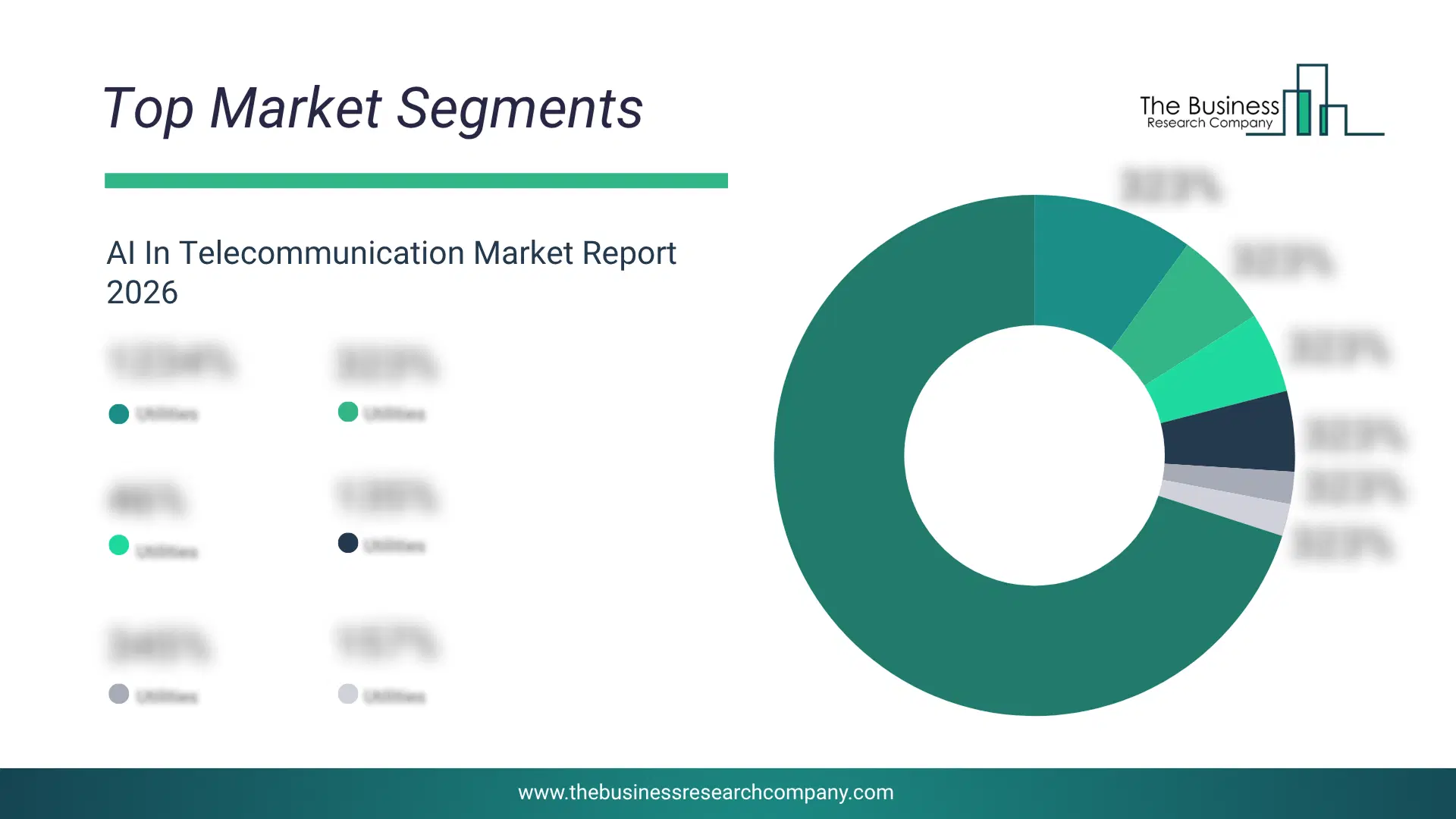
1) By Component: Solution, Service 2) By Technology: Machine Learning, Natural Language Processing (NLP), Data Analytics, Other Technologies 3) By Deployment Model: On-Premise, Cloud 4) By Application: Customer Analytics, Network Security, Network Optimization, Self-Diagnostics, Virtual Assistance, Other Applications Subsegments: 1) By Solutions: Network Optimization, Network Security, Customer Analytics, Virtual Assistants, Predictive Maintenance 2) By Services: Professional Services, Managed Services The top segments in the artificial intelligence (ai) in telecommunication market will be: • Solution will reach $18.32 Billion by 2030. • Service will reach $8.91 Billion by 2030.What Is The Driver Of The AI In Telecommunication Market?
The rapid implementation of 5G networks is expected to propel the growth of AI (artificial intelligence) in the telecommunications market going forward. 5G networks refer to the fifth generation of wireless technology for mobile communication. It represents the latest and most advanced generation of cellular networks, succeeding 4G (LTE) networks. 5G networks bring increased complexity due to higher data speeds, low latency, and the massive number of connected devices. AI is crucial in managing and optimizing these complex networks efficiently. For instance, in November 2023, according to the Ericsson Mobility Report, a Sweden-based telecommunications technology company, global 5G subscriptions increased by 610 million in 2023, bringing the total to 1.6 billion, which represents a 63 % rise over the 2022 total. Therefore, implementation of 5G networks is driving the growth of AI (artificial intelligence) in the telecommunications market.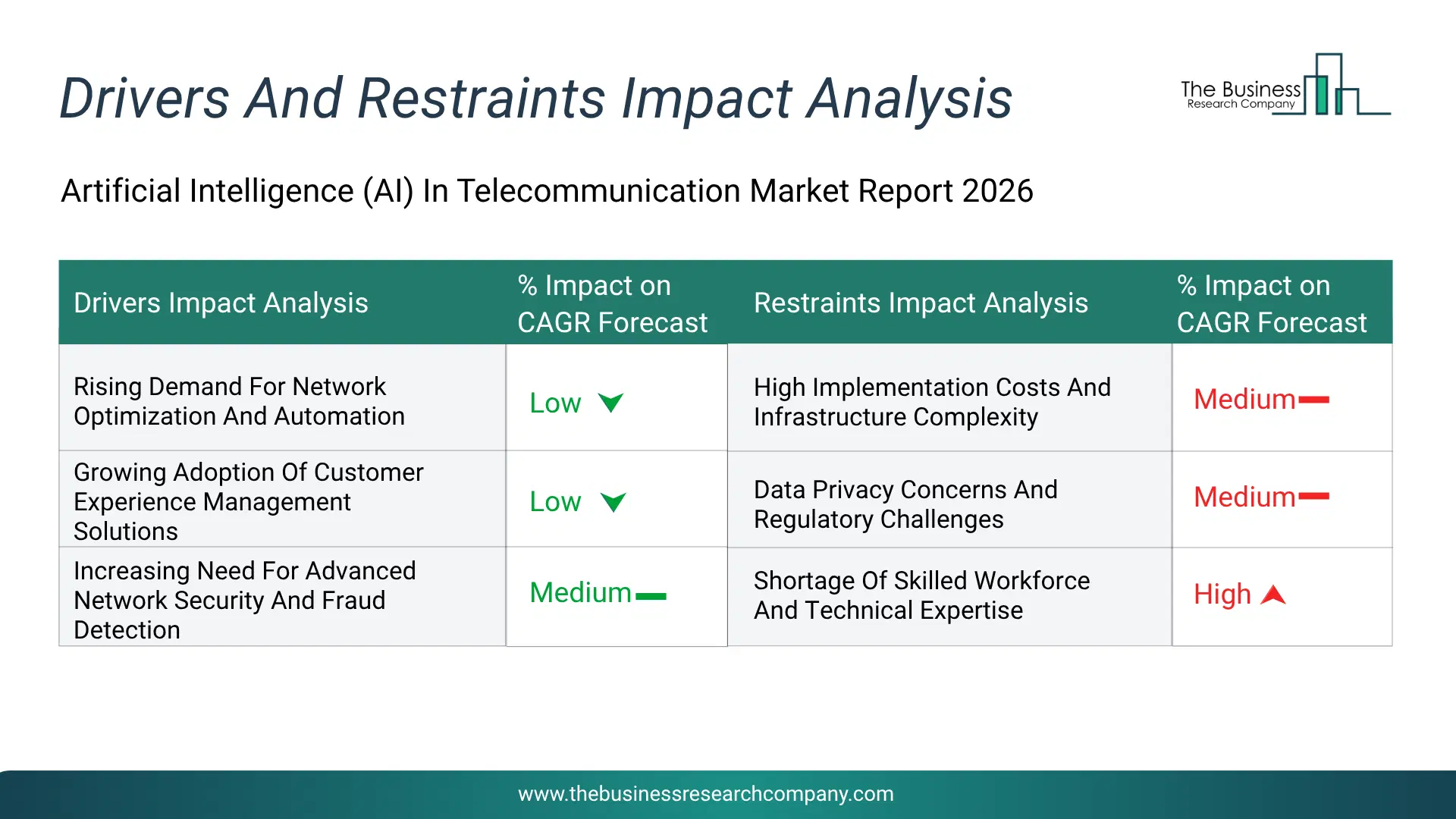
Infographic Chart Showing Key Market Drivers Analysis And Restraints For Ai In Telecommunication Market
The chart presents an impact analysis of key drivers and restraints, quantifying their relative influence on the market's growth rate and helping assess the balance between growth enablers and limiting factors. This chart offers a high-level perspective; the full report contains more detailed insights.
How Will The Drivers Impact Growth In The Global Artificial Intelligence (AI) In Telecommunication Market?
• Rising Demand For Network Optimization And Automation (Low) – During the forecast period, the rising demand for network optimization and automation is expected to become a key growth driver for the artificial intelligence (AI) in telecommunication market by 2030. Telecom operators are increasingly leveraging AI to manage complex and high-volume network traffic, ensuring efficient bandwidth allocation and minimizing latency issues. AI-enabled automation supports real-time monitoring, predictive traffic balancing, and dynamic resource allocation, improving overall network performance. As telecom networks evolve with increasing device connectivity and data consumption, the need for intelligent automation continues to accelerate. This transition toward autonomous network operations is reinforcing steady market expansion. • Growing Adoption Of Customer Experience Management Solutions (Low) – During the forecast period, the growing adoption of customer experience management solutions is expected to emerge as a major factor driving the expansion of the artificial intelligence (AI) in telecommunication market by 2030. Telecom companies are increasingly utilizing AI-driven platforms to analyze customer behavior, preferences, and service usage patterns to deliver personalized experiences. These solutions enable proactive issue resolution, targeted service offerings, and improved customer engagement through intelligent insights. With increasing competition among telecom providers, enhancing customer satisfaction and retention has become a strategic priority. • Increasing Need For Advanced Network Security And Fraud Detection (Medium) – During the forecast period, the increasing need for advanced network security and fraud detection is expected to act as a key growth catalyst for the artificial intelligence (AI) in telecommunication market by 2030. AI technologies are being deployed to detect anomalies, prevent cyber threats, and identify fraudulent activities in real time across telecom networks. These systems enhance the ability to safeguard sensitive user data and ensure uninterrupted service delivery. As cyber risks and digital threats continue to evolve in scale and complexity, telecom operators are prioritizing intelligent security frameworks.How Will The Restraints Impact Growth In The Global Artificial Intelligence (AI) In Telecommunication Market?
• High Implementation Costs And Infrastructure Complexity (Low) – During the forecast period, high implementation costs and infrastructure complexity are significantly restricting the growth of the artificial intelligence (AI) in telecommunication market. Deployment of AI-driven telecom solutions requires substantial investment in cloud infrastructure, data processing systems, and integration with existing networks, creating financial and technical barriers for widespread adoption. • Data Privacy Concerns And Regulatory Challenges (Low) – During the forecast period, data privacy concerns and regulatory challenges are significantly restricting the growth of the artificial intelligence (AI) in telecommunication market. Strict data protection regulations, cross-border data transfer restrictions, and increasing scrutiny on AI-driven data usage are limiting deployment flexibility and increasing compliance burdens for telecom operators. • Shortage Of Skilled Workforce And Technical Expertise (Medium) – During the forecast period, the shortage of skilled workforce and technical expertise is significantly restricting the growth of the artificial intelligence (AI) in telecommunication market. Limited availability of professionals with expertise in AI, machine learning, and telecom network integration is slowing implementation and reducing the pace of AI adoption across the industry.Key Players In The Global AI In Telecommunication Market
Major companies operating in the AI in telecommunication market are Intel Corporation; Nuance Communications Inc.; Infosys Limited.; ZTE Corporation; IBM Corporation; Google LLC; Microsoft Corporation; Salesforce Inc.; Cisco Systems Inc.; NVIDIA Corporation; Evolv Technology Solutions Inc.; AI Incorporated; Sentient Technologies LLC; Comcast Corporation; Verizon Communications Inc.; Windstream Holdings Inc.; Nokia Corporation; Amazon Web Services Inc.; Tech Mahindra Limited; Huawei Technologies Canada Co. Ltd.; Samsung Electronics Co. Ltd.; Orange Business; Deutsche Telekom AG; Telefonaktiebolaget LM Ericsson; China Mobile Limited; China Telecom Corporation Limited; China Unicom (Hong Kong) Limited; Vodafone Group Plc; BT Group plc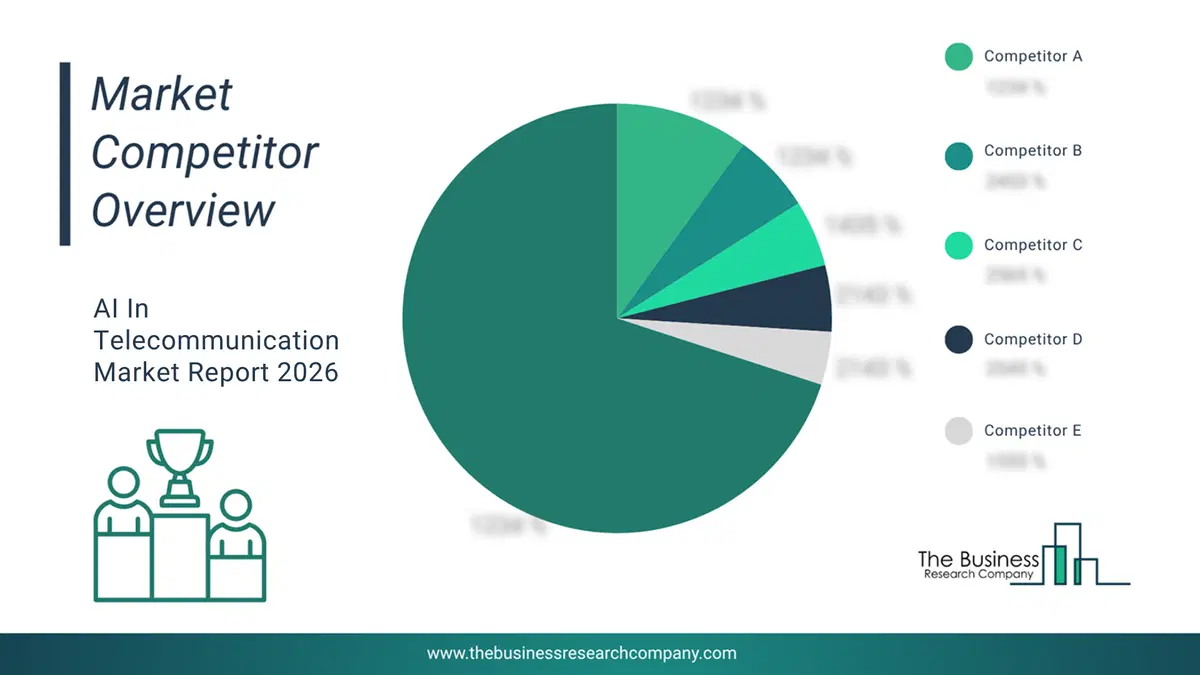
This chart is for illustrative purposes; the full report includes a detailed competitor analysis and comprehensive overview of the top 10 companies in the market.
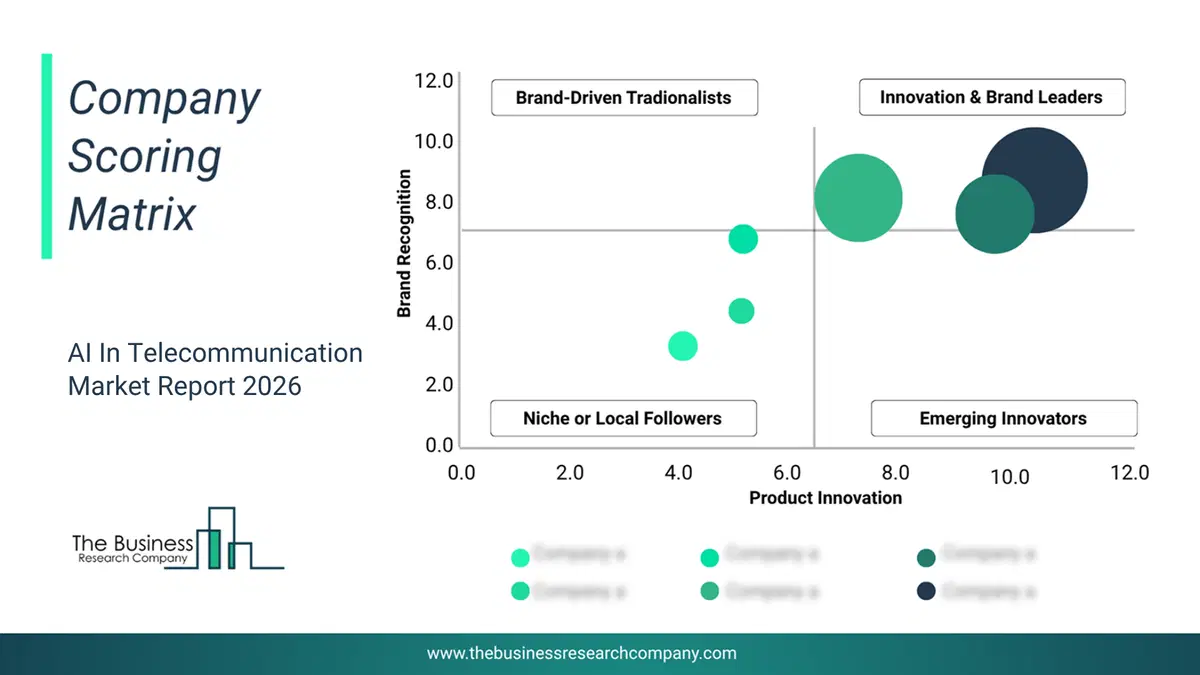
This chart maps companies by product innovation and brand strength, with bubble size indicating relative revenue, helping identify market leaders, challengers, and niche players. This is an illustrative chart; the full report provides a complete and accurate competitive analysis.
Global AI In Telecommunication Market Trends and Insights
Major companies operating in the AI in telecommunications market are developing technological advancements, such as technical controls, to enhance data security, ensure regulatory compliance, improve operational efficiency, and facilitate the responsible use of AI technologies across their networks. Technical controls refer to technology-based security measures designed to safeguard information systems and data from threats, including tools like firewalls, encryption, and access restrictions. For instance, in September 2024, the GSM Association (GSMA), a UK-based trade association, launched the Responsible AI (RAI) Maturity Roadmap for the telecom industry. This roadmap provides telecom operators with a framework to assess and improve their responsible use of AI, featuring assessment tools to measure current maturity against strategic goals and guidelines for implementing best practices. It focuses on five key dimensions: organizational vision, AI governance, regulatory compliance through technical controls, collaboration with third parties, and effective change management. By emphasizing principles such as fairness, human oversight, privacy, transparency, and sustainability, the roadmap positions the telecom sector as a leader in ethical AI integration.What Are Latest Mergers And Acquisitions In The AI In Telecommunication Market?
In October 2025, Capgemini SE, a France-based consulting and technology company, acquired WNS for an undisclosed amount. With this acquisition, Capgemini aims to strengthen its position in data-led business process management and enhance its capabilities in analytics-driven digital operations across key industry verticals. WNS is an India-based company that specializes in providing AI solutions, agentic AI, and AI-powered data analytics platforms that serve multiple industries, including telecommunications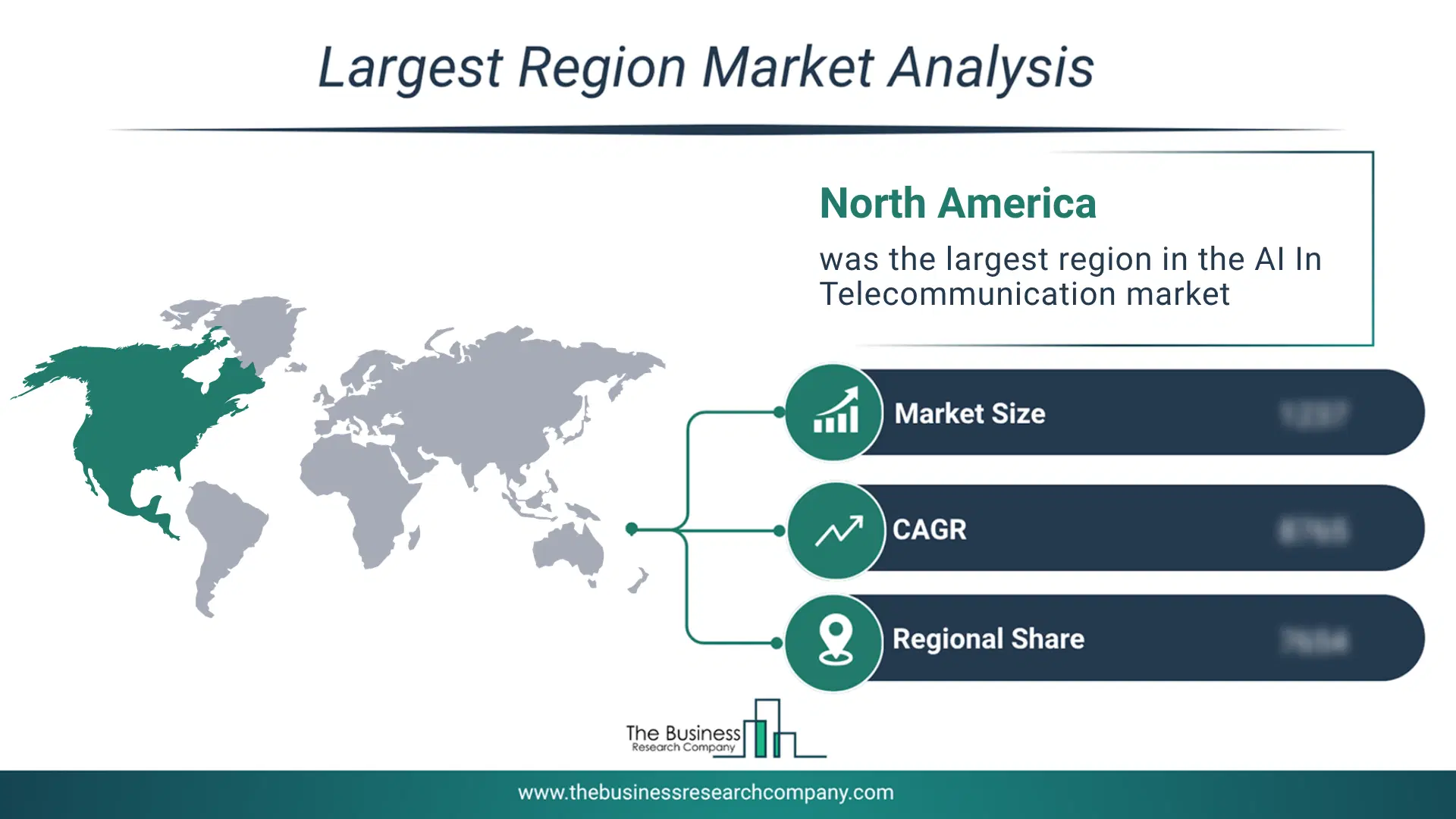
Regional Insights
North America was the largest region in the AI in telecommunication market in 2025.Asia-Pacific is expected to be the fastest-growing region in the global AI in telecommunication market report during the forecast period. The regions covered in this market report are Asia-Pacific, South East Asia, Western Europe, Eastern Europe, North America, South America, Middle East, Africa. The countries covered in this market report are Australia, Brazil, China, France, Germany, India, Indonesia, Japan, Taiwan, Russia, South Korea, UK, USA, Canada, Italy, SpainWhat Defines the AI In Telecommunication Market?
The AI in telecommunication market includes revenues earned by entities by robotics process automation (RPA), chatbots and virtual assistants, and network security. The market value includes the value of related goods sold by the service provider or included within the service offering. Only goods and services traded between entities or sold to end consumers are included. The AI in telecommunication market consists of sales of CPU, graphics processors, and semiconductors. Values in this market are ‘factory gate’ values, that is the value of goods sold by the manufacturers or creators of the goods, whether to other entities (including downstream manufacturers, wholesalers, distributors and retailers) or directly to end customers. The value of goods in this market includes related services sold by the creators of the goods.How is Market Value Defined and Measured?
The market value is defined as the revenues that enterprises gain from the sale of goods and/or services within the specified market and geography through sales, grants, or donations in terms of the currency (in USD unless otherwise specified). The revenues for a specified geography are consumption values that are revenues generated by organizations in the specified geography within the market, irrespective of where they are produced. It does not include revenues from resales along the supply chain, either further along the supply chain or as part of other products.
This chart presents market attractiveness based on a quantitative evaluation of growth, competition, strategic alignment, and risk, offering a clear view of opportunity areas for decision-making. This chart is for illustrative purposes; the full report contains the complete analysis.

This chart highlights the Total Addressable Market (TAM) by estimating the maximum revenue opportunity using an assumption-driven approach, supporting strategic planning and opportunity sizing across markets. The chart is illustrative; the full report provides a more comprehensive analysis.
What Key Data and Analysis Are Included in the AI In Telecommunication Market Report 2026?
The ai in telecommunication market research report is one of a series of new reports from The Business Research Company that provides market statistics, including industry global market size, regional shares, competitors with the market share, detailed market segments, market trends and opportunities, and any further data you may need to thrive in the ai in telecommunication industry. The market research report delivers a complete perspective of everything you need, with an in-depth analysis of the current and future state of the industry.AI In Telecommunication Market Report Forecast Analysis
| Report Attribute | Details |
|---|---|
| Market Size Value In 2026 | $6.69 billion |
| Revenue Forecast In 2030 | $27.33 billion |
| Growth Rate | CAGR of 41.9% from 2026 to 2030 |
| Base Year For Estimation | 2025 |
| Actual Estimates/Historical Data | 2020-2025 |
| Forecast Period | 2026 - 2030 |
| Market Representation | Revenue in USD Billion and CAGR from 2026 to 2030 |
| Segments Covered | Component, Technology, Deployment Model, Application |
| Regional Scope | Asia-Pacific, Western Europe, Eastern Europe, North America, South America, Middle East, Africa |
| Country Scope | The countries covered in the report are Australia, Brazil, China, France, Germany, India, Indonesia, Japan, Taiwan, Russia, South Korea, UK, USA, Canada, Italy, Spain. |
| Key Companies Profiled | Intel Corporation; Nuance Communications Inc.; Infosys Limited.; ZTE Corporation; IBM Corporation; Google LLC; Microsoft Corporation; Salesforce Inc.; Cisco Systems Inc.; NVIDIA Corporation; Evolv Technology Solutions Inc.; AI Incorporated; Sentient Technologies LLC; Comcast Corporation; Verizon Communications Inc.; Windstream Holdings Inc.; Nokia Corporation; Amazon Web Services Inc.; Tech Mahindra Limited; Huawei Technologies Canada Co. Ltd.; Samsung Electronics Co. Ltd.; Orange Business; Deutsche Telekom AG; Telefonaktiebolaget LM Ericsson; China Mobile Limited; China Telecom Corporation Limited; China Unicom (Hong Kong) Limited; Vodafone Group Plc; BT Group plc |
| Customization Scope | Request for Customization |
| Pricing And Purchase Options | Explore Purchase Options |