
AI Skin Analysis Instruments Market Report 2026
Global Outlook – By Product Type (Handheld Skin Analysis Devices, Desktop Skin Analyzers, Wearable Skin Monitors, Mobile Application-Based Analyzers), By Technology (Multispectral Imaging, Optical Coherence Tomography (OCT), Ultrasound Technology, Artificial Intelligence Algorithms), By Distribution Channel (Online Sales, Retail Stores, Direct Sales, Distributor Partnerships), By Application (Skin Type Analysis, Skin Condition Diagnosis, Product Recommendations, Home Skincare Routine Optimization), By End User (Hospitals And Clinics, Beauty And Skincare Clinics, Research Institutions, Home Users, Cosmetics Manufacturers) – Market Size, Trends, Strategies, and Forecast to 2030
AI Skin Analysis Instruments Market Overview
• AI Skin Analysis Instruments market size has reached to $2.14 billion in 2025 • Expected to grow to $5.03 billion in 2030 at a compound annual growth rate (CAGR) of 18.6% • Growth Driver: The Growing Prevalence Of Acne And Hyperpigmentation Is Fueling The Growth Of The Market Due To Rising Beauty Consciousness • Market Trend: Launches of AI-Powered Skin Diagnostic Systems • North America was the largest region in 2025 and Asia-Pacific is the fastest growing region.Market Gains By 2030 – Top Opportunities By Segment
Market Gain identifies the most promising market opportunities by highlighting the segments or products expected to generate the highest incremental revenue growth over the next five years.
What Is Covered Under AI Skin Analysis Instruments Market?
Artificial Intelligence (AI) skin analysis instruments are advanced diagnostic tools designed to assess the condition of the skin using intelligent algorithms. These devices capture detailed visual data and evaluate various skin attributes through automated processing, delivering accurate and consistent insights. By leveraging data-driven analysis, they help professionals make informed decisions related to skin health and appearance. The main product types in AI skin analysis instruments are handheld skin analysis devices, desktop skin analyzers, wearable skin monitors, and mobile application-based analyzers. Handheld skin analysis devices are portable tools used to assess various aspects of skin health, such as moisture levels, pigmentation, and texture. It leverages various technologies such as multispectral imaging, optical coherence tomography (OCT), ultrasound technology, and artificial intelligence algorithms and is distributed through online sales, retail stores, direct sales, and distributor partnerships. These products find applications in skin type analysis, skin condition diagnosis, product recommendations, and home skincare routine optimization, catering to various end users such as hospitals and clinics, beauty and skincare clinics, research institutions, home users, and cosmetics manufacturers.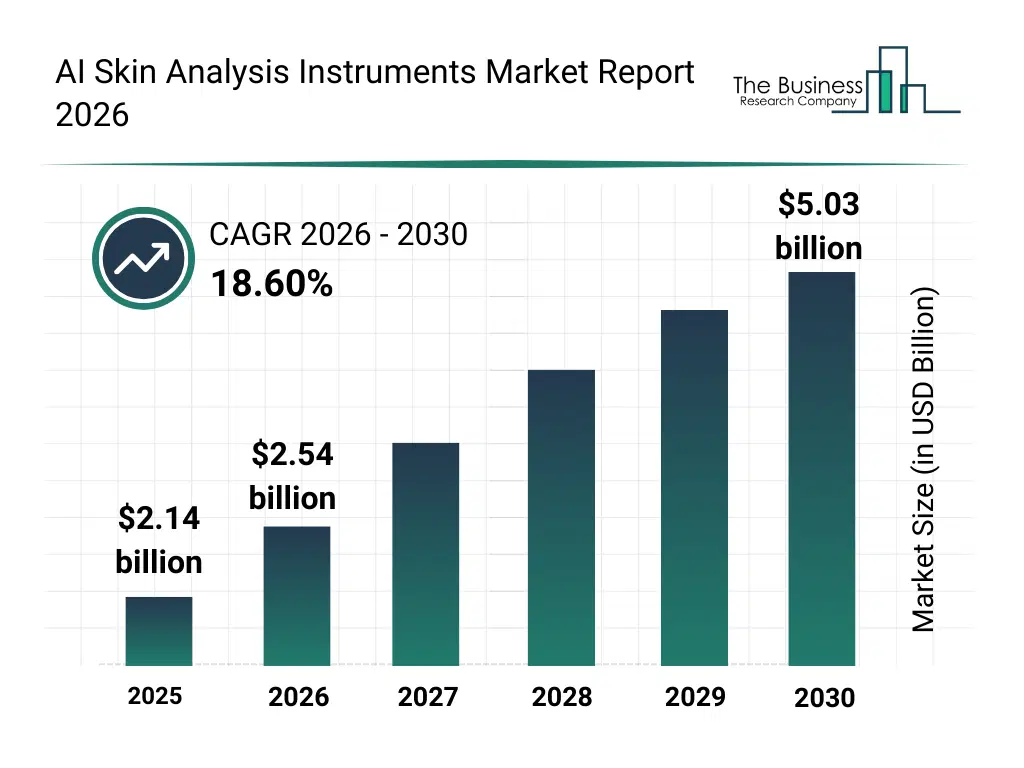
What Is The AI Skin Analysis Instruments Market Size and Share 2026?
The ai skin analysis instruments market size has grown rapidly in recent years. It will grow from $2.14 billion in 2025 to $2.54 billion in 2026 at a compound annual growth rate (CAGR) of 18.8%. The growth in the historic period can be attributed to growing adoption of digital dermatology tools, increasing demand for objective skin assessment, expansion of aesthetic and cosmetic clinics, rising use of imaging technologies in skincare, availability of advanced computing algorithms.What Is The AI Skin Analysis Instruments Market Growth Forecast?
The ai skin analysis instruments market size is expected to see rapid growth in the next few years. It will grow to $5.03 billion in 2030 at a compound annual growth rate (CAGR) of 18.6%. The growth in the forecast period can be attributed to increasing demand for personalized skincare solutions, rising integration of ai with consumer health devices, expansion of home-based skin monitoring, growing investments in digital beauty technologies, increasing focus on preventive skin health. Major trends in the forecast period include increasing adoption of ai-driven skin diagnostic platforms, rising use of multispectral and imaging-based analysis tools, growing integration of mobile and app-based skin assessment solutions, expansion of personalized skincare recommendation systems, enhanced focus on data accuracy and consistency.
Global AI Skin Analysis Instruments Market Segmentation
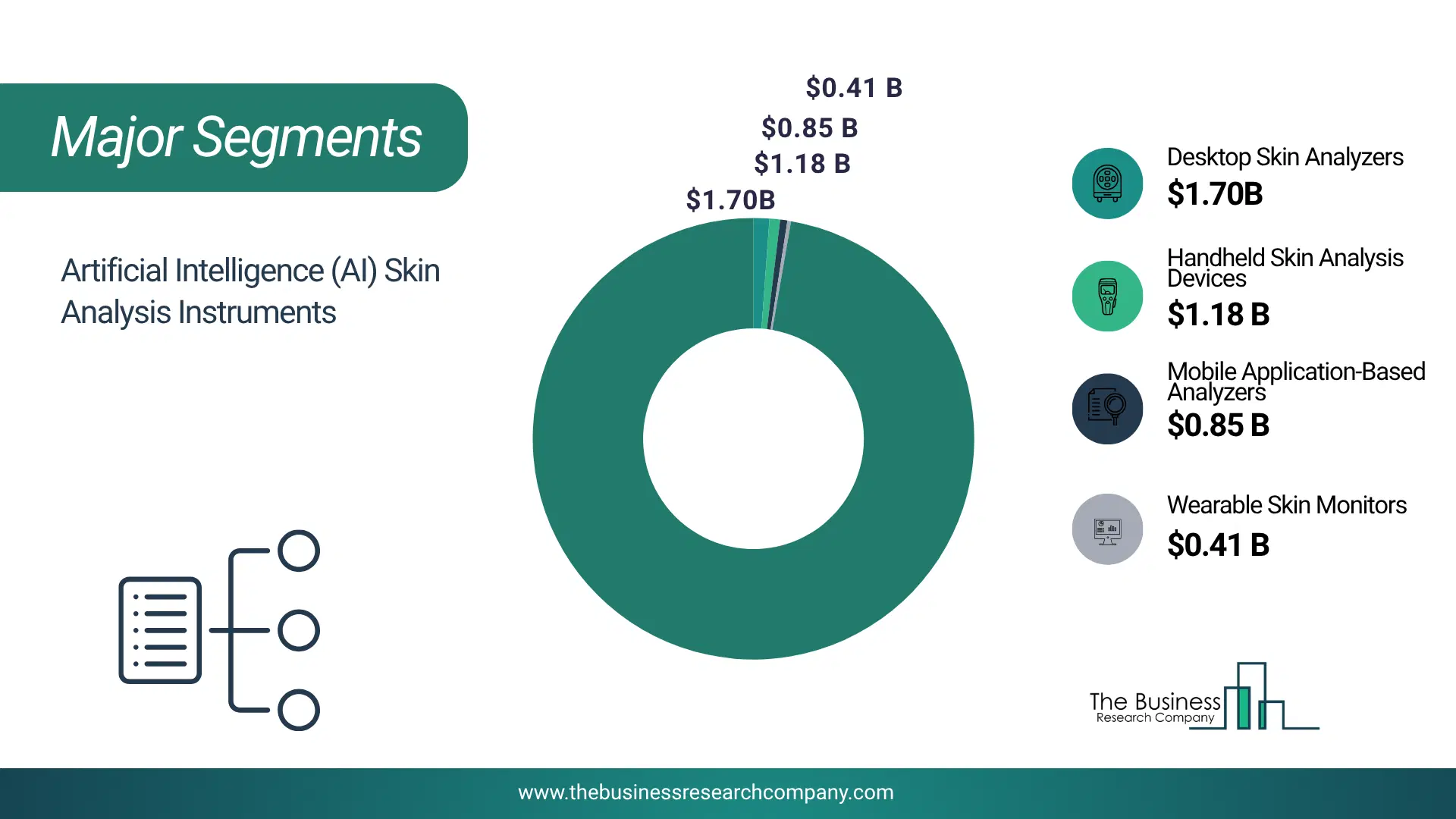
1) By Product Type: Handheld Skin Analysis Devices, Desktop Skin Analyzers, Wearable Skin Monitors, Mobile Application-Based Analyzers 2) By Technology: Multispectral Imaging, Optical Coherence Tomography (OCT), Ultrasound Technology, Artificial Intelligence Algorithms 3) By Distribution Channel: Online Sales, Retail Stores, Direct Sales, Distributor Partnerships 4) By Application: Skin Type Analysis, Skin Condition Diagnosis, Product Recommendations, Home Skincare Routine Optimization 5) By End User: Hospitals And Clinics, Beauty And Skincare Clinics, Research Institutions, Home Users, Cosmetics Manufacturers Subsegments: 1) By Handheld Skin Analysis Devices: AI-Enabled Dermatoscopes, Portable Spectrometers With AI Skin Diagnostics, Smart Beauty Scanners With AI Integration 2) By Desktop Skin Analyzers: Multi-Spectrum Imaging Systems With AI Analysis, Clinical-Grade AI Diagnostic Platforms, AI-Assisted Diagnostic Imaging Stations 3) By Wearable Skin Monitors: AI-Powered UV Exposure Trackers, Smart Patches For Hydration And PH Monitoring, Continuous Skin Health Monitoring Bands With AI 4) By Mobile Application-Based Analyzers: AI Skin Health Apps Using Smartphone Cameras, Cloud-Based AI Dermatology Platforms, Real-Time Acne, Wrinkle, And Pigmentation Analyzers Via Mobile The top segments in the artificial intelligence (ai) skin analysis instruments market will be: • Desktop Skin Analyzers will reach $1.7 Billion by 2030. • Handheld Skin Analysis Devices will reach $1.18 Billion by 2030. • Mobile Application-Based Analyzers will reach $0.85 Billion by 2030. • Wearable Skin Monitors will reach $0.41 Billion by 2030.What Is The Driver Of The AI Skin Analysis Instruments Market?
The growing prevalence of skin disorders such as acne and hyperpigmentation is expected to propel the growth of the artificial intelligence (AI) skin analysis instruments market going forward. Skin disorders such as acne and hyperpigmentation refer to common inflammatory and pigmentary skin conditions characterized by acne breakouts and dark spots caused by excess melanin after skin irritation or injury. The increasing demand for solutions to acne and hyperpigmentation is growing due to rising beauty consciousness and social media influence, which make people more aware of skin imperfections and more willing to seek targeted treatments. For instance, in September 2024, according to the Journal of the American Academy of Dermatology (JAAD), a US-based influential dermatology organization, around 15% of the surveyed population (7,126) reported post-inflammatory hyperpigmentation, mainly women (56%) with a mean age of 39 years, and 30% had phototype >IV compared with 25% worldwide, indicating a sizeable and vulnerable base for pigmentary skin disorders. Moreover, 71% of those with PIH reported prior acne, and 85% believed earlier acne treatment could have prevented it, underscoring the escalating burden of acne-driven hyperpigmentation in the population. Therefore, the growing prevalence of skin disorders such as acne and hyperpigmentation is driving the artificial intelligence (AI) skin analysis instruments.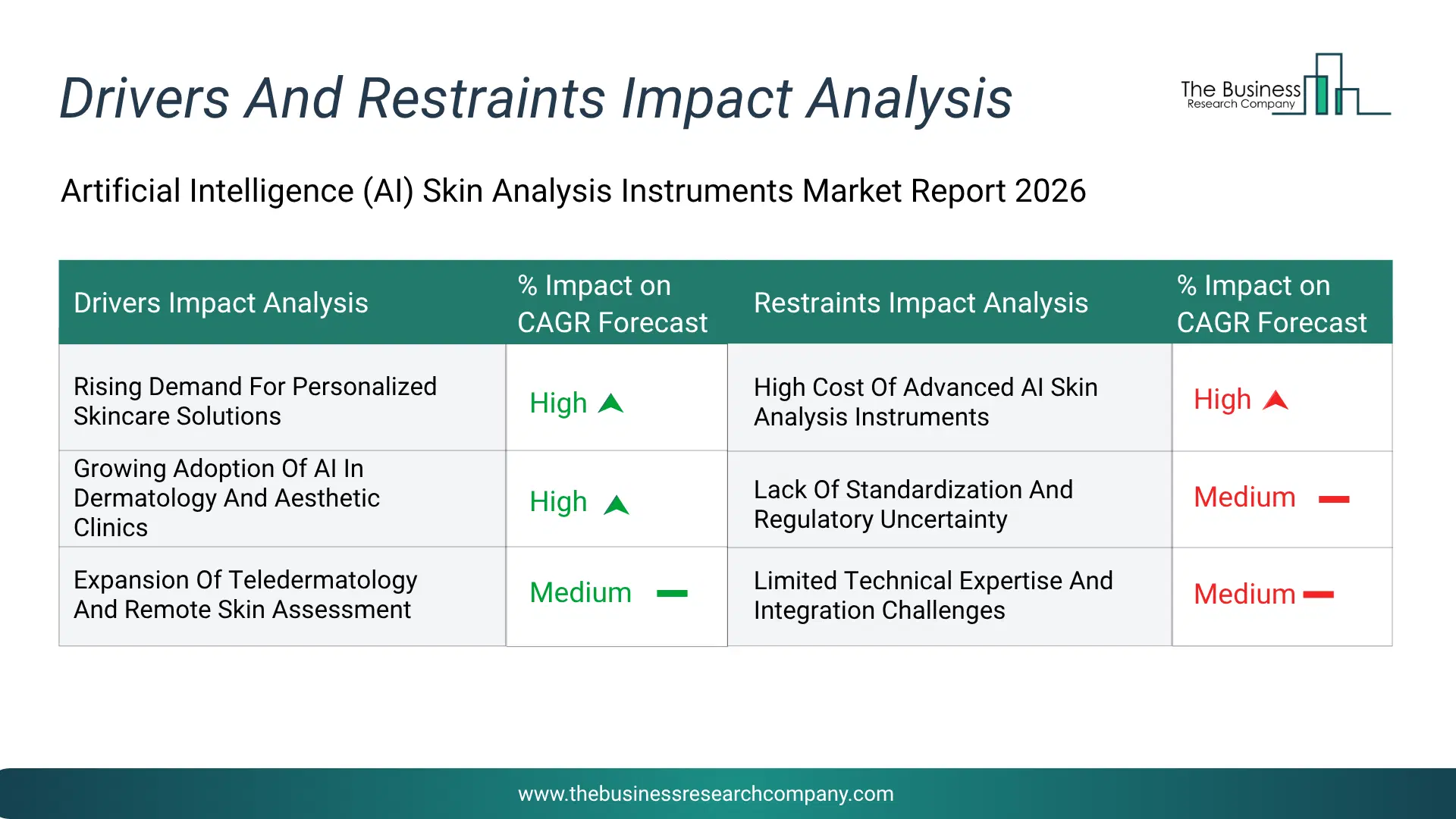
Infographic Chart Showing Key Market Drivers Analysis And Restraints For Ai Skin Analysis Instruments Market
The chart presents an impact analysis of key drivers and restraints, quantifying their relative influence on the market's growth rate and helping assess the balance between growth enablers and limiting factors. This chart offers a high-level perspective; the full report contains more detailed insights.
How Will The Drivers Impact Growth In The Global Artificial Intelligence (AI) Skin Analysis Instruments Market?
• Rising Demand For Personalized Skincare Solutions (High) – During the forecast period, the rising demand for personalized skincare solutions is expected to become a key growth driver for the artificial intelligence (AI) skin analysis instruments market by 2030. Consumers are increasingly seeking customized skincare regimens based on individual skin conditions, concerns, and environmental exposure, driving the adoption of AI-powered analysis tools. These instruments enable precise evaluation of parameters such as hydration, pigmentation, wrinkles, and pores, allowing tailored product recommendations and treatment plans. Skincare brands and technology providers are leveraging data-driven insights to enhance customer experience and product effectiveness. This growing emphasis on individualized care is accelerating the integration of AI skin analysis across retail, clinical, and home-use platforms. • Growing Adoption Of AI In Dermatology And Aesthetic Clinics (High) – During the forecast period, growing Adoption Of AI In Dermatology And Aesthetic Clinics - The growing adoption of AI in dermatology and aesthetic clinics is expected to emerge as a major factor driving the expansion of the artificial intelligence (AI) skin analysis instruments market by 2030. Clinics are increasingly utilizing AI-enabled imaging and diagnostic systems to improve accuracy, efficiency, and consistency in skin assessments. These technologies support dermatologists in early detection of skin conditions, treatment monitoring, and outcome prediction, enhancing clinical decision-making. Additionally, aesthetic clinics are integrating advanced skin analyzers to offer data-backed consultations and premium services to clients. The shift toward technology-driven dermatological practices is strengthening the demand for sophisticated analysis instruments. • Expansion Of Teledermatology And Remote Skin Assessment (Medium) – During the forecast period, the expansion of teledermatology and remote skin assessment is expected to act as a key growth catalyst for the artificial intelligence (AI) skin analysis instruments market by 2030. The increasing use of digital health platforms is enabling consumers to access skin evaluation services without visiting physical clinics, supported by smartphone-based imaging and AI algorithms. Remote analysis tools facilitate continuous skin monitoring, early diagnosis, and convenient follow-up consultations, improving accessibility to dermatological care. Healthcare providers and skincare companies are investing in cloud-based platforms and mobile-integrated solutions to expand their reach and service offerings. As virtual care models gain traction globally, the demand for portable and app-based skin analysis tools is rising significantly.How Will The Restraints Impact Growth In The Global Artificial Intelligence (AI) Skin Analysis Instruments Market?
• High Cost Of Advanced AI Skin Analysis Instruments (High) – During the forecast period, the high cost of advanced AI skin analysis instruments is restricting the growth of the Artificial Intelligence (AI) skin analysis instruments market. Significant upfront investment requirements, expensive hardware components, and ongoing software licensing costs are placing financial strain on dermatology clinics, aesthetic centers, and small healthcare providers, thereby limiting widespread adoption of these advanced diagnostic technologies particularly in price-sensitive markets. • Lack Of Standardization And Regulatory Uncertainty (High) – During the forecast period, lack of standardization and regulatory uncertainty is restricting the growth of the Artificial Intelligence (AI) skin analysis instruments market. The absence of uniform clinical validation standards and evolving regulatory frameworks across regions are creating compliance complexities and delaying product approvals, which in turn is discouraging manufacturers and healthcare providers from fully adopting AI-driven skin analysis solutions. • Limited Technical Expertise And Integration Challenges (Medium) – During the forecast period, limited technical expertise and integration challenges are restricting the growth of the Artificial Intelligence (AI) skin analysis instruments market. Insufficient availability of skilled professionals to operate AI-based systems and difficulties in integrating these instruments with existing clinical workflows and electronic health records are hindering efficient deployment and utilization, particularly in smaller clinics and emerging markets.Key Players In The Global AI Skin Analysis Instruments Market
Major companies operating in the ai skin analysis instruments market are L'Oréal S.A., Meitu Inc., Neutrogena Corporation, Foreo AB, Perfect Corp., FotoFinder Systems Inc., DJM Medical Instrument GmbH, Beijing ADSS Development Co. Ltd., Canfield Scientific Inc., MetaOptima Technology Inc., Shiseido Company Limited, Aesthetic Bureau Pty Ltd., Haut.AI OÜ, Shanghai May Skin Information Technology Co. Ltd., SkinVision B.V., Zemits Inc., VISIA Skin Analysis (Canfield), HiMirror (Caliber Interactive), WaySkin Inc., SK-II Skin Analysis Solutions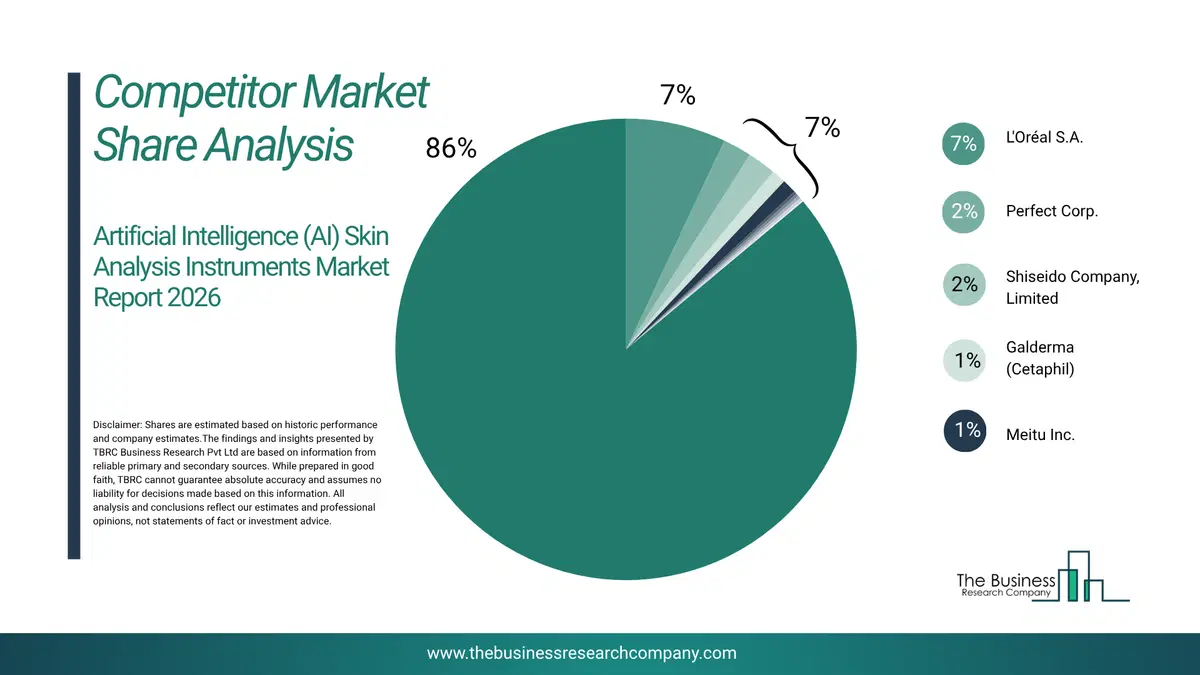
This chart is for illustrative purposes; the full report includes a detailed competitor analysis and comprehensive overview of the top 10 companies in the market.
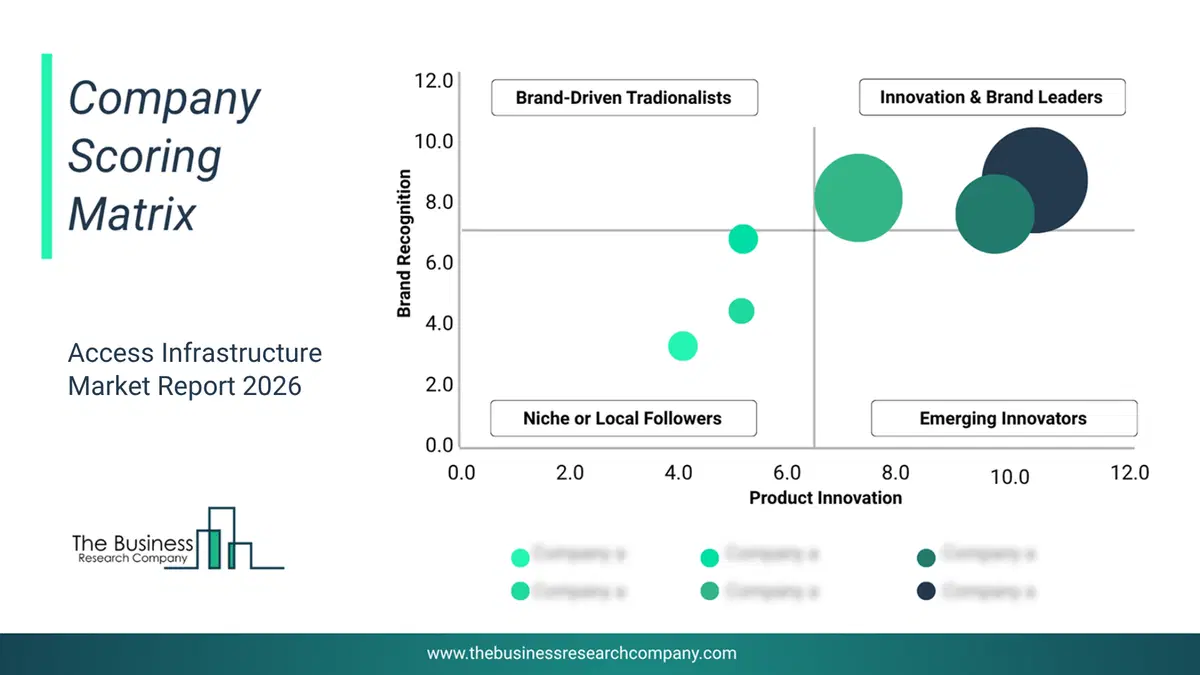
This chart maps companies by product innovation and brand strength, with bubble size indicating relative revenue, helping identify market leaders, challengers, and niche players. This is an illustrative chart; the full report provides a complete and accurate competitive analysis.
Global AI Skin Analysis Instruments Market Trends and Insights
Major companies operating in the AI Skin Analysis Instruments market are focusing on AI‑powered skin diagnostic systems, such as digital skin analysis tools that use computer vision and machine‑learning algorithms to assess skin biomarkers and recommend personalized skincare routines. In this context, digital skin analysis tools refer to software or platforms that analyze images of the skin (for example, selfies) using AI to quantify parameters like wrinkles, pigmentation, pores, texture, and other clinically relevant skin metrics, and then use those insights to guide product selection or skincare regimens. For instance, in April 2024, NAOS, a France‑based skincare company, launched Skin Observer, an AI-driven digital skin-analysis service developed in collaboration with Haut.AI. The platform evaluates more than 150 skin-biomarker data points using Haut.AI’s advanced computer-vision and machine-learning algorithms to deliver clinical-grade assessments with high precision. It personalizes recommendations by tracking changes in skin condition over time and tailoring skincare routines to individual goals and preferences. Designed for both consumers and professionals, the service enhances skin-health monitoring, supports evidence-based product selection, and strengthens NAOS’s positioning in data-powered, personalized skincare solutions.What Are Latest Mergers And Acquisitions In The AI Skin Analysis Instruments Market?
In April 2024, NAOS, a France-based company specializing in skincare and human care, partnered with Haut AI to integrate advanced AI technology into personalized skincare. The partnership aims to revolutionize skincare by combining ecobiological science with AI-powered personalization through the skin observer tool, offering consumers dermatologist-level analysis and tailored solutions for healthier skin. Haut AI is an Estonia-based artificial intelligence company that specializes in skincare and longevity and offers AI-powered skin analysis tools.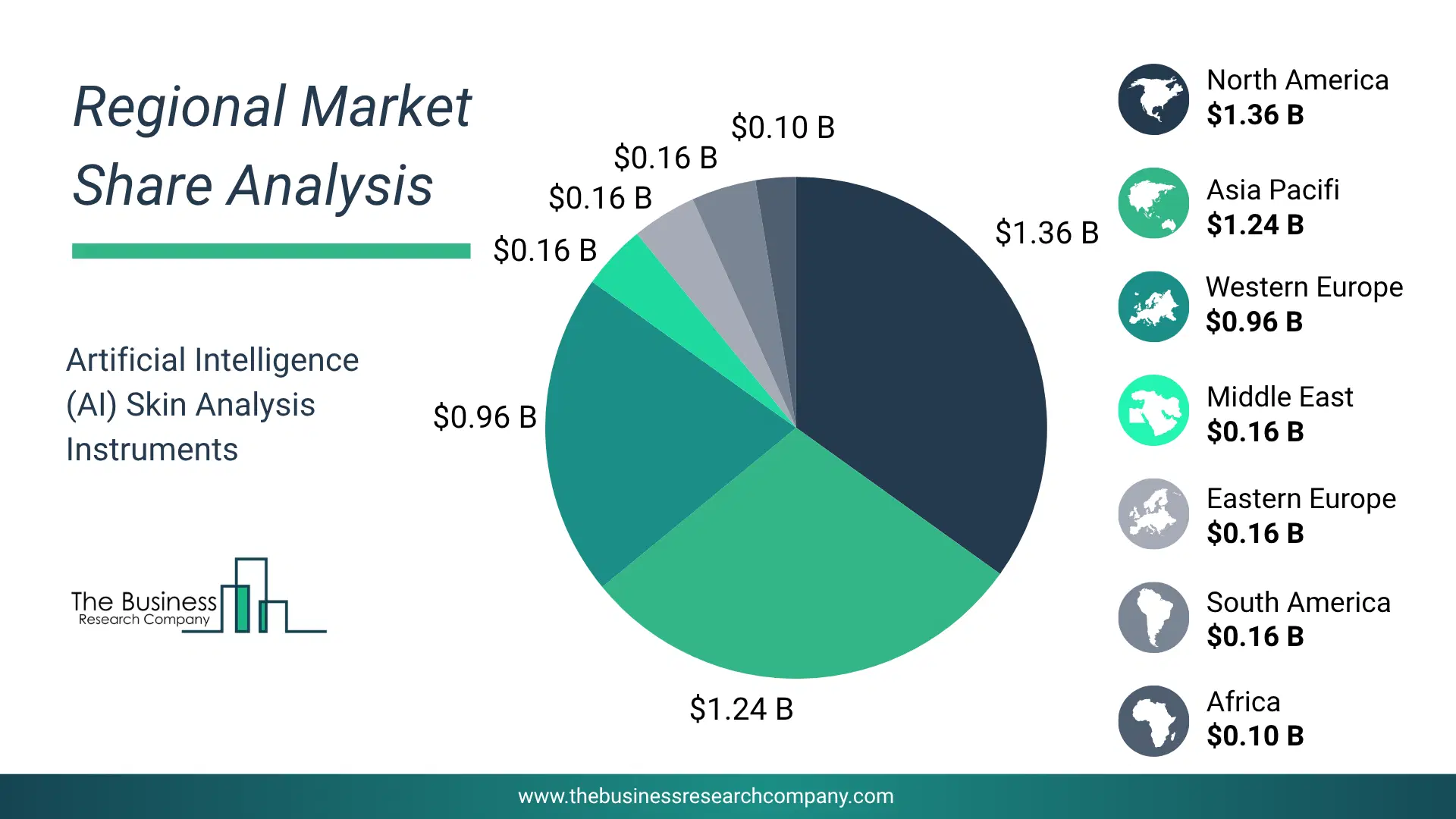
Regional Outlook
North America was the largest region in the AI skin analysis instruments market in 2025. Asia-Pacific is expected to be the fastest-growing region in the forecast period. The regions covered in this market report are Asia-Pacific, South East Asia, Western Europe, Eastern Europe, North America, South America, Middle East, Africa. The countries covered in this market report are Australia, Brazil, China, France, Germany, India, Indonesia, Japan, Taiwan, Russia, South Korea, UK, USA, Canada, Italy, SpainWhat Defines the AI Skin Analysis Instruments Market?
The AI skin analysis instruments market consists of revenues earned by entities by providing services such as wrinkle and fine line detection, pigmentation and spot mapping, personalized skincare recommendations, and pore size and texture assessment. The market value includes the value of related goods sold by the service provider or included within the service offering. The AI skin analysis instruments market also includes sales of AI facial analyzers, 3D skin imaging systems, wearable skin monitors, and dermatoscopes. Values in this market are ‘factory gate’ values, that is, the value of goods sold by the manufacturers or creators of the goods, whether to other entities (including downstream manufacturers, wholesalers, distributors, and retailers) or directly to end customers. The value of goods in this market includes related services sold by the creators of the goods.How is Market Value Defined and Measured?
The market value is defined as the revenues that enterprises gain from the sale of goods and/or services within the specified market and geography through sales, grants, or donations in terms of the currency (in USD unless otherwise specified). The revenues for a specified geography are consumption values that are revenues generated by organizations in the specified geography within the market, irrespective of where they are produced. It does not include revenues from resales along the supply chain, either further along the supply chain or as part of other products.
This chart presents market attractiveness based on a quantitative evaluation of growth, competition, strategic alignment, and risk, offering a clear view of opportunity areas for decision-making. This chart is for illustrative purposes; the full report contains the complete analysis.

This chart highlights the Total Addressable Market (TAM) by estimating the maximum revenue opportunity using an assumption-driven approach, supporting strategic planning and opportunity sizing across markets. The chart is illustrative; the full report provides a more comprehensive analysis.
What Key Data and Analysis Are Included in the AI Skin Analysis Instruments Market Report 2026?
The ai skin analysis instruments market research report is one of a series of new reports from The Business Research Company that provides market statistics, including industry global market size, regional shares, competitors with the market share, detailed market segments, market trends and opportunities, and any further data you may need to thrive in the ai skin analysis instruments industry. The market research report delivers a complete perspective of everything you need, with an in-depth analysis of the current and future state of the industry.AI Skin Analysis Instruments Market Report Forecast Analysis
| Report Attribute | Details |
|---|---|
| Market Size Value In 2026 | $2.54 billion |
| Revenue Forecast In 2030 | $5.03 billion |
| Growth Rate | CAGR of 18.8% from 2026 to 2030 |
| Base Year For Estimation | 2025 |
| Actual Estimates/Historical Data | 2020-2025 |
| Forecast Period | 2026 - 2030 |
| Market Representation | Revenue in USD Billion and CAGR from 2026 to 2030 |
| Segments Covered | Product Type, Technology, Distribution Channel, Application, End User |
| Regional Scope | Asia-Pacific, Western Europe, Eastern Europe, North America, South America, Middle East, Africa |
| Country Scope | The countries covered in the report are Australia, Brazil, China, France, Germany, India, Indonesia, Japan, Taiwan, Russia, South Korea, UK, USA, Canada, Italy, Spain. |
| Key Companies Profiled | L'Oréal S.A., Meitu Inc., Neutrogena Corporation, Foreo AB, Perfect Corp., FotoFinder Systems Inc., DJM Medical Instrument GmbH, Beijing ADSS Development Co. Ltd., Canfield Scientific Inc., MetaOptima Technology Inc., Shiseido Company Limited, Aesthetic Bureau Pty Ltd., Haut.AI OÜ, Shanghai May Skin Information Technology Co. Ltd., SkinVision B.V., Zemits Inc., VISIA Skin Analysis (Canfield), HiMirror (Caliber Interactive), WaySkin Inc., SK-II Skin Analysis Solutions |
| Customization Scope | Request for Customization |
| Pricing And Purchase Options | Explore Purchase Options |