
Aircraft Emergency Oxygen System Market Report 2026
Global Outlook – By System Type (Chemical Oxygen Systems, Compressed Oxygen Systems, Continuous Flow Oxygen Systems, Diluter Demand Oxygen Systems, Pressure Demand Oxygen Systems), By Aircraft Type (Commercial Aircraft, Military Aircraft, Business Jets, Regional Aircraft, Helicopters), By Fitment (Line Fit, Retrofit), By Distribution Channel (Direct Sales, Distributors, Aftermarket Suppliers), By End User (Original Equipment Manufacturers, Aftermarket, Airlines, Military Organizations) – Market Size, Trends, Strategies, and Forecast to 2035
Aircraft Emergency Oxygen System Market Overview
• Aircraft Emergency Oxygen System market size has reached to $0.89 billion in 2025 • Expected to grow to $1.36 billion in 2030 at a compound annual growth rate (CAGR) of 8.8% • Growth Driver: Growing Air Passenger Traffic Driving The Market Growth Due To Increasing Demand For Aircraft Safety And Emergency Systems • Market Trend: Innovations In Integrated Life Support Systems Enhance Emergency Oxygen Availability In Military Aircraft • North America was the largest region in 2025 and Asia-Pacific is the fastest growing region.What Is Covered Under Aircraft Emergency Oxygen System Market?
Aircraft emergency oxygen systems refer to safety equipment installed in aircraft to provide breathable oxygen to passengers and crew during emergency situations such as cabin depressurization or reduced oxygen availability at high altitudes. These systems are designed to ensure a continuous supply of oxygen through oxygen delivery, storage, and distribution mechanisms while supporting passenger safety and compliance with aviation safety requirements. The main system types of aircraft emergency oxygen system include chemical oxygen systems, compressed oxygen systems, continuous flow oxygen systems, diluter demand oxygen systems, and pressure demand oxygen systems. Chemical oxygen systems refer to systems that generate oxygen through a controlled chemical reaction to provide emergency breathing support during aircraft cabin depressurization or other oxygen-demand situations. These systems are installed on commercial aircraft, military aircraft, business jets, regional aircraft, and helicopters, and are available through line fit and retrofit installations. They are distributed through direct sales, distributors, and aftermarket suppliers, and are used end users by original equipment manufacturers, aftermarket providers, airlines, and military organizations.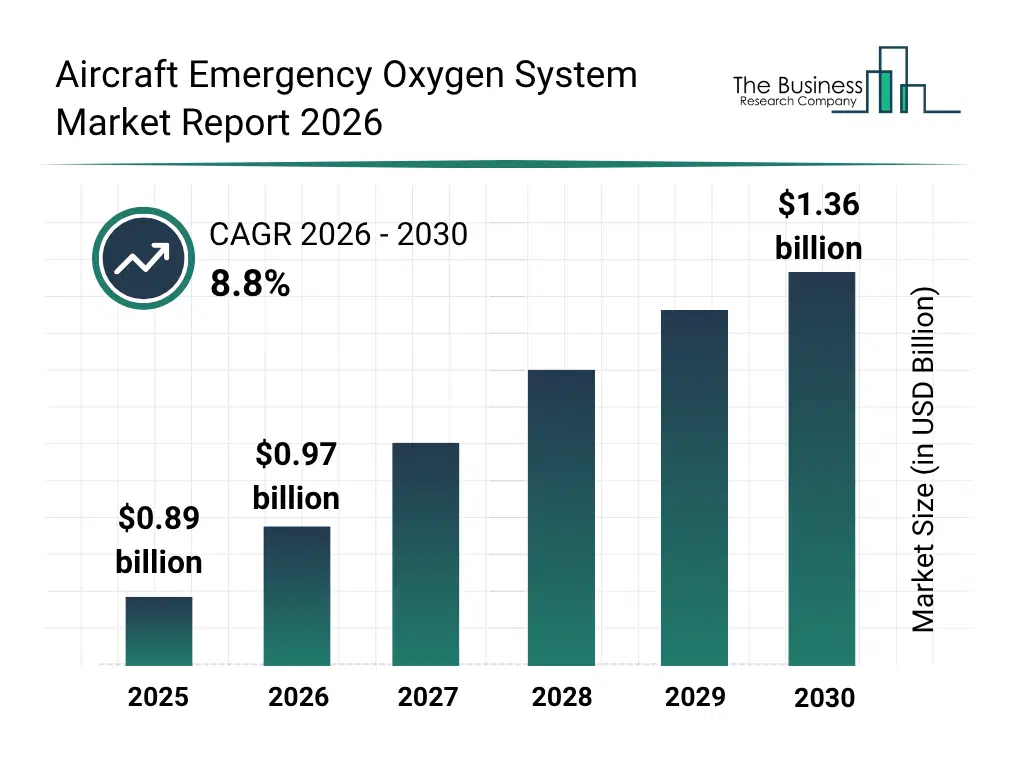
What Is The Aircraft Emergency Oxygen System Market Size and Share 2026?
The aircraft emergency oxygen system market size has grown strongly in recent years. It will grow from $0.89 billion in 2025 to $0.97 billion in 2026 at a compound annual growth rate (CAGR) of 9.2%. The growth in the historic period can be attributed to increasing aircraft production and fleet expansion, stringent aviation safety regulations, rising commercial air passenger traffic, increasing aircraft retrofit activities, growing adoption of advanced emergency oxygen equipment.What Is The Aircraft Emergency Oxygen System Market Growth Forecast?
The aircraft emergency oxygen system market size is expected to see strong growth in the next few years. It will grow to $1.36 billion in 2030 at a compound annual growth rate (CAGR) of 8.8%. The growth in the forecast period can be attributed to increasing demand for next-generation aircraft, expansion of global commercial aviation fleets, rising demand for lightweight aircraft safety systems, increasing aircraft modernization and refurbishment programs, growing emphasis on passenger and crew safety. Major trends in the forecast period include lightweight emergency oxygen system components, extended oxygen storage capacity, compact passenger oxygen delivery systems, improved oxygen mask deployment mechanisms, enhanced emergency oxygen system reliability.Tariff Impact On Aircraft Emergency Oxygen System Market
Tariffs are impacting the aircraft emergency oxygen systems market by increasing the cost of imported oxygen generators, cylinders, valves, masks, pressure regulators, and other specialized aerospace components. Line-fit systems for commercial aircraft and retrofit systems for existing fleets may face higher costs, with North America, Europe, and Asia-Pacific particularly affected by interconnected aerospace supply chains. However, tariffs may encourage manufacturers to localize component production, diversify suppliers, and strengthen regional aerospace manufacturing capabilities, supporting supply-chain resilience over the long term.
Global Aircraft Emergency Oxygen System Market Segmentation
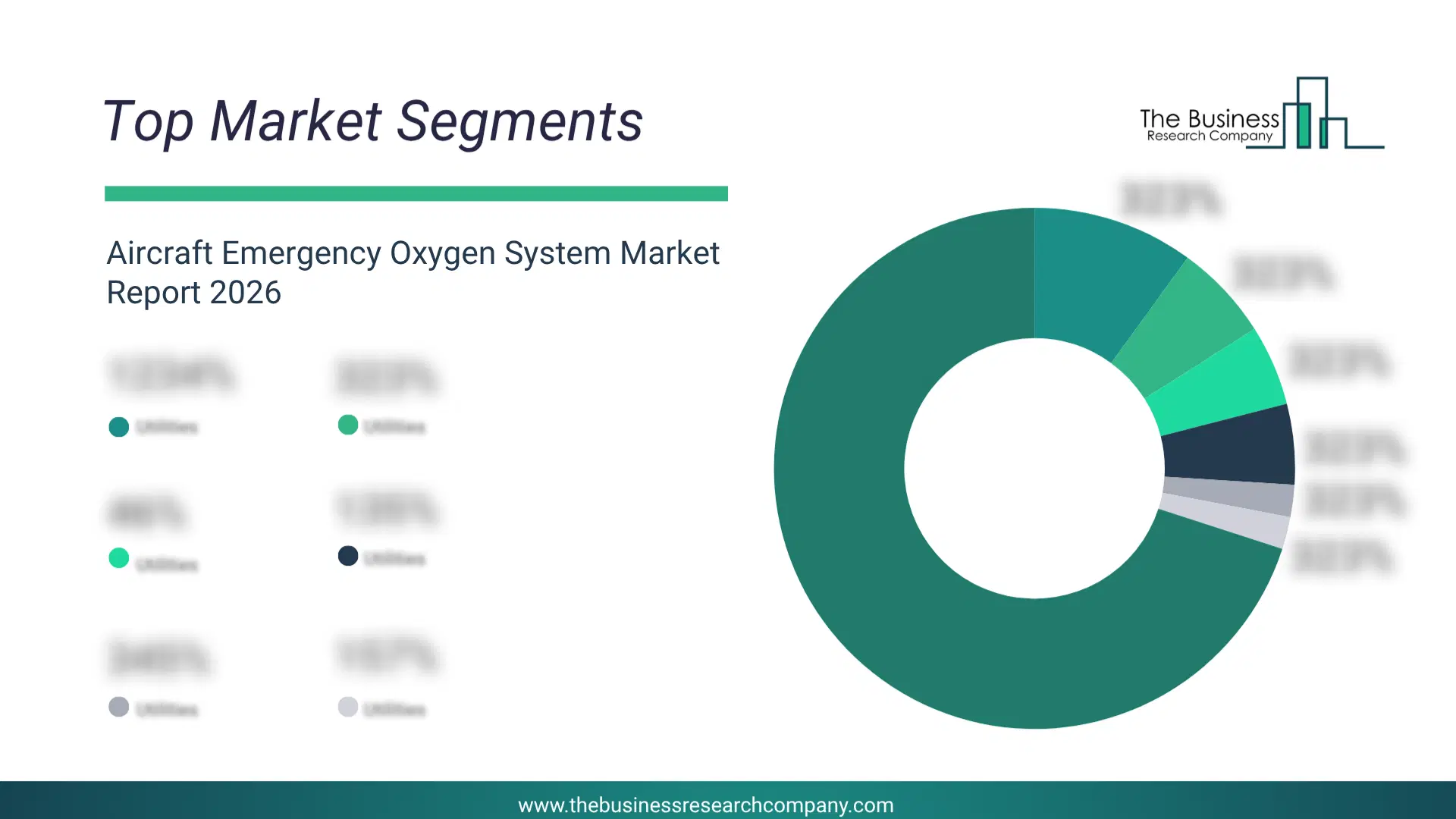
2) By Aircraft Type: Commercial Aircraft, Military Aircraft, Business Jets, Regional Aircraft, Helicopters 3) By Fitment: Line Fit, Retrofit 4) By Distribution Channel: Direct Sales, Distributors, Aftermarket Suppliers 5) By End User: Original Equipment Manufacturers, Aftermarket, Airlines, Military Organizations Subsegments: 1) By Chemical Oxygen Systems: Solid Chemical Oxygen Generators, Potassium Superoxide Oxygen Systems, Sodium Chlorate Oxygen Systems, Emergency Oxygen Generators, Portable Chemical Oxygen Systems 2) By Compressed Oxygen Systems: High Pressure Oxygen Systems, Oxygen Cylinder Systems, Portable Compressed Oxygen Systems, Centralized Compressed Oxygen Systems, Emergency Compressed Oxygen Systems 3) By Continuous Flow Oxygen Systems: Passenger Continuous Flow Oxygen Systems, Crew Continuous Flow Oxygen Systems, Portable Continuous Flow Oxygen Systems, Low Flow Oxygen Systems, High Flow Oxygen Systems 4) By Diluter Demand Oxygen Systems: Automatic Diluter Demand Systems, Pilot Diluter Demand Systems, Adjustable Diluter Demand Systems, Altitude Compensating Diluter Demand Systems, Advanced Diluter Demand Systems 5) By Pressure Demand Oxygen Systems: Pilot Pressure Demand Systems, High Altitude Pressure Demand Systems, Military Pressure Demand Systems, Automatic Pressure Demand Systems, Emergency Pressure Demand SystemsWhat Is The Driver Of The Aircraft Emergency Oxygen System Market?
The growing air passenger traffic is expected to propel the growth of the aircraft emergency oxygen system market going forward. Air passenger traffic refers to the movement of travelers through commercial aviation networks for domestic and international transportation. Air passenger traffic is rising due to increasing tourism, as more people are traveling for leisure, business, and international experiences, leading to higher demand for air travel. Rising air passenger traffic drives demand for aircraft emergency oxygen systems by increasing aircraft production, fleet expansion, and the need for advanced emergency equipment that provides supplemental oxygen to passengers and crew during critical situations. For instance, in September 2025, according to the International Civil Aviation Organization (ICAO), a Canada-based specialised agency of the United Nations, the global number of airline passengers is expected to reach 18.7 billion by the year 2045, approximately doubling the 2024 level. Therefore, the growing air passenger traffic is driving the growth of the aircraft emergency oxygen system industry.Key Players In The Global Aircraft Emergency Oxygen System Market
Major companies operating in the aircraft emergency oxygen system market are Safran Aerosystems SAS, Honeywell Aerospace Technologies Inc., Eaton Corporation plc, Liebherr-Aerospace Lindenberg GmbH, AMETEK Inc., Diehl Aviation GmbH, Bucher Leichtbau AG, Gentex Corporation, Essex Industries Inc., Adams Rite Aerospace Inc., Aero Sekur S.p.A., Ventura Aerospace LLC, Aerox Aviation Oxygen Systems Inc., Precise Flight Inc., Caeli Nova Ltd., Mountain High Equipment & Supply Company, SkyOx LLC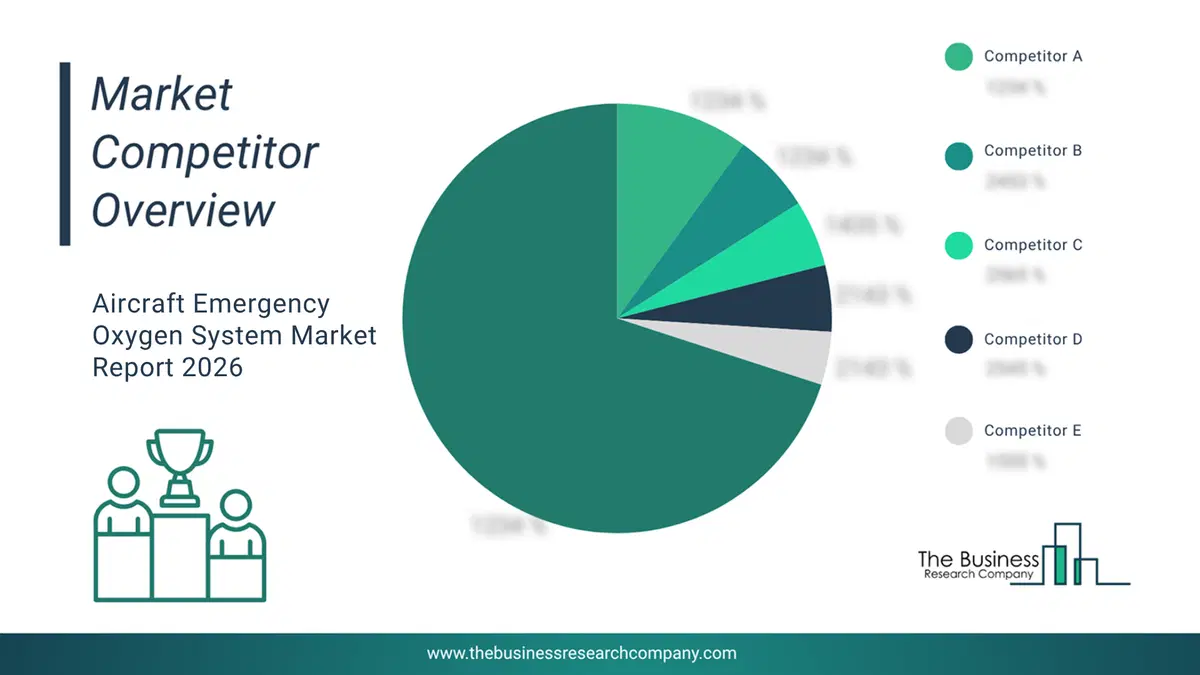
This chart is for illustrative purposes; the full report includes a detailed competitor analysis and comprehensive overview of the top 10 companies in the market.
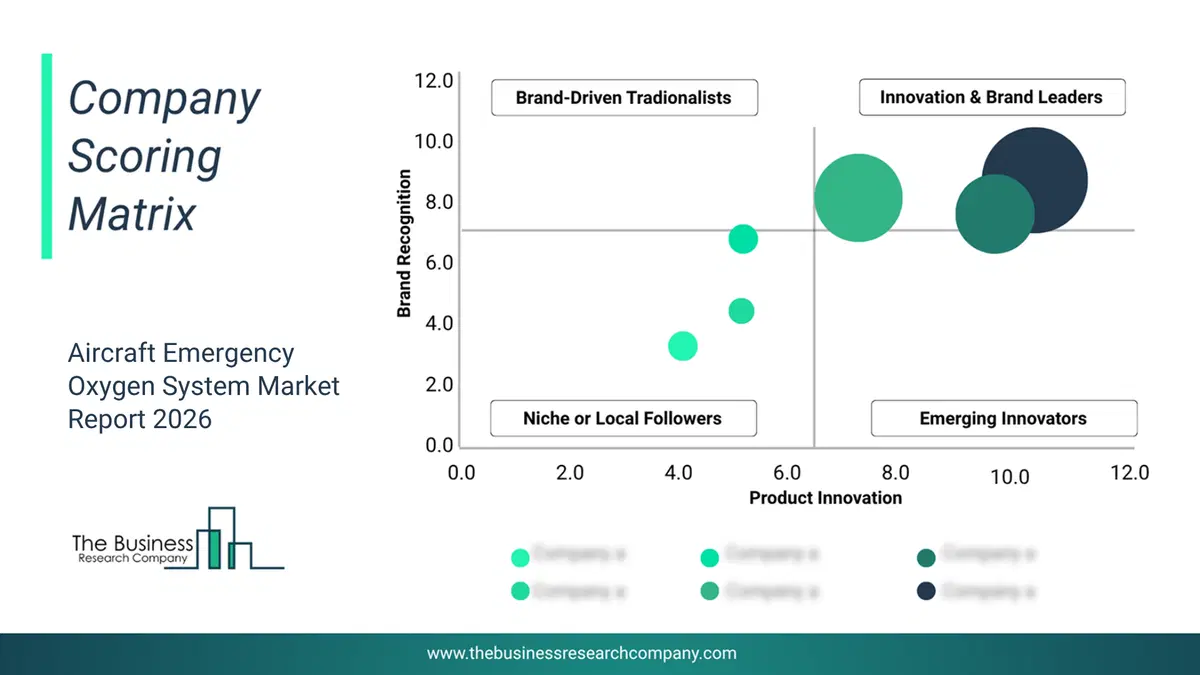
This chart maps companies by product innovation and brand strength, with bubble size indicating relative revenue, helping identify market leaders, challengers, and niche players. This is an illustrative chart; the full report provides a complete and accurate competitive analysis.
Global Aircraft Emergency Oxygen System Market Trends and Insights
Major companies operating in the aircraft emergency oxygen system market are focusing on developing advanced solutions, such as integrated onboard oxygen generation and emergency oxygen systems, to ensure reliable oxygen availability, enhance pilot safety, and improve operational effectiveness during high-altitude flight. Integrated emergency oxygen systems are aircraft life-support systems designed to provide breathable oxygen to pilots during critical flight conditions, including high-altitude operations and emergencies. For instance, in March 2025, the Defence Research and Development Organisation (DRDO), an India-based defense research organization, successfully conducted high-altitude trials of an Indigenous On-Board Oxygen Generating System (OBOGS)-based Integrated Life Support System (ILSS) for the LCA Tejas aircraft. It is developed by DRDO's Defence Bio-Engineering & Electro Medical Laboratory (DEBEL). The system integrates 10 Line Replaceable Units, including an Emergency Oxygen System, Oxygen Sensor, Low-Pressure Breathing Regulator, and Anti-G Valve, and was tested under flight conditions of up to 50,000 feet and high-G maneuvers to ensure reliable oxygen generation and delivery for pilots.What Are Latest Mergers And Acquisitions In The Aircraft Emergency Oxygen System Market?
In April 2026, Signia Aerospace, a US-based provider of high-performance systems and mission-critical components for the aerospace and defense industries, acquired Aerox Aerospace Group for an undisclosed amount. Through this acquisition, Signia Aerospace aims to expand its aircraft oxygen system capabilities by integrating Aerox’s portable and installed aviation oxygen systems, including emergency oxygen systems, TSO-approved oxygen masks, PMA-certified cylinders, regulators, and related accessories. Aerox Aerospace Group is a US-based aviation oxygen systems provider that designs and manufactures oxygen solutions for general aviation, business aviation, airlines, the military, and special mission applications.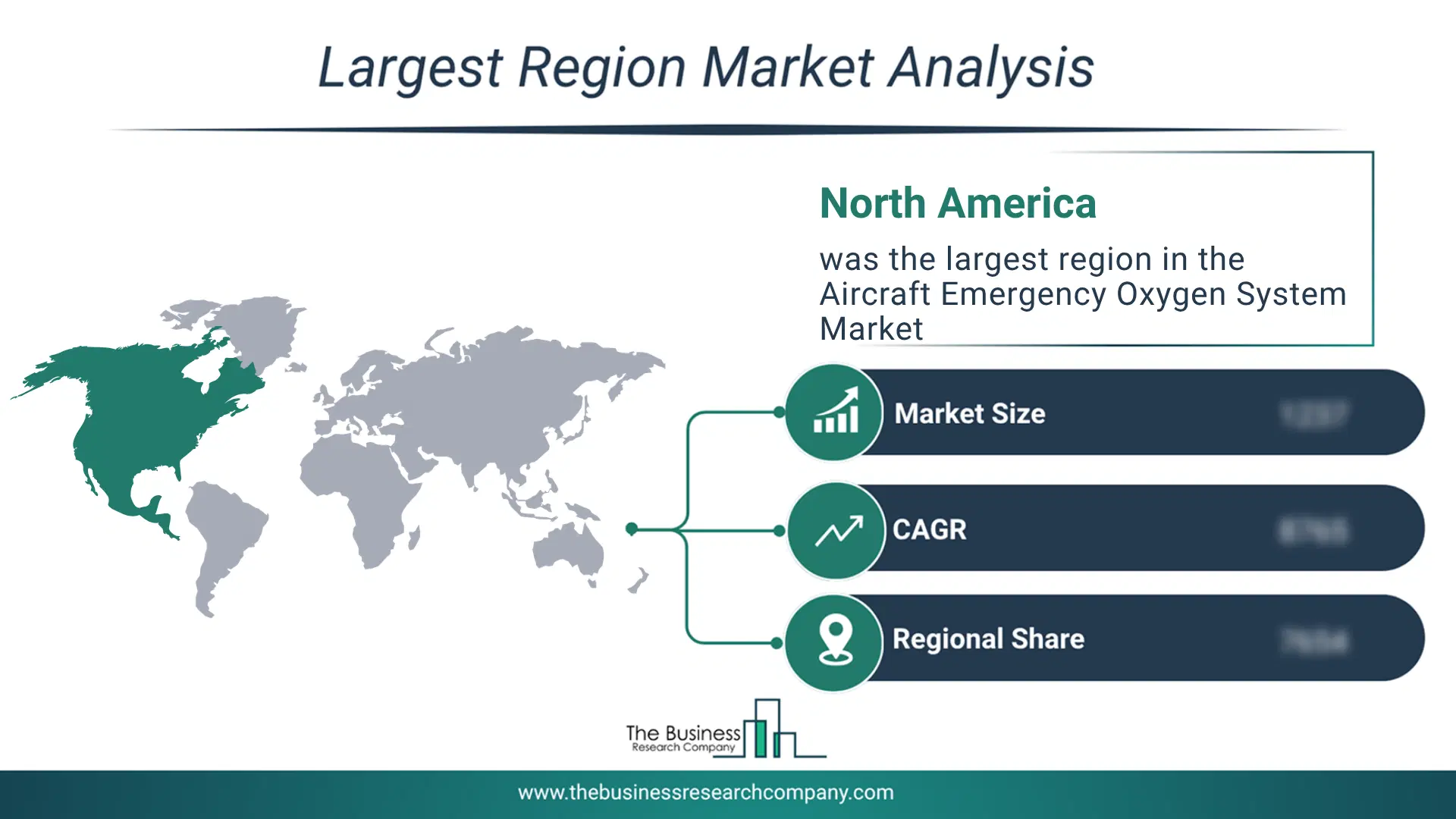
Regional Outlook/Insights
North America was the largest region in the aircraft emergency oxygen systems market in 2025. Asia-Pacific is expected to be the fastest-growing region in the forecast period. The regions covered in this market report are Asia-Pacific, South East Asia, Western Europe, Eastern Europe, North America, South America, Middle East, Africa. The countries covered in this market report are Australia, Brazil, China, France, Germany, India, Indonesia, Japan, Taiwan, Russia, South Korea, UK, USA, Canada, Italy, Spain.What Defines the Aircraft Emergency Oxygen System Market?
The aircraft emergency oxygen system market consists of sales of oxygen masks, oxygen regulators, oxygen supply units, passenger oxygen systems, crew oxygen systems, oxygen storage cylinders, oxygen distribution assemblies, oxygen control panels, and related aircraft oxygen equipment. Values in this market are ‘factory gate’ values, that is, the value of goods sold by the manufacturers or creators of the goods, whether to other entities (including downstream manufacturers, wholesalers, distributors, and retailers) or directly to end customers. The value of goods in this market includes related services sold by the creators of the goods.How is Market Value Defined and Measured?
The market value is defined as the revenues that enterprises gain from the sale of goods and/or services within the specified market and geography through sales, grants, or donations in terms of the currency (in USD unless otherwise specified). The revenues for a specified geography are consumption values that are revenues generated by organizations in the specified geography within the market, irrespective of where they are produced. It does not include revenues from resales along the supply chain, either further along the supply chain or as part of other products.
This chart presents market attractiveness based on a quantitative evaluation of growth, competition, strategic alignment, and risk, offering a clear view of opportunity areas for decision-making. This chart is for illustrative purposes; the full report contains the complete analysis.

This chart highlights the Total Addressable Market (TAM) by estimating the maximum revenue opportunity using an assumption-driven approach, supporting strategic planning and opportunity sizing across markets. The chart is illustrative; the full report provides a more comprehensive analysis.
What Key Data and Analysis Are Included in the Aircraft Emergency Oxygen System Market Report 2026?
The aircraft emergency oxygen system market research report is one of a series of new reports from The Business Research Company that provides market statistics, including industry global market size, regional shares, competitors with the market share, detailed market segments, market trends and opportunities, and any further data you may need to thrive in the aircraft emergency oxygen system industry. The market research report delivers a complete perspective of everything you need, with an in-depth analysis of the current and future state of the industry.Aircraft Emergency Oxygen System Market Report Forecast Analysis
| Report Attribute | Details |
|---|---|
| Market Size Value In 2026 | $0.97 billion |
| Revenue Forecast In 2030 | $1.36 billion |
| Growth Rate | CAGR of 8.8% from 2026 to 2035 |
| Base Year For Estimation | 2025 |
| Actual Estimates/Historical Data | 2020-2025 |
| Forecast Period | 2026 - 2030 |
| Market Representation | Revenue in USD Billion and CAGR from 2026 to 2030 |
| Segments Covered | System Type, Aircraft Type, Fitment, Distribution Channel, End User |
| Regional Scope | Asia-Pacific, Western Europe, Eastern Europe, North America, South America, Middle East, Africa |
| Country Scope | The countries covered in the report are Australia, Brazil, China, France, Germany, India, Indonesia, Japan, Taiwan, Russia, South Korea, UK, USA, Canada, Italy, Spain. |
| Customization Scope | Request for Customization |
| Pricing And Purchase Options | Explore Purchase Options |