

Aircraft Exhaust System Market Report 2026
Global Outlook – By System (Engine Exhaust System, Auxiliary Power Unit Exhaust System), By Aircraft Type (Commercial, Regional Jets, Business Aviation, Military Fixed Wing, Helicopters Civil And Military, General Aviation Piston And Turboprop), By Material (Stainless Steel, Titanium Alloys, Nickel Based Alloys, Composite Materials, Other Materials), By Sales Channel (Direct Sales, Distributor Sales, Aftermarket Sales), By End User (Original Equipment Manufacturers, Maintenance Repair And Overhaul) – Market Size, Trends, Strategies, and Forecast to 2030
Aircraft Exhaust System Market Overview
• Aircraft Exhaust System market size has reached to $1.14 billion in 2025 • Expected to grow to $1.71 billion in 2030 at a compound annual growth rate (CAGR) of 8.4% • Growth Driver: Rising Air Passenger Traffic Is Fueling The Growth Of The Market Due To Fleet Expansion And Increased Aircraft Utilization • Market Trend: Advanced Exhaust Nozzle Development Supports Efficient Aircraft Propulsion • North America was the largest region in 2025 and Asia-Pacific is the fastest growing region.What Is Covered Under Aircraft Exhaust System Market?
Aircraft exhaust systems refer to assemblies installed in aircraft engines to safely direct and discharge exhaust gases generated during engine operation. These systems are designed to manage high-temperature emissions, reduce engine backpressure, protect surrounding aircraft components from heat, and contribute to overall engine performance and operational safety. They are manufactured using heat-resistant materials and precision engineering to withstand extreme operating conditions while meeting aviation performance and regulatory requirements. The main systems of aircraft exhaust systems include engine exhaust systems and auxiliary power unit exhaust systems. Engine exhaust systems refer to systems that collect and discharge exhaust gases produced during aircraft engine operation while helping manage exhaust flow, temperature, and emissions. These systems are used in commercial aircraft, regional jets, business aviation, military fixed wing aircraft, civil and military helicopters, and general aviation piston and turboprop aircraft and are manufactured using stainless steel, titanium alloys, nickel based alloys, composite materials, and other materials. They are sold through direct sales, distributor sales, and aftermarket sales, and are used by end users including original equipment manufacturers and maintenance, repair, and overhaul providers.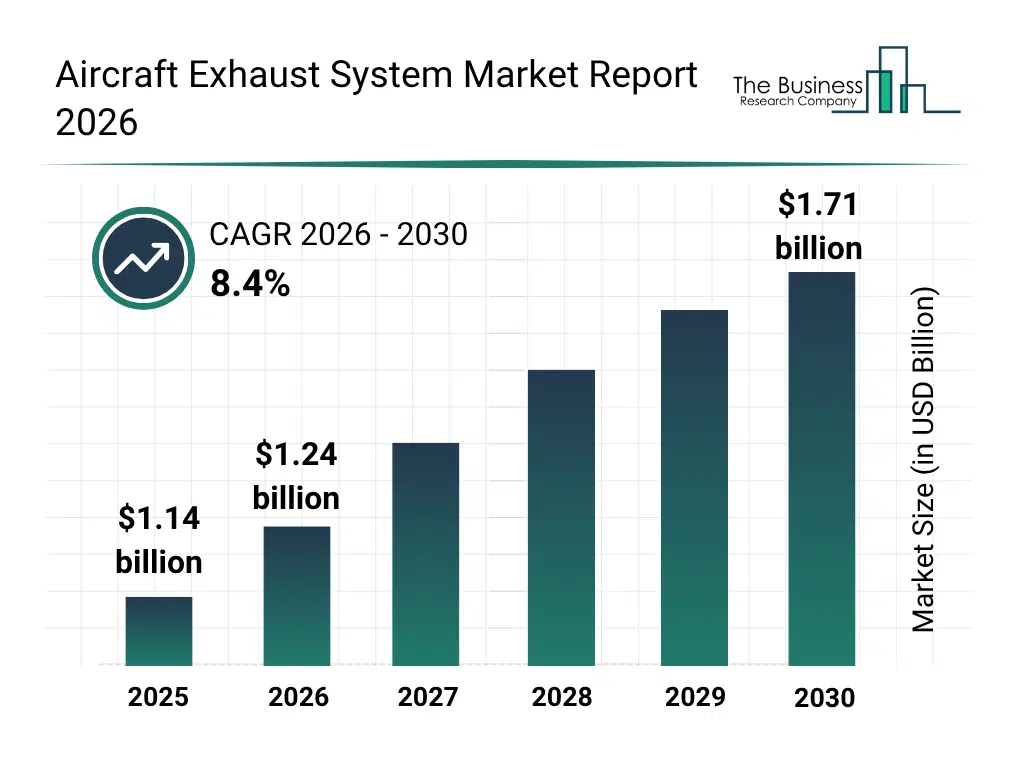
What Is The Aircraft Exhaust System Market Size and Share 2026?
The aircraft exhaust system market size has grown strongly in recent years. It will grow from $1.14 billion in 2025 to $1.24 billion in 2026 at a compound annual growth rate (CAGR) of 8.9%. The growth in the historic period can be attributed to increasing aircraft fleet expansion, rising demand for aircraft engine maintenance, growing adoption of high-performance exhaust assemblies, increasing aviation safety requirements, rising replacement demand for aging exhaust components.What Is The Aircraft Exhaust System Market Growth Forecast?
The aircraft exhaust system market size is expected to see strong growth in the next few years. It will grow to $1.71 billion in 2030 at a compound annual growth rate (CAGR) of 8.4%. The growth in the forecast period can be attributed to increasing demand for lightweight exhaust systems, rising adoption of advanced heat-resistant materials, growing focus on improved engine efficiency, increasing demand for low-emission exhaust configurations, rising need for extended exhaust component service life. Major trends in the forecast period include increasing demand for lightweight aircraft exhaust components, rising adoption of high-temperature resistant exhaust materials, growing demand for improved exhaust gas management, increasing focus on reduced engine backpressure, rising demand for durable and corrosion-resistant exhaust assemblies.
Global Aircraft Exhaust System Market Segmentation
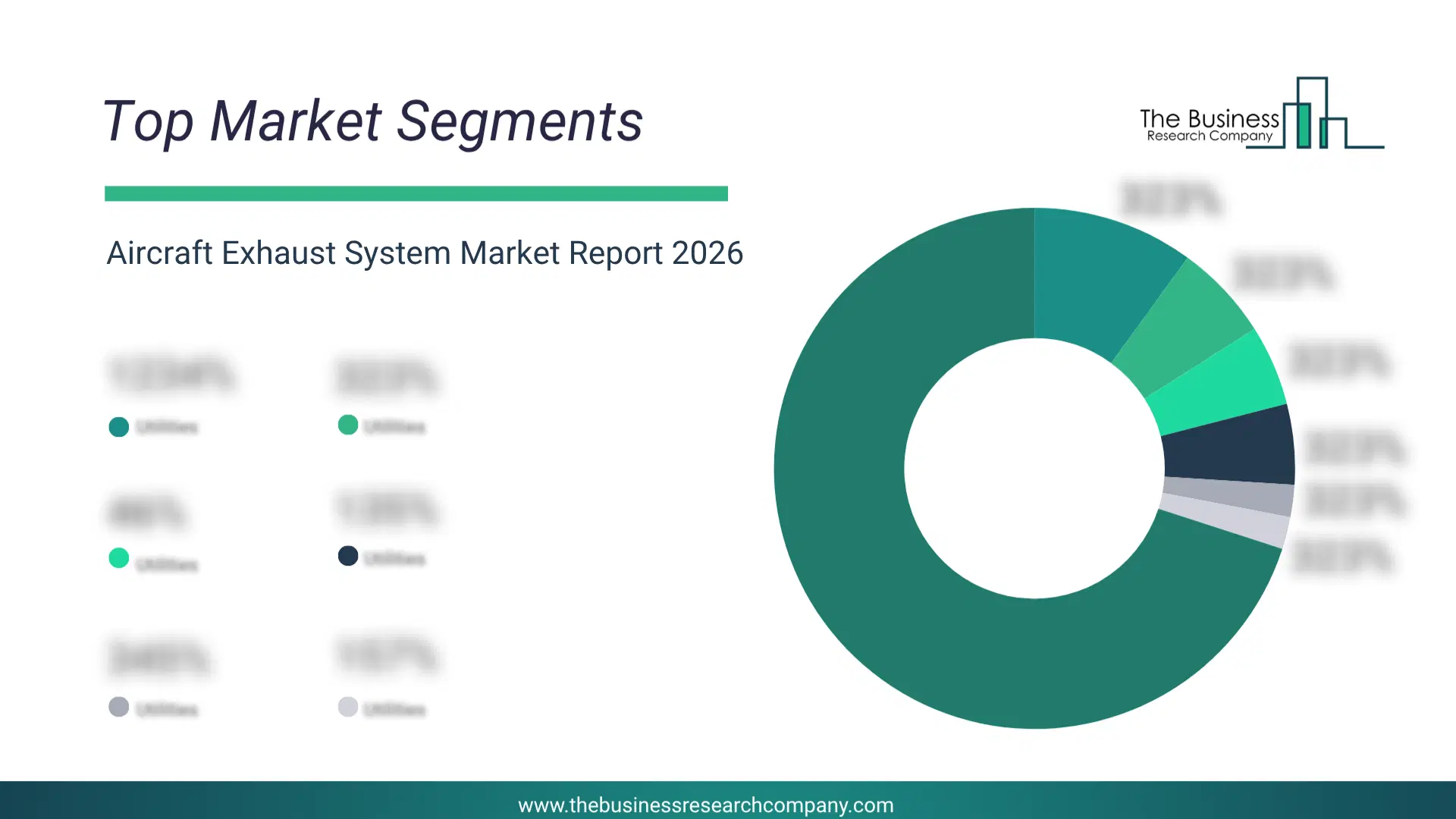
1) By System: Engine Exhaust System, Auxiliary Power Unit Exhaust System 2) By Aircraft Type: Commercial, Regional Jets, Business Aviation, Military Fixed Wing, Helicopters Civil And Military, General Aviation Piston And Turboprop 3) By Material: Stainless Steel, Titanium Alloys, Nickel Based Alloys, Composite Materials, Other Materials 4) By Sales Channel: Direct Sales, Distributor Sales, Aftermarket Sales 5) By End User: Original Equipment Manufacturers, Maintenance Repair And Overhaul Subsegments: 1) By Engine Exhaust System: Exhaust Manifold System, Exhaust Duct System, Exhaust Nozzle System, Thrust Reverser Exhaust System, Infrared Suppression Exhaust System 2) By Auxiliary Power Unit Exhaust System: Straight Exhaust System, Silenced Exhaust System, Heat Shielded Exhaust System, Infrared Suppression Exhaust System, Integrated Auxiliary Power Unit Exhaust SystemWhat Is The Driver Of The Aircraft Exhaust System Market?
The rising global air passenger traffic is expected to propel aircraft exhaust system market going forward. Air passenger traffic refers to the movement of travelers through commercial aviation networks for domestic and international transportation. Air passenger traffic is increasing due to rising tourism activities, expanding business travel, growing disposable incomes, and increasing connectivity through global airline networks. Air passenger traffic growth is accelerating the expansion of commercial aviation, leading to higher aircraft utilization and production, which consequently supports the increasing demand for aircraft exhaust systems across the global aerospace industry. For instance, in January 2025, according to the International Air Transport Association (IATA), a Switzerland-based aviation trade association, total global passenger traffic measured in revenue passenger kilometers increased by 10.4% in 2024 compared with 2023, while international passenger traffic increased by 13.6% during the same period. The overall passenger load factor reached a record 83.5% in 2024. Therefore, rising air passenger traffic is driving the growth of the aircraft exhaust system industry.Key Players In The Global Aircraft Exhaust System Market
Major companies operating in the aircraft exhaust system market are GE Aerospace, RTX Corporation, Rolls-Royce Holdings plc, Honeywell International Inc., Safran SA, Mitsubishi Heavy Industries Ltd., Parker-Hannifin Corporation, Eaton Corporation plc, Kawasaki Heavy Industries Ltd., IHI Corporation, TransDigm Group Incorporated, MTU Aero Engines AG, HEICO Corporation, GKN Aerospace Services Limited, Hindustan Aeronautics Limited, Curtiss-Wright Corporation, Woodward Inc., Senior plc, Crane Co., Ducommun Incorporated, FACC AG
This chart is for illustrative purposes; the full report includes a detailed competitor analysis and comprehensive overview of the top 10 companies in the market.
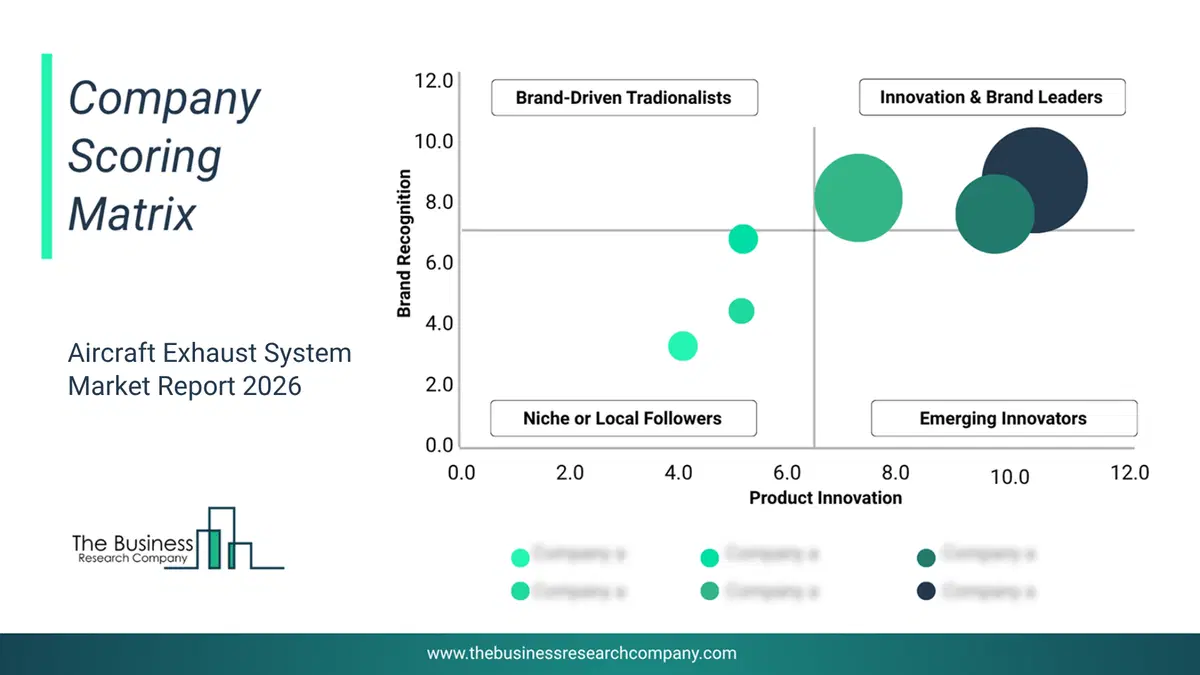
This chart maps companies by product innovation and brand strength, with bubble size indicating relative revenue, helping identify market leaders, challengers, and niche players. This is an illustrative chart; the full report provides a complete and accurate competitive analysis.
Global Aircraft Exhaust System Market Trends and Insights
Major companies operating in the aircraft exhaust system market are focusing on developing advanced exhaust components, such as exhaust nozzles, to improve propulsion efficiency and support lower-emission aircraft designs. Aircraft exhaust nozzles are propulsion-system components that control and accelerate exhaust gases exiting the engine, influencing thrust, efficiency, and aircraft performance. For instance, in July 2025, ST Engineering MRAS, a US-based aerospace manufacturer, was selected by JetZero, a US-based aerospace startup, to design and manufacture the exhaust nozzle for JetZero’s full-scale blended-wing-body demonstrator aircraft. ST Engineering MRAS will provide engineering, design, and manufacturing expertise for the component in collaboration with JetZero and its propulsion system partners. The development supports JetZero’s next-generation aircraft program, which targets up to 50% lower fuel consumption and carbon emissions compared with conventional aircraft, while the exhaust nozzle forms an important part of the aircraft’s propulsion system.What Are Latest Mergers And Acquisitions In The Aircraft Exhaust System Market?
In December 2025, The Boeing Company, a US-based aerospace and defense company, acquired Spirit AeroSystems Holdings, Inc. for approximately $4.7 billion. With this acquisition, The Boeing Company aimed to strengthen aviation safety, aircraft quality, and supply chain stability by reintegrating Spirit AeroSystems Holdings, Inc.’s commercial aerostructures operations, improving production efficiency, enhancing manufacturing oversight for key aircraft programs including the 737, 767, 777, and 787, and supporting long-term growth across its commercial and defense businesses. Spirit AeroSystems Holdings Inc. is a US-based aerospace manufacturing company that specializes in designing and manufacturing provides complete propulsion systems, including engine exhausts, nacelles, and thrust reverser systems for both commercial and defense aircraft.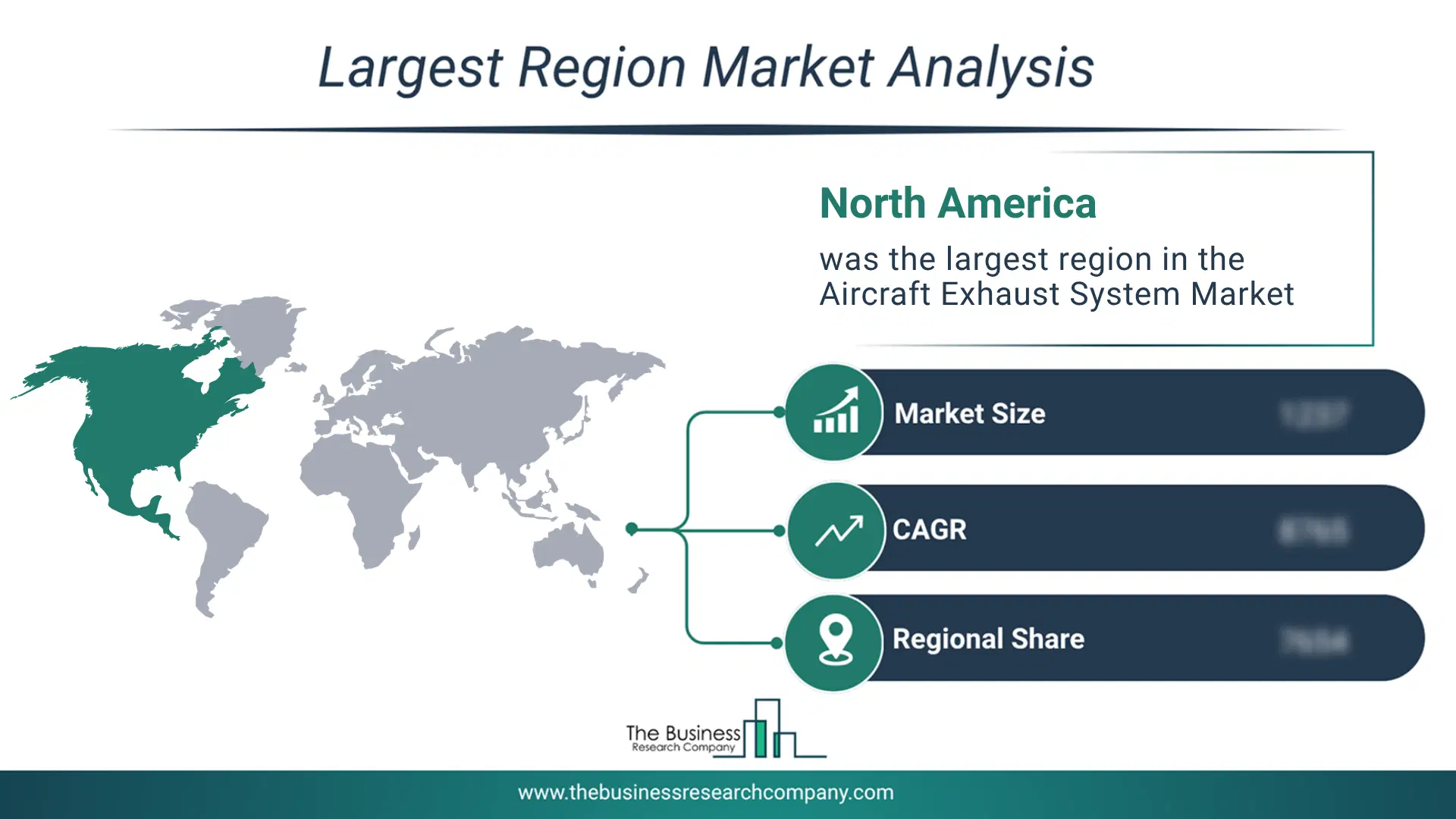
Regional Outlook
North America was the largest region in the aircraft exhaust system market in 2025. Asia-Pacific is expected to be the fastest-growing region in the forecast period. The regions covered in this market report are Asia-Pacific, South East Asia, Western Europe, Eastern Europe, North America, South America, Middle East, Africa. The countries covered in this market report are Australia, Brazil, China, France, Germany, India, Indonesia, Japan, Taiwan, Russia, South Korea, UK, USA, Canada, Italy, Spain.What Defines the Aircraft Exhaust System Market?
The aircraft exhaust system market consists of sales of exhaust stacks, exhaust collectors, exhaust ducts, tailpipes, turbocharger exhaust components, collector rings, exhaust manifolds, exhaust flanges, exhaust clamps, and related aircraft exhaust system components. Values in this market are ‘factory gate’ values, that is, the value of goods sold by the manufacturers or creators of the goods, whether to other entities (including downstream manufacturers, wholesalers, distributors, and retailers) or directly to end customers. The value of goods in this market includes related services sold by the creators of the goods.How is Market Value Defined and Measured?
The market value is defined as the revenues that enterprises gain from the sale of goods and/or services within the specified market and geography through sales, grants, or donations in terms of the currency (in USD unless otherwise specified). The revenues for a specified geography are consumption values that are revenues generated by organizations in the specified geography within the market, irrespective of where they are produced. It does not include revenues from resales along the supply chain, either further along the supply chain or as part of other products.
This chart presents market attractiveness based on a quantitative evaluation of growth, competition, strategic alignment, and risk, offering a clear view of opportunity areas for decision-making. This chart is for illustrative purposes; the full report contains the complete analysis.

This chart highlights the Total Addressable Market (TAM) by estimating the maximum revenue opportunity using an assumption-driven approach, supporting strategic planning and opportunity sizing across markets. The chart is illustrative; the full report provides a more comprehensive analysis.
What Key Data and Analysis Are Included in the Aircraft Exhaust System Market Report 2026?
The aircraft exhaust system market research report is one of a series of new reports from The Business Research Company that provides market statistics, including industry global market size, regional shares, competitors with the market share, detailed market segments, market trends and opportunities, and any further data you may need to thrive in the aircraft exhaust system industry. The market research report delivers a complete perspective of everything you need, with an in-depth analysis of the current and future state of the industry.Aircraft Exhaust System Market Report Forecast Analysis
| Report Attribute | Details |
|---|---|
| Market Size Value In 2026 | $1.24 billion |
| Revenue Forecast In 2030 | $1.71 billion |
| Growth Rate | CAGR of 8.4% from 2026 to 2030 |
| Base Year For Estimation | 2025 |
| Actual Estimates/Historical Data | 2020-2025 |
| Forecast Period | 2026 - 2030 |
| Market Representation | Revenue in USD Billion and CAGR from 2026 to 2030 |
| Segments Covered | System, Aircraft Type, Material, Sales Channel, End User |
| Regional Scope | Asia-Pacific, Western Europe, Eastern Europe, North America, South America, Middle East, Africa |
| Country Scope | The countries covered in the report are Australia, Brazil, China, France, Germany, India, Indonesia, Japan, Taiwan, Russia, South Korea, UK, USA, Canada, Italy, Spain. |
| Key Companies Profiled | GE Aerospace, RTX Corporation, Rolls-Royce Holdings plc, Honeywell International Inc., Safran SA, Mitsubishi Heavy Industries Ltd., Parker-Hannifin Corporation, Eaton Corporation plc, Kawasaki Heavy Industries Ltd., IHI Corporation, TransDigm Group Incorporated, MTU Aero Engines AG, HEICO Corporation, GKN Aerospace Services Limited, Hindustan Aeronautics Limited, Curtiss-Wright Corporation, Woodward Inc., Senior plc, Crane Co., Ducommun Incorporated, FACC AG |
| Customization Scope | Request for Customization |
| Pricing And Purchase Options | Explore Purchase Options |