

Aircraft Fuel Management System Market Report 2026
Global Outlook – By Type (Hydro Mechanical, Electronic Engine Control, Full Authority Digital Engine Control, Other Types), By Technology (Manual Fuel Management Systems, Semi Automatic Fuel Management Systems, Automatic Fuel Management Systems), By Installation (Line Fit, Retrofit), By Application (Fuel Quantity Measurement, Fuel Monitoring, Fuel Transfer And Distribution, Fuel Balancing, Fuel Consumption Management, Fuel Leak Detection), By End User (Original Equipment Manufacturers, Aftermarket, Military Operators, Commercial Airlines, Business Aviation Operators) – Market Size, Trends, Strategies, and Forecast to 2030
Aircraft Fuel Management System Market Overview
• Aircraft Fuel Management System market size has reached to $1.89 billion in 2025 • Expected to grow to $3.02 billion in 2030 at a compound annual growth rate (CAGR) of 9.8% • Growth Driver: Growth In Air Passenger Traffic Drives The Market Due To Increasing Flight Operations • Market Trend: Advancements In Digital Fuel Measurement Technologies Supporting Sustainable Aviation • North America was the largest region in 2025 and Europe is the fastest growing region.What Is Covered Under Aircraft Fuel Management System Market?
An aircraft fuel management system is an integrated system that monitors, measures, and controls the quantity and distribution of fuel throughout an aircraft to ensure safe and efficient operation. It enhances operational reliability by optimizing fuel usage, maintaining proper fuel balance, and supporting overall aircraft performance during flight. The main types of aircraft fuel management systems include hydro mechanical, electronic engine control, full authority digital engine control, and other types. Hydro mechanical refer to systems that use mechanical and hydraulic components to regulate and control fuel flow to aircraft engines based on operating conditions. These systems incorporate manual fuel management systems, semi automatic fuel management systems, and automatic fuel management systems and are available through line fit and retrofit installations. They find application in fuel quantity measurement, fuel monitoring, fuel transfer and distribution, fuel balancing, fuel consumption management, and fuel leak detection, serving end users including original equipment manufacturers, aftermarket, military operators, commercial airlines, and business aviation operators.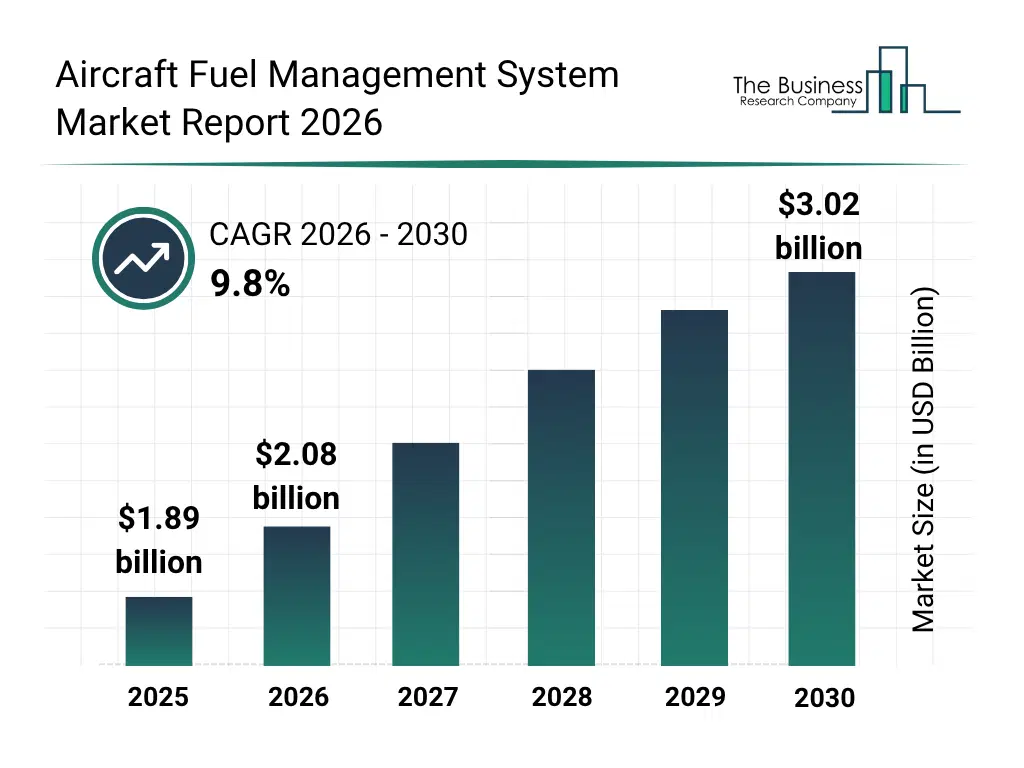
What Is The Aircraft Fuel Management System Market Size and Share 2026?
The aircraft fuel management system market size has grown rapidly in recent years. It will grow from $1.89 billion in 2025 to $2.08 billion in 2026 at a compound annual growth rate (CAGR) of 10.2%. The growth in the historic period can be attributed to increasing demand for accurate aircraft fuel measurement, rising focus on aircraft operational safety, growing adoption of automated fuel quantity monitoring, increasing need for efficient fuel distribution, expanding commercial aircraft fleets.What Is The Aircraft Fuel Management System Market Growth Forecast?
The aircraft fuel management system market size is expected to see strong growth in the next few years. It will grow to $3.02 billion in 2030 at a compound annual growth rate (CAGR) of 9.8%. The growth in the forecast period can be attributed to rising demand for fuel consumption optimization, increasing adoption of predictive fuel management, growing focus on sustainable aviation operations, rising demand for advanced fuel imbalance detection, increasing need for integrated aircraft fuel control. Major trends in the forecast period include increasing adoption of AI-driven fuel consumption optimization, rising integration of autonomous fuel balancing systems, growing use of real-time connected fuel monitoring, increasing adoption of cloud-based fuel data analytics, rising demand for cybersecurity in aircraft fuel management systems.
Global Aircraft Fuel Management System Market Segmentation
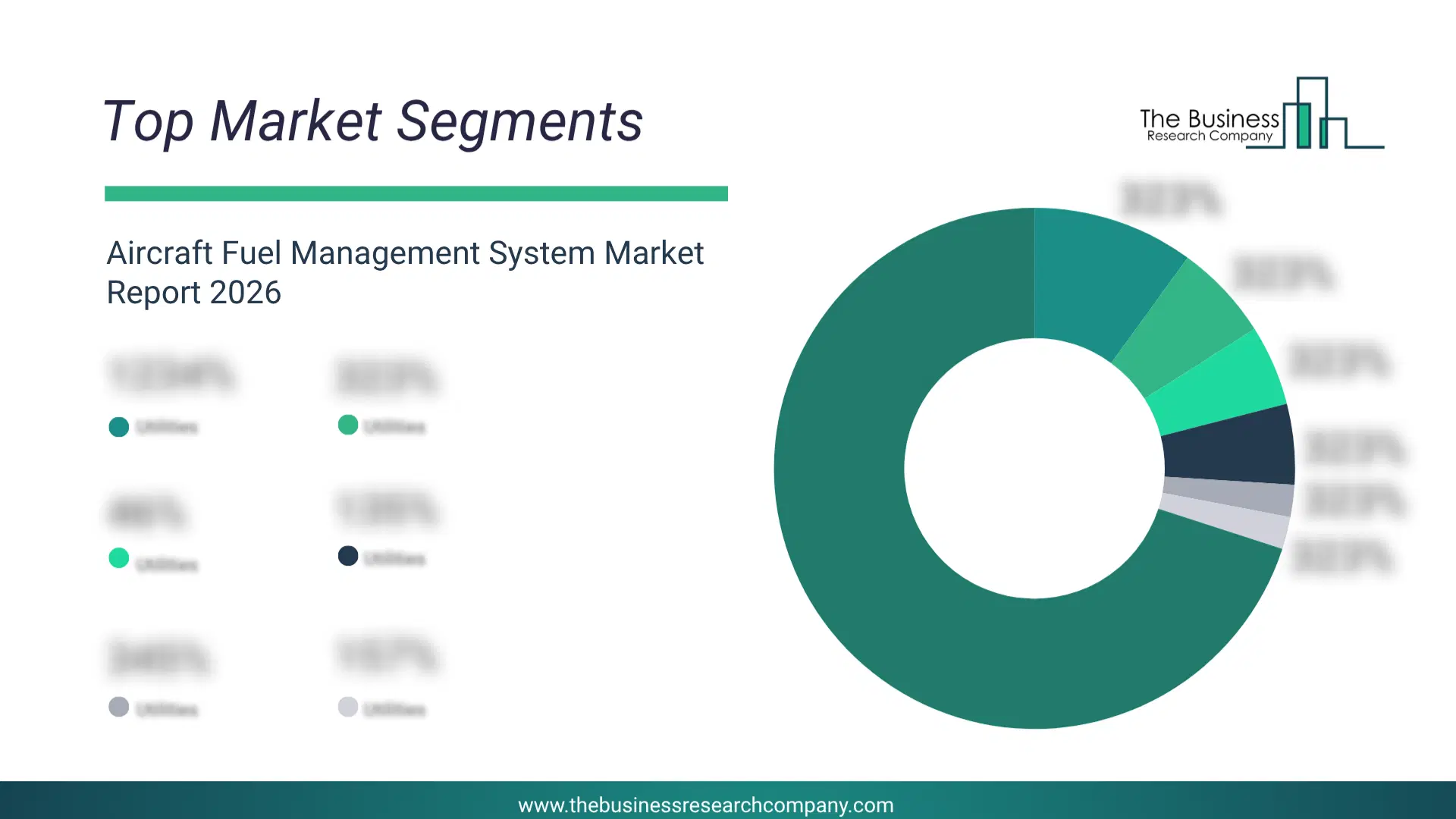
1) By Type: Hydro Mechanical, Electronic Engine Control, Full Authority Digital Engine Control, Other Types 2) By Technology: Manual Fuel Management Systems, Semi Automatic Fuel Management Systems, Automatic Fuel Management Systems 3) By Installation: Line Fit, Retrofit 4) By Application: Fuel Quantity Measurement, Fuel Monitoring, Fuel Transfer And Distribution, Fuel Balancing, Fuel Consumption Management, Fuel Leak Detection 5) By End User: Original Equipment Manufacturers, Aftermarket, Military Operators, Commercial Airlines, Business Aviation Operators Subsegments: 1) By Hydro Mechanical: Mechanical Fuel Metering Units, Hydraulic Fuel Control Units, Pressure Regulating Systems, Fuel Scheduling Mechanisms 2) By Electronic Engine Control: Single Channel Electronic Engine Control, Dual Channel Electronic Engine Control, Integrated Engine Monitoring Systems, Programmable Fuel Control Systems 3) By Full Authority Digital Engine Control: Single Engine Control Systems, Twin Engine Control Systems, Integrated Propulsion Control Systems, Digital Fuel Scheduling Systems 4) By Other Types: Hybrid Fuel Control Systems, Distributed Engine Control Systems, Adaptive Fuel Management Systems, Custom Engine Control SolutionsWhat Are The Drivers Of The Aircraft Fuel Management System Market?
The growth in air passenger traffic is expected to propel the growth of the aircraft fuel management system market going forward. Air passenger traffic is the total number of passengers traveling by air through airports or on airlines over a specific period. Air passenger traffic is increasing due to rising disposable incomes, which enable more people to afford air travel for business and leisure purposes. Increasing air passenger traffic drives demand for aircraft fuel management systems by expanding flight operations, requiring more efficient fuel monitoring, optimization, and consumption management to reduce costs and improve operational efficiency. For instance, in January 2025, according to the International Air Transport Association, a Canada-based aviation trade association, total global air passenger traffic increased by 10.4% in 2024 compared to 2023, while international passenger traffic grew by 13.6% year over year. Therefore, the growth in air passenger traffic is driving the growth of the aircraft fuel management system industry. The increasing commercial aircraft deliveries are expected to propel the growth of the aircraft fuel management system market going forward. Commercial aircraft deliveries are the handover of newly manufactured commercial aircraft by manufacturers to customers, such as airlines and leasing companies, after completion of production and certification. Commercial aircraft deliveries are increasing due to rising air passenger demand, which encourages airlines to expand and modernize their fleets to accommodate higher travel volumes. Increasing commercial aircraft deliveries drive the aircraft fuel management system by expanding the number of aircraft requiring advanced fuel monitoring, measurement, and management systems for efficient and safe operations. For instance, in January 2024, according to Airbus SE, a Netherlands-based aerospace and defense corporation, 735 commercial aircraft were delivered in 2023, marking an 11% increase compared with 2022. Therefore, the increasing commercial aircraft deliveries are driving the growth of the aircraft fuel management system industry.Key Players In The Global Aircraft Fuel Management System Market
Major companies operating in the aircraft fuel management system market are RTX Corporation, GE Aerospace, Honeywell International Inc, Safran SA, Parker-Hannifin Corporation, Eaton Corporation plc, TransDigm Group Incorporated, Liebherr-International AG, Woodward Inc, AMETEK Inc, HEICO Corporation, Moog Inc, Curtiss-Wright Corporation, Crane Co, AAR CORP, Senior plc, Ducommun Incorporated, Astronics Corporation, Ontic Engineering & Manufacturing Inc, Valcor Engineering Corporation, Triumph Group Inc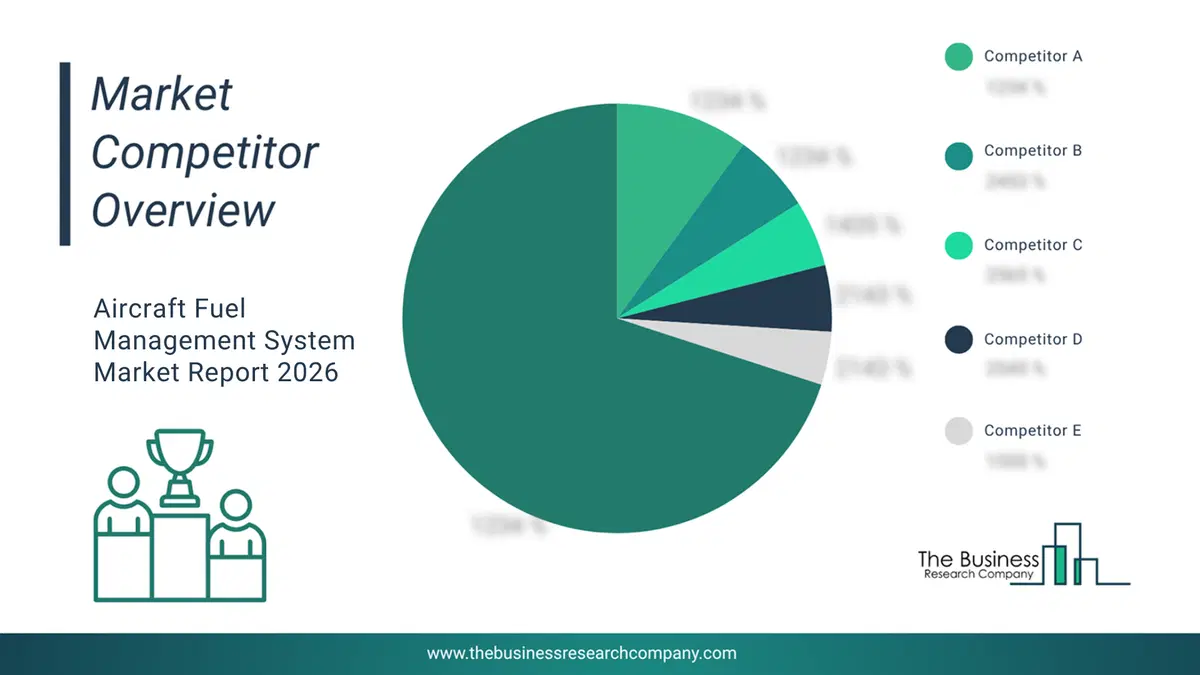
This chart is for illustrative purposes; the full report includes a detailed competitor analysis and comprehensive overview of the top 10 companies in the market.
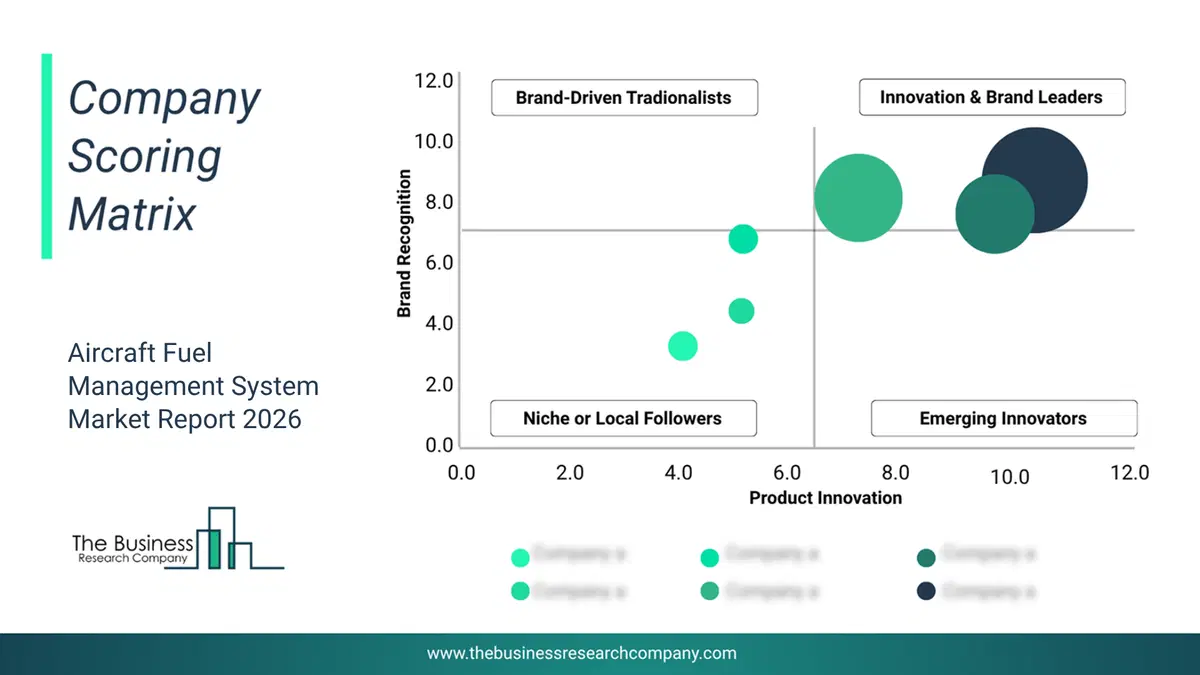
This chart maps companies by product innovation and brand strength, with bubble size indicating relative revenue, helping identify market leaders, challengers, and niche players. This is an illustrative chart; the full report provides a complete and accurate competitive analysis.
Global Aircraft Fuel Management System Market Trends and Insights
Major companies operating in the aircraft fuel management system market are focusing on validating innovative fuel management technologies, such as digital fuel quantity measurement systems, to support the adoption of sustainable aviation fuels (SAF), improve fuel measurement accuracy, and ensure compatibility with next-generation aircraft operations. Digital fuel quantity measurement systems refer to advanced electronic fuel gauging solutions that continuously monitor, measure, and transmit accurate fuel quantity data using digital sensors and processing technologies, enabling reliable fuel management across varying operating conditions. For instance, in December 2023, Eaton, an Ireland-based intelligent power management company, announced that its digital Fuel Quantity Measurement System (FQMS) successfully supported Gulfstream Aerospace's historic transatlantic flight powered by 100% sustainable aviation fuel (SAF). The system demonstrated reliable fuel gauging performance using 100% SAF, validating its compatibility with alternative aviation fuels without compromising measurement accuracy or operational safety. This milestone highlights the growing role of advanced aircraft fuel management systems in enabling sustainable aviation by supporting accurate fuel monitoring, enhancing operational reliability, and facilitating the industry's transition toward lower-carbon aviation operations.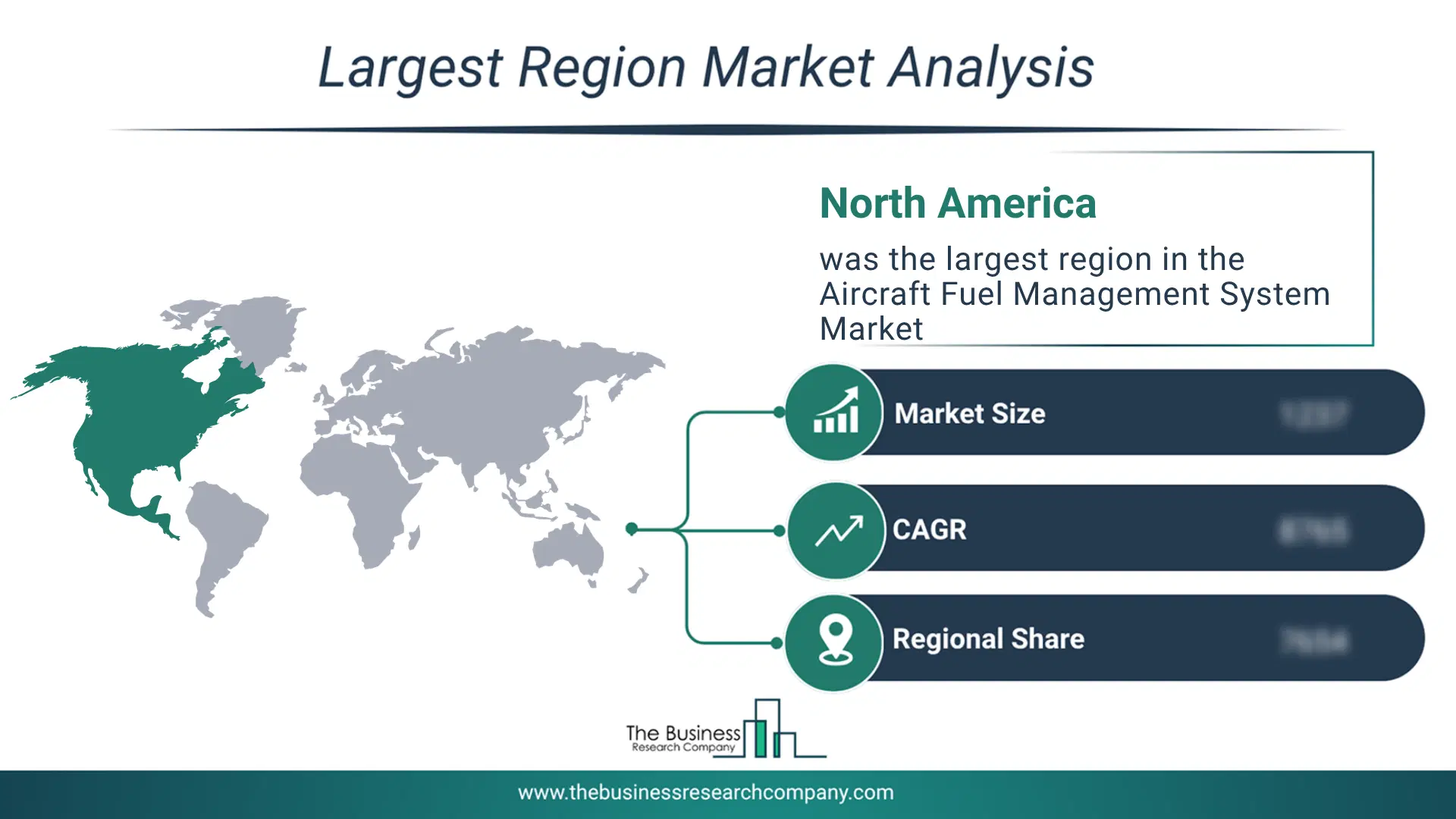
Regional Outlook
North America was the largest region in the aircraft fuel management system market in 2025. Europe is expected to be the fastest-growing region in the forecast period. The regions covered in this market report are Asia-Pacific, South East Asia, Western Europe, Eastern Europe, North America, South America, Middle East, Africa. The countries covered in this market report are Australia, Brazil, China, France, Germany, India, Indonesia, Japan, Taiwan, Russia, South Korea, UK, USA, Canada, Italy, Spain.What Defines the Aircraft Fuel Management System Market?
The aircraft fuel management system market consists of revenues earned by entities by providing services such as fuel refueling management, fuel defueling management, fuel temperature monitoring, and fuel pressure monitoring. The market value includes the value of related goods sold by the service provider or included within the service offering. The aircraft fuel management system market also includes sales of fuel management computers (FMCs), fuel quantity indication systems (FQIS), fuel level sensors, and fuel flow sensors. Values in this market are ‘factory gate’ values, that is, the value of goods sold by the manufacturers or creators of the goods, whether to other entities (including downstream manufacturers, wholesalers, distributors, and retailers) or directly to end customers. The value of goods in this market includes related services sold by the creators of the goods.How is Market Value Defined and Measured?
The market value is defined as the revenues that enterprises gain from the sale of goods and/or services within the specified market and geography through sales, grants, or donations in terms of the currency (in USD unless otherwise specified). The revenues for a specified geography are consumption values that are revenues generated by organizations in the specified geography within the market, irrespective of where they are produced. It does not include revenues from resales along the supply chain, either further along the supply chain or as part of other products.
This chart presents market attractiveness based on a quantitative evaluation of growth, competition, strategic alignment, and risk, offering a clear view of opportunity areas for decision-making. This chart is for illustrative purposes; the full report contains the complete analysis.

This chart highlights the Total Addressable Market (TAM) by estimating the maximum revenue opportunity using an assumption-driven approach, supporting strategic planning and opportunity sizing across markets. The chart is illustrative; the full report provides a more comprehensive analysis.
What Key Data and Analysis Are Included in the Aircraft Fuel Management System Market Report 2026?
The aircraft fuel management system market research report is one of a series of new reports from The Business Research Company that provides market statistics, including industry global market size, regional shares, competitors with the market share, detailed market segments, market trends and opportunities, and any further data you may need to thrive in the aircraft fuel management system industry. The market research report delivers a complete perspective of everything you need, with an in-depth analysis of the current and future state of the industry.Aircraft Fuel Management System Market Report Forecast Analysis
| Report Attribute | Details |
|---|---|
| Market Size Value In 2026 | $2.08 billion |
| Revenue Forecast In 2030 | $3.02 billion |
| Growth Rate | CAGR of 9.8% from 2026 to 2030 |
| Base Year For Estimation | 2025 |
| Actual Estimates/Historical Data | 2020-2025 |
| Forecast Period | 2026 - 2030 |
| Market Representation | Revenue in USD Billion and CAGR from 2026 to 2030 |
| Segments Covered | Type, Technology, Installation, Application, End User |
| Regional Scope | Asia-Pacific, Western Europe, Eastern Europe, North America, South America, Middle East, Africa |
| Country Scope | The countries covered in the report are Australia, Brazil, China, France, Germany, India, Indonesia, Japan, Taiwan, Russia, South Korea, UK, USA, Canada, Italy, Spain. |
| Key Companies Profiled | RTX Corporation, GE Aerospace, Honeywell International Inc, Safran SA, Parker-Hannifin Corporation, Eaton Corporation plc, TransDigm Group Incorporated, Liebherr-International AG, Woodward Inc, AMETEK Inc, HEICO Corporation, Moog Inc, Curtiss-Wright Corporation, Crane Co, AAR CORP, Senior plc, Ducommun Incorporated, Astronics Corporation, Ontic Engineering & Manufacturing Inc, Valcor Engineering Corporation, Triumph Group Inc |
| Customization Scope | Request for Customization |
| Pricing And Purchase Options | Explore Purchase Options |