
Aircraft Seals Market Report 2026
Global Outlook – By Type (Dynamic Seals, Static Seals), By Material (Composites, Polymers, Metals), By Distribution (OEM, Aftermarket), By Application (Engine System, Airframe, Avionics And Electrical System, Flight Control And Hydraulics System, Landing Gear System), By End User (Commercial Aircraft, Military Aircraft) – Market Size, Trends, Strategies, and Forecast to 2030
Aircraft Seals Market Overview
• Aircraft Seals market size has reached to $2.06 billion in 2025 • Expected to grow to $2.77 billion in 2030 at a compound annual growth rate (CAGR) of 5.8% • Growth Driver: Elevated Demand For Hybrid And Electric Propulsion Fuels Growth In Aircraft Seals Market • Market Trend: Rise Of Advanced Hydrogen-Resistant Seals In The Aircraft Seals Market • North America was the largest region in 2025 and Asia-Pacific is the fastest growing region.What Is Covered Under Aircraft Seals Market?
The aircraft seals refer to hydraulic sealing systems deployed in various aviation applications. These seals are used throughout the plane, from cockpit windshields to exterior flaps. Aircraft seals help flight systems prevent the spread of fire or flames inside the aircraft's engine system, to avert air leakage, water or dust intrusion, corrosion, or any aviation liquid leakage. The main types of aircraft seals are dynamic seals and static seals. The dynamic seals are used in linear, oscillating, and rotary motion applications to create a barrier between stationary or moving surfaces. Hydraulic aggregates, machines, and locomotive components such as hydraulic cylinders and pistons use these seals. Aircraft seals are made up of materials such as composites, polymers, and metals and are distributed through channels such as OEM and aftermarket. Aircraft seals are mostly used in engine systems, airframes, avionics and electrical systems, flight control and hydraulics systems, and landing gear systems, and by end users such as commercial aircraft and military aircraft.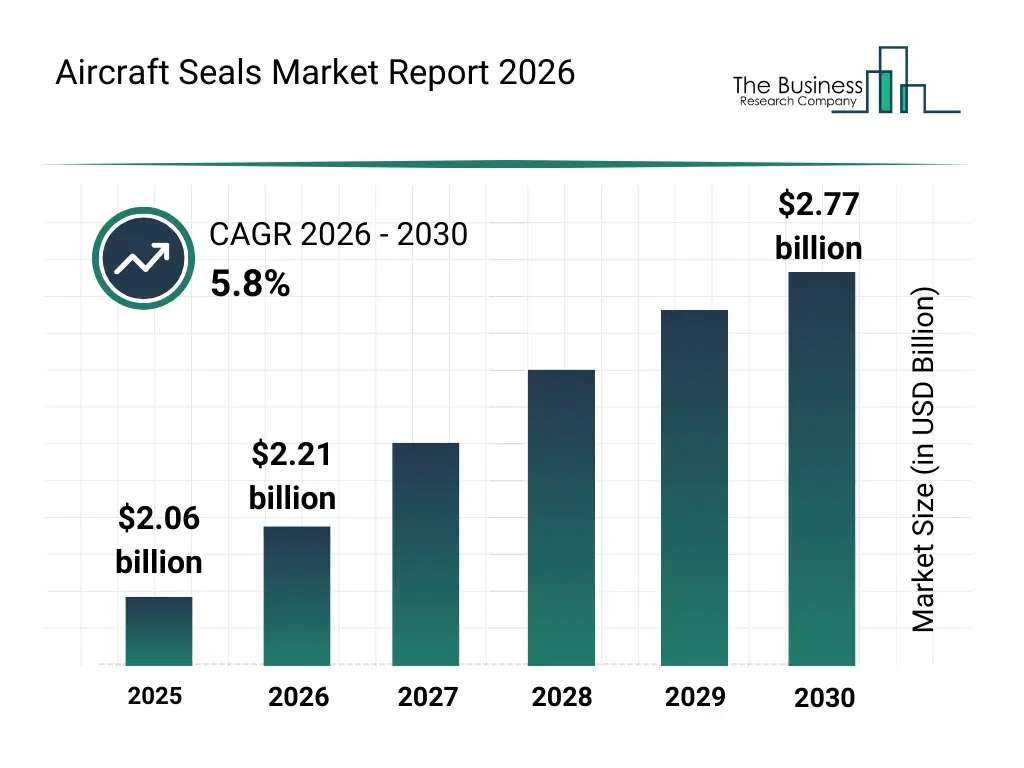
What Is The Aircraft Seals Market Size and Share 2026?
The aircraft seals market size has grown strongly in recent years. It will grow from $2.06 billion in 2025 to $2.21 billion in 2026 at a compound annual growth rate (CAGR) of 7.2%. The growth in the historic period can be attributed to growth in commercial and military aircraft production increasing demand for sealing systems, rising use of organic elastomers for hydraulic and fuel system sealing, expansion of mro activities requiring frequent replacement of aircraft seals, increased adoption of radar-absorbing materials for stealth applications, advancements in reinforced conducting fabric improving seal durability.What Is The Aircraft Seals Market Growth Forecast?
The aircraft seals market size is expected to see strong growth in the next few years. It will grow to $2.77 billion in 2030 at a compound annual growth rate (CAGR) of 5.8%. The growth in the forecast period can be attributed to rising production of next-generation aircraft requiring advanced high-temperature and fire-resistant seals, increasing emphasis on corrosion prevention and environmental sealing in modern airframes, growth in electrified aircraft systems driving demand for specialized sealing materials, development of lightweight and eco-friendly sealing compounds, expanding global fleet size boosting recurring demand for replacement aircraft seals. Major trends in the forecast period include advanced material innovation for sealing systems, corrosion and leak-resistant seal development, lightweight aerospace components, enhanced fire & thermal protection systems, precision manufacturing and quality control.
Global Aircraft Seals Market Segmentation
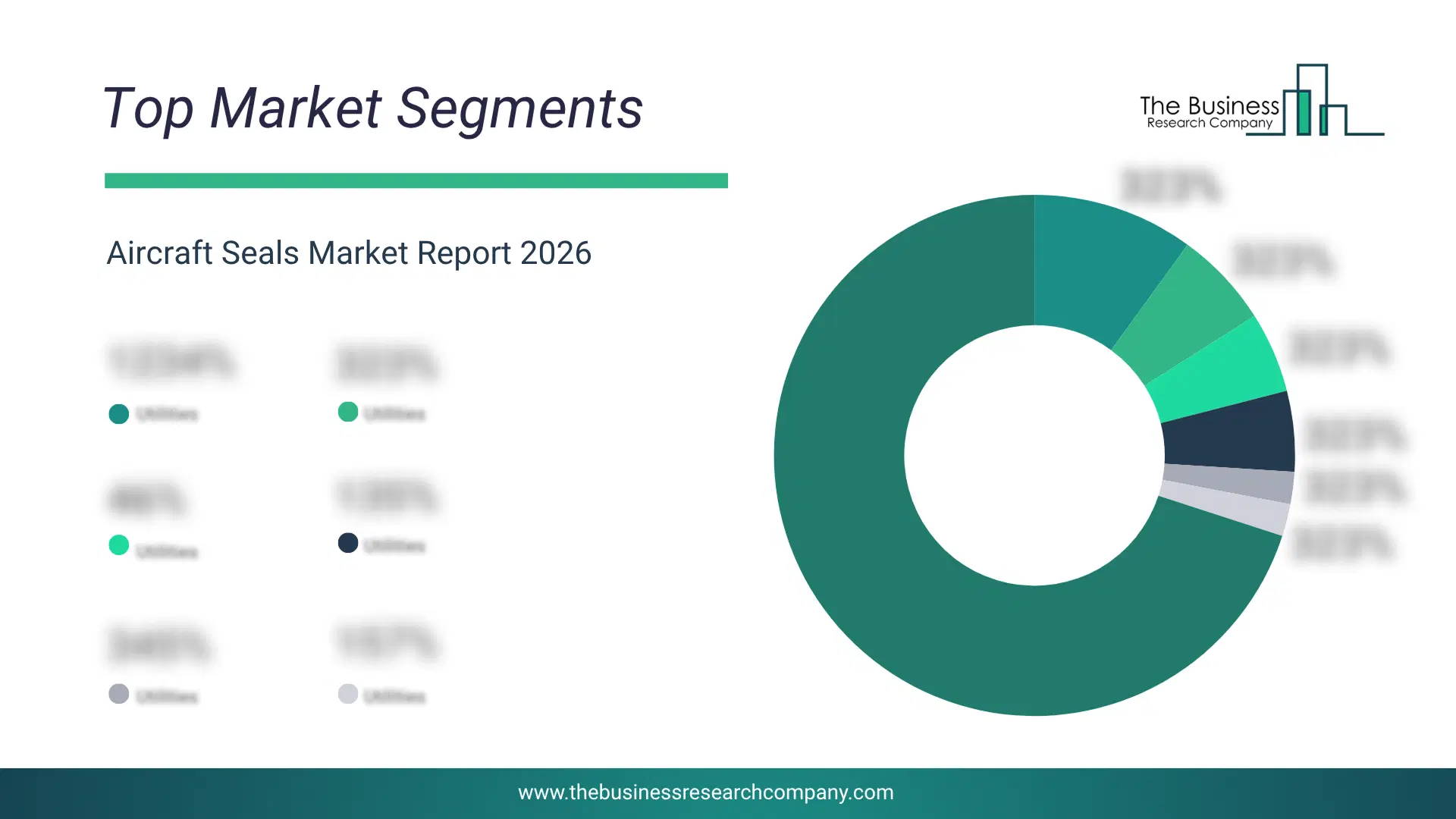
1) By Type: Dynamic Seals, Static Seals 2) By Material: Composites, Polymers, Metals 3) By Distribution: OEM, Aftermarket 4) By Application: Engine System, Airframe, Avionics And Electrical System, Flight Control And Hydraulics System, Landing Gear System 5) By End User: Commercial Aircraft, Military Aircraft Subsegments: 1) By Dynamic Seals: Rotary Seals, Piston Seals, Lip Seals 2) By Static Seals: O-Rings, Gaskets, Bonded SealsWhat Is Driver Of The Aircraft Seals Market?
The increasing demand for hybrid and electric propulsion is expected to propel the demand for the aircraft seals market. Aircraft seals are used as a component that fills gaps between mating surfaces on civilian, military, and commercial aircraft. The innovation of modern aircraft configurations with hybrid-electric propulsion reflects the growing demand for environmentally friendly aviation and shorter travel times. These modern aircraft use hybrid and electric aircraft seals to bind assembly applications, which helps reduce the overall weight of aircraft and fuel consumption while ensuring safety. For instance, in January 2024, according to a report published by The U.S. Energy Information Administration (EIA), a US-based agency, according to Wards Intelligence data, the combined sales of hybrid vehicles, plug-in hybrid electric vehicles (PHEVs), and battery electric vehicles (BEVs) in the United States, light-duty vehicle (LDV) sales reached 16.3% in 2023, an increase from 12.9% in 2022. Therefore, the increasing demand and development of hybrid and propulsion aircraft will drive the aircraft seals industry.Key Players In The Global Aircraft Seals Market
Major companies operating in the aircraft seals market are Parker Hannifin Corporation, Meggitt Plc, Trelleborg Sealing Solutions, Saint Gobain S.A., Eaton Corporation, TransDigm Group Incorporated, Freudenberg Group, Hutchinson SA, SKF Group, Technetics Group, Sealtech.com Aviation Seals Mfg. Ltd, Sealcon, Sujan Industries, Eagle Industry Co., Precision Polymer Engineering, Safran SA, Micro Seals, International Seal Co Australia (ISCA) Pty Ltd, DuPont de Nemours Inc, Bal Seal Engineering Inc, Regal Rexnord Corporation, PPG Industries Inc, Embraer S.A, LASSAC AERO, Performance Sealing Inc, Advanced Aircraft Seal, SEAL Aviation LLC, Airbus, Bombardier Inc, MDA Corporation, Collins Aerospace, CAE Inc, Goodrich Aerospace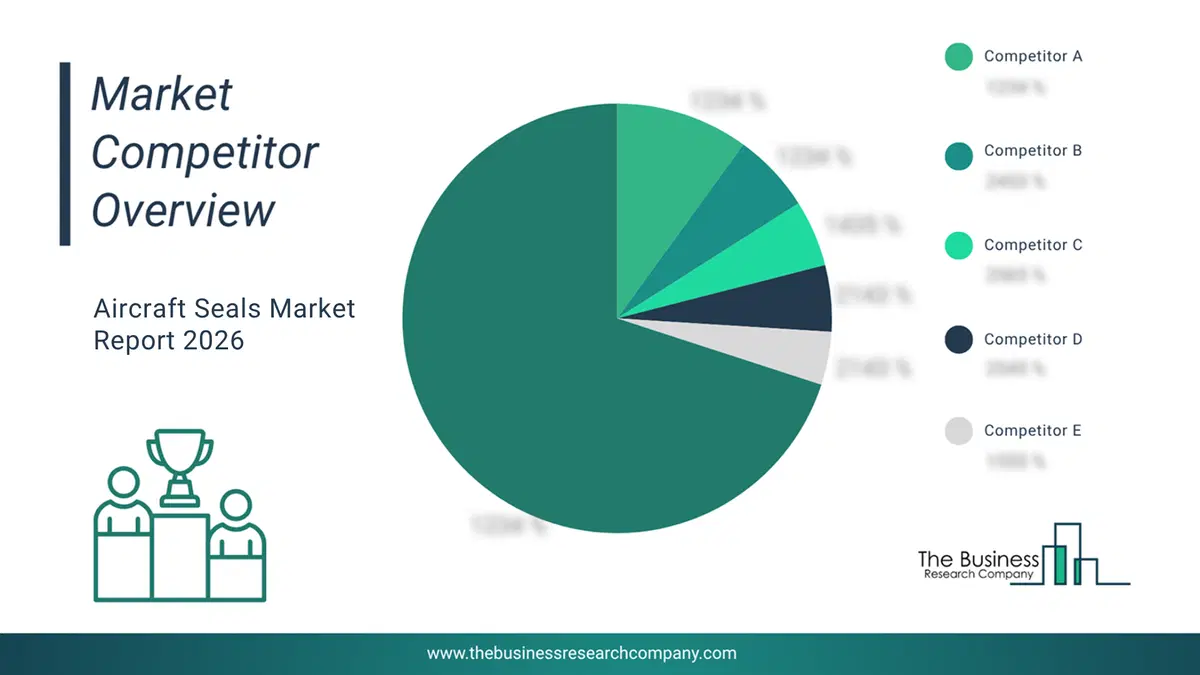
This chart is for illustrative purposes; the full report includes a detailed competitor analysis and comprehensive overview of the top 10 companies in the market.
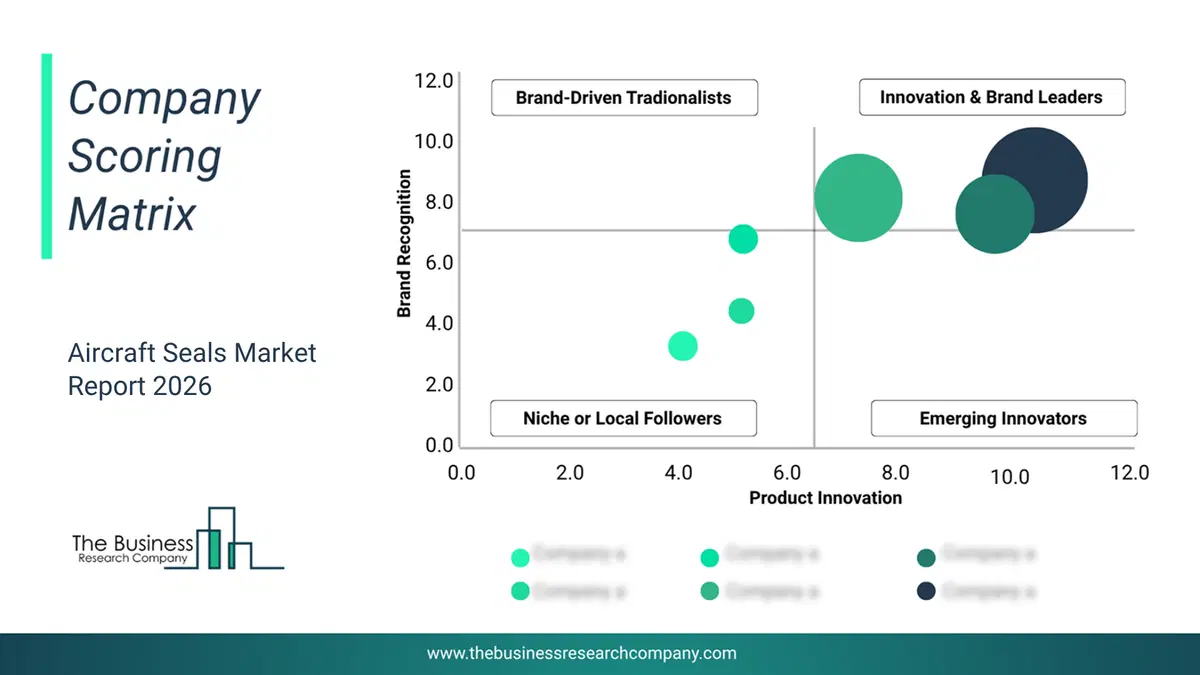
This chart maps companies by product innovation and brand strength, with bubble size indicating relative revenue, helping identify market leaders, challengers, and niche players. This is an illustrative chart; the full report provides a complete and accurate competitive analysis.
Global Aircraft Seals Market Trends and Insights
Major companies operating in the aircraft seals market are focusing on the use of advanced sealing solution products, such as hydrogen-resistant seals, to enhance performance, reliability, and longevity in demanding aerospace and energy applications. A hydrogen-resistant seal is a specialized sealing solution designed to withstand high pressures and low temperatures while maintaining effective sealing properties, preventing leakage in various hydrogen systems. For instance, in July 2023, Trelleborg Sealing Solutions, a Germany-based manufacturer and supplier of precision seals, bearings, and custom-molded polymer components, launched the H2Pro range of sealing materials, an advanced sealing solution designed for hydrogen applications across production, storage, and transportation. The range includes a new ethylene propylene diene monomer (EPDM) rubber for high-pressure environments across a wide range of temperatures and a thermoplastic polyurethane (TPU) for very low temperatures. These materials are designed to address the specific challenges of sealing hydrogen systems, providing enhanced safety and efficiency in demanding conditions.What Are Latest Mergers And Acquisitions In The Aircraft Seals Market? Trelleborg Sealing Solutions Partered With Airbus
In July 2024, Trelleborg Sealing Solutions, a Germany-based manufacturer and supplier of precision seals, bearings, and custom-molded polymer components, partnered with Airbus to hydrogen sealing applications as part of the mission to deliver a hydrogen-powered commercial aircraft by 2035. Through this partnership, Trelleborg aims to advance high-performance sealing technologies capable of withstanding the unique challenges of hydrogen propulsion systems, contributing to the aviation industry’s transition toward sustainable, zero-emission flight. Airbus is a France-based aerospace corporation specializing in the design, manufacture, and delivery of commercial aircraft, helicopters, and defense systems.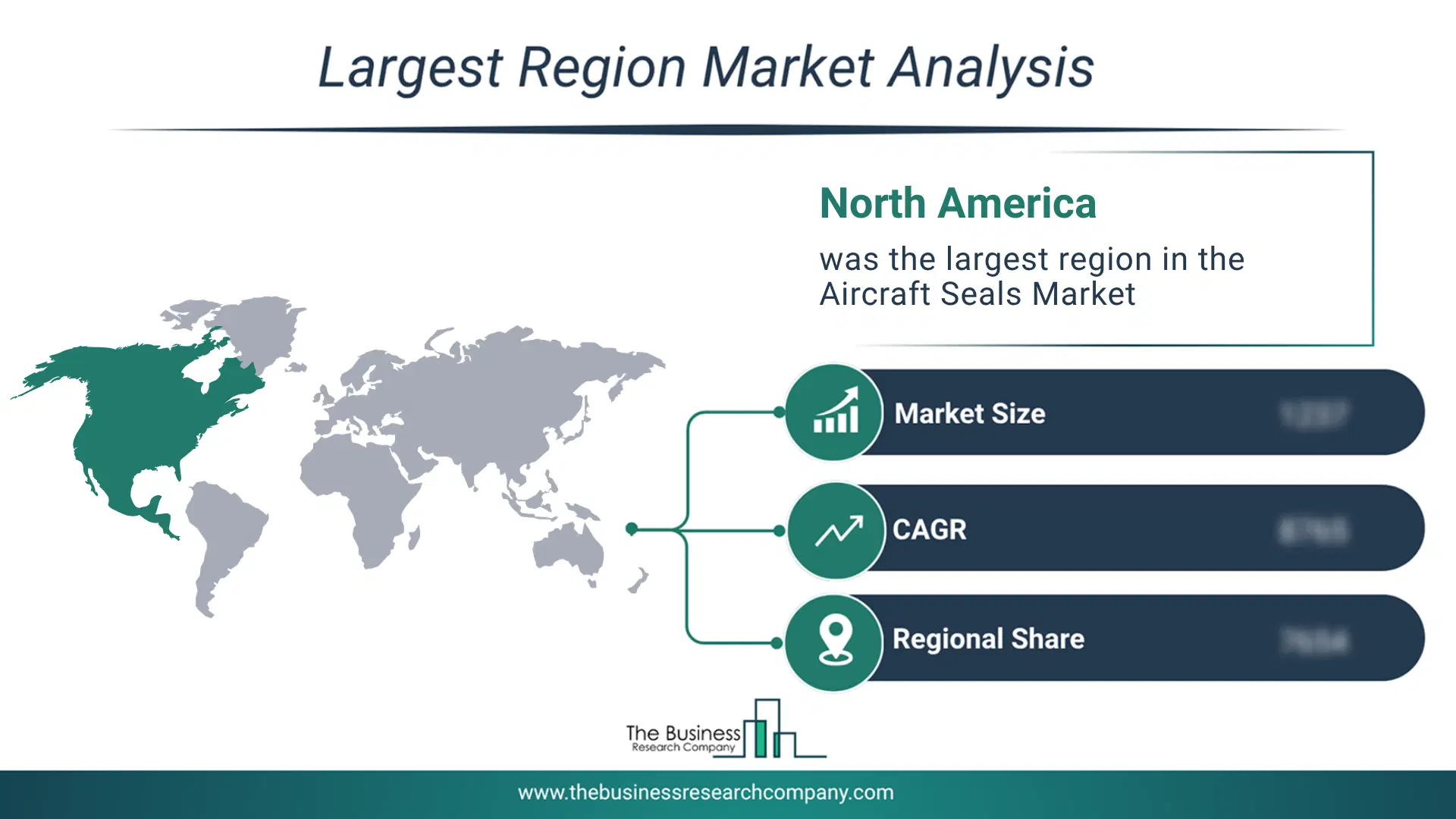
Regional Insights
North America was the largest region in the aircraft seals market in 2025. Asia-Pacific is expected to be the fastest-growing region in the forecast period. The regions covered in this market report are Asia-Pacific, South East Asia, Western Europe, Eastern Europe, North America, South America, Middle East, Africa. The countries covered in this market report are Australia, Brazil, China, France, Germany, India, Indonesia, Japan, Taiwan, Russia, South Korea, UK, USA, Canada, Italy, SpainWhat Defines the Aircraft Seals Market?
The aircraft seals market consists of sales of aircraft seals by-products such as organic elastomers, radar-absorbing materials and reinforced conducting fabric. Values in this market are ‘factory gate’ values, that is the value of goods sold by the manufacturers or creators of the goods, whether to other entities (including downstream manufacturers, wholesalers, distributors, and retailers) or directly to end customers. The value of goods in this market includes related services sold by the creators of the goods.How is Market Value Defined and Measured?
The market value is defined as the revenues that enterprises gain from the sale of goods and/or services within the specified market and geography through sales, grants, or donations in terms of the currency (in USD unless otherwise specified). The revenues for a specified geography are consumption values that are revenues generated by organizations in the specified geography within the market, irrespective of where they are produced. It does not include revenues from resales along the supply chain, either further along the supply chain or as part of other products.
This chart presents market attractiveness based on a quantitative evaluation of growth, competition, strategic alignment, and risk, offering a clear view of opportunity areas for decision-making. This chart is for illustrative purposes; the full report contains the complete analysis.

This chart highlights the Total Addressable Market (TAM) by estimating the maximum revenue opportunity using an assumption-driven approach, supporting strategic planning and opportunity sizing across markets. The chart is illustrative; the full report provides a more comprehensive analysis.
What Key Data and Analysis Are Included in the Aircraft Seals Market Report 2026?
The aircraft seals market research report is one of a series of new reports from The Business Research Company that provides market statistics, including industry global market size, regional shares, competitors with the market share, detailed market segments, market trends and opportunities, and any further data you may need to thrive in the aircraft seals industry. The market research report delivers a complete perspective of everything you need, with an in-depth analysis of the current and future state of the industry.Aircraft Seals Market Report Forecast Analysis
| Report Attribute | Details |
|---|---|
| Market Size Value In 2026 | $2.21 billion |
| Revenue Forecast In 2030 | $2.77 billion |
| Growth Rate | CAGR of 5.8% from 2026 to 2030 |
| Base Year For Estimation | 2025 |
| Actual Estimates/Historical Data | 2020-2025 |
| Forecast Period | 2026 - 2030 |
| Market Representation | Revenue in USD Billion and CAGR from 2026 to 2030 |
| Segments Covered | Type, Material, Distribution, Application, End User |
| Regional Scope | Asia-Pacific, Western Europe, Eastern Europe, North America, South America, Middle East, Africa |
| Country Scope | The countries covered in the aircraft seals market report are Australia, Brazil, China, France, Germany, India, Indonesia, Japan, Taiwan, Russia, South Korea, UK, USA, Canada, Italy, Spain |
| Key Companies Profiled | Parker Hannifin Corporation, Meggitt Plc, Trelleborg Sealing Solutions, Saint Gobain S.A., Eaton Corporation, TransDigm Group Incorporated, Freudenberg Group, Hutchinson SA, SKF Group, Technetics Group, Sealtech.com Aviation Seals Mfg. Ltd, Sealcon, Sujan Industries, Eagle Industry Co., Precision Polymer Engineering, Safran SA, Micro Seals, International Seal Co Australia (ISCA) Pty Ltd, DuPont de Nemours Inc, Bal Seal Engineering Inc, Regal Rexnord Corporation, PPG Industries Inc, Embraer S.A, LASSAC AERO, Performance Sealing Inc, Advanced Aircraft Seal, SEAL Aviation LLC, Airbus, Bombardier Inc, MDA Corporation, Collins Aerospace, CAE Inc, Goodrich Aerospace |
| Customization Scope | Request for Customization |
| Pricing And Purchase Options | Explore Purchase Options |