
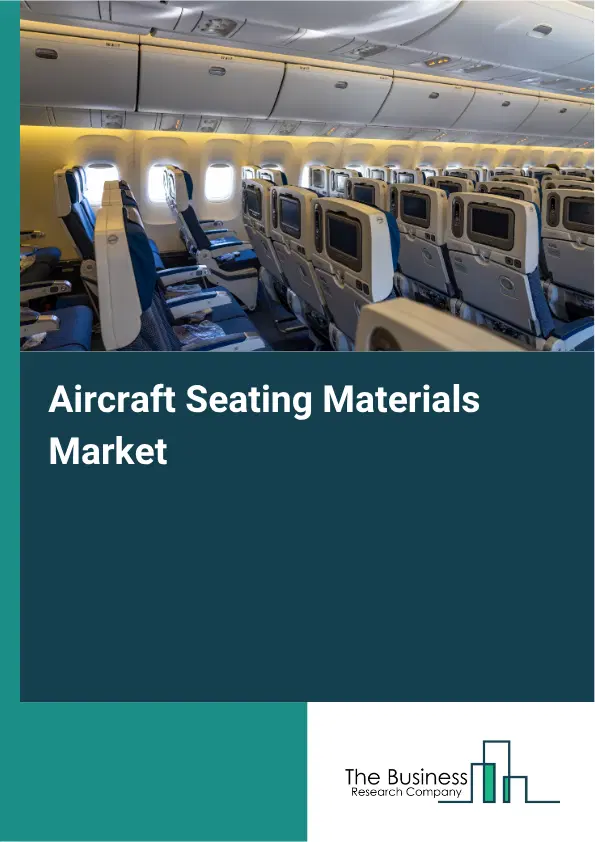
Aircraft Seating Materials Market Report 2026
Global Outlook – By Material Type (Structure, Cushion Filling, Upholsteries, Plastic Molding ), By Aircraft Type (Business Jets, Narrow-Body Aircraft, Wide-Body Aircraft, General Aviation, Regional Transportation, Helicopters, Other Aircraft Types ), By Application (First Class, Business Class, Economy Class, Premium Economy Class ), By End-Use Type (Original Equipment Manufacturer (OEM), Maintenance, Repair, And Overhaul (MRO), Aftermarket ) – Market Size, Trends, Strategies, and Forecast to 2030
Aircraft Seating Materials Market Overview
• Aircraft Seating Materials market size has reached to $4.5 billion in 2025 • Expected to grow to $6.05 billion in 2030 at a compound annual growth rate (CAGR) of 6.0% • Growth Driver: Growth In Commercial Aircraft Deliveries Is Fueling The Growth Of The Market Due To The Increasing Need For Avionics Software Validation And Regulatory Compliance • Market Trend: Software-Driven RF Testing Innovations Improve Aerospace Communication System Validation • North America was the largest region in 2025 and Asia-Pacific is the fastest growing region.What Is Covered Under Aircraft Seating Materials Market?
Aircraft seating materials are specialized fabrics, foams, leather, composites, and lightweight structural materials used in the production of passenger and crew seats. Their primary purpose is to enhance passenger comfort, ensure safety and regulatory compliance, minimize aircraft weight, improve durability, and support greater fuel efficiency and extended service life. The main material types of aircraft seating materials include structure, cushion filling, upholsteries, and plastic molding. Structure refers to the structural materials used to provide strength, support, stability, and durability to aircraft seats. These materials are used in business jets, narrow-body aircraft, wide-body aircraft, general aviation, regional transportation, helicopters, and other aircraft seating materials. They are used applications across first class, business class, economy class, and premium economy class seating and are serving end use types including original equipment manufacturers (OEM), maintenance, repair, and overhaul (MRO) providers, and aftermarket applications.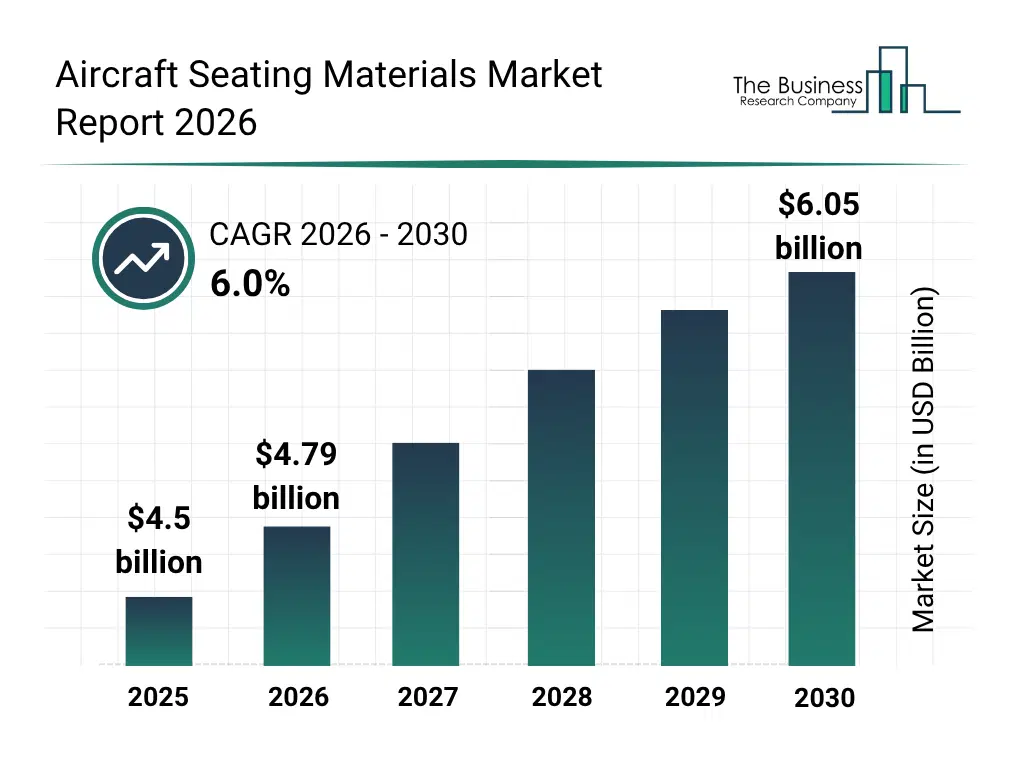
What Is The Aircraft Seating Materials Market Size and Share 2026?
The aircraft seating materials market size has grown strongly in recent years. It will grow from $4.5 billion in 2025 to $4.79 billion in 2026 at a compound annual growth rate (CAGR) of 6.4%. The growth in the historic period can be attributed to increasing aircraft passenger traffic, rising aircraft production, growing demand for passenger comfort, increasing aircraft seating replacement requirements, expanding commercial aircraft fleets.What Is The Aircraft Seating Materials Market Growth Forecast?
The aircraft seating materials market size is expected to see strong growth in the next few years. It will grow to $6.05 billion in 2030 at a compound annual growth rate (CAGR) of 6.0%. The growth in the forecast period can be attributed to growing demand for lightweight seating materials, increasing aircraft cabin refurbishment activities, rising demand for durable seating solutions, expanding aircraft delivery volumes, increasing focus on aircraft interior weight reduction. Major trends in the forecast period include increasing demand for lightweight aircraft seating materials, rising adoption of high-durability seating materials, growing demand for fire-resistant seating materials, increasing focus on passenger comfort and ergonomics, rising demand for extended-life aircraft seating materials.Tariff Impact On Aircraft Seating Materials Market
Tariffs are impacting the aircraft seating materials market by increasing the cost of imported foams, fabrics, leather, composites, plastics, and specialized materials used in aircraft seat manufacturing and refurbishment. This is raising production and procurement costs for aircraft seating manufacturers, particularly in regions dependent on imported aerospace materials such as North America, Europe, and Asia-Pacific. Hardware-intensive and material-intensive applications involving structural components, cushion filling, upholsteries, and plastic molding are most affected by higher input costs and supply chain disruptions. However, tariffs are also encouraging domestic material production, regional supplier diversification, localized sourcing, and stronger aerospace material supply chains, creating greater long-term resilience in the market.
Global Aircraft Seating Materials Market Segmentation
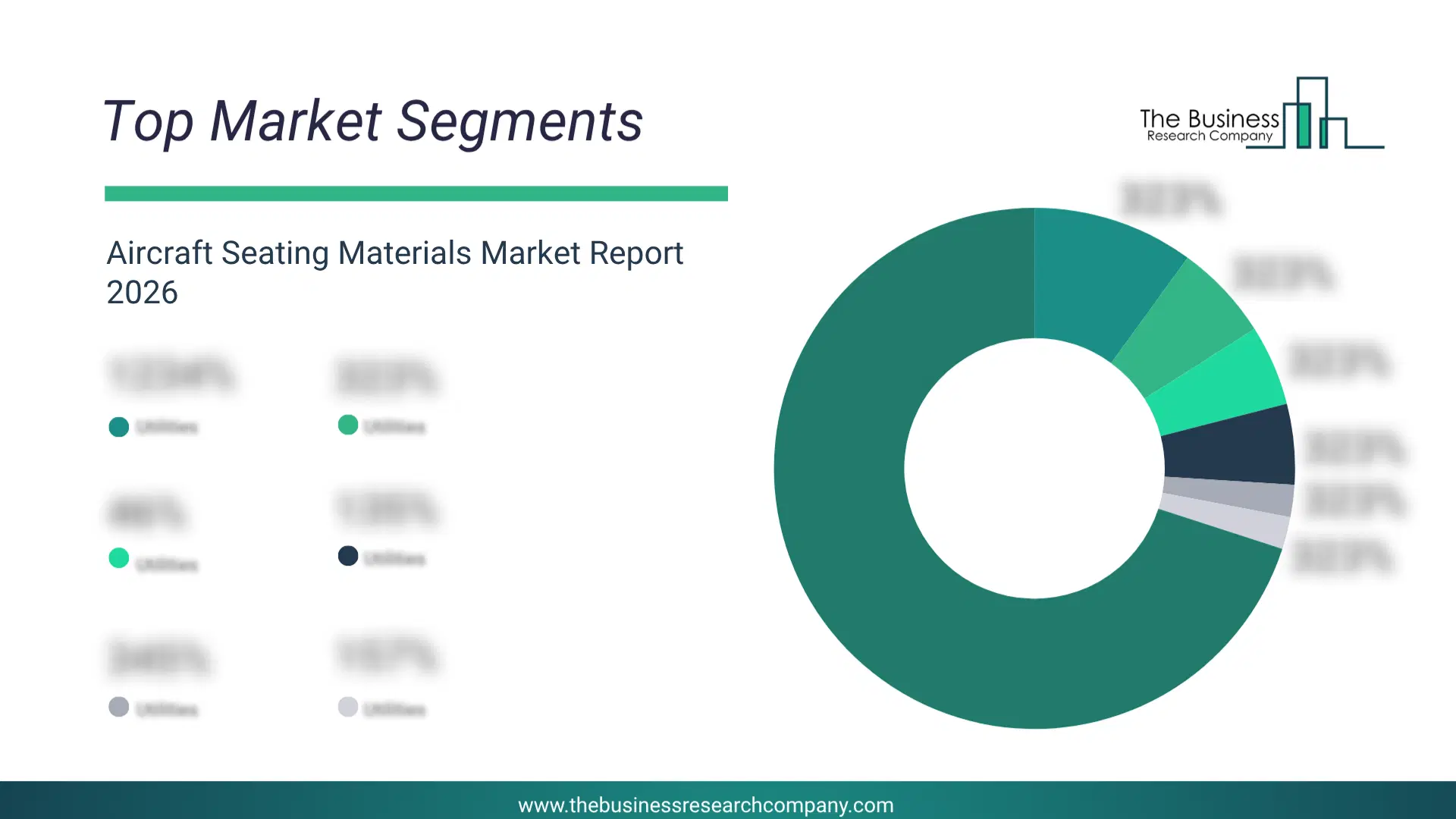
2) By Aircraft Type: Business Jets, Narrow-Body Aircraft, Wide-Body Aircraft, General Aviation, Regional Transportation, Helicopters, Other Aircraft Types 3) By Application: First Class, Business Class, Economy Class, Premium Economy Class 4) By End-Use Type: Original Equipment Manufacturer (OEM), Maintenance, Repair, And Overhaul (MRO), Aftermarket Subsegments: 1) By Structure: Aluminum Alloys, Titanium Alloys, Composite Materials, Carbon Fiber Reinforced Polymers, Glass Fiber Reinforced Polymers, Honeycomb Panels 2) By Cushion Filling: Polyurethane Foam, Memory Foam, Silicone Foam, Gel Cushioning, Latex Foam, Polyester Fiber Fill 3) By Upholsteries: Genuine Leather, Synthetic Leather, Wool Fabrics, Polyester Fabrics, Nylon Fabrics, Vinyl Materials 4) By Plastic Molding: Thermoplastic Components, Thermoset Components, Polycarbonate Moldings, Polypropylene Moldings, Acrylonitrile Butadiene Styrene Moldings, Polyether Ether Ketone MoldingsWhat Is The Driver Of The Aircraft Seating Materials Market?
The increasing air passenger traffic is expected to propel the growth of the aircraft seating materials market going forward. Air passenger traffic refers to the total volume of passengers transported by commercial airlines over a given period, measured in terms of passengers carried or revenue passenger kilometers (RPKs). Air passenger traffic is rising due to increasing disposable incomes, enabling more people to travel by air for business and leisure, which drives higher demand for flights. Higher passenger volumes directly drive the need for aircraft procurement, retrofitting, and cabin refurbishment, increasing the consumption of seating materials used in the construction and replacement of aircraft seats. For instance, in January 2024, according to the International Air Transport Association (IATA), a Canada-based trade association representing approximately 300 airlines and accounting for 83% of global air traffic, total air traffic in 2023 (measured in revenue passenger kilometers) rose 36.9% compared to 2022, with global full-year 2023 traffic reaching 94.1% of pre-pandemic levels. Therefore, increasing air passenger traffic is driving the growth of the aircraft seating materials industry.Key Players In The Global Aircraft Seating Materials Market
Major companies operating in the aircraft seating materials market are BASF SE, Compagnie de Saint-Gobain SA, 3M Company, Mitsubishi Chemical Group Corporation, Syensqo SA, Toray Industries Inc, DuPont de Nemours Inc, Evonik Industries AG, Sumitomo Bakelite Co Ltd, Trelleborg AB, Huntsman Corporation, Teijin Limited, Sekisui Chemical Co Ltd, Hexcel Corporation, Rogers Corporation, SGL Carbon SE, Victrex plc, Gurit Holding AG, Freudenberg Performance Materials Holding SE & Co KG, Zotefoams plc, Lantal Textiles AG, General Plastics Manufacturing Company, Ensinger GmbH, Tapis Corporation, Scottish Leather Group Limited, Wollsdorf Leder Schmidt & Co GesmbH, Garrett Leather Corporation, Arville Textiles Limited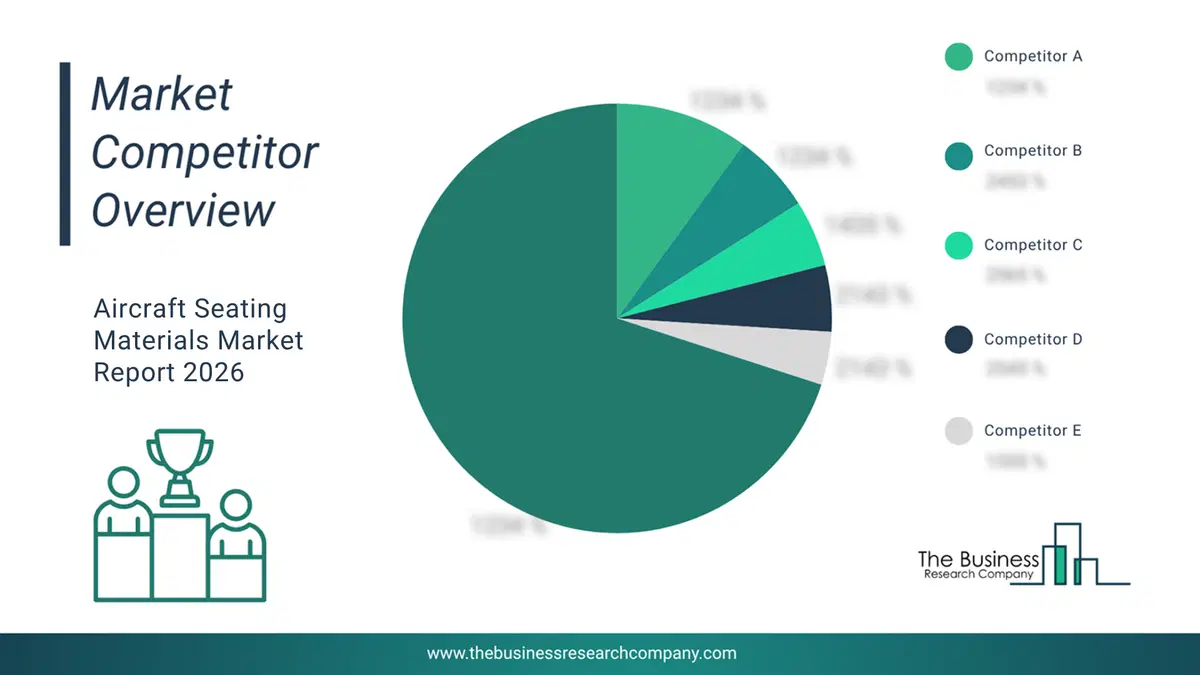
This chart is for illustrative purposes; the full report includes a detailed competitor analysis and comprehensive overview of the top 10 companies in the market.
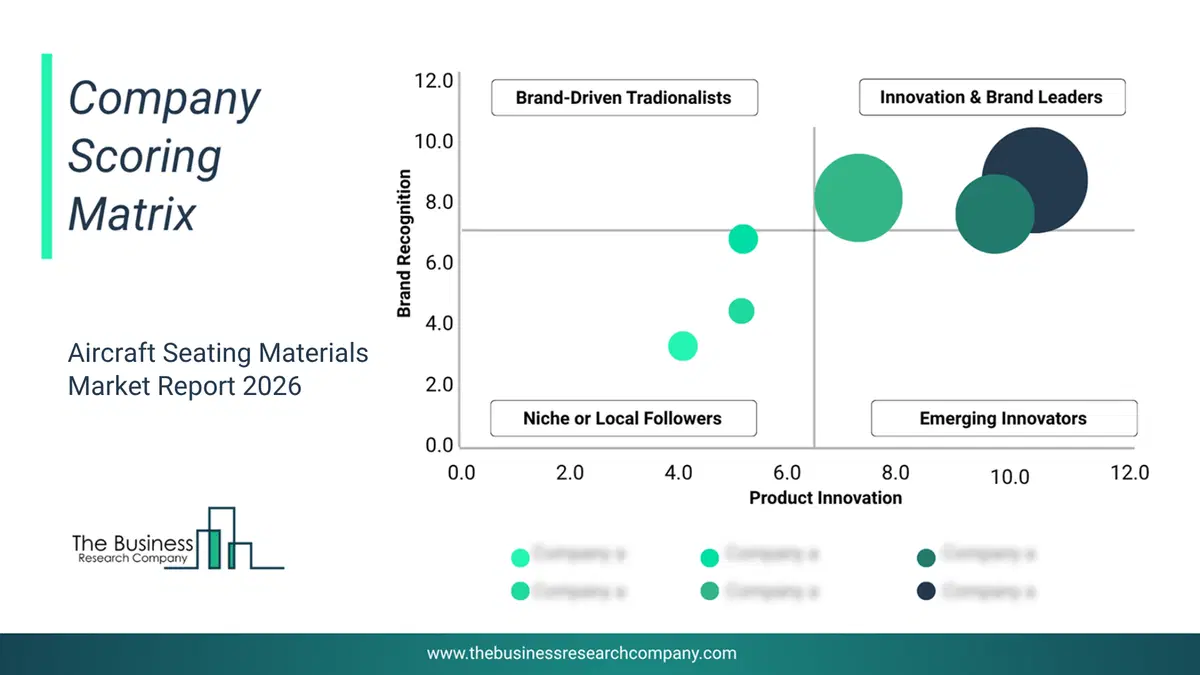
This chart maps companies by product innovation and brand strength, with bubble size indicating relative revenue, helping identify market leaders, challengers, and niche players. This is an illustrative chart; the full report provides a complete and accurate competitive analysis.
Global Aircraft Seating Materials Market Trends and Insights
Major companies operating in the aircraft seating materials market are focusing on developing advanced sustainable upholstery solutions, such as bio-based performance fabrics, to reduce environmental impact, improve passenger comfort, and support aircraft lightweighting initiatives. Bio-based performance fabrics are advanced seating materials manufactured using renewable plant-based content that deliver durability, comfort, and compliance with stringent aviation standards while reducing dependence on fossil-based resources. For instance, in August 2024, Ultrafabrics, a US-based manufacturer of high-performance fabrics, launched AV Bio, a bio-based performance material designed to provide a high-performance upholstery solution for aircraft seating with a reduced reliance on fossil-based raw materials. It offers benefits such as renewable bio-based content, exceptional durability for aviation interiors, and easy maintenance and cleaning. The launch aims to help customers reduce the environmental footprint of aircraft interiors while supporting the aviation industry's transition toward more sustainable cabin materials.What Are Latest Mergers And Acquisitions In The Aircraft Seating Materials Market?
In April 2026, Iberia, a Spain-based airline, partnered with RECARO Aircraft Seating GmbH & Co. KG to trial certified sustainable aircraft seating features in an Airbus A320neo cabin. Through this partnership, the companies aim to validate more sustainable seating materials in commercial operations while enhancing passenger comfort, premium cabin design, and environmental performance in aircraft interiors. RECARO Aircraft Seating GmbH & Co. KG is a Germany-based aircraft seating manufacturer that provides premium economy and business class aircraft seating solutions.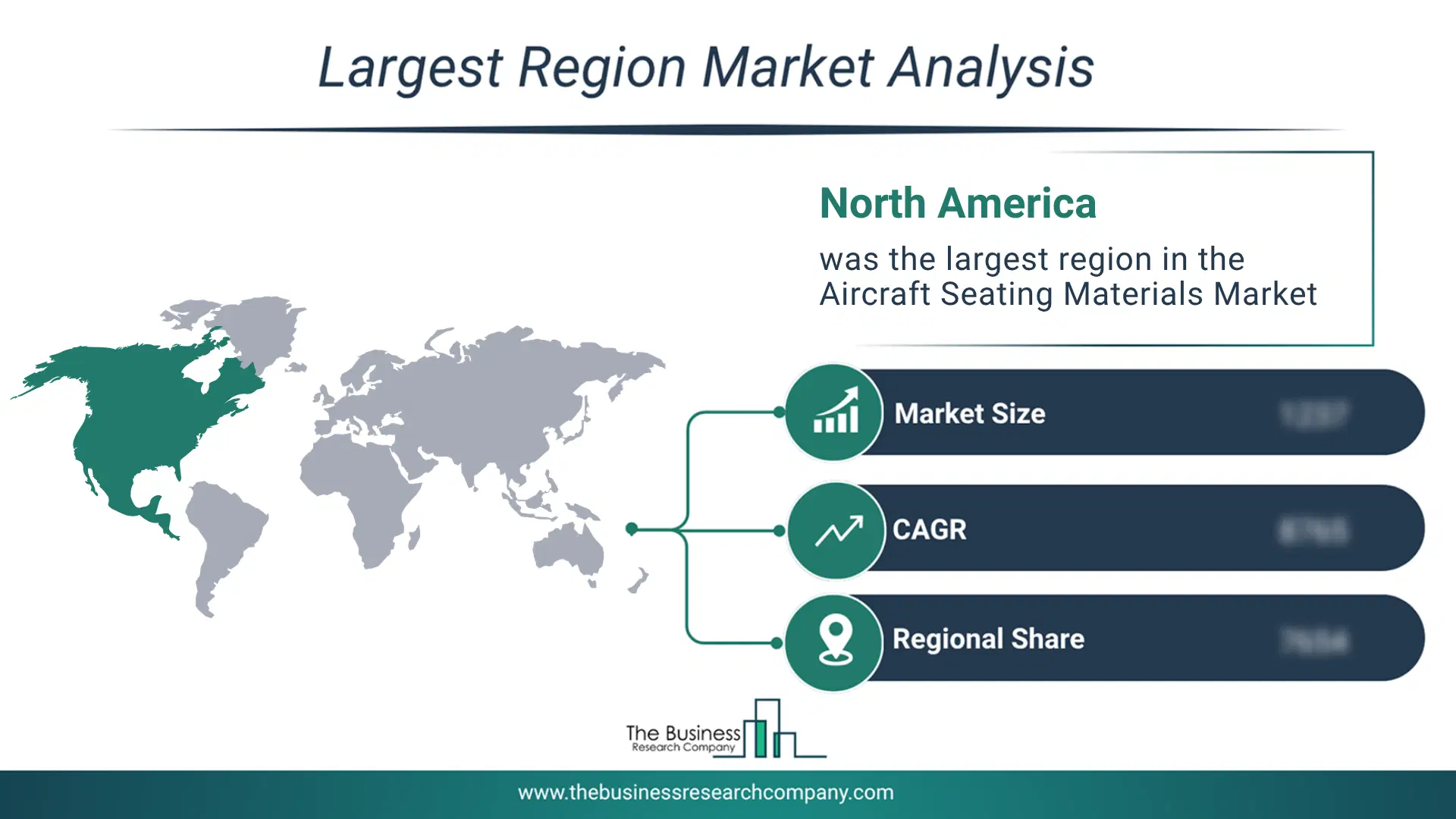
Regional Outlook
North America was the largest region in the aircraft seating materials market in 2025. Asia-Pacific is expected to be the fastest-growing region in the forecast period. The regions covered in the aircraft seating materials market are Asia-Pacific, South East Asia, Western Europe, Eastern Europe, North America, South America, Middle East, Africa. The countries covered in the aircraft seating materials market are Australia, Brazil, China, France, Germany, India, Indonesia, Japan, Taiwan, Russia, South Korea, UK, USA, Canada, Italy, Spain.What Defines the Aircraft Seating Materials Market?
The aircraft seating materials market consists of sales of seat covers and upholstery materials, fire-resistant materials, and seat frame components. Values in this market are ‘factory gate’ values, that is, the value of goods sold by the manufacturers or producers of these goods, whether to other entities (including downstream manufacturers, wholesalers, distributors, and retailers) or directly to end customers. The value of goods in this market includes related services sold by the manufacturers or producers of the goods.How is Market Value Defined and Measured?
The market value is defined as the revenues that enterprises gain from the sale of goods and/or services within the specified market and geography through sales, grants, or donations in terms of the currency (in USD unless otherwise specified). The revenues for a specified geography are consumption values that are revenues generated by organizations in the specified geography within the market, irrespective of where they are produced. It does not include revenues from resales along the supply chain, either further along the supply chain or as part of other products.
This chart presents market attractiveness based on a quantitative evaluation of growth, competition, strategic alignment, and risk, offering a clear view of opportunity areas for decision-making. This chart is for illustrative purposes; the full report contains the complete analysis.

This chart highlights the Total Addressable Market (TAM) by estimating the maximum revenue opportunity using an assumption-driven approach, supporting strategic planning and opportunity sizing across markets. The chart is illustrative; the full report provides a more comprehensive analysis.
What Key Data and Analysis Are Included in the Aircraft Seating Materials Market Report 2026?
The aircraft seating materials market research report is one of a series of new reports from The Business Research Company that provides market statistics, including industry global market size, regional shares, competitors with the market share, detailed market segments, market trends and opportunities, and any further data you may need to thrive in the aircraft seating materials industry. The market research report delivers a complete perspective of everything you need, with an in-depth analysis of the current and future state of the industry.Aircraft Seating Materials Market Report Forecast Analysis
| Report Attribute | Details |
|---|---|
| Market Size Value In 2026 | $4.79 billion |
| Revenue Forecast In 2030 | $6.05 billion |
| Growth Rate | CAGR of 6.0% from 2026 to 2030 |
| Base Year For Estimation | 2025 |
| Actual Estimates/Historical Data | 2020-2025 |
| Forecast Period | 2026 - 2030 |
| Market Representation | Revenue in USD Billion and CAGR from 2026 to 2030 |
| Segments Covered | Material Type, Aircraft Type, Application, End-Use Type |
| Regional Scope | Asia-Pacific, Western Europe, Eastern Europe, North America, South America, Middle East, Africa |
| Country Scope | The countries covered in the report are Australia, Brazil, China, France, Germany, India, Indonesia, Japan, Taiwan, Russia, South Korea, UK, USA, Canada, Italy, Spain. |
| Key Companies Profiled | BASF SE, Compagnie de Saint-Gobain SA, 3M Company, Mitsubishi Chemical Group Corporation, Syensqo SA, Toray Industries Inc, DuPont de Nemours Inc, Evonik Industries AG, Sumitomo Bakelite Co Ltd, Trelleborg AB, Huntsman Corporation, Teijin Limited, Sekisui Chemical Co Ltd, Hexcel Corporation, Rogers Corporation, SGL Carbon SE, Victrex plc, Gurit Holding AG, Freudenberg Performance Materials Holding SE & Co KG, Zotefoams plc, Lantal Textiles AG, General Plastics Manufacturing Company, Ensinger GmbH, Tapis Corporation, Scottish Leather Group Limited, Wollsdorf Leder Schmidt & Co GesmbH, Garrett Leather Corporation, Arville Textiles Limited |
| Customization Scope | Request for Customization |
| Pricing And Purchase Options | Explore Purchase Options |